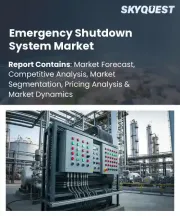
|
시장보고서
상품코드
2024554
비상 정지 시스템 시장 보고서 : 구성부품, 제어 방식, 업계별, 지역별(2026-2034년)Emergency Shutdown Systems Market Report by Component, Control Method, Industry Vertical, and Region 2026-2034 |
||||||

세계의 비상 정지 시스템 시장 규모는 2025년에 26억 달러에 달했습니다. 향후 IMARC Group은 2034년까지 시장 규모가 49억 달러에 달하며, 2026-2034년에 CAGR 7.24%로 성장할 것으로 예측하고 있습니다.
비상 정지 시스템은 제어할 수 없는 침수 등 비상 상황으로 인한 영향을 최소화하고 안전한 운영을 보장하기 위해 설계된 특수 제어 시스템입니다. 밸브, 현장 설치형 센서, 액추에이터, 안전 센서, 비상 정지 장치, 프로그래밍 가능한 안전 시스템, 안전 모듈 및 릴레이로 구성됩니다. 이러한 시스템은 탄화수소 운송 지역 및 기타 위험 지역에서 폭발 및 화재 발생 가능성을 줄이기 위해 널리 사용되고 있습니다. 비상정지 시스템은 방수문 및 방화문 폐쇄, 전기 장비의 격리, 시스템 부품 및 장비의 차단 및 감압을 지원합니다. 이러한 시스템은 신뢰할 수 있고, 안전하고, 유연하고, 정확하며, 더 빠른 응답 시간을 제공합니다. 그 결과, 정유, 제약, 제지/펄프, 발전, 금속/광업, 석유/가스 등 다양한 산업 분야에서 널리 활용되고 있습니다.
비상 정지 시스템 시장 동향:
석유 및 가스 산업의 괄목할 만한 성장은 시장 전망을 밝게 만드는 주요 요인 중 하나입니다. 비상 정지 시스템은 일반적으로 심각한 사고의 위험을 최소화하고 갱구에서 압력 파열을 방지하기 위해 사용됩니다. 이에 따라 특히 해상 정유소의 제품 수요 증가가 시장 성장을 촉진하고 있습니다. 또한 실시간 모니터링을 위한 비상 정지 시스템에 사물인터넷(IoT)을 통합하는 등 다양한 기술 발전이 시장 성장을 촉진하고 있습니다. 또한 유독성 성분이나 가열 및 냉각제가 사용되는 제약 산업에서 비상 정지 시스템이 빠르게 도입되고 있는 것도 시장 성장에 긍정적인 영향을 미치고 있습니다. 이 외에도 발전 산업 전반에 걸친 비상 정지 시스템에 대한 수요 증가, 직장 안전을 위한 다양한 정부 주도의 노력 등이 글로벌 시장 성장을 촉진하고 있습니다.
시장 세분화:
이 보고서는 세계의 비상 정지 시스템 시장의 각 하위 부문의 주요 동향 분석과 함께 2026-2034년 세계, 지역 및 국가별 예측을 제공합니다. 이 보고서는 구성 요소, 제어 방식, 산업별로 시장을 분류합니다.
구성 부품별 내역:
- 스위치
- 센서
- 프로그래밍 가능한 안전 시스템
- 안전밸브
- 액추에이터
- 기타
제어 방식별 분류:
- 공압식
- 전기식
- 광섬유
- 유압식
- 기타
산업별 분석:
- 석유 및 가스
- 정제
- 발전
- 금속 및 광업
- 제지-펄프
- 기타
지역별 분석:
- 북미
- 미국
- 캐나다
- 아시아태평양
- 중국
- 일본
- 인도
- 한국
- 호주
- 인도네시아
- 기타
- 유럽
- 독일
- 프랑스
- 영국
- 이탈리아
- 스페인
- 러시아
- 기타
- 라틴아메리카
- 브라질
- 멕시코
- 기타
- 중동 및 아프리카
경쟁 상황:
본 업계의 경쟁 상황에 대해서도 주요 기업의 개요로서 ABB Ltd, Emerson Electric Co., General Electric Company, HIMA Paul Hildebrandt GmbH, Honeywell International Inc., Nov Inc., Rockwell Automation Inc, Schneider Electric SE, Siemens Aktiengesellschaft, Versa Products Company Inc., Winn-Marion Companies, Yokogawa Electric Corporation가 검증되고 있습니다.
이 보고서에서 답변하는 주요 질문
1. 2025년 세계의 비상 정지 시스템 시장 규모는 어느 정도였는가?
2. 2026-2034년 세계의 비상 정지 시스템 시장의 예상 성장률은 얼마인가?
3. COVID-19는 세계의 비상 정지 시스템 시장에 어떤 영향을 미쳤는가?
4. 글로벌 비상 정지 시스템 시장을 촉진하는 주요 요인은 무엇인가?
5. 제어 방식별 세계의 비상 정지 시스템 시장의 구성은?
6. 산업별 세계의 비상 정지 시스템 시장의 구성은 어떻게 되어 있는가?
7. 세계 비상 정지 시스템 시장의 주요 지역은 어디인가?
8. 글로벌 비상 정지 시스템 시장의 주요 플레이어/기업은 어디인가?
목차
제1장 서문
제2장 조사 범위와 조사 방법
제3장 개요
제4장 서론
제5장 세계의 비상 정지 시스템 시장
제6장 시장 내역 : 컴포넌트별
제7장 시장 내역 : 제어 방식별
제8장 시장 내역 : 산업 분야별
제9장 시장 내역 : 지역별
제10장 SWOT 분석
제11장 밸류체인 분석
제12장 Porters Five Forces 분석
제13장 가격 분석
제14장 경쟁 구도
KSA 26.05.18The global emergency shutdown systems market size reached USD 2.6 Billion in 2025. Looking forward, IMARC Group expects the market to reach USD 4.9 Billion by 2034, exhibiting a growth rate (CAGR) of 7.24% during 2026-2034.
Emergency shutdown systems are specialized control systems designed to minimize the consequences of emergencies, such as uncontrolled flooding, and provide safe operations. They consist of valves, field-mounted sensors, actuators, safety sensors, emergency stop devices, programmable safety systems, safety modules, and relays. These systems are widely used to reduce the chances of possible explosions and an outbreak of fire in hydrocarbon carrying areas and other hazardous areas. Emergency shutdown systems assist in closing watertight and fire doors, isolating electrical equipment and shutting and depressurizing system parts and equipment. They are highly reliable, safe, flexible, accurate, and provide faster response time. As a result, they find extensive application across various industries, such as refining, pharmaceuticals, paper and pulp, power generation, metal and mining, oil and gas.
Emergency Shutdown Systems Market Trends:
Significant growth in the oil and gas industry is one of the key factors creating a positive outlook for the market. Emergency shutdown systems are commonly used to minimize the risk of major incidents and prevent the pressure from bursting through the wellhead. In line with this, the increasing product demand, especially from offshore refineries, is favoring the market growth. Moreover, various technological advancements, such as the integration of the Internet of Things (IoT) in emergency shutdown systems to provide real-time monitoring, are boosting the market growth. Additionally, the rapid adoption of emergency shutdown systems in the pharmaceutical industry due to the involvement of toxic ingredients and heating and cooling agents is positively impacting the market growth. Other factors, such as the rising demand for emergency shutdown systems across the power generation industry and the implementation of various government initiatives for workplace safety, are driving the market growth across the globe.
Market Segmentation:
This report provides an analysis of the key trends in each sub-segment of the global emergency shutdown systems market report, along with forecasts at the global, regional and country level from 2026-2034. The report categorizes the market based on component, control method and industry vertical.
Breakup by Component:
- Switches
- Sensors
- Programmable Safety Systems
- Safety Valves
- Actuators
- Others
Breakup by Control Method:
- Pneumatic
- Electrical
- Fiber Optic
- Hydraulic
- Others
Breakup by Industry Vertical:
- Oil and Gas
- Refining
- Power Generation
- Metal and Mining
- Paper and Pulp
- Others
Breakup by Region:
- North America
- United States
- Canada
- Asia-Pacific
- China
- Japan
- India
- South Korea
- Australia
- Indonesia
- Others
- Europe
- Germany
- France
- United Kingdom
- Italy
- Spain
- Russia
- Others
- Latin America
- Brazil
- Mexico
- Others
- Middle East and Africa
Competitive Landscape:
The competitive landscape of the industry has also been examined along with the profiles of the key players being ABB Ltd, Emerson Electric Co., General Electric Company, HIMA Paul Hildebrandt GmbH, Honeywell International Inc., Nov Inc., Rockwell Automation Inc, Schneider Electric SE, Siemens Aktiengesellschaft, Versa Products Company Inc., Winn-Marion Companies and Yokogawa Electric Corporation.
Key Questions Answered in This Report
1. What was the size of the global emergency shutdown systems market in 2025?
2. What is the expected growth rate of the global emergency shutdown systems market during 2026-2034?
3. What has been the impact of COVID-19 on the global emergency shutdown systems market?
4. What are the key factors driving the global emergency shutdown systems market?
5. What is the breakup of the global emergency shutdown systems market based on the control method?
6. What is the breakup of the global emergency shutdown systems market based on the industry vertical?
7. What are the key regions in the global emergency shutdown systems market?
8. Who are the key players/companies in the global emergency shutdown systems market?
Table of Contents
1 Preface
2 Scope and Methodology
- 2.1 Objectives of the Study
- 2.2 Stakeholders
- 2.3 Data Sources
- 2.3.1 Primary Sources
- 2.3.2 Secondary Sources
- 2.4 Market Estimation
- 2.4.1 Bottom-Up Approach
- 2.4.2 Top-Down Approach
- 2.5 Forecasting Methodology
3 Executive Summary
4 Introduction
- 4.1 Overview
- 4.2 Key Industry Trends
5 Global Emergency Shutdown Systems Market
- 5.1 Market Overview
- 5.2 Market Performance
- 5.3 Impact of COVID-19
- 5.4 Market Forecast
6 Market Breakup by Component
- 6.1 Switches
- 6.1.1 Market Trends
- 6.1.2 Market Forecast
- 6.2 Sensors
- 6.2.1 Market Trends
- 6.2.2 Market Forecast
- 6.3 Programmable Safety Systems
- 6.3.1 Market Trends
- 6.3.2 Market Forecast
- 6.4 Safety Valves
- 6.4.1 Market Trends
- 6.4.2 Market Forecast
- 6.5 Actuators
- 6.5.1 Market Trends
- 6.5.2 Market Forecast
- 6.6 Others
- 6.6.1 Market Trends
- 6.6.2 Market Forecast
7 Market Breakup by Control Method
- 7.1 Pneumatic
- 7.1.1 Market Trends
- 7.1.2 Market Forecast
- 7.2 Electrical
- 7.2.1 Market Trends
- 7.2.2 Market Forecast
- 7.3 Fiber Optic
- 7.3.1 Market Trends
- 7.3.2 Market Forecast
- 7.4 Hydraulic
- 7.4.1 Market Trends
- 7.4.2 Market Forecast
- 7.5 Others
- 7.5.1 Market Trends
- 7.5.2 Market Forecast
8 Market Breakup by Industry Vertical
- 8.1 Oil and Gas
- 8.1.1 Market Trends
- 8.1.2 Market Forecast
- 8.2 Refining
- 8.2.1 Market Trends
- 8.2.2 Market Forecast
- 8.3 Power Generation
- 8.3.1 Market Trends
- 8.3.2 Market Forecast
- 8.4 Metal and Mining
- 8.4.1 Market Trends
- 8.4.2 Market Forecast
- 8.5 Paper and Pulp
- 8.5.1 Market Trends
- 8.5.2 Market Forecast
- 8.6 Others
- 8.6.1 Market Trends
- 8.6.2 Market Forecast
9 Market Breakup by Region
- 9.1 North America
- 9.1.1 United States
- 9.1.1.1 Market Trends
- 9.1.1.2 Market Forecast
- 9.1.2 Canada
- 9.1.2.1 Market Trends
- 9.1.2.2 Market Forecast
- 9.1.1 United States
- 9.2 Asia-Pacific
- 9.2.1 China
- 9.2.1.1 Market Trends
- 9.2.1.2 Market Forecast
- 9.2.2 Japan
- 9.2.2.1 Market Trends
- 9.2.2.2 Market Forecast
- 9.2.3 India
- 9.2.3.1 Market Trends
- 9.2.3.2 Market Forecast
- 9.2.4 South Korea
- 9.2.4.1 Market Trends
- 9.2.4.2 Market Forecast
- 9.2.5 Australia
- 9.2.5.1 Market Trends
- 9.2.5.2 Market Forecast
- 9.2.6 Indonesia
- 9.2.6.1 Market Trends
- 9.2.6.2 Market Forecast
- 9.2.7 Others
- 9.2.7.1 Market Trends
- 9.2.7.2 Market Forecast
- 9.2.1 China
- 9.3 Europe
- 9.3.1 Germany
- 9.3.1.1 Market Trends
- 9.3.1.2 Market Forecast
- 9.3.2 France
- 9.3.2.1 Market Trends
- 9.3.2.2 Market Forecast
- 9.3.3 United Kingdom
- 9.3.3.1 Market Trends
- 9.3.3.2 Market Forecast
- 9.3.4 Italy
- 9.3.4.1 Market Trends
- 9.3.4.2 Market Forecast
- 9.3.5 Spain
- 9.3.5.1 Market Trends
- 9.3.5.2 Market Forecast
- 9.3.6 Russia
- 9.3.6.1 Market Trends
- 9.3.6.2 Market Forecast
- 9.3.7 Others
- 9.3.7.1 Market Trends
- 9.3.7.2 Market Forecast
- 9.3.1 Germany
- 9.4 Latin America
- 9.4.1 Brazil
- 9.4.1.1 Market Trends
- 9.4.1.2 Market Forecast
- 9.4.2 Mexico
- 9.4.2.1 Market Trends
- 9.4.2.2 Market Forecast
- 9.4.3 Others
- 9.4.3.1 Market Trends
- 9.4.3.2 Market Forecast
- 9.4.1 Brazil
- 9.5 Middle East and Africa
- 9.5.1 Market Trends
- 9.5.2 Market Breakup by Country
- 9.5.3 Market Forecast
10 SWOT Analysis
- 10.1 Overview
- 10.2 Strengths
- 10.3 Weaknesses
- 10.4 Opportunities
- 10.5 Threats
11 Value Chain Analysis
12 Porters Five Forces Analysis
- 12.1 Overview
- 12.2 Bargaining Power of Buyers
- 12.3 Bargaining Power of Suppliers
- 12.4 Degree of Competition
- 12.5 Threat of New Entrants
- 12.6 Threat of Substitutes
13 Price Analysis
14 Competitive Landscape
- 14.1 Market Structure
- 14.2 Key Players
- 14.3 Profiles of Key Players
- 14.3.1 ABB Ltd
- 14.3.1.1 Company Overview
- 14.3.1.2 Product Portfolio
- 14.3.1.3 Financials
- 14.3.1.4 SWOT Analysis
- 14.3.2 Emerson Electric Co.
- 14.3.2.1 Company Overview
- 14.3.2.2 Product Portfolio
- 14.3.2.3 Financials
- 14.3.2.4 SWOT Analysis
- 14.3.3 General Electric Company
- 14.3.3.1 Company Overview
- 14.3.3.2 Product Portfolio
- 14.3.3.3 Financials
- 14.3.3.4 SWOT Analysis
- 14.3.4 HIMA Paul Hildebrandt GmbH
- 14.3.4.1 Company Overview
- 14.3.4.2 Product Portfolio
- 14.3.5 Honeywell International Inc.
- 14.3.5.1 Company Overview
- 14.3.5.2 Product Portfolio
- 14.3.5.3 Financials
- 14.3.5.4 SWOT Analysis
- 14.3.6 Nov Inc.
- 14.3.6.1 Company Overview
- 14.3.6.2 Product Portfolio
- 14.3.6.3 Financials
- 14.3.6.4 SWOT Analysis
- 14.3.7 Rockwell Automation Inc
- 14.3.7.1 Company Overview
- 14.3.7.2 Product Portfolio
- 14.3.7.3 Financials
- 14.3.7.4 SWOT Analysis
- 14.3.8 Schneider Electric SE
- 14.3.8.1 Company Overview
- 14.3.8.2 Product Portfolio
- 14.3.8.3 Financials
- 14.3.8.4 SWOT Analysis
- 14.3.9 Siemens Aktiengesellschaft
- 14.3.9.1 Company Overview
- 14.3.9.2 Product Portfolio
- 14.3.9.3 Financials
- 14.3.9.4 SWOT Analysis
- 14.3.10 Versa Products Company Inc.
- 14.3.10.1 Company Overview
- 14.3.10.2 Product Portfolio
- 14.3.11 Winn-Marion Companies
- 14.3.11.1 Company Overview
- 14.3.11.2 Product Portfolio
- 14.3.12 Yokogawa Electric Corporation
- 14.3.12.1 Company Overview
- 14.3.12.2 Product Portfolio
- 14.3.12.3 Financials
- 14.3.12.4 SWOT Analysis
- 14.3.1 ABB Ltd