|
시장보고서
상품코드
2049629
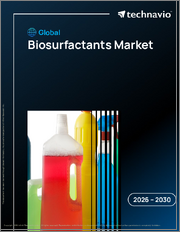
바이오 계면활성제 시장 보고서 : 제품별, 원료별, 용도별, 지역별(2026-2034년)Biosurfactants Market Report by Product (Rhamnolipids, Sophorolipids, Methyl Ester Sulfonates, Alkyl Polyglucosides, Sorbitan Esters, Sucrose Esters, and Others), Source, Application, and Region 2026-2034 |
||||||

세계의 바이오 계면활성제 시장 규모는 2025년에 29억 달러에 달했습니다. 향후 IMARC Group은 2026년부터 2034년까지 CAGR 4.24%를 기록하며 2034년까지 시장 규모가 43억 달러에 달할 것으로 예측하고 있습니다.
바이오 계면활성제는 박테리아, 효모, 사상균을 이용하여 제조되는 활성 화합물입니다. 이들은 저독성, 높은 생분해성, 제조 용이성 등 합성품에 비해 몇 가지 장점이 있습니다. 그 결과, 전 세계 섬유, 화학, 광업, 농업, 화장품, 제약, 식품 및 음료(F&B) 산업에서 습윤제 및 기능성 성분으로 채택되고 있습니다. 또한, 바이오 계면활성제는 용해도를 높이고 계면장력을 낮추기 때문에 석유 탱크 바닥의 슬러지로부터 화석연료를 회수하거나 중질원유의 바이오리모델링에서 유화제로도 활용되고 있습니다.
바이오 계면활성제 시장 동향:
작물 생산성 향상에 대한 수요 증가는 농업 분야에서 바이오 계면활성제 사용을 촉진하는 주요 요인 중 하나입니다. 바이오 계면활성제는 무거운 토양을 친수화하여 양호한 습윤성을 얻음과 동시에 비료를 토양 내에 균일하게 분산시키는데 사용됩니다. 또한, 환경에 대한 관심의 증가와 화학 계면활성제에 대한 위험성 증가로 인해 친환경 바이오 계면활성제에 대한 수요가 증가하고 있으며, 이는 상업용 세탁 세제 생산에도 활용되고 있습니다. 이 외에도 다양한 바이오 계면활성제에는 강력한 항균, 항진균, 항바이러스 작용이 있어 암 등의 질병을 치료하는 치료제 및 프로바이오틱스로서 제약 업계에서도 주목받고 있습니다. 또한, 유기농 및 천연 유래 화장품에 대한 소비자의 관심이 높아지면서 바이오 계면활성제는 비듬 방지 샴푸, 마스카라, 립스틱, 입욕제 등의 발포제, 가용화제, 세정제로도 사용되고 있습니다. 그 외 가공식품에 대한 수요 증가, 석유 및 가스 탐사 활동의 활성화 등의 요인도 시장을 견인할 것으로 예상됩니다.
본 보고서에서 답변하는 주요 질문
- 지금까지의 세계 바이오 계면활성제 시장 동향은 어떠했으며, 향후 몇 년 동안 어떻게 변화할 것인가?
- COVID-19는 세계 바이오 계면활성제 시장에 어떤 영향을 미쳤는가?
- 주요 지역 시장은 어디인가?
- 제품별로 보면 시장 내역은 어떠한가?
- 원재료별 시장 현황은 어떠한가?
- 용도별 시장 현황은 어떠한가?
- 이 산업의 가치사슬에서 각 단계는 어떤 역할을 하는가?
- 이 산업의 주요 촉진요인과 과제는 무엇인가?
- 세계 바이오 계면활성제 시장의 구조는 무엇이며, 주요 플레이어는 누구인가?
- 업계 내 경쟁은 어느 정도 치열한가?
목차
제1장 서문
제2장 조사 범위와 조사 방법
제3장 주요 요약
제4장 소개
제5장 세계의 바이오 계면활성제 시장
제6장 시장 내역 : 제품별
제7장 시장 내역 : 원료별
제8장 시장 내역 : 용도별
제9장 시장 내역 : 지역별
제10장 SWOT 분석
제11장 밸류체인 분석
제12장 Porter's Five Forces 분석
제13장 가격 분석
제14장 경쟁 구도
KSM 26.06.10The global biosurfactants market size reached USD 2.9 Billion in 2025. Looking forward, IMARC Group expects the market to reach USD 4.3 Billion by 2034, exhibiting a growth rate (CAGR) of 4.24% during 2026-2034.
Biosurfactants are active compounds made using bacteria, yeasts, and filamentous fungi. They offer several advantages over their synthetic counterparts, which include low toxicity, high biodegradability, and ease of preparation. As a result, they are employed in the textile, chemicals, mining, agriculture, cosmetics, pharmaceutical, and food and beverage (F&B) industries worldwide as wetting agents and functional ingredients. Besides this, as they enhance the solubility and reduce interfacial surface tension, biosurfactants are also utilized as emulsifiers in fossil fuel recovery from petroleum tank bottom sludges and in the bioremediation of heavy crude oil.
BIOSURFACTANTS MARKET TRENDS:
The rising need for enhancing crop productivity represents one of the key factors positively influencing the utilization of biosurfactants in the agriculture industry. Biosurfactants are used for hydrophilization of heavy soils to obtain good wettability and evenly distribute fertilizer in the soil. Moreover, growing environmental concerns and increasing risks associated with chemical surfactants are catalyzing the demand for ecofriendly biosurfactants, which are further used in the manufacturing of commercials laundry detergents. Apart from this, as various biosurfactants have strong antibacterial, antifungal, and antivirus properties, they are gaining traction in the pharmaceutical industry as therapeutic and probiotic agents to treat diseases like cancer. Due to the increasing consumer inclination towards organic and natural cosmetic products, biosurfactants are also being used as foaming agents, solubilizers, and cleansers in anti-dandruff shampoos, mascara, lipsticks, and bathing products. Other factors, including escalating demand for packaged food products and rising oil and gas exploration activities, are anticipated to drive the market.
KEY MARKET SEGMENTATION:
Breakup by Product:
- Rhamnolipids
- Sophorolipids
- Methyl Ester Sulfonates (MES)
- Alkyl Polyglucosides (APG)
- Sorbitan Esters
- Sucrose Esters
- Others
Breakup by Source:
- Bacteria
- Fungi
- Agricultural Waste
- Agro-Industrial Waste
Breakup by Application:
- Household Detergents
- Personal Care
- Industrial Cleaners
- Food Processing
- Oilfield Chemicals
- Agricultural Chemicals
- Textiles
- Others
Breakup by Region:
- North America
- United States
- Canada
- Asia-Pacific
- China
- Japan
- India
- South Korea
- Australia
- Indonesia
- Others
- Europe
- Germany
- France
- United Kingdom
- Italy
- Spain
- Russia
- Others
- Latin America
- Brazil
- Mexico
- Others
- Middle East and Africa
COMPETITIVE LANDSCAPE:
The competitive landscape of the industry has also been examined along with the profiles of the key players being Akzo Nobel N.V., BASF SE, Croda International plc, Ecover (S. C. Johnson & Son Inc.), Evonik Industries AG (RAG-Stiftung), Givaudan SA, Henkel AG & Co. KGaA, Jeneil Biotech Inc., Kao Corporation, Kemin Industries Inc., Lion Corporation and Saraya Co. Ltd.
KEY QUESTIONS ANSWERED IN THIS REPORT
- How has the global biosurfactants market performed so far and how will it perform in the coming years?
- What has been the impact of COVID-19 on the global biosurfactants market?
- What are the key regional markets?
- What is the breakup of the market based on the product?
- What is the breakup of the market based on the source?
- What is the breakup of the market based on the application?
- What are the various stages in the value chain of the industry?
- What are the key driving factors and challenges in the industry?
- What is the structure of the global biosurfactants market and who are the key players?
- What is the degree of competition in the industry?
Table of Contents
1 Preface
2 Scope and Methodology
- 2.1 Objectives of the Study
- 2.2 Stakeholders
- 2.3 Data Sources
- 2.3.1 Primary Sources
- 2.3.2 Secondary Sources
- 2.4 Market Estimation
- 2.4.1 Bottom-Up Approach
- 2.4.2 Top-Down Approach
- 2.5 Forecasting Methodology
3 Executive Summary
4 Introduction
- 4.1 Overview
- 4.2 Key Industry Trends
5 Global Biosurfactants Market
- 5.1 Market Overview
- 5.2 Market Performance
- 5.3 Impact of COVID-19
- 5.4 Market Forecast
6 Market Breakup by Product
- 6.1 Rhamnolipids
- 6.1.1 Market Trends
- 6.1.2 Market Forecast
- 6.2 Sophorolipids
- 6.2.1 Market Trends
- 6.2.2 Market Forecast
- 6.3 Methyl Ester Sulfonates (MES)
- 6.3.1 Market Trends
- 6.3.2 Market Forecast
- 6.4 Alkyl Polyglucosides (APG)
- 6.4.1 Market Trends
- 6.4.2 Market Forecast
- 6.5 Sorbitan Esters
- 6.5.1 Market Trends
- 6.5.2 Market Forecast
- 6.6 Sucrose Esters
- 6.6.1 Market Trends
- 6.6.2 Market Forecast
- 6.7 Others
- 6.7.1 Market Trends
- 6.7.2 Market Forecast
7 Market Breakup by Source
- 7.1 Bacteria
- 7.1.1 Market Trends
- 7.1.2 Market Forecast
- 7.2 Fungi
- 7.2.1 Market Trends
- 7.2.2 Market Forecast
- 7.3 Agricultural Waste
- 7.3.1 Market Trends
- 7.3.2 Market Forecast
- 7.4 Agro-Industrial Waste
- 7.4.1 Market Trends
- 7.4.2 Market Forecast
8 Market Breakup by Application
- 8.1 Household Detergents
- 8.1.1 Market Trends
- 8.1.2 Market Forecast
- 8.2 Personal Care
- 8.2.1 Market Trends
- 8.2.2 Market Forecast
- 8.3 Industrial Cleaners
- 8.3.1 Market Trends
- 8.3.2 Market Forecast
- 8.4 Food Processing
- 8.4.1 Market Trends
- 8.4.2 Market Forecast
- 8.5 Oilfield Chemicals
- 8.5.1 Market Trends
- 8.5.2 Market Forecast
- 8.6 Agricultural Chemicals
- 8.6.1 Market Trends
- 8.6.2 Market Forecast
- 8.7 Textiles
- 8.7.1 Market Trends
- 8.7.2 Market Forecast
- 8.8 Others
- 8.8.1 Market Trends
- 8.8.2 Market Forecast
9 Market Breakup by Region
- 9.1 North America
- 9.1.1 United States
- 9.1.1.1 Market Trends
- 9.1.1.2 Market Forecast
- 9.1.2 Canada
- 9.1.2.1 Market Trends
- 9.1.2.2 Market Forecast
- 9.1.1 United States
- 9.2 Asia-Pacific
- 9.2.1 China
- 9.2.1.1 Market Trends
- 9.2.1.2 Market Forecast
- 9.2.2 Japan
- 9.2.2.1 Market Trends
- 9.2.2.2 Market Forecast
- 9.2.3 India
- 9.2.3.1 Market Trends
- 9.2.3.2 Market Forecast
- 9.2.4 South Korea
- 9.2.4.1 Market Trends
- 9.2.4.2 Market Forecast
- 9.2.5 Australia
- 9.2.5.1 Market Trends
- 9.2.5.2 Market Forecast
- 9.2.6 Indonesia
- 9.2.6.1 Market Trends
- 9.2.6.2 Market Forecast
- 9.2.7 Others
- 9.2.7.1 Market Trends
- 9.2.7.2 Market Forecast
- 9.2.1 China
- 9.3 Europe
- 9.3.1 Germany
- 9.3.1.1 Market Trends
- 9.3.1.2 Market Forecast
- 9.3.2 France
- 9.3.2.1 Market Trends
- 9.3.2.2 Market Forecast
- 9.3.3 United Kingdom
- 9.3.3.1 Market Trends
- 9.3.3.2 Market Forecast
- 9.3.4 Italy
- 9.3.4.1 Market Trends
- 9.3.4.2 Market Forecast
- 9.3.5 Spain
- 9.3.5.1 Market Trends
- 9.3.5.2 Market Forecast
- 9.3.6 Russia
- 9.3.6.1 Market Trends
- 9.3.6.2 Market Forecast
- 9.3.7 Others
- 9.3.7.1 Market Trends
- 9.3.7.2 Market Forecast
- 9.3.1 Germany
- 9.4 Latin America
- 9.4.1 Brazil
- 9.4.1.1 Market Trends
- 9.4.1.2 Market Forecast
- 9.4.2 Mexico
- 9.4.2.1 Market Trends
- 9.4.2.2 Market Forecast
- 9.4.3 Others
- 9.4.3.1 Market Trends
- 9.4.3.2 Market Forecast
- 9.4.1 Brazil
- 9.5 Middle East and Africa
- 9.5.1 Market Trends
- 9.5.2 Market Breakup by Country
- 9.5.3 Market Forecast
10 SWOT Analysis
- 10.1 Overview
- 10.2 Strengths
- 10.3 Weaknesses
- 10.4 Opportunities
- 10.5 Threats
11 Value Chain Analysis
12 Porters Five Forces Analysis
- 12.1 Overview
- 12.2 Bargaining Power of Buyers
- 12.3 Bargaining Power of Suppliers
- 12.4 Degree of Competition
- 12.5 Threat of New Entrants
- 12.6 Threat of Substitutes
13 Price Analysis
14 Competitive Landscape
- 14.1 Market Structure
- 14.2 Key Players
- 14.3 Profiles of Key Players
- 14.3.1 Akzo Nobel N.V.
- 14.3.1.1 Company Overview
- 14.3.1.2 Product Portfolio
- 14.3.1.3 Financials
- 14.3.1.4 SWOT Analysis
- 14.3.2 BASF SE
- 14.3.2.1 Company Overview
- 14.3.2.2 Product Portfolio
- 14.3.2.3 Financials
- 14.3.2.4 SWOT Analysis
- 14.3.3 Croda International plc
- 14.3.3.1 Company Overview
- 14.3.3.2 Product Portfolio
- 14.3.3.3 Financials
- 14.3.3.4 SWOT Analysis
- 14.3.4 Ecover (S. C. Johnson & Son Inc.)
- 14.3.4.1 Company Overview
- 14.3.4.2 Product Portfolio
- 14.3.5 Evonik Industries AG (RAG-Stiftung)
- 14.3.5.1 Company Overview
- 14.3.5.2 Product Portfolio
- 14.3.5.3 Financials
- 14.3.5.4 SWOT Analysis
- 14.3.6 Givaudan SA
- 14.3.6.1 Company Overview
- 14.3.6.2 Product Portfolio
- 14.3.6.3 Financials
- 14.3.6.4 SWOT Analysis
- 14.3.7 Henkel AG & Co. KGaA
- 14.3.7.1 Company Overview
- 14.3.7.2 Product Portfolio
- 14.3.7.3 Financials
- 14.3.7.4 SWOT Analysis
- 14.3.8 Jeneil Biotech Inc.
- 14.3.8.1 Company Overview
- 14.3.8.2 Product Portfolio
- 14.3.9 Kao Corporation
- 14.3.9.1 Company Overview
- 14.3.9.2 Product Portfolio
- 14.3.9.3 Financials
- 14.3.9.4 SWOT Analysis
- 14.3.10 Kemin Industries Inc.
- 14.3.10.1 Company Overview
- 14.3.10.2 Product Portfolio
- 14.3.11 Lion Corporation
- 14.3.11.1 Company Overview
- 14.3.11.2 Product Portfolio
- 14.3.11.3 Financials
- 14.3.11.4 SWOT Analysis
- 14.3.12 Saraya Co. Ltd.
- 14.3.12.1 Company Overview
- 14.3.12.2 Product Portfolio
- 14.3.1 Akzo Nobel N.V.