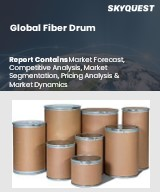
|
시장보고서
상품코드
1858019
섬유 드럼 시장 : 용도별, 최종사용자 산업별, 드럼 유형별, 용량별, 라이닝별 - 세계 예측(2025-2032년)Fiber Drums Market by Application, End User Industry, Drum Type, Capacity, Lining - Global Forecast 2025-2032 |
||||||
 360iResearch
섬유 드럼 시장은 2032년까지 연평균 복합 성장률(CAGR) 7.46%로 24억 3,000만 달러에 이를 것으로 예측됩니다.
| 주요 시장 통계 | |
|---|---|
| 기준 연도 : 2024년 | 13억 7,000만 달러 |
| 추정 연도 : 2025년 | 14억 7,000만 달러 |
| 예측 연도 : 2032년 | 24억 3,000만 달러 |
| CAGR(%) | 7.46% |
기술 개선, 규제 압력, 구매자의 우선 순위가 산업용 섬유 드럼의 사양을 재정의하는 방법에 대한 간략한 상황 개요
산업용 드럼의 세계 포장 환경은 꾸준한 기술 개선과 광범위한 공급망에 대한 면밀한 검토가 필요한 시기를 맞이하고 있습니다. 섬유 구성, 라이닝 기술, 자동 드럼 핸들링의 발전은 제품 보호, 오염 방지 및 재활용 가능성에 대한 다운스트림 사용자의 기대치가 높아지고 있습니다. 그 결과, 화학 가공, 식품 제조, 제약 업계에서는 비용, 안전성, 환경 성능의 균형을 맞추기 위해 드럼통의 사양을 재검토하고 있습니다.
현실적인 관점에서 볼 때, 기존 충전 라인 및 클로저 시스템과의 호환성, 규제 세척성 기준을 충족해야 할 필요성, 고객 및 규제 당국에 대한 순환성 증명에 대한 요구가 증가함에 따라 채택 결정은 점점 더 많은 영향을 받고 있습니다. 마찬가지로, 조달팀은 공급업체의 탄력성, 리드타임의 예측 가능성, 품질 보증 수단을 더욱 중요하게 여기고 있습니다. 이러한 역학은 조달 우선순위를 재구성하고 엔지니어링 팀이 드럼 재료 선택이 전체 운영 효율성과 제품 무결성에 미치는 영향을 재검토하도록 촉구하고 있습니다.
지속가능성에 대한 기대, 디지털 추적성, 진화하는 제품 배합이 파이버드럼 생태계 전반의 혁신과 협업을 가속화하고 있는 방법
산업용 섬유 드럼의 환경은 지속가능성에 대한 기대, 디지털 추적성 요구 사항, 다운스트림 산업의 제품 배합 변화 등의 복합적인 요인으로 인해 변화하고 있습니다. 지속가능성 의무화는 특정 기존 소재에 비해 낮은 구현 영향과 개선된 사용 경로를 보여줄 수 있는 섬유 기반 포장재의 채택을 촉진하고 있습니다. 동시에, 디지털화는 배치 레벨 라벨링과 변조 방지 기능을 통해 통합 추적 가능성을 도입하여 위험을 줄이고 리콜 발생 시 합리화할 수 있는 기회를 제공합니다.
또한, 화학 배합의 변화, 특수 화학 물질의 부상, 식품 및 의약품 가공 기술의 발전은 드럼 라이닝 및 클로저의 적합성 요구 사항에 영향을 미치고 있습니다. 이러한 추세는 제조업체들에게 라이너의 화학적 특성과 드럼통 구조의 혁신을 요구하고 있으며, 드럼통 공급업체들은 더욱 다양한 열적, 화학적 스트레스 하에서 성능을 검증할 것을 요구하고 있습니다. 이러한 혁신적인 변화를 종합하면, 드럼 제조업체, 라이닝 공급업체, 최종 사용자가 더욱 긴밀한 협력 관계를 구축하고 운영 및 규정 준수 요구 사항을 충족하는 솔루션을 공동 개발해야 합니다.
2025년에 도입된 관세 조치가 산업용 드럼 공급망에서 공급처 선택, 총비용 계산, 지역 생산 전략을 어떻게 변화시켰는지를 이해합니다.
미국이 2025년 특정 포장 수입품에 관세를 부과함에 따라 대서양 횡단 및 태평양 횡단 무역로에서 사업을 운영하는 바이어와 공급업체에게 새로운 상업적 복잡성을 가져왔습니다. 관세 조정으로 인해 특정 드럼통 및 관련 부품의 육지 비용의 움직임이 바뀌면서 공급망 팀은 마진을 보호하고 공급의 연속성을 보장하기 위해 조달 전략, 육상 재고 버퍼 및 계약 조건을 검토해야 합니다. 이에 따라 많은 기업들이 관세의 영향을 덜 받는 지역이나 추가 관세를 상쇄할 수 있는 물류적 이점이 있는 지역의 대체 공급업체를 평가하게 되었습니다.
동시에 관세는 단가뿐만 아니라 총소유비용을 더 깊이 고려하도록 촉구했습니다. 조달 및 재무 부서는 간헐적인 공급 중단의 위험과 재고 보유 비용을 절충하는 멀티 시나리오 공급 전략을 모델링하고 있습니다. 그 결과, 니어쇼어링, 지역 제조 파트너십, 비상 재고 풀 개발에 다시 한 번 초점을 맞추었습니다. 이러한 적응은 추가적인 정책 변화 및 무역 마찰에 대한 취약성을 줄이면서 서비스 수준을 유지하는 것을 목표로 하고 있습니다. 중요한 것은 지역적 생산 능력, 투명한 비용 구조, 협력적 계획 프로세스를 입증할 수 있는 공급업체가 관세 환경의 변화 속에서 더욱 매력적인 파트너가 되었습니다는 점입니다.
세분화를 기반으로 한 심층적인 통찰력을 통해 용도, 최종 용도, 드럼 구성, 생산 능력 임계값, 라이닝 선택이 공급업체와 제품 전략을 결정하는 방법을 밝힙니다.
세분화 분석을 통해 용도, 최종 사용자 산업, 드럼 유형, 용량, 라이닝 선호도에 따라 서로 다른 수요를 파악하여 설계, 인증, 공급업체 선정에 대한 명확한 요구사항을 도출했습니다. 용도별로는 접착제-실링제, 화학-석유화학(농약, 석유화학, 특수화학제품 등), 식음료(유제품, 식용유, 가공식품 등), 의약품(원액과 최종 제제로 나뉨) 등에 사용됩니다. 이러한 용도의 미묘한 차이에 따라 필요한 적합성 테스트, 세척성 및 이차 오염을 방지하기 위한 특수 라이너 및 코팅의 필요성이 결정될 수 있습니다.
목차
제1장 서문
제2장 조사 방법
제3장 주요 요약
제4장 시장 개요
제5장 시장 인사이트
제6장 미국 관세의 누적 영향 2025
제7장 AI의 누적 영향 2025
제8장 섬유 드럼 시장 : 용도별
- 접착제 및 실란트
- 화학제품 및 석유화학제품
- 농업 화학제품
- 석유 화학제품
- 특수 화학제품
- 식품 및 음료
- 유제품
- 식용유
- 가공식품
- 의약품
- 벌크 의약품
- 완성제형
제9장 섬유 드럼 시장 : 최종사용자 산업별
- 접착제 및 실란트
- 화학제품 및 석유화학제품
- 식품 및 음료
- 페인트 및 코팅
- 의약품
제10장 섬유 드럼 시장 : 드럼 유형별
- 클로즈드 헤드
- 오픈 헤드
제11장 섬유 드럼 시장 : 용량별
- 21-60리터
- 60리터 이상
- 20리터까지
제12장 섬유 드럼 시장 : 라이닝별
- 플라스틱 라이너 있음
- 라이너 없음
제13장 섬유 드럼 시장 : 지역별
- 아메리카
- 북미
- 라틴아메리카
- 유럽, 중동 및 아프리카
- 유럽
- 중동
- 아프리카
- 아시아태평양
제14장 섬유 드럼 시장 : 그룹별
- ASEAN
- GCC
- EU
- BRICS
- G7
- NATO
제15장 섬유 드럼 시장 : 국가별
- 미국
- 캐나다
- 멕시코
- 브라질
- 영국
- 독일
- 프랑스
- 러시아
- 이탈리아
- 스페인
- 중국
- 인도
- 일본
- 호주
- 한국
제16장 경쟁 구도
- 시장 점유율 분석, 2024
- FPNV 포지셔닝 매트릭스, 2024
- 경쟁 분석
- Greif, Inc.
- Mondi PLC
- Smurfit Kappa Group plc
- DS Smith Plc
- WestRock Company
- Sonoco Products Company
- International Paper Company
The Fiber Drums Market is projected to grow by USD 2.43 billion at a CAGR of 7.46% by 2032.
| KEY MARKET STATISTICS | |
|---|---|
| Base Year [2024] | USD 1.37 billion |
| Estimated Year [2025] | USD 1.47 billion |
| Forecast Year [2032] | USD 2.43 billion |
| CAGR (%) | 7.46% |
A concise contextual overview of how technological improvements, regulatory pressures, and buyer priorities are redefining specifications for industrial fiber drums
The global packaging environment for industrial drums is undergoing a period of steady technical refinement and broader supply chain scrutiny. Advances in fiber composition, lining technology, and automated drum handling are converging with elevated expectations from downstream users around product protection, contamination control, and recyclability. As a result, organizations across chemical processing, food manufacturing, and pharmaceutical operations are reassessing drum specifications to balance cost, safety, and environmental performance.
From a practical perspective, adoption decisions are increasingly influenced by compatibility with existing filling lines and closure systems, the need to meet regulatory cleanability standards, and the growing desire to demonstrate circularity credentials to customers and regulators. Likewise, procurement teams are placing greater emphasis on supplier resilience, lead-time predictability, and quality assurance measures. These dynamics are reshaping procurement priorities and prompting engineering teams to revisit how drum material choices affect overall operational efficiency and product integrity.
How sustainability expectations, digital traceability, and evolving product formulations are jointly accelerating innovation and collaboration across the fiber drum ecosystem
The landscape for industrial fiber drums is being transformed by a combination of sustainability expectations, digital traceability requirements, and changing product formulations within downstream industries. Sustainability mandates are driving the adoption of fiber-based packaging that can demonstrate lower embodied impacts and improved end-of-life pathways compared with certain legacy materials. Concurrently, digitalization is introducing opportunities for integrated traceability through batch-level labeling and tamper-evident features that reduce risk and streamline recalls when they occur.
Moreover, shifts in chemical formulations, the rise of specialty chemistries, and evolving food and pharmaceutical processing techniques are affecting compatibility requirements for drum linings and closures. These trends are forcing manufacturers to innovate in liner chemistry and drum construction, while suppliers of drums are increasingly required to validate performance under more diverse thermal and chemical stressors. Taken together, these transformative shifts are encouraging closer collaboration between drum manufacturers, lining suppliers, and end users to co-develop solutions that meet operational and compliance needs.
Understanding how tariff actions introduced in 2025 reshaped sourcing choices, total cost calculations, and regional production strategies for industrial drum supply chains
The imposition of tariffs on selected packaging imports by the United States in 2025 has introduced new layers of commercial complexity for buyers and suppliers operating in transatlantic and transpacific trade lanes. Tariff adjustments have altered landed cost dynamics for certain classes of drums and associated components, prompting supply chain teams to revisit sourcing strategies, onshore inventory buffers, and contractual terms to protect margins and ensure continuity of supply. In response, many organizations have evaluated alternative suppliers in regions where tariff exposure is lower or where logistical advantages offset additional duties.
At the same time, tariffs have encouraged a deeper look at total cost of ownership rather than unit price alone. Procurement and finance functions have increasingly modeled multi-scenario supply strategies that trade off inventory carrying costs against the risk of intermittent supply disruptions. As a result, there has been a renewed focus on nearshoring, regional manufacturing partnerships, and the development of contingency inventory pools. These adaptations aim to preserve service levels while reducing vulnerability to further policy shifts or trade frictions. Importantly, suppliers that can demonstrate regional production capability, transparent cost structures, and collaborative planning processes have become more attractive partners under the altered tariff landscape.
Deep segmentation-driven insights revealing how application, industry end use, drum configuration, capacity thresholds, and lining choices define supplier and product strategies
Segmentation analysis reveals differentiated demands across application, end-user industry, drum type, capacity, and lining preferences, each creating distinct requirements for design, certification, and supplier selection. Based on application, products are used across adhesives and sealants, chemicals and petrochemicals which themselves include agricultural chemicals, petrochemicals, and specialty chemicals, food and beverage which further encompasses dairy products, edible oils, and processed foods, and pharmaceuticals subdivided into bulk drugs and finished dosage forms. These application nuances determine required compatibility testing, cleanability, and potentially the need for specialized liners or coatings to prevent cross-contamination.
Based on end user industry, demand patterns emerge from adhesives and sealants, chemicals and petrochemicals, food and beverage, paints and coatings, and pharmaceutical sectors, with each industry prioritizing different performance attributes such as barrier properties, moisture resistance, and regulatory compliance documentation. Based on drum type, market needs bifurcate into closed head and open head drums, where closed head drums are often preferred for liquid transport and spill minimization while open head drums enable easier access for solids and high-viscosity materials. Based on capacity, typical operational thresholds span up to 20 liter, 21-60 liter, and above 60 liter segments, which influence handling equipment compatibility and storage density considerations. Based on lining, drums are specified either with plastic liners or without liner configurations, dictating suitability for corrosive chemistries, ease of product recovery, and recycling pathways. Collectively, these segmentation layers inform product development priorities, validation requirements, and go-to-market strategies for suppliers seeking to address the nuanced needs of each industry vertical.
How regional regulatory environments, manufacturing density, and logistics realities across leading global regions shape supplier selection and packaging strategies
Regional dynamics play a pivotal role in driving procurement choices, regulatory expectations, and supplier networks across the Americas, Europe, Middle East & Africa, and Asia-Pacific regions. In the Americas, emphasis is often placed on logistics efficiency, compliance with domestic transport regulations, and responsiveness to large-scale chemical and food production hubs. Manufacturers and distributors operating in this region tend to prioritize lead-time certainty and supplier transparency to support lean inventory approaches.
In Europe, Middle East & Africa, regulatory complexity and sustainability policy drivers exert significant influence on packaging decisions, with end users seeking materials and certifications that align with circular economy objectives and cross-border transport requirements. Compliance documentation, recyclability credentials, and the ability to meet a variety of national standards are frequent procurement considerations. In the Asia-Pacific region, the combination of manufacturing density, cost competitiveness, and evolving quality expectations creates a diverse supplier landscape. Buyers there may focus on scalability of supply, technical support for lining compatibility, and the ability to service export-oriented operations. Understanding these regional distinctions enables suppliers and end users to tailor commercial offers, validation workflows, and inventory strategies to local market realities.
Competitive landscape analysis showing that technical credibility, integrated supplier partnerships, and regional manufacturing flexibility determine commercial resilience and buyer preference
Competitive dynamics within the fiber drum sector emphasize engineering rigor, validated quality systems, and the ability to respond to diverse regulatory regimes. Leading manufacturers distinguish themselves by investing in liner R&D, automated fabrication to ensure dimensional consistency, and certification programs that simplify cross-border movement for their customers. Additionally, companies that establish transparent quality control protocols and provide robust product data packages including compatibility testing and handling guidance gain a competitive edge with risk-averse industrial buyers.
Partnership models between drum makers and lining or closure suppliers are becoming more common, enabling end users to source integrated solutions that reduce acceptance testing times and streamline supplier management. Service differentiation often includes technical support for product onboarding, customized labeling or traceability solutions, and value-added logistics offerings such as vendor-managed inventory or consignment stocking. Firms able to demonstrate regional manufacturing footprints or flexible contract terms can capture incremental business from organizations seeking to reduce tariff exposure or minimize lead-time variability. Overall, the most resilient companies combine technical credibility, supply chain transparency, and customer-focused service models to maintain long-term commercial relationships.
Actionable strategic priorities for manufacturers and suppliers to strengthen validation, resilience, and customer-centric services to capture emerging demand and mitigate trade risks
Industry leaders should prioritize integrated product validation, resilient sourcing, and collaboration with downstream users to convert evolving requirements into commercial advantage. Begin by strengthening compatibility testing protocols for linings and closures so that product safety and transition risks are demonstrably minimized when customers change formulations or processing conditions. Equally important is investing in traceability features and documentation that support rapid response in quality events and streamline regulatory submissions.
Strategically, companies should evaluate the feasibility of regional production capacity or preferred supplier arrangements to mitigate tariff exposure and reduce transit-related disruptions. Developing service offerings such as technical onboarding, consignment inventory, and joint forecasting can deepen customer relationships and make suppliers indispensable to operational continuity. Finally, align R&D efforts with end-user sustainability goals by expanding recyclable material options and optimizing liner selection for circularity, while simultaneously documenting the lifecycle benefits through credible third-party validation to support procurement decisions.
A rigorous multi-method research approach combining practitioner interviews, technical documentation review, and supplier capability assessment to ensure actionable, defensible insights
The research employed a multi-method approach combining primary interviews, technical literature review, and supplier capability assessments to ensure findings reflect practical operational realities and contemporary regulatory contexts. Primary inputs were gathered from procurement leaders, packaging engineers, and regulatory compliance specialists across multiple industries to capture a range of perspectives on performance expectations, sourcing strategies, and quality assurance practices. These conversations informed the interpretation of product specifications, liner technologies, and service model preferences observed in the market.
Secondary review included technical standards, material safety documentation, and published best practices to validate compatibility and handling requirements for different applications. Supplier capability assessments examined production footprints, quality certification regimes, and product development roadmaps to contextualize competitive strengths. Synthesizing these data streams enabled an evidence-based view of how application demands, tariff shifts, and regional dynamics coalesce to shape supplier strategy and buyer decision-making. Throughout, methodological rigor focused on triangulating qualitative insights with documented technical criteria to provide actionable, defensible conclusions.
Concluding synthesis highlighting how technical validation, regional agility, and service-driven supplier models will determine who captures value as industry demands evolve
In conclusion, the fiber drum sector is navigating a period of pragmatic innovation driven by sustainability considerations, stricter compatibility needs, and geopolitical trade dynamics that affect sourcing strategies. These forces are pushing suppliers to elevate technical documentation, expand regional capabilities, and offer integrated services that minimize operational disruption for end users. For buyers, the emphasis on total cost transparency, supplier reliability, and product validation means procurement decisions increasingly hinge on demonstrated performance rather than unit price alone.
Looking ahead, vendors who invest in collaborative development with customers, robust lining validation, and clear sustainability narratives will be better positioned to capture demand in regulated or high-value applications. Meanwhile, organizations that proactively reassess sourcing footprints and strengthen supplier partnerships can reduce exposure to tariff-induced cost volatility and secure more predictable supply chains. The path forward favors those who combine technical rigor, supply chain agility, and customer-oriented servicing to translate market shifts into sustainable competitive advantage.
Table of Contents
1. Preface
- 1.1. Objectives of the Study
- 1.2. Market Segmentation & Coverage
- 1.3. Years Considered for the Study
- 1.4. Currency & Pricing
- 1.5. Language
- 1.6. Stakeholders
2. Research Methodology
3. Executive Summary
4. Market Overview
5. Market Insights
- 5.1. Growing adoption of certified compostable fiber drums to meet circular economy targets and reduce landfill waste
- 5.2. Integration of advanced moisture barrier liners in fiber drums for safe chemical and pharmaceutical storage
- 5.3. Shift towards customizable fiber drum dimensions and closures to optimize packaging efficiency in niche industries
- 5.4. Emergence of smart fiber drums with embedded IoT sensors for real-time tracking and condition monitoring
- 5.5. Surge in demand for lightweight high-strength fiber drums to lower transportation costs and carbon emissions
- 5.6. Implementation of antimicrobial coatings on fiber drums to ensure food safety during global supply chain transit
- 5.7. Development of hybrid fiber-steel drum designs combining sustainability with enhanced durability for harsh environments
- 5.8. Adoption of AI-driven design tools to optimize fiber drum structural integrity and material utilization
6. Cumulative Impact of United States Tariffs 2025
7. Cumulative Impact of Artificial Intelligence 2025
8. Fiber Drums Market, by Application
- 8.1. Adhesives & Sealants
- 8.2. Chemicals & Petrochemicals
- 8.2.1. Agricultural Chemicals
- 8.2.2. Petrochemicals
- 8.2.3. Specialty Chemicals
- 8.3. Food & Beverage
- 8.3.1. Dairy Products
- 8.3.2. Edible Oils
- 8.3.3. Processed Foods
- 8.4. Pharmaceuticals
- 8.4.1. Bulk Drugs
- 8.4.2. Finished Dosage Form
9. Fiber Drums Market, by End User Industry
- 9.1. Adhesives & Sealants
- 9.2. Chemicals & Petrochemicals
- 9.3. Food & Beverage
- 9.4. Paints & Coatings
- 9.5. Pharmaceutical
10. Fiber Drums Market, by Drum Type
- 10.1. Closed Head
- 10.2. Open Head
11. Fiber Drums Market, by Capacity
- 11.1. 21-60 Liter
- 11.2. Above 60 Liter
- 11.3. Up To 20 Liter
12. Fiber Drums Market, by Lining
- 12.1. With Plastic Liner
- 12.2. Without Liner
13. Fiber Drums Market, by Region
- 13.1. Americas
- 13.1.1. North America
- 13.1.2. Latin America
- 13.2. Europe, Middle East & Africa
- 13.2.1. Europe
- 13.2.2. Middle East
- 13.2.3. Africa
- 13.3. Asia-Pacific
14. Fiber Drums Market, by Group
- 14.1. ASEAN
- 14.2. GCC
- 14.3. European Union
- 14.4. BRICS
- 14.5. G7
- 14.6. NATO
15. Fiber Drums Market, by Country
- 15.1. United States
- 15.2. Canada
- 15.3. Mexico
- 15.4. Brazil
- 15.5. United Kingdom
- 15.6. Germany
- 15.7. France
- 15.8. Russia
- 15.9. Italy
- 15.10. Spain
- 15.11. China
- 15.12. India
- 15.13. Japan
- 15.14. Australia
- 15.15. South Korea
16. Competitive Landscape
- 16.1. Market Share Analysis, 2024
- 16.2. FPNV Positioning Matrix, 2024
- 16.3. Competitive Analysis
- 16.3.1. Greif, Inc.
- 16.3.2. Mondi PLC
- 16.3.3. Smurfit Kappa Group plc
- 16.3.4. DS Smith Plc
- 16.3.5. WestRock Company
- 16.3.6. Sonoco Products Company
- 16.3.7. International Paper Company