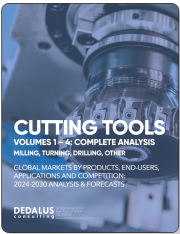
|
시장보고서
상품코드
1962872
CNC 절삭 공구 시장 : 공구 유형, 재료, 기계 유형, 코팅 유형, 절삭 기술, 최종 이용 산업별 - 예측(2026-2032년)CNC Cutting Tool Market by Tool Type, Material, Machine Type, Coating Type, Cutting Technique, End Use Industry - Global Forecast 2026-2032 |
||||||
 360iResearch
CNC 절삭 공구 시장은 2025년에 25억 2,000만 달러로 평가되었습니다. 2026년에는 26억 4,000만 달러에 이르고, CAGR 5.63%로 성장을 지속하여 2032년까지 37억 달러에 달할 것으로 예측됩니다.
| 주요 시장 통계 | |
|---|---|
| 기준 연도 : 2025년 | 25억 2,000만 달러 |
| 추정 연도 : 2026년 | 26억 4,000만 달러 |
| 예측 연도 : 2032년 | 37억 달러 |
| CAGR(%) | 5.63% |
현대 가공 환경에서 CNC 절삭 공구의 혁신성, 공급망 복원력, 시스템 수준의 경쟁력을 종합적으로 파악한 미래 전망
CNC 절삭 공구 분야는 재료 과학, 제조 자동화 및 세계 공급망 조정이 교차하는 영역에 위치하고 있으며, 최종 사용자가 더 높은 정밀도, 더 긴 공구 수명 및 더 나은 공정 효율을 요구함에 따라 계속 진화하고 있습니다. 최근 몇 년 동안 기판 야금, 코팅 기술 및 기계 제어의 발전으로 절삭 공구가 실현할 수 있는 성능에 비약적인 변화를 가져왔으며, 기업은 사이클 시간을 단축하고 더 엄격한 공차를 유지하며 점점 더 복잡한 재료를 가공할 수 있게 되었습니다. 그 결과, 절삭 공구 제조업체는 상품적 사고를 넘어 통합업체 및 OEM 제조업체의 기술 파트너로서 입지를 다지고 있습니다.
첨단 소재, 자동화, 지속가능성에 대한 고려가 CNC 절삭 공구 산업 전반의 경쟁과 제품 혁신을 어떻게 재구성하고 있는가?
CNC 절삭 공구 산업은 재료의 복잡성, 자동화, 지속가능성에 대한 요구라는 변화의 물결에 직면하여 기존 비즈니스 모델이 적응해야 하는 상황에 직면해 있습니다. 항공우주, 자동차 전동화, 의료기기 제조에 사용되는 고성능 합금 및 복합재료는 생산성과 부품의 무결성을 유지하기 위해 새로운 공구 형상과 첨단 코팅이 필요합니다. 제조업체들이 공차 및 표면 조도의 한계에 도전하는 가운데, 공구 개발자들은 기판 혁신, 다층 코팅, 정밀 연삭 형상을 결합한 통합 솔루션으로 대응하고 있습니다.
2025년 미국에서 발효된 관세 조치가 조달 전략, 현지 생산 전환, 총소유비용 재조정 등에 미치는 영향
2025년 미국에서 도입된 특정 관세 및 무역 조치는 CNC 절삭 공구 및 원자재 조달과 관련된 공급망, 조달 전략 및 비용 구조에 중대한 영향을 미치고 있습니다. 국제 공급업체에 의존하는 제조업체는 관세가 착륙 비용 계산에 영향을 미치기 때문에 공급업체 포트폴리오와 리드타임을 재검토하고 있습니다. 이에 따라 정책 주도의 가격 변동 리스크를 줄이기 위해 니어쇼어링, 듀얼소싱, 장기계약의 도입이 진행되고 있습니다. 이러한 영향 경로는 재료 집약도 및 부품의 복잡성에 따라 다르며, 특정 고정밀 인서트 및 특수 코팅은 국경 간 무역 변동에 더 민감하게 영향을 받습니다.
종합적인 세분화 분석을 통해 최종 용도 요구 사항, 공구 구조, 재료, 기계 플랫폼, 코팅, 냉각 전략이 어떻게 차별화된 공구 전략을 결정하는지를 파악할 수 있습니다.
세분화 분석을 통해 용도, 공구 구조, 재료 유형, 기계 플랫폼, 코팅 전략, 절삭 기술별로 서로 다른 수요 요인과 솔루션 요구 사항을 파악할 수 있습니다. 최종 사용 산업별로는 항공우주, 자동차, 전자, 에너지, 일반 기계, 의료 분야를 조사 대상으로 삼았으며, 각 분야는 공구 형상 및 서비스 모델을 형성하는 고유한 공차 요구사항, 표면 품질 기준 및 사이클 타임 제약을 부과하고 있습니다. 항공우주 및 의료 분야에서는 인증의 추적성과 낮은 불량률을 중시하는 반면, 자동차 및 일반 기계 분야에서는 처리량과 부품 단가를 우선시하여 공구 개발 및 애프터마켓 서비스에서 서로 다른 방향성이 생겨나고 있습니다.
공구 수요, 서비스 모델, 현지화 선택에 영향을 미치는 요인, 미주, 유럽, 중동 및 아프리카, 아시아태평양의 주요 지역 동향 및 전략적 요구사항
CNC 절삭 공구 분야의 지역적 동향은 제조 집중도, 기술 도입률, 정책 환경이 복합적으로 작용하여 조달처 선정, 연구개발 거점 배치, 애프터마켓 지원 네트워크에 영향을 미치고 있습니다. 미주 대륙은 다품종 소량 생산에 집중하고, 리쇼어링(생산 회귀), 국내 마무리 가공 및 부가가치 서비스를 촉진하는 선진적인 제조 프로그램이 특징입니다. 이 환경은 신속한 기술 대응, 재생 서비스, 재고 보유 비용 절감 및 가동률 향상을 실현하는 통합 공구 관리 시스템을 제공하는 공급업체를 지원합니다.
공구 제조업체, 재료 공급업체, OEM 파트너십이 코팅 기술 혁신, 용도 엔지니어링, 서비스 지향적 상업 모델을 통해 경쟁 우위를 재정의하는 방법
CNC 절삭 공구 생태계의 주요 업체들은 재료 과학, 코팅 기술, 응용 엔지니어링, 통합 서비스 제공 등 여러 분야에서 경쟁하고 있습니다. 경쟁사로는 전문 공구 제조업체, 대규모 금속 가공 공급업체, 공구와 기계 시스템을 번들로 판매하는 공작기계 제조업체의 부서 등이 있습니다. 전략적 차별화는 독자적인 코팅 공정, 자체 기판 개발, 데이터 수집 및 진단 서비스를 통한 용도 테스트를 통한 공구 성능 검증 능력에 점점 더 의존하고 있습니다.
선도 기업들이 재료 혁신, 현지 마무리, 분석 기반 서비스, 지속가능성을 경쟁 공구 전략에 통합할 수 있는 실행 가능한 전략적 이니셔티브를 제공합니다.
업계 리더은 기술적 진보를 활용하면서 지정학적 리스크와 공급 측면의 리스크를 줄이기 위해 일련의 실천적 행동을 취해야 합니다. 첫째, 코팅 및 기판 전문 지식과 현지 용도 엔지니어링을 통합하는 전략적 파트너십을 우선시하여 복잡한 재료의 성능 발휘 시간을 단축하고 반복 주기를 줄입니다. 둘째, 국경 간 관세에 대한 노출을 줄이고 보충 리드 타임을 단축할 수 있는 현지 마무리 및 재생 능력에 투자하여 업무의 회복력을 향상시킵니다.
기술 인터뷰, 2차 문헌 검토, 지역 교차 검증을 결합한 강력한 혼합 방법론 연구 접근법을 통해 응용 중심적인 연구 결과를 뒷받침합니다.
본 분석의 기반이 되는 조사 방법은 기술 전문가와의 질적 직접 대화, 조달 및 프로세스 엔지니어링 담당자와의 구조화된 인터뷰, 기술 문헌 및 특허 공개에 대한 이차적 검토를 결합하여 다각적인 증거 기반을 구축하였습니다. 1차 데이터에는 용도 엔지니어, 공작기계 통합업체, 애프터마켓 서비스 제공업체와의 심층적인 논의를 통해 다양한 제조 환경의 실제 제약, 성능 기대치, 도입 장벽을 파악한 내용이 포함되어 있습니다. 이러한 직접적인 참여는 기술적 요구와 상업적 현실이 최종 결과물에서 일관성을 유지하도록 보장합니다.
재료 혁신, 디지털 통합 및 지역 전략이 진화하는 CNC 절삭 공구 시장에서 경쟁 우위를 결정하는 방법에 대한 요약
결론적으로, CNC 절삭 공구 분야는 재료의 복잡성, 자동화, 정책 변화, 지속가능성에 대한 우려와 함께 공급업체의 가치 제안과 구매 행동을 재구성하는 중요한 분기점에 서 있습니다. 공구의 성능 평가는 절삭 성능뿐만 아니라 디지털 가공 생태계와의 통합성, 무인화 지원 정도, 라이프사이클 비용 절감에 대한 기여도 등으로 이루어지고 있습니다. 기업이 관세 환경과 지역 밀착형 제조 트렌드에 대응하는 가운데, 적응력이 높은 제품 플랫폼, 신속한 기술 지원, 순환형 서비스 모델을 제공할 수 있는 공급업체가 전략적 고객에 대한 우선적 접근권을 확보할 수 있을 것입니다.
자주 묻는 질문
목차
제1장 서문
제2장 조사 방법
제3장 주요 요약
제4장 시장 개요
제5장 시장 인사이트
제6장 미국 관세의 누적 영향, 2025
제7장 AI의 누적 영향, 2025
제8장 CNC 절삭 공구 시장 : 공구 유형별
제9장 CNC 절삭 공구 시장 : 소재별
제10장 CNC 절삭 공구 시장 : 기종별
제11장 CNC 절삭 공구 시장 : 코팅 유형별
제12장 CNC 절삭 공구 시장 : 절삭 기술별
제13장 CNC 절삭 공구 시장 : 최종 이용 산업별
제14장 CNC 절삭 공구 시장 : 지역별
제15장 CNC 절삭 공구 시장 : 그룹별
제16장 CNC 절삭 공구 시장 : 국가별
제17장 미국의 CNC 절삭 공구 시장
제18장 중국의 CNC 절삭 공구 시장
제19장 경쟁 구도
LSH 26.03.27The CNC Cutting Tool Market was valued at USD 2.52 billion in 2025 and is projected to grow to USD 2.64 billion in 2026, with a CAGR of 5.63%, reaching USD 3.70 billion by 2032.
| KEY MARKET STATISTICS | |
|---|---|
| Base Year [2025] | USD 2.52 billion |
| Estimated Year [2026] | USD 2.64 billion |
| Forecast Year [2032] | USD 3.70 billion |
| CAGR (%) | 5.63% |
A forward-looking introduction that frames CNC cutting tool innovation, supply chain resilience, and system-level competitiveness across modern machining environments
The CNC cutting tool sector sits at the intersection of materials science, manufacturing automation, and global supply chain orchestration, and it continues to evolve as end users demand higher precision, longer tool life, and greater process efficiency. Recent advances in substrate metallurgies, coating technologies, and machine controls have driven a step change in what cutting tools can deliver, enabling firms to reduce cycle time, uphold tighter tolerances, and machine increasingly complex materials. As a result, manufacturers of cutting tools are moving beyond commodity thinking and positioning themselves as technology partners to integrators and original equipment manufacturers.
In parallel, digital enablers such as toolpath optimization software and in-process condition monitoring are reshaping relationships between toolmakers and their customers by offering performance guarantees tied to application data. Supply chain resilience has become central to strategic planning as manufacturers balance near-term procurement constraints with longer-term localization initiatives. Consequently, competitiveness is now determined by a combination of metallurgical expertise, coating chemistry, application engineering, and the ability to integrate tools into automated, data-driven machining ecosystems.
Given this landscape, decision-makers must think holistically about cutting tools as systems rather than discrete products. This perspective influences purchasing behavior, R&D priorities, and aftermarket support models, and it amplifies the importance of collaboration across machine tool builders, materials suppliers, and end-use customers to capture incremental productivity gains and sustain long-term value creation.
How advanced materials, automation, and sustainability considerations are reshaping competitive dynamics and product innovation across the CNC cutting tool industry
The CNC cutting tool landscape is undergoing transformative shifts driven by material complexity, automation, and sustainability imperatives that force incumbent business models to adapt. High-performance alloys and engineered composites used in aerospace, automotive electrification, and medical device manufacturing require novel tool geometries and advanced coatings to maintain productivity and component integrity. As manufacturers push the boundaries of tolerances and surface finish, tool developers are responding with integrated solutions that combine substrate innovation, multilayer coatings, and precision-ground geometries.
Automation and closed-loop machining are further accelerating change by creating demand for tools that perform predictably across unattended operations. In this context, life-cycle cost considerations often outweigh unit price, prompting buyers to favor suppliers that can deliver consistent performance, rapid technical support, and traceable quality data. Sustainability and circularity are also reshaping procurement criteria; there is growing emphasis on coating chemistries that enable longer tool life and on service models such as regrinding and refurbishment that reduce environmental footprint.
Consequently, competitive dynamics are shifting from transactional supply toward collaborative partnerships that bundle application expertise, tool management services, and digital monitoring capabilities. These shifts require organizations to realign R&D investment, refine go-to-market approaches, and create cross-functional teams that bridge materials science, process engineering, and commercial strategy to capture the next wave of productivity improvements.
Implications of United States tariff measures enacted in 2025 on sourcing strategies, localized manufacturing pivots, and total cost of ownership recalibrations
The introduction of targeted tariffs and trade measures in the United States during 2025 has material implications for supply chains, sourcing strategies, and cost structures associated with CNC cutting tools and their raw material inputs. Manufacturers reliant on international suppliers are re-evaluating supplier portfolios and procurement windows as duties alter landed cost calculations, prompting nearshoring, dual-sourcing, and longer-term contracts to mitigate exposure to policy-driven price volatility. These repercussion pathways vary by material intensity and component complexity, with certain high-precision inserts and specialty coatings being more sensitive to cross-border trade shifts.
In response to tariff-induced displacement, a number of manufacturers and distributors have pursued regional manufacturing and finishing capabilities to shorten lead times and stabilize inventory flows. At the same time, some firms accelerated investments in domestic regrinding and refurbishment operations to extend tool life and reduce dependence on newly manufactured parts subject to import duties. This operational pivot is accompanied by a more pronounced segmentation of supplier relationships, where strategic partners are selected on the basis of flexibility, value-added services, and the ability to localize critical finishing steps.
Moreover, the policy environment has reiterated the importance of scenario planning; procurement leaders now model duty sensitivity as part of total cost of ownership assessments and collaborate more closely with customs and trade specialists. The broader consequence is a durable shift toward supply chain diversification, deeper supplier performance audits, and an increased valuation of local technical support that can deliver rapid troubleshooting and on-site process optimization in a policy-constrained trading environment.
Comprehensive segmentation analysis revealing how end-use demands, tool architecture, materials, machine platforms, coatings, and cooling strategies determine differentiated tooling strategies
Segmentation insights reveal differentiated demand drivers and solution requirements across application, tool architecture, material type, machine platform, coating strategy, and cutting technique. Based on End Use Industry, market is studied across Aerospace, Automotive, Electronics, Energy, General Engineering, and Medical; each sector imposes distinct tolerances, surface integrity expectations, and cycle-time pressures that shape tool geometry and service models. Aerospace and medical sectors emphasize certification traceability and low-defect rates, while automotive and general engineering prioritize throughput and cost per component, creating divergent paths for tool development and aftermarket services.
Based on Tool Type, market is studied across Drills, End Mills, Inserts, Reamers, Saw Blades, and Taps; tool form factor and indexability determine serviceability and integration with automated tool changers, and they influence inventory strategies for spare capacity. Inserts and end mills typically drive high-frequency replacement cycles in high-speed milling operations, whereas drills and reamers can be optimized for longer campaign runs in production drilling cells. This variation influences supplier value propositions and the emergence of subscription-style tooling agreements for high-usage tool categories.
Based on Material, market is studied across Composites, Ferrous Metals, Non-Ferrous Metals, and Plastics; each material family requires tailored substrate and coating combinations to manage heat, adhesion, and wear mechanisms. Advanced composites increase the importance of edge geometry and chip evacuation solutions, whereas ferrous machining continues to demand carbide substrates with thermally stable coatings to resist diffusion and abrasion. Based on Machine Type, market is studied across Drilling Machine, EDM, Grinding Machine, Milling Machine, and Turning Machine; machine rigidity, spindle speed ranges, and axis control fidelity influence the achievable surface finish and acceptable tool geometries, which in turn dictate application engineering priorities.
Based on Coating Type, market is studied across DLC, TiAlN, TiN, and Uncoated; selection criteria increasingly factor in wear resistance versus cost, thermal barrier properties, and chemical compatibility with workpiece materials. Based on Cutting Technique, market is studied across Dry, Flood Coolant, and MQL; environmental and operational drivers shape coolant strategies, with dry and minimal quantity lubrication gaining traction where chip control and post-processing cleanliness are paramount. Taken together, these segmentation dimensions form a multi-axial framework that suppliers and end users can use to align R&D, inventory management, and commercial offers with specific machining contexts.
Key regional dynamics and strategic imperatives across Americas, Europe, Middle East & Africa, and Asia-Pacific that influence tooling demand, service models, and localization choices
Regional dynamics in the CNC cutting tool arena reflect a mix of manufacturing intensity, technology adoption rates, and policy environments that influence sourcing, R&D placement, and aftermarket support networks. Americas is characterized by a focus on high-mix production, reshoring initiatives, and advanced manufacturing programs that encourage domestic finishing and value-added services. This environment supports suppliers that offer rapid technical response, reconditioning services, and integrated tool management systems that reduce inventory carrying costs and enhance uptime.
Europe, Middle East & Africa exhibits a pronounced emphasis on regulatory compliance, sustainability goals, and precision manufacturing clusters that drive demand for certified tool systems and environmentally conscious coating solutions. The regulatory landscape and industrial electrification trends incentivize suppliers to offer life-cycle management programs and to collaborate closely with machine tool builders to optimize energy-efficient machining cycles. In contrast, Asia-Pacific combines scale manufacturing capabilities with rapid adoption of automation, producing both high-volume demand for commodity tooling and an expanding market for high-performance solutions tailored to electronics and automotive components.
Across these regions, commercial models diverge: some markets reward localized technical support and just-in-time inventory models, while others value wide distribution reach and competitive unit pricing. Consequently, go-to-market strategies must be regionally nuanced, balancing global product platforms with localized application engineering and aftermarket services to capture regional productivity and quality priorities.
How toolmakers, materials suppliers, and OEM partnerships are redefining competitive advantage through coating innovation, application engineering, and service-oriented commercial models
Leading players in the CNC cutting tool ecosystem compete on multiple fronts: materials science, coating technologies, application engineering, and integrated service offerings. The competitive set includes specialized tool manufacturers, large-scale metalworking suppliers, and divisions of machine tool builders that bundle tools with machine systems. Strategic differentiation has increasingly relied on proprietary coating processes, in-house substrate development, and the ability to validate tool performance through application trials supported by data capture and diagnostic services.
Collaboration between toolmakers and machine tool OEMs has intensified to deliver turnkey solutions for complex machining tasks and to ensure that tool geometries and cutting strategies are optimized for specific machine dynamics. At the same time, independent tooling specialists have carved out niches by offering refurbishment, custom geometries, and on-site process engineering support. Partnerships with materials producers and research institutions further accelerate innovation cycles, enabling quicker translation of new alloys and composites into viable machining solutions.
Commercial models are evolving as well, with more suppliers offering performance-based procurement agreements, managed tooling services, and subscription models that align incentives around part-level productivity and uptime. This shift elevates the importance of service infrastructure, data analytics capabilities, and the ability to provide demonstrable, application-specific ROI through documented trials and case studies.
Actionable strategic initiatives for leaders to integrate materials innovation, local finishing, analytics-driven services, and sustainability into competitive tooling strategies
Industry leaders should adopt a set of pragmatic actions to harness technological advances while mitigating geopolitical and supply-side risks. First, prioritize strategic partnerships that integrate coating and substrate expertise with on-site application engineering to accelerate time-to-performance for complex materials and to reduce iteration cycles. Second, invest in localized finishing and refurbishment capabilities that can lower exposure to cross-border tariffs and shorten replenishment lead times, thereby improving operational resilience.
Third, embed condition monitoring and tool usage analytics into customer-facing service offerings to transition from transactional sales to performance-based relationships that demonstrate measurable productivity improvements. Fourth, develop modular product portfolios that enable flexible deployment across a range of machine platforms and material families, thereby appealing to customers with mixed-production environments. Finally, align sustainability initiatives with commercial incentives by formalizing refurbishment programs and by selecting coating chemistries that extend tool life without compromising performance, which enhances brand credibility among environmentally conscious buyers.
Taken together, these actions help leaders balance short-term operational agility with long-term differentiation through service excellence and materials innovation, ensuring that tooling strategies remain tightly coupled to customer outcomes and manufacturing priorities.
Robust mixed-method research approach combining technical interviews, secondary literature review, and cross-regional validation to ground application-focused insights
The research methodology underpinning this analysis combines qualitative primary engagement with technical experts, structured interviews with procurement and process engineering leaders, and secondary review of technical literature and patent disclosures to create a multifaceted evidence base. Primary inputs included in-depth discussions with application engineers, machine tool integrators, and aftermarket service providers to capture practical constraints, performance expectations, and adoption barriers across different manufacturing contexts. This direct engagement ensures that technical imperatives and commercial realities are reconciled in the final insights.
Secondary research focused on materials science advancements, coating process developments, and machine tool control innovations to contextualize primary observations within broader technological trajectories. Comparative analyses of supplier product portfolios and service offerings helped to identify recurring patterns in commercial models and differentiation levers. Furthermore, cross-regional interviews provided a lens into how regulatory regimes, labor markets, and industry clusters influence adoption speed and supplier selection criteria.
Where possible, validation steps included triangulation of interview findings with published technical white papers, supplier product specifications, and case study outcomes to ensure consistency and to minimize anecdotal bias. The resulting methodology delivers robust, application-oriented insights that are designed to inform operational decision-making and strategic planning for tooling, machining, and supply chain leaders.
Concluding synthesis of how materials innovation, digital integration, and localized strategies will determine competitive leadership in the evolving CNC cutting tool market
In conclusion, the CNC cutting tool sector is at a pivotal juncture where material complexity, automation, policy shifts, and sustainability concerns collectively reshape supplier value propositions and purchasing behavior. Tool performance is now evaluated not only by immediate cutting metrics but by how well it integrates into digital machining ecosystems, supports unattended operations, and contributes to life-cycle cost reductions. As firms respond to tariff environments and localized manufacturing trends, suppliers that can offer adaptable product platforms, rapid technical support, and circular service models will gain preferential access to strategic customers.
The imperative for stakeholders is clear: align R&D and commercial strategies with the nuanced demands of key end markets, invest in regional capabilities that mitigate trade-related risk, and monetize application expertise through outcome-oriented service offerings. Organizations that successfully bridge materials science, application engineering, and data-driven service delivery will be best positioned to capture the efficiency and quality gains driving the next generation of machining innovations.
Table of Contents
1. Preface
- 1.1. Objectives of the Study
- 1.2. Market Definition
- 1.3. Market Segmentation & Coverage
- 1.4. Years Considered for the Study
- 1.5. Currency Considered for the Study
- 1.6. Language Considered for the Study
- 1.7. Key Stakeholders
2. Research Methodology
- 2.1. Introduction
- 2.2. Research Design
- 2.2.1. Primary Research
- 2.2.2. Secondary Research
- 2.3. Research Framework
- 2.3.1. Qualitative Analysis
- 2.3.2. Quantitative Analysis
- 2.4. Market Size Estimation
- 2.4.1. Top-Down Approach
- 2.4.2. Bottom-Up Approach
- 2.5. Data Triangulation
- 2.6. Research Outcomes
- 2.7. Research Assumptions
- 2.8. Research Limitations
3. Executive Summary
- 3.1. Introduction
- 3.2. CXO Perspective
- 3.3. Market Size & Growth Trends
- 3.4. Market Share Analysis, 2025
- 3.5. FPNV Positioning Matrix, 2025
- 3.6. New Revenue Opportunities
- 3.7. Next-Generation Business Models
- 3.8. Industry Roadmap
4. Market Overview
- 4.1. Introduction
- 4.2. Industry Ecosystem & Value Chain Analysis
- 4.2.1. Supply-Side Analysis
- 4.2.2. Demand-Side Analysis
- 4.2.3. Stakeholder Analysis
- 4.3. Porter's Five Forces Analysis
- 4.4. PESTLE Analysis
- 4.5. Market Outlook
- 4.5.1. Near-Term Market Outlook (0-2 Years)
- 4.5.2. Medium-Term Market Outlook (3-5 Years)
- 4.5.3. Long-Term Market Outlook (5-10 Years)
- 4.6. Go-to-Market Strategy
5. Market Insights
- 5.1. Consumer Insights & End-User Perspective
- 5.2. Consumer Experience Benchmarking
- 5.3. Opportunity Mapping
- 5.4. Distribution Channel Analysis
- 5.5. Pricing Trend Analysis
- 5.6. Regulatory Compliance & Standards Framework
- 5.7. ESG & Sustainability Analysis
- 5.8. Disruption & Risk Scenarios
- 5.9. Return on Investment & Cost-Benefit Analysis
6. Cumulative Impact of United States Tariffs 2025
7. Cumulative Impact of Artificial Intelligence 2025
8. CNC Cutting Tool Market, by Tool Type
- 8.1. Drills
- 8.2. End Mills
- 8.3. Inserts
- 8.4. Reamers
- 8.5. Saw Blades
- 8.6. Taps
9. CNC Cutting Tool Market, by Material
- 9.1. Composites
- 9.2. Ferrous Metals
- 9.3. Non-Ferrous Metals
- 9.4. Plastics
10. CNC Cutting Tool Market, by Machine Type
- 10.1. Drilling Machine
- 10.2. EDM
- 10.3. Grinding Machine
- 10.4. Milling Machine
- 10.5. Turning Machine
11. CNC Cutting Tool Market, by Coating Type
- 11.1. DLC
- 11.2. TiAlN
- 11.3. TiN
- 11.4. Uncoated
12. CNC Cutting Tool Market, by Cutting Technique
- 12.1. Dry
- 12.2. Flood Coolant
- 12.3. MQL
13. CNC Cutting Tool Market, by End Use Industry
- 13.1. Aerospace
- 13.2. Automotive
- 13.3. Electronics
- 13.4. Energy
- 13.5. General Engineering
- 13.6. Medical
14. CNC Cutting Tool Market, by Region
- 14.1. Americas
- 14.1.1. North America
- 14.1.2. Latin America
- 14.2. Europe, Middle East & Africa
- 14.2.1. Europe
- 14.2.2. Middle East
- 14.2.3. Africa
- 14.3. Asia-Pacific
15. CNC Cutting Tool Market, by Group
- 15.1. ASEAN
- 15.2. GCC
- 15.3. European Union
- 15.4. BRICS
- 15.5. G7
- 15.6. NATO
16. CNC Cutting Tool Market, by Country
- 16.1. United States
- 16.2. Canada
- 16.3. Mexico
- 16.4. Brazil
- 16.5. United Kingdom
- 16.6. Germany
- 16.7. France
- 16.8. Russia
- 16.9. Italy
- 16.10. Spain
- 16.11. China
- 16.12. India
- 16.13. Japan
- 16.14. Australia
- 16.15. South Korea
17. United States CNC Cutting Tool Market
18. China CNC Cutting Tool Market
19. Competitive Landscape
- 19.1. Market Concentration Analysis, 2025
- 19.1.1. Concentration Ratio (CR)
- 19.1.2. Herfindahl Hirschman Index (HHI)
- 19.2. Recent Developments & Impact Analysis, 2025
- 19.3. Product Portfolio Analysis, 2025
- 19.4. Benchmarking Analysis, 2025
- 19.5. Asahi Diamond Industrial Co Ltd
- 19.6. BIG Daishowa Seiki Co Ltd
- 19.7. Ceratizit Group
- 19.8. Dormer Pramet
- 19.9. Emuge Franken
- 19.10. Guhring
- 19.11. Hitachi Metals
- 19.12. Horn
- 19.13. ISCAR Ltd
- 19.14. Kennametal
- 19.15. Kyocera Corporation
- 19.16. Mapal
- 19.17. Mitsubishi Materials Corporation
- 19.18. Mitutoyo Corporation
- 19.19. Nachi-Fujikoshi Corp
- 19.20. OSG Corporation
- 19.21. Sandvik Coromant
- 19.22. Seco Tools
- 19.23. Sumitomo Electric Industries
- 19.24. TaeguTec
- 19.25. Tungaloy Corporation
- 19.26. Union Tool Co
- 19.27. Walter AG
- 19.28. Widia Products Group