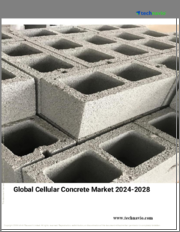
|
시장보고서
상품코드
1985561
기포 콘크리트 시장 : 제품 유형, 원료, 강도 등급, 밀도, 기술, 용도, 최종 용도, 유통 채널별 - 세계 예측(2026-2032년)Cellular Concrete Market by Product Type, Raw Material, Strength Grade, Density, Technology, Application, End Use, Distribution Channel - Global Forecast 2026-2032 |
||||||
 360iResearch
기포 콘크리트 시장은 2025년에 304억 1,000만 달러로 평가되었습니다. 2026년에는 321억 5,000만 달러로 성장하고, CAGR 6.02%를 나타내 2032년까지 458억 달러에 달할 것으로 예측됩니다.
| 주요 시장 통계 | |
|---|---|
| 기준 연도(2025년) | 304억 1,000만 달러 |
| 추정 연도(2026년) | 321억 5,000만 달러 |
| 예측 연도(2032년) | 458억 달러 |
| CAGR(%) | 6.02% |
기포 콘크리트의 기술적 특성, 실용적 장점, 현대 건설 현장에서의 중요성 증가에 대한 설명, 알기 쉬운 소개 가이드
기포 콘크리트는 틈새 시장용 벽돌에서 에너지 효율, 내화, 경량화 등 현대의 요구사항을 충족하는 다용도한 건축 부재로 진화했습니다. 지난 10년간 재료와 제조 방법의 혁신으로 그 역할은 건축 외피, 인프라 백필, 특수 단열 시스템 등으로 확대되고 있습니다. 제조업체와 최종 사용자 모두 단열 성능, 저밀도, 성형성의 조합을 활용하여 다양한 건축 유형에서 설계 및 물류 문제를 해결하고 있습니다.
탈탄소화, 모듈식 건설, 변화하는 규제 요건이 어떻게 기포 콘크리트 생산, 사양, 공급망 전략을 재구성하고 있는가?
기포 콘크리트 산업은 탈탄소화의 우선순위, 신속한 시공 방법에 대한 수요, 점점 더 엄격해지는 화재 및 단열 기준 등 여러 가지 요인이 결합되어 혁신적인 변화를 겪고 있습니다. 원료 배합과 양생 기술의 발전으로 품질 균일성이 향상되고, 제조시 탄소 배출량이 감소했습니다. 한편, 모듈식 건설의 추세는 현장 밖에서 제조되고 예측 가능한 성능으로 납품할 수 있는 표준화된 프리캐스트 부재 수요를 더욱 증가시키고 있습니다.
2025년 관세 조정이 기포콘크리트 밸류체인 전반의 조달, 생산 탄력성, 전략적 조달 결정에 어떤 영향을 미쳤는지에 대한 평가
2025년에 시행된 특정 건축자재 및 수입 조립식 부품에 대한 관세 조정을 포함한 정책 조치는 기포 콘크리트 산업의 제조업체, 유통업체 및 최종 사용자에게 측정 가능한 다운스트림에 영향을 미쳤습니다. 특정 완제품 패널 및 전 공정 부품에 대한 수입 관세 인상은 국경 간 조달에 의존하는 기업의 선적 비용을 증가시켜 조달 팀이 공급업체 계약 및 재고 전략을 재검토하도록 유도했습니다. 그 결과, 조달 리드타임이 길어지고 단기적인 비용 변동성이 높아져 프로젝트 예산에 대한 비용 전가 능력이 제한적이었던 공급업체의 이익률에 압박이 가해졌습니다.
제품 형태, 용도 요건, 유통 채널, 재료 배합, 기술 선택을 상업적 성과로 연결시키는 종합적인 세분화 분석
세분화 분석을 통해 제품 형태, 용도, 최종 용도, 유통 채널, 원료 구성, 강도 등급, 밀도 분류, 기술 변형이 어떻게 기포 콘크리트 시장의 경쟁과 구매자의 선호도를 결정하는지 파악할 수 있습니다. 제품 유형에 따라 프리캐스트 유닛과 현장 타설 솔루션의 관점에서 시장을 검증합니다. 프리캐스트는 재현성과 시공의 신속성을 중시하는 반면, 현장 타설은 맞춤형 형태와 현장 적응성을 지원합니다. 용도별로 보면 내화벽, 단열재, 방음벽, 공극 충진에 있으며, 성능 요구사항이 크게 다릅니다. 단열재 수요는 벽체 단열과 외단열이 서로 다른 재료 특성과 시공방법을 통해 주도하고 있습니다. 최종 용도별로 보면 상업용 건축, 인프라, 주거용 건축에 따라 채택 패턴이 다릅니다. 주택 건축에서 공동주택 프로젝트에서는 표준화된 고생산성 시스템이 요구되는 반면, 단독주택에서는 유연성과 맞춤형 가공제를 중시하는 경향이 있습니다.
다양한 규제, 공급망, 건설 관행이 세계 시장에서 기포 콘크리트 수요를 어떻게 형성하고 있는지 설명하는 지역별 동향 및 도입 패턴을 설명
기포 콘크리트의 지역적 동향은 도입 곡선 및 제품 혁신에 영향을 미치는 고유한 규제 체계, 건설 관행, 공급망의 지역적 특성에 의해 형성됩니다. 북미와 남미에서는 인프라 업데이트, 에너지 개조 구상, 재현성 높은 프리캐스트 솔루션에 중점을 둔 대형 건설업체들의 집중적인 수요와 밀접한 관련이 있습니다. 이 지역의 제조업체들은 광범위하게 분산된 건설 현장에 대응하고 운송 부하를 줄이기 위해 지역적 생산 거점에 투자하고 있습니다. 유럽, 중동, 아프리카에서는 도입 패턴에 차이가 있습니다. 많은 유럽 시장의 엄격한 화재 및 단열 규제는 인증된 오토클레이브 처리 제품에 대한 수요를 촉진하는 한편, 중동 및 아프리카 일부 지역의 급속한 도시화 시장에서는 고온 기후에서도 대규모로 설치할 수 있는 경량 및 단열 솔루션에 대한 수요가 증가하고 있습니다.
기포 콘크리트 부문에서 생산 우수성, 지역 대응력, 재료 및 기술 혁신이 경쟁 우위를 결정하는 주요 기업 동향
기포 콘크리트의 경쟁 환경은 통합형 제조업체, 지역 전문 기업, 기술, 배합 또는 서비스 모델에 특화된 틈새 혁신가들이 혼재하는 양상을 보이고 있습니다. 주요 기업은 개발자 및 인프라 고객과의 장기 계약을 확보하기 위해 엄격한 생산 관리와 인증 프로그램, 확립된 판매 채널 관계를 결합하는 경향이 있습니다. 일관된 밀도, 강도 등급 및 단열 성능은 계약상의 보증을 지원하고 클레임을 줄이기 위해 품질관리 및 공정 자동화에 대한 투자는 공통의 전략적 우선 순위가 되었습니다.
생산자와 공급업체가 탄력성을 구축하고, 채택을 가속화하며, 기술적 우위를 경쟁적 상업적 가치로 전환할 수 있는 실행 가능한 전략적인 방안
업계 리더는 탄력성, 제품 차별화, 진화하는 건설 관행에 대한 상업적 일관성을 우선시함으로써 새로운 기회를 포착하기 위한 단호한 조치를 취할 수 있습니다. 첫째, 프리캐스트와 현장 생산량을 유연하게 전환할 수 있는 분산형 생산 능력과 유연한 생산 라인에 투자하여 물류 충격과 관세 변동에 대한 노출을 줄입니다. 둘째, 플라이애시, GGBS(유리섬유강화시멘트) 등 현지에서 가용 가능한 보조 시멘트계 재료를 활용한 배합 개발을 가속화하여 원료의 다양화를 꾀하면서 매립탄소량을 줄이고 공급을 확보합니다. 셋째, 방화 및 단열 기준이 강화되고 있는 시장에서 승인 프로세스를 효율화하는 인증 채널과 제3자 검사 프로그램을 구축하여 건축가 및 엔지니어의 사양 결정을 가속화할 수 있도록 합니다.
결론을 지원하기 위해 전문가 인터뷰, 공장 검증, 표준 검토, 부문 간 상호 검증을 결합한 투명하고 반복 가능한 조사 접근 방식을 채택했습니다.
본 조사방법은 1차 및 2차 정보원을 결합하여 결론의 견고성과 추적가능성을 확보하기 위해 삼각측량을 실시합니다. 1차 자료에는 밸류체인 전반에 걸쳐 재료 과학자, 공장 운영 책임자, 설계 전문가, 조달 책임자와의 구조화된 인터뷰가 포함되며, 생산 관행과 품질관리 시스템을 검증하기 위한 현장 방문 및 공장 감사로 보완됩니다. 2차 자료에는 시멘트계 재료 및 열 성능에 관한 기술 표준, 규제 지침 문서, 동료 검토 문헌, 채택 동향 및 인증 기준을 밝히는 산업 단체의 보고서가 포함됩니다.
이 재료의 강점, 공급망에 미치는 영향, 기포 콘크리트가 주류가 되기 위해 필요한 전략적 우선순위를 강조한 요약
기포 콘크리트 산업은 재료 과학, 규정의 진화, 건설 공정의 혁신이 교차하여 이 재료의 유용성을 확대하는 전환점에 서 있습니다. 단열성, 내화성, 저밀도 등의 강점은 건물 외피 단열부터 인프라 프로젝트의 대규모 공극 충진에 이르기까지 더욱 폭넓은 용도로 활용되고 있습니다. 동시에 공급망 재편과 정책 전환을 통해 제조업체들은 조달 전략을 재검토하고 지역 수요동향에 맞는 생산 거점에 대한 투자를 진행하고 있습니다.
자주 묻는 질문
목차
제1장 서문
제2장 조사 방법
제3장 개요
제4장 시장 개요
제5장 시장 인사이트
제6장 미국의 관세 누적 영향(2025년)
제7장 AI의 누적 영향(2025년)
제8장 기포 콘크리트 시장 : 제품 유형별
제9장 기포 콘크리트 시장 : 원료별
제10장 기포 콘크리트 시장 : 강도 등급별
제11장 기포 콘크리트 시장 : 밀도별
제12장 기포 콘크리트 시장 : 기술별
제13장 기포 콘크리트 시장 : 용도별
제14장 기포 콘크리트 시장 : 최종 용도별
제15장 기포 콘크리트 시장 : 유통 채널별
제16장 기포 콘크리트 시장 : 지역별
제17장 기포 콘크리트 시장 : 그룹별
제18장 기포 콘크리트 시장 : 국가별
제19장 미국의 기포 콘크리트 시장
제20장 중국의 기포 콘크리트 시장
제21장 경쟁 구도
KTH 26.04.15The Cellular Concrete Market was valued at USD 30.41 billion in 2025 and is projected to grow to USD 32.15 billion in 2026, with a CAGR of 6.02%, reaching USD 45.80 billion by 2032.
| KEY MARKET STATISTICS | |
|---|---|
| Base Year [2025] | USD 30.41 billion |
| Estimated Year [2026] | USD 32.15 billion |
| Forecast Year [2032] | USD 45.80 billion |
| CAGR (%) | 6.02% |
An informed introduction to cellular concrete explaining its technical attributes, practical benefits, and rising relevance in modern construction practice
Cellular concrete has evolved from a niche masonry material into a versatile building component that meets contemporary demands for energy efficiency, fire resistance, and lightweight construction. Over the past decade, innovation in materials and production methods has broadened its role across building envelopes, infrastructure backfill, and specialized insulating systems. Manufacturers and end users alike are drawing on its combination of thermal performance, low density, and formability to solve design and logistics challenges across multiple construction typologies.
This introduction contextualizes cellular concrete within broader shifts in construction practices, regulatory requirements, and sustainability priorities. The narrative begins with the material's technical attributes - porosity, thermal resistance, and compressive profiles - then connects those properties to practical benefits such as reduced structural dead loads, simplified onsite handling, and improved acoustic separation. Attention is also given to how standardized production methods, including both precast and site cast approaches, influence quality control and installation timelines.
Finally, the section positions cellular concrete as a material of choice for projects seeking lifecycle advantages. Developers and specifiers are increasingly valuing systems that can reduce energy consumption, streamline construction sequencing, and provide predictable performance under fire and moisture stressors. As a result, cellular concrete is shifting from an alternative material toward mainstream consideration for design teams focused on efficiency and risk mitigation.
How decarbonization, modular construction, and evolving regulatory expectations are reshaping cellular concrete production, specification, and supply chain strategies
The cellular concrete landscape is undergoing transformative shifts driven by converging forces: decarbonization priorities, demand for rapid construction methods, and increasingly stringent fire and thermal codes. Advances in raw material blends and curing technologies have improved consistency and lowered embodied carbon intensity, while modular construction trends amplify demand for standardized precast components that can be manufactured offsite and delivered with predictable performance.
At the same time, digital design tools and performance-based codes are enabling engineers to exploit cellular concrete's unique properties in hybrid systems, integrating it with steel and timber frames to reduce weight and improve envelope performance. Supply chain reconfiguration is another key shift; manufacturers are balancing centralized high-volume production with regional microplants to shorten lead times and reduce transport emissions. This hybrid production footprint supports both large-scale infrastructure projects and more distributed residential or retrofit markets.
The interplay between regulation and innovation is accelerating product differentiation. Where fire codes and thermal standards tighten, manufacturers are responding with tailored formulations and certification pathways that reduce approval friction. In sum, these transformational shifts are repositioning cellular concrete from a specialized product to a systemic solution that addresses speed, sustainability, and compliance together, creating new opportunities for designers, contractors, and material suppliers.
Assessment of how 2025 tariff adjustments influenced sourcing, production resilience, and strategic procurement decisions across the cellular concrete value chain
Policy measures implemented in 2025 that included tariff adjustments on selected construction inputs and imported prefabricated elements have had measurable downstream effects on manufacturers, distributors, and end users in the cellular concrete space. Increases in import duties for certain finished panels and precursor components raised landed costs for firms dependent on cross-border sourcing, prompting procurement teams to revisit vendor contracts and inventory strategies. As a result, procurement time horizons lengthened while near-term cost variability increased, creating pressure on margins for suppliers who had limited ability to pass costs through to project budgets.
The cumulative effect has been a recalibration of supply chains: organizations moved toward greater localization of key inputs such as cementitious binders and mineral admixtures, and some vertically integrated producers accelerated investments in domestic precast facilities to mitigate exposure to tariff volatility. Contractors and specifiers responded by prioritizing products with stable local supply and by adjusting designs to accommodate available material grades and density classes. Financing decisions were also influenced, as lenders and owners assessed the risk of cost escalation in long-duration projects and applied tighter contingencies.
While tariffs increased near-term disruption, they also catalyzed strategic shifts that may enhance resilience. Distributed production, stronger supplier partnerships, and alternative raw material adoption emerged as pragmatic responses that improve long-run supply security and control over product quality, particularly in markets where tariff regimes are expected to remain a factor in sourcing calculus.
Comprehensive segmentation insight that connects product forms, application requirements, distribution channels, material blends, and technology choices to commercial outcomes
Segmentation analysis reveals how product form, application, end use, distribution pathways, raw material composition, strength grading, density classification, and technology variants define competitive dynamics and buyer preferences in the cellular concrete market. Based on Product Type, the market is examined through the prism of precast units and site cast solutions, with precast favoring repeatability and faster installation, while site cast supports custom geometries and on-project adaptability. Based on Application, performance requirements differ significantly across fire resistant walls, insulation, sound barrier, and void filling; within insulation demand, cavity insulation and external insulation drive divergent material properties and installation methods. Based on End Use, adoption patterns vary between commercial construction, infrastructure, and residential construction; within residential construction, multi family projects demand standardized, higher throughput systems while single family work often values flexibility and bespoke finishes.
Based on Distribution Channel, the route to market shapes margins and service expectations: direct sales relationships often underpin large project commitments, distributors serve regional contractors and smaller builders, and online retailers, including manufacturer websites and third party platforms, expand accessibility and traceability for niche buyers. Based on Raw Material, formulations pivot among cement, fly ash, and GGBS, each offering distinct sustainability and performance trade-offs that influence procurement and certification paths. Based on Strength Grade, product segmentation by high grade, medium grade, and low grade dictates structural versus non-structural use cases and drives testing protocols. Based on Density, lightweight, mediumweight, and standard density classes align with thermal and structural objectives, balancing insulation needs against load-bearing requirements. Based on Technology, autoclaved aerated concrete and non-autoclaved approaches present different production capital requirements and product attributes, with autoclaved variants further split between dry process and wet process methods, each affecting factory layout, throughput, and quality control regimes.
Understanding these intersecting segments enables clearer specification and product positioning decisions, and highlights where technical differentiation or supply chain optimization can deliver the greatest commercial advantage.
Regional dynamics and adoption patterns that explain how differing regulations, supply chains, and construction practices shape cellular concrete demand across global markets
Regional dynamics for cellular concrete are shaped by distinct regulatory regimes, construction practices, and supply chain geographies that influence adoption curves and product innovation. In the Americas, demand is strongly linked to infrastructure renewal, energy retrofit initiatives, and a concentration of large contractors who value repeatable precast solutions; manufacturers here are investing in regional production hubs to serve widely dispersed project sites and to reduce transport intensity. Europe, Middle East & Africa displays heterogeneous adoption patterns: stringent fire and thermal regulations in many European markets incentivize certified autoclaved products, while rapidly urbanizing markets in the Middle East and parts of Africa create demand for lightweight, thermally efficient solutions that can be deployed at scale under hot climates.
Asia-Pacific represents a dynamic frontier where high urban growth, aggressive housing programs, and local supply of raw materials support both autoclaved and non-autoclaved production routes. Regional manufacturers in Asia-Pacific are innovating to meet mass housing and infrastructure needs, leveraging lower labor costs for site cast installations as well as sophisticated factory systems for high-volume precast production. Cross-regional trade flows are significant, yet local policy measures and logistics costs frequently encourage domestic capacity build-out. Consequently, each region's regulatory environment, construction culture, and logistics profile shapes the commercial approach for suppliers and specifiers, while regional R&D networks are increasingly focused on tailoring formulations to local raw material availability and climatic challenges.
Key company dynamics showing how production excellence, local responsiveness, and material and technology innovation determine competitive advantage in cellular concrete
Competitive landscapes in cellular concrete reflect a mix of integrated manufacturers, regional specialists, and niche innovators who focus on technology, formulation, or service models. Leading firms tend to combine strong production discipline with certification programs and well-developed channel relationships to secure long-term contracts with developers and infrastructure clients. Investment in quality control and process automation is a common strategic priority, as consistent density, strength grade, and thermal performance underpin contractual warranties and reduce callbacks.
Smaller players and regional producers differentiate through responsiveness and local expertise, offering flexible site cast services or custom precast configurations for projects with complex geometries or accelerated schedules. Technology vendors and material innovators contribute to competitive dynamics by introducing admixtures, recycled raw material blends, or optimized curing regimes that reduce embodied carbon and improve workability. Distribution and after-sales service are also differentiators; firms that provide technical support, installation training, and specification assistance often achieve higher retention among contractors and designers. Partnerships between material suppliers and insulation or facade system manufacturers are increasingly common, enabling bundled solutions that simplify procurement and align performance across interfaces.
Overall, the competitive picture rewards operational excellence, regulatory compliance, and the ability to translate technical performance into tangible installation and lifecycle advantages for customers.
Actionable strategic moves for producers and suppliers to build resilience, accelerate adoption, and convert technical advantages into competitive commercial value
Industry leaders can act decisively to capture emerging opportunities by prioritizing resilience, product differentiation, and commercial alignment with evolving construction practices. First, invest in distributed manufacturing capacity and flexible production lines that can shift between precast and site cast volumes, thereby reducing exposure to logistics shocks and tariff volatility. Second, accelerate formulation work that utilizes locally available supplementary cementitious materials such as fly ash and GGBS to lower embodied carbon and secure supply while diversifying raw material inputs. Third, create certification pathways and third-party testing programs that streamline approval in markets with tightening fire and thermal codes, facilitating faster specification by architects and engineers.
Additionally, strengthen channel strategies by offering integrated value propositions: combine product delivery with installation training, technical support, and design assistance so that contractors face fewer performance uncertainties. Develop digital tools for thermal and structural simulation that demonstrate lifecycle benefits and reduce specification friction. Finally, pursue strategic partnerships with facade, insulation, and modular building system providers to create bundled offerings that simplify procurement and accelerate adoption. Taken together, these actions will sharpen competitive positioning, enhance resilience against policy and trade shocks, and translate technical strengths into measurable commercial outcomes.
A transparent and reproducible research approach combining expert interviews, factory validation, standards review, and segmental cross-validation to underpin conclusions
The research methodology combines primary and secondary evidence streams, triangulated to ensure robustness and traceability of conclusions. Primary inputs include structured interviews with material scientists, plant operations managers, design professionals, and procurement leads across the value chain, supplemented by site visits and factory audits to validate production practices and quality control regimes. Secondary sources encompass technical standards, regulatory guidance documents, and peer-reviewed literature on cementitious materials and thermal performance, as well as trade association reports that illuminate adoption trends and certification norms.
Qualitative insights are supported by a structured framework for segment analysis that evaluates product type, application, end use, distribution channel, raw material, strength grade, density, and technology. Data quality protocols included cross-validation between interview findings and documented specifications, and sensitivity checks on production process descriptions. Where possible, lifecycle and embodied carbon assessments were referenced to inform discussion of sustainability trends without presenting numerical estimates. The methodology emphasizes transparency in source attribution, reproducibility of analytical steps, and a conservative approach to inference, ensuring that recommendations are grounded in observable practice and expert consensus rather than extrapolation alone.
Concluding synthesis that highlights the material's strengths, supply chain implications, and the strategic priorities needed for cellular concrete to achieve mainstream adoption
The cellular concrete sector stands at an inflection point where material science, regulatory evolution, and construction process innovation converge to expand the material's utility. Strengths such as thermal efficiency, fire resistance, and low density are increasingly being leveraged across a wider set of applications, from envelope insulation to large-scale void filling in infrastructure projects. At the same time, supply chain realignment and policy shifts are prompting manufacturers to reexamine sourcing strategies and invest in production footprints that better align with regional demand profiles.
Looking ahead, success will favor organizations that can translate technical performance into reliable supply and simplified specification for design teams. Strategic emphasis on product certification, local raw material integration, and bundled service models will accelerate uptake, while investments in process automation and quality assurance will protect margins as the market scales. The combined pressures of sustainability requirements and construction productivity goals create fertile ground for cellular concrete to transition from specialized applications to a mainstream role in low-carbon, efficient building systems, provided that stakeholders synchronize innovation with pragmatic deployment strategies.
Table of Contents
1. Preface
- 1.1. Objectives of the Study
- 1.2. Market Definition
- 1.3. Market Segmentation & Coverage
- 1.4. Years Considered for the Study
- 1.5. Currency Considered for the Study
- 1.6. Language Considered for the Study
- 1.7. Key Stakeholders
2. Research Methodology
- 2.1. Introduction
- 2.2. Research Design
- 2.2.1. Primary Research
- 2.2.2. Secondary Research
- 2.3. Research Framework
- 2.3.1. Qualitative Analysis
- 2.3.2. Quantitative Analysis
- 2.4. Market Size Estimation
- 2.4.1. Top-Down Approach
- 2.4.2. Bottom-Up Approach
- 2.5. Data Triangulation
- 2.6. Research Outcomes
- 2.7. Research Assumptions
- 2.8. Research Limitations
3. Executive Summary
- 3.1. Introduction
- 3.2. CXO Perspective
- 3.3. Market Size & Growth Trends
- 3.4. Market Share Analysis, 2025
- 3.5. FPNV Positioning Matrix, 2025
- 3.6. New Revenue Opportunities
- 3.7. Next-Generation Business Models
- 3.8. Industry Roadmap
4. Market Overview
- 4.1. Introduction
- 4.2. Industry Ecosystem & Value Chain Analysis
- 4.2.1. Supply-Side Analysis
- 4.2.2. Demand-Side Analysis
- 4.2.3. Stakeholder Analysis
- 4.3. Porter's Five Forces Analysis
- 4.4. PESTLE Analysis
- 4.5. Market Outlook
- 4.5.1. Near-Term Market Outlook (0-2 Years)
- 4.5.2. Medium-Term Market Outlook (3-5 Years)
- 4.5.3. Long-Term Market Outlook (5-10 Years)
- 4.6. Go-to-Market Strategy
5. Market Insights
- 5.1. Consumer Insights & End-User Perspective
- 5.2. Consumer Experience Benchmarking
- 5.3. Opportunity Mapping
- 5.4. Distribution Channel Analysis
- 5.5. Pricing Trend Analysis
- 5.6. Regulatory Compliance & Standards Framework
- 5.7. ESG & Sustainability Analysis
- 5.8. Disruption & Risk Scenarios
- 5.9. Return on Investment & Cost-Benefit Analysis
6. Cumulative Impact of United States Tariffs 2025
7. Cumulative Impact of Artificial Intelligence 2025
8. Cellular Concrete Market, by Product Type
- 8.1. Precast
- 8.2. Site Cast
9. Cellular Concrete Market, by Raw Material
- 9.1. Cement
- 9.2. Fly Ash
- 9.3. GGBS
10. Cellular Concrete Market, by Strength Grade
- 10.1. High Grade
- 10.2. Low Grade
- 10.3. Medium Grade
11. Cellular Concrete Market, by Density
- 11.1. Lightweight
- 11.2. Mediumweight
- 11.3. Standard
12. Cellular Concrete Market, by Technology
- 12.1. Autoclaved Aerated Concrete
- 12.1.1. Dry Process
- 12.1.2. Wet Process
- 12.2. Non Autoclaved
13. Cellular Concrete Market, by Application
- 13.1. Fire Resistant Walls
- 13.2. Insulation
- 13.2.1. Cavity Insulation
- 13.2.2. External Insulation
- 13.3. Sound Barrier
- 13.4. Void Filling
14. Cellular Concrete Market, by End Use
- 14.1. Commercial Construction
- 14.2. Infrastructure
- 14.3. Residential Construction
- 14.3.1. Multi Family
- 14.3.2. Single Family
15. Cellular Concrete Market, by Distribution Channel
- 15.1. Direct Sales
- 15.2. Distributors
- 15.3. Online Retailers
- 15.3.1. Manufacturer Website
- 15.3.2. Third Party Platforms
16. Cellular Concrete Market, by Region
- 16.1. Americas
- 16.1.1. North America
- 16.1.2. Latin America
- 16.2. Europe, Middle East & Africa
- 16.2.1. Europe
- 16.2.2. Middle East
- 16.2.3. Africa
- 16.3. Asia-Pacific
17. Cellular Concrete Market, by Group
- 17.1. ASEAN
- 17.2. GCC
- 17.3. European Union
- 17.4. BRICS
- 17.5. G7
- 17.6. NATO
18. Cellular Concrete Market, by Country
- 18.1. United States
- 18.2. Canada
- 18.3. Mexico
- 18.4. Brazil
- 18.5. United Kingdom
- 18.6. Germany
- 18.7. France
- 18.8. Russia
- 18.9. Italy
- 18.10. Spain
- 18.11. China
- 18.12. India
- 18.13. Japan
- 18.14. Australia
- 18.15. South Korea
19. United States Cellular Concrete Market
20. China Cellular Concrete Market
21. Competitive Landscape
- 21.1. Market Concentration Analysis, 2025
- 21.1.1. Concentration Ratio (CR)
- 21.1.2. Herfindahl Hirschman Index (HHI)
- 21.2. Recent Developments & Impact Analysis, 2025
- 21.3. Product Portfolio Analysis, 2025
- 21.4. Benchmarking Analysis, 2025
- 21.5. "
- 21.6. "Contech Engineered Solutions LLC bu Quikrete Holdings Inc.
- 21.7. ACICO Group
- 21.8. Aerix Industries
- 21.9. Aircrete Systems BV
- 21.10. Broco Industries.
- 21.11. Cell-Crete Corporation
- 21.12. CellFill, LLC
- 21.13. Cellular Concrete Inc.
- 21.14. Cematrix
- 21.15. JK Lakshmi Cement Ltd.
- 21.16. Laston Italiana S.p.a.
- 21.17. Shirke Construction Technology Pvt Ltd.
- 21.18. SOLBET Spolka z o.o.
- 21.19. Thomas Armstrong (Holdings) Limited
- 21.20. VentureRadar Limited
- 21.21. Xella International GmbH