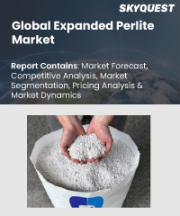
|
시장보고서
상품코드
1992088
팽창 펄라이트 시장 확대 : 등급, 형태, 용도, 유통 채널별 - 세계 예측(2026-2032년)Expanded Perlite Market by Grade, Form, Application, Distribution Channel - Global Forecast 2026-2032 |
||||||
 360iResearch
팽창 펄라이트 시장은 2025년에 9억 9,344만 달러로 평가되었습니다. 2026년에는 10억 5,088만 달러로 성장하고 CAGR 6.68%를 나타내 2032년까지 15억 6,246만 달러에 달할 것으로 예측됩니다.
| 주요 시장 통계 | |
|---|---|
| 기준 연도(2025년) | 9억 9,344만 달러 |
| 추정 연도(2026년) | 10억 5,088만 달러 |
| 예측 연도(2032년) | 15억 6,246만 달러 |
| CAGR(%) | 6.68% |
전략적 의사결정을 위한 팽창 펄라이트의 기술적 특성과 다분야에서의 유용성을 개괄하는 종합적인 업계 소개
팽창 펄라이트는 저밀도, 단열성, 화학적 불활성 등의 특성으로 인해 원예, 건설, 여과, 에너지 분야에서 없어서는 안 될 필수적인 성분으로 활용도가 높은 불활성 광물입니다. 기존에는 천연 펄라이트 광석을 급속 가열하여 제조해 왔으나, 그 물리적 특성(다공성, 입자 크기 분포, 부피 밀도)으로 인해 보수성, 내열성, 여과 매체를 필요로 하는 용도에 특히 적합합니다.
공급망 다각화, 지속가능성에 대한 우선순위, 용도 중심의 혁신이 경쟁의 역학 및 구매자의 기대치를 재정의하는 방법
최근 몇 가지 혁신적인 변화가 팽창 펄라이트의 시장 구조를 재구성하고 조달 전략과 제품 사양을 재평가하도록 유도하고 있습니다. 바이어들이 단일 산지에 대한 의존도와 운송의 혼란에 대한 내성을 요구함에 따라 공급망 다변화가 가속화되고 있습니다. 동시에 등급, 형상, 가공의 고도화에 따른 품질 차별화가 진행되면서 공급업체 선정은 가격만을 고려하는 수준을 넘어섭니다. 이와 함께 지속가능성과 순환 경제에 대한 우선순위가 높아지면서 조달 정책과 제품 설계에 점점 더 많은 영향을 미치고 있으며, 이해관계자들은 제조에 필요한 에너지, 재활용 가능성, 혼합 및 하이브리드 재료의 잠재력을 평가하고 있습니다.
2025년까지 관세 변경이 조달 전략, 국내 가공 인센티브 및 다운스트림 공정의 사양 선택에 미치는 누적적 영향
광물 및 광물 유래 제품에 영향을 미치는 관세의 도입과 인상은 팽창 펄라이트 관련 이해관계자들에게 복잡한 사업 환경을 조성했습니다. 2025년까지 시행되는 누적 관세 조치는 수입의 경제성을 변화시켜 일부 다운스트림 사용자들에게 해외산 펄라이트에 대한 의존도를 재검토하고, 가능한 경우 니어쇼어링, 국내 선광 또는 대체 재료를 검토할 것을 촉구하고 있습니다. 그 결과, 조달 부서는 단가, 총 착륙 비용 및 장기적인 공급업체 신뢰성의 균형을 맞추기 위해 더 많은 압력에 직면하고 있습니다.
응용 분야 요구, 등급 사양, 입자 형태 변형, 조달 및 제품 혁신 요구사항과 연계된 부문 기반 인사이트
팽창 펄라이트 시장과의 전략적 참여에 있어 제품 세분화에 대한 정밀한 이해가 필수적입니다. 용도별로 보면 시장은 다음과 같은 분야에 걸쳐 있습니다. 수경재배, 토양 개량, 무토양 배지에 사용되는 농업 및 원예 분야, 건축 분야에서는 단열재, 경량 콘크리트 배합 및 석고 및 모르타르 시스템에 펄라이트가 내장되어 있습니다. 여과 분야에서는 음료 여과, 화학 여과, 물 여과에 널리 사용되고 있습니다. 또한, 석유 및 가스 분야에서 펄라이트는 시추 첨가제 및 우물 시멘트 역할을 합니다. 각 용도에 따라 입자 크기 분포, 부피 밀도, 열전도율, 순도에 대한 고유한 성능 기준이 부과되며, 이에 따른 가공 및 품질 관리 체계가 필수적입니다.
세계 시장에서의 조달 우선순위, 규제 준수 및 고객 지원 모델을 결정하는 지역적 동향 및 운영 고려 사항
지역별 동향은 공급 흐름, 생산 기지 및 최종 사용자의 선호도에 큰 영향을 미치고 있습니다. 아메리카에서는 성숙한 건설 시장과 확대되는 전문 원예 사업의 결합으로 일관된 품질과 안정적인 물류에 대한 요구가 증가하고 있으며, 공급업체들은 안정적인 유통 채널과 신속한 기술 지원을 중요시하고 있습니다. 유럽, 중동 및 아프리카에서는 다양한 규제 체계와 다양한 기후 조건으로 인해 도입 패턴이 다양합니다. 고성능 단열 및 여과 기준을 우선시하는 시장이 있는 반면, 비용 효율적인 배합을 중시하는 시장도 있습니다. 아시아태평양 시장에서는 큰 산업적 수요와 성장하는 첨단 원예 부문이 결합하여 대량 조달 전략과 현지 가공에 대한 투자를 통해 리드 타임을 단축하고 현지 작물 및 건설 관행에 맞는 제품 특성을 실현하기 위해 노력하고 있습니다.
가공 기술 고도화, 응용 서비스, 전략적 파트너십을 차별화의 원천으로 하는 경쟁 프로파일과 가치 제안
펄라이트 시장의 경쟁 역학은 가공 능력, 제품 품질 차별화, 기술 서비스 및 지리적 범위의 상호 작용에 의해 형성되고 있습니다. 주요 기업들은 좁은 입자 크기 분포, 낮은 오염 수준, 초미세 분말 및 엔지니어링 블록 보드와 같은 맞춤형 형상을 구현하기 위해 전문 가공 라인에 투자해 왔습니다. 또한, 기술 지원, 현장 테스트, 배합 컨설팅과 같은 부가가치 서비스는 고급 원예 및 특수 여과 분야를 타겟으로 하는 공급업체에게 결정적인 차별화 요소로 부상하고 있습니다.
리더 기업이 공급 탄력성을 강화하고, 전문 분야를 공략하며, 지속가능성을 핵심 비즈니스에 통합하기 위한 실질적인 전략적 조치
업계 선두 기업들은 업무 효율성을 희생하지 않고 공급 탄력성, 제품 차별화 및 지속가능성을 다루는 통합 전략을 추구해야 합니다. 첫째, 원자재 조달의 다변화와 지역별 가공 거점 구축은 무역 정책의 변동과 물류 혼란에 대한 취약성을 크게 줄이는 동시에 주요 고객에 대한 리드타임을 단축할 수 있습니다. 둘째, 입자 크기 분포와 부피 밀도를 정밀하게 제어할 수 있는 표적화된 가공 기술에 대한 투자를 통해 공급업체는 원예 및 여과 분야의 고수익 특수 부문에 진출할 수 있습니다. 셋째, 무토양 배지 배합 지원, 맞춤형 여과 시험 등 용도에 특화된 서비스 메뉴를 개발하여 고객과의 관계를 강화하고 진입장벽을 구축할 수 있습니다.
이해관계자 인터뷰, 기술 문헌 검토, 상호 검증을 거친 통합 분석을 결합한 투명성이 높은 혼합 연구 접근법을 통해 확고한 결론을 도출합니다.
이러한 결과를 뒷받침하는 본 조사는 1차 이해관계자들과의 대화와 엄격한 2차 분석을 통합하여 균형 잡힌 실용적인 결과를 보장합니다. 1차 데이터는 제조업체, 가공업체, 다운스트림 사용자, 물류 사업자를 대상으로 구조화된 인터뷰를 통해 품질 요구사항, 공급 제약, 혁신 우선순위에 대한 일선 현장의 관점을 수집했습니다. 2차 분석에서는 펄라이트의 가공 및 응용 성능에 관한 기술 문헌, 무역 정책 문서, 공개된 규제 기준을 면밀히 검토하여 업계 관행 및 규정 준수 현황을 파악했습니다.
가공 능력, 응용 분야에 대한 집중, 전략적 일관성을 강조하는 핵심 지식의 통합을 통해 기존 및 신흥 응용 분야에서 가치를 실현합니다.
요약하면, 팽창 펄라이트는 여전히 전략적으로 중요한 광물 원료이며, 공급망 변화, 규제 압력 및 진화하는 최종 용도 요구 사항에 따라 그 역할이 재정의되고 있습니다. 용도 중심의 수요, 등급 및 형태에 따른 세분화, 지역적 특성이 교차하는 가운데, 조달 및 제품 개발에는 보다 정교한 접근 방식이 요구되고 있습니다. 가공능력에 적극적으로 투자하고, 용도 중심의 서비스 체계를 구축하며, 정책으로 인한 시장 변화에 적응하는 기업만이 경쟁 우위를 유지할 수 있는 유리한 위치에 서게 될 것입니다.
자주 묻는 질문
목차
제1장 서문
제2장 조사 방법
제3장 주요 요약
제4장 시장 개요
제5장 시장 인사이트
제6장 미국의 관세 누적 영향(2025년)
제7장 AI의 누적 영향(2025년)
제8장 팽창 펄라이트 시장 : 등급별
제9장 팽창 펄라이트 시장 : 형태별
제10장 팽창 펄라이트 시장 : 용도별
제11장 팽창 펄라이트 시장 : 유통 채널별
제12장 팽창 펄라이트 시장 : 지역별
제13장 팽창 펄라이트 시장 : 그룹별
제14장 팽창 펄라이트 시장 : 국가별
제15장 미국의 팽창 펄라이트 시장
제16장 중국의 팽창 펄라이트 시장
제17장 경쟁 구도
KTH 26.04.20The Expanded Perlite Market was valued at USD 993.44 million in 2025 and is projected to grow to USD 1,050.88 million in 2026, with a CAGR of 6.68%, reaching USD 1,562.46 million by 2032.
| KEY MARKET STATISTICS | |
|---|---|
| Base Year [2025] | USD 993.44 million |
| Estimated Year [2026] | USD 1,050.88 million |
| Forecast Year [2032] | USD 1,562.46 million |
| CAGR (%) | 6.68% |
A comprehensive industry introduction to expanded perlite that frames its technical attributes and multi-sector utility for strategic decision-making
Expanded perlite is a versatile inert mineral that has become a critical component across horticulture, construction, filtration, and energy sectors due to its low density, thermal insulating properties, and chemical inertness. Historically derived from naturally occurring perlite ore by rapid heating, the material's physical characteristics-porosity, particle size distribution, and bulk density-make it particularly well suited to applications requiring moisture retention, thermal resistance, and filtration media.
As demand drivers evolve, stakeholders are recalibrating supply chains, specifications, and product formulations to align with sustainability goals, regulatory expectations, and performance-driven end uses. The material's utility extends from soil amendment and soilless media in controlled agriculture to inclusion as aggregate and filler in lightweight concrete and insulation systems. Consequently, a multi-faceted introduction to expanded perlite must emphasize both its technical attributes and the pragmatic considerations that influence procurement and product development decisions.
How supply chain diversification, sustainability priorities, and application-driven innovation are redefining competitive dynamics and buyer expectations
Over recent years, several transformative shifts have reshaped the expanded perlite landscape, prompting reassessment of sourcing strategies and product specifications. Supply chain diversification has accelerated as buyers seek resilience against single-origin dependencies and shipping disruptions; concurrently, quality differentiation driven by grade, form, and processing sophistication has elevated supplier selection beyond price considerations. In parallel, sustainability and circularity priorities are increasingly influencing both procurement policies and product design, with stakeholders evaluating embodied energy, recyclability, and the potential for blended or hybrid materials.
Moreover, technology-enabled applications such as optimized filtration media and engineered horticultural substrates have emerged, prompting collaboration between material scientists and end users to tailor particle size distributions and surface treatments. As a result, legacy assumptions about perlite's role in conventional sectors are being redefined through cross-functional innovation efforts, regulatory pressures, and shifting end-user expectations.
The cumulative effects of tariff changes through 2025 on sourcing strategies, domestic processing incentives, and downstream specification choices
The implementation and escalation of tariffs impacting minerals and mineral-derived products have created a complex operating environment for stakeholders connected to expanded perlite. Cumulative tariff measures enacted through 2025 have altered the economics of imports, encouraging some downstream users to reassess their reliance on foreign-sourced perlite and to explore nearshoring, domestic beneficiation, or alternative materials where feasible. Consequently, procurement teams face heightened pressure to balance unit cost, total landed cost, and long-term supplier reliability.
In response, some manufacturers and distributors accelerated investments in domestic or regional processing capacity to capture value further down the supply chain and mitigate exposure to cross-border trade policy shifts. At the same time, end users in construction and horticulture re-evaluated specification criteria and formulation strategies to preserve performance while managing cost impacts. While tariffs can prompt short-term price adjustments and inventory rebalancing, the more durable effects manifest through altered sourcing patterns, increased domestic investment in processing capacity, and a recalibration of supplier relationships that emphasize contractual resilience and logistical agility.
Segment-driven insights that connect application needs, grade specifications, and particulate form variations to procurement and product innovation imperatives
A nuanced understanding of product segmentation is central to strategic engagement with the expanded perlite market. Based on application, the market spans Agriculture and Horticulture where products are used for hydroponics, soil amendment, and soilless media; Construction where perlite is incorporated into insulation, lightweight concrete formulations, and plaster and mortar systems; Filtration where its use extends across beverage filtration, chemical filtration, and water filtration; and Oil and Gas where perlite serves as drilling additives and in well cementing. Each application imposes distinct performance criteria related to particle size distribution, bulk density, thermal conductivity, and purity, necessitating tailored processing and quality control regimes.
Based on grade, offerings are categorized into construction grade, filtration grade, horticulture grade, and industrial grade, each matched to regulatory demands and end-use performance requirements. Based on form, perlite is available as agglomerates in blocks and boards, granules in coarse, fine, and medium fractions, powder in standard and ultra-fine varieties, and tablets in custom and standard formulations. These segmentation axes influence sourcing decisions and product development: application requirements typically dictate preferred grades and forms, while form and grade in turn drive production processes and handling logistics. Moving forward, alignment between form, grade, and application will be a primary determinant of competitive differentiation and supplier selection.
Regional dynamics and operational considerations that determine sourcing priorities, regulatory alignment, and customer support models across global markets
Regional dynamics exert a strong influence on supply flows, production footprints, and end-user preferences. In the Americas, a combination of mature construction markets and expanding specialty horticulture operations has increased the need for consistent quality and reliable logistics, prompting suppliers to emphasize stable distribution channels and responsive technical support. In Europe, the Middle East and Africa region, diverse regulatory regimes and a wide spectrum of climatic conditions have led to varied adoption patterns: some markets prioritize high-performance insulation and filtration standards, while others prioritize cost-effective formulations. Asia-Pacific markets combine significant industrial demand with a growing advanced horticulture sector, driving both volume-oriented sourcing strategies and investments in localized processing to reduce lead times and tailor product attributes to local crop and construction practices.
As a consequence, regional differentiation is not only a matter of demand scale but also of technical expectations, regulatory alignment, and supply chain maturity. Firms seeking to scale or enter new territories must therefore reconcile global supply efficiencies with the need for regionally attuned product specifications and customer support models, and they must prepare to adapt commercial terms and logistics solutions to regional market realities.
Competitive profiles and value propositions that elevate processing sophistication, application services, and strategic partnerships as sources of differentiation
Competitive dynamics in the expanded perlite space are shaped by the interplay of processing capability, product quality differentiation, technical service, and geographic reach. Leading firms have invested in specialized processing lines to deliver narrow particle size distributions, low contamination levels, and tailored forms such as ultra-fine powders or engineered blocks and boards. In addition, value-added services-technical application support, on-site trials, and formulation consulting-have emerged as decisive differentiators for suppliers targeting premium horticulture and specialized filtration segments.
Further, strategic partnerships between material processors and downstream manufacturers have accelerated time-to-market for novel formulations and enabled co-developed solutions that optimize performance while addressing cost and sustainability constraints. Logistics competence, regulatory compliance frameworks, and the ability to offer consistent quality across multiple jurisdictions also separate market leaders from smaller regional players. Looking ahead, firms that combine processing excellence with application-specific services and adaptable supply models will be best positioned to capture elevated specification-driven demand.
Practical strategic actions for leaders to enhance supply resilience, capture specialty segments, and integrate sustainability into core operations
Industry leaders should pursue integrated strategies that address supply resilience, product differentiation, and sustainability without sacrificing operational efficiency. First, diversifying feedstock procurement and establishing regional processing hubs can significantly reduce vulnerability to trade policy shifts and logistics disruptions while shortening lead times for key customers. Second, investing in targeted processing technologies that enable precise control over particle size distribution and bulk density will allow suppliers to pursue higher-margin specialty segments in horticulture and filtration. Third, developing application-focused service offerings-such as formulation support for soilless media or bespoke filtration trials-will strengthen customer relationships and create barriers to entry.
Concurrently, firms must accelerate initiatives to quantify and reduce the environmental footprint of their operations, focusing on energy efficiency in thermal expansion processes and opportunities for material recycling or by-product valorization. Finally, commercial strategies should emphasize flexible contract structures and collaborative development agreements that align incentives with key customers. Taken together, these actions will position organizations to respond proactively to demand shifts, regulatory pressures, and competitive moves while preserving margin and growth potential.
Transparent mixed-methods research approach combining stakeholder interviews, technical literature review, and cross-validated synthesis for robust insights
The research underpinning these findings integrates primary stakeholder engagement with rigorous secondary analysis to ensure balanced and actionable insights. Primary inputs included structured interviews with manufacturers, processors, downstream users, and logistics providers to capture first-hand perspectives on quality requirements, supply constraints, and innovation priorities. Secondary analysis reviewed technical literature on perlite processing and application performance, trade policy documents, and publicly available regulatory standards to contextualize industry practices and compliance landscapes.
Data synthesis prioritized cross-validation between primary testimony and documented technical sources to identify consistent trends and to highlight areas of divergence that warrant further investigation. Throughout the methodology, emphasis was placed on traceability of assumptions, transparency of source material, and the use of performance-driven criteria to map segmentation to application outcomes. This approach supports practical recommendations and ensures that conclusions reflect both on-the-ground realities and technical constraints.
Synthesis of critical takeaways emphasizing processing capability, application focus, and strategic alignment to unlock value across traditional and emerging applications
In summary, expanded perlite remains a strategically important mineral input whose role is being reshaped by supply chain shifts, regulatory pressures, and evolving end-use requirements. The intersection of application-driven demand, segmentation by grade and form, and regionally specific dynamics necessitates a more sophisticated approach to sourcing and product development. Firms that proactively invest in processing capability, build application-centric service offerings, and adapt to policy-induced market changes will be better positioned to sustain competitive advantage.
Ultimately, the pathway to resilience and growth lies in harmonizing operational investments with customer-focused innovation and sustainability commitments. By aligning technical capability with commercial strategy, organizations can convert the current period of transition into an opportunity to redefine market positioning and to capture value across both traditional and emerging applications.
Table of Contents
1. Preface
- 1.1. Objectives of the Study
- 1.2. Market Definition
- 1.3. Market Segmentation & Coverage
- 1.4. Years Considered for the Study
- 1.5. Currency Considered for the Study
- 1.6. Language Considered for the Study
- 1.7. Key Stakeholders
2. Research Methodology
- 2.1. Introduction
- 2.2. Research Design
- 2.2.1. Primary Research
- 2.2.2. Secondary Research
- 2.3. Research Framework
- 2.3.1. Qualitative Analysis
- 2.3.2. Quantitative Analysis
- 2.4. Market Size Estimation
- 2.4.1. Top-Down Approach
- 2.4.2. Bottom-Up Approach
- 2.5. Data Triangulation
- 2.6. Research Outcomes
- 2.7. Research Assumptions
- 2.8. Research Limitations
3. Executive Summary
- 3.1. Introduction
- 3.2. CXO Perspective
- 3.3. Market Size & Growth Trends
- 3.4. Market Share Analysis, 2025
- 3.5. FPNV Positioning Matrix, 2025
- 3.6. New Revenue Opportunities
- 3.7. Next-Generation Business Models
- 3.8. Industry Roadmap
4. Market Overview
- 4.1. Introduction
- 4.2. Industry Ecosystem & Value Chain Analysis
- 4.2.1. Supply-Side Analysis
- 4.2.2. Demand-Side Analysis
- 4.2.3. Stakeholder Analysis
- 4.3. Porter's Five Forces Analysis
- 4.4. PESTLE Analysis
- 4.5. Market Outlook
- 4.5.1. Near-Term Market Outlook (0-2 Years)
- 4.5.2. Medium-Term Market Outlook (3-5 Years)
- 4.5.3. Long-Term Market Outlook (5-10 Years)
- 4.6. Go-to-Market Strategy
5. Market Insights
- 5.1. Consumer Insights & End-User Perspective
- 5.2. Consumer Experience Benchmarking
- 5.3. Opportunity Mapping
- 5.4. Distribution Channel Analysis
- 5.5. Pricing Trend Analysis
- 5.6. Regulatory Compliance & Standards Framework
- 5.7. ESG & Sustainability Analysis
- 5.8. Disruption & Risk Scenarios
- 5.9. Return on Investment & Cost-Benefit Analysis
6. Cumulative Impact of United States Tariffs 2025
7. Cumulative Impact of Artificial Intelligence 2025
8. Expanded Perlite Market, by Grade
- 8.1. Construction Grade
- 8.2. Filtration Grade
- 8.3. Horticulture Grade
- 8.4. Industrial Grade
9. Expanded Perlite Market, by Form
- 9.1. Agglomerates
- 9.1.1. Blocks
- 9.1.2. Boards
- 9.2. Granules
- 9.2.1. Coarse
- 9.2.2. Fine
- 9.2.3. Medium
- 9.3. Powder
- 9.4. Tablets
10. Expanded Perlite Market, by Application
- 10.1. Agriculture & Horticulture
- 10.1.1. Hydroponics
- 10.1.2. Soil Amendment
- 10.1.3. Soilless Media
- 10.2. Construction
- 10.2.1. Insulation
- 10.2.2. Lightweight Concrete
- 10.2.3. Plaster & Mortar
- 10.3. Filtration
- 10.3.1. Beverage Filtration
- 10.3.2. Chemical Filtration
- 10.3.3. Water Filtration
- 10.4. Oil & Gas
- 10.4.1. Drilling Additives
- 10.4.2. Well Cementing
11. Expanded Perlite Market, by Distribution Channel
- 11.1. Online
- 11.2. Offline
12. Expanded Perlite Market, by Region
- 12.1. Americas
- 12.1.1. North America
- 12.1.2. Latin America
- 12.2. Europe, Middle East & Africa
- 12.2.1. Europe
- 12.2.2. Middle East
- 12.2.3. Africa
- 12.3. Asia-Pacific
13. Expanded Perlite Market, by Group
- 13.1. ASEAN
- 13.2. GCC
- 13.3. European Union
- 13.4. BRICS
- 13.5. G7
- 13.6. NATO
14. Expanded Perlite Market, by Country
- 14.1. United States
- 14.2. Canada
- 14.3. Mexico
- 14.4. Brazil
- 14.5. United Kingdom
- 14.6. Germany
- 14.7. France
- 14.8. Russia
- 14.9. Italy
- 14.10. Spain
- 14.11. China
- 14.12. India
- 14.13. Japan
- 14.14. Australia
- 14.15. South Korea
15. United States Expanded Perlite Market
16. China Expanded Perlite Market
17. Competitive Landscape
- 17.1. Market Concentration Analysis, 2025
- 17.1.1. Concentration Ratio (CR)
- 17.1.2. Herfindahl Hirschman Index (HHI)
- 17.2. Recent Developments & Impact Analysis, 2025
- 17.3. Product Portfolio Analysis, 2025
- 17.4. Benchmarking Analysis, 2025
- 17.5. Amol Dicalite Limited
- 17.6. Bergama Mining Perlite
- 17.7. Blue Pacific Minerals Ltd
- 17.8. Cevahir Perlite
- 17.9. Chillagoe Perlite Pty Ltd
- 17.10. Dicaperl Minerals Corp.
- 17.11. Genper Group
- 17.12. Gulf Perlite LLC
- 17.13. Imerys S.A.
- 17.14. Inpro New Zealand
- 17.15. IPM Industries
- 17.16. Keltech Energies Ltd.
- 17.17. KNAUF Perlite GmbH
- 17.18. Omya International AG
- 17.19. Perlite Canada Inc.
- 17.20. Perlite Hellas SA.
- 17.21. Pratley
- 17.22. Supreme Perlite Co.
- 17.23. The Perlite Group
- 17.24. The Schundler Company
- 17.25. THERM-O-Rock East, Inc.