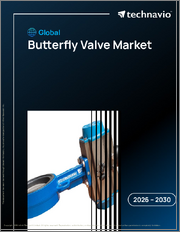
|
시장보고서
상품코드
2003922
버터플라이 밸브 시장 : 재료별, 유형별, 작동 방식별, 단부 접속별, 사이즈별, 용도별 - 시장 예측(2026-2032년)Butterfly Valve Market by Material, Type, Operation, End Connection, Size, Application - Global Forecast 2026-2032 |
||||||
 360iResearch
버터플라이 밸브 시장은 2025년에 195억 3,000만 달러로 평가되었고, 2026년에는 206억 3,000만 달러로 성장할 전망이며, CAGR 6.52%로 성장을 지속하여, 2032년까지 304억 달러에 이를 것으로 예측됩니다.
| 주요 시장 통계 | |
|---|---|
| 기준 연도 : 2025년 | 195억 3,000만 달러 |
| 추정 연도 : 2026년 | 206억 3,000만 달러 |
| 예측 연도 : 2032년 | 304억 달러 |
| CAGR(%) | 6.52% |
버터플라이 밸브는 산업 공정에서 유체 제어의 핵심적인 역할을 담당하고 있으며, 컴팩트한 디자인과 빠른 작동을 결합하여 다양한 처리 능력과 차단 요구 사항을 충족합니다. 전통적으로 다른 쿼터턴 밸브에 비해 가볍고 비용 효율적이기 때문에 선호되어 왔지만, 현대의 버터플라이 밸브 설계는 더 높은 압력 등급, 더 엄격한 누출 허용 오차, 더 엄격한 작동 요구 사항을 충족하도록 진화하고 있습니다. 시설에서 노후화된 설비의 개보수가 진행되고, 신규 플랜트에서는 모듈식 및 유지보수가 용이한 부품이 우선시되는 가운데, 버터플라이 밸브는 변동하는 유량 및 부식성 조건에서도 반복적인 성능이 요구되는 모든 부문에서 점점 더 주요한 부품으로 자리 잡고 있습니다.
기존의 장점에 더해, 다양한 재료와 단부 연결이 가능하기 때문에 자동화된 밸브 네트워크 및 원격 제어에 통합할 수 있어 그 매력이 더욱 커지고 있습니다. 배출가스, 수질, 안전과 관련된 규제 요인 또한 제조업체들에게 씰링 기술 및 인증 프로세스의 개선을 촉구하고 있습니다. 그 결과, 조달팀과 플랜트 엔지니어들은 버터플라이 밸브를 선택할 때 초기 비용뿐만 아니라 수명주기 내 유지보수성, 액추에이터의 상호운용성, 디지털 모니터링 시스템과의 호환성 등을 고려하게 되었습니다. 이러한 상황에서 각 설치 환경과 운영 프로파일에 적합한 솔루션을 찾기 위해서는 용도, 재료, 작동 방식, 연결 표준에 따른 설계상의 트레이드오프를 이해하는 것이 필수적입니다.
재료 혁신, 첨단 구동 기술, 디지털 상태 모니터링, 공급망 재구축으로 밸브 선택과 서비스 모델을 동시에 변화시키고 있습니다.
버터플라이 밸브 산업은 일련의 복합적인 변화가 진행되고 있으며, OEM, 공급업체 및 최종 사용자가 사양 수립, 공급 및 서비스 방식을 변화시키고 있습니다. 재료 과학의 발전으로 내식성을 높이면서도 경량화를 실현할 수 있는 합금과 폴리머의 선택 폭이 넓어졌고, 밸브는 이전보다 더 가혹한 매체와 고온 환경에서 작동할 수 있게 되었습니다. 동시에 구동 기술도 성숙해졌습니다. 전기, 유압 및 공압 구동 옵션은 보다 정밀한 위치 제어와 통합된 피드백 기능을 통합하여 연속 및 배치 공정 모두에서 공정 정확도에 대한 요구 사항을 지원합니다.
밸브 공급망 전반에서 2025년 미국 관세 조치가 조달, 공급업체 경제성, 재고 정책, 제품 설계 전략에 미치는 영향 평가
2025년에 도입된 관세 조치는 밸브 산업 생태계 내 조달 결정, 공급업체의 경제성, 가격 전략에 파급되는 누적 영향을 미쳤습니다. 특정 원자재 및 완제품에 대한 수입 관세가 인상됨에 따라 조달팀은 단가에만 의존하지 않고 총 착륙 비용을 재평가하게 되었습니다. 일부 경우, 바이어는 관세 위험을 줄이고 리드 타임의 변동을 줄이기 위해 지역 공급업체의 인증 프로세스를 가속화하여 관세 위험을 줄였습니다. 이러한 변화는 이차적인 영향을 가져왔습니다. 수직계열화 역량을 갖춘 공급업체는 비용과 일정 리스크를 내재화하여 경쟁 우위를 확보한 반면, 순수 부품 수출업체는 유통 모델 재구축과 수익률 압박을 흡수해야 하는 압력에 직면했습니다.
용도 요구사항, 재료 선택, 밸브 유형, 작동 방식, 끝단 연결, 크기 분류를 성능 및 수명주기 성과와 일치시키는 세분화 기반 인사이트
세분화를 통해 제품과 상업적 전략을 분석하면 용도, 재료, 유형, 동작, 단부 연결, 크기 등 각 차원에서 실행 가능한 명확한 방향을 제시할 수 있습니다. 용도별로 평가하면, 화학 및 석유화학 환경용으로 지정된 제품은 내식성과 기밀성을 우선시하고, 석유 및 가스 용도는 내압 성능과 산업별 인증 준수에 중점을 둡니다. 발전용 사양은 열 사이클에 대한 내성과 낮은 유지보수성의 균형을 맞추며, 상하수도 용도는 내마모성 트림과 비용 효율적인 유지보수성을 중요시합니다. 재료의 선택은 이러한 성능상의 트레이드오프에 직접적인 영향을 미칩니다. 합금강과 스테인리스는 열악한 공정 환경에서 우수한 내식성과 내열성을 발휘하고, 탄소강은 부식성이 낮은 조건에서 강도와 비용의 균형을 이루며, 주철은 비용과 제조 용이성이 주요 고려 사항인 경우에 여전히 유용합니다.
세계 각지의 제조 거점, 규정 준수 노력, 애프터마켓 서비스 모델, 조달 선호도를 결정하는 지역별 동향 비교
지역별 동향은 전 세계 생산기지, 조달 전략, 서비스 네트워크 형성에 있어 매우 중요합니다. 북미와 남미 지역에서는 강력한 애프터마켓 시스템과 기존 배관 표준을 준수하는 밸브를 필요로 하는 개보수 프로그램, 에너지 전환 프로젝트, 노후화된 인프라의 업그레이드가 수요를 견인하고 있습니다. 그 결과, 신속한 부품 공급과 현장 서비스 업무를 지원할 수 있는 현지 제조 및 유통 거점은 분명한 경쟁 우위를 보이고 있습니다. 유럽, 중동 및 아프리카의 경우, 다양한 규제와 폭넓은 산업적 용도 분야로 인해 유연한 제품 포트폴리오와 강력한 컴플라이언스 역량을 갖춘 공급업체에게 기회가 주어지고 있습니다. 복잡한 인증 제도를 적절히 관리하고 지역에 맞는 재료와 씰링 솔루션을 제공할 수 있는 공급업체는 이 지역에서 사업을 운영하는 산업 바이어들로부터 우선적으로 선택되고 있습니다.
주요 제조업체와 공급업체가 제품 혁신, 통합 서비스, 전략적 파트너십을 결합하여 경쟁 우위와 고객 정착을 강화하는 방법은 무엇인가?
버터플라이 밸브 부문의 주요 기업들은 제품 차별화, 서비스 확대, 전략적 파트너십을 결합하여 경쟁 우위를 재정의하고 있습니다. 많은 기존 제조업체들은 누출을 줄이고 수명을 늘리기 위해 재료 개발 및 고유한 씰링 기술에 투자하는 한편, 액추에이터와 포지셔너를 확장하고 조달 및 설치를 간소화하는 통합 밸브 패키징을 제공합니다. 반면, 다른 기업들은 운영 우수성에 초점을 맞추고 자동화 및 린 생산 방식을 통해 제조를 최적화하여 리드 타임을 단축하고 제품군 전반의 품질 일관성을 개선하고 있습니다.
밸류체인 강화, 제품 업그레이드, 서비스 모델을 예지보전 및 라이프사이클 가치 획득으로 전환하기 위한 리더를 위한 실천적이고 우선순위가 높은 액션
업계 리더는 인사이트를 강력한 상업적, 기술적 성과로 전환하는 일련의 실천적 행동을 우선시해야 합니다. 우선, 주요 합금 등급 및 액추에이터 부품의 단일 공급원에 대한 의존도를 줄이기 위해 공급업체 다변화 정책을 도입하고, 납기 준수 및 품질 향상을 장려하는 계약 조건을 수립하는 것부터 시작합니다. 동시에, 지정학적 마찰과 관세로 인해 비용과 일정에 불확실성이 있는 지역에서 니어쇼어링을 가능하게 하기 위해 지역 공급업체를 위한 인증 프로그램을 가속화합니다. 제품 측면에서는 대상 용도 분야에서 배출량을 확실하게 줄이고 평균수명주기(MTBF)를 연장할 수 있는 씰링 기술, 재료 코팅, 트림 금속 가공 기술에 선택적으로 투자해야 합니다.
1차 인터뷰, 공장 감사, 기술 검증, 시나리오 분석을 통합하여 의사결정권자를 위한 견고하고 재현 가능한 조사방법을 제공합니다.
본 조사 접근법은 정성적 및 정량적 조사방법을 결합하여 의사결정에 즉각적으로 활용할 수 있는 견고하고 즉각적인 결과를 도출하였습니다. 1차 조사에서는 대표적인 산업의 플랜트 엔지니어, 조달 책임자, 고위 경영진을 대상으로 구조화된 인터뷰를 실시하여 실제 사양 결정 요인, 신뢰성 관련 과제, 구매 제약 요인을 파악했습니다. 공급업체 평가에는 공장 방문 및 공정 감사, 제조 관행, 품질 관리 절차, 생산 능력의 유연성 등을 확인했습니다. 기술 검증은 재료 데이터 시트, 성능 검사 보고서, 액추에이터 통합 사례 연구를 면밀히 검토하여 적용 적합성 및 고장 모드를 확인했습니다.
통합 엔지니어링, 공급망 민첩성, 애프터마켓의 우수성이 경쟁과 가동률에 영향을 미치는 이유를 보여주는 전략적 우선순위 통합
이러한 분석을 종합하면, 버터플라이 밸브는 여전히 산업용 유체 시스템에서 매우 중요한 구성 요소이지만, 경쟁 규칙과 사양이 빠르게 변화하고 있음을 알 수 있습니다. 재료의 진보, 더 스마트한 작동 메커니즘, 디지털 모니터링은 신중하게 통합되면 성능을 향상시키고 수명주기 비용을 절감할 수 있습니다. 그러나 이러한 이점을 실현하기 위해서는 체계적인 공급업체 전략, 신중한 단자 연결 및 크기 선택, 조달 인센티브와 장기적인 운영 성과와의 일관성이 필수적입니다. 무역 정책의 변화 및 지역적 추세로 인해 기업은 수익률을 보장하고 가동 시간 약속을 유지하기 위해 밸브 제조, 조달 및 서비스 제공 위치를 재평가할 수밖에 없습니다.
자주 묻는 질문
목차
제1장 서문
제2장 조사 방법
제3장 주요 요약
제4장 시장 개요
제5장 시장 인사이트
제6장 미국 관세의 누적 영향(2025년)
제7장 AI의 누적 영향(2025년)
제8장 버터플라이 밸브 시장 : 재료별
제9장 버터플라이 밸브 시장 : 유형별
제10장 버터플라이 밸브 시장 : 조작별
제11장 버터플라이 밸브 시장 : 단부 접속별
제12장 버터플라이 밸브 시장 : 사이즈별
제13장 버터플라이 밸브 시장 : 용도별
제14장 버터플라이 밸브 시장 : 지역별
제15장 버터플라이 밸브 시장 : 그룹별
제16장 버터플라이 밸브 시장 : 국가별
제17장 미국의 버터플라이 밸브 시장
제18장 중국의 버터플라이 밸브 시장
제19장 경쟁 구도
AJY 26.04.24The Butterfly Valve Market was valued at USD 19.53 billion in 2025 and is projected to grow to USD 20.63 billion in 2026, with a CAGR of 6.52%, reaching USD 30.40 billion by 2032.
| KEY MARKET STATISTICS | |
|---|---|
| Base Year [2025] | USD 19.53 billion |
| Estimated Year [2026] | USD 20.63 billion |
| Forecast Year [2032] | USD 30.40 billion |
| CAGR (%) | 6.52% |
Butterfly valves occupy a central role in fluid control across industrial processes, combining compact design with rapid operation to meet diverse throughput and isolation requirements. Historically favored for their low weight and cost-effectiveness relative to other quarter-turn valves, modern butterfly valve designs have evolved to address higher pressure classes, tighter leakage tolerances, and more exacting actuation demands. As facilities retrofit aging assets and new plants prioritize modular, easy-to-maintain components, butterfly valves increasingly serve as a workhorse component across sectors that demand repeatable performance under variable flow and corrosive conditions.
Beyond classical advantages, the device's compatibility with a broad spectrum of materials and end connections has made it attractive for integration into automated valve networks and remote operations. Regulatory drivers tied to emissions, water quality, and safety have also pushed manufacturers to refine sealing technologies and certification pathways. Consequently, procurement teams and plant engineers weigh not only initial cost but lifecycle serviceability, actuator interoperability, and compatibility with digital monitoring systems when selecting butterfly valves. In this context, understanding design trade-offs across applications, materials, actuation types, and connection standards becomes critical for specifying the right solution for each installation and operational profile.
How materials innovation, advanced actuation, digital condition monitoring, and supply chain restructuring are simultaneously reshaping valve selection and service models
The landscape for butterfly valves is undergoing a series of converging shifts that are altering how original equipment manufacturers, suppliers, and end users approach specification, supply, and service. Advances in materials science have expanded the palette of alloys and polymers that combat corrosion while reducing weight, enabling valves to operate in more aggressive media and at higher temperatures than before. Simultaneously, actuation technology has matured: electric, hydraulic, and pneumatic actuation options now incorporate finer-positioning control and integrated feedback, supporting demands for process precision in both continuous and batch processes.
Digitalization is another transformative vector. Smart positioners, embedded sensors, and condition monitoring enable predictive maintenance regimes, reducing unscheduled downtime and allowing operations teams to shift from calendar-based service to interventions driven by asset health indicators. Supply chain dynamics are also shifting; greater emphasis on regional sourcing, multi-tier supplier visibility, and inventory optimization is prompting manufacturers to localize production nodes and diversify raw material sources. Regulatory and sustainability pressures complement these technical shifts, motivating product redesigns that prioritize reduced fugitive emissions and recyclable materials. As a result, stakeholders must reassess engineering standards, procurement frameworks, and aftermarket service models to capture the benefits of these technological and structural changes.
Assessment of 2025 United States tariff impacts on sourcing, supplier economics, inventory policies, and product design strategies across the valve supply chain
The tariff measures introduced in the United States in 2025 have had cumulative effects that ripple across sourcing decisions, supplier economics, and pricing strategies within the valve ecosystem. Increased import duties on certain raw materials and finished components prompted procurement teams to re-evaluate total landed cost rather than relying on unit price alone. In several cases, buyers accelerated qualification of regional suppliers to mitigate tariff exposure and reduce lead-time volatility. This shift had secondary consequences: suppliers with vertically integrated capabilities gained a competitive edge by internalizing cost and schedule risks, while pure-play component exporters faced pressure to restructure distribution models or absorb margin compression.
Operationally, firms adjusted inventory policies to smooth the impact of intermittent tariff-driven cost increases, moving toward longer-term contracts and strategic safety stocks for critical material grades. Manufacturers also revisited product architectures to reduce dependence on tariff-sensitive inputs, opting for alternative materials or design simplifications where performance trade-offs were acceptable. Financially, some players reallocated investment from conventional capacity expansion into automation and local fabrication to protect gross margins. Overall, the tariff environment accelerated a broader trend toward supply chain resilience: companies prioritized supplier diversification, nearshoring, and design flexibility to maintain continuity of supply and predictable cost trajectories in the face of trade policy uncertainty.
Segmentation-driven insights that align application demands, material selections, valve types, actuation modalities, end connections, and size categories to performance and lifecycle outcomes
Breaking down product and commercial strategies through segmentation yields actionable clarity across application, material, type, operation, end connection, and size dimensions. When evaluated by application, products specified for chemical and petrochemical environments prioritize corrosion resistance and tight sealing, while oil and gas applications emphasize pressure ratings and compliance with industry-specific certifications; power generation specifications balance thermal cycling resilience with low maintenance needs, and water and wastewater applications favor abrasion-resistant trims and cost-effective serviceability. Material choice directly influences these performance trade-offs: alloy steel and stainless steel provide superior corrosion and temperature performance for demanding process environments, carbon steel balances strength and cost for less corrosive conditions, and cast iron remains relevant where cost and ease of manufacture are dominant considerations.
Type and form factor also shape deployment patterns. Double flanged and lug designs facilitate secure installations in high-pressure and removable valve contexts, whereas wafer types deliver space and weight savings that suit confined piping systems. Actuation modes determine automation readiness and response characteristics; electric actuation, in both AC and DC variants, supports precise positioning and integration with control systems, while hydraulic actuation, available in linear or quarter-turn configurations, offers high force density suitable for large sizes and extreme conditions. Pneumatic actuation, whether linear or quarter-turn, remains a preferred choice for fast cycling and intrinsically safe environments. End connection choices - butt weld, flanged, socket weld, and threaded - influence installation practices and maintenance approaches, with flanged options offering raised face or ring type joint designs to address varying pressure, sealing, and flange standard requirements. Finally, valve size tiers categorized as large, medium, and small correlate with installation complexity, actuation selection, and maintenance regimes, making size a central determinant in lifecycle cost and engineering planning. Together, these segment lenses allow stakeholders to map product features to operational needs and procurement priorities, enabling more precise specification and performance assurance.
Comparative regional dynamics that determine manufacturing footprints, compliance approaches, aftermarket service models, and procurement preferences across global regions
Regional dynamics are instrumental in shaping production footprints, sourcing strategies, and service networks across the globe. In the Americas, demand signals favor retrofit programs, energy transition projects, and aging infrastructure upgrades that require both robust aftermarket capabilities and valves that conform to legacy piping standards. As a result, local manufacturing and distribution hubs that can deliver parts quickly and support field service operations demonstrate clear competitive advantages. In Europe, Middle East & Africa, regulatory heterogeneity and a wide range of industrial end uses create opportunities for suppliers with flexible product portfolios and strong compliance capabilities. Suppliers that can navigate complex certification regimes and offer regionally adapted materials or sealing solutions gain preference among industrial buyers operating in this geography.
Asia-Pacific remains a major center for both manufacturing scale and rapid project-driven demand, where production economies support competitive pricing and suppliers often provide integrated solutions spanning fabrication, actuation, and system integration. Regional clusters benefit from dense supplier ecosystems that accelerate innovation adoption, yet buyers increasingly demand traceability and compliance as part of global supply chains. Across all regions, aftermarket responsiveness, spare parts availability, and field service expertise play decisive roles in procurement decisions, particularly where uptime and environmental compliance carry significant operational and financial consequences. Consequently, successful commercial strategies deploy a mix of localized capabilities, strategic distributor partnerships, and remote diagnostic services to address regional priorities and reduce time-to-repair.
How leading manufacturers and suppliers are combining product innovation, integrated services, and strategic partnerships to deepen competitive advantage and customer lock-in
Leading companies in the butterfly valve space are redefining competitive advantage through a combination of product differentiation, service expansion, and strategic partnerships. Many established manufacturers invest in materials development and proprietary sealing technologies to reduce leakage and improve lifetime performance, while simultaneously expanding actuation and positioner offerings to deliver integrated valve packages that simplify procurement and installation. Other players concentrate on operational excellence, optimizing manufacturing through automation and lean practices to shorten lead times and improve quality consistency across product families.
In parallel, several firms pursue service-led growth by scaling aftermarket operations, training field technicians, and offering digital support platforms for predictive maintenance. Strategic partnerships with actuator specialists, control system integrators, and materials suppliers allow companies to bundle solutions that address complex system-level requirements. Smaller, niche vendors often succeed by focusing on specialized applications that demand bespoke materials or unique end connections, securing loyal customer bases where standard products fall short. Across these behaviors, the ability to demonstrate compliance with safety and environmental standards, to provide transparent supply chain information, and to ensure rapid parts availability distinguishes market leaders from competitors pursuing purely transactional relationships.
Practical and prioritized actions for leaders to fortify supply chains, upgrade products, and shift service models toward predictive maintenance and lifecycle value capture
Industry leaders should prioritize a set of pragmatic actions that convert insight into resilient commercial and engineering outcomes. Begin by instituting supplier diversification policies that reduce single-source exposure for critical alloy grades and actuator components while establishing contractual terms that incentivize on-time delivery and quality. Simultaneously, accelerate qualification programs for regional suppliers to enable nearshoring where geopolitical friction or tariffs create cost and schedule uncertainty. On the product side, invest selectively in sealing technologies, material coatings, and trim metallurgy that demonstrably reduce emissions and extend mean time between repairs in targeted applications.
Operational teams should adopt predictive maintenance frameworks driven by embedded sensing and analytics to shift service models from reactive to condition-based interventions, thereby lowering unplanned downtime. Commercial functions need to reconfigure pricing and warranty models to reflect total lifecycle value rather than initial purchase price, and supply chain leaders must introduce scenario planning to stress-test procurement strategies against tariff, transportation, and raw-material disruptions. Finally, create cross-functional centers of excellence that codify lessons from retrofits and new-build projects, enabling faster specification cycles and consistent aftermarket delivery. These coordinated steps will enhance resilience, improve margin capture, and strengthen customer relationships across diverse operating environments.
Methodological framework integrating primary interviews, factory audits, technical validation, and scenario analysis to ensure robust and reproducible insights for decision-makers
The research approach combined qualitative and quantitative inquiry methods to generate robust, decision-ready insights. Primary engagement involved structured interviews with plant engineers, procurement leads, and senior executives across a representative set of industries to surface real-world specification drivers, reliability challenges, and purchasing constraints. Supplier assessments included factory visits and process audits to observe manufacturing practices, quality control protocols, and capacity flexibility. Technical validation entailed reviewing materials data sheets, performance testing reports, and actuator integration case studies to corroborate application fit and failure modes.
Secondary investigation triangulated regulatory frameworks, industry standards, and technology roadmaps to ensure interpretations reflected the most current compliance expectations and innovation trajectories. Data triangulation combined supplier-supplied performance figures with independent field feedback and service records to reduce bias and highlight discrepancies between claimed and observed performance. Scenario analysis and sensitivity testing were applied to evaluate supply chain and design alternatives under a range of demand and policy conditions. Throughout, methodological rigor emphasized reproducibility, source transparency, and an audit trail linking key conclusions to primary evidence and documented observations.
Synthesis of strategic priorities showing why integrated engineering, supply chain agility, and aftermarket excellence determine competitive resilience and operational uptime
The cumulative analysis highlights that butterfly valves remain a pivotal component across industrial fluid systems, but the rules of competition and specification are evolving rapidly. Material advances, smarter actuation, and digital monitoring enhance performance and reduce lifecycle costs when integrated thoughtfully; however, realization of these benefits depends on disciplined supplier strategies, careful end-connection and size selection, and an alignment of procurement incentives with long-term operational outcomes. Trade policy shifts and regional dynamics further compel companies to reassess where they manufacture, source, and service valves to preserve margin and maintain uptime commitments.
Looking forward, firms that combine engineering rigor with supply chain agility and aftermarket excellence will be best positioned to capture value. Those that lean into predictive maintenance, modular product architectures, and localized production capacity will reduce risk and accelerate time-to-service. Conversely, organizations that focus narrowly on initial price without accounting for installation complexity, certification needs, and spare-parts responsiveness risk higher total cost and operational disruption. In sum, purposeful integration of product, process, and procurement strategies will determine competitive standing in the coming cycle of technology adoption and regulatory tightening.
Table of Contents
1. Preface
- 1.1. Objectives of the Study
- 1.2. Market Definition
- 1.3. Market Segmentation & Coverage
- 1.4. Years Considered for the Study
- 1.5. Currency Considered for the Study
- 1.6. Language Considered for the Study
- 1.7. Key Stakeholders
2. Research Methodology
- 2.1. Introduction
- 2.2. Research Design
- 2.2.1. Primary Research
- 2.2.2. Secondary Research
- 2.3. Research Framework
- 2.3.1. Qualitative Analysis
- 2.3.2. Quantitative Analysis
- 2.4. Market Size Estimation
- 2.4.1. Top-Down Approach
- 2.4.2. Bottom-Up Approach
- 2.5. Data Triangulation
- 2.6. Research Outcomes
- 2.7. Research Assumptions
- 2.8. Research Limitations
3. Executive Summary
- 3.1. Introduction
- 3.2. CXO Perspective
- 3.3. Market Size & Growth Trends
- 3.4. Market Share Analysis, 2025
- 3.5. FPNV Positioning Matrix, 2025
- 3.6. New Revenue Opportunities
- 3.7. Next-Generation Business Models
- 3.8. Industry Roadmap
4. Market Overview
- 4.1. Introduction
- 4.2. Industry Ecosystem & Value Chain Analysis
- 4.2.1. Supply-Side Analysis
- 4.2.2. Demand-Side Analysis
- 4.2.3. Stakeholder Analysis
- 4.3. Porter's Five Forces Analysis
- 4.4. PESTLE Analysis
- 4.5. Market Outlook
- 4.5.1. Near-Term Market Outlook (0-2 Years)
- 4.5.2. Medium-Term Market Outlook (3-5 Years)
- 4.5.3. Long-Term Market Outlook (5-10 Years)
- 4.6. Go-to-Market Strategy
5. Market Insights
- 5.1. Consumer Insights & End-User Perspective
- 5.2. Consumer Experience Benchmarking
- 5.3. Opportunity Mapping
- 5.4. Distribution Channel Analysis
- 5.5. Pricing Trend Analysis
- 5.6. Regulatory Compliance & Standards Framework
- 5.7. ESG & Sustainability Analysis
- 5.8. Disruption & Risk Scenarios
- 5.9. Return on Investment & Cost-Benefit Analysis
6. Cumulative Impact of United States Tariffs 2025
7. Cumulative Impact of Artificial Intelligence 2025
8. Butterfly Valve Market, by Material
- 8.1. Alloy Steel
- 8.2. Carbon Steel
- 8.3. Cast Iron
- 8.4. Stainless Steel
9. Butterfly Valve Market, by Type
- 9.1. Double Flanged
- 9.2. Lug
- 9.3. Wafer
10. Butterfly Valve Market, by Operation
- 10.1. Electric
- 10.1.1. AC Electric
- 10.1.2. DC Electric
- 10.2. Hydraulic
- 10.2.1. Linear Hydraulic
- 10.2.2. Quarter Turn Hydraulic
- 10.3. Manual
- 10.4. Pneumatic
- 10.4.1. Linear Pneumatic
- 10.4.2. Quarter Turn Pneumatic
11. Butterfly Valve Market, by End Connection
- 11.1. Butt Weld
- 11.2. Flanged
- 11.2.1. Raised Face
- 11.2.2. Ring Type Joint
- 11.3. Socket Weld
- 11.4. Threaded
12. Butterfly Valve Market, by Size
- 12.1. Large
- 12.2. Medium
- 12.3. Small
13. Butterfly Valve Market, by Application
- 13.1. Chemical & Petrochemical
- 13.2. Oil & Gas
- 13.3. Power Generation
- 13.4. Water & Wastewater
14. Butterfly Valve Market, by Region
- 14.1. Americas
- 14.1.1. North America
- 14.1.2. Latin America
- 14.2. Europe, Middle East & Africa
- 14.2.1. Europe
- 14.2.2. Middle East
- 14.2.3. Africa
- 14.3. Asia-Pacific
15. Butterfly Valve Market, by Group
- 15.1. ASEAN
- 15.2. GCC
- 15.3. European Union
- 15.4. BRICS
- 15.5. G7
- 15.6. NATO
16. Butterfly Valve Market, by Country
- 16.1. United States
- 16.2. Canada
- 16.3. Mexico
- 16.4. Brazil
- 16.5. United Kingdom
- 16.6. Germany
- 16.7. France
- 16.8. Russia
- 16.9. Italy
- 16.10. Spain
- 16.11. China
- 16.12. India
- 16.13. Japan
- 16.14. Australia
- 16.15. South Korea
17. United States Butterfly Valve Market
18. China Butterfly Valve Market
19. Competitive Landscape
- 19.1. Market Concentration Analysis, 2025
- 19.1.1. Concentration Ratio (CR)
- 19.1.2. Herfindahl Hirschman Index (HHI)
- 19.2. Recent Developments & Impact Analysis, 2025
- 19.3. Product Portfolio Analysis, 2025
- 19.4. Benchmarking Analysis, 2025
- 19.5. AVK Holding A/S
- 19.6. Cameron International Corporation
- 19.7. Crane Co.
- 19.8. Emerson Electric Co.
- 19.9. Flowserve Corporation
- 19.10. GE Energy (General Electric Company)
- 19.11. IMI plc
- 19.12. KITZ Corporation
- 19.13. L&T Valves Limited
- 19.14. NIBCO INC.
- 19.15. Parker Hannifin Corporation
- 19.16. Pentair plc
- 19.17. Schuf Holding GmbH
- 19.18. The Weir Group PLC
- 19.19. Tyco International Ltd.
- 19.20. Velan Inc.
- 19.21. Watts Water Technologies, Inc.
- 19.22. Xomox Corporation