|
시장보고서
상품코드
2004209
직교 로봇 시장 : 축방향 움직임별, 적재 용량별, 기술별, 판매 채널별, 용도별, 최종 사용자별 - 시장 예측(2026-2032년)Cartesian Robots Market by Axis Movement, Payload Capacity, Technology, Distribution Channel, Application, End-User - Global Forecast 2026-2032 |
||||||
 360iResearch
직교 로봇 시장은 2025년에 179억 달러로 평가되었고, 2026년에는 197억 5,000만 달러로 성장할 전망이며, CAGR 10.95%로 성장을 지속하여, 2032년까지 370억 6,000만 달러에 이를 것으로 예측됩니다.
| 주요 시장 통계 | |
|---|---|
| 기준 연도 : 2025년 | 179억 달러 |
| 추정 연도 : 2026년 | 197억 5,000만 달러 |
| 예측 연도 : 2032년 | 370억 6,000만 달러 |
| CAGR(%) | 10.95% |
직교 로봇의 종합적인 도입 : 핵심 기능, 산업 전반의 응용 및 자동화에 대한 전략적 의미
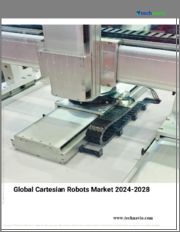
직선적인 X, Y, Z축의 움직임을 특징으로 하는 직교 로봇은 현대 제조업 및 실험실 자동화에서 많은 결정론적 동작 작업의 핵심적인 역할을 하고 있습니다. 이 책에서는 기본 아키텍처, 대표적인 제어 패러다임, 그리고 반복 정밀도, 프로그래밍 용이성, 도입 비용 측면에서 카르테시안 설계가 관절형 및 SCARA형 솔루션을 능가하는 운영 시나리오를 개괄적으로 설명합니다. 독자들은 갠트리 레이아웃, 레일 시스템, 그리고 칼테시안 마운트 엔드 이펙터의 실용적인 메커니즘에 초점을 맞추어 간결한 설계가 고빈도 픽앤플레이스, 기계 로딩, 정밀 디스펜싱과 같은 워크스트림에서 어떻게 예측 가능한 성능으로 이어지는지 이해할 수 있습니다.
기술 융합, 공급망 변화, 규제 환경의 변화가 주도하는 시장 환경의 변화가 직교 로봇의 도입을 재구성하고 있습니다.
직교 로봇의 자동화 환경은 기술 및 운영상의 변화가 교차하면서 재구성되고 있으며, 이로 인해 기능 도입이 가속화되는 한편, 공급업체와의 관계도 변화하고 있습니다. 임베디드 컴퓨팅과 실시간 제어의 발전으로 지연이 줄어들고 보다 정밀한 모션 제어가 가능해졌습니다. 이를 통해 기존에는 보다 복잡한 운동학을 필요로 하는 작업에도 직교 로봇 시스템을 적용할 수 있게 되었습니다. 동시에, 머신 비전과 비전 가이드 제어의 보급으로 허용 공차 범위가 확대되고 적응형 픽앤 플레이스 루틴이 가능해져 픽앤 플레이스 비용과 사이클 타임의 변동성을 줄일 수 있게 되었습니다.
2025년 미국 관세 조치가 직교 로봇에 영향을 미치는 부품 조달, 비용 구조, 리쇼어링 결정에 미치는 누적 효과
2025년 미국의 관세 조치는 직교 로봇 공급망, 부품 조달 전략 및 설비 투자 의사 결정에 파급되는 누적된 운영상의 마찰을 가져왔습니다. 수입되는 기계식 서브어셈블리, 구동 장치 및 특정 전자 모듈에 대한 관세로 인한 비용 상승으로 인해 바이어들은 공급업체 선정 기준을 재검토하고 현지 조달이 가능한 대안을 검토해야 했습니다. 많은 경우, 조달팀은 관세, 물류 변동성, 잠재적인 리드타임 프리미엄을 포함한 총 착륙 비용에 미치는 영향을 모델링하기 시작했으며, 이를 통해 국내 공급업체와 근해 파트너에 대한 보다 적극적인 공급업체 인증을 추진하고 있습니다.
축 이동, 중량 카테고리, 기술, 유통 채널, 용도 유형, 최종 사용자의 산업별 부문에 걸쳐 수요 추세를 파악할 수 있는 인사이트를 제공합니다.
엄격한 세분화 관점은 직교 로봇에 대한 수요가 동작 아키텍처, 중량 운반 능력, 기반 기술, 유통 경로, 용도 이용 사례 및 최종 사용자의 산업별 우선순위에 따라 어떻게 달라지는지 명확하게 보여줍니다. 축의 움직임을 고려하면 2축 및 3축 레이아웃에서 다축 구성에 이르기까지 다양한 선택이 가능합니다. 다축 카테고리 자체는 복잡한 공간 작업을 위한 복합적인 움직임을 가능하게 하는 4축 및 5축 변형으로 세분화됩니다. 적재 능력에 따라 시장은 더욱 세분화됩니다. 저하중 구간(0-5kg 및 5-10kg), 중하중 구간(10-15kg 및 15-20kg), 고하중 구간(20-50kg 및 50kg 이상)으로 구분되며, 각 구간은 프레임 설계, 액추에이터 선택 및 안전 시스템 요구사항에 영향을 미칩니다.
미주, 유럽, 중동 및 아프리카, 아시아태평양의 도입 패턴은 공급 탄력성, 현지화, 부문별 도입 추세를 강조하고 있습니다.
직교 로봇 도입의 지역별 동향은 산업 구조, 정책 환경, 공급망 토폴로지에 따라 뚜렷한 차이를 보입니다. 북미와 남미에서는 산업 자동화 프로그램이 자동차 및 전자 산업 클러스터의 제조 현대화에 중점을 두는 경향이 있으며, 현지화된 조립 라인과 유지 보수가 용이한 아키텍처에 대한 관심이 증가하고 있습니다. 자금에 대한 접근성과 시스템 통합사업자 생태계의 확장은 파일럿 단계에서 본격적인 도입으로 전환을 촉진하고 있으며, 지역 물류의 강점은 적시 보충 전략을 뒷받침하고 있습니다.
직교 로봇 벤더 및 통합업체들의 경쟁 분석 : 제품 설계, 서비스 모델, 파트너십, 연구 개발(R&D)에 중점을 둔 핵심 차별화 요소 파악
주요 벤더 및 시스템 통합사업자들은 제품 모듈성, 통합 툴킷, 서비스 생태계, 전략적 파트너십으로 정의되는 차별화된 경쟁 우위를 점하고 있습니다. 일부 공급업체는 통합 시간을 단축하기 위해 구성 가능한 갠트리 플랫폼과 검증된 엔드오브암 툴 카탈로그에 중점을 두는 반면, 다른 공급업체는 소프트웨어 스택에 많은 투자를 하여 API, 디지털 트윈 모델, 함대 수준 최적화를 가능하게 하는 오케스트레이션 계층을 제공합니다. 비전 벤더 및 센서 제조업체와의 파트너십은 차별화의 중요한 축이 되고 있으며, 벤더는 인식과 제어를 통합 솔루션에 번들로 묶어 최종 사용자의 통합 위험을 줄일 수 있습니다.
업계 리더가 직교 로봇 도입을 최적화하고, 통합을 가속화하고, 공급 위험을 관리하고, 운영 가치를 창출할 수 있는 실용적 제안
업계 리더는 직교 로봇 기술의 능력을 지속 가능한 운영 우위로 전환하기 위해 일련의 협력적 노력을 추진해야 합니다. 첫째, 선형 정확도와 단순한 운동학이 매우 높은 수익을 가져다주는 이용 사례(예 : 고빈도 픽앤플레이스, 기계 적재 작업 등)를 식별하고, 자동화 투자를 명확한 가치 흐름과 일치시켜야 합니다. 둘째, 설계 및 공급업체 선정에 있어 모듈성을 우선시하고, 최소한의 재작업으로 서브 어셈블리 및 엔드 이펙터를 교체할 수 있도록 합니다. 이를 통해 다운타임의 위험을 줄이고 업그레이드를 가속화할 수 있습니다.
1차 및 2차 조사에서 데이터 수집, 전문가 인터뷰, 신뢰성과 엄밀성을 보장하기 위한 다단계 검증 과정을 상세하게 기술한 강력한 조사 방법론
본 연구 접근법은 1차 정성조사와 구조화된 2차 증거의 통합을 결합하여 종합적이고 증거에 기반한 인사이트를 확보했습니다. 1차 조사에서는 장비 제조업체, 시스템 통합사업자, 자동화 엔지니어 및 최종 사용자의 조달 이해관계자와의 인터뷰를 통해 도입 시 과제, 설계 선호도, 우선순위 이용 사례를 파악했습니다. 인터뷰 결과는 기술 문서, 제품 로드맵, 표준 지침과 대조하여 성능에 대한 주장 및 상호운용성 특성을 검증했습니다.
직교 로봇이 산업 생산성, 경쟁력, 노동력의 역할 및 전략적 선택에 미치는 영향, 결정적인 전략적 통합에 대해 설명합니다.
이 보고서는 직교 로봇가 개별 제조 및 실험실 환경에서 운영 설계 옵션을 어떻게 형성하고 있는지를 종합적으로 분석합니다. 증거에 따르면, 직교 설계는 직선 운동, 반복성, 예측 가능한 처리량이 최우선 순위인 상황에서 탁월하며, 비전 시스템 및 IoT 연결과 같은 기반 기술이 기존의 제약을 완화함에 따라 그 역할이 확대되고 있습니다. 경쟁의 역학은 하드웨어뿐만 아니라 써드파티와의 통합, 애프터마켓 서비스, 소프트웨어 생태계에 의해 점점 더 결정되고 있으며, 이에 따라 벤더 선택은 장기적인 서비스를 제공할 수 있는 파트너로 이동하고 있습니다.
자주 묻는 질문
목차
제1장 서문
제2장 조사 방법
제3장 주요 요약
제4장 시장 개요
제5장 시장 인사이트
제6장 미국 관세의 누적 영향(2025년)
제7장 AI의 누적 영향(2025년)
제8장 직교 로봇 시장 : 축방향 움직임별
제9장 직교 로봇 시장 : 적재 용량별
제10장 직교 로봇 시장 : 기술별
제11장 직교 로봇 시장 : 유통 채널별
제12장 직교 로봇 시장 : 용도별
제13장 직교 로봇 시장 : 최종 사용자별
제14장 직교 로봇 시장 : 지역별
제15장 직교 로봇 시장 : 그룹별
제16장 직교 로봇 시장 : 국가별
제17장 미국의 직교 로봇 시장
제18장 중국의 직교 로봇 시장
제19장 경쟁 구도
AJYThe Cartesian Robots Market was valued at USD 17.90 billion in 2025 and is projected to grow to USD 19.75 billion in 2026, with a CAGR of 10.95%, reaching USD 37.06 billion by 2032.
| KEY MARKET STATISTICS | |
|---|---|
| Base Year [2025] | USD 17.90 billion |
| Estimated Year [2026] | USD 19.75 billion |
| Forecast Year [2032] | USD 37.06 billion |
| CAGR (%) | 10.95% |
Comprehensive introduction to Cartesian robotics outlining core capabilities, cross-industry applications, and strategic implications for automation
Cartesian robots, characterized by linear X, Y and Z axis movements, are central to many deterministic motion tasks within modern manufacturing and laboratory automation. This introduction outlines the fundamental architecture, typical control paradigms, and the operational contexts where Cartesian designs outperform articulated or SCARA solutions in repeatability, ease of programming, and cost-to-implement. By focusing on the practical mechanics of gantry layouts, rail systems, and Cartesian-mounted end effectors, readers can appreciate how design simplicity translates into predictable performance across high-cadence pick-and-place, machine loading, and precision dispensing workstreams.
Beyond core mechanics, this section situates Cartesian robots within broader systems engineering considerations. Integration with vision systems, grippers, and safety-rated collaborative features changes how engineers approach risk mitigation and throughput optimization. Transitioning from standalone arms toward modular gantry networks enables new topologies of cell consolidation and line-level automation. Consequently, procurement and engineering teams should weigh discrete benefits such as footprint efficiency and linear repeatability against systems-level trade-offs including integration complexity and spare-parts logistics. In this way, the introduction frames Cartesian robotics as a pragmatic, adaptable toolset for targeted automation challenges rather than a one-size-fits-all solution.
Market landscape transformation led by technological convergence, supply chain shifts, and changing regulatory dynamics reshaping Cartesian robot deployment
The automation landscape for Cartesian robots is being reshaped by intersecting technological and operational shifts that accelerate capability adoption while changing supplier relationships. Advances in embedded compute and real-time control have reduced latency and enabled tighter motion control, which in turn allows Cartesian systems to be applied in tasks that previously required more complex kinematics. Simultaneously, the proliferation of machine vision and vision-guided control expands the envelope of permissible tolerance and enables adaptive pick-and-place routines that reduce fixturing costs and cycle time variability.
Concurrently, supply chain reconfiguration and modularization trends are influencing procurement strategies. Manufacturers increasingly prefer configurable gantry subassemblies and prevalidated end-of-arm tooling to shorten integration windows. Regulatory and safety frameworks are also evolving, pushing vendors to offer safer human-machine collaboration modes and integrated guarding solutions. Taken together, these shifts create a new decision calculus for integrators and end users: technology convergence is lowering technical barriers while system-level considerations such as maintainability, interoperability, and lifecycle service become decisive factors in deployment planning. As a result, adoption is no longer determined solely by unit cost but by ecosystem fit and long-term operability.
Cumulative implications of United States tariff actions in 2025 on component sourcing, cost structures, reshoring decisions affecting Cartesian robotics
United States tariff actions in 2025 have introduced cumulative operational frictions that reverberate through Cartesian robot supply chains, component sourcing strategies, and capital procurement decisions. Tariff-driven cost increases on imported mechanical subassemblies, drives, and certain electronic modules have compelled buyers to reassess supplier selection criteria and to investigate localized alternatives. In many cases, procurement teams have begun to model total landed cost implications including tariffs, logistics variability, and potential lead-time premiums, which has prompted more aggressive supplier qualification of domestic vendors and nearshore partners.
Moreover, these policy changes have accelerated conversations about reshoring and dual-sourcing frameworks. For engineering organizations, the immediate response has often been to prioritize components with longer lead times for inventory buffering while rearchitecting designs to increase the use of modular, interchangeable parts that can be sourced from multiple geographies. At the same time, integrators and OEMs are exploring contractual hedges and pass-through pricing structures to manage margin volatility. Taken together, the tariff environment has not only influenced price and availability but has also catalyzed strategic shifts in sourcing philosophies, encouraging a more resilient configuration of supplier networks and inventory policies.
Segmented insights across axis movement, payload categories, technologies, distribution channels, application types, and end-user verticals revealing demand dynamics
A rigorous segmentation lens clarifies how demand for Cartesian robotics is differentiated by motion architecture, payload capability, enabling technologies, distribution pathways, application use-cases, and end-user vertical priorities. When considering axis movement, options range from Two-Axis and Three-Axis layouts to Multi-Axis configurations; the Multi-Axis category itself subdivides into Four-Axis and Five-Axis variants that unlock compound motion for complex spatial tasks. Payload capacity further stratifies the market into Low Payload bands covering 0-5kg and 5-10kg ranges, Medium Payload bands spanning 10-15kg and 15-20kg, and High Payload segments that include 20-50kg and 50kg & Above classes, each influencing frame design, actuator selection, and safety system requirements.
Technology deployment shapes system behavior, with AI and machine learning enabling predictive maintenance and adaptive motion profiles, IoT-enabled architectures delivering real-time telemetry for fleet orchestration, and vision-guided systems providing compensatory alignment and quality inspection capabilities. Distribution channels vary between Offline engagements such as direct OEM and systems integrator partnerships and Online procurement modalities that favor standardized, configurable modules. Application segmentation touches handling operations-encompassing assembly line handling, machine loading, and plastic molding-inspection workflows including quality control inspection, video analysis, and vision systems, material handling ecosystems with automated guided vehicles, conveyors and mobile robots, and packaging and labeling activities such as labeling and sorting, palletizing, and pick-and-place packaging. Lastly, end-user verticals differ markedly: aerospace needs emphasize assembly automation and parts fabrication, automotive priorities include manufacturing throughput, parts assembly and quality assurance, electronics demands center on assembly line automation and chip handling, food & beverage focuses on packaging and processing automation, and healthcare & pharmaceutical applications require solutions for drug manufacturing and packaging, laboratory automation, and surgical automation. Together, these segmentation axes provide a multi-dimensional perspective that helps engineering, procurement, and strategy teams align technical choices to operational objectives.
Regional adoption patterns across the Americas, Europe Middle East & Africa, and Asia-Pacific highlighting supply resilience, localization, and sectoral deployment trends
Regional dynamics in Cartesian robotics adoption display clear variation driven by industrial structure, policy environments, and supply chain topology. In the Americas, industrial automation programs tend to emphasize manufacturing modernization in automotive and electronics clusters, with increasing interest in localized assembly lines and service-friendly architectures. Access to capital and a growing ecosystem of system integrators facilitate pilot-to-scale transitions, while regional logistics strengths support just-in-time replenishment strategies.
Across Europe, Middle East & Africa, the landscape is fragmented but technologically sophisticated, with stringent regulatory and safety standards encouraging adoption of advanced control and functional safety features. Northern and Western European markets emphasize energy efficiency and modular integration, whereas pockets in the Middle East and Africa prioritize cost-effective, ruggedized installations suited to harsh operating conditions. In Asia-Pacific, dense manufacturing hubs and mature electronics supply chains drive high-volume deployments; the combination of local component ecosystems and targeted government initiatives encourages both innovation and rapid scaling. As a result, firms operating across regions must adapt commercial and technical strategies to account for localization, compliance variability, and the differing pace of digital transformation in each geography.
Competitive mapping of Cartesian robot vendors and integrators revealing core differentiators in product design, service models, partnerships, and R&D focus
Leading vendors and systems integrators occupy differentiated competitive positions defined by product modularity, integration toolkits, service ecosystems, and strategic partnerships. Some suppliers emphasize configurable gantry platforms and a catalog of validated end-of-arm tooling to reduce integration time, while others invest heavily in software stacks-offering APIs, digital twin models, and orchestration layers that enable fleet-level optimization. Partnerships with vision vendors and sensor manufacturers have become a key axis of differentiation, enabling vendors to bundle perception and control into integrated solutions that reduce integration risk for end users.
Service and aftermarket capabilities also delineate competitive strength. Companies that provide field service networks, predictive maintenance subscriptions, and spare parts logistics create higher lifetime value propositions for customers. Meanwhile, integrators with deep vertical expertise-such as automotive or pharmaceuticals-offer prevalidated solution templates that shorten deployment cycles. Research and development priorities increasingly focus on improving energy efficiency, enhancing human-robot collaboration modes, and embedding machine learning-driven optimization. These strategic choices influence how vendors go-to-market, which partners they select, and how customers evaluate long-term total cost of ownership beyond upfront system price.
Actionable recommendations for industry leaders to optimize Cartesian robot adoption, accelerate integration, manage supply risk, and capture operational value
Industry leaders should pursue a set of coordinated actions to translate Cartesian robotics capabilities into sustainable operational advantage. First, align automation investments with clear value streams by identifying use-cases where linear accuracy and simple kinematics deliver outsized returns, such as high-frequency pick-and-place or machine loading tasks. Second, prioritize modularity in design and supplier selection so that subassemblies and end effectors can be swapped with minimal rework; this reduces downtime exposure and accelerates upgrades.
Third, adopt a resilient sourcing posture that combines local and nearshore suppliers with strategic inventory buffers for long lead-time components. Fourth, integrate vision and IoT telemetry at the outset to enable closed-loop quality control and condition-based maintenance; these technologies compound benefit over time by reducing defects and unplanned interruptions. Fifth, invest in workforce reskilling programs that transition technicians from reactive maintenance to system orchestration and data interpretation roles. Finally, structure commercial agreements with vendors to include SLAs for uptime and rapid access to spare parts, which will safeguard production continuity. By sequencing these steps-starting with targeted pilots and scaling through modular replication-leaders can mitigate risk while accelerating value realization.
Robust research methodology detailing primary and secondary data collection, expert interviews, and multi-step validation processes ensuring reliability and rigor
The research approach combined primary qualitative engagement and structured secondary evidence synthesis to ensure comprehensive, evidence-based insights. Primary work comprised interviews with equipment manufacturers, systems integrators, automation engineers, and end-user procurement stakeholders to surface deployment pain points, design preferences, and priority use-cases. Interview findings were triangulated with technical documentation, product roadmaps, and standards guidance to validate capability claims and interoperability characteristics.
Secondary analysis examined academic literature, standards bodies' publications, supplier white papers, and trade press coverage to capture technology trajectories and regulatory changes. Data integrity was maintained through a multi-step validation process that included cross-referencing vendor claims with independent case studies and, where feasible, with field performance reports. Analytical rigor was further reinforced by scenario analysis to test sensitivity to supply disruptions and tariff shifts. Together, these methods generated a layered evidence base that supports both descriptive characterization and practical recommendations for practitioners evaluating Cartesian automation initiatives.
Conclusive strategic synthesis highlighting how Cartesian robotics influence industrial productivity, competitive dynamics, workforce roles, and strategic choices
Taken together, the report synthesizes how Cartesian robotics are shaping operational design choices across discrete manufacturing and laboratory environments. The evidence suggests that Cartesian designs excel where linear motion, repeatability, and predictable throughput are paramount, and that their role is expanding as enabling technologies such as vision systems and IoT connectivity reduce traditional constraints. Competitive dynamics are increasingly determined by third-party integrations, aftermarket services, and software ecosystems rather than by hardware alone, which shifts vendor selection toward partners capable of long-term service delivery.
Workforce implications are notable: successful deployments combine modest headcount shifts with an emphasis on technician reskilling and collaboration between automation engineers and production teams. In summary, Cartesian robotics should be viewed as a strategic enabler for targeted throughput and quality gains, and organizations that thoughtfully integrate technology with supply resilience and talent development will capture the greatest operational benefit. The conclusion frames these themes into an actionable perspective for executives and technical leaders planning near-term automation programs.
Table of Contents
1. Preface
- 1.1. Objectives of the Study
- 1.2. Market Definition
- 1.3. Market Segmentation & Coverage
- 1.4. Years Considered for the Study
- 1.5. Currency Considered for the Study
- 1.6. Language Considered for the Study
- 1.7. Key Stakeholders
2. Research Methodology
- 2.1. Introduction
- 2.2. Research Design
- 2.2.1. Primary Research
- 2.2.2. Secondary Research
- 2.3. Research Framework
- 2.3.1. Qualitative Analysis
- 2.3.2. Quantitative Analysis
- 2.4. Market Size Estimation
- 2.4.1. Top-Down Approach
- 2.4.2. Bottom-Up Approach
- 2.5. Data Triangulation
- 2.6. Research Outcomes
- 2.7. Research Assumptions
- 2.8. Research Limitations
3. Executive Summary
- 3.1. Introduction
- 3.2. CXO Perspective
- 3.3. Market Size & Growth Trends
- 3.4. Market Share Analysis, 2025
- 3.5. FPNV Positioning Matrix, 2025
- 3.6. New Revenue Opportunities
- 3.7. Next-Generation Business Models
- 3.8. Industry Roadmap
4. Market Overview
- 4.1. Introduction
- 4.2. Industry Ecosystem & Value Chain Analysis
- 4.2.1. Supply-Side Analysis
- 4.2.2. Demand-Side Analysis
- 4.2.3. Stakeholder Analysis
- 4.3. Porter's Five Forces Analysis
- 4.4. PESTLE Analysis
- 4.5. Market Outlook
- 4.5.1. Near-Term Market Outlook (0-2 Years)
- 4.5.2. Medium-Term Market Outlook (3-5 Years)
- 4.5.3. Long-Term Market Outlook (5-10 Years)
- 4.6. Go-to-Market Strategy
5. Market Insights
- 5.1. Consumer Insights & End-User Perspective
- 5.2. Consumer Experience Benchmarking
- 5.3. Opportunity Mapping
- 5.4. Distribution Channel Analysis
- 5.5. Pricing Trend Analysis
- 5.6. Regulatory Compliance & Standards Framework
- 5.7. ESG & Sustainability Analysis
- 5.8. Disruption & Risk Scenarios
- 5.9. Return on Investment & Cost-Benefit Analysis
6. Cumulative Impact of United States Tariffs 2025
7. Cumulative Impact of Artificial Intelligence 2025
8. Cartesian Robots Market, by Axis Movement
- 8.1. Multi-Axis
- 8.1.1. Five-Axis
- 8.1.2. Four-Axis
- 8.2. Three-Axis
- 8.3. Two-Axis
9. Cartesian Robots Market, by Payload Capacity
- 9.1. High Payload
- 9.1.1. 20-50kg
- 9.1.2. 50 kg & Above
- 9.2. Low Payload
- 9.2.1. 0-5kg
- 9.2.2. 5-10kg
- 9.3. Medium Payload
- 9.3.1. 10-15kg
- 9.3.2. 15-20kg
10. Cartesian Robots Market, by Technology
- 10.1. AI and Machine Learning
- 10.2. IoT-Enabled
- 10.3. Vision-Guided
11. Cartesian Robots Market, by Distribution Channel
- 11.1. Offline
- 11.2. Online
12. Cartesian Robots Market, by Application
- 12.1. Handling Operations
- 12.1.1. Assembly Line Handling
- 12.1.2. Machine Loading
- 12.1.3. Plastic Molding
- 12.2. Inspection
- 12.2.1. Quality Control Inspection
- 12.2.2. Video Analysis
- 12.2.3. Vision System
- 12.3. Material Handling
- 12.3.1. Automated Guided Vehicles (AGVs)
- 12.3.2. Conveyors
- 12.3.3. Mobile Robots
- 12.4. Packaging & Labelling
- 12.4.1. Labeling and Sorting
- 12.4.2. Palletizing
- 12.4.3. Pick-And-Place Packaging
13. Cartesian Robots Market, by End-User
- 13.1. Aerospace
- 13.1.1. Assembly Automation
- 13.1.2. Parts Fabrication
- 13.2. Automotive
- 13.2.1. Manufacturing
- 13.2.2. Parts Assembly
- 13.2.3. Quality Assurance
- 13.3. Electronics
- 13.3.1. Assembly Line Automation
- 13.3.2. Chip Handling
- 13.4. Food & Beverage
- 13.4.1. Packaging Automation
- 13.4.2. Processing Automation
- 13.5. Healthcare & Pharmaceutical
- 13.5.1. Drug Manufacturing & Packaging
- 13.5.2. Laboratory Automation
- 13.5.3. Surgical Automation
14. Cartesian Robots Market, by Region
- 14.1. Americas
- 14.1.1. North America
- 14.1.2. Latin America
- 14.2. Europe, Middle East & Africa
- 14.2.1. Europe
- 14.2.2. Middle East
- 14.2.3. Africa
- 14.3. Asia-Pacific
15. Cartesian Robots Market, by Group
- 15.1. ASEAN
- 15.2. GCC
- 15.3. European Union
- 15.4. BRICS
- 15.5. G7
- 15.6. NATO
16. Cartesian Robots Market, by Country
- 16.1. United States
- 16.2. Canada
- 16.3. Mexico
- 16.4. Brazil
- 16.5. United Kingdom
- 16.6. Germany
- 16.7. France
- 16.8. Russia
- 16.9. Italy
- 16.10. Spain
- 16.11. China
- 16.12. India
- 16.13. Japan
- 16.14. Australia
- 16.15. South Korea
17. United States Cartesian Robots Market
18. China Cartesian Robots Market
19. Competitive Landscape
- 19.1. Market Concentration Analysis, 2025
- 19.1.1. Concentration Ratio (CR)
- 19.1.2. Herfindahl Hirschman Index (HHI)
- 19.2. Recent Developments & Impact Analysis, 2025
- 19.3. Product Portfolio Analysis, 2025
- 19.4. Benchmarking Analysis, 2025
- 19.5. ARBURG GmbH + Co KG
- 19.6. Bosch Rexroth AG
- 19.7. Brooks Automation Inc.
- 19.8. Cerebrus Corporation
- 19.9. Denso Corporation
- 19.10. ENGEL AUSTRIA GmbH
- 19.11. Festo Corporation
- 19.12. FUYU Technology
- 19.13. Gudel Group AG
- 19.14. Hirata Corporation
- 19.15. Honeywell International Inc.
- 19.16. IAI Industrieroboter Gmbh
- 19.17. JANOME Corporation
- 19.18. Koganei Corporation
- 19.19. KUKA AG
- 19.20. Midea Group Co. Ltd.
- 19.21. Mitsubishi Electric Corporation
- 19.22. Musashi Engineering, Inc.
- 19.23. Negri Bossi S.P.A.
- 19.24. Newmark Systems Incorporated
- 19.25. Nordson Corporation
- 19.26. Omron Corporation
- 19.27. Parker Hannifin Corporation
- 19.28. Samick Thk Co. Ltd.
- 19.29. Sepro Robotique SAS
- 19.30. Shibaura Machine CO., LTD
- 19.31. The Timken Company
- 19.32. TPA Robot
- 19.33. Yamaha Motor Co. Ltd.
- 19.34. Yushin Precision Equipment Co. Ltd.