|
시장보고서
상품코드
2005120
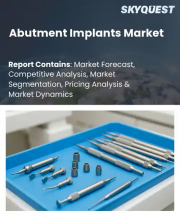
어버트먼트 임플란트 시장 : 소재별, 제품 유형별, 최종 사용자별, 접속 방식별, 유통 채널별 - 시장 예측(2026-2032년)Abutment Implants Market by Material, Product Type, End User, Connection Type, Distribution Channel - Global Forecast 2026-2032 |
||||||
 360iResearch
어버트먼트 임플란트 시장은 2025년에 5억 5,118만 달러로 평가되었고, 2026년에는 5억 9,218만 달러로 성장할 전망이며, CAGR 6.88%로 성장을 지속하여, 2032년까지 8억 7,824만 달러에 이를 것으로 예측됩니다.
| 주요 시장 통계 | |
|---|---|
| 기준 연도 : 2025년 | 5억 5,118만 달러 |
| 추정 연도 : 2026년 | 5억 9,218만 달러 |
| 예측 연도 : 2032년 | 8억 7,824만 달러 |
| CAGR(%) | 6.88% |
재료, 제조 기술 혁신, 변화하는 임상 및 조달 우선순위에 초점을 맞춘 현대의 어버트먼트 임플란트 시장에 대한 간략한 개요
어버트먼트 임플란트 분야는 첨단 생체 재료, 정밀 제조, 그리고 진화하는 임상 실습의 교차점에 위치하고 있습니다. 최근 몇 년 동안 임상의와 의료기기 제조업체는 심미성, 기능성 및 장기적인 조직 반응을 개선하기 위해 더욱 긴밀하게 협력하고 있습니다. 한편, 설계 및 제조의 혁신으로 리드 타임이 단축되고 더 높은 수준의 사용자 정의가 가능해졌습니다. 그 결과, 수술팀에서 조달 담당자에 이르기까지 이해관계자들은 내구성, 연조직과의 통합성, 그리고 진료 시간을 단축하는 효율적인 워크플로우를 우선순위에 두고 제품 선택 기준을 재검토하고 있습니다.
재료의 비약적 발전, 디지털 제조의 도입, 그리고 진화하는 조달 채널이 제품 전략과 임상 도입 경로를 재정의하는 방법
어버트먼트 임플란트 분야는 재료 혁신, 디지털 제조 및 변화하는 임상적 선호도에 힘입어 혁신적인 변화를 겪고 있습니다. 임상의들은 연조직 합병증을 최소화하면서 예측 가능한 심미적 결과를 제공하는 솔루션을 점점 더 선호하고 있으며, 이에 따라 제조업체들은 티타늄 시스템의 개선과 함께 지르코니아 개발에 투자하고 있습니다. 이러한 재료 개발의 수렴은 획일적인 구성 요소에서 환자의 해부학적 구조와 심미적 요구사항에 맞는 맞춤형 솔루션으로 전환하려는 업계 전반의 광범위한 움직임을 반영합니다.
최근 미국의 관세 조치가 어버트먼트 임플란트 생태계 전반에 걸쳐 공급처 선택, 공급망 복원력 전략 및 조달 행동을 어떻게 재구성하고 있는지 살펴봅니다.
최근 미국의 관세 동향은 어버트먼트 임플란트 조달 및 공급망 계산을 더욱 복잡하게 만들고 있습니다. 수입 관세 및 관련 무역 조치는 선적 비용뿐만 아니라 조달 결정, 재고 전략, 공급업체 선정 기준에도 영향을 미칩니다. 수입업체와 유통업체는 공급업체 거점을 재검토하고, 니어쇼어링 옵션을 검토하고, 무역 관련 리스크를 보다 명확하게 할당하는 계약 조건을 협상함으로써 대응하고 있습니다.
재료 선택, 맞춤형 생산 방식, 최종 사용자 수요, 연결 형태 및 다양한 유통 경로가 임상 채택 및 상업적 전략에 어떤 영향을 미치는지 파악할 수 있는 세부 세분화 분석
부문별 동향은 전체 어버트먼트 임플란트 시장에서 수요와 혁신이 어디에 집중되어 있는지를 자세히 보여줍니다. 소재의 차이가 제품의 포지셔닝을 좌우하고 있습니다. 티타늄은 수년간의 임상적 성과와 기계적 강도로 높은 평가를 받고 있지만, 심미성이 최우선시되는 분야에서는 지르코니아가 선호되고 있습니다. 지르코니아의 진화에는 특정 고강도 용도 분야에서 선호되는 모놀리식 지르코니아와 전치부 수복물에서 우수한 광학 특성을 제공하는 다층 지르코니아가 모두 포함됩니다. 이러한 재료의 진화가 임상의의 권장 사항과 수리 프로토콜을 형성하고 있습니다.
미주, 유럽, 중동 및 아프리카, 아시아태평양의 도입 패턴, 규제 다양성, 조달 방식 고도화의 차이를 보여주는 지역별 비교 분석
지역별 동향은 전략적 계획의 핵심이 됩니다. 왜냐하면 도입 패턴, 규제 프레임워크, 조달 관행이 지역마다 크게 다르기 때문입니다. 북미와 남미에서는 탄탄한 임상 네트워크, 높은 민간 치과 보급률, 그리고 선진화된 상환 환경이 기존 티타늄 시스템과 신흥 지르코니아 대체품의 급속한 보급을 뒷받침하고 있습니다. 이 지역의 조달 고도화는 통합 서비스 제공과 부가가치 기술 지원을 선호하는 경향이 있으며, 단순한 가격 비교를 넘어 벤더 선정에 영향을 미치고 있습니다.
기존 기업과 기동력 있는 신규 진출기업이 임상 관계, 제조 능력, 디지털 파트너십을 활용하여 시장 침투를 위해 어떻게 활용하고 있는지 파악할 수 있는 경쟁 정보 개요
어버트먼트 임플란트 분야 경쟁 구도는 기존 임플란트 시스템 제공업체, 전문 부품 제조업체, 그리고 신흥 디지털 우선 진출기업이 혼재되어 있음을 반영하고 있습니다. 기존 제조업체는 깊은 임상 관계, 풍부한 규제 대응 경험, 광범위한 유통 네트워크를 활용하여 의료 기관 조달 채널에서 입지를 유지하고 있습니다. 이러한 기존 기업들은 외과 의사와 보철 치과 의사의 지지를 유지하기 위해 제품의 단계적 개선, 공급의 신뢰성, 임상 교육 프로그램을 우선시하는 경우가 많습니다.
제품 채택과 상업적 성공을 가속화하기 위해 경영진이 제품, 제조, 유통 및 임상의와의 연계 전략을 조정할 수 있는 실용적이고 우선순위가 지정된 권장 사항
업계 리더는 기술력을 상업적 우위로 전환하기 위해 실행 가능한 일련의 노력을 우선순위에 두어야 합니다. 첫째, 지역 수요와 최종 사용자의 워크플로우에 부합하는 임상적으로 차별화된 가치 제안을 중심으로 제품 포트폴리오를 통합합니다. 이는 심미적, 생물학적 결과를 분명히 향상시키는 재료와 연결 방법을 결정하고, 그 이점을 외과 의사와 수복 팀에게 명확하게 전달할 수 있는 방법을 찾는 것을 의미합니다.
임상의와의 인터뷰, 기술 문헌, 규제 당국의 검토를 통합하여 실무적으로 관련성 있는 결과를 도출하는 혼합 연구 접근법을 투명하게 설명합니다.
이 조사는 임상의, 조달 담당자, 제조 전문가에 대한 1차 인터뷰, 동료 검토를 거친 임상 문헌, 규제 당국에 제출한 서류, 문서화된 제품 사양에 대한 면밀한 검토와 함께 통합적으로 이루어졌습니다. 이 접근법은 삼각측량(트라이앵글레이션)을 중시하며, 임상적 지식을 제조 능력 및 유통 실태와 비교하여 상호 검증함으로써 결론이 임상적 타당성뿐만 아니라 운영상의 타당성도 반영될 수 있도록 하고 있습니다.
재료, 제조, 임상적 검증, 상업적 전략의 통합을 지속적인 채택과 환자 결과 개선을 위한 길로 강조하는 간결한 통합
어버트먼트 임플란트 분야는 재료과학, 디지털 제조 및 상업적 전략이 융합되어 임상 실습을 재구성하는 전환점에 서 있습니다. 티타늄의 신뢰할 수 있는 성능에 대한 입증과 지르코니아의 심미성 및 연조직 결과에 대한 관심이 높아짐에 따라, 제조업체는 일관된 결과를 제공하기 위해 이러한 재료의 선택과 연결부 형상 및 보철 워크플로우를 조화롭게 조정해야 합니다. 디지털 생산 방식과 맞춤형 솔루션으로 환자 맞춤형 치료에 대한 장벽이 낮아지고 있지만, 이러한 발전에는 품질 관리 시스템과 임상의 교육에 대한 투자가 병행되어야 합니다.
자주 묻는 질문
목차
제1장 서문
제2장 조사 방법
제3장 주요 요약
제4장 시장 개요
제5장 시장 인사이트
제6장 미국 관세의 누적 영향(2025년)
제7장 AI의 누적 영향(2025년)
제8장 어버트먼트 임플란트 시장 : 소재별
제9장 어버트먼트 임플란트 시장 : 제품 유형별
제10장 어버트먼트 임플란트 시장 : 최종 사용자별
제11장 어버트먼트 임플란트 시장 : 접속 유형별
제12장 어버트먼트 임플란트 시장 : 유통 채널별
제13장 어버트먼트 임플란트 시장 : 지역별
제14장 어버트먼트 임플란트 시장 : 그룹별
제15장 어버트먼트 임플란트 시장 : 국가별
제16장 미국의 어버트먼트 임플란트 시장
제17장 중국의 어버트먼트 임플란트 시장
제18장 경쟁 구도
AJY 26.04.22The Abutment Implants Market was valued at USD 551.18 million in 2025 and is projected to grow to USD 592.18 million in 2026, with a CAGR of 6.88%, reaching USD 878.24 million by 2032.
| KEY MARKET STATISTICS | |
|---|---|
| Base Year [2025] | USD 551.18 million |
| Estimated Year [2026] | USD 592.18 million |
| Forecast Year [2032] | USD 878.24 million |
| CAGR (%) | 6.88% |
A concise orientation to the contemporary abutment implant landscape highlighting materials, manufacturing innovations, and shifting clinical and procurement priorities
The abutment implant sector sits at the intersection of advanced biomaterials, precision manufacturing, and evolving clinical practice. Recent years have seen clinicians and device manufacturers collaborate more closely to improve esthetics, functionality, and long-term tissue response, while innovations in design and production are reducing lead times and enabling greater customization. As a result, stakeholders from surgical teams to procurement officers are revisiting product selection criteria to prioritize durability, soft-tissue integration, and streamlined workflows that reduce chair time.
Transitioning from research-driven experimentation to clinically validated solutions has sharpened competitive dynamics. Developers are balancing proven titanium systems with the growing clinical appetite for zirconia alternatives, which promise superior aesthetics for anterior restorations and improved soft tissue outcomes in select patient cohorts. At the same time, advances in digital dentistry-driven by CAD/CAM and additive manufacturing-are reconfiguring supply chains and expanding the range of viable custom solutions. These technological shifts are complemented by evolving reimbursement frameworks and procurement behaviors that favor demonstrable clinical benefits and cost-efficient supply models.
Taken together, the industry is moving toward integrated offerings that combine material science, manufacturing agility, and evidence-based clinical protocols. Decision-makers require concise, actionable intelligence to navigate trade-offs among material choices, connection geometries, and distribution strategies, ensuring that product investments align with both clinician expectations and patient outcomes.
How material breakthroughs, digital manufacturing adoption, and evolving procurement channels are collectively redefining product strategies and clinical adoption pathways
The abutment implant arena is undergoing transformative shifts driven by material innovation, digital manufacturing, and changing clinical preferences. Clinicians are increasingly favoring solutions that deliver predictable esthetic outcomes while minimizing soft-tissue complications, prompting manufacturers to invest in zirconia development alongside improvements in titanium systems. This convergence of material pathways reflects a broader industry move from one-size-fits-all components toward tailored solutions that match patient anatomy and esthetic demands.
Simultaneously, digital workflows are maturing. CAD/CAM systems and additive manufacturing have moved from experimental to operational use in many specialty clinics and dental laboratories, enabling faster turnaround for custom abutments and reducing dependency on centralized production. The ability to produce patient-specific geometries improves prosthetic fit and clinician satisfaction, while also placing pressure on traditional stock product providers to differentiate on speed, cost, or integrated service offerings.
Procurement channels are also evolving. Healthcare buyers and clinic operators are adopting procurement strategies that weigh clinical evidence, total cost of ownership, and supply resilience. Distribution models extend beyond traditional distributors to include direct tender arrangements and e-commerce platforms that streamline ordering and inventory management. These combined shifts require suppliers to be agile across manufacturing, regulatory compliance, and commercial models to maintain clinical relevance and secure long-term adoption.
Examining how recent United States tariff measures are reshaping sourcing choices, supply chain resilience strategies, and procurement behavior across the abutment implant ecosystem
Recent tariff developments in the United States have injected additional complexity into the procurement and supply-chain calculus for abutment implants. Import duties and related trade measures affect not only landed cost but also sourcing decisions, inventory strategies, and supplier selection criteria. Importers and distributors are responding by reassessing supplier footprints, considering nearshoring options, and negotiating contract terms that more explicitly allocate trade-related risk.
Clinicians and institutional buyers are feeling indirect effects through pricing pressures and altered product availability. In some instances, higher landed costs have accelerated conversations about local manufacturing and domestic capacity building, with stakeholders assessing the feasibility of shifting production to regions with favorable trade relationships or closer proximity to end-users. At the same time, manufacturers outside of tariff jurisdictions are leveraging their relative cost advantage to pursue expanded distribution agreements and to strengthen relationships with national distributors.
Operationally, supply chain teams are refining inventory policies to buffer against volatility, increasing visibility across tiered suppliers, and identifying alternative components or materials that maintain clinical performance while reducing exposure to tariff-related cost swings. Regulatory compliance and quality control remain paramount during any sourcing transition, and successful organizations are those that balance cost management with the rigorous clinical and safety standards required for implantable dental components.
In-depth segmentation analysis revealing how material choices, custom production methods, end-user demands, connection geometries, and diverse distribution routes shape clinical adoption and commercial strategy
Segment-level dynamics offer a nuanced view of where demand and innovation are concentrating across the abutment implant space. Material distinctions drive product positioning: titanium continues to be prized for its long-standing clinical performance and mechanical strength, while zirconia is gaining traction where esthetic considerations are paramount. Zirconia's evolution includes both monolithic zirconia options, favored for certain high-strength applications, and multi-layer zirconia variants that offer improved optical properties for anterior restorations; these material pathways are shaping clinician recommendations and restorative protocols.
Product type segmentation differentiates off-the-shelf stock abutments from increasingly popular custom solutions. Custom abutments are being delivered via CAD/CAM workflows and additive manufacturing techniques such as 3D printing, enabling individualized emergence profiles and enhanced soft-tissue management. This capability is particularly valued in complex cases where prosthetic contours and esthetics are critical, whereas stock abutments retain relevance for standardized cases that prioritize cost efficiency and rapid availability.
End users vary in clinical needs and procurement sophistication. Dental clinics frequently pursue solutions that streamline chairside workflows and improve aesthetic outcomes, hospitals emphasize compatibility with broader surgical protocols and inventory management, and specialty clinics prioritize advanced restorative options and bespoke components. Connection type matters clinically and operationally; ball connector systems, external hex, and internal hex interfaces each offer distinct surgical handling characteristics and prosthetic considerations that influence clinician preference and inventory strategy. Finally, distribution channels influence access and purchasing behavior. Direct tender arrangements offer large institutional buyers predictable supply terms, distributors provide breadth of product offerings and local service, and online channels are simplifying ordering for smaller practices and enabling faster replenishment. These segmentation lenses collectively inform product development, commercial targeting, and supply chain design.
Comparative regional intelligence showing how adoption patterns, regulatory diversity, and procurement sophistication differ across the Americas, Europe Middle East & Africa, and Asia-Pacific
Regional dynamics are central to strategic planning as adoption patterns, regulatory frameworks, and procurement practices vary significantly across geographies. In the Americas, strong clinical networks, high levels of private dental practice penetration, and advanced reimbursement environments support rapid uptake of both established titanium systems and emerging zirconia alternatives. Procurement sophistication in this region often favors integrated service offerings and value-added technical support, influencing vendor selection beyond simple price comparisons.
Across Europe, Middle East & Africa, the regulatory landscape and heterogeneous healthcare systems lead to differentiated adoption curves. Some markets show early enthusiasm for aesthetic-driven zirconia solutions and digitally enabled services, while others rely on traditional titanium-based systems due to entrenched clinical protocols and supply relationships. Distributors play a pivotal role in bridging manufacturer capabilities with diverse clinical settings, and cross-border trade considerations influence sourcing strategies and distribution footprints.
In Asia-Pacific, rapid investment in dental infrastructure, growing middle-class demand for elective dental procedures, and an expanding network of specialty clinics are driving innovation adoption. Manufacturers looking to expand in this region must navigate varied regulatory requirements, local manufacturing expectations, and evolving clinician preferences that increasingly value both aesthetic outcomes and digitally integrated workflows. Each region presents distinct opportunities and constraints, and companies that tailor their product, regulatory, and commercial approaches to regional realities are better positioned to capture clinical adoption and build durable partnerships.
Competitive intelligence overview identifying how incumbents and agile entrants leverage clinical relationships, manufacturing capabilities, and digital partnerships to win adoption
Competitive dynamics in the abutment implant segment reflect a mix of established implant system providers, specialty component manufacturers, and emerging digital-first entrants. Established manufacturers leverage deep clinical relationships, extensive regulatory experience, and broad distribution networks to maintain presence in institutional procurement channels. These incumbents often prioritize incremental product enhancements, supply reliability, and clinical education programs to sustain preference among surgeons and restorative dentists.
Concurrently, smaller and more agile companies are carving niches by focusing on material innovation, customized manufacturing workflows, or digital integration that shortens delivery cycles. These entrants frequently collaborate with dental laboratories and specialty clinics to validate performance and to build clinical case libraries that support adoption. Partnerships between component manufacturers and digital-platform providers are also becoming more common, creating bundled offerings that simplify the transition to CAD/CAM or additive workflows for clinicians who lack in-house digital capabilities.
Across the competitive landscape, firms that combine demonstrable clinical outcomes with flexible manufacturing and responsive distribution tend to win adoption. Strategic investments in regulatory pathways, clinician training, and after-sales technical support are differentiators. The most successful organizations align product development with the practical realities of clinical workflows and procurement processes, ensuring that innovations translate into tangible benefits at the point of care.
Practical, prioritized recommendations for executives to align product, manufacturing, distribution, and clinician engagement strategies to accelerate adoption and commercial success
Industry leaders should prioritize a set of actionable initiatives to convert technical capability into commercial advantage. First, align product portfolios around clinically differentiated value propositions that match regional demands and end-user workflows. This means advancing material and connection decisions that demonstrably improve esthetic and biological outcomes while communicating those benefits clearly to surgeons and restorative teams.
Second, invest in digital and manufacturing flexibility. Expanding CAD/CAM compatibility and selective use of additive manufacturing can reduce lead times for custom abutments and enhance clinician satisfaction. Equally important is the development of robust quality and regulatory processes that permit rapid iteration without compromising safety or compliance.
Third, refine distribution strategies to balance reach with service. A hybrid approach that combines direct tender relationships for large institutional buyers, selective distributor partnerships for market coverage, and targeted online channels for smaller practices can optimize accessibility and control. Finally, strengthen clinician engagement through targeted education, case support, and evidence generation that underscores clinical benefits. By integrating these initiatives, companies can reduce friction in adoption pathways and create sustainable differentiation.
Transparent explanation of the mixed-methods research approach that integrates clinician interviews, technical literature, and regulatory review to produce operationally relevant insights
This research synthesizes primary interviews with clinicians, procurement officers, and manufacturing experts, combined with a careful review of peer-reviewed clinical literature, regulatory filings, and documented product specifications. The approach emphasizes triangulation: clinical insights are cross-validated against manufacturing capabilities and distribution realities to ensure conclusions reflect operational feasibility as well as clinical desirability.
Primary qualitative research involved structured conversations with restorative dentists, oral surgeons, dental lab managers, and supply-chain leaders to understand drivers of product selection, tolerance for new materials, and the practicalities of integrating custom solutions into existing workflows. Secondary sources focused on material science developments, published comparative studies on abutment outcomes, and regulatory guidance that informs product registration and clinical use. Wherever possible, technical claims were corroborated by device documentation and clinical case series to provide a balanced assessment.
Analytical methods prioritize actionable synthesis over broad numerical forecasting. The study highlights practical implications, trade-offs, and decision levers for stakeholders considering product development, market entry, or portfolio optimization, ensuring recommendations are grounded in both clinical practice and commercial realities.
A concise synthesis emphasizing the convergence of materials, manufacturing, clinical validation, and commercial strategy as the pathway to durable adoption and improved patient outcomes
The abutment implant sector stands at an inflection point where material science, digital manufacturing, and commercial strategy converge to reshape clinical practice. Titanium's legacy of reliable performance coexists with growing interest in zirconia for aesthetic and soft-tissue outcomes, and manufacturers must reconcile these material choices with connection geometries and prosthetic workflows to deliver consistent results. Digital production methods and customized solutions are reducing barriers to tailored care, yet these advances require parallel investments in quality systems and clinician education.
Procurement and distribution dynamics are also evolving, with tariff considerations and regional regulatory differences prompting a re-evaluation of sourcing and inventory strategies. Organizations that proactively address supply-chain resilience, while maintaining rigorous clinical validation, will be better positioned to navigate volatility. Ultimately, success favors companies that couple technical excellence with pragmatic commercialization: clear evidence of clinical benefit, responsive manufacturing capabilities, and channel strategies aligned to end-user needs.
Leaders who focus on integrated offerings-materials, manufacturing, clinical support, and distribution-can convert innovation into market adoption and deliver superior patient outcomes.
Table of Contents
1. Preface
- 1.1. Objectives of the Study
- 1.2. Market Definition
- 1.3. Market Segmentation & Coverage
- 1.4. Years Considered for the Study
- 1.5. Currency Considered for the Study
- 1.6. Language Considered for the Study
- 1.7. Key Stakeholders
2. Research Methodology
- 2.1. Introduction
- 2.2. Research Design
- 2.2.1. Primary Research
- 2.2.2. Secondary Research
- 2.3. Research Framework
- 2.3.1. Qualitative Analysis
- 2.3.2. Quantitative Analysis
- 2.4. Market Size Estimation
- 2.4.1. Top-Down Approach
- 2.4.2. Bottom-Up Approach
- 2.5. Data Triangulation
- 2.6. Research Outcomes
- 2.7. Research Assumptions
- 2.8. Research Limitations
3. Executive Summary
- 3.1. Introduction
- 3.2. CXO Perspective
- 3.3. Market Size & Growth Trends
- 3.4. Market Share Analysis, 2025
- 3.5. FPNV Positioning Matrix, 2025
- 3.6. New Revenue Opportunities
- 3.7. Next-Generation Business Models
- 3.8. Industry Roadmap
4. Market Overview
- 4.1. Introduction
- 4.2. Industry Ecosystem & Value Chain Analysis
- 4.2.1. Supply-Side Analysis
- 4.2.2. Demand-Side Analysis
- 4.2.3. Stakeholder Analysis
- 4.3. Porter's Five Forces Analysis
- 4.4. PESTLE Analysis
- 4.5. Market Outlook
- 4.5.1. Near-Term Market Outlook (0-2 Years)
- 4.5.2. Medium-Term Market Outlook (3-5 Years)
- 4.5.3. Long-Term Market Outlook (5-10 Years)
- 4.6. Go-to-Market Strategy
5. Market Insights
- 5.1. Consumer Insights & End-User Perspective
- 5.2. Consumer Experience Benchmarking
- 5.3. Opportunity Mapping
- 5.4. Distribution Channel Analysis
- 5.5. Pricing Trend Analysis
- 5.6. Regulatory Compliance & Standards Framework
- 5.7. ESG & Sustainability Analysis
- 5.8. Disruption & Risk Scenarios
- 5.9. Return on Investment & Cost-Benefit Analysis
6. Cumulative Impact of United States Tariffs 2025
7. Cumulative Impact of Artificial Intelligence 2025
8. Abutment Implants Market, by Material
- 8.1. Titanium
- 8.2. Zirconia
- 8.2.1. Monolithic Zirconia
- 8.2.2. Multi-Layer Zirconia
9. Abutment Implants Market, by Product Type
- 9.1. Custom
- 9.1.1. 3D Printed
- 9.1.2. CAD/CAM
- 9.2. Stock
10. Abutment Implants Market, by End User
- 10.1. Dental Clinics
- 10.2. Hospitals
- 10.3. Specialty Clinics
11. Abutment Implants Market, by Connection Type
- 11.1. Ball Connector
- 11.2. External Hex
- 11.3. Internal Hex
12. Abutment Implants Market, by Distribution Channel
- 12.1. Offline
- 12.2. Online
13. Abutment Implants Market, by Region
- 13.1. Americas
- 13.1.1. North America
- 13.1.2. Latin America
- 13.2. Europe, Middle East & Africa
- 13.2.1. Europe
- 13.2.2. Middle East
- 13.2.3. Africa
- 13.3. Asia-Pacific
14. Abutment Implants Market, by Group
- 14.1. ASEAN
- 14.2. GCC
- 14.3. European Union
- 14.4. BRICS
- 14.5. G7
- 14.6. NATO
15. Abutment Implants Market, by Country
- 15.1. United States
- 15.2. Canada
- 15.3. Mexico
- 15.4. Brazil
- 15.5. United Kingdom
- 15.6. Germany
- 15.7. France
- 15.8. Russia
- 15.9. Italy
- 15.10. Spain
- 15.11. China
- 15.12. India
- 15.13. Japan
- 15.14. Australia
- 15.15. South Korea
16. United States Abutment Implants Market
17. China Abutment Implants Market
18. Competitive Landscape
- 18.1. Market Concentration Analysis, 2025
- 18.1.1. Concentration Ratio (CR)
- 18.1.2. Herfindahl Hirschman Index (HHI)
- 18.2. Recent Developments & Impact Analysis, 2025
- 18.3. Product Portfolio Analysis, 2025
- 18.4. Benchmarking Analysis, 2025
- 18.5. ACE Surgical Supply Co
- 18.6. ADIN Dental Implant Systems Ltd
- 18.7. Bicon LLC
- 18.8. BioHorizons Inc
- 18.9. Camlog Biotechnologies AG
- 18.10. Cortex Dental Implants Industries Ltd
- 18.11. Dentium Co Ltd
- 18.12. Dentsply Sirona Inc
- 18.13. DIO Implant Co Ltd
- 18.14. Envista Holdings Corporation
- 18.15. Glidewell Laboratories
- 18.16. Henry Schein Inc
- 18.17. Ivoclar Vivadent AG
- 18.18. Keystone Dental Inc
- 18.19. MegaGen Implant Co Ltd
- 18.20. MIS Implants Technologies Ltd
- 18.21. Neoss Ltd
- 18.22. Nobel Biocare Services AG
- 18.23. Osstem Implant Co Ltd
- 18.24. Southern Implants
- 18.25. Straumann Holding AG
- 18.26. Sweden & Martina SpA
- 18.27. Thommen Medical AG
- 18.28. Zest Anchors LLC
- 18.29. ZimVie Inc