|
시장보고서
상품코드
2008530
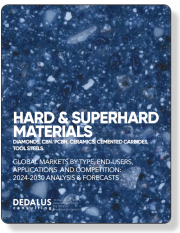
초경질 재료 시장 : 재료 유형, 제품 형태, 제조 기술, 용도, 최종 사용자 산업별 - 세계 예측(2026-2032년)Superhard Materials Market by Material Type, Product Form, Production Technology, Application, End-User Industry - Global Forecast 2026-2032 |
||||||
 360iResearch
초경질 재료 시장은 2025년에 74억 달러로 평가되었습니다. 2026년에는 78억 1,000만 달러로 성장하고 CAGR 7.28%를 나타내, 2032년까지 121억 2,000만 달러에 이를 것으로 예측됩니다.
| 주요 시장 통계 | |
|---|---|
| 기준 연도(2025년) | 74억 달러 |
| 추정 연도(2026년) | 78억 1,000만 달러 |
| 예측 연도(2032년) | 121억 2,000만 달러 |
| CAGR(%) | 7.28% |
초경질 재료가 고성능 산업에 필수적인 이유와 공급망 및 가공상의 문제가 도입에 미치는 영향에 대한 명확한 전략적 개요를 제공합니다.
초경질 분야는 첨단 제조, 고성능 엔지니어링, 그리고 매우 복잡한 공급망의 교차점에 위치하고 있습니다. 합성 다이아몬드 구조물에서 붕소 및 탄화물을 주성분으로 하는 세라믹에 이르기까지, 이러한 엔지니어링 고체 재료는 내마모성, 열 안정성 및 극한의 경도가 필수적인 모든 분야에서 기반이 되는 기초 재료로 활용되고 있습니다. 산업 공정이 더 빠른 속도, 더 정밀한 공차, 더 가혹한 사용 환경으로 발전함에 따라 초경질 재료 수요 요인은 단순한 범용 재료의 대체가 아닌 성능의 통합에 점점 더 의존하고 있습니다.
기술, 규제, 공급의 탄력성이라는 요인이 교차하면서 초경질 생태계 전반의 개발 우선순위와 경쟁 역학이 어떻게 재구성되고 있는가?
초경질 재료 분야에서는 혁신의 우선순위, 조달 전략, 제조 기지 배치의 재구축 등 몇 가지 혁신적인 변화가 일어나고 있습니다. 필름 형성 및 합성 기술의 발전으로 실험실 개념 증명에서 산업 인증까지의 주기가 단축되어 재료의 화학적 구성과 미세 구조를 빠르게 개선할 수 있게 되었습니다. 동시에, 엔지니어들은 수명과 에너지 효율에 대한 기대치가 높아짐에 따라 재료와 형상이 단순히 대체품으로 존재하는 것이 아니라 서로 진화할 수 있도록 부품 수준의 설계를 재검토하고 있습니다.
최근 관세 정책 및 무역 동향이 초경질 재료의 가치사슬 전반에서 조달 전략, 투자 결정 및 공급업체 선정에 어떤 영향을 미치고 있는지 살펴봅니다.
최근 수입 산업 원자재에 영향을 미치는 관세 조치로 인해 여러 제조 부문에서 비용 구조와 공급업체 선택에 대한 재검토가 이루어지고 있습니다. 특정 소재 및 완제품에 대한 관세 인상으로 인해 바이어들은 총 착륙 비용을 재평가하고, 조달 거점을 재조정하고, 중요한 초경질 재료에 대해 근해 또는 국내 생산 옵션을 모색하고 있습니다. 실제로, 조달팀은 현재 관세 리스크와 관세 분류 리스크를 공급업체 인증 및 장기 계약의 핵심 판단 요소로 삼고 있습니다.
재료 유형, 제품 유형, 생산 기술 및 최종 용도가 기술 요구 사항 및 상업적 포지셔닝을 결정하는 방법을 설명하는 상세한 세분화에 기반한 인사이트
기술 수요가 제품 아키텍처 및 최종 사용 요구사항과 어떻게 교차하는지를 명확히 하는 정교한 세분화 프레임워크를 통해 타겟팅된 시장 진출 전략이 가능합니다. 재료의 유형에 따라 탄화붕소, 입방정 질화붕소, 다이아몬드, 탄화규소, 탄화규소, 탄화텅스텐이 포함됩니다. 다이아몬드의 카테고리는 결정 품질, 결함 제어, 적용 가능한 공정 창문의 차이를 반영하여 천연, 합성 CVD, 합성 HPHT의 각 변형으로 세분화되어 있습니다. 재료의 선택은 다운스트림 공정에서 화학적 거동, 열적 거동 및 마모 특성을 결정하며, 이는 특정 용도에 맞는 제품 설계 방침을 결정합니다.
미주, 유럽, 중동/아프리카, 아시아태평양 시장별 수요, 생산, 규제 차이에 따른 조달 우선순위와 혁신의 초점 결정, 지역별 수요, 생산, 규제 차이
지역별 동향은 수요 패턴, 공급 체계, 혁신의 우선순위를 형성하고, 전략적 투자와 전술적 조달 모두에 시사점을 제공합니다. 북미와 남미에서 제조업체들은 시장과 가까운 곳에서 신속한 대응과 애프터마켓 지원을 중시하고 있으며, 중요한 부품의 도입 시간을 단축하는 운영 탄력성과 국내 인증 능력에 중점을 두고 있습니다. 항공우주 및 자동차 산업 클러스터가 검증된 재료와 추적 가능한 원산지를 요구하는 지역에서는 현지화된 공급망과 테스트 시설이 특히 중요하게 여겨지고 있습니다.
기술 차별화, 규모 투자, 공동 연구개발이 어떻게 경쟁 우위와 파트너십의 기회를 형성하는지, 기업 차원의 전략 동향
초경질 부문의 경쟁 역학은 기술적 차별화, 제조 규모, 엄격한 인증 프로세스를 지원하는 능력의 조합에 따라 좌우됩니다. 시장 진출기업은 야금 및 합성에 대한 깊은 전문 지식을 갖춘 전문 소재 개발 기업부터 합성, 성형 및 마무리 능력을 겸비한 통합 제조업체에 이르기까지 다양합니다. 강력한 품질 시스템과 사내 특성화 역량에 투자하는 기업은 인증 주기를 단축하고 엄격한 추적성을 요구하는 항공우주 및 의료 분야 고객에게 프리미엄을 확보할 수 있습니다.
업계 리더가 공급 탄력성을 강화하고, 용도 중심의 혁신을 가속화하며, 통합적인 고객 가치 제안을 실현할 수 있도록 지원하는 실행 가능한 전략적 우선순위
업계 리더는 공급 탄력성을 강화하고, 용도 중심의 혁신을 가속화하며, 고객과의 친밀도를 높이는 동시에 균형 잡힌 접근 방식을 추구해야 합니다. 지정학적 요인과 관세로 인한 혼란을 줄이기 위해 멀티 소싱 전략의 구축과 대체 원료 루트의 인증을 우선시하고, 장기적인 수요와 인증 요건이 자본 투입을 정당화할 수 있는 지역에서는 현지 생산 능력에 대한 선택적 투자가 이루어져야 합니다. 또한, 통관 및 컴플라이언스 체계를 강화함으로써 조달 마찰을 줄이고 규제 대상 부문의 바이어에게 예측가능성을 높일 수 있습니다.
기술 문헌, 이해관계자 인터뷰, 규제 검토를 통합하고, 전략적 시사점과 실천적 수단을 검증하고, 투명성이 높은 다중 출처 조사 방법론
이번 조사는 공개된 기술 문헌, 업계 특허 출원, 공급업체 기술 정보, 조달 및 엔지니어링 이해관계자를 대상으로 한 1차 인터뷰를 통합하여 재료, 공정 기술 및 상업적 동향에 대한 다각적인 조사결과를 도출했습니다. 이 조사 방법론은 상호 검증에 중점을 두고 있으며, 기술적 주장은 독립적인 특성화 보고서 및 공급업체 데이터 시트와 비교하여 검증하고, 상업적 주제는 대상 최종 사용 산업 분야의 구매 및 용도 엔지니어링 전문가와의 질적 인터뷰를 통해 검증합니다. 인터뷰를 통해 검증하고 있습니다.
초경질 재료에서 기술 통합, 공급 탄력성 및 고객 지향적 혁신의 지속적인 전략적 중요성을 강조하는 결정적 통합 분석
초경질은 수많은 산업 분야에서 고성능 제조 공정과 내구성이 뛰어난 미션 크리티컬한 부품을 구현하는 데 필수적인 요소로 자리매김하고 있습니다. 전반적으로 기술의 성숙이 가속화되고, 가치사슬에 대한 기대치가 변화하고, 라이프사이클과 규제 준수에 대한 중요성이 높아지고 있음을 알 수 있습니다. 재료 혁신을 응용 엔지니어링과 연계하고, 인증 역량에 투자하고, 정책적 리스크를 적극적으로 관리하는 조직은 시장이 성능과 예측 가능성을 모두 요구하는 상황에서 다른 조직보다 우월한 가치를 얻을 수 있을 것입니다.
자주 묻는 질문
목차
제1장 서문
제2장 조사 방법
제3장 주요 요약
제4장 시장 개요
제5장 시장 인사이트
제6장 미국의 관세 누적 영향(2025년)
제7장 AI의 누적 영향(2025년)
제8장 초경질 재료 시장 : 소재 유형별
제9장 초경질 재료 시장 : 제품 형태별
제10장 초경질 재료 시장 : 제조 기술별
제11장 초경질 재료 시장 : 용도별
제12장 초경질 재료 시장 : 최종 사용자 업계별
제13장 초경질 재료 시장 : 지역별
제14장 초경질 재료 시장 : 그룹별
제15장 초경질 재료 시장 : 국가별
제16장 미국의 초경질 재료 시장
제17장 중국의 초경질 재료 시장
제18장 경쟁 구도
KTH 26.04.27The Superhard Materials Market was valued at USD 7.40 billion in 2025 and is projected to grow to USD 7.81 billion in 2026, with a CAGR of 7.28%, reaching USD 12.12 billion by 2032.
| KEY MARKET STATISTICS | |
|---|---|
| Base Year [2025] | USD 7.40 billion |
| Estimated Year [2026] | USD 7.81 billion |
| Forecast Year [2032] | USD 12.12 billion |
| CAGR (%) | 7.28% |
A clear strategic overview explaining why superhard materials are critical across high-performance industries and how supply chain and processing pressures influence adoption
The superhard materials domain sits at the intersection of advanced manufacturing, high-performance engineering and critical supply chain complexity. These engineered solids-ranging from synthetic diamond constructs to boron- and carbide-based ceramics-serve as foundational enabling materials across sectors where wear resistance, thermal stability and extreme hardness are non-negotiable. As industrial processes push toward higher speeds, finer tolerances and more demanding service environments, demand drivers for superhard materials increasingly hinge on performance integration rather than commodity replacement.
This introduction positions the reader to understand not only the materials themselves but also the value chain pressures that shape innovation and commercialization. Upstream, synthesis processes and feedstock security determine the consistency and cost structure of high-performance products. Midstream, product form decisions-whether abrasive tools, coatings or powders-translate material properties into manufacturable components. Downstream, end-user requirements in aerospace, automotive and electronics impose application-specific specifications that drive customized material formulations and processing routes.
Transitions from legacy specifications to next-generation performance are being navigated by research teams, OEM engineering groups and procurement leaders simultaneously. The objective of this analysis is to map those transitions, clarify competitive inflection points and highlight where technical differentiation and supply resilience intersect to create strategic advantage.
How converging technological, regulatory, and supply resilience forces are reshaping development priorities and competitive dynamics across the superhard materials ecosystem
The landscape for superhard materials is undergoing several transformative shifts that realign innovation priorities, procurement strategies and manufacturing footprints. Advances in deposition and synthesis technologies are compressing cycles from laboratory proof-of-concept to industrial qualification, enabling rapid iteration of material chemistries and microstructures. At the same time, rising expectations for lifetime performance and energy efficiency are prompting engineers to rethink component-level design so that materials and geometries co-evolve rather than existing as drop-in substitutions.
Concurrently, supply chain resilience has moved from a cost-plus consideration to a strategic capability. Organizations are reassessing sourcing geographies, diversifying supplier bases and investing in in-house synthesis where long-term service continuity justifies capital allocation. Regulatory and environmental drivers are accelerating adoption of cleaner production routes and more rigorous lifecycle documentation, which together reshape supplier selection and certification timelines.
Industrial digitalization and advanced characterization tools are also transforming product qualification. In-situ monitoring, model-driven design and accelerated testing protocols are reducing time-to-certification for new compositions and product forms. Collectively, these shifts favor integrated suppliers that can pair materials expertise with process engineering and quality systems, while creating opportunities for specialized players to capture premium niches based on performance and certification capabilities.
Examination of how recent tariff policies and trade dynamics are recalibrating sourcing strategies, investment decisions, and supplier selection across the superhard materials value chain
Recent tariff actions affecting imported industrial inputs have created a recalibration of cost structures and supplier selection across multiple manufacturing sectors. Higher duties on certain material classes and finished components have prompted buyers to reassess total landed cost, reshuffle sourcing footprints and explore near-shore or domestic production options for critical superhard materials. In practice, procurement teams are now including tariff exposure and customs classification risk as core inputs to supplier qualification and long-term contracts.
The cumulative impact of tariff measures extends beyond immediate price adjustments. Increased duties alter investment calculus for capital-intensive production technologies, making localized production more attractive in jurisdictions with stable trade policies and supportive industrial incentives. For downstream producers, tariffs can accelerate vertical integration strategies to capture margin and control supply continuity. At the same time, some customers respond by redesigning parts and processes to substitute toward forms or materials that face lower trade friction, or by negotiating long-term agreements that hedge future policy shifts.
Importantly, tariff-driven dynamics also increase the valuation of supplier compliance capabilities. Companies that can demonstrate robust customs classification, preferential origin documentation and strategic distribution points gain a competitive advantage when clients prioritize predictability. The net effect is a more fragmented sourcing map in which policy risk and logistics agility are as important as technical performance when selecting partners.
In-depth segmentation-driven insights explaining how material types, product forms, production technologies and end-use applications determine technical requirements and commercial positioning
A nuanced segmentation framework clarifies where technical demand intersects with product architecture and end-use requirements, enabling targeted go-to-market strategies. Based on material type the universe includes Boron Carbide, Cubic Boron Nitride, Diamond, Silicon Carbide, and Tungsten Carbide, with the diamond category subdivided into Natural, Synthetic CVD and Synthetic HPHT variants to reflect differences in crystal quality, defect control and applicable process windows. Material choice drives downstream chemistry, thermal behavior and wear characteristics, which in turn inform how products are engineered for specific tasks.
Based on product form the landscape spans Abrasive Tools, Bulk material, Coating solutions, Films, and Powder, with Abrasive Tools further categorized as Burrs, Cutting Inserts, Discs, and Grinding Wheels to reflect the diversity of form factors and machining interfaces. Product form decisions balance manufacturability, integration ease and replacement cadence, and they influence the types of qualification testing required by OEMs. Based on application the primary functions are Cutting, Drilling, Grinding, Milling, Polishing and Wear Resistance, each of which imposes distinct mechanical, thermal and chemical demands that guide material selection and heat-treatment protocols.
Based on end-user industry the principal sectors include Aerospace, Automotive, Electronics, Industrial Manufacturing, Medical, and Oil & Gas, with Automotive use cases further parsed into Body, Braking Systems, Engine Components, and Transmission applications to reflect differentiated performance envelopes and regulatory constraints. These end markets determine certification regimes, lifecycle requirements and aftermarket service models. Finally, based on production technology the dominant routes are Chemical Vapor Deposition and High Pressure High Temperature, which yield different microstructures, defect profiles and scale economics. Layering these segmentation axes enables precise targeting of value propositions and helps identify where incremental innovation or supply-chain investments will deliver the greatest commercial return.
Regional demand, production and regulatory contrasts that determine sourcing priorities and innovation focus across the Americas, Europe Middle East & Africa, and Asia-Pacific markets
Regional dynamics shape demand patterns, supply architectures and innovation priorities in ways that inform both strategic investment and tactical sourcing. In the Americas manufacturers place a premium on near-market responsiveness and rapid aftermarket support, with emphasis on operational resilience and domestic qualification capabilities that shorten time-to-deployment for critical components. Localized supply networks and test facilities are especially valued where aerospace and automotive clusters demand validated materials and traceable provenance.
In Europe, Middle East & Africa the market foregrounds stringent regulatory frameworks, lifecycle documentation and environmental compliance. These requirements drive interest in cleaner production processes and recycling pathways, along with certifications that facilitate cross-border trade within the region. Suppliers that can demonstrate robust environmental, health and safety practices and meet OEM certification standards gain preferential consideration among highly regulated end users.
In the Asia-Pacific region rapid industrialization, dense manufacturing ecosystems and aggressive R&D investment create a high-velocity environment for material innovation and scale-up. Cost-competitive production, proximity to major electronics and industrial manufacturing bases, and expanding domestic demand for advanced tooling and coatings make the region a pivotal production hub. Taken together, regional priorities underscore the importance of tailored commercial strategies that account for certification regimes, logistics realities and the local balance between cost and performance.
Strategic company-level dynamics revealing how technical differentiation, scale investments, and collaborative R&D shape competitive advantage and partnership opportunities
Competitive dynamics in the superhard materials sector are governed by a combination of technical differentiation, manufacturing scale and the ability to support demanding qualification processes. Market participants vary from specialized material developers with deep metallurgical and synthetic expertise to integrated manufacturers that combine synthesis, shaping and finishing capabilities. Firms that invest in robust quality systems and in-house characterization capabilities can shorten qualification cycles and command premium positioning with aerospace and medical customers who require rigorous traceability.
Strategic partnerships and collaborative R&D programs are increasingly important as firms seek to de-risk new compositions and expedite certification. Cross-disciplinary alliances between material scientists, equipment suppliers and OEM engineering teams facilitate co-development pathways that align product properties with application-specific testing protocols. Additionally, companies that offer complementary services-such as coating deposition, post-process finishing and application-specific testing-tend to capture greater wallet share because they reduce friction for buyers.
Supply-side consolidation tendencies are evident where scale economies matter most, particularly for capital-intensive production technologies like high-pressure presses and large-scale CVD reactors. At the same time, niche specialists with unique process know-how remain attractive acquisition targets or preferred partners for differentiated applications. Overall, the most resilient companies balance investments in process scale with focused application expertise and strong downstream service propositions.
Actionable strategic priorities for industry leaders to enhance supply resilience, accelerate application-driven innovation, and deliver integrated customer value propositions
Industry leaders should pursue a balanced approach that simultaneously strengthens supply resilience, accelerates application-driven innovation and improves customer intimacy. Prioritize building multi-sourcing strategies and qualifying alternate feedstock pathways to mitigate geopolitical and tariff-induced disruptions while investing selectively in localized capacity where long-term demand and certification needs justify capital deployment. Strengthening customs and compliance capabilities will also reduce procurement friction and enhance predictability for buyers in regulated sectors.
From a technology perspective, accelerate integration of advanced process monitoring and model-based design to reduce qualification cycles for new material formulations and product forms. Investing in pilot-scale CVD or HPHT capabilities alongside robust lab characterization shortens the path from concept to certified part. Complement these technical investments with stronger application engineering teams that co-design materials and component geometries, thereby creating defensible differentiation through systems-level performance rather than raw material properties alone.
Commercially, deepen value through bundled offerings that combine materials, coatings and service agreements to simplify customer procurement and improve lifecycle economics. Pursue targeted partnerships with OEMs and Tier 1 suppliers to co-develop validated solutions for high-value applications, and maintain a disciplined M&A appetite for niche specialists that bring unique process knowledge or certification advantages. These combined actions will enhance resilience, create premium positioning and accelerate uptake in mission-critical environments.
Transparent multi-source research methodology that integrates technical literature, stakeholder interviews, and regulatory review to validate strategic implications and practical levers
This research synthesizes publicly available technical literature, industry patent filings, supplier technical bulletins and primary interviews with procurement and engineering stakeholders to triangulate insights on materials, process technologies and commercial dynamics. The methodology emphasizes cross-validation: technical claims are corroborated against independent characterization reports and supplier datasheets, while commercial themes are tested through qualitative interviews with purchasing and application engineering professionals across target end-use industries.
Data collection included a systematic review of open-source regulatory documentation and trade classifications to understand how policy measures influence logistics and supplier qualification. Where appropriate, secondary evidence from trade and customs filings was used to validate reported shifts in sourcing patterns. The analytical approach combined thematic content analysis with process-mapping to identify bottlenecks in qualification and opportunities for vertical integration.
Limitations are acknowledged: proprietary manufacturing details and confidential customer agreements are outside the scope of public disclosure and were not accessed directly. To mitigate this, the research prioritized multiple independent sources and sought corroboration from subject-matter experts. The resulting methodology produces a pragmatic, industry-focused view that emphasizes operational levers and strategic implications rather than proprietary cost structures.
Conclusive synthesis highlighting the enduring strategic importance of technical integration, supply resilience, and customer-aligned innovation in superhard materials
Superhard materials remain essential enablers of higher-performance manufacturing and durable, mission-critical components across numerous industries. The cumulative picture is one of accelerated technical maturation, evolving supply-chain expectations and growing emphasis on lifecycle and regulatory compliance. Organizations that align material innovation with application engineering, invest in qualification capabilities and proactively manage policy exposure will capture disproportionate value as markets demand both performance and predictability.
Key thematic takeaways emphasize the need for integrated offerings that reduce friction for OEMs, targeted investment in production technologies that enable scale without compromising microstructure control, and strategic supply diversification to insulate operations from tariff and geopolitical shocks. Additionally, regional differentiation in regulation and industrial policy underscores the importance of locally informed commercial strategies that balance cost competitiveness with certification and environmental credentials.
In conclusion, sustained competitive advantage in the superhard materials arena will accrue to firms that combine deep technical know-how with operational agility and strong customer engagement models. Executives should therefore prioritize cross-functional investments that optimize the interface between material performance, product architecture and supply continuity to meet the increasingly exacting demands of modern industrial ecosystems.
Table of Contents
1. Preface
- 1.1. Objectives of the Study
- 1.2. Market Definition
- 1.3. Market Segmentation & Coverage
- 1.4. Years Considered for the Study
- 1.5. Currency Considered for the Study
- 1.6. Language Considered for the Study
- 1.7. Key Stakeholders
2. Research Methodology
- 2.1. Introduction
- 2.2. Research Design
- 2.2.1. Primary Research
- 2.2.2. Secondary Research
- 2.3. Research Framework
- 2.3.1. Qualitative Analysis
- 2.3.2. Quantitative Analysis
- 2.4. Market Size Estimation
- 2.4.1. Top-Down Approach
- 2.4.2. Bottom-Up Approach
- 2.5. Data Triangulation
- 2.6. Research Outcomes
- 2.7. Research Assumptions
- 2.8. Research Limitations
3. Executive Summary
- 3.1. Introduction
- 3.2. CXO Perspective
- 3.3. Market Size & Growth Trends
- 3.4. Market Share Analysis, 2025
- 3.5. FPNV Positioning Matrix, 2025
- 3.6. New Revenue Opportunities
- 3.7. Next-Generation Business Models
- 3.8. Industry Roadmap
4. Market Overview
- 4.1. Introduction
- 4.2. Industry Ecosystem & Value Chain Analysis
- 4.2.1. Supply-Side Analysis
- 4.2.2. Demand-Side Analysis
- 4.2.3. Stakeholder Analysis
- 4.3. Porter's Five Forces Analysis
- 4.4. PESTLE Analysis
- 4.5. Market Outlook
- 4.5.1. Near-Term Market Outlook (0-2 Years)
- 4.5.2. Medium-Term Market Outlook (3-5 Years)
- 4.5.3. Long-Term Market Outlook (5-10 Years)
- 4.6. Go-to-Market Strategy
5. Market Insights
- 5.1. Consumer Insights & End-User Perspective
- 5.2. Consumer Experience Benchmarking
- 5.3. Opportunity Mapping
- 5.4. Distribution Channel Analysis
- 5.5. Pricing Trend Analysis
- 5.6. Regulatory Compliance & Standards Framework
- 5.7. ESG & Sustainability Analysis
- 5.8. Disruption & Risk Scenarios
- 5.9. Return on Investment & Cost-Benefit Analysis
6. Cumulative Impact of United States Tariffs 2025
7. Cumulative Impact of Artificial Intelligence 2025
8. Superhard Materials Market, by Material Type
- 8.1. Boron Carbide
- 8.2. Cubic Boron Nitride
- 8.3. Diamond
- 8.3.1. Natural
- 8.3.2. Synthetic CVD
- 8.3.3. Synthetic HPHT
- 8.4. Silicon Carbide
- 8.5. Tungsten Carbide
9. Superhard Materials Market, by Product Form
- 9.1. Abrasive Tools
- 9.1.1. Burrs
- 9.1.2. Cutting Inserts
- 9.1.3. Discs
- 9.1.4. Grinding Wheels
- 9.2. Bulk
- 9.3. Coating
- 9.4. Films
- 9.5. Powder
10. Superhard Materials Market, by Production Technology
- 10.1. Chemical Vapor Deposition
- 10.2. High Pressure High Temperature
11. Superhard Materials Market, by Application
- 11.1. Cutting
- 11.2. Drilling
- 11.3. Grinding
- 11.4. Milling
- 11.5. Polishing
- 11.6. Wear Resistance
12. Superhard Materials Market, by End-User Industry
- 12.1. Aerospace
- 12.2. Automotive
- 12.2.1. Body
- 12.2.2. Braking Systems
- 12.2.3. Engine Components
- 12.2.4. Transmission
- 12.3. Electronics
- 12.4. Industrial Manufacturing
- 12.5. Medical
- 12.6. Oil & Gas
13. Superhard Materials Market, by Region
- 13.1. Americas
- 13.1.1. North America
- 13.1.2. Latin America
- 13.2. Europe, Middle East & Africa
- 13.2.1. Europe
- 13.2.2. Middle East
- 13.2.3. Africa
- 13.3. Asia-Pacific
14. Superhard Materials Market, by Group
- 14.1. ASEAN
- 14.2. GCC
- 14.3. European Union
- 14.4. BRICS
- 14.5. G7
- 14.6. NATO
15. Superhard Materials Market, by Country
- 15.1. United States
- 15.2. Canada
- 15.3. Mexico
- 15.4. Brazil
- 15.5. United Kingdom
- 15.6. Germany
- 15.7. France
- 15.8. Russia
- 15.9. Italy
- 15.10. Spain
- 15.11. China
- 15.12. India
- 15.13. Japan
- 15.14. Australia
- 15.15. South Korea
16. United States Superhard Materials Market
17. China Superhard Materials Market
18. Competitive Landscape
- 18.1. Market Concentration Analysis, 2025
- 18.1.1. Concentration Ratio (CR)
- 18.1.2. Herfindahl Hirschman Index (HHI)
- 18.2. Recent Developments & Impact Analysis, 2025
- 18.3. Product Portfolio Analysis, 2025
- 18.4. Benchmarking Analysis, 2025
- 18.5. Adamas One Corp.
- 18.6. Anhui Hongjing New Material Co., Ltd.
- 18.7. Applied Diamond Inc
- 18.8. Besco Superabrasives Co.,Ltd.
- 18.9. Compagnie de Saint-Gobain S.A.
- 18.10. De Beers Group
- 18.11. Element Six (UK) Limited
- 18.12. Funik Ultrahard Material Co., Ltd.
- 18.13. H.C. Starck Tungsten GmbH
- 18.14. Henan Huanghe Whirlwind CO.,Ltd.
- 18.15. Henan Yalong Superhard Materials Co., Ltd
- 18.16. Hyperion Materials & Technologies, Inc.
- 18.17. ILJIN Diamond Co., Ltd.
- 18.18. Kennametal, Inc.
- 18.19. Morgan Advanced Materials plc
- 18.20. Mudanjiang Jingangzuan Boron Carbide Co., Ltd
- 18.21. Sandvik AB
- 18.22. Scio Diamond Technology Corporation
- 18.23. SF Diamond Co., Ltd.
- 18.24. Sumitomo Electric Industries, Ltd.
- 18.25. Tomei Diamond Co.,Ltd.
- 18.26. WorldWide Superabrasives, LLC.
- 18.27. Zhengzhou Sino-Crystal Diamond Co., Ltd.
- 18.28. Zhongnan Diamond Co., Ltd.