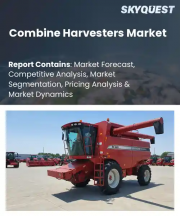
|
시장보고서
상품코드
2012306
사탕수수 수확기 시장 : 제품 유형, 동력원, 최종 사용자, 유통 채널별 예측(2026-2032년)Sugarcane Harvester Market by Product Type, Power Source, End User, Distribution Channel - Global Forecast 2026-2032 |
||||||
 360iResearch
사탕수수 수확기 시장은 2025년에 19억 5,000만 달러로 평가되었고 2026년에는 24억 1,000만 달러로 성장하여 CAGR 25.46%로 성장을 지속하여, 2032년까지 95억 6,000만 달러에 이를 것으로 예측됩니다.
| 주요 시장 통계 | |
|---|---|
| 기준 연도 : 2025년 | 19억 5,000만 달러 |
| 추정 연도 : 2026년 | 24억 1,000만 달러 |
| 예측 연도 : 2032년 | 95억 6,000만 달러 |
| CAGR(%) | 25.46% |
사탕수수 수확기 산업의 산업 상황에 대한 전략적 프레임워크: 운영상의 압력, 기술적 촉진요인, 상업적 결정의 필수 요건에 초점을 맞추었습니다.
농업 가치사슬 전반에 걸쳐 생산성, 지속가능성, 비용 관리에 대한 압박이 가중되는 가운데, 사탕수수 수확기 부문은 전환점을 맞이하고 있습니다. 지난 10년간 가속화된 기계화 추세는 주요 생산 지역의 노동력 부족, 인건비 상승, 토양의 건전성을 보호하면서 밭의 처리 능력을 향상시켜야 할 필요성에 힘입어 수확 전략을 재구성하고 있습니다. 동시에 전동화, 디지털화 및 재료 기술 혁신의 융합으로 새로운 기계 및 개조 솔루션의 설계 범위가 변화하고 있습니다.
제조 및 도급 이해관계자들 사이에서 최근 관세 동향이 수확기 공급망, 제품 조달, 애프터마켓 전략을 재구성하는 방법에 대한 분석
2025년에 시행된 정책 조치는 일련의 무역 동향을 가져왔고, 수확기 제조업체와 차량 운영자의 조달 전략, 공급업체 입지 및 부품 조달 결정에 실질적인 영향을 미치고 있습니다. 주요 금속 부품 및 전자 부품에 대한 관세 조정으로 인해 투입 비용의 변동성이 확대되고, OEM 제조업체와 공급업체는 조달 지역을 재검토하고 계약 조건을 재검토해야 하는 상황에 처해 있습니다. 이에 따라 많은 기업들이 니어쇼어링을 가속화하여 물류 리드타임을 단축하고 관세와 관련된 비용 변동에 대한 노출을 줄였습니다.
제품 유형, 파워트레인 선택, 최종 사용자 프로파일, 유통 경로가 어떻게 차별화된 제품 및 서비스 전략을 주도하는지에 대한 상세한 세분화 분석을 제공합니다.
부문별 동향은 제조업체와 서비스 제공업체가 경쟁력을 유지하기 위해 노력해야 하는 다양한 요구사항과 도입 경로를 보여줍니다. 제품 유형별로 장비를 살펴보면, 견인식 기계와 자력식 수확기의 차이에 따라 내구성, 기동성, 적재량 처리에 있어 명확한 우선순위를 정할 수 있습니다. 트랙터가 운영상의 유연성을 제공하는 상황에서 견인식 시스템은 여전히 중요하지만, 자체 추진 장치는 통합된 효율성과 작업자의 작업 환경으로 인해 높은 평가를 받고 있습니다. 동력원으로의 전환도 엔지니어링 및 지원 요구 사항을 재구성하고 있습니다. 디젤 파워트레인은 여전히 가동 시간이 긴 작업에서 주축을 이루고 있지만, 전기 및 하이브리드 옵션은 에너지 관리, 열 제어 및 충전 물류에 대한 새로운 고려 사항을 가져옵니다.
전 세계 생산 지역의 수확기 도입에 영향을 미치는 운영 요건, 규제 요인, 인프라 영향에 대한 종합적인 지역별 전망
지역별 역학은 주요 지역마다 기술 도입, 차량 구성, 규제와의 상호작용을 다르게 형성하고 있습니다. 북미와 남미에서는 농업의 규모화 및 통합화 추세로 인해 더 크고 처리 능력이 높은 기계와 첨단 텔레매틱스 플랫폼에 대한 투자가 증가하고 있습니다. 한편, 기후의 다양성으로 인해 다양한 밭 조건에서 작동할 수 있는 적응성 높은 수확 솔루션의 필요성이 높아지고 있습니다. 또한, 강력한 애프터마켓 생태계와 잘 정비된 금융 시장은 입증 가능한 운영 효율성을 가져오는 경우, 초기 투자 비용이 높은 솔루션의 도입을 촉진하고 있습니다.
수확기 부문에서 장기적인 가치를 확보하기 위해 하드웨어의 우수성, 애프터마켓 진출, 디지털 서비스 모델을 결합하는 기업의 경쟁적 및 협력적 과제
수확기 생태계의 경쟁 역학은 내구성이 뛰어난 하드웨어 플랫폼과 광범위한 애프터마켓 기능 및 디지털 서비스를 결합하는 기업에게 점점 더 유리하게 작용하고 있습니다. 주요 장비 제조업체들은 파워트레인 및 자동화 패키지의 단계적 업그레이드를 가능하게 하는 모듈식 아키텍처에 대한 투자를 통해 차별화를 꾀하고 있으며, 차세대 기능 시장 출시 기간을 단축하고 고객의 유지보수 부담을 줄여주고 있습니다. 마찬가지로, 서비스 네트워크와 데이터 분석 역량을 갖춘 기업은 프리미엄 가동률 보장 및 성능 기반 계약을 제공할 수 있으며, 이는 예측 가능한 운영 비용을 원하는 대규모 상업 운영자 및 계약 수확업체에게 매력적입니다.
제조업체와 서비스 제공업체가 탄력성을 강화하고, 기술 도입을 가속화하며, 모든 고객 부문에서 지속적인 수익 기회를 확대할 수 있는 실질적인 전략적인 조치를 취합니다.
업계 리더는 단기적인 회복력과 장기적인 변화의 균형을 맞추는 다각적인 전략을 채택해야 합니다. 첫째, 조달처를 다변화하고 중요 부품에 대해서는 이중 소싱을 검토하여 무역 정책의 변동과 물류의 혼란으로부터 생산을 보호합니다. 이와 함께 전기 또는 하이브리드 파워트레인 및 자율주행 패키지를 단계적으로 통합할 수 있는 모듈식 플랫폼의 개발을 가속화하여 고객이 전체 차량을 교체하지 않고도 기계를 업그레이드할 수 있도록할 것입니다. 둘째, 원격 진단, 예지보전 및 현지 예비 부품 공급에 중점을 두고 서비스 및 부품 네트워크를 확장하여 분산된 사업장의 다운타임을 줄일 수 있도록 합니다.
1차 인터뷰, 2차 기술 검토, 공급망 매핑, 시나리오 분석, 동료 검증을 통합한 투명성 높은 다중 방법론 조사 프로토콜을 통해 실행 가능한 인사이트를 얻을 수 있습니다.
이 분석은 신뢰성과 실용적 관련성을 보장하기 위해 설계된 구조화된 다중 방법론적 조사 접근법에서 얻은 정성적 및 정량적 증거를 통합한 것입니다. 주요 정보원으로는 설비 엔지니어, 상업용 농장 및 계약 기업의 조달 책임자, 애프터마켓 부문의 고위 관리자, 독립 기술 전문가를 대상으로 한 구조화된 인터뷰가 포함됩니다. 이러한 이해관계자들과의 대화를 통해 운영상의 제약, 다운타임 요인, 새로운 파워트레인 및 자동화 기능의 도입 장벽에 대한 현장 차원의 관점을 얻을 수 있었습니다.
기술 도입, 공급망 탄력성, 서비스 혁신이 교차하고, 미래 경쟁력을 결정짓는 포인트를 강조한 통합적 전략 제안
요약하면, 수확기 산업은 지속 가능한 파워트레인, 자동화, 강력한 공급망이 변화하는 구매자의 선호도와 교차하는 급격한 기술 및 상업적 변화의 시기를 극복하기 위해 노력하고 있습니다. 모듈성을 우선시하고, 서비스 생태계에 투자하고, 현실적인 공급업체 다변화를 추구하는 제조업체는 이러한 변화를 경쟁 우위로 전환하는 데 가장 유리한 위치에 서게 될 것입니다. 계약 수확자 및 협동조합 모델은 구매 및 자금 조달 트렌드를 계속 형성할 것이며, 인프라 및 규제에 대한 지역적 차이로 인해 다양한 실행 가능한 제품 아키텍처가 유지될 것입니다.
자주 묻는 질문
목차
제1장 서문
제2장 조사 방법
제3장 주요 요약
제4장 시장 개요
제5장 시장 인사이트
제6장 미국 관세의 누적 영향, 2025년
제7장 AI의 누적 영향, 2025년
제8장 사탕수수 수확기 시장 : 제품 유형별
제9장 사탕수수 수확기 시장 : 동력원별
제10장 사탕수수 수확기 시장 : 최종 사용자별
제11장 사탕수수 수확기 시장 : 유통 채널별
제12장 사탕수수 수확기 시장 : 지역별
제13장 사탕수수 수확기 시장 : 그룹별
제14장 사탕수수 수확기 시장 : 국가별
제15장 미국의 사탕수수 수확기 시장
제16장 중국의 사탕수수 수확기 시장
제17장 경쟁 구도
JHS 26.04.30The Sugarcane Harvester Market was valued at USD 1.95 billion in 2025 and is projected to grow to USD 2.41 billion in 2026, with a CAGR of 25.46%, reaching USD 9.56 billion by 2032.
| KEY MARKET STATISTICS | |
|---|---|
| Base Year [2025] | USD 1.95 billion |
| Estimated Year [2026] | USD 2.41 billion |
| Forecast Year [2032] | USD 9.56 billion |
| CAGR (%) | 25.46% |
Strategic framing of the sugarcane harvester industry landscape highlighting operational pressures technological catalysts and commercial decision imperatives
The sugarcane harvester sector is at an inflection point as pressure mounts on productivity, sustainability, and cost control across agricultural value chains. Mechanization trends that accelerated over the past decade continue to reshape harvesting strategies, driven by labor scarcity in key producing regions, rising wage bills, and the need to improve field throughput while protecting soil health. At the same time, the convergence of electrification, digitalization, and materials innovation is altering the design envelope for new machines and retrofit solutions.
Against this backdrop, manufacturers, service providers, and large-scale growers are recalibrating how they invest in capital equipment, balancing short-term operational continuity with longer-term resilience. The interplay between fuel costs, component availability, and regulatory expectations for emissions and noise is prompting an increased focus on modular platforms that can be updated as technologies mature. Moreover, as value chains for sugar, ethanol, and emerging bioproducts evolve, harvester strategies are being evaluated not only on throughput but also on the quality of delivered feedstock and the broader environmental footprint.
Consequently, stakeholders must integrate engineering priorities with commercial realities: enhancing uptime through remote diagnostics, optimizing fuel and energy use, and ensuring supplier relationships support rapid parts availability. This integrated perspective underpins the rest of the analysis, framing opportunities for targeted investment in machine architectures, after-sales ecosystems, and cross-sector partnerships that can sustain competitive advantage in a changing operational and policy environment.
Recent transformative shifts in the harvesting landscape reflect a broader reorientation of agricultural machinery toward smarter, cleaner, and more connected systems. Electrification and hybrid powertrains have moved from experimental to commercially viable solutions in many crop-harvesting contexts, driven by improvements in battery energy density, electric drive components, and an expanding ecosystem of power electronics suppliers. Concurrently, advances in autonomy and assistance systems have increased the effective productivity of smaller crews by automating repetitive tasks such as steering, depth control, and row following.
In addition, telematics and data-driven maintenance have become mainstream expectations rather than optional add-ons. Remote monitoring enables condition-based servicing that reduces unplanned downtime and extends component life, while data capture at harvest time allows better traceability of feedstock quality for downstream processors. Materials engineering improvements, including higher-strength steels and composites in wear zones, are improving durability without proportionally increasing machine weight, which matters for soil compaction and transport logistics.
These shifts are reinforced by changing customer expectations: growers and contractors seek equipment that delivers measurable total cost-of-ownership improvements, integrates into farm-level digital platforms, and supports multiple use cases across seasons. Together, these technological and commercial dynamics are forming a new baseline for product development and aftersales investment, compelling incumbents and new entrants alike to prioritize modularity, serviceability, and interoperable software ecosystems.
Analysis of how recent tariff dynamics have recalibrated supply chains product sourcing and aftermarket strategies for harvesters across manufacturing and contracting stakeholders
Policy measures enacted in 2025 have introduced a set of trade dynamics that materially influence procurement strategies, supplier footprints, and component sourcing decisions for harvester manufacturers and fleet operators. Tariff adjustments on key metallic and electronic components have amplified input cost volatility, prompting original equipment manufacturers and suppliers to reassess sourcing geographies and contractual terms. In response, many firms accelerated nearshoring initiatives to shorten logistics lead times and reduce exposure to tariff-related cost swings.
Meanwhile, distributors and aftermarket providers rebalanced inventory strategies to mitigate the risk of extended replenishment cycles. This led to a mix of tactical stockpiling for critical spares and strategic partnerships with local fabricators for non-proprietary items. Importantly, these tariff-driven pressures have catalyzed renewed investment in supplier diversification, with manufacturers exploring alternative component designs that reduce dependence on tariffed inputs while preserving reliability and performance.
On a commercial level, contract harvesters and cooperative purchasing consortia adjusted procurement windows and financing arrangements to preserve cash flow under uncertain equipment pricing. In addition, equipment financing and leasing offerings expanded to accommodate the timing mismatches introduced by tariff volatility. Over time, the aggregate effect has been to accelerate structural changes in manufacturing footprints, distribution networks, and capital acquisition models, all of which will influence how quickly new powertrain and automation technologies reach field deployment.
In-depth segmentation analysis elucidating how product type powertrain choices end user profiles and distribution pathways drive differentiated product and service strategies
Segment-specific dynamics reveal diverse requirements and adoption pathways that manufacturers and service providers must address to remain competitive. When equipment is considered by product type, differences between pull type machines and self-propelled harvesters create distinct priorities for durability, mobility, and payload handling; pull type systems maintain relevance where tractors offer operational flexibility, while self-propelled units command a premium for integrated efficiency and operator ergonomics. Transitioning to power sources also reshapes engineering and support needs: diesel powertrains remain the workhorse for high-hours operations, whereas electric and hybrid options introduce new considerations for energy management, thermal control, and charging logistics.
End user segmentation further influences purchasing criteria and service expectations: commercial farms typically prioritize uptime, predictable maintenance schedules, and long-term service agreements; contract harvesters emphasize rapid turnaround, transportability between fields and regions, and flexible financing; cooperative farmers often pursue shared-asset models that demand robust documentation, operator training, and equitable scheduling mechanisms. Distribution dynamics distinguish original equipment manufacturer channels, where bundled warranties and integrated financing are common, from aftermarket channels that compete on parts availability, price, and technical support. Taken together, these segmentation axes inform product roadmaps, channel investments, and tailored financing and service propositions that align with the specific operational constraints of each user group.
Comprehensive regional perspectives on operational requirements regulatory drivers and infrastructure influences shaping harvester adoption across global producing territories
Regional dynamics shape technology adoption, fleet composition, and regulatory interactions in distinct ways across major geographies. In the Americas, scale operations and consolidation trends in agriculture have supported investment in larger, higher-throughput machines and sophisticated telematics platforms, while climatic diversity has driven the need for adaptable harvest solutions capable of operating across varied field conditions. In addition, a strong aftermarket ecosystem and well-developed finance markets facilitate the uptake of higher-capex solutions when they deliver demonstrable operational efficiencies.
Turning to Europe, Middle East & Africa, regulatory pressures around emissions and noise, combined with landholding fragmentation in some territories, create a heterogeneous demand picture that favors modularity and smaller self-propelled or towable solutions in certain markets, and advanced automation in others. Infrastructure constraints and variable service networks in parts of the region underscore the importance of robust remote diagnostics and simplified maintenance procedures. In Asia-Pacific, rapid mechanization in several producing countries, government-led modernization efforts, and high labor-cost environments have spurred demand for a broad range of harvester types-from economical pull-type systems to advanced self-propelled units-while port and logistics proximity influence the viability of larger, export-oriented manufacturing models.
Across all regions, climate variability and sustainability expectations are elevating the importance of fuel efficiency, soil-protective designs, and traceability, thereby guiding both product design and go-to-market strategies.
Competitive and collaborative imperatives for companies combining hardware excellence aftermarket reach and digital service models to secure long term value in the harvester sector
Competitive dynamics in the harvester ecosystem increasingly reward firms that combine durable hardware platforms with expansive aftermarket capabilities and digital services. Leading equipment builders are differentiating through investments in modular architectures that allow incremental upgrades to powertrains and automation packages, reducing the time-to-market for next-generation features and easing maintenance burdens for customers. Similarly, firms with deep service networks and data analytics capabilities can offer premium uptime guarantees and performance-based contracts, which appeal to large commercial operators and contract harvesters seeking predictable operating costs.
Strategic partnerships between OEMs and component specialists have become central to accelerating development cycles and mitigating supply risk. Supply chain collaborations focus on securing critical subassemblies and on co-developing solutions such as electric drivetrains or advanced cutting systems. At the same time, aftermarket participants who can rapidly validate and supply wear parts, retrofit kits, and diagnostic tools gain a competitive edge in regions where logistics delays erode machine availability. The resulting landscape favors integrated value propositions that combine hardware, software, financing, and training, enabling vendors to capture recurring revenue while deepening customer relationships.
Finally, new entrants and niche specialists are leveraging focused innovations in areas such as sensor suites, operator interfaces, and energy recovery to carve out segments within the broader harvester market, prompting incumbents to accelerate technology roadmaps and strategic collaborations.
Practical strategic actions for manufacturers and service providers to enhance resilience accelerate technology adoption and expand recurring revenue opportunities across customer segments
Industry leaders should adopt a multi-pronged strategy that balances short-term resilience with long-term transformation. First, diversify sourcing and consider dual-sourcing critical components to insulate production from trade policy shocks and logistics disruptions. Parallel to this, accelerate development of modular platforms that allow progressive integration of electric or hybrid powertrains and autonomy packages, enabling customers to upgrade machines without complete fleet replacement. Second, expand service and parts networks with an emphasis on remote diagnostics, predictive maintenance, and localized spare parts provisioning to reduce downtime across dispersed operations.
Third, create financing and usage models tailored to distinct end users-leasing and performance-based contracts for contract harvesters, cooperative-friendly ownership models, and subscription services for telematics and predictive maintenance. Fourth, invest in operator training and digital adoption programs to ensure new technologies translate into field-level productivity gains, and work closely with downstream processors to align feedstock specifications and traceability standards. Fifth, pursue strategic partnerships with power electronics, battery, and software firms to share development risk and accelerate time to revenue. Collectively, these actions will improve resilience, open new revenue streams, and support faster adoption of sustainable powertrain options while maintaining operational continuity during transitional periods.
Transparent multi method research protocol integrating primary interviews secondary technical review supply chain mapping scenario analysis and peer validation for actionable findings
This analysis synthesizes qualitative and quantitative evidence drawn from a structured, multi-method research approach designed to ensure reliability and practical relevance. Primary inputs included structured interviews with equipment engineers, procurement leaders at commercial farms and contracting firms, senior aftermarket managers, and independent technical experts. These stakeholder conversations provided ground-level perspectives on operational constraints, downtime drivers, and adoption barriers for new powertrains and automation features.
Secondary research encompassed technical literature, standards documentation, patent flows, and product literature to validate technology readiness and component-level innovations. Supply chain mapping identified critical single-source components and logistics chokepoints, while scenario analysis explored the implications of policy shifts, input cost volatility, and adoption diffusion under multiple plausible trajectories. Data triangulation and cross-validation procedures were applied to reconcile differences between reported field experiences and supplier-provided specifications. Finally, sensitivity checks on key assumptions and peer review by independent industry experts ensured that conclusions are robust, actionable, and appropriately qualified for decision-making purposes.
Consolidated strategic takeaways highlighting where technological adoption supply chain resilience and service innovation converge to define future competitiveness
In sum, the harvester industry is navigating a period of rapid technological and commercial change where sustainable powertrains, automation, and resilient supply chains intersect with evolving buyer preferences. Manufacturers that prioritize modularity, invest in service ecosystems, and pursue pragmatic supplier diversification will be best positioned to convert disruption into competitive advantage. Contract harvesters and cooperative models will continue to shape purchase and financing dynamics, while regional differences in infrastructure and regulation will sustain a range of viable product architectures.
Looking ahead, the combination of incremental electrification, improved telematics-driven maintenance, and smarter aftermarket strategies will determine which organizations can deliver the most reliable and cost-effective harvesting solutions. Stakeholders should treat the current environment as an opportunity to modernize fleet economics and to embed sustainability into product and service lifecycles. By aligning engineering roadmaps with real-world operational constraints and by strengthening channel and financing arrangements, companies can accelerate adoption, protect margins, and support growers in meeting both productivity and environmental objectives.
Table of Contents
1. Preface
- 1.1. Objectives of the Study
- 1.2. Market Definition
- 1.3. Market Segmentation & Coverage
- 1.4. Years Considered for the Study
- 1.5. Currency Considered for the Study
- 1.6. Language Considered for the Study
- 1.7. Key Stakeholders
2. Research Methodology
- 2.1. Introduction
- 2.2. Research Design
- 2.2.1. Primary Research
- 2.2.2. Secondary Research
- 2.3. Research Framework
- 2.3.1. Qualitative Analysis
- 2.3.2. Quantitative Analysis
- 2.4. Market Size Estimation
- 2.4.1. Top-Down Approach
- 2.4.2. Bottom-Up Approach
- 2.5. Data Triangulation
- 2.6. Research Outcomes
- 2.7. Research Assumptions
- 2.8. Research Limitations
3. Executive Summary
- 3.1. Introduction
- 3.2. CXO Perspective
- 3.3. Market Size & Growth Trends
- 3.4. Market Share Analysis, 2025
- 3.5. FPNV Positioning Matrix, 2025
- 3.6. New Revenue Opportunities
- 3.7. Next-Generation Business Models
- 3.8. Industry Roadmap
4. Market Overview
- 4.1. Introduction
- 4.2. Industry Ecosystem & Value Chain Analysis
- 4.2.1. Supply-Side Analysis
- 4.2.2. Demand-Side Analysis
- 4.2.3. Stakeholder Analysis
- 4.3. Porter's Five Forces Analysis
- 4.4. PESTLE Analysis
- 4.5. Market Outlook
- 4.5.1. Near-Term Market Outlook (0-2 Years)
- 4.5.2. Medium-Term Market Outlook (3-5 Years)
- 4.5.3. Long-Term Market Outlook (5-10 Years)
- 4.6. Go-to-Market Strategy
5. Market Insights
- 5.1. Consumer Insights & End-User Perspective
- 5.2. Consumer Experience Benchmarking
- 5.3. Opportunity Mapping
- 5.4. Distribution Channel Analysis
- 5.5. Pricing Trend Analysis
- 5.6. Regulatory Compliance & Standards Framework
- 5.7. ESG & Sustainability Analysis
- 5.8. Disruption & Risk Scenarios
- 5.9. Return on Investment & Cost-Benefit Analysis
6. Cumulative Impact of United States Tariffs 2025
7. Cumulative Impact of Artificial Intelligence 2025
8. Sugarcane Harvester Market, by Product Type
- 8.1. Pull Type
- 8.2. Self Propelled
9. Sugarcane Harvester Market, by Power Source
- 9.1. Diesel
- 9.2. Electric
- 9.3. Hybrid
10. Sugarcane Harvester Market, by End User
- 10.1. Commercial Farms
- 10.2. Contract Harvesters
- 10.3. Cooperative Farmers
11. Sugarcane Harvester Market, by Distribution Channel
- 11.1. Aftermarket
- 11.2. Original Equipment Manufacturer
12. Sugarcane Harvester Market, by Region
- 12.1. Americas
- 12.1.1. North America
- 12.1.2. Latin America
- 12.2. Europe, Middle East & Africa
- 12.2.1. Europe
- 12.2.2. Middle East
- 12.2.3. Africa
- 12.3. Asia-Pacific
13. Sugarcane Harvester Market, by Group
- 13.1. ASEAN
- 13.2. GCC
- 13.3. European Union
- 13.4. BRICS
- 13.5. G7
- 13.6. NATO
14. Sugarcane Harvester Market, by Country
- 14.1. United States
- 14.2. Canada
- 14.3. Mexico
- 14.4. Brazil
- 14.5. United Kingdom
- 14.6. Germany
- 14.7. France
- 14.8. Russia
- 14.9. Italy
- 14.10. Spain
- 14.11. China
- 14.12. India
- 14.13. Japan
- 14.14. Australia
- 14.15. South Korea
15. United States Sugarcane Harvester Market
16. China Sugarcane Harvester Market
17. Competitive Landscape
- 17.1. Market Concentration Analysis, 2025
- 17.1.1. Concentration Ratio (CR)
- 17.1.2. Herfindahl Hirschman Index (HHI)
- 17.2. Recent Developments & Impact Analysis, 2025
- 17.3. Product Portfolio Analysis, 2025
- 17.4. Benchmarking Analysis, 2025
- 17.5. AGCO Corporation
- 17.6. CANETEC Pty Ltd.
- 17.7. Case IH
- 17.8. CLAAS KGaA mbH
- 17.9. CNH Industrial N.V.
- 17.10. Deere & Company
- 17.11. Deutz-Fahr
- 17.12. Escorts Limited
- 17.13. Grupo Jacto
- 17.14. Guangxi LiuGong Group
- 17.15. Jiangsu World Agriculture Machinery Co., Ltd
- 17.16. Kartar Agro Industries Private Limited
- 17.17. Komatsu Ltd.
- 17.18. Kubota Corporation
- 17.19. KUHN Group
- 17.20. Mahindra & Mahindra Ltd.
- 17.21. Massey Ferguson
- 17.22. New Holland Agriculture
- 17.23. Sampo Rosenlew Ltd.
- 17.24. SDF Group
- 17.25. TAGRM Co. Ltd.
- 17.26. Tirth Agro Technology Private Limited
- 17.27. Wuhan Wubota Machinery Co., Ltd.
- 17.28. Yanmar Holdings Co., Ltd.
- 17.29. Zoomlion Heavy Industry Science and Technology Co., Ltd.