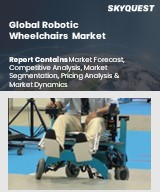
|
시장보고서
상품코드
2016290
로봇 휠체어 시장 : 제어 방식, 최종 사용자, 용도, 판매 채널별 - 세계 예측(2026-2032년)Robotic Wheelchair Market by Control Type, End User, Application, Distribution Channel - Global Forecast 2026-2032 |
||||||
 360iResearch
로봇 휠체어 시장은 2025년에 2억 3,724만 달러로 평가되었습니다. 2026년에는 2억 5,587만 달러로 성장하고 CAGR 8.36%를 나타내, 2032년까지 4억 1,624만 달러에 이를 것으로 예측됩니다.
| 주요 시장 통계 | |
|---|---|
| 기준 연도(2025년) | 2억 3,724만 달러 |
| 추정 연도(2026년) | 2억 5,587만 달러 |
| 예측 연도(2032년) | 4억 1,624만 달러 |
| CAGR(%) | 8.36% |
기술 융합과 이해관계자의 기대가 로봇 휠체어 개발 및 보급의 우선순위를 어떻게 재구성하고 있는지에 대한 간략한 개요
로봇 휠체어 기술은 현재 보조 공학, 첨단 감지 기술, 인간 중심 설계의 교차점에 위치하여 다양한 요구를 가진 사용자의 이동 능력을 향상시킬 수 있는 새로운 기회를 창출하고 있습니다. 센서 융합, 머신러닝, 인체공학적 제어 시스템이 융합되면서, 장치는 더욱 직관적이고 다양한 환경에서 안전하게 작동할 수 있게 되었습니다. 이러한 진화는 기술적인 것뿐만 아니라 시스템적인 측면도 있습니다. 의료 제공업체, 보험사, 기술 공급업체는 총 진료 비용을 관리하면서 기능적 독립성을 향상시킨다는 공동의 목표를 위해 협력하고 있습니다.
보조 이동 솔루션의 제품 설계, 조달, 케어 경로를 재정의하는 주요 기술적, 운영적, 규제적 변화에 대한 증거 기반 개요
최근 이동 지원 기기 분야의 변화는 자율성, 휴먼-머신 인터페이스, 서비스 제공 모델의 급속한 발전을 반영하고 있으며, 이는 제품 로드맵과 조달 기준을 모두 변화시키고 있습니다. 과거 실험 단계에 머물렀던 자율 주행 기능은 장애물 회피 및 경로 계획을 위한 실용적인 기능으로 발전하여 실내와 실외 환경을 넘나들며 보다 안전하게 이동할 수 있게 되었습니다. 동시에 시선 추적 및 머리 제어 시스템을 포함한 사용자 인터페이스의 혁신으로 중증 장애인의 장벽을 낮춰 잠재적 사용자 층을 넓히고 있습니다.
최근 관세 조치가 이동 지원 장비의 밸류체인 전반에 걸쳐 공급망 전략, 비즈니스 연속성 및 조달 행동을 어떻게 재구성했는지에 대한 냉철한 평가
최근 시행된 관세 정책으로 인해 전동 휠체어 제조에 필수적인 부품 제조업체와 수입업체에 대한 비용 및 규정 준수에 대한 압박이 증가하고 있습니다. 특정 전자 모듈 및 기계 어셈블리에 대한 관세로 인해 공급업체들은 조달 전략을 재검토하고 일부 조달 결정을 지역 공급업체로 전환하고 있으며, 이는 생산 리드 타임과 재고 관리 관행에 영향을 미치고 있습니다. 그 결과, 많은 기업들이 공급의 연속성을 유지하기 위해 이중 소싱을 우선시하고, 재고 버퍼를 강화하며, 장기적인 공급업체 계약 협상을 진행하고 있습니다.
제어 방식, 최종 사용자 환경, 용도 요구사항, 유통 채널을 실용적인 설계 및 상용화 우선순위와 연결, 부문 중심의 인사이트
부문 수준 분석에서 도출된 결과는 제품 개발, 임상 도입 및 비즈니스 모델에 미치는 미묘한 영향력을 밝혀낼 수 있습니다. 제어 유형에 따라 시장 조사는 시선 추적 제어, 머리 제어, 조이스틱 제어를 포함하며, 각각 센서 통합, 보정 절차, 간병인 교육에 대한 요구 사항이 다릅니다. 따라서 엔지니어링 팀은 일관된 신뢰성과 사용자 안전을 보장하는 동시에 여러 제어 방식을 지원하기 위해 모듈성을 우선시해야 합니다.
지역별 규제 체계, 상환 방식, 유통 네트워크가 제품 전략 및 상업화 경로에 미치는 영향에 대한 지리적 뉘앙스를 고려한 평가
지역별 동향은 대륙별 제품 개발, 규제, 조달 방식에 실질적인 영향을 미치고 있으며, 임상 현장의 관행, 상환 기준, 유통 생태계를 반영한 지역 맞춤형 시장 진출 전략이 요구되고 있습니다. 북미와 남미의 구매자들은 임상 워크플로우와의 통합과 근거에 기반한 성과에 집중하는 경향이 있으며, 서비스 보증과 기존 지원 기술과의 상호운용성에 대한 수요도 높은 임베디드니다. 이러한 기대는 제품 로드맵과 애프터케어 제공 내용을 형성하고, 의료 시스템 및 재활 서비스 제공업체와의 파트너십을 촉진합니다.
제품 차별화, 파트너십, 서비스 모델, 선택적 통합이 경쟁적 포지셔닝과 장기적 생존 가능성에 미치는 영향에 대한 전략적 분석
주요 개발업체와 공급업체 간 경쟁 구도는 첨단 엔지니어링 전문성, 의료 분야와의 파트너십, 차별화된 서비스 모델의 융합으로 특징지어집니다. 강력한 하드웨어 플랫폼과 지속적으로 업데이트되는 소프트웨어 및 원격 진단 기능을 결합한 기업은 임상 현장에서의 수용성과 판매 후 수익 측면에서 우위를 점할 수 있습니다. 임상 연구 기관 및 재활 전문가와의 전략적 제휴를 통해 임상적 증거를 강화하고, 더 광범위한 기관에서 조달할 수 있는 경로를 제공합니다.
제조업체와 이해관계자가 도입을 가속화하고, 가치사슬의 위험을 줄이며, 지속 가능한 상업적 및 임상적 가치 제안을 구축할 수 있는 구체적이고 실행 가능한 단계
업계 리더는 새로운 기회를 포착하고 하방 리스크를 줄이기 위해 기술적 유연성과 운영 탄력성이라는 두 가지 관점에 중점을 두어야 합니다. 제어 모듈과 센서 어레이를 원활하게 교체할 수 있는 모듈식 아키텍처를 우선시하여 고비용의 재설계 없이 단일 플랫폼에서 아이트래킹, 헤드 컨트롤 또는 조이스틱 인터페이스를 필요로 하는 사용자를 지원할 수 있도록 합니다. 동시에 공급 기반을 다변화하고 근해 생산 능력에 투자함으로써 무역 혼란과 관세로 인한 비용 변동에 대한 노출을 줄일 수 있습니다.
1차 인터뷰, 실제 장비 테스트, 규제 분석, 공급망 매핑을 결합한 혼합 연구 접근 방식을 투명하게 제시하여 검증된 결과를 제공합니다.
이 조사의 통합 분석은 1차 인터뷰, 기기 테스트, 문서 분석을 통합한 혼합 방법론 접근법을 기반으로 하여 견고하고 삼각측량된 결과를 확보했습니다. 1차 조사에는 임상의, 조달 담당자, 재활 전문가, 기기 엔지니어를 대상으로 한 구조화된 인터뷰를 통해 사용성, 서비스 요구사항, 도입 장벽에 대한 현장의 관점을 파악했습니다. 이러한 질적 연구 결과는 대표적인 실내 및 실외 시나리오에서 제어 성능, 인체공학 및 유지보수 고려사항을 평가하기 위한 실제 기기 평가를 통해 보완되었습니다.
기술 발전, 운영 탄력성, 협업 전략을 이동 지원 장비의 지속 가능한 도입과 성과 향상으로 연결하는 간결한 통합 분석
요약하면, 감지 기술, 제어 시스템 및 소프트웨어의 발전으로 인해 로봇 휠체어 혁신에 있어 매우 중요한 시기가 도래하고 있습니다. 여기에는 기술적 역량과 더불어 현실적인 사업화 및 지원 전략이 필수적입니다. 규제 요건의 변화, 관세로 인한 공급망 조정, 다양한 최종 사용자의 요구사항 등 복합적인 압력으로 인해 성공하려면 우수한 하드웨어만으로는 충분하지 않으며, 통합된 서비스 모델, 임상 파트너십, 도입 시 지역적 고려사항이 필요합니다.
자주 묻는 질문
목차
제1장 서문
제2장 조사 방법
제3장 주요 요약
제4장 시장 개요
제5장 시장 인사이트
제6장 미국의 관세 누적 영향(2025년)
제7장 AI의 누적 영향(2025년)
제8장 로봇 휠체어 시장 : 제어 방식별
제9장 로봇 휠체어 시장 : 최종 사용자별
제10장 로봇 휠체어 시장 : 용도별
제11장 로봇 휠체어 시장 : 유통 채널별
제12장 로봇 휠체어 시장 : 지역별
제13장 로봇 휠체어 시장 : 그룹별
제14장 로봇 휠체어 시장 : 국가별
제15장 미국의 로봇 휠체어 시장
제16장 중국의 로봇 휠체어 시장
제17장 경쟁 구도
KTH 26.05.11The Robotic Wheelchair Market was valued at USD 237.24 million in 2025 and is projected to grow to USD 255.87 million in 2026, with a CAGR of 8.36%, reaching USD 416.24 million by 2032.
| KEY MARKET STATISTICS | |
|---|---|
| Base Year [2025] | USD 237.24 million |
| Estimated Year [2026] | USD 255.87 million |
| Forecast Year [2032] | USD 416.24 million |
| CAGR (%) | 8.36% |
A concise orientation to how converging technologies and stakeholder expectations are reshaping the priorities for robotic wheelchair development and adoption
Robotic wheelchair technology now sits at the intersection of assistive engineering, advanced sensing, and human-centered design, creating new opportunities to enhance mobility for users with varied needs. As sensor fusion, machine learning, and ergonomic control systems converge, devices are becoming more intuitive and capable of operating safely in diverse environments. This evolution is not only technical but also systemic: healthcare providers, insurers, and technology vendors are aligning around a shared goal of improving functional independence while managing total cost of care.
Consequently, stakeholders from clinicians to procurement officers are reevaluating specifications, installation models, and service propositions. The emphasis is shifting from purely hardware-centric value toward bundled solutions that include software updates, remote monitoring, and integrated training for caregivers and clinicians. As such, organizations that balance technological innovation with pragmatic considerations like interoperability, maintenance pathways, and user training are positioned to lead adoption efforts over the coming business cycles.
An evidence-based overview of the major technical, operational, and regulatory shifts that are redefining product design, procurement, and care pathways for assistive mobility solutions
Recent shifts in the assistive mobility landscape reflect rapid advances in autonomy, human-machine interfaces, and service delivery models that alter both product roadmaps and procurement criteria. Autonomous navigation capabilities that were once experimental have matured into practical features for obstacle avoidance and path planning, enabling safer transitions across indoor and outdoor environments. At the same time, user interface innovations, including eye-tracking and head control systems, reduce barriers for people with high levels of impairment and broaden the potential user base.
In parallel, supply chain resilience and component sourcing have become strategic concerns, prompting firms to reassess manufacturing footprints and supplier diversification. Regulatory frameworks are adapting to contend with software-driven safety considerations, and reimbursement models are beginning to recognize the broader health and social value of mobility-enhancing technologies. These technical, operational, and policy shifts combine to create a setting in which cross-disciplinary partnerships and agile commercialization strategies determine who successfully scales solutions.
A clear-eyed assessment of how recent tariff measures have recalibrated supply chain strategy, operational resilience, and procurement behavior across the assistive mobility value chain
Tariff policy enacted in recent periods has introduced heightened cost and compliance pressures for manufacturers and importers of components critical to robotic wheelchair production. Duties on certain electronic modules and mechanical assemblies have led suppliers to reassess sourcing strategies and push some procurement decisions toward regional suppliers, which in turn affects production lead times and inventory management practices. As a result, many enterprises are prioritizing dual-sourcing, increasing stock buffer policies, and negotiating longer-term supplier agreements to maintain continuity of supply.
Moreover, the administrative burden of tariff classification and customs compliance has required greater investment in trade operations and legal expertise, especially for firms operating multi-jurisdictional supply chains. These dynamics influence product architecture decisions as well, encouraging modular designs that allow for substitution of affected components without full redesign. From a buyer perspective, hospitals, rehabilitation centers, and distributors are increasingly attentive to total cost of ownership and service-level agreements that account for extended lead times, which necessitates closer collaboration with suppliers on delivery commitments and spare-parts provisioning.
Segment-driven insights that connect control modalities, end-user environments, application demands, and distribution channels to practical design and commercialization priorities
Insights derived from segment-level analysis reveal nuanced implications for product development, clinical deployment, and commercial models. Based on Control Type, market studies encompass Eye-Tracking Control, Head Control, and Joystick Control, each of which imposes different demands on sensor integration, calibration procedures, and caregiver training. Engineering teams must therefore prioritize modularity to support multiple control schemes while ensuring consistent reliability and user safety.
Based on End User, evaluations cover Assisted Living Facilities, Home Care Settings, Hospitals, and Rehabilitation Centers, with each setting presenting distinct service, maintenance, and procurement pathways. Facilities-focused deployments emphasize durable designs and centralized service contracts, whereas home care adoption hinges on simplified setup and remote support capabilities. Based on Application, classification includes Indoor Use and Outdoor Use, and these contexts drive divergent priorities in suspension systems, wheelbase stability, and obstacle detection algorithms. Based on Distribution Channel, studies include Hospital Pharmacies, Online Sales Platforms, Retail Medical Equipment Stores, and Specialty Stores, which affects pricing strategies, warranty structures, and aftercare logistics. Together, these segmentation lenses highlight that successful offerings require not only technical differentiation but also tailored commercial and support models aligned to the specific control method, end-user environment, application demands, and chosen distribution routes.
A geographically nuanced appraisal of how regional regulatory regimes, reimbursement approaches, and distribution networks shape product strategy and commercialization pathways
Regional dynamics materially influence how products are developed, regulated, and procured across continents, requiring localized go-to-market strategies that reflect clinical practice, reimbursement norms, and distribution ecosystems. In the Americas, purchaser emphasis tends to center on integration with clinical workflows and evidence-based outcomes, and there is strong demand for service guarantees and interoperability with existing assistive technologies. These expectations shape product roadmaps and aftercare offerings, and they encourage partnerships with health systems and rehabilitation providers.
In Europe, Middle East & Africa, regulatory harmonization in certain jurisdictions and diverse reimbursement landscapes necessitate adaptive certification strategies and flexible pricing models. Providers in this region often prioritize safety standards and long-term maintenance capabilities. Meanwhile, in Asia-Pacific, fast-paced manufacturing ecosystems and growing domestic innovation create opportunities for rapid prototyping and cost-competitive production, but companies must navigate a range of regulatory regimes and channel structures. Consequently, manufacturers commonly employ differentiated strategies across these regions, combining local partnerships, regional support hubs, and tailored training programs to achieve sustainable adoption.
A strategic analysis of how product differentiation, partnerships, service models, and selective consolidation influence competitive positioning and long-term viability
Competitive dynamics among leading developers and suppliers are characterized by a blend of deep engineering expertise, healthcare partnerships, and differentiated service models. Companies that couple robust hardware platforms with continuously updated software and remote diagnostics gain an advantage in both clinical acceptance and post-sale revenue. Strategic collaborations with clinical research institutions and rehabilitation specialists strengthen clinical evidence and provide pathways to broader institutional procurement.
Concurrently, some firms pursue consolidation through targeted acquisitions to acquire specific capabilities such as advanced control interfaces, proprietary navigation algorithms, or distributed service networks. Others concentrate on niche specialization, offering products tailored to particular end-user groups or application environments. Across these approaches, emphasis on interoperability, data security, and long-term maintenance contracts emerges as a common theme that separates transient innovation from sustainable commercial leadership.
Concrete, actionable steps for manufacturers and stakeholders to accelerate adoption, de-risk supply chains, and build durable commercial and clinical value propositions
Industry leaders should adopt a dual focus on technical flexibility and operational resilience to capture emerging opportunities and mitigate downside risks. Prioritize modular architectures that allow seamless substitution of control modules and sensor arrays so that a single platform can address users who require eye-tracking, head control, or joystick interfaces without costly redesigns. At the same time, diversify supply bases and invest in near-shore production capabilities to reduce exposure to trade disruptions and tariff-driven cost volatility.
Strengthen clinical evidence through collaborative trials with rehabilitation centers and hospitals to demonstrate functional benefits and support reimbursement conversations. Expand service footprints with remote diagnostics and predictive maintenance offerings that lower downtime and improve total cost of ownership for institutional buyers. Finally, cultivate commercial flexibility by blending direct sales to healthcare systems with partnerships across online sales platforms, hospital pharmacies, and specialty stores to meet the preferences of diverse end users and procurement channels.
A transparent exposition of the mixed-methods research approach combining primary interviews, hands-on device testing, regulatory analysis, and supply chain mapping for validated insights
The research synthesis draws on a mixed-methods approach that integrates primary interviews, device testing, and documentary analysis to ensure robust, triangulated findings. Primary research included structured interviews with clinicians, procurement officers, rehabilitation specialists, and device engineers to capture frontline perspectives on usability, service requirements, and adoption barriers. These qualitative insights were complemented by hands-on device evaluations to assess control performance, ergonomics, and maintenance considerations under representative indoor and outdoor scenarios.
Secondary research encompassed regulatory filings, standards literature, and patent analytics to map technological trajectories and compliance obligations. Supply chain mapping exercises identified key component dependencies and common mitigation strategies employed by manufacturers. Throughout the process, data were cross-validated across multiple sources and subjected to expert review to reduce bias. Methodological limitations include variability in clinical practice across jurisdictions and heterogeneity in distribution channels, which the study addressed by sampling a broad set of stakeholder types and testing environments.
A concise synthesis that links technological progress, operational resilience, and collaborative strategies to sustainable adoption and improved outcomes in assistive mobility
In sum, advancements in sensing, control systems, and software have created a pivotal moment for robotic wheelchair innovation, where technical capability must be matched by pragmatic commercialization and support strategies. The combined pressures of evolving regulatory expectations, tariff-induced supply chain adjustments, and diverse end-user requirements mean that success depends on more than superior hardware: it requires integrated service models, clinical partnerships, and regional sensitivity in deployment.
Looking ahead, organizations that invest in modular product design, evidence-building collaborations, and resilient operational models will be best positioned to translate technological progress into real-world improvements in mobility and quality of life. Cross-sector collaboration between manufacturers, healthcare providers, payers, and distributors will accelerate safe, equitable access to advanced mobility solutions while ensuring long-term sustainability for providers and suppliers alike.
Table of Contents
1. Preface
- 1.1. Objectives of the Study
- 1.2. Market Definition
- 1.3. Market Segmentation & Coverage
- 1.4. Years Considered for the Study
- 1.5. Currency Considered for the Study
- 1.6. Language Considered for the Study
- 1.7. Key Stakeholders
2. Research Methodology
- 2.1. Introduction
- 2.2. Research Design
- 2.2.1. Primary Research
- 2.2.2. Secondary Research
- 2.3. Research Framework
- 2.3.1. Qualitative Analysis
- 2.3.2. Quantitative Analysis
- 2.4. Market Size Estimation
- 2.4.1. Top-Down Approach
- 2.4.2. Bottom-Up Approach
- 2.5. Data Triangulation
- 2.6. Research Outcomes
- 2.7. Research Assumptions
- 2.8. Research Limitations
3. Executive Summary
- 3.1. Introduction
- 3.2. CXO Perspective
- 3.3. Market Size & Growth Trends
- 3.4. Market Share Analysis, 2025
- 3.5. FPNV Positioning Matrix, 2025
- 3.6. New Revenue Opportunities
- 3.7. Next-Generation Business Models
- 3.8. Industry Roadmap
4. Market Overview
- 4.1. Introduction
- 4.2. Industry Ecosystem & Value Chain Analysis
- 4.2.1. Supply-Side Analysis
- 4.2.2. Demand-Side Analysis
- 4.2.3. Stakeholder Analysis
- 4.3. Porter's Five Forces Analysis
- 4.4. PESTLE Analysis
- 4.5. Market Outlook
- 4.5.1. Near-Term Market Outlook (0-2 Years)
- 4.5.2. Medium-Term Market Outlook (3-5 Years)
- 4.5.3. Long-Term Market Outlook (5-10 Years)
- 4.6. Go-to-Market Strategy
5. Market Insights
- 5.1. Consumer Insights & End-User Perspective
- 5.2. Consumer Experience Benchmarking
- 5.3. Opportunity Mapping
- 5.4. Distribution Channel Analysis
- 5.5. Pricing Trend Analysis
- 5.6. Regulatory Compliance & Standards Framework
- 5.7. ESG & Sustainability Analysis
- 5.8. Disruption & Risk Scenarios
- 5.9. Return on Investment & Cost-Benefit Analysis
6. Cumulative Impact of United States Tariffs 2025
7. Cumulative Impact of Artificial Intelligence 2025
8. Robotic Wheelchair Market, by Control Type
- 8.1. Eye-Tracking Control
- 8.2. Head Control
- 8.3. Joystick Control
9. Robotic Wheelchair Market, by End User
- 9.1. Assisted Living Facilities
- 9.2. Home Care Settings
- 9.3. Hospitals
- 9.4. Rehabilitation Centers
10. Robotic Wheelchair Market, by Application
- 10.1. Indoor Use
- 10.2. Outdoor Use
11. Robotic Wheelchair Market, by Distribution Channel
- 11.1. Offline
- 11.2. Online
12. Robotic Wheelchair Market, by Region
- 12.1. Americas
- 12.1.1. North America
- 12.1.2. Latin America
- 12.2. Europe, Middle East & Africa
- 12.2.1. Europe
- 12.2.2. Middle East
- 12.2.3. Africa
- 12.3. Asia-Pacific
13. Robotic Wheelchair Market, by Group
- 13.1. ASEAN
- 13.2. GCC
- 13.3. European Union
- 13.4. BRICS
- 13.5. G7
- 13.6. NATO
14. Robotic Wheelchair Market, by Country
- 14.1. United States
- 14.2. Canada
- 14.3. Mexico
- 14.4. Brazil
- 14.5. United Kingdom
- 14.6. Germany
- 14.7. France
- 14.8. Russia
- 14.9. Italy
- 14.10. Spain
- 14.11. China
- 14.12. India
- 14.13. Japan
- 14.14. Australia
- 14.15. South Korea
15. United States Robotic Wheelchair Market
16. China Robotic Wheelchair Market
17. Competitive Landscape
- 17.1. Market Concentration Analysis, 2025
- 17.1.1. Concentration Ratio (CR)
- 17.1.2. Herfindahl Hirschman Index (HHI)
- 17.2. Recent Developments & Impact Analysis, 2025
- 17.3. Product Portfolio Analysis, 2025
- 17.4. Benchmarking Analysis, 2025
- 17.5. Airwheel Holding Limited
- 17.6. ALBA Robot
- 17.7. FANUC
- 17.8. Hoobox Robotics
- 17.9. Matia Robotics
- 17.10. Meyra GmbH
- 17.11. REX Bionics Limited
- 17.12. Sunrise Medical GmbH
- 17.13. Toyota Motor Corporation
- 17.14. WHILL Inc.
- 17.15. Yamaha Motor Co., Ltd.