|
시장보고서
상품코드
2016842
분광법 시장 : 제품 유형, 기술, 용도, 최종 용도별 - 세계 예측(2026-2032년)Spectroscopy Market by Product Type, Technology, Application, End Use - Global Forecast 2026-2032 |
||||||
 360iResearch
분광법 시장은 2025년에 206억 9,000만 달러로 평가되었습니다. 2026년에는 222억 달러까지 성장하고 CAGR 8.18%를 나타내, 2032년까지 358억 8,000만 달러에 이를 것으로 예측됩니다.
| 주요 시장 통계 | |
|---|---|
| 기준 연도(2025년) | 206억 9,000만 달러 |
| 추정 연도(2026년) | 222억 달러 |
| 예측 연도(2032년) | 358억 8,000만 달러 |
| CAGR(%) | 8.18% |
본 Executive Summary의 기초와 목적 : 분광법의 동향, 이해관계자의 동기, 의사결정자를 위한 전략적 배경을 정리합니다.
본 Executive Summary는 실험실, 현장 도입, 산업 환경에서의 분광법의 현재 동향과 의사결정의 요점을 이해하기 위한 기초를 확립합니다. 이 보고서는 장비 제조업체, 소프트웨어 개발자, 서비스 제공업체 및 기관 최종 사용자에게 중요한 기술 개발, 운영상의 제약, 규제 영향 및 조달 동향을 통합하고 있습니다. 이 보고서는 기술 리더와 상업 전략 담당자가 역량 격차 및 기회와 투자를 신속히 일치시킬 수 있도록 실용적인 시사점을 우선순위에 두고 작성되었습니다.
분광법의 역량과 경쟁 우위를 재정의하는 기술 패러다임, 진화하는 기술 패러다임, 규제 압력, 그리고 새로운 비즈니스 모델
분광 분석은 기술 발전의 융합, 사용자 기대치의 변화, 더 엄격한 규제 및 환경 요구 사항에 따라 급속한 변화의 시기를 맞이하고 있습니다. 장비의 소형화, 검출기 감도 향상, 하이브리드 분석 접근 방식으로 실험실 수준의 역량이 현장 및 니어라인 환경으로 확장되어 실시간 의사결정 요구와 기존 중앙집중식 분석의 간극을 메우고 있습니다. 그 결과, 운영팀은 견고성과 모듈식 업그레이드 경로를 갖춘 장비를 점점 더 우선순위에 두고 있습니다.
2025년 미국 관세가 분광법 분야 전반의 장비 공급망, 조달 및 연구 투자에 미치는 누적 영향
2025년 시행된 미국 관세의 누적된 영향은 기술 도입의 근본적인 요인을 바꾸지 않고도 조달 계획, 공급업체 선정 및 공급망 구조에 측정 가능한 변화를 가져왔습니다. 특정 수입 부품 및 하위 조립품에 대한 관세 인상은 많은 장비 제조업체의 조달 비용을 증가시켜 조달 전략과 계약 조건을 재평가하도록 유도했습니다. 이에 따라 여러 공급업체들은 위험을 줄이고 납기를 유지하기 위해 공급업체 다변화와 지역 분산화에 박차를 가하고 있습니다.
제품 유형, 기술 플랫폼, 용도 및 최종 용도 부문이 어떻게 교차하여 분광법의 조달을 형성하는지를 보여주는 세분화 기반 인사이트 제공
세분화는 분광 분석의 전체 그림에서 서로 다른 사용자 요구 사항과 기술 선택이 어떻게 상호 작용하는지 해석할 수 있는 실용적인 관점을 제공합니다. 제품 유형에 따라 장비는 여전히 핵심 하드웨어 플랫폼이고, 서비스는 컨설팅, 교육, 유지 보수 및 지원, 소프트웨어는 데이터 분석과 장비 제어로 나뉩니다. 이러한 제품 구분이 중요한 이유는 조달팀이 장비와 서비스 계약, 분석 도구 구독을 세트로 제공하는 경우가 많기 때문에 운영 배포와 도입 후 가치 실현을 위한 통합 솔루션을 구축하기 위해서입니다.
기술 도입, 공급 탄력성, 서비스 제공 형태, 미주, 유럽, 중동 및 아프리카, 아시아태평양의 동향
지역 동향은 기술 도입, 공급업체 전략 및 서비스 제공 패턴에 큰 영향을 미치고 있으며, 이러한 차이를 이해하는 것은 강력한 공급망과 효과적인 시장 진입 계획을 수립하는 데 필수적입니다. 북미와 남미에서 구매자는 기술 지원에 대한 높은 기대와 신속한 도입 및 현지 수리 체계에 대한 요구 사이의 균형을 맞추고 있습니다. 이 지역에서는 현장 적용이 가능한 시스템이나 실용적인 결과를 얻기까지 걸리는 시간을 단축하는 통합 분석 도구에 대한 수요가 많습니다. 조직이 가동 시간과 규정 준수를 최적화하기 위해 국내 서비스 네트워크와 현지화된 예비 부품 유통망에 대한 투자를 우선순위로 삼는 경향이 있습니다.
파트너십에 중점을 둔 분광법을 위한 계측기기, 소프트웨어 분석, 서비스 제공을 추진하는 주요 기업들에 대한 경쟁정보
분광법 분야의 주요 기업들은 우수한 측정 장비, 강력한 소프트웨어 에코시스템, 확장성 높은 서비스 제공을 결합한 통합적인 가치 제안으로 차별화를 꾀하고 있습니다. 현재 경쟁 환경에서는 고성능 광학 및 검출기뿐만 아니라 직관적인 사용자 인터페이스, 검증된 분석 기능, 예측 가능한 라이프사이클 지원을 제공하는 기업이 평가받고 있습니다. 전략적 파트너십, 학술 기관과의 공동 개발 계약, 틈새 소프트웨어 벤더의 표적 인수를 통해 기업은 역량 격차를 빠르게 해소하고 복잡한 요구 사항을 가진 최종 사용자에게 엔드 투 엔드 솔루션을 제공할 수 있습니다.
기술 동향, 조달 과제, 규제 동향을 분광법 분야 선도기업을 위한 전략적 우선순위로 전환할 수 있는 실용적 제안
리더는 역량, 조달 탄력성, 고객 경험, 규제 대응 준비라는 네 가지 실질적인 측면에서 전략이 일치해야 합니다. 첫째, 이미 도입된 장비와의 하위 호환성을 유지하면서 용도의 적용 범위를 확장하는 기술에 선택적으로 투자해야 합니다. 모듈식 장비 설계와 소프트웨어의 업그레이드 가능성은 기존 고객의 부담을 줄이고 신규 고객의 전환 장벽을 낮춥니다. 둘째, 공급원을 다변화하고, 2차 공급업체를 조기에 인증하여 무역 혼란과 관세 변동에 대한 영향을 줄이고, 공급업체 다변화와 재고 최적화를 결합하여 비용과 대응력의 균형을 맞출 필요가 있습니다.
엄격한 결과를 보장하기 위해 사용된 데이터 소스, 분석 방법, 검증 절차, 품질 관리를 기술한 투명한 조사 방법을 설명합니다.
본 조사방법은 여러 증거를 결합하여 강력하고 재현 가능한 결과를 도출하기 위해 여러 가지 증거를 결합하여 조사했습니다. 주요 입력 정보에는 조달 담당자, 실험실 관리자, 연구 개발(R&&D) 리더와의 구조화된 인터뷰, 통제된 환경에서 수행된 기술 검증, 그리고 가능한 경우 장비군의 익명화된 사용량 텔레메트리가 포함됩니다. 추가 입력 정보에는 피어 리뷰 문헌, 표준 및 지침 문서, 기능적 트레이드오프와 성능 기준선을 명확히 하는 벤더의 기술 백서 등이 포함됩니다.
공급업체, 최종 사용자, 정책 입안자를 위한 시사점을 통합하고 분광법 이해관계자를 위한 전략적 우선순위를 강조하는 결론
결론적으로, 분광법은 기술 혁신, 조달 환경의 변화, 규제적 기대가 교차하면서 분석 기술의 조달, 도입 및 지원 방식을 재정의하는 전환점에 서 있습니다. 모듈성, 개방형 소프트웨어 아키텍처, 강력한 서비스 생태계를 도입하는 장비 제조업체는 다양한 최종 사용자의 요구를 파악하는 데 있어 보다 유리한 위치에 서게 될 것입니다. 총소유비용(TCO), 공급업체 탄력성, 통합 분석 기능을 우선시하는 최종 사용자는 인사이트 확보 시간을 단축하고 비즈니스 연속성을 향상시킬 수 있습니다.
자주 묻는 질문
목차
제1장 서문
제2장 조사 방법
제3장 주요 요약
제4장 시장 개요
제5장 시장 인사이트
제6장 미국의 관세 누적 영향(2025년)
제7장 AI의 누적 영향(2025년)
제8장 분광법 시장 : 제품 유형별
제9장 분광법 시장 : 기술별
제10장 분광법 시장 : 용도별
제11장 분광법 시장 : 최종 용도별
제12장 분광법 시장 : 지역별
제13장 분광법 시장 : 그룹별
제14장 분광법 시장 : 국가별
제15장 미국의 분광법 시장
제16장 중국의 분광법 시장
제17장 경쟁 구도
KTH 26.05.11The Spectroscopy Market was valued at USD 20.69 billion in 2025 and is projected to grow to USD 22.20 billion in 2026, with a CAGR of 8.18%, reaching USD 35.88 billion by 2032.
| KEY MARKET STATISTICS | |
|---|---|
| Base Year [2025] | USD 20.69 billion |
| Estimated Year [2026] | USD 22.20 billion |
| Forecast Year [2032] | USD 35.88 billion |
| CAGR (%) | 8.18% |
Foundations and purpose of this executive summary framing spectroscopy trends, stakeholder motivations, and the strategic context for decision-makers
This executive summary establishes the foundation for understanding current trajectories and decision levers within spectroscopy across laboratories, field deployments, and industrial environments. It synthesizes technological developments, operational constraints, regulatory influences, and procurement dynamics that matter to equipment manufacturers, software developers, service providers, and institutional end users. The narrative prioritizes practical implications so technical leaders and commercial strategists can rapidly align investments with capability gaps and opportunity windows.
The introduction frames spectroscopy not merely as a set of analytical instruments but as an integrated ecosystem in which instruments, data pipelines, and human expertise interact. Emerging workflows combine laboratory-grade instrumentation with field-capable sensors and advanced data analytics, altering both day-to-day operations and long-term capital planning. Consequently, stakeholders must evaluate trade-offs between accuracy, throughput, portability, and lifecycle support when defining strategic objectives.
Finally, the introduction clarifies the intended audience and the analytical approach used in the subsequent sections. It sets expectations for how evidence is interpreted and how recommendations are structured, ensuring readers can translate insights into procurement specifications, R&D priorities, regulatory compliance plans, and vendor engagement strategies. Throughout, the focus remains on actionable intelligence that supports effective decision-making across technical and commercial teams.
Evolving technological paradigms, regulatory pressures, and new commercial models that are redefining spectroscopy capabilities and competitive advantage
Spectroscopy is undergoing a period of rapid transformation driven by converging technological advances, shifting user expectations, and more rigorous regulatory and environmental requirements. Instrument miniaturization, improved detector sensitivity, and hybrid analytical approaches now extend laboratory-grade capabilities into field and near-line contexts, closing the gap between real-time decision needs and traditional centralized analysis. As a result, operations teams increasingly prioritize instruments that combine robustness with modular upgrade paths.
Parallel developments in data handling are reshaping workflows. Cloud-native architectures, edge computing, and machine learning are maturing from pilot projects into production-grade solutions that augment human interpretation, automate routine analyses, and accelerate anomaly detection. At the same time, software-defined instrumentation and open APIs permit tighter integration between instrument control and downstream analytics, enabling turnkey solutions for complex applications such as environmental monitoring and process control.
Commercially, new business models are emerging that emphasize recurring revenue streams through services, software subscriptions, and integrated support offerings. This change encourages vendors to bundle instrument sales with analytics, consulting, and long-term maintenance agreements. Regulatory pressures and evolving standards further incentivize vendors and end users to adopt traceability and validation workflows, which shape procurement criteria and place a premium on documentation, reproducibility, and vendor-supported qualification services.
Cumulative effects of United States tariffs during 2025 on instrument supply chains, procurement, and research investments across the spectroscopy sector
The cumulative impact of United States tariffs implemented during 2025 has created measurable shifts in procurement planning, supplier selection, and supply chain architecture without altering the underlying drivers of technological adoption. Increased duties on certain imported components and subassemblies raised procurement costs for many instrument manufacturers, prompting re-evaluation of sourcing strategies and contract terms. In response, several suppliers accelerated supplier diversification and regionalization efforts to mitigate exposure and preserve delivery timelines.
These tariff-driven cost pressures translated into more conservative inventory strategies and closer collaboration between procurement teams and design engineers. For some vendors, redesigning instruments to substitute tariffed components with domestically sourced alternatives or modularized assemblies became a tactical priority, as this reduced long-term exposure to trade policy volatility. Additionally, service providers adjusted pricing and warranty models to reflect higher spare-parts logistics costs and extended lead times for certain imported components.
Importantly, the policy environment prompted firms to reassess total cost of ownership and life-cycle support arrangements rather than simply focusing on headline instrument price. This resulted in strengthened vendor-user relationships where long-term service contracts, local repair capabilities, and validated replacement parts became central to procurement decisions. Collectively, these adjustments improved resilience but also required near-term capital and operational trade-offs for many stakeholders.
Segmentation-driven insights showing how product types, technology platforms, applications, and end-use sectors converge to shape spectroscopy procurement
Segmentation offers a practical lens to interpret how different user requirements and technology choices interact across the spectroscopy landscape. Based on product type, instruments remain the core hardware platform while services encompass consulting and training plus maintenance and support, and software divides into data analysis and instrument control. These product distinctions matter because procurement teams often bundle instruments with service agreements and analytics subscriptions, creating integrated solutions that address both operational deployment and post-acquisition value realization.
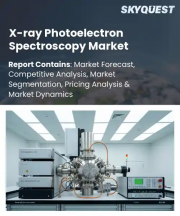
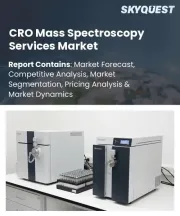
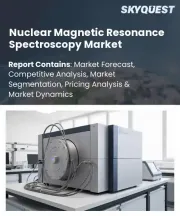
Based on technology, modalities span atomic absorption, infrared, mass spectrometry, nuclear magnetic resonance, Raman, ultraviolet-visible, and X-ray photoelectron techniques. Within atomic absorption, Flame, Graphite Furnace, and Hydride Generation subtypes serve distinct sensitivity and matrix requirements. Infrared methodologies break down into Far Infrared, Mid Infrared, and Near Infrared approaches, each suited to particular molecular fingerprints and sample types. Mass spectrometry contains electrospray ionization, matrix-assisted laser desorption ionization, time-of-flight, and triple quadrupole techniques that vary by ionization chemistry and analytical throughput. Nuclear magnetic resonance differentiates high-resolution and low-resolution systems, while Raman includes confocal, dispersive, and Fourier transform variants. Ultraviolet-visible systems offer double beam and single beam options for differing precision and cost profiles.
Based on application, workflows focus on qualitative analysis, quantitative analysis, and research and development, with each application imposing distinct validation and throughput constraints. Based on end use, stakeholders include academic and government research, chemical and petrochemical, environmental testing, food and beverage, and pharmaceuticals and biotechnology, and each end-use sector brings unique regulatory and operational expectations that influence procurement specifications and service requirements. Understanding these segmentation layers helps vendors and buyers align product configurations, service offerings, and support models to real operational need.
Regional dynamics across the Americas, Europe Middle East & Africa, and Asia-Pacific that shape technology adoption, supply resilience, and service delivery
Regional dynamics exert a strong influence on technology adoption, supplier strategies, and service delivery patterns, and understanding these differences is essential to building resilient supply chains and effective go-to-market plans. In the Americas, purchasers balance high expectations for technical support with a preference for rapid deployment and local repair capabilities; this region often drives demand for field-capable systems and integrated analytics that shorten time to actionable results. Investment in domestic service networks and localized spare-parts distribution tends to be a priority as organizations optimize uptime and compliance.
Within Europe, Middle East & Africa, regulatory harmonization, cross-border logistics complexity, and diverse end-user sophistication levels create a mosaic of procurement behavior. Western European laboratories frequently prioritize validated workflows and full documentation, while emerging markets across the broader region focus on cost-effective, robust platforms and training partnerships. Service models that combine remote diagnostics with on-site qualification are increasingly valuable across this geography.
Asia-Pacific exhibits rapid uptake of both high-end laboratory instruments and compact field analyzers driven by industrial expansion, environmental monitoring mandates, and significant investments in pharmaceutical and food safety infrastructure. Regional manufacturing capability in some Asia-Pacific markets supports both local OEM growth and export-oriented supply chains, but it also creates competitive pressure that influences pricing and innovation cycles. Across all regions, cross-border collaboration, local regulatory regimes, and talent availability determine the shape of adoption curves and service expectations.
Competitive intelligence on leading companies advancing instrumentation, software analytics, and service offerings for spectroscopy with focus on partnerships and partnerships
Leading companies in the spectroscopy space differentiate through integrated value propositions that combine instrumentation excellence, robust software ecosystems, and scalable service offerings. Competitive dynamics now reward firms that deliver not only high-performance optics and detectors but also intuitive user interfaces, validated analytics, and predictable lifecycle support. Strategic partnerships, co-development agreements with academic institutions, and targeted acquisitions of niche software vendors enable firms to close capability gaps rapidly and to present end-to-end solutions to complex end users.
Companies that maintain flexible manufacturing footprints and robust supplier relationships can respond more effectively to trade policy shifts and component shortages. At the same time, those that invest in modular instrument architectures allow users to upgrade sensing and computing subsystems without wholesale replacement. This headroom for incremental improvement supports longer equipment lifecycles and reduces resistance to higher upfront pricing when offset by lower long-term operational costs.
Service leadership is a differentiator. Firms that combine proactive remote monitoring, expedited spare-parts logistics, and comprehensive training programs strengthen customer retention and create recurring revenue opportunities. Transparency in product roadmaps, certification programs for application workflows, and accessible validation protocols further solidify vendor credibility with regulated end users and institutional buyers.
Actionable recommendations turning technical trends, procurement challenges, and regulatory signals into strategic priorities for spectroscopy leaders
Leaders should align strategy across four pragmatic dimensions: capability, procurement resilience, customer experience, and regulatory readiness. First, invest selectively in technologies that expand application reach while preserving backward compatibility with installed bases; modular instrument designs and software upgradeability reduce friction for existing customers and lower switching barriers for new ones. Second, diversify supply sources and qualify secondary suppliers early to reduce exposure to trade disruptions and tariff fluctuations, pairing supplier diversification with inventory optimization to balance cost and responsiveness.
Third, build stronger recurring-revenue service models that integrate analytics subscriptions, managed support, and training programs. This approach not only stabilizes revenue but also deepens customer relationships and provides a channel for iterative product improvement through usage data. Fourth, embed regulatory and validation workflows into product and service development so that end users can more rapidly demonstrate compliance and reproducibility; provide comprehensive documentation, validation kits, and training modules to ease customer adoption.
Operationally, prioritize investments in digital tools that enable remote diagnostics, predictive maintenance, and secure data exchange, and foster alliances with software partners to accelerate analytics deployment. Taken together, these recommendations reduce procurement risk, increase customer lifetime value, and position firms to capture demand as spectroscopy use cases diversify.
Transparent research methodology describing data sources, analytical approaches, validation steps, and quality controls used to ensure rigorous results
The research methodology combines multiple evidence streams to produce robust, reproducible insights. Primary inputs include structured interviews with procurement specialists, laboratory managers, and R&D leaders; technical validations conducted in controlled environments; and de-identified usage telemetry from instrument fleets where available. Supplementary inputs encompass peer-reviewed literature, standards and guidance documents, and vendor technical whitepapers that clarify functional trade-offs and performance baselines.
Analytical approaches integrate qualitative synthesis with comparative feature mapping and risk assessment frameworks. Validation steps include cross-referencing interview findings with observed procurement behavior and technical test results, while sensitivity checks ensure that conclusions remain stable across plausible variations in supply chain conditions and regulatory scenarios. Quality controls include independent peer review of technical interpretations and replication of key instrument performance observations by certified laboratories.
These methodological choices prioritize transparency and traceability. Each analytical claim is supported by source annotations and, where appropriate, by technical appendices detailing test conditions, instrumentation parameters, and data-processing workflows. This structure enables readers to reproduce critical analyses and to adapt the approach to their own organizational contexts.
Conclusion synthesizing implications for suppliers, end users, and policy makers and highlighting strategic priorities for spectroscopy stakeholders
In conclusion, spectroscopy stands at an inflection point where technical innovation, shifting procurement dynamics, and regulatory expectations intersect to redefine how analytics are procured, deployed, and supported. Instrument manufacturers that embrace modularity, open software architectures, and robust service ecosystems will be better positioned to capture diverse end-user needs. End users who prioritize total cost of ownership, supplier resilience, and integrated analytics will realize faster time to insight and improved operational continuity.
Policy makers and standards bodies play a constructive role by clarifying validation expectations and supporting harmonized approaches to data integrity and traceability. These efforts lower barriers for cross-border collaboration and accelerate adoption of next-generation spectroscopy applications in environmental monitoring, pharmaceuticals, and industrial process control. Looking ahead, continued convergence between hardware performance and software intelligence will create differentiated value for organizations that can integrate analytics into decision-making workflows.
Overall, stakeholders must take a holistic view that balances near-term operational resilience with longer-term investments in capability expansion. By focusing on modularity, service integration, and validated analytics, organizations can adapt to evolving technical and policy landscapes while maintaining high standards of scientific rigor and operational performance.
Table of Contents
1. Preface
- 1.1. Objectives of the Study
- 1.2. Market Definition
- 1.3. Market Segmentation & Coverage
- 1.4. Years Considered for the Study
- 1.5. Currency Considered for the Study
- 1.6. Language Considered for the Study
- 1.7. Key Stakeholders
2. Research Methodology
- 2.1. Introduction
- 2.2. Research Design
- 2.2.1. Primary Research
- 2.2.2. Secondary Research
- 2.3. Research Framework
- 2.3.1. Qualitative Analysis
- 2.3.2. Quantitative Analysis
- 2.4. Market Size Estimation
- 2.4.1. Top-Down Approach
- 2.4.2. Bottom-Up Approach
- 2.5. Data Triangulation
- 2.6. Research Outcomes
- 2.7. Research Assumptions
- 2.8. Research Limitations
3. Executive Summary
- 3.1. Introduction
- 3.2. CXO Perspective
- 3.3. Market Size & Growth Trends
- 3.4. Market Share Analysis, 2025
- 3.5. FPNV Positioning Matrix, 2025
- 3.6. New Revenue Opportunities
- 3.7. Next-Generation Business Models
- 3.8. Industry Roadmap
4. Market Overview
- 4.1. Introduction
- 4.2. Industry Ecosystem & Value Chain Analysis
- 4.2.1. Supply-Side Analysis
- 4.2.2. Demand-Side Analysis
- 4.2.3. Stakeholder Analysis
- 4.3. Porter's Five Forces Analysis
- 4.4. PESTLE Analysis
- 4.5. Market Outlook
- 4.5.1. Near-Term Market Outlook (0-2 Years)
- 4.5.2. Medium-Term Market Outlook (3-5 Years)
- 4.5.3. Long-Term Market Outlook (5-10 Years)
- 4.6. Go-to-Market Strategy
5. Market Insights
- 5.1. Consumer Insights & End-User Perspective
- 5.2. Consumer Experience Benchmarking
- 5.3. Opportunity Mapping
- 5.4. Distribution Channel Analysis
- 5.5. Pricing Trend Analysis
- 5.6. Regulatory Compliance & Standards Framework
- 5.7. ESG & Sustainability Analysis
- 5.8. Disruption & Risk Scenarios
- 5.9. Return on Investment & Cost-Benefit Analysis
6. Cumulative Impact of United States Tariffs 2025
7. Cumulative Impact of Artificial Intelligence 2025
8. Spectroscopy Market, by Product Type
- 8.1. Instruments
- 8.2. Services
- 8.2.1. Consulting And Training
- 8.2.2. Maintenance And Support
- 8.3. Software
- 8.3.1. Data Analysis
- 8.3.2. Instrument Control
9. Spectroscopy Market, by Technology
- 9.1. Atomic Absorption
- 9.1.1. Flame
- 9.1.2. Graphite Furnace
- 9.1.3. Hydride Generation
- 9.2. Infrared
- 9.2.1. Far Infrared
- 9.2.2. Mid Infrared
- 9.2.3. Near Infrared
- 9.3. Mass Spectrometry
- 9.3.1. Electrospray Ionization
- 9.3.2. Matrix Assisted Laser Desorption Ionization
- 9.3.3. Time Of Flight
- 9.3.4. Triple Quadrupole
- 9.4. Nuclear Magnetic Resonance
- 9.4.1. High Resolution
- 9.4.2. Low Resolution
- 9.5. Raman
- 9.5.1. Confocal
- 9.5.2. Dispersive
- 9.5.3. Fourier Transform
- 9.6. Ultraviolet Visible
- 9.6.1. Double Beam
- 9.6.2. Single Beam
- 9.7. X Ray Photoelectron
10. Spectroscopy Market, by Application
- 10.1. Qualitative Analysis
- 10.2. Quantitative Analysis
- 10.3. Research And Development
11. Spectroscopy Market, by End Use
- 11.1. Academic And Government Research
- 11.2. Chemical And Petrochemical
- 11.3. Environmental Testing
- 11.4. Food And Beverage
- 11.5. Pharmaceuticals And Biotechnology
12. Spectroscopy Market, by Region
- 12.1. Americas
- 12.1.1. North America
- 12.1.2. Latin America
- 12.2. Europe, Middle East & Africa
- 12.2.1. Europe
- 12.2.2. Middle East
- 12.2.3. Africa
- 12.3. Asia-Pacific
13. Spectroscopy Market, by Group
- 13.1. ASEAN
- 13.2. GCC
- 13.3. European Union
- 13.4. BRICS
- 13.5. G7
- 13.6. NATO
14. Spectroscopy Market, by Country
- 14.1. United States
- 14.2. Canada
- 14.3. Mexico
- 14.4. Brazil
- 14.5. United Kingdom
- 14.6. Germany
- 14.7. France
- 14.8. Russia
- 14.9. Italy
- 14.10. Spain
- 14.11. China
- 14.12. India
- 14.13. Japan
- 14.14. Australia
- 14.15. South Korea
15. United States Spectroscopy Market
16. China Spectroscopy Market
17. Competitive Landscape
- 17.1. Market Concentration Analysis, 2025
- 17.1.1. Concentration Ratio (CR)
- 17.1.2. Herfindahl Hirschman Index (HHI)
- 17.2. Recent Developments & Impact Analysis, 2025
- 17.3. Product Portfolio Analysis, 2025
- 17.4. Benchmarking Analysis, 2025
- 17.5. ABB Ltd.
- 17.6. Agilent Technologies Inc.
- 17.7. Bruker Corporation
- 17.8. Danaher Corporation
- 17.9. Hitachi High-Tech Corporation
- 17.10. HORIBA, Ltd.
- 17.11. JEOL Ltd.
- 17.12. Metrohm AG
- 17.13. Ocean Insight Inc.
- 17.14. Oxford Instruments plc
- 17.15. PerkinElmer Inc.
- 17.16. Sartorius AG
- 17.17. Shimadzu Corporation
- 17.18. Thermo Fisher Scientific Inc.
- 17.19. Waters Corporation