|
시장보고서
상품코드
2018009
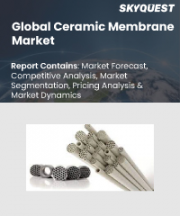
세라믹 멤브레인 시장 : 제품 유형별, 소재별, 기술별, 최종 사용자별 예측(2026-2032년)Ceramic Membrane Market by Product, Material Type, Technology, End-User - Global Forecast 2026-2032 |
||||||
 360iResearch
세라믹 멤브레인 시장은 2025년에 119억 3,000만 달러로 평가되었고 2026년에는 125억 7,000만 달러로 성장하여 CAGR 5.98%로 성장을 지속하여, 2032년까지 179억 2,000만 달러에 이를 것으로 예측됩니다.
| 주요 시장 통계 | |
|---|---|
| 기준 연도 : 2025년 | 119억 3,000만 달러 |
| 추정 연도 : 2026년 | 125억 7,000만 달러 |
| 예측 연도 : 2032년 | 179억 2,000만 달러 |
| CAGR(%) | 5.98% |
세라믹 멤브레인의 기초 지식, 기능적 형태 구분, 성능 결정 요인 및 산업 도입자의 조달 결정 요인에 대한 종합적인 개요
세라믹 멤브레인 기술은 대체 소재에 비해 우수한 내화학성, 열 안정성 및 긴 수명을 가지고 있어 산업 분야 전반에서 고성능 분리 공정의 중요한 기반 기술로 부상하고 있습니다. 이 보고서에서는 여과, 정제 및 공정 강화에 있어 세라믹 멤브레인의 광범위한 유용성을 개괄하고, 열악한 작동 환경에서 이러한 구성요소를 매력적으로 만드는 재료 및 설계상의 고유한 특성을 밝힙니다.
재료의 혁신, 운영의 디지털화, 산업 전반에 걸친 구매자의 우선순위 변화에 따라 세라믹 멤브레인 채택에 있어 중요한 변화가 일어나고 있습니다.
세라믹 멤브레인 시장 환경은 기술의 정교화, 규제 요건의 변화, 산업 공정 전반에 걸친 내성 분리 솔루션에 대한 수요 증가로 인해 변화하고 있습니다. 지난 몇 년 동안 제조업체들은 소결 공정의 개선, 기공의 균일성 향상, 모듈화 설계의 확장을 통해 적용 범위가 넓어지고 최종 사용자의 도입 장벽을 낮추었습니다. 동시에 디지털 공정 제어와 첨단 진단 기술을 통해 막의 수명을 연장하고 총소유비용을 절감하는 예지보전 접근방식이 가능해졌습니다.
관세 정책의 변화가 세라믹 멤브레인 밸류체인 전반의 조달 전략, 공급업체 다변화 및 상업적 리스크 관리에 어떤 영향을 미쳤는지 평가
2025년 미국이 최근 시행한 관세 조치는 세라믹 멤브레인 및 관련 원료를 포함한 고성능 산업 부품의 세계 공급망에 구체적인 복잡성을 가져왔습니다. 공급자와 구매자는 이에 대응하여 조달 전략을 재검토하고, 니어쇼어링 및 다각화 옵션을 평가하고, 수익률 감소와 프로젝트 지연을 최소화하기 위해 거래 조건을 재협상하고 있습니다. 그 결과, 조달팀은 거래에서 공급업체의 연속성, 계약의 유연성, 투명한 비용 전가 메커니즘을 그 어느 때보다 중요하게 여기고 있습니다.
제품 형태, 주요 재료 선택, 분리 기술, 최종 사용자 요구 사항이 어떻게 결합하여 공급업체의 차별화를 형성하는지, 세부 세분화에 대한 인사이트를 제공합니다.
인사이트 있는 세분화 분석을 통해 성능 요구 사항, 재료 과학 및 최종 사용 동향이 교차하는 지점을 파악하여 제품 선택 및 공급업체 포지셔닝을 결정합니다. 제품별로는 세라믹 멤브레인 디스크 홀더, 세라믹 멤브레인 필터, 세라믹 멤브레인 테스트 셀로 시장을 조사했으며, 각 형식은 고객의 평가 기준에 영향을 미치는 고유한 통합 및 유지보수 프로파일을 가지고 있습니다. 디스크 홀더는 컴팩트한 설치와 잦은 세척 주기가 필요한 경우에 주로 선택되며, 필터는 광범위한 공정 여과 요구를 충족시키고, 테스트 셀은 스케일업 및 품질 보증에 필수적인 검증 기능을 제공합니다. 그 결과, 모듈식 설계와 손쉬운 리노베이션 경로가 우수한 공급업체는 리노베이션 프로젝트와 신규 프로젝트 모두에서 고객의 지지를 얻을 수 있습니다.
인프라 우선순위, 규제 압력, 서비스 역량이 세계 시장에서의 도입 패턴을 결정하고, 세라믹 멤브레인 수요를 형성하는 지역적 추세
세라믹 멤브레인 도입에 대한 지역별 동향은 산업 구조, 규제 프레임워크, 인프라 투자 사이클의 조합을 반영합니다. 북미와 남미에서는 수처리 현대화, 첨단 제조 및 석유 및 가스 응용 분야에 수요가 집중되는 경향이 있으며, 조달 활동은 성능 보증 및 애프터마켓 서비스 역량에 의해 주도되고 있습니다. 이 지역에서 사업을 영위하는 기업들은 촉박한 프로젝트 일정을 맞추기 위해 신속한 현장 지원과 검증된 성능 데이터를 제공할 수 있는 공급업체를 선호하는 경우가 많습니다.
수직적 통합, 독자적인 제조 기술 및 종합적인 애프터 서비스 모델을 통해 경쟁 우위를 구축하는 방법
세라믹 멤브레인 시장 경쟁 구도는 단일 제품 제공이 아닌 능력의 조합에 의해 점점 더 정의되고 있습니다. 주요 기업들은 재료에 대한 전문 지식, 첨단 제조 기술, 예지보전 및 현장 지원과 같은 애프터마켓 서비스를 결합한 수직적 통합 역량 구축에 투자하고 있습니다. 이러한 수직적 통합 접근 방식은 프로젝트 팀이 제품 인증까지 걸리는 시간을 단축하고, 자산의 라이프사이클 전반에 걸쳐 가치를 창출할 수 있도록 지원합니다. 또한, 고객의 시스템 통합 리스크를 줄여주는 턴키 방식의 제공 모델이 시장에서 선호됨에 따라 멤브레인 제조업체와 시스템 통합사업자 간의 전략적 제휴도 보편화되고 있습니다.
지속 가능한 가치를 얻기 위해 제조업체와 공급업체가 R&D, 모듈화, 공급 탄력성, 애프터마켓 서비스를 강화하기 위한 실질적인 전략적 조치를 취해야 합니다.
업계 선두 기업들은 세라믹 멤브레인 분야에서 경쟁 우위와 비즈니스 연속성을 보장하기 위해 몇 가지 실질적인 조치를 취할 수 있습니다. 첫째, 재료 연구 개발 및 공정 검증에 대한 투자를 우선시하고, 우수한 내오염성, 기계적 견뢰도 및 부식성이 강한 화학 물질과의 호환성을 입증하는 것입니다. 이를 통해 조달 주기를 단축하고, 규제가 까다로운 분야로의 진입 장벽을 낮출 수 있습니다. 둘째, 모듈화된 제품 아키텍처와 리트로핏 키트를 개발하여 기존 시스템과의 통합을 용이하게 하고, 간소화된 설치 절차를 통해 대상 시장을 확대하는 것입니다.
실무자 인터뷰, 기술 검증 자료, 시나리오 기반 공급망 분석을 통합한 투명하고 재현성 높은 조사 기법
본 조사는 1차 정보와 2차 정보를 통합하고 입증된 기술적 성능과 상업적 동향에 초점을 맞추어 세라믹 멤브레인 분야에 대한 증거에 기반한 분석을 구축합니다. 1차 정보로는 업계 실무자, 조달 책임자, 기술 전문가를 대상으로 구조화된 인터뷰를 통해 용도 수준의 기대치, 통합 장벽, 공급업체 성과에 대한 인식을 파악했습니다. 이러한 질적 연구 결과는 2차 기술 문헌, 특허 출원 및 공개된 운영 사례와 대조하여 성능에 대한 주장 및 혁신의 궤적을 뒷받침하는 데 활용되었습니다.
장기적인 세라믹 멤브레인 보급에 있어 검증된 성능, 서비스 지향적 상업 모델 및 공급 탄력성이 중요한 역할을 강조하는 결론적 통합
종합적인 평가 결과, 세라믹 멤브레인은 내구성, 내화학성 및 수명주기 동안 환경 부하를 줄이는 것이 필수적인 점점 더 다양해지는 분리 문제에 대응할 수 있는 위치에 있다는 사실이 밝혀졌습니다. 재료 및 제조 기술의 발전과 함께 검증 및 유지보수성에 대한 관심이 높아지면서 경쟁의 초점이 원자재 가격에서 자산 수명주기 전반에 걸쳐 입증 가능한 가치로 이동하고 있습니다. 따라서 도입의 성패는 공급업체가 실험실에서의 성능을 신뢰할 수 있는 실제 결과로 전환하고, 탄탄한 애프터서비스 체계를 통해 고객을 지원할 수 있느냐에 달려있다고 할 수 있습니다.
자주 묻는 질문
목차
제1장 서문
제2장 조사 방법
제3장 주요 요약
제4장 시장 개요
제5장 시장 인사이트
제6장 미국 관세의 누적 영향, 2025년
제7장 AI의 누적 영향, 2025년
제8장 세라믹 멤브레인 시장 : 제품별
제9장 세라믹 멤브레인 시장 : 소재 유형별
제10장 세라믹 멤브레인 시장 : 기술별
제11장 세라믹 멤브레인 시장 : 최종 사용자별
제12장 세라믹 멤브레인 시장 : 지역별
제13장 세라믹 멤브레인 시장 : 그룹별
제14장 세라믹 멤브레인 시장 : 국가별
제15장 미국의 세라믹 멤브레인 시장
제16장 중국의 세라믹 멤브레인 시장
제17장 경쟁 구도
JHS 26.05.12The Ceramic Membrane Market was valued at USD 11.93 billion in 2025 and is projected to grow to USD 12.57 billion in 2026, with a CAGR of 5.98%, reaching USD 17.92 billion by 2032.
| KEY MARKET STATISTICS | |
|---|---|
| Base Year [2025] | USD 11.93 billion |
| Estimated Year [2026] | USD 12.57 billion |
| Forecast Year [2032] | USD 17.92 billion |
| CAGR (%) | 5.98% |
Comprehensive orientation to ceramic membrane fundamentals, distinguishing functional formats, performance determinants, and procurement decision drivers for industrial adopters
Ceramic membrane technology is emerging as a pivotal enabler for high-performance separation processes across industrial sectors, offering robust chemical resilience, thermal stability, and longevity compared with alternative materials. The introduction to this report frames the broad utility of ceramic membranes in filtration, purification, and process intensification roles, and it identifies the intrinsic material and design attributes that make these components attractive for demanding operating environments.
The narrative begins by differentiating the primary ceramic membrane formats and their functional roles within process streams, and then transitions to the practical considerations that influence adoption decisions such as compatibility with aggressive chemistries, backwash and cleaning regimes, and lifecycle maintenance. It also highlights the interplay between membrane geometry, pore structure, and the range of separation technologies commonly deployed. Readers will find a concise synthesis of how technical performance maps to application requirements and the operational levers that buyers prioritize when evaluating suppliers.
Collectively, this introduction sets a foundation for deeper analysis by outlining the technical vocabulary and framing the commercial drivers that shape procurement cycles, project specifications, and supplier evaluation criteria. As a result, stakeholders gain a clear, actionable context for interpreting subsequent sections that examine market evolution, tariff impacts, segmentation intelligence, regional behaviors, and recommended strategic responses.
Critical transformative shifts in ceramic membrane adoption driven by material innovations, operational digitization, and evolving buyer priorities across industrial applications
The landscape for ceramic membranes is shifting under the combined influence of technological refinement, evolving regulatory expectations, and accelerating demand for resilient separation solutions across industrial processes. Over recent cycles, manufacturers have improved sintering processes, enhanced pore uniformity, and expanded modular designs, which together have widened the addressable application set and reduced integration friction for end users. In parallel, digital process controls and advanced diagnostics now enable predictive maintenance approaches that extend membrane life and lower total cost of ownership.
Moreover, there is a transition in buyer requirements from purely cost-driven choices to value-based decisions where longevity, chemical compatibility, and lower lifecycle emissions are prioritized. This has further spurred innovation in novel materials and hybrid configurations that combine ceramic robustness with functional surface coatings to tailor fouling resistance and selectivity. Simultaneously, capital project teams are placing greater emphasis on lifecycle data and third-party validation, prompting suppliers to formalize testing protocols and performance guarantees to de-risk procurement.
Consequently, the competitive environment is evolving: differentiation now rests on demonstrable application success, clarity of service and aftermarket support, and the ability to deliver integrated solutions rather than commodity components. Taken together, these transformative shifts are creating new pathways for adoption while raising the bar for proven performance and customer experience.
Assessment of how tariff policy shifts have reshaped sourcing strategies, supplier diversification, and commercial risk management across the ceramic membrane value chain
Recent tariff measures implemented by the United States in 2025 have introduced tangible complexity into global supply chains for high-performance industrial components, including ceramic membranes and associated raw materials. Suppliers and purchasers are responding by reassessing sourcing strategies, evaluating nearshoring and diversification options, and renegotiating trade terms to minimize margin erosion and project delays. As a result, procurement teams are placing heightened emphasis on supplier continuity, contractual flexibility, and transparent cost pass-through mechanisms in their engagements.
In practice, the tariff environment has encouraged manufacturers to reconfigure logistics and production footprints where feasible, shifting certain manufacturing steps closer to key demand centers to avoid tariff exposure. Concurrently, procurement organizations are diversifying supplier panels to include regional capability and to create redundancy for critical components. These tactical shifts often accompany adjustments to inventory strategies, with firms balancing the risk of stockholding against the potential for supply disruption and pricing volatility.
Looking ahead, stakeholders must factor tariff-driven cost variability into bid reviews, project timelines, and supplier qualification processes. Actionable responses include strengthening contractual clauses related to force majeure and trade policy changes, increasing transparency into component cost build-ups, and accelerating supplier development programs that reduce dependence on single-source geographies. In sum, tariffs have prompted a more strategic, resilience-oriented approach to supply chain and commercial planning within the ceramic membrane ecosystem.
In-depth segmentation insights revealing how product formats, core material choices, separation technologies, and end-user requirements jointly shape supplier differentiation
Insightful segmentation analysis reveals where performance requirements, material science, and end-use dynamics intersect to determine product selection and supplier positioning. Based on Product, the market is studied across Ceramic Membrane Disc Holder, Ceramic Membrane Filters, and Ceramic Membrane Test Cell, and each format aligns to distinct integration and maintenance profiles that influence customer evaluation criteria. Disc holders are often chosen for compact installations and frequent cleaning cycles, filters serve broad process filtration needs, and test cells provide essential validation capability for scale-up and quality assurance. Consequently, suppliers that excel in modular design and straightforward retrofit paths can capture preference across retrofit and greenfield projects.
Based on Material Type, the market is studied across Aluminum Oxide, Silicon Carbide, Titanium Dioxide, and Zirconium Dioxide, and material selection is a primary performance lever that dictates chemical compatibility, thermal tolerance, and abrasion resistance. For example, Silicon Carbide tends to be favored where abrasion and high-temperature stability are critical, while Zirconium Dioxide offers advantageous toughness in certain aggressive media. Transitioning between materials requires clear justification based on service conditions and lifecycle total cost.
Based on Technology, the market is studied across Microfiltration, Nanofiltration, Reverse Osmosis, and Ultrafiltration, and each separation class imposes unique constraints on pore architecture, transmembrane pressure, and pretreatment needs. Microfiltration and ultrafiltration are commonly applied for particle and colloid removal, whereas nanofiltration and reverse osmosis are selected for solute separation and desalination tasks. Therefore, technology choice is tightly coupled to upstream process characteristics and downstream product quality requirements.
Based on End-User, the market is studied across Chemical, Food & Beverage, Oil & Gas, Pharmaceutical & Biotechnology, Power & Energy, and Water & Wastewater Treatment, and each vertical imposes distinct regulatory, cleanliness, and traceability expectations. Pharmaceutical and biotechnology customers emphasize validation, material traceability, and sterilizability, while oil and gas applications prioritize fouling resistance and mechanical durability. Recognizing these sector-specific imperatives helps suppliers tailor their value propositions and aftersales support to match operational realities.
Regional dynamics shaping ceramic membrane demand where infrastructure priorities, regulatory pressure, and service capabilities determine adoption patterns across global markets
Regional behavior in ceramic membrane adoption reflects a combination of industrial structure, regulatory frameworks, and infrastructure investment cycles. In the Americas, demand tends to cluster around water treatment modernization, advanced manufacturing, and oil and gas applications, with procurement driven by performance assurances and aftermarket service capabilities. Companies operating in this region often prioritize suppliers that can provide rapid field support and validated performance data to meet aggressive project timetables.
Across Europe, Middle East & Africa, regulatory stringency, sustainability mandates, and water stewardship initiatives drive uptake, particularly in sectors where emissions and effluent controls are tightly regulated. Buyers in these markets evaluate ceramic membrane solutions through the lens of environmental compliance and lifecycle sustainability, and they increasingly require evidence of reduced chemical consumption and lower energy intensity. Vendors that can demonstrate circularity benefits and compliance credentials gain an advantage in this region.
In the Asia-Pacific region, rapid industrial expansion, municipal water infrastructure projects, and growth in food and beverage processing create strong demand for robust filtration solutions. Procurement decisions here often balance capital intensity with long-term operational reliability, and suppliers that can scale production and deliver cost-effective service networks are well positioned. Across all regions, converging themes include the need for localized support, validated performance, and demonstrable lifecycle benefits, which together influence adoption pathways and commercial terms.
How competitive advantage is being engineered through vertical integration, proprietary manufacturing techniques, and comprehensive aftermarket service models
Competitive dynamics within the ceramic membrane landscape are increasingly defined by capability bundles rather than single-product offerings. Leading companies are investing in vertically integrated capabilities that combine materials expertise, advanced manufacturing, and aftermarket services such as predictive maintenance and field support. This vertical orientation reduces time to qualification for project teams and helps capture value across the asset lifecycle. In addition, strategic partnerships between membrane manufacturers and systems integrators are becoming more common as the market favors turn-key delivery models that reduce customer integration risk.
Product differentiation is also driven by proprietary sintering techniques, surface modification chemistries, and modular product architectures that simplify retrofit and scaling. Firms that can demonstrate repeatable performance in demanding applications such as chemical processing, pharmaceutical production, and oilfield operations build credibility that translates into longer-term service revenue and cross-sell opportunities. Meanwhile, aftermarket services that include condition-based maintenance, spare parts availability, and rapid technical response become deciding factors in competitive bids.
Investment in validation and third-party testing capabilities further separates established suppliers from new entrants. Companies that publish rigorous technical dossiers, maintain transparent test protocols, and provide accessible technical support generally secure higher consideration from risk-averse procurement teams. Overall, the most successful players combine technical excellence with commercial responsiveness and robust service frameworks.
Actionable strategic moves for manufacturers and suppliers to strengthen R&D, modularization, supply resilience, and aftermarket services to capture sustainable value
Industry leaders can take several pragmatic actions to secure competitive advantage and operational resilience in the ceramic membrane sector. First, prioritize investments in materials R&D and process validation to demonstrate superior fouling resistance, mechanical robustness, and compatibility with aggressive chemistries; this will shorten procurement cycles and reduce entry barriers into regulated sectors. Second, develop modular product architectures and retrofit kits to ease integration into legacy systems while expanding addressable markets through simplified installation protocols.
Third, strengthen supply chain resilience by diversifying supplier bases and establishing contingency manufacturing pathways that mitigate trade policy and logistics disruptions. Align contractual terms to incorporate clarity on trade-related cost adjustments and improve inventory visibility to enable rapid replenishment. Fourth, build comprehensive aftermarket capabilities, including predictive maintenance services and spare parts networks, to increase customer lifetime value and differentiate on total cost of ownership rather than upfront price.
Finally, invest in transparent testing and documentation to meet stringent validation requirements in high-regulation sectors, and couple these technical investments with client-focused commercial models that offer trial programs, performance guarantees, and collaborative pilot projects. Taken together, these actions will enable companies to win larger, longer-duration engagements and to convert technical leadership into sustainable commercial returns.
Transparent and reproducible research methodology integrating practitioner interviews, technical validation references, and scenario-based supply chain analysis
This research synthesizes primary and secondary data sources to construct an evidence-based analysis of the ceramic membrane domain, with a focus on validated technical performance and commercial dynamics. Primary inputs include structured interviews with industry practitioners, procurement leaders, and technical experts to capture application-level expectations, integration barriers, and supplier performance perceptions. These qualitative insights were triangulated with secondary technical literature, patent filings, and publicly available operational case studies to corroborate performance claims and innovation trajectories.
Analytical rigor was maintained through comparative evaluation of material properties, technology classifications, and end-user requirements to ensure that segmentation insights align with real-world deployment constraints. Where possible, experimental validation protocols and standard test methods were referenced to assess claims related to fouling resistance, permeability, and mechanical durability. In addition, supply chain and policy impacts were analyzed using scenario-based methods to surface likely operational responses without resorting to speculative forecasting.
Throughout the study, emphasis was placed on transparency of methodology, reproducibility of findings, and the use of expert validation to strengthen conclusions. This approach ensures that recommendations are actionable for procurement, engineering, and strategy teams seeking to accelerate adoption or refine supplier selection criteria.
Conclusive synthesis emphasizing the critical role of validated performance, service-oriented commercial models, and supply resilience in long-term ceramic membrane adoption
The cumulative assessment underscores that ceramic membranes are positioned to address a growing array of separation challenges where durability, chemical resilience, and low lifecycle impact are essential. Technical advances in materials and manufacturing, coupled with a stronger emphasis on validation and serviceability, are shifting the competitive focus from commodity pricing to demonstrable value across the asset lifecycle. Consequently, successful adoption will hinge on suppliers' abilities to translate laboratory performance into reliable field results and to support customers with robust aftersales frameworks.
At the same time, external factors such as trade policy shifts, regional infrastructure investments, and tighter environmental regulations are reshaping procurement behavior and supplier selection criteria. Firms that proactively manage supply chain exposure, invest in regionally relevant service capabilities, and align product development with sector-specific regulatory needs will be better positioned to capture durable business. In short, the field rewards technical excellence that is paired with practical, customer-centered commercial execution.
Stakeholders should therefore prioritize investments that reduce integration risk, demonstrate performance under realistic operating conditions, and build long-term service relationships. By doing so, they will enhance the probability of successful deployment and unlock sustainable value across industrial applications.
Table of Contents
1. Preface
- 1.1. Objectives of the Study
- 1.2. Market Definition
- 1.3. Market Segmentation & Coverage
- 1.4. Years Considered for the Study
- 1.5. Currency Considered for the Study
- 1.6. Language Considered for the Study
- 1.7. Key Stakeholders
2. Research Methodology
- 2.1. Introduction
- 2.2. Research Design
- 2.2.1. Primary Research
- 2.2.2. Secondary Research
- 2.3. Research Framework
- 2.3.1. Qualitative Analysis
- 2.3.2. Quantitative Analysis
- 2.4. Market Size Estimation
- 2.4.1. Top-Down Approach
- 2.4.2. Bottom-Up Approach
- 2.5. Data Triangulation
- 2.6. Research Outcomes
- 2.7. Research Assumptions
- 2.8. Research Limitations
3. Executive Summary
- 3.1. Introduction
- 3.2. CXO Perspective
- 3.3. Market Size & Growth Trends
- 3.4. Market Share Analysis, 2025
- 3.5. FPNV Positioning Matrix, 2025
- 3.6. New Revenue Opportunities
- 3.7. Next-Generation Business Models
- 3.8. Industry Roadmap
4. Market Overview
- 4.1. Introduction
- 4.2. Industry Ecosystem & Value Chain Analysis
- 4.2.1. Supply-Side Analysis
- 4.2.2. Demand-Side Analysis
- 4.2.3. Stakeholder Analysis
- 4.3. Porter's Five Forces Analysis
- 4.4. PESTLE Analysis
- 4.5. Market Outlook
- 4.5.1. Near-Term Market Outlook (0-2 Years)
- 4.5.2. Medium-Term Market Outlook (3-5 Years)
- 4.5.3. Long-Term Market Outlook (5-10 Years)
- 4.6. Go-to-Market Strategy
5. Market Insights
- 5.1. Consumer Insights & End-User Perspective
- 5.2. Consumer Experience Benchmarking
- 5.3. Opportunity Mapping
- 5.4. Distribution Channel Analysis
- 5.5. Pricing Trend Analysis
- 5.6. Regulatory Compliance & Standards Framework
- 5.7. ESG & Sustainability Analysis
- 5.8. Disruption & Risk Scenarios
- 5.9. Return on Investment & Cost-Benefit Analysis
6. Cumulative Impact of United States Tariffs 2025
7. Cumulative Impact of Artificial Intelligence 2025
8. Ceramic Membrane Market, by Product
- 8.1. Ceramic Membrane Disc Holder
- 8.2. Ceramic Membrane Filters
- 8.3. Ceramic Membrane Test Cell
9. Ceramic Membrane Market, by Material Type
- 9.1. Aluminum Oxide
- 9.2. Silicon Carbide
- 9.3. Titanium Dioxide
- 9.4. Zirconium Dioxide
10. Ceramic Membrane Market, by Technology
- 10.1. Microfiltration
- 10.2. Nanofiltration
- 10.3. Reverse Osmosis
- 10.4. Ultrafiltration
11. Ceramic Membrane Market, by End-User
- 11.1. Chemical
- 11.2. Food & Beverage
- 11.3. Oil & Gas
- 11.4. Pharmaceutical & Biotechnology
- 11.5. Power & Energy
- 11.6. Water & Wastewater Treatment
12. Ceramic Membrane Market, by Region
- 12.1. Americas
- 12.1.1. North America
- 12.1.2. Latin America
- 12.2. Europe, Middle East & Africa
- 12.2.1. Europe
- 12.2.2. Middle East
- 12.2.3. Africa
- 12.3. Asia-Pacific
13. Ceramic Membrane Market, by Group
- 13.1. ASEAN
- 13.2. GCC
- 13.3. European Union
- 13.4. BRICS
- 13.5. G7
- 13.6. NATO
14. Ceramic Membrane Market, by Country
- 14.1. United States
- 14.2. Canada
- 14.3. Mexico
- 14.4. Brazil
- 14.5. United Kingdom
- 14.6. Germany
- 14.7. France
- 14.8. Russia
- 14.9. Italy
- 14.10. Spain
- 14.11. China
- 14.12. India
- 14.13. Japan
- 14.14. Australia
- 14.15. South Korea
15. United States Ceramic Membrane Market
16. China Ceramic Membrane Market
17. Competitive Landscape
- 17.1. Market Concentration Analysis, 2025
- 17.1.1. Concentration Ratio (CR)
- 17.1.2. Herfindahl Hirschman Index (HHI)
- 17.2. Recent Developments & Impact Analysis, 2025
- 17.3. Product Portfolio Analysis, 2025
- 17.4. Benchmarking Analysis, 2025
- 17.5. Alsys Group
- 17.6. Aquabrane Water Technologies Pvt. Ltd.
- 17.7. Aquaneel Seperation
- 17.8. Aquatech International LLC
- 17.9. ARAN Holding GmbH
- 17.10. Cembrane A/S
- 17.11. Ceraflo Pte Ltd.
- 17.12. GEA Group Aktiengesellschaft
- 17.13. Guochu Technology (Xiamen) Co., Ltd.
- 17.14. IPNR Endura
- 17.15. Jiangsu Jiuwu Hi-Tech Co., Ltd.
- 17.16. KERAFOL Keramische Folien GmbH & Co. KG
- 17.17. Kuraray Co., Ltd.
- 17.18. LiqTech Holding A/S
- 17.19. Mantec Technical Ceramics Ltd.
- 17.20. Membratec SA
- 17.21. Membrion, Inc.
- 17.22. Metawater Co., Ltd.
- 17.23. Nanjing Tangent Fluid Technology Co., Ltd.
- 17.24. Nanostone Water, Inc.
- 17.25. Pall Corporation
- 17.26. Paul Rauschert GmbH & Co. KG.
- 17.27. Qua Group LLC
- 17.28. Saint-Gobain S.A.
- 17.29. SIVA Unit
- 17.30. TAMI Industries
- 17.31. Toray Industries, Inc.
- 17.32. Veolia Water Solutions & Technologies