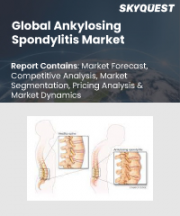
|
시장보고서
상품코드
2018525
강직성 척추염 시장 : 투여 경로, 환자 연령층, 최종 사용자, 투여 경로별 - 세계 예측(2026-2032년)Ankylosing Spondylitis Market by Administration Route, Patient Age Group, End User, Route Of Administration - Global Forecast 2026-2032 |
||||||
 360iResearch
강직성 척추염 시장은 2025년에 60억 4,000만 달러로 평가되었습니다. 2026년에는 65억 1,000만 달러로 성장하고 CAGR 8.67%를 나타내, 2032년까지 108억 1,000만 달러에 이를 것으로 예측됩니다.
| 주요 시장 통계 | |
|---|---|
| 기준 연도(2025년) | 60억 4,000만 달러 |
| 추정 연도(2026년) | 65억 1,000만 달러 |
| 예측 연도(2032년) | 108억 1,000만 달러 |
| CAGR(%) | 8.67% |
강직성 척추염에 대한 종합적인 임상적, 체계적 프레임워크를 제공하고, 이해관계자들이 통합적 치료 및 치료 제공의 관점으로 전환할 수 있도록 안내합니다.
강직성 척추염은 류마티스학, 정형외과, 재활의학, 의료경제학 등 여러 분야에 걸쳐 영향을 미치는 복잡한 염증성 질환입니다. 이 보고서의 첫 번째 요약에서는 임상적 특징, 진화하는 치료 접근법, 그리고 이해관계자들이 진단, 치료, 장기적 관리에 접근하는 방식을 형성하는 변화하는 지불자 및 의료 제공 역학에 대해 정리했습니다. 최근 병태생리학적 발견과 실제 치료 경로를 함께 살펴봄으로써, 이 보고서는 임상의, 보험사, 제약사, 환자 지원 단체의 전략적 의사결정을 위한 토대를 마련할 수 있을 것입니다.
강직성 척추염 생태계 전반에서 치료 혁신, 진단 및 의료 서비스 제공 체계의 재구축이 임상 관행, 증거 요구 및 지불자의 기대치를 어떻게 공동으로 재구성하고 있는가?
강직성 척추염의 치료와 관리의 현주소는 치료의 혁신, 진단 기술의 향상, 그리고 새로운 치료 모델에 힘입어 큰 변화의 시기를 맞이하고 있습니다. 새로운 표적치료제와 경구용 저분자 약물의 등장으로 기존 생물학적 제제의 틀을 넘어선 치료 옵션이 확대되고 있으며, 영상진단과 바이오마커의 발전으로 보다 빠르고 정확한 진단이 가능해졌습니다. 이러한 변화는 임상 알고리즘을 변화시켜 지속적인 질병 조절, 기능 유지 및 동반 질환의 부담 감소에 대한 기대치를 높이고 있습니다.
강직성 척추염 치료제의 관세 정책 변경이 공급망, 조달 전략 및 상업적 탄력성에 미치는 실무적 영향
2025년 관세 정책 전환의 누적 영향은 바이오의약품의 가치사슬 전반에 걸쳐 공급망 설계, 조달 전략, 가격 체계에 대한 새로운 고려 사항을 가져왔습니다. 수입관세 인상과 관세제도의 복잡성으로 인해 현지 생산기지 결정과 유통 네트워크의 유연성이 중요해지고 있습니다. 제조업체와 유통업체는 이제 집중 생산으로 인한 효율성과 지역 또는 국내 생산 능력으로 인한 비용 절감의 이점을 신중하게 고려해야 합니다.
투여 경로, 연령대, 최종 사용자 환경, 실제 임상 치료 경로 및 상업적 우선순위와 연계한 고선명 세분화 분석
강직성 척추염에서 부문 수준의 미묘한 차이는 임상 채택, 환자 경험 및 상업화 전략의 중요한 결정 요인이 됩니다. 투여 경로에 따라 시장은 주사제, 정맥 투여, 경구제로 분류하여 조사됩니다. 주사제에 대해서는 정맥주사와 피하주사로 나누어 자세히 조사했습니다. 경구제의 경우, 캡슐제와 정제로 구분하여 더 자세히 조사했습니다. 이러한 관점은 투약 경로가 복약 순응도, 임상 모니터링의 필요성, 진료 현장의 경제성에 어떤 영향을 미치는지 명확하게 보여줍니다. 특히, 피하 제제는 외래에서 편리하게 사용할 수 있고, 정맥 내 제제는 정맥주사 환경에 집중되어 있는 것으로 나타났습니다.
미주, EMEA, 아시아태평양의 각기 다른 상환 제도, 공급망 제약, 도입 패턴을 조정하기 위한 지역별 전략
세계 주요 지역마다 임상 관행, 상환 체계, 공급망 현실이 크게 다르기 때문에 지역별 동향은 전략적 계획의 핵심이 될 것입니다. 북미와 남미 지역에서는 가치 기반 계약과 통합 진료 경로에 대한 강조가 지속되고 있으며, 지속적인 치료 결과와 실제 데이터(REW) 수집을 촉진하는 선진적인 지불자 프로세스가 도입되고 있습니다. 반면, 유럽-중동 및 아프리카(EMEA)는 상환 환경과 규제 상황이 다양하여 지역별로 특화된 접근 전략과 협력적 가격 책정을 선호하고 있습니다. 아시아태평양에서는 일부 시장에서는 새로운 치료법이 빠르게 확산되고 있는 반면, 다른 시장에서는 비용에 대한 제약이 존재하고 있어 시장 진입과 사업 확장을 위한 다양한 고려사항이 발생하고 있습니다.
근거 창출, 현지 생산, 통합적 환자 지원을 통해 경쟁 우위를 구축하는 기업 전략과 파트너십 모델
강직성 척추염 경쟁 구도는 치료 효과와 환자 지원 서비스, 데이터 기반 증거 창출을 결합한 통합적 제공 형태에 의해 점점 더 정의되고 있습니다. 전통적 바이오 제약사들은 표적화된 파이프라인 자산과 적응증 확대를 통한 임상적 차별화를 위해 지속적으로 투자하고 있으며, 전문성이 높은 바이오테크놀러지 기업들은 작용기전 혁신과 틈새 시장 포지셔닝에 집중하고 있습니다. 동시에 경구용 저분자 의약품 및 제네릭 의약품 제조업체들은 제형 개선 및 차별화된 투여 시스템을 활용하여 치료의 연속선상에 있는 각 부문을 확보하기 위해 노력하고 있습니다.
증거 창출, 밸류체인의 유연성, 환자 중심의 제공 체계, 치료적 가치와 상업적 가치의 조화를 위한 실용적인 전략 플레이북
업계 리더는 임상적 차별화와 상업적 실행 가능성, 그리고 사업 운영의 탄력성을 조화시키는 일련의 실행 가능한 조치를 우선시해야 합니다. 첫째, 무작위 시험, 실용적인 실제 연구, 환자 보고 결과를 결합한 통합적 증거 계획에 투자하여 지불자와 임상의에게 장기적인 가치를 입증할 수 있도록 합니다. 둘째, 공급망 배치를 재검토하여 중앙 집중화를 통한 효율성과 지역별 이동성의 균형을 맞추고, 관세 변동과 조달 상황의 변화에 신속하게 대응할 수 있도록 합니다. 셋째, 투약 경로의 선호도와 의료 제공 장소의 경제성을 고려한 환자 중심의 제공 모델을 설계하여 복약 순응도와 비용 효율성을 모두 지원해야 합니다.
신뢰할 수 있는 전략적 인사이트를 확보하기 위해 1차 인터뷰, 2차 문헌 통합, 삼각측량 분석을 결합한 투명하고 다각적인 연구 접근 방식
본 보고서의 기초가 되는 조사방법은 1차 정성조사와 엄격한 2차 정보 분석, 구조화된 데이터 통합을 결합하여 재현성과 실용적인 명확성을 보장합니다. 1차 조사에서는 임상의사, 상환 전문가, 공급망 임원, 환자 지원 단체 대표를 대상으로 심층 인터뷰를 실시하여 진료 패턴, 접근 장벽, 실제 임상에서 치료 선호도에 대한 실질적인 정보를 수집했습니다. 이러한 대화는 업무상의 미묘한 차이를 밝히고 가설 중심의 분석 프레임워크를 검증하기 위한 목적으로 설계되었습니다.
치료의 진보를 환자 및 시스템 수준에서 지속 가능한 가치로 전환하기 위해 리더가 조정해야 할 임상적, 상업적, 운영적 과제를 통합하는 것
요약하면, 강직성 척추염의 현재 상황은 임상적 혁신, 진화하는 치료 모델, 그리고 운영상의 압력으로 특징지어지며, 이러한 요소들이 결합되어 이해관계자들에게 기회와 복잡성을 모두 창출하고 있습니다. 치료법의 다양화, 진단 기술의 향상, 디지털 헬스 통합은 환자 진단 및 관리 방식을 변화시키고 있으며, 지불자 및 조달 관련 트렌드는 보다 정교한 가치 전달과 적응형 공급 전략을 요구하고 있습니다. 투여 경로, 환자 인구 통계, 치료 환경의 상호 작용은 치료가 어디에서 어떻게 의미 있는 임상적 효과를 가져올 수 있는지를 더욱 명확히 합니다.
자주 묻는 질문
목차
제1장 서문
제2장 조사 방법
제3장 주요 요약
제4장 시장 개요
제5장 시장 인사이트
제6장 미국의 관세 누적 영향(2025년)
제7장 AI의 누적 영향(2025년)
제8장 강직성 척추염 시장 : 투여 경로별
제9장 강직성 척추염 시장 : 환자 연령층별
제10장 강직성 척추염 시장 : 최종 사용자별
제11장 강직성 척추염 시장 : 투여 경로별
제12장 강직성 척추염 시장 : 지역별
제13장 강직성 척추염 시장 : 그룹별
제14장 강직성 척추염 시장 : 국가별
제15장 미국의 강직성 척추염 시장
제16장 중국의 강직성 척추염 시장
제17장 경쟁 구도
KTH 26.05.13The Ankylosing Spondylitis Market was valued at USD 6.04 billion in 2025 and is projected to grow to USD 6.51 billion in 2026, with a CAGR of 8.67%, reaching USD 10.81 billion by 2032.
| KEY MARKET STATISTICS | |
|---|---|
| Base Year [2025] | USD 6.04 billion |
| Estimated Year [2026] | USD 6.51 billion |
| Forecast Year [2032] | USD 10.81 billion |
| CAGR (%) | 8.67% |
Comprehensive clinical and systemic framing of ankylosing spondylitis to orient stakeholders toward integrated therapeutic and care-delivery considerations
Ankylosing spondylitis remains a complex inflammatory condition with implications across rheumatology, orthopedics, rehabilitation, and health economics. This report's opening synthesis frames the clinical profile, evolving therapeutic approaches, and the shifting payer and care-delivery dynamics that shape how stakeholders approach diagnosis, treatment, and long-term management. By situating recent mechanistic discoveries alongside pragmatic treatment pathways, the introduction sets a foundation for strategic decisions by clinicians, payers, manufacturers, and patient advocates.
The narrative emphasizes diagnostic challenges, the heterogeneity of clinical presentation, and the downstream effects on quality of life and functional outcomes. It also foregrounds the interplay between novel biologics, small molecules, and supportive care modalities, highlighting how therapeutic selection increasingly depends on patient comorbidities and route-of-administration considerations. Furthermore, the introduction underscores the role of digital health tools and patient-reported outcomes in driving more personalized care and in supporting value-based contracting discussions. Transitioning from clinical context to commercial implications, this section prepares readers for deeper analysis of policy, regional dynamics, and segment-level insights that follow in subsequent chapters.
How therapeutic innovation, diagnostics, and care-delivery redesign are jointly reshaping clinical practice, evidence needs, and payer expectations across the ankylosing spondylitis ecosystem
The treatment and care landscape for ankylosing spondylitis is undergoing a period of substantive transformation driven by therapeutic innovation, enhanced diagnostics, and new care models. Emerging targeted agents and oral small molecules are expanding the armamentarium beyond traditional biologic classes, while advances in imaging and biomarkers are enabling earlier and more precise diagnosis. These shifts are altering clinical algorithms and increasing expectations for sustained disease control, functional preservation, and reduced comorbidity burden.
Concurrently, payer models and contracting approaches are evolving to reward outcomes and adherence, prompting manufacturers to rethink evidence generation and patient-support infrastructures. Digital therapeutics and remote monitoring tools are gaining traction, creating opportunities for long-term engagement and adherence support but also placing new demands on interoperability and data governance. As a result, successful stakeholders are those aligning clinical value propositions with pragmatic delivery models, investing in real-world evidence generation, and designing differentiated patient access programs. This chapter explores how these transformative currents intersect, and it outlines the strategic implications for clinical development, commercialization, and health-system integration.
Practical implications of tariff policy changes on supply chains, procurement strategies, and commercial resilience for ankylosing spondylitis therapies
The cumulative effects of tariff policy shifts in 2025 introduced new considerations for supply chain design, procurement strategies, and pricing architecture across the biopharmaceutical value chain. Increased import duties and tariff complexity have elevated the importance of local manufacturing footprint decisions and the flexibility of distribution networks. Manufacturers and distributors must now weigh the trade-offs between centralized production efficiencies and the cost mitigation benefits of regional or in-country production capabilities.
These policy developments have implications beyond immediate landed cost adjustments. They affect contractual negotiations with health systems and payers, as procurement teams integrate tariff-related cost variability into sourcing decisions. In parallel, companies are accelerating contingency planning to preserve margin stability and continuity of supply, including strategic stockpiling, multi-sourcing, and selective regionalization of high-volume product lines. Regulatory compliance and customs agility have become competitive differentiators, underscoring the need for cross-functional coordination between commercial, supply chain, and legal teams. Moving forward, stakeholders that proactively model tariff exposure and embed flexible manufacturing and distribution options into their commercial playbooks will be better positioned to sustain market access and operational resilience.
High-resolution segmentation analysis linking administration route, age cohorts, and end-user settings to real-world treatment pathways and commercial priorities
Segment-level nuance is a critical determinant of clinical adoption, patient experience, and commercialization strategy in ankylosing spondylitis. Based on Administration Route, market is studied across Injectable, Intravenous, and Oral. The Injectable is further studied across Intravenous Infusion and Subcutaneous Injection. The Oral is further studied across Capsules and Tablets. This perspective clarifies how route of administration influences adherence patterns, clinical monitoring needs, and site-of-care economics, with subcutaneous formulations offering outpatient convenience and intravenous options concentrated in infusion settings.
Patient heterogeneity also shapes demand and care pathways; based on Patient Age Group, market is studied across Adult, Geriatric, and Pediatric. Age-related differences affect comorbidity profiles, safety considerations, and shared decision-making priorities, thereby informing label strategies and pharmacoepidemiology plans. End-user dynamics determine where care is delivered and how support services are structured: based on End User, market is studied across Homecare Centers, Hospitals, and Specialty Clinics. Each setting has distinct reimbursement, staffing, and monitoring capabilities that influence product positioning and services design.
Finally, route-specific segmentation is further refined: based on Route Of Administration, market is studied across Injectable, Oral, and Topical. The Injectable is further studied across Intravenous Infusion and Subcutaneous Injection. The Oral is further studied across Solutions and Tablets. The Topical is further studied across Creams and Gels. This granular framework helps clarify R&D prioritization, pricing strategy, and patient support program design by aligning formulation choices with real-world use patterns and site-of-care realities.
Regionally calibrated strategies to reconcile divergent reimbursement systems, supply-chain constraints, and adoption patterns across the Americas, EMEA, and Asia-Pacific
Regional dynamics remain central to strategic planning, as clinical practice, reimbursement frameworks, and supply-chain realities vary significantly across major world regions. The Americas continue to demonstrate a strong emphasis on value-based contracting and integrated care pathways, with advanced payer processes that incentivize durable outcomes and real-world evidence collection. In contrast, Europe, Middle East & Africa show heterogeneous reimbursement landscapes and regulatory approaches that favor region-specific access strategies and collaborative pricing arrangements. Asia-Pacific presents rapid uptake of new modalities in some markets alongside cost-constrained environments in others, creating a diverse set of market-entry and scale-up considerations.
These geographic differences affect go-to-market sequencing, evidence-generation priorities, and partner selection. In many cases, early commercial focus on specific high-value submarkets enables proof points that can be adapted for broader regional rollout. Moreover, local manufacturing, regulatory harmonization efforts, and distribution partnerships play pivotal roles in mitigating tariff and logistic exposure across these regions. Accordingly, a regionally calibrated approach that balances uniformity of clinical value messaging with localized operational tactics will be essential for sustained access and uptake across the Americas, Europe, Middle East & Africa, and Asia-Pacific.
Corporate strategies and partnership models that are defining competitive advantage through evidence generation, localized manufacturing, and integrated patient support
Competitive dynamics in ankylosing spondylitis are increasingly defined by integrated offerings that combine therapeutic efficacy with patient support services and data-driven evidence generation. Established biopharmaceutical firms continue to invest in clinical differentiation through targeted pipeline assets and extended indication development, while specialty biotech companies focus on mechanistic innovation and niche positioning. Concurrently, manufacturers of oral small molecules and generics are leveraging formulation improvements and differentiated delivery systems to capture segments of the treatment continuum.
Partnerships across the ecosystem are accelerating, with collaborations between pharma companies and specialty service providers enabling bundled solutions that address adherence, monitoring, and outcomes measurement. Diagnostics and imaging firms are deepening engagement with clinical stakeholders to support earlier detection and longitudinal disease management, and contract manufacturing organizations are adapting to demand for more localized production capacity. Collectively, these company-level trends point toward a landscape where strategic alliances, flexible manufacturing models, and robust real-world evidence capabilities determine who can deliver sustained clinical and commercial value.
Actionable strategic playbook for aligning evidence generation, supply-chain flexibility, and patient-centric delivery to capture therapeutic and commercial value
Industry leaders should prioritize a set of actionable measures that align clinical differentiation with commercial viability and operational resilience. First, invest in integrated evidence plans that combine randomized trials, pragmatic real-world studies, and patient-reported outcomes to substantiate long-term value for payers and clinicians. Second, reassess supply-chain footprints to balance centralized efficiencies with regional agility, enabling responsiveness to tariff shifts and procurement variability. Third, design patient-centric delivery models that account for administration-route preferences and site-of-care economics, supporting both adherence and cost-effectiveness.
In addition, cultivate strategic partnerships across diagnostics, digital health, and specialty care networks to accelerate early diagnosis and continuous disease monitoring. Embed flexible contracting options and risk-sharing arrangements tailored to regional reimbursement realities to facilitate market access and reduce payer resistance. Finally, prioritize capability-building in data analytics and regulatory affairs to translate real-world insights into label expansions and differentiated reimbursement conversations. Collectively, these actions will enable organizations to convert clinical innovation into sustainable, patient-centered commercial outcomes.
Transparent, multi-method research approach combining primary interviews, secondary literature synthesis, and triangulated analysis to ensure credible strategic insights
The research methodology underpinning this report combines primary qualitative inquiry with rigorous secondary intelligence and structured data synthesis to ensure reproducibility and actionable clarity. Primary research involved in-depth interviews with clinicians, reimbursement specialists, supply-chain executives, and patient advocacy representatives to capture practical insights on care patterns, access barriers, and real-world treatment preferences. These conversations were designed to illuminate operational nuances and to validate hypothesis-driven analytic frameworks.
Secondary research complemented primary findings by consolidating peer-reviewed literature, regulatory guidance, clinical practice recommendations, and publicly available health-system reports. Data triangulation techniques were applied to reconcile differing source perspectives and to strengthen the reliability of interpretation. Analytic rigor was maintained through iterative peer review, methodological transparency, and quality checks on sourcing and interpretation. Where applicable, sensitivity analysis and scenario planning were used to test the robustness of strategic implications, supporting more resilient recommendations for stakeholders across clinical, commercial, and policy domains.
Synthesis of clinical, commercial, and operational imperatives that leaders must align to translate therapeutic progress into durable patient and system-level value
In sum, the ankylosing spondylitis landscape is characterized by clinical innovation, evolving care models, and operational pressures that together create both opportunity and complexity for stakeholders. Therapeutic diversification, enhanced diagnostics, and digital health integration are reshaping how patients are diagnosed and managed, while payer and procurement dynamics necessitate more sophisticated value communication and adaptive supply strategies. The interplay between administration routes, patient demographics, and care settings further refines where and how treatments will achieve meaningful clinical impact.
Strategic success will depend on aligning evidence-generation efforts with pragmatic commercialization tactics, investing in flexible manufacturing and distribution, and building partnerships that extend beyond traditional product-centric models. By focusing on patient outcomes, regional particularities, and resilient operational design, organizations can navigate policy shifts and adoption hurdles while delivering improved care. The conclusion emphasizes that deliberate, integrated approaches will be required to translate scientific progress into lasting patient benefit and sustainable commercial performance.
Table of Contents
1. Preface
- 1.1. Objectives of the Study
- 1.2. Market Definition
- 1.3. Market Segmentation & Coverage
- 1.4. Years Considered for the Study
- 1.5. Currency Considered for the Study
- 1.6. Language Considered for the Study
- 1.7. Key Stakeholders
2. Research Methodology
- 2.1. Introduction
- 2.2. Research Design
- 2.2.1. Primary Research
- 2.2.2. Secondary Research
- 2.3. Research Framework
- 2.3.1. Qualitative Analysis
- 2.3.2. Quantitative Analysis
- 2.4. Market Size Estimation
- 2.4.1. Top-Down Approach
- 2.4.2. Bottom-Up Approach
- 2.5. Data Triangulation
- 2.6. Research Outcomes
- 2.7. Research Assumptions
- 2.8. Research Limitations
3. Executive Summary
- 3.1. Introduction
- 3.2. CXO Perspective
- 3.3. Market Size & Growth Trends
- 3.4. Market Share Analysis, 2025
- 3.5. FPNV Positioning Matrix, 2025
- 3.6. New Revenue Opportunities
- 3.7. Next-Generation Business Models
- 3.8. Industry Roadmap
4. Market Overview
- 4.1. Introduction
- 4.2. Industry Ecosystem & Value Chain Analysis
- 4.2.1. Supply-Side Analysis
- 4.2.2. Demand-Side Analysis
- 4.2.3. Stakeholder Analysis
- 4.3. Porter's Five Forces Analysis
- 4.4. PESTLE Analysis
- 4.5. Market Outlook
- 4.5.1. Near-Term Market Outlook (0-2 Years)
- 4.5.2. Medium-Term Market Outlook (3-5 Years)
- 4.5.3. Long-Term Market Outlook (5-10 Years)
- 4.6. Go-to-Market Strategy
5. Market Insights
- 5.1. Consumer Insights & End-User Perspective
- 5.2. Consumer Experience Benchmarking
- 5.3. Opportunity Mapping
- 5.4. Distribution Channel Analysis
- 5.5. Pricing Trend Analysis
- 5.6. Regulatory Compliance & Standards Framework
- 5.7. ESG & Sustainability Analysis
- 5.8. Disruption & Risk Scenarios
- 5.9. Return on Investment & Cost-Benefit Analysis
6. Cumulative Impact of United States Tariffs 2025
7. Cumulative Impact of Artificial Intelligence 2025
8. Ankylosing Spondylitis Market, by Administration Route
- 8.1. Injectable
- 8.1.1. Intravenous Infusion
- 8.1.2. Subcutaneous Injection
- 8.2. Intravenous
- 8.3. Oral
- 8.3.1. Capsules
- 8.3.2. Tablets
9. Ankylosing Spondylitis Market, by Patient Age Group
- 9.1. Adult
- 9.2. Geriatric
- 9.3. Pediatric
10. Ankylosing Spondylitis Market, by End User
- 10.1. Homecare Centers
- 10.2. Hospitals
- 10.3. Specialty Clinics
11. Ankylosing Spondylitis Market, by Route Of Administration
- 11.1. Injectable
- 11.1.1. Intravenous Infusion
- 11.1.2. Subcutaneous Injection
- 11.2. Oral
- 11.2.1. Solutions
- 11.2.2. Tablets
- 11.3. Topical
- 11.3.1. Creams
- 11.3.2. Gels
12. Ankylosing Spondylitis Market, by Region
- 12.1. Americas
- 12.1.1. North America
- 12.1.2. Latin America
- 12.2. Europe, Middle East & Africa
- 12.2.1. Europe
- 12.2.2. Middle East
- 12.2.3. Africa
- 12.3. Asia-Pacific
13. Ankylosing Spondylitis Market, by Group
- 13.1. ASEAN
- 13.2. GCC
- 13.3. European Union
- 13.4. BRICS
- 13.5. G7
- 13.6. NATO
14. Ankylosing Spondylitis Market, by Country
- 14.1. United States
- 14.2. Canada
- 14.3. Mexico
- 14.4. Brazil
- 14.5. United Kingdom
- 14.6. Germany
- 14.7. France
- 14.8. Russia
- 14.9. Italy
- 14.10. Spain
- 14.11. China
- 14.12. India
- 14.13. Japan
- 14.14. Australia
- 14.15. South Korea
15. United States Ankylosing Spondylitis Market
16. China Ankylosing Spondylitis Market
17. Competitive Landscape
- 17.1. Market Concentration Analysis, 2025
- 17.1.1. Concentration Ratio (CR)
- 17.1.2. Herfindahl Hirschman Index (HHI)
- 17.2. Recent Developments & Impact Analysis, 2025
- 17.3. Product Portfolio Analysis, 2025
- 17.4. Benchmarking Analysis, 2025
- 17.5. AbbVie Inc.
- 17.6. Amgen Inc.
- 17.7. Biothera Pharmaceuticals, Inc.
- 17.8. Boehringer Ingelheim International GmbH
- 17.9. Bristol-Myers Squibb Company
- 17.10. Celgene Corporation
- 17.11. Celltrion Healthcare Co.,Ltd.
- 17.12. Eisai Co., Ltd
- 17.13. Eli Lilly and Company
- 17.14. Gilead Sciences, Inc.
- 17.15. GlaxoSmithKline PLC
- 17.16. Hetero Drugs Limited
- 17.17. Johnson & Johnson Services Inc.
- 17.18. Merck & Co. Inc.
- 17.19. Mylab Discovery Solutions Pvt. Ltd.
- 17.20. Novartis AG
- 17.21. Pfizer, Inc.
- 17.22. Reliance Life Sciences
- 17.23. Samsung Bioepis Co., Ltd.
- 17.24. Sandoz International GmbH
- 17.25. Shanghai Pharmaceuticals Holding Co., Ltd.
- 17.26. Takeda Pharmaceutical Company Limited
- 17.27. Trinity Biotech PLC
- 17.28. UCB, Inc.
- 17.29. Xian Janssen Pharmaceutical Ltd