|
시장보고서
상품코드
2018805
수의용 영상 시장 : 영상 진단법, 동물 유형, 컴포넌트, 최종 사용자, 판매 채널, 임상 용도별 예측(2026-2032년)Veterinary Imaging Market by Imaging Modality, Animal Type, Component, End User, Sales Channel, Clinical Application - Global Forecast 2026-2032 |
||||||
 360iResearch
수의용 영상 시장은 2025년에 23억 3,000만 달러로 평가되었고 2026년에는 24억 9,000만 달러로 성장하여 CAGR 7.28%로 성장을 지속하여, 2032년까지 38억 1,000만 달러에 이를 것으로 예측됩니다.
| 주요 시장 통계 | |
|---|---|
| 기준 연도 : 2025년 | 23억 3,000만 달러 |
| 추정 연도 : 2026년 | 24억 9,000만 달러 |
| 예측 연도 : 2032년 | 38억 1,000만 달러 |
| CAGR(%) | 7.28% |
기술 혁신과 임상적 요구가 수의학 영상진단 분야의 진단 프로세스 및 조달 우선순위를 어떻게 변화시키고 있는지에 대한 권위 있는 개요
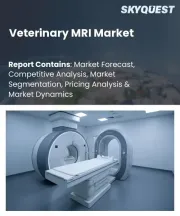
임상적 요구와 기술 혁신이 결합하여 동물 의료를 위한 새로운 진단 경로를 창출함에 따라 수의학 영상진단 분야는 빠르게 진화하고 있습니다. 컴퓨터 단층촬영(CT), 자기공명영상(MRI) 등의 발전으로 수의사가 종을 초월한 복잡한 질병을 진단할 수 있는 능력이 확대되고 있으며, 초음파 검사 및 디지털 엑스레이 촬영의 개선으로 워크플로우의 효율성과 진료현장에서의 의사결정이 개선되고 있습니다. 동시에 3차원 재구성 도구에서 통합 이미지 아카이브 및 통신 시스템에 이르는 소프트웨어 기능은 데이터 관리 및 진단의 연계 방식을 재구성하고 있습니다. 이러한 발전은 진단검사실, 동물병원 및 동물의료시설의 조달 전략, 임상 프로토콜 및 서비스 제공 모델에 영향을 미치고 있습니다.
양상의 융합, 소프트웨어 기반 워크플로우, 휴대성, 그리고 진화하는 비즈니스 모델이 수의학 영상 진단을 어떻게 변화시키고 있는가?
수의학 영상진단의 도입 패턴과 혁신의 궤적은 기술, 임상 실습, 비즈니스 모델에 걸친 몇 가지 혁신적인 변화로 인해 방향이 바뀌고 있습니다. 첫째, 양식의 융합이 더욱 두드러지고 있습니다. 멀티 슬라이스 CT와 같은 고해상도 영상 진단 기술이 첨단 후처리 소프트웨어와 결합하여 이전에는 전문 시설에만 국한되었던 진단적 지식을 창출하고 있습니다. 동시에 자기공명영상(MRI) 시스템의 저자장화 및 소형화가 진행되어 기존에는 대형 시스템을 설치할 수 없었던 진료소에서도 이용할 수 있게 되었습니다. 이러한 하드웨어의 발전과 함께 소프트웨어도 성숙해지면서 워크플로우 용도과 클라우드 지원 PACS를 통해 영상 공유와 다직종 간 사례 검토의 장벽을 낮추고 있습니다.
2025년 관세 동향이 미국 수의용 영상 이해관계자의 조달 선택, 유통 전략, 서비스 모델을 재구성하는 이유
2025년까지 미국이 부과하는 수입 관세는 수의용 영상 분야 전반에 걸쳐 장비 조달, 공급업체 전략, 유통 경로에 지속적으로 영향을 미칠 것입니다. 관세 조정은 CT 및 MRI 시스템과 같은 고가의 하드웨어 취득 비용에 영향을 미치고, 일부 구매자는 신규 장비 구매와 기존 자산의 업그레이드 사이의 균형을 재검토하도록 촉구하고 있습니다. 이에 따라 이해관계자들은 공급망 리스크를 줄이고 총소유비용(TCO)을 절감하기 위해 현지 서비스 체계를 갖춘 벤더나 현지 유통업체와의 제휴를 모색하는 경우가 많아지고 있습니다. 동시에 관세 압력은 일반적으로 물류 복잡성이 낮고 관세 부담이 적은 휴대용 및 카트형 초음파 진단 장비와 소형 엑스레이 촬영 시스템의 매력을 높이고 있습니다.
모달리티의 기능, 동물의 고유한 임상적 요구, 최종 사용자의 우선순위, 제품 및 서비스 조합이 어떻게 차별화된 수요를 창출하는지를 보여주는 상세한 세분화 분석
세분화를 자세히 분석하면 제품 설계, 판매 전략, 서비스 제공에 영향을 미치는 차별화된 수요 요인과 임상적 이용 사례를 파악할 수 있습니다. 영상진단 방식별로 살펴보면, 컴퓨터 단층촬영(CT)은 복잡한 근골격계 및 종양학 사례에서 여전히 중요한 위치를 차지하고 있으며, 다열 스캔 시스템은 바쁜 의뢰 기관에 높은 처리 능력을 제공하고, 단일 열 스캔 장비는 소규모 시설에 저렴한 비용으로 선택이 가능합니다. 제공합니다. 내시경에는 연성형과 경성형이 있으며, 각기 다른 시술 요구에 대응할 수 있습니다. 연성 내시경은 연부조직 및 최소침습 진단에 최적화되어 있는 반면, 경성 내시경은 정형외과 및 전문적 중재시술을 지원합니다. 자기공명영상(MRI)은 고자기장 및 저자기장 솔루션으로 나뉘는데, 고자기장 시스템은 고급 신경학 및 종양학에서 우수한 연부조직 대비를 제공하는 반면, 저자기장 시스템은 저렴한 가격과 간소화된 설치 환경을 제공합니다.
세계 시장에서 수의용 영상 기술 도입 및 서비스 제공에 영향을 미치는 지역별 동향과 인프라의 다양성.
지역별 동향은 북미, 남미, 유럽, 중동 및 아프리카, 아시아태평양의 기술 도입, 규제 환경 및 서비스 제공에 강력한 영향을 미치고 있습니다. 북미와 남미에서는 의료기관의 통합과 성숙한 민간보험제도 환경이 특히 의뢰 병원과 전문 진단센터의 고급 양식과 통합 소프트웨어 플랫폼에 대한 투자를 촉진하고 있습니다. 반면, 유럽, 중동, 아프리카는 의료 자금과 인프라의 편차로 인해 고급형 3차 의료기관과 응급의료 및 지방 현장의 휴대용, 비용 효율적인 영상진단에 대한 수요 증가가 공존하는 양극화된 시장이 형성되어 있습니다.
조달 및 라이프사이클 가치 형성, 제조업체, 소프트웨어 벤더, 판매 파트너 간의 경쟁 및 전략적 차별화 요소
수의용 영상 분야 경쟁 구도는 전통 있는 의료용 영상진단 기기 제조업체, 전문 수의용 기기 제공업체, 그리고 소프트웨어 혁신가들이 혼재되어 있으며, 이들이 함께 제품 로드맵과 고객의 기대를 형성하고 있다는 점이 특징입니다. 시장 진출기업들은 임상적 성과와 시스템 활용률 향상을 위한 모달리티별 기술 혁신, 서비스 계약 확대 및 교육 프로그램 확대에 대한 투자를 통해 차별화를 꾀하고 있습니다. 3D 시각화, PACS, 워크플로우 자동화를 아우르는 종합적인 소프트웨어 생태계를 통합하는 벤더는 사례 관리를 간소화하고 원격 진료를 촉진하여 고객 유지율을 높이는 경향이 있습니다.
제조업체, 유통업체 및 임상 현장의 구매자가 진화하는 진단 요구에 맞게 제품, 서비스 및 조달 모델을 조정할 수 있는 실용적인 전략적 조치
업계 리더는 제품 포트폴리오, 판매 채널, 서비스 모델을 진화하는 임상 워크플로우와 지역 현실에 맞추어 제품 포트폴리오, 판매 채널, 서비스 모델을 통합적으로 접근해야 합니다. 먼저, 하드웨어 설계와 클라우드 지원 소프트웨어에서 모듈성을 우선시하여 다양한 임상 환경에서의 적응성을 높이고, 벤더가 고처리 능력을 갖춘 의뢰 의료기관부터 소규모 외래 진료소까지 다양한 요구에 대응할 수 있도록 합니다. 또한, 공급업체는 특히 물류가 복잡한 지역에서 관세 관련 공급망 리스크를 줄이고 적시에 유지보수 및 부품 지원을 보장하기 위해 유통업체와의 파트너십 및 현지 서비스 네트워크를 강화해야 합니다.
실무자 인터뷰, 기술 검증, 공급망 평가를 결합한 투명하고 다각적인 조사 접근 방식을 통해 조사 결과와 인사이트를 뒷받침합니다.
이번 조사는 1차 및 2차 데이터 수집과 엄격한 분석 프로토콜을 결합한 다각적인 접근 방식을 통해 투명하고 재현성 있는 결과를 도출해냈습니다. 1차 자료로는 현직 수의사, 임상과장, 영상진단기사, 구매담당자 및 대리점 담당자와의 구조화된 인터뷰와 협의를 통해 실제 의사결정 요인, 사용패턴, 서비스에 대한 기대치를 파악했습니다. 이러한 정성적 정보는 장비 수준의 기술 사양, 규제 지침, 제품 자료로 보완되어 성능 특성 및 도입 제약 조건을 검증했습니다.
양식의 진화, 소프트웨어 통합, 지역적 차이 및 조달 트렌드가 임상적 가치와 운영상의 성공을 결정하는 방법에 대한 통합 분석
결론적으로, 수의용 영상 기술의 발전, 종을 초월한 임상 수요의 변화, 그리고 상업적 트렌드의 변화가 교차하면서 진단 프로세스를 재정의하는 전환점에 있습니다. 컴퓨터 단층촬영(CT) 및 자기공명영상(MRI) 기술의 발전과 더불어 휴대용 초음파 진단 장비와 디지털 엑스레이 촬영의 보급으로 임상의에게 더 많은 진단 옵션을 제공하고 치료의 신속성을 높이고 있습니다. 동시에 3D 영상 진단 도구와 PACS를 포함한 소프트웨어 생태계가 워크플로우 효율화, 원격 진료 및 사례의 시간 경과에 따른 관리를 위한 필수 요소로 부상하고 있습니다.
자주 묻는 질문
목차
제1장 서문
제2장 조사 방법
제3장 주요 요약
제4장 시장 개요
제5장 시장 인사이트
제6장 미국 관세의 누적 영향, 2025년
제7장 AI의 누적 영향, 2025년
제8장 수의용 영상 시장 : 영상 진단법별
제9장 수의용 영상 시장 : 동물 유형별
제10장 수의용 영상 시장 : 컴포넌트별
제11장 수의용 영상 시장 : 최종 사용자별
제12장 수의용 영상 시장 : 판매 채널별
제13장 수의용 영상 시장 : 임상 용도별
제14장 수의용 영상 시장 : 지역별
제15장 수의용 영상 시장 : 그룹별
제16장 수의용 영상 시장 : 국가별
제17장 미국의 수의용 영상 시장
제18장 중국의 수의용 영상 시장
제19장 경쟁 구도
JHS 26.05.14The Veterinary Imaging Market was valued at USD 2.33 billion in 2025 and is projected to grow to USD 2.49 billion in 2026, with a CAGR of 7.28%, reaching USD 3.81 billion by 2032.
| KEY MARKET STATISTICS | |
|---|---|
| Base Year [2025] | USD 2.33 billion |
| Estimated Year [2026] | USD 2.49 billion |
| Forecast Year [2032] | USD 3.81 billion |
| CAGR (%) | 7.28% |
An authoritative overview of how technological innovation and clinical demand are reshaping diagnostic pathways and procurement priorities across veterinary imaging
The veterinary imaging landscape is evolving rapidly as clinical demand and technological innovation intersect to create new diagnostic pathways for animal health. Advances in modalities such as computed tomography and magnetic resonance imaging are expanding veterinarians' ability to diagnose complex conditions across species, while refinements in ultrasound and digital radiography improve workflow efficiency and bedside decision-making. Concurrently, software capabilities-from three-dimensional reconstruction tools to integrated picture archiving and communication systems-are reshaping data management and diagnostic collaboration. Together, these developments are influencing procurement strategies, clinical protocols, and service delivery models in diagnostic laboratories, veterinary clinics, and hospitals.
Beyond technology, shifts in the types of animals receiving advanced imaging, from small companion animals to equine and select exotic species, are changing equipment utilization patterns. End users are adapting by consolidating imaging services in referral centers and by integrating portable and cart-based systems for on-site diagnostics. As stakeholders prioritize both diagnostic accuracy and operational efficiency, the convergence of hardware and software solutions becomes a central theme for clinical leaders, researchers, and enterprise decision-makers seeking to align capital investments with long-term care objectives.
How modality convergence, software-enabled workflows, portability, and evolving commercial models are collectively transforming veterinary imaging delivery
Adoption patterns and innovation trajectories within veterinary imaging are being redirected by several transformative shifts that span technology, clinical practice, and commercial models. First, modality convergence is becoming more pronounced: high-resolution imaging techniques such as multi-slice computed tomography are being paired with advanced post-processing software to produce diagnostic insights previously confined to specialty centers. Simultaneously, the migration of magnetic resonance imaging systems into lower-field, more compact footprints is widening access for clinics that historically could not accommodate large-field systems. These hardware adaptations are paralleled by software maturation, where workflow applications and cloud-enabled PACS reduce friction in image sharing and multidisciplinary case review.
Another significant shift is the decentralization of imaging services. Portable ultrasound and compact radiography units enable point-of-care diagnostics in ambulatory settings and on-site in large-animal environments, which shortens diagnostic timelines and reduces the need for patient transport. In parallel, endoscopy platforms are becoming more flexible and modular, improving procedural throughput and cross-specialty utilization. Lastly, commercial dynamics are evolving as vendors offer bundled hardware-software service contracts and flexible sales channels, including direct sales and distributor partnerships, to meet diverse procurement strategies across clinics, hospitals, and research institutes. These shifts are collectively driving a more integrated, accessible, and clinically responsive imaging ecosystem.
Why 2025 tariff dynamics are reshaping procurement choices, distribution strategies, and service models across veterinary imaging stakeholders in the United States
In 2025, the import tariffs imposed by the United States will continue to influence equipment sourcing, vendor strategies, and distribution pathways across the veterinary imaging sector. Tariff adjustments affect capital acquisition costs for high-value hardware such as CT and MRI systems, prompting some buyers to reassess the balance between purchasing new equipment and upgrading existing assets. As a result, stakeholders often pursue vendors with localized service capabilities or local distributor arrangements to mitigate supply chain risk and reduce total cost of ownership. Simultaneously, tariff pressures accentuate the appeal of portable and cart-based ultrasound and compact radiography systems, which typically involve lower logistics complexity and smaller duty burdens.
From a market behavior perspective, tariffs can accelerate diversification of procurement channels: end users increasingly evaluate global distributors and local partners to secure favorable delivery terms, spare parts availability, and maintenance agreements. Research institutes and diagnostic laboratories may prioritize supplier relationships that include comprehensive service-level agreements to preserve uptime despite customs-related uncertainties. Moreover, manufacturers and channel partners may respond by relocating production, deepening regional partnerships, or enhancing bundled service offerings to maintain competitiveness. Consequently, tariff dynamics in 2025 are a material consideration in capital planning and vendor selection, shaping decisions from budget allocations to clinical service expansion.
Detailed segmentation analysis revealing how modality features, animal-specific clinical needs, end-user priorities, and product-service mixes drive differentiated demand
A granular view of segmentation reveals differentiated demand drivers and clinical use-cases that influence product design, sales strategies, and service delivery. When examined by imaging modality, computed tomography retains prominence for complex musculoskeletal and oncologic cases, with multi-slice systems offering higher throughput for busy referral centers and single-slice units providing a lower-cost option for smaller facilities. Endoscopy's flexible and rigid variants serve distinct procedural needs: flexible endoscopes are optimized for soft-tissue and minimally invasive diagnostics, whereas rigid endoscopes support orthopedic and specialized interventions. Magnetic resonance imaging bifurcates into high-field and low-field solutions, where high-field systems deliver superior soft-tissue contrast for advanced neurology and oncology, while low-field systems offer affordability and simplified installation.
Animal-type segmentation underscores the diversity of clinical requirements: equine practice demands large-bore and mobile imaging configurations to accommodate size and field constraints, whereas small animal workflows emphasize speed, throughput, and high-resolution modalities for cats and dogs. Exotic species introduce unique instrumentation and anesthesia considerations, particularly for avian and reptile diagnostics. End-user segmentation clarifies where value is realized, as diagnostic laboratories and research institutes prioritize high-end modalities and software for advanced analysis, while veterinary clinics and hospitals focus on integrated systems that balance diagnostic capability with clinical throughput. Product-type distinctions between hardware systems and software suites highlight the growing importance of 3D imaging software, PACS, and workflow tools in extracting clinical value, and sales-channel segmentation differentiates procurement preferences, with direct sales often supporting bespoke configurations and distributor channels facilitating broader geographic reach.
Regional dynamics and infrastructure variability that determine how veterinary imaging technologies are adopted and serviced across global markets
Regional dynamics exert a powerful influence on technology adoption, regulatory environment, and service provision across the Americas, Europe, Middle East & Africa, and Asia-Pacific. In the Americas, clinical consolidation and a mature private-payer landscape foster investment in advanced modalities and integrated software platforms, particularly among referral hospitals and specialty diagnostic centers. Conversely, in Europe, Middle East & Africa, variability in healthcare funding and infrastructure leads to a dual market where high-end tertiary centers coexist with growing demand for portable and cost-efficient imaging in emergent and rural settings.
Asia-Pacific presents a mix of rapid adoption in urban referral centers and an expanding base of clinics seeking scalable imaging solutions, driven by rising pet ownership and expanded veterinary education. Across regions, distributor networks and local manufacturing footprints shape equipment availability and after-sales support, while regional training and certification programs influence clinical utilization patterns. As a result, strategic approaches to product rollout and service models must account for regional regulatory regimes, logistic complexity, and the differing pace at which clinics, hospitals, and research organizations adopt new imaging capabilities.
Competitive dynamics and strategic differentiators among manufacturers, software vendors, and distributor partners that shape procurement and lifecycle value
The competitive landscape in veterinary imaging is characterized by a mixture of established medical imaging manufacturers, specialized veterinary equipment providers, and software innovators that together shape product roadmaps and customer expectations. Market participants are differentiating through investments in modality-specific advancements, enhanced service agreements, and expanded training programs aimed at improving clinical outcomes and system utilization. Vendors that integrate comprehensive software ecosystems-encompassing 3D visualization, PACS, and workflow automation-tend to strengthen client retention by simplifying case management and facilitating teleconsultation.
In addition, partnerships between equipment makers and local distributors or clinical networks enhance market access and reduce adoption friction, particularly in regions where installation and maintenance logistics are complex. Companies pursuing modular hardware designs and field-upgradable software features are better positioned to address diverse end-user needs across small animal clinics, large-animal practices, and research institutes. Finally, emphasis on lifecycle support, including spare-parts availability, remote diagnostics, and training resources, increasingly factors into procurement decisions, favoring suppliers that can demonstrate reliable long-term service delivery and clinical education offerings.
Actionable strategic moves for manufacturers, distributors, and clinical buyers to align product, service, and procurement models with evolving diagnostic needs
Industry leaders should adopt an integrated approach that aligns product portfolios, sales channels, and service models with evolving clinical workflows and regional realities. To begin, prioritizing modularity in hardware design and cloud-enabled software will increase adaptability across diverse clinical environments, enabling vendors to address both high-throughput referral centers and smaller ambulatory clinics. Vendors should also strengthen distributor partnerships and local service networks to mitigate tariff-related supply chain risks and to assure timely maintenance and parts support, particularly in regions with complex logistics.
Clinicians and institutional buyers should focus on total operational value rather than upfront cost alone, assessing how workflow software, PACS integration, and training programs enhance throughput and diagnostic confidence. Research institutes and diagnostic laboratories would benefit from collaborating with manufacturers on pilot deployments that validate modality performance for specific species and clinical indications. Finally, purchasers across regions should negotiate service-level agreements that include remote support, upgrading pathways, and access to analytics that track utilization-thereby ensuring that imaging assets continue to deliver clinical and economic value over their operational life.
A transparent, multi-method research approach combining practitioner interviews, technical validation, and supply-chain assessment to underpin findings and insights
The research synthesized here is grounded in a multi-method approach combining primary and secondary data collection with rigorous analytical protocols to ensure transparent, reproducible insights. Primary inputs consisted of structured interviews and consultations with practicing veterinarians, clinical directors, imaging technicians, procurement officers, and distributor representatives to capture real-world decision drivers, usage patterns, and service expectations. These qualitative inputs were augmented by device-level technical specifications, regulatory guidance, and product literature to validate performance characteristics and deployment constraints.
Analytical steps included cross-validation of clinical use-cases with end-user feedback, mapping product capabilities to animal-type and facility-level requirements, and assessing sales-channel implications for installation and lifecycle support. Where applicable, supply chain and tariff impacts were evaluated through logistics assessments and distributor interviews to identify sourcing sensitivities. Throughout the methodology, care was taken to protect respondent confidentiality, triangulate findings across multiple data sources, and document assumptions that informed interpretive analysis and sectoral implications.
A synthesis of how modality evolution, software integration, regional variability, and procurement dynamics will determine clinical value and operational success
In conclusion, veterinary imaging is at an inflection point where technological advances, shifting clinical demand across species, and changing commercial dynamics intersect to redefine diagnostic pathways. The increasing sophistication of computed tomography and magnetic resonance technologies, together with the rise of portable ultrasound and digital radiography, offers clinicians more diagnostic options and improves the timeliness of care. At the same time, software ecosystems including 3D imaging tools and PACS are emerging as essential enablers of workflow efficiency, remote consultation, and longitudinal case management.
As stakeholders navigate tariff uncertainties, regional infrastructure differences, and diverse end-user needs, success will favor organizations that prioritize modularity, service excellence, and strong distributor relationships. Clinicians should seek integrated solutions that align modality capability with species-specific requirements and clinical throughput, while vendors must focus on delivering quantifiable operational value and robust after-sales support. These combined efforts will help ensure that imaging investments translate into better diagnostics, more efficient clinical workflows, and improved outcomes across small animal, large animal, equine, and exotic practice settings.
Table of Contents
1. Preface
- 1.1. Objectives of the Study
- 1.2. Market Definition
- 1.3. Market Segmentation & Coverage
- 1.4. Years Considered for the Study
- 1.5. Currency Considered for the Study
- 1.6. Language Considered for the Study
- 1.7. Key Stakeholders
2. Research Methodology
- 2.1. Introduction
- 2.2. Research Design
- 2.2.1. Primary Research
- 2.2.2. Secondary Research
- 2.3. Research Framework
- 2.3.1. Qualitative Analysis
- 2.3.2. Quantitative Analysis
- 2.4. Market Size Estimation
- 2.4.1. Top-Down Approach
- 2.4.2. Bottom-Up Approach
- 2.5. Data Triangulation
- 2.6. Research Outcomes
- 2.7. Research Assumptions
- 2.8. Research Limitations
3. Executive Summary
- 3.1. Introduction
- 3.2. CXO Perspective
- 3.3. Market Size & Growth Trends
- 3.4. Market Share Analysis, 2025
- 3.5. FPNV Positioning Matrix, 2025
- 3.6. New Revenue Opportunities
- 3.7. Next-Generation Business Models
- 3.8. Industry Roadmap
4. Market Overview
- 4.1. Introduction
- 4.2. Industry Ecosystem & Value Chain Analysis
- 4.2.1. Supply-Side Analysis
- 4.2.2. Demand-Side Analysis
- 4.2.3. Stakeholder Analysis
- 4.3. Porter's Five Forces Analysis
- 4.4. PESTLE Analysis
- 4.5. Market Outlook
- 4.5.1. Near-Term Market Outlook (0-2 Years)
- 4.5.2. Medium-Term Market Outlook (3-5 Years)
- 4.5.3. Long-Term Market Outlook (5-10 Years)
- 4.6. Go-to-Market Strategy
5. Market Insights
- 5.1. Consumer Insights & End-User Perspective
- 5.2. Consumer Experience Benchmarking
- 5.3. Opportunity Mapping
- 5.4. Distribution Channel Analysis
- 5.5. Pricing Trend Analysis
- 5.6. Regulatory Compliance & Standards Framework
- 5.7. ESG & Sustainability Analysis
- 5.8. Disruption & Risk Scenarios
- 5.9. Return on Investment & Cost-Benefit Analysis
6. Cumulative Impact of United States Tariffs 2025
7. Cumulative Impact of Artificial Intelligence 2025
8. Veterinary Imaging Market, by Imaging Modality
- 8.1. Computed Tomography
- 8.2. Endoscopy
- 8.2.1. Flexible
- 8.2.2. Rigid
- 8.3. Magnetic Resonance Imaging
- 8.4. Nuclear Imaging
- 8.5. Ultrasound
- 8.5.1. Cart Based
- 8.5.2. Portable
- 8.6. X Ray
- 8.6.1. Computed Radiography
- 8.6.2. Digital Radiography
9. Veterinary Imaging Market, by Animal Type
- 9.1. Exotic
- 9.1.1. Avian
- 9.1.2. Reptile
- 9.2. Large Animal & Equine
- 9.2.1. Cattle
- 9.2.2. Swine
- 9.2.3. Horse
- 9.3. Small Animal
- 9.3.1. Cat
- 9.3.2. Dog
10. Veterinary Imaging Market, by Component
- 10.1. Hardware
- 10.2. Software
- 10.3. Services
- 10.4. Consumables
11. Veterinary Imaging Market, by End User
- 11.1. Diagnostic Laboratory
- 11.2. Research Institute
- 11.3. Veterinary Clinic & Hospital
12. Veterinary Imaging Market, by Sales Channel
- 12.1. Direct Sales
- 12.2. Distributor Sales
- 12.3. Online
13. Veterinary Imaging Market, by Clinical Application
- 13.1. Orthopedic & Musculoskeletal
- 13.2. Cardiology
- 13.3. Emergency And Critical Care
- 13.4. Respiratory & Thoracic
- 13.5. Dentistry
- 13.6. Abdominal
- 13.7. Neurology
- 13.8. Oncology
14. Veterinary Imaging Market, by Region
- 14.1. Americas
- 14.1.1. North America
- 14.1.2. Latin America
- 14.2. Europe, Middle East & Africa
- 14.2.1. Europe
- 14.2.2. Middle East
- 14.2.3. Africa
- 14.3. Asia-Pacific
15. Veterinary Imaging Market, by Group
- 15.1. ASEAN
- 15.2. GCC
- 15.3. European Union
- 15.4. BRICS
- 15.5. G7
- 15.6. NATO
16. Veterinary Imaging Market, by Country
- 16.1. United States
- 16.2. Canada
- 16.3. Mexico
- 16.4. Brazil
- 16.5. United Kingdom
- 16.6. Germany
- 16.7. France
- 16.8. Russia
- 16.9. Italy
- 16.10. Spain
- 16.11. China
- 16.12. India
- 16.13. Japan
- 16.14. Australia
- 16.15. South Korea
17. United States Veterinary Imaging Market
18. China Veterinary Imaging Market
19. Competitive Landscape
- 19.1. Market Concentration Analysis, 2025
- 19.1.1. Concentration Ratio (CR)
- 19.1.2. Herfindahl Hirschman Index (HHI)
- 19.2. Recent Developments & Impact Analysis, 2025
- 19.3. Product Portfolio Analysis, 2025
- 19.4. Benchmarking Analysis, 2025
- 19.5. IDEXX Laboratories, Inc.
- 19.6. GE Healthcare
- 19.7. Canon Inc.
- 19.8. Fujifilm Holdings Corporation
- 19.9. Siemens Healthineers
- 19.10. Esaote S.p.A.
- 19.11. Carestream Health, Inc.
- 19.12. Shimadzu Corporation
- 19.13. Agfa-Gevaert Group
- 19.14. BioChek B.V.
- 19.15. BMV MEDTECH GROUP CO., LTD.
- 19.16. Chison Medical Technologies Co., Ltd.
- 19.17. Clarius Mobile Health Corp.
- 19.18. Covetrus, Inc.
- 19.19. DRAMINSKI S. A.
- 19.20. E.I. Medical Imaging
- 19.21. Edan Instruments, Inc.
- 19.22. Epica Medical Innovations Inc.
- 19.23. Hallmarq Veterinary Imaging
- 19.24. Heska Corporation by Mars, Incorporated
- 19.25. IM3 Inc.
- 19.26. IMV Imaging (UK) Ltd.
- 19.27. Interson Corporation
- 19.28. Leltek Inc.
- 19.29. Lepu Medical Technology (Beijing) Co., Ltd.
- 19.30. Merck KGaA
- 19.31. MinXray, Inc.
- 19.32. Narang Medical Limited
- 19.33. Probo Medical
- 19.34. Promed Technology Co., Ltd.
- 19.35. ReproScan
- 19.36. Samsung Electronics Co., Ltd.
- 19.37. Shenzhen Mindray Bio-Medical Electronics Co., Ltd.
- 19.38. SonoScape Medical Corp.
- 19.39. Thermo Fisher Scientific, Inc.
- 19.40. Vet Rocket, Inc.
- 19.41. Zoetis, Inc.