|
시장보고서
상품코드
2018856
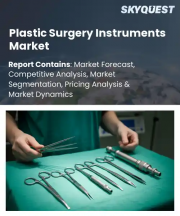
성형외과용 기구 시장 : 기구 유형, 재질, 판매 채널, 용도, 최종 사용자별 예측(2026-2032년)Plastic Surgery Instruments Market by Instrument Type, Material, Sales Channel, Application, End User - Global Forecast 2026-2032 |
||||||
 360iResearch
성형외과용 기구 시장은 2025년에 24억 3,000만 달러로 평가되었고 2026년에는 26억 8,000만 달러로 성장하여 CAGR 10.18%로 성장을 지속하여, 2032년까지 48억 달러에 이를 것으로 예측됩니다.
| 주요 시장 통계 | |
|---|---|
| 기준 연도 : 2025년 | 24억 3,000만 달러 |
| 추정 연도 : 2026년 | 26억 8,000만 달러 |
| 예측 연도 : 2032년 | 48억 달러 |
| CAGR(%) | 10.18% |
전략적 이해관계자들에게 임상적 요인, 의료기기 혁신, 재료 선택 및 조달에 미치는 영향을 통합한 성형외과 기기 생태계에 대한 권위 있는 가이드를 제공합니다.
본 주요 요약은 성형외과 및 재건외과 진료 현장에서 사용되는 기구에 대한 종합적인 분석을 소개하고, 조달 및 임상적 의사결정에 영향을 미치는 기술, 재료, 임상적 용도에 초점을 맞추었습니다. 이 보고서는 의료기기 설계, 멸균 방법, 임상의의 선호도에 대한 관찰된 동향을 정리하고, 제품의 가용성과 보급에 영향을 미치는 규제 및 공급망 요인을 배경으로 설명합니다. 이 보고서의 목적은 임상 리더, 조달 팀, 제품 전략 담당자에게 이 분야에 대한 간결하고 실질적인 개요를 제공하고, 자본 계획과 혁신 로드맵을 진화하는 수술 워크플로우에 맞게 조정할 수 있도록 하는 것입니다.
수술 방법의 혁신, 첨단 재료, 제조의 민첩성이 기기 설계, 멸균 방법 및 임상 조달 행동을 종합적으로 재구성하는 방법
성형외과용 기구의 혁신은 수술 기술, 재료 과학, 디지털 기술을 활용한 제조 등의 분야가 융합되어 제품 설계와 공급 전략 모두에 혁신적인 변화의 물결을 불러일으키고 있습니다. 최소침습 수술로 절개 크기와 수술 시간이 지속적으로 단축되고 있으며, 수술의 복잡성을 증가시키지 않으면서도 정밀도를 구현하는 마이크로 기구와 내시경 기구에 대한 관심이 높아지고 있습니다. 동시에 티타늄 가공, 표면 처리 및 고급 스테인리스 합금의 발전으로 가볍고 내구성이 뛰어난 기구가 가능하여 장시간 수술 시 인체공학적 편의성이 향상되고 피로로 인한 실수를 줄일 수 있습니다.
최근 미국의 관세 조치가 공급망 다변화와 규제에 대한 경각심을 높이면서 조달 전략, 선적 비용, 제조 거점 배치를 어떻게 재구성하고 있는가?
최근 미국의 관세 정책 조치는 의료기기 분야의 많은 분야에서 비용 구조와 공급망 탄력성에 압력을 가하고 있으며, 성형 수술 기구에도 큰 영향을 미치고 있습니다. 관세로 인해 수입 부품 및 완제품의 수입 비용이 상승하고, 제조업체는 공급업체 포트폴리오를 재평가하고, 가능한 범위 내에서 니어쇼어링을 가속화하며, 임상 성능을 유지하면서 단위당 경제성을 관리할 수 있는 가치 엔지니어링의 기회를 추구해야 합니다. 대리점을 통해 구매하는 의료기관의 경우, 이러한 비용 변동은 가격 변동을 완화하기 위한 조달 협상, 계약 주기, 재고 전략에 영향을 미치고 있습니다.
기기 분류, 임상 용도, 최종 사용자 환경, 재료 선택, 판매 채널을 연계한 상세한 세분화 분석을 통해 제품 및 조달 전략을 수립할 수 있도록 지원합니다.
정교한 세분화 관점을 통해 제품, 임상, 채널의 고유한 트렌드를 파악할 수 있으며, 이는 제조업체와 공급자에게 기회와 위험을 정의합니다. 유형별로 분류된 의료기기에는 드릴 시스템에서 내시경, 집게, 개창기, 메스, 가위에 이르기까지 다양한 기기가 포함되며, 각 기기마다 고유한 성능과 멸균 프로파일이 있습니다. 드릴 시스템의 범주에는 대규모 뼈 수술에 사용되는 매크로 드릴과 섬세한 두개안면 수술 및 미세 수술용으로 설계된 마이크로 드릴이 모두 포함됩니다. 내시경은 관절경, 복강경, 비강경 등 다양한 유형이 있으며, 최소 침습적 시각화를 가능하게 하는 동시에 엄격한 광학 및 멸균 기준이 요구됩니다. 집게는 붕대용, 지혈용, 조직 특이적 디자인 등이 있으며, 팁의 모양과 파지력이 다릅니다. 개창기는 빠른 노출을 위한 휴대용 장치로, 또는 보조자의 양손을 자유롭게 사용할 수 있는 자가 유지형 시스템으로 설계되어 있습니다. 메스의 경우, 일회용의 편리함과 장기적인 비용 및 멸균 주기를 중시하는 재사용 가능한 칼날 사이의 절충점이 있습니다. 한편, 가위는 정밀한 해부를 위한 마이크로 가위와 보다 광범위한 조직 조작을 위한 수술용 가위로 구분됩니다.
전 세계 시장에서 제품 선정 및 공급망 우선순위, 규제 체계, 조달 행동, 임상 인프라의 지역적 차이로 인한 제품 선정 및 공급망 우선순위 결정
지역별로 미묘한 차이가 성형외과용 기구 제품 선택, 규제 준수 접근 방식 및 공급망 설계에 큰 영향을 미치고 있습니다. 북미와 남미에서는 높은 수술 건수, 외래 수술 시설의 높은 보급률, 의료기관의 감염 관리 및 추적 가능성에 대한 중요성이 수요를 형성하고 있으며, 조달 주기에서 장기적인 공급업체와의 관계 및 종합적인 서비스 계약을 선호하는 경향이 있습니다. 유럽, 중동 및 아프리카은 다양한 규제 상황과 경제 환경이 공존하는 지역으로, 엄격한 유럽의 적합성 요건과 비용 효율적이고 내구성이 뛰어난 기기 솔루션을 우선시하는 빠르게 성장하는 시장이 공존합니다. 또한, 이 지역에서는 수술 건수가 많은 시설에서 효율적인 멸균 워크플로우를 조기에 도입하고 있습니다. 아시아태평양에서는 도시 지역의 고급 3차 의료 센터와 민간 전문 클리닉의 광범위한 채택이라는 두 가지 추세가 첨단 의료기기의 고급화와 저렴한 대체품의 보급을 촉진하고 있습니다. 또한, 이 지역공급망 거점은 전 세계 조달 전략의 핵심이 되어 전 세계 리드타임에 영향을 미치고 있습니다.
인체공학적 혁신, 통합 서비스 제공, 지역 밀착형 생산 전략, 지속 가능한 차별화를 정의하는 임상 파트너십을 통해 형성되는 경쟁 구도
경쟁하고 있습니다. 경쟁하고 있습니다. 각 회사는 다양한 수술 요구를 충족시키면서 트레이의 기구 수를 줄이는 인체공학, 표면 처리 및 모듈식 기구 시스템에 투자하고 있습니다. 임상 교육 센터 및 KOL과의 전략적 제휴를 통해 새로운 기기의 형태를 검증하고, 수술 시간 단축 및 인체공학적 개선을 입증함으로써 도입에 박차를 가하고 있습니다. 유통 측면에서는 풍부한 임상 교육 프로그램과 신속한 애프터 서비스 및 재처리에 대한 자문 서비스를 결합한 기업이 대형 병원 시스템 및 외래 진료 네트워크에서 우선 공급업체 지위를 확보하는 경향이 있습니다.
트레이의 복잡성을 줄이고, 조달 탄력성을 강화하며, 임상 교육을 확대하고, 상업적 모델을 의료기관의 우선순위와 일치시키는 실행 가능한 운영 및 제품 전략을 제공합니다.
업계 선두 기업들은 제품 개발, 공급망 탄력성, 고객 참여를 임상 현실과 일치시키는 일련의 실천적 노력을 우선시해야 합니다. 첫째, 모듈식 기구 시리즈와 인체공학적으로 최적화된 디자인에 대한 투자는 트레이의 복잡성을 줄이고 외과 의사의 만족도를 향상시킵니다. 이를 통해 총소유비용(TCO)을 절감하고 수술 처리 능력을 향상시킬 수 있습니다. 둘째, 제조업체와 유통업체는 교육 및 재처리 지원 제공을 확대하여 단순한 공급업체가 아닌 의료기관이 감염 관리 및 효율화 목표를 달성할 수 있도록 지원하는 비즈니스 파트너로서의 입지를 구축해야 합니다. 셋째, 공급망 전략은 지리적 분산과 경제적으로 실행 가능한 범위 내에서 니어쇼어링을 포함해야 합니다. 이를 통해 관세로 인한 비용 변동에 대한 영향을 최소화하고 납기를 단축할 수 있습니다.
이해관계자 인터뷰, 공급업체와의 협의, 2차 기술 검증을 통합한 혼합 연구 설계를 통해 재현성 있는 증거 기반 조사 결과를 제공합니다.
이번 조사는 구조화된 1차 인터뷰, 선별된 공급업체 및 임상의와의 면담, 규제 및 기술 문헌에 대한 종합적인 2차 검증을 결합한 혼합 방법론적 접근법을 사용했습니다. 1차 조사에서는 의료기기 조달 책임자, 수술실 간호사, 수술 기술자 및 현직 성형외과 의사를 대상으로 체계적인 인터뷰를 실시하여 기기 성능에 대한 우선순위, 멸균에 대한 과제 및 조달 결정 기준을 파악했습니다. 공급업체와의 대화에서는 생산 기지, 품질 관리 관행 및 유통 전략에 대해 탐구했습니다. 2차 검증은 공개되어 있는 규제 당국 신고 서류, 기술 기준 및 피어리뷰 문헌을 활용하여 재료, 멸균 방법 및 의료기기 분류에 대한 주장을 다각도로 검증했습니다.
임상, 운영 및 공급망 동향을 통합하고, 제품 우수성과 조직 효율성 및 규제 준수를 조화시키기 위한 전략적 우선순위를 파악합니다.
이러한 분석을 통합한 결과, 임상적 요구와 운영상의 현실이 교차하여 기기 설계, 조달 전략 및 구매 행동을 형성하는 시장 환경이 드러났습니다. 최소침습기술과 미세수술의 발전으로 정밀 기기 및 광학 기기의 중요성이 높아진 반면, 멸균 워크플로우와 재료과학적 고려사항은 수명 가치와 조달 선택에 영향을 미치고 있습니다. 관세 압박과 공급망 제약으로 인해 지역별 생산 조정과 공급업체 다변화가 가속화되고 있으며, 단순한 가격 비교를 넘어 비용, 리드타임, 규제 영향에 대한 재평가가 요구되고 있습니다.
자주 묻는 질문
목차
제1장 서문
제2장 조사 방법
제3장 주요 요약
제4장 시장 개요
제5장 시장 인사이트
제6장 미국 관세의 누적 영향, 2025년
제7장 AI의 누적 영향, 2025년
제8장 성형외과용 기구 시장 : 기기 유형별
제9장 성형외과용 기구 시장 : 소재별
제10장 성형외과용 기구 시장 : 판매 채널별
제11장 성형외과용 기구 시장 : 용도별
제12장 성형외과용 기구 시장 : 최종 사용자별
제13장 성형외과용 기구 시장 : 지역별
제14장 성형외과용 기구 시장 : 그룹별
제15장 성형외과용 기구 시장 : 국가별
제16장 미국의 성형외과용 기구 시장
제17장 중국의 성형외과용 기구 시장
제18장 경쟁 구도
JHS 26.05.14The Plastic Surgery Instruments Market was valued at USD 2.43 billion in 2025 and is projected to grow to USD 2.68 billion in 2026, with a CAGR of 10.18%, reaching USD 4.80 billion by 2032.
| KEY MARKET STATISTICS | |
|---|---|
| Base Year [2025] | USD 2.43 billion |
| Estimated Year [2026] | USD 2.68 billion |
| Forecast Year [2032] | USD 4.80 billion |
| CAGR (%) | 10.18% |
An authoritative orientation to the plastic surgery instruments ecosystem that synthesizes clinical drivers, device innovation, materials choices, and procurement implications for strategic stakeholders
This executive summary introduces a comprehensive analysis of instruments used in plastic and reconstructive surgical practice, focusing on the technologies, materials, and clinical uses that shape procurement and clinical decisions. It consolidates observed trends in device design, sterilization practices, and clinician preferences while contextualizing regulatory and supply chain influences that affect availability and adoption. The intent is to equip clinical leaders, procurement teams, and product strategists with a succinct yet substantive orientation to the landscape so they can align capital planning and innovation roadmaps with evolving procedural workflows.
Throughout the report, attention is given to the intersection of surgical technique evolution and instrument innovation, highlighting how minimally invasive approaches and microsurgical demand are influencing design priorities. The introduction also frames the competitive context for manufacturers and distributors, addressing quality standards, sterilization lifecycle considerations, and the growing importance of materials selection. Finally, strategic implications for hospital purchasing groups and ambulatory providers are outlined to support early-stage decision-making and to prepare readers for the more detailed segmentation, regional, and tactical recommendations that follow.
How procedural innovation, advanced materials, and manufacturing agility are collectively reshaping instrument design, sterilization practices, and clinical procurement behaviors
Plastic surgery instrument innovation is being driven by converging forces across surgical technique, materials science, and digital-enabled manufacturing, producing a wave of transformative shifts in both product design and supply strategies. Minimally invasive procedures continue to reduce incision sizes and operating times, prompting a stronger emphasis on micro-instrumentation and endoscopic tools that deliver precision without increasing procedural complexity. Concurrently, advances in titanium processing, surface finishes, and high-grade stainless alloys enable lighter, more durable instruments that improve ergonomics for prolonged procedures and reduce fatigue-related error.
In parallel, sterilization and reprocessing cycles are reshaping purchasing decisions. Single-use disposable scalpels and the debate over reusable versus disposable device lifecycles reflect not only clinical safety priorities but also institutional resource calculus around autoclave throughput and infection control. Additive manufacturing and just-in-time production models are shortening lead times for specialized instrument components, while digital platforms facilitate traceability and regulatory documentation, supporting compliance with stringent medical device standards. Together, these shifts are altering how surgical teams evaluate instruments and how supply chain managers plan inventory and capital allocation.
How recent U.S. tariff actions are reshaping sourcing strategies, landed costs, and manufacturing footprints while driving supply chain diversification and regulatory vigilance
Recent tariff policy actions in the United States have exerted pressure on cost structures and supply chain resilience across many segments of the medical device sector, with palpable implications for plastic surgery instruments. Tariffs increase landed costs on imported components and finished goods, compelling manufacturers to reassess supplier portfolios, accelerate nearshoring where feasible, and pursue value-engineering opportunities that preserve clinical performance while managing unit economics. For institutions that purchase through distributors, these cost dynamics cascade into procurement negotiations, contracting cycles, and inventory strategies intended to mitigate price volatility.
Beyond direct cost impacts, tariff-driven adjustments influence strategic decisions about manufacturing footprints and supplier diversification. Some OEMs respond by shifting higher-value, precision manufacturing to domestic or regional facilities to insulate lead items from import duties, while lower-complexity components may be sourced from tariff-favored jurisdictions. These adaptations affect lead times and capital requirements and often necessitate stronger collaboration between clinical engineering, supply chain teams, and suppliers. Additionally, regulatory conformity and certification pathways must be managed carefully when production locations change, ensuring that clinical equivalence and traceability are maintained. As a result, tariffs not only alter near-term procurement costs but also catalyze structural changes in how instrument portfolios are sourced and validated.
Detailed segmentation analysis connecting instrument typology, clinical applications, end-user settings, material selection, and sales channels to inform product and procurement strategies
A refined segmentation lens reveals distinct product, clinical, and channel dynamics that together define opportunity and risk for manufacturers and providers. Instruments classified by type encompass a broad array of devices from drill systems through endoscopes, forceps, retractors, scalpels, and scissors, each with specific performance and sterilization profiles. The drill systems category includes both macro drills used for major osseous work and micro drills designed for delicate craniofacial or microsurgical tasks. Endoscopes span arthroscopic, laparoscopic, and nasal variants that enable minimally invasive visualization and require rigorous optical and sterilization standards. Forceps vary between dressing, hemostatic, and tissue-specific designs with different tip geometries and clamping forces. Retractors are engineered as either handheld devices for rapid exposure or as self-retaining systems that free an assistant's hands. Scalpels present a trade-off between disposable single-use convenience and reusable blades that emphasize long-term cost and sterilization cycles, while scissors are distinguished by micro scissors for fine dissection or operating scissors for broader tissue handling.
Application segmentation highlights varied clinical drivers ranging from burn care to cosmetic and reconstructive surgeries. Burn-related instruments prioritize tools for skin grafting and wound debridement that withstand frequent reprocessing. Cosmetic procedures divide between body and facial interventions, which impose distinct ergonomics and finishing requirements for instruments. Reconstructive work, including congenital repairs and trauma repair, demands robust instrument sets that support complex, multi-team operative workflows. End user segmentation differentiates ambulatory surgical centers, clinics, and hospitals; ambulatory facilities include daycare and outpatient settings where efficiency and disposable options may be prioritized, clinics bifurcate into general and specialty practices with differing inventory breadth, and hospitals span government and private institutions with varied procurement cycles and compliance requirements. Material segmentation underscores choices among plastic polymers, stainless steel, and titanium, each presenting trade-offs in weight, durability, and sterilization resilience. Sales channel dynamics range from direct sales relationships and distributor networks to online sales platforms; e-commerce further divides into B2B portals that support institutional procurement and B2C channels catering to smaller specialist buyers or elective practice consumers. Together, these segmentation dimensions inform product roadmaps, procurement policies, and the specification criteria that clinical teams apply when selecting instruments for distinct procedural contexts.
Regional differentiation in regulatory regimes, procurement behaviors, and clinical infrastructure that drive distinct product preferences and supply chain priorities across global markets
Regional nuances significantly influence product preferences, regulatory compliance approaches, and supply chain design for plastic surgery instruments. In the Americas, demand is shaped by advanced procedural volumes, a high prevalence of ambulatory surgical capacity, and an institutional emphasis on infection control and traceability; procurement cycles tend to favor long-term vendor relationships and bundled service agreements. Europe, Middle East & Africa present a heterogeneous regulatory and economic landscape where stringent European conformity requirements coexist with rapidly developing markets that prioritize cost-effective, durable instrument solutions; this region also shows early uptake of lean sterilization workflows in high-volume centers. Asia-Pacific demonstrates a dual dynamic of sophisticated tertiary care centers in urban hubs and wide adoption in private specialty clinics, driving both premium instrument sophistication and affordable alternatives; supply chain hubs in the region are also central to global sourcing strategies, affecting lead times worldwide.
Across all regions, interoperability with sterilization technologies, local regulatory approvals, and distributor support models are key determinants of adoption. Regional training infrastructures and centers of excellence further influence preferences for specific instrument configurations and the speed at which novel device formats achieve clinical acceptance. Consequently, manufacturers and distributors must tailor go-to-market strategies and service offerings to align with the distinct operational realities and regulatory regimes of each region.
Competitive landscape shaped by ergonomic innovation, integrated service offerings, regionalized production strategies, and clinical partnerships that define sustainable differentiation
Competitive behavior among leading manufacturers and distributors of plastic surgery instruments reflects a mix of product innovation, service differentiation, and channel optimization. Companies are investing in ergonomics, surface treatments, and modular instrument systems that reduce instrument counts on trays while meeting diverse procedural needs. Strategic alliances with clinical training centers and key opinion leaders accelerate adoption by validating new instrument geometries and demonstrating measurable improvements in procedure time or ergonomics. On the distribution side, firms that combine robust clinical education programs with responsive aftermarket support and reprocessing advisory services tend to secure preferred supplier status with large hospital systems and ambulatory networks.
Operationally, companies emphasize quality management systems and traceability to support regulatory submissions and hospital credentialing, while also exploring manufacturing agility through regionalized production or partnerships to mitigate tariff and logistics pressures. Pricing strategies are increasingly nuanced, pairing core capital instruments with consumable sales or service contracts that stabilize revenue and reinforce long-term relationships. As a result, competitive advantage is defined less by single-product superiority and more by the ability to deliver integrated solutions that address clinical efficacy, operational efficiency, and regulatory compliance in a cohesive value proposition.
Actionable operational and product strategies to reduce tray complexity, strengthen sourcing resilience, expand clinical education, and align commercial models with institutional priorities
Industry leaders should prioritize a set of pragmatic actions that align product development, supply chain resilience, and customer engagement with clinical realities. First, investing in modular instrument families and ergonomically optimized designs reduces tray complexity and improves surgeon satisfaction, thereby lowering the total cost of ownership and increasing procedural throughput. Second, manufacturers and distributors should expand training and reprocessing support offerings, positioning themselves not just as vendors but as operational partners who help institutions meet infection control and efficiency targets. Third, supply chain strategies must incorporate geographic diversification and nearshoring where economically viable to limit exposure to tariff-driven cost fluctuations and to shorten fulfillment lead times.
Additionally, product teams should validate material selections and finishing processes against real-world sterilization cycles and clinician feedback to ensure long-term durability. Sales leaders should tailor contractual offerings to institutional procurement models, combining direct sales and distributor engagement with selective e-commerce capabilities that serve specialty clinics and smaller ambulatory centers. Finally, fostering clinical evidence through structured post-market surveillance and outcome-focused partnerships will accelerate trust and adoption, while enabling iterative product improvements grounded in procedural performance data.
Mixed-methods research design integrating stakeholder interviews, supplier consultations, and secondary technical validation to deliver reproducible, evidence-driven insights
The research applied a mixed-methods approach combining structured primary interviews, targeted supplier and clinician consultations, and comprehensive secondary validation of regulatory and technical literature. Primary research encompassed systematic interviews with clinical procurement leaders, operating room nurses, surgical technologists, and practicing plastic surgeons to capture instrument performance priorities, sterilization challenges, and procurement decision criteria. Supplier dialogues explored production footprints, quality management practices, and channel strategies. Secondary validation drew upon publicly available regulatory filings, technical standards, and peer-reviewed literature to triangulate claims related to materials, sterilization methods, and device classification.
Data integrity was ensured through cross-validation of interview insights with device specifications and sterilization protocols, while methodological controls included a standardized interview guide, anonymized response handling, and iterative hypothesis testing across multiple stakeholder cohorts. Segmentation mapping used device attributes, clinical applications, end-user profiles, material composition, and sales channel behavior to construct a decision framework that supports both clinical comparability and procurement differentiation. The methodology emphasizes transparency and reproducibility, enabling readers to understand the evidence base behind the strategic implications and recommendations provided.
Synthesis of clinical, operational, and supply chain dynamics that identifies strategic priorities for aligning product excellence with institutional efficiency and regulatory compliance
The combined analysis reveals a market environment where clinical imperatives and operational realities converge to shape instrument design, sourcing strategies, and purchasing behavior. Advances in minimally invasive techniques and microsurgical applications are elevating the importance of precision instruments and optics, while sterilization workflows and material science considerations influence lifetime value and procurement choices. Tariff pressures and supply chain constraints are accelerating regional production adjustments and supplier diversification, prompting a reevaluation of cost, lead time, and regulatory implications that extend beyond simple price comparisons.
In conclusion, stakeholders that align product portfolios with clinician needs, invest in training and reprocessing support, and adopt flexible sourcing models will be best positioned to navigate the evolving landscape. The strategic opportunities lie in delivering integrated solutions that balance clinical performance with operational efficiency, while maintaining rigorous quality and regulatory compliance. These priorities will shape procurement decisions, manufacturer roadmaps, and distribution strategies going forward.
Table of Contents
1. Preface
- 1.1. Objectives of the Study
- 1.2. Market Definition
- 1.3. Market Segmentation & Coverage
- 1.4. Years Considered for the Study
- 1.5. Currency Considered for the Study
- 1.6. Language Considered for the Study
- 1.7. Key Stakeholders
2. Research Methodology
- 2.1. Introduction
- 2.2. Research Design
- 2.2.1. Primary Research
- 2.2.2. Secondary Research
- 2.3. Research Framework
- 2.3.1. Qualitative Analysis
- 2.3.2. Quantitative Analysis
- 2.4. Market Size Estimation
- 2.4.1. Top-Down Approach
- 2.4.2. Bottom-Up Approach
- 2.5. Data Triangulation
- 2.6. Research Outcomes
- 2.7. Research Assumptions
- 2.8. Research Limitations
3. Executive Summary
- 3.1. Introduction
- 3.2. CXO Perspective
- 3.3. Market Size & Growth Trends
- 3.4. Market Share Analysis, 2025
- 3.5. FPNV Positioning Matrix, 2025
- 3.6. New Revenue Opportunities
- 3.7. Next-Generation Business Models
- 3.8. Industry Roadmap
4. Market Overview
- 4.1. Introduction
- 4.2. Industry Ecosystem & Value Chain Analysis
- 4.2.1. Supply-Side Analysis
- 4.2.2. Demand-Side Analysis
- 4.2.3. Stakeholder Analysis
- 4.3. Porter's Five Forces Analysis
- 4.4. PESTLE Analysis
- 4.5. Market Outlook
- 4.5.1. Near-Term Market Outlook (0-2 Years)
- 4.5.2. Medium-Term Market Outlook (3-5 Years)
- 4.5.3. Long-Term Market Outlook (5-10 Years)
- 4.6. Go-to-Market Strategy
5. Market Insights
- 5.1. Consumer Insights & End-User Perspective
- 5.2. Consumer Experience Benchmarking
- 5.3. Opportunity Mapping
- 5.4. Distribution Channel Analysis
- 5.5. Pricing Trend Analysis
- 5.6. Regulatory Compliance & Standards Framework
- 5.7. ESG & Sustainability Analysis
- 5.8. Disruption & Risk Scenarios
- 5.9. Return on Investment & Cost-Benefit Analysis
6. Cumulative Impact of United States Tariffs 2025
7. Cumulative Impact of Artificial Intelligence 2025
8. Plastic Surgery Instruments Market, by Instrument Type
- 8.1. Drill Systems
- 8.1.1. Macro Drill
- 8.1.2. Micro Drill
- 8.2. Endoscopes
- 8.2.1. Arthroscope
- 8.2.2. Laparoscope
- 8.2.3. Nasal Endoscope
- 8.3. Forceps
- 8.3.1. Dressing Forceps
- 8.3.2. Hemostatic Forceps
- 8.3.3. Tissue Forceps
- 8.4. Retractors
- 8.4.1. Handheld
- 8.4.2. Self-Retaining
- 8.5. Scalpels
- 8.5.1. Disposable
- 8.5.2. Reusable
- 8.6. Scissors
- 8.6.1. Micro Scissors
- 8.6.2. Operating Scissors
9. Plastic Surgery Instruments Market, by Material
- 9.1. Plastic
- 9.2. Stainless Steel
- 9.3. Titanium
10. Plastic Surgery Instruments Market, by Sales Channel
- 10.1. Direct Sales
- 10.2. Distributors
- 10.3. Online Sales
- 10.3.1. B2B E-Commerce
- 10.3.2. B2C
11. Plastic Surgery Instruments Market, by Application
- 11.1. Burn
- 11.1.1. Skin Graft
- 11.1.2. Wound Debridement
- 11.2. Cosmetic
- 11.2.1. Body
- 11.2.2. Facial
- 11.3. Reconstructive
- 11.3.1. Congenital Repair
- 11.3.2. Trauma Repair
12. Plastic Surgery Instruments Market, by End User
- 12.1. Ambulatory Surgical Centers
- 12.1.1. Daycare
- 12.1.2. Outpatient
- 12.2. Clinics
- 12.2.1. General
- 12.2.2. Specialty
- 12.3. Hospitals
- 12.3.1. Government
- 12.3.2. Private
13. Plastic Surgery Instruments Market, by Region
- 13.1. Americas
- 13.1.1. North America
- 13.1.2. Latin America
- 13.2. Europe, Middle East & Africa
- 13.2.1. Europe
- 13.2.2. Middle East
- 13.2.3. Africa
- 13.3. Asia-Pacific
14. Plastic Surgery Instruments Market, by Group
- 14.1. ASEAN
- 14.2. GCC
- 14.3. European Union
- 14.4. BRICS
- 14.5. G7
- 14.6. NATO
15. Plastic Surgery Instruments Market, by Country
- 15.1. United States
- 15.2. Canada
- 15.3. Mexico
- 15.4. Brazil
- 15.5. United Kingdom
- 15.6. Germany
- 15.7. France
- 15.8. Russia
- 15.9. Italy
- 15.10. Spain
- 15.11. China
- 15.12. India
- 15.13. Japan
- 15.14. Australia
- 15.15. South Korea
16. United States Plastic Surgery Instruments Market
17. China Plastic Surgery Instruments Market
18. Competitive Landscape
- 18.1. Market Concentration Analysis, 2025
- 18.1.1. Concentration Ratio (CR)
- 18.1.2. Herfindahl Hirschman Index (HHI)
- 18.2. Recent Developments & Impact Analysis, 2025
- 18.3. Product Portfolio Analysis, 2025
- 18.4. Benchmarking Analysis, 2025
- 18.5. 3M Company
- 18.6. Anthony Products Co.
- 18.7. Anthony Products, Inc.
- 18.8. Arthrex, Inc.
- 18.9. B. Braun Melsungen AG
- 18.10. Blink Medical Ltd.
- 18.11. BMT Medizintechnik GmbH
- 18.12. Bolton Surgical Ltd.
- 18.13. Boston Scientific Corporation
- 18.14. ConMed Corporation
- 18.15. Integra LifeSciences Holdings Corporation
- 18.16. Johnson & Johnson Services, Inc.
- 18.17. KARL STORZ SE & Co. KG
- 18.18. KLS Martin Group
- 18.19. Marina Medical Instruments Inc.
- 18.20. Medtronic plc
- 18.21. MicroAire Surgical Instruments, LLC
- 18.22. MSI Precision Instruments
- 18.23. Novo Surgical Inc.
- 18.24. Olympus Corporation
- 18.25. Sklar Surgical Instruments
- 18.26. Smith & Nephew plc
- 18.27. Stryker Corporation
- 18.28. Surgicon Pvt. Ltd.
- 18.29. Surgipro Inc.
- 18.30. Surtex Instruments Ltd.
- 18.31. Teleflex Incorporated
- 18.32. Zimmer Biomet Holdings, Inc.