|
시장보고서
상품코드
2081842
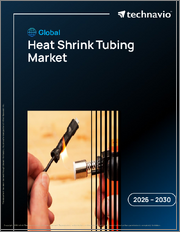
열수축 튜브 시장 : 재료별, 수축률별, 두께별, 사용 온도별, 용도별, 최종 사용 산업별 예측(2026-2032년)Heat-Shrink Tubing Market by Material, Shrink Ratio, Wall Thickness, Operating Temperature, Application, End User Industry - Global Forecast 2026-2032 |
||||||
 360iResearch
열수축 튜브 시장은 2032년까지 연평균 복합 성장률(CAGR) 5.93%로 36억 7,000만 달러 규모로 확대될 것으로 예측됩니다.
| 주요 시장 통계 | |
|---|---|
| 기준 연도 : 2025년 | 24억 5,000만 달러 |
| 추정 연도 : 2026년 | 25억 9,000만 달러 |
| 예측 연도 : 2032년 | 36억 7,000만 달러 |
| CAGR(%) | 5.93% |
열수축 튜브는 와이어 하네스, 커넥터, 단자, 스플라이스, 센서, 케이블 어셈블리 등에서 절연, 밀봉, 장력 완화, 마모 방지, 식별을 위한 중요한 솔루션으로 널리 사용되고 있습니다. 이러한 수요는 전동화, 산업 자동화, 통신 인프라, 항공우주 및 방위용 전자기기, 재생에너지 시스템, 높은 신뢰성이 요구되는 자동차 용도 등에 의해 뒷받침되고 있습니다.
시장은 범용 보호 슬리브에서 폴리올레핀, 불소 수지, 엘라스토머, PVC, 특수 소재로 만들어진 엔지니어링 열수축 튜브로 점차 전환되고 있습니다. 확인된 수요의 징후로는 국제에너지기구(IEA)가 2023년 전기차 판매 대수가 약 1,400만 대에 달했고, 재생에너지의 신규 도입 용량이 약 510 GW로 사상 최고치를 기록했다고 보고한 점을 들 수 있습니다. 이 모든 요소는 내구성이 뛰어난 케이블 보호, 방습 씰, 고전압 절연에 대한 수요를 확대시키는 요인들입니다.
열수축 튜브 산업의 혁신적인 변화
열수축 튜브 시장 환경은 고전압 아키텍처, 전자 기기의 소형화, 가혹한 작동 환경, 더욱 엄격해진 안전 기준의 요구에 따라 재편되고 있습니다. 자동차 OEM, 배터리 제조업체, 태양광 발전 설비 설치업체, 철도 사업자, 산업용 장비 제조업체는 수축률 제어, 난연성, 내화학성, 내자외선성, 저발연성, 접착제 라이닝을 통한 밀봉 기능을 갖춘 튜브에 대한 수요가 점점 더 증가하고 있습니다.
인공지능(AI)이 가져오는 누적 영향
인공지능(AI)은 압출 성형 제어, 두께 모니터링, 결함 감지, 예방 정비를 개선함으로써 열수축 튜브 제조 과정에서 측정 가능한 업무적 가치를 창출하고 있습니다. 머신 비전은 육안 검사보다 일관되게 표면 결함, 인쇄 불균일, 오염, 치수 공차를 식별할 수 있어, 자동차, 항공우주, 의료, 방위 산업 분야의 응용 분야에서 더욱 엄격한 품질 보증을 뒷받침하고 있습니다.
세계 시장의 주요 지역별 동향
아시아태평양은 중국, 일본, 한국, 인도, 호주, 아세안(ASEAN)에서의 전자기기 제조, 전기차(EV) 공급망, 통신 인프라 구축, 산업 생산 덕분에 열수축 튜브에 있어 여전히 가장 큰 구조적 수요 거점으로 남아 있습니다. 이 지역은 와이어 하네스, 배터리, 반도체, 가전제품으로 구성된 긴밀한 생태계에 힘입고 있는 한편, 국가 송전망의 현대화와 재생에너지 통합으로 인해 내습성 케이블 씰링 및 전기 절연재에 대한 수요가 증가하고 있습니다. 북미 시장은 전기차(EV) 투자, 송전망 현대화, 데이터센터, 국방 조달, 첨단 제조업의 국내 복귀에 힘입어 성장하고 있으며, 구매자들은 미션 크리티컬한 조립 공정에 사용할 수 있도록 인증을 받았고 추적 가능성이 보장되며 신뢰성이 높은 튜브를 중요하게 여기고 있습니다.
전략적 시장 포지셔닝에 활용된 주요 그룹 인사이트
아세안(ASEAN)에서는 베트남, 태국, 말레이시아, 인도네시아, 필리핀에서 전자기기 조립, 자동차 부품, 가전제품 제조, 데이터 인프라가 확대되면서 수요가 증가하고 있습니다. 이에 따라 색상 구분 가능, 인쇄 가능, 접착제가 부착된 열수축 튜브에 대한 수요가 증가하고 있습니다. GCC 시장에서는 가혹한 환경 하에서 성능 요구 사항이 까다로워지는 에너지, 유틸리티, 항공, 해수 담수화, 대규모 건설 프로젝트 분야에서 난연성, 내화학성, 내자외선성, 내열성을 갖춘 튜브가 중요하게 여겨지고 있습니다.
열수축 튜브 수요를 좌우하는 주요 국가의 동향
미국에서는 항공우주, 방위, 전기차(EV), 데이터센터, 의료기기, 송전망 현대화, 산업 자동화를 통해 고부가가치 수요를 주도하고 있는 반면, 캐나다에서는 유틸리티, 광업, 운송, 청정 에너지 투자, 한랭지 인프라가 수요를 뒷받침하고 있습니다. 멕시코는 자동차 산업의 니어쇼어링, 와이어 하네스 생산, 가전제품 제조, 국경을 넘는 전자기기 공급망의 혜택을 누리고 있으며, 브라질 수요는 자동차, 에너지, 농업 기계, 통신 네트워크, 산업용 유지보수 분야에서 뒷받침되고 있습니다.
산업 리더를 대상으로 한 실천적인 제안
산업용 공급업체는 범용 절연재, 접착제가 포함된 환경용 씰, 고온 보호, 저연·무할로겐, 내화학성 보호, 고전압 EV 용도 등 용도별 위험에 따라 제품 포트폴리오를 세분화해야 합니다. UL, CSA, RoHS, REACH, 철도, 항공우주, 방위, 자동차 등 각 규격에 대한 명확한 인증 매핑은 구매자의 신뢰를 높이고 인증 주기를 단축합니다.
조사 방법 및 데이터 검증
본 요약 보고서에서는 2차 조사, 1차 인터뷰, 공급 측면 평가, 수요 측면 검증을 결합한 체계적인 시장 조사 기법을 채택하고 있습니다. 입력 데이터에는 공공기관의 데이터, 표준화 기관, 산업 간행물, 특허 및 인증 활동, 유통업체 동향, 수출입 동향, 그리고 자동차, 에너지, 통신, 항공우주, 전자, 철도, 방위, 산업 부문의 최종 시장 지표가 포함됩니다.
결론 및 전략적 전망
전기 시스템이 점점 더 다양해지고, 소형화 및 연결화가 진행되며, 가혹한 환경에 노출됨에 따라 열수축 튜브 시장은 앞으로도 전략적으로 중요한 위치를 유지할 것으로 전망됩니다. 전기화, 재생에너지, 데이터 인프라, 산업 자동화, 철도 현대화, 통신망 확대, 국방 현대화에 따라 신뢰성이 높은 절연, 밀봉, 케이블 식별, 스트레인 릴리프, 기계적 보호에 대한 수요가 증가하고 있습니다.
자주 묻는 질문
목차
제1장 서문
제2장 조사 방법
제3장 주요 요약
제4장 시장 개요
제5장 시장 인사이트
제6장 AI의 누적 영향, 2026년
제7장 열수축 튜브 시장 : 재료별
제8장 열수축 튜브 시장 : 수축률별
제9장 열수축 튜브 시장 : 두께별
제10장 열수축 튜브 시장 : 사용 온도별
제11장 열수축 튜브 시장 : 용도별
제12장 열수축 튜브 시장 : 최종 사용 산업별
제13장 열수축 튜브 시장 : 지역별
제14장 열수축 튜브 시장 : 그룹별
제15장 열수축 튜브 시장 : 국가별
제16장 경쟁 구도
제17장 기업 개요
JHS 26.07.15The Heat-Shrink Tubing Market is projected to grow by USD 3.67 billion at a CAGR of 5.93% by 2032.
| KEY MARKET STATISTICS | |
|---|---|
| Base Year [2025] | USD 2.45 billion |
| Estimated Year [2026] | USD 2.59 billion |
| Forecast Year [2032] | USD 3.67 billion |
| CAGR (%) | 5.93% |
Heat-shrink tubing is a critical insulation, sealing, strain-relief, abrasion-protection, and identification solution used across wire harnesses, connectors, terminals, splices, sensors, and cable assemblies. Demand is supported by electrification, industrial automation, telecommunications infrastructure, aerospace and defense electronics, renewable energy systems, and high-reliability automotive applications.
The market is shifting from commodity protective sleeves toward engineered heat-shrink tubing made from polyolefin, fluoropolymer, elastomer, PVC, and specialty materials. Verified demand signals include the International Energy Agency reporting nearly 14 million electric car sales in 2023 and record renewable capacity additions of about 510 GW in 2023, both of which expand requirements for durable cable protection, moisture sealing, and high-voltage insulation.
Transformative Shifts in the Heat-Shrink Tubing Landscape
The heat-shrink tubing landscape is being reshaped by higher-voltage architectures, miniaturized electronics, harsher operating environments, and stricter safety expectations. Automotive OEMs, battery manufacturers, solar installers, rail operators, and industrial equipment builders increasingly require tubing with controlled shrink ratios, flame-retardant performance, chemical resistance, UV stability, low-smoke output, and adhesive-lined sealing.
Competitive differentiation is moving toward application-specific products, faster customization, color coding, printing, and compliance with standards such as UL, CSA, RoHS, REACH, and industry-specific specifications. Supply chain resilience is also influencing procurement, with manufacturers balancing global scale, localized conversion, and reliable resin sourcing to reduce lead-time risk.
Cumulative Impact of Artificial Intelligence
Artificial intelligence is creating measurable operational value in heat-shrink tubing manufacturing by improving extrusion control, wall-thickness monitoring, defect detection, and preventive maintenance. Machine vision can identify surface flaws, inconsistent printing, contamination, and dimensional variation more consistently than manual inspection, supporting tighter quality assurance for automotive, aerospace, medical, and defense-grade applications.
AI is also improving commercial planning. Demand forecasting models can combine distributor orders, OEM production schedules, EV adoption indicators, infrastructure spending, and regional inventory data to reduce stockouts and overproduction. The strongest impact is expected where AI is paired with polymer engineering expertise, validated testing protocols, and traceable production data.
Key Regional Insights Across Global Markets
Asia-Pacific remains the largest structural demand center for heat-shrink tubing due to electronics manufacturing, electric vehicle supply chains, telecom deployment, and industrial production across China, Japan, South Korea, India, Australia, and ASEAN economies. The region benefits from dense wire harness, battery, semiconductor, and consumer electronics ecosystems, while national grid upgrades and renewable power integration increase the need for moisture-resistant cable sealing and electrical insulation. North America is supported by EV investment, grid modernization, data centers, defense procurement, and reshoring of advanced manufacturing, with buyers emphasizing certified, traceable, and high-reliability tubing for mission-critical assemblies.
Europe is shaped by automotive electrification, rail systems, renewable energy, and rigorous environmental compliance under EU regulatory frameworks, including RoHS and REACH requirements that influence material selection and documentation. Latin America benefits from automotive clusters in Mexico and Brazil as well as solar, wind, mining, and utility infrastructure that require durable cable protection in outdoor and industrial settings. The Middle East is driven by oil and gas, utilities, construction, aviation, and high-temperature cable protection, while Africa's demand is tied to electrification, telecom expansion, renewable mini-grids, and industrial maintenance where rugged insulation and splice protection improve system reliability.
Key Group Insights for Strategic Market Positioning
ASEAN demand is expanding as electronics assembly, automotive components, appliance manufacturing, and data infrastructure grow across Vietnam, Thailand, Malaysia, Indonesia, and the Philippines, strengthening demand for color-coded, printable, and adhesive-lined heat-shrink tubing. GCC markets emphasize flame-retardant, chemical-resistant, UV-stable, and high-temperature tubing for energy, utilities, aviation, desalination, and large-scale construction projects where harsh environments intensify performance requirements.
The European Union prioritizes compliant, low-halogen, recyclable, and traceable materials, creating opportunities for premium suppliers with documented regulatory performance and validated product testing. BRICS countries combine large-scale industrialization, automotive production, grid expansion, renewable deployment, and telecom growth, while G7 markets lead in high-specification requirements for EVs, aerospace, medical electronics, defense, and advanced manufacturing. NATO-related procurement supports demand for rugged, traceable, and mission-critical cable protection in defense communications, aerospace, naval, and land systems, where consistency, qualification evidence, and long-term supply continuity are central purchasing factors.
Key Country Insights Shaping Heat-Shrink Tubing Demand
The United States leads high-value demand through aerospace, defense, EVs, data centers, medical devices, grid upgrades, and industrial automation, while Canada is supported by utilities, mining, transportation, clean energy investments, and cold-climate infrastructure. Mexico benefits from automotive nearshoring, wire harness production, appliance manufacturing, and cross-border electronics supply chains, and Brazil's demand is anchored in automotive, energy, agriculture equipment, telecom networks, and industrial maintenance.
In Europe, the United Kingdom, Germany, France, Italy, and Spain emphasize automotive, rail, renewable energy, aerospace, and regulated electrical safety applications, while Russia's demand is tied to energy, industrial equipment, transport infrastructure, and maintenance-intensive electrical systems. China remains central to global electronics, EV, battery, solar, and industrial supply chains; India is scaling electrical infrastructure, rail, telecom, automotive production, and renewable energy deployment. Japan and South Korea focus on precision electronics, advanced vehicles, batteries, semiconductors, and robotics, while Australia's market is supported by mining, utilities, defense, rail, telecom, and renewable energy projects requiring UV-resistant, abrasion-resistant, and environmentally sealed cable protection.
Actionable Recommendations for Industry Leaders
Industry vendors should segment product portfolios by application risk, including commodity insulation, adhesive-lined environmental sealing, high-temperature protection, low-smoke zero-halogen use, chemical-resistant protection, and high-voltage EV applications. Clear certification mapping to UL, CSA, RoHS, REACH, railway, aerospace, defense, and automotive standards strengthens buyer confidence and shortens qualification cycles.
Manufacturers should invest in AI-enabled inspection, regional inventory hubs, technical sales support, and rapid customization for colors, shrink ratios, cut lengths, wall thicknesses, and print identification. Strategic resin sourcing, recycled-content evaluation where technically feasible, lifecycle documentation, and supplier qualification programs can improve resilience while meeting growing sustainability and traceability expectations.
Research Methodology and Data Validation
This executive summary applies a structured market research methodology combining secondary research, primary interviews, supply-side assessment, and demand-side validation. Inputs include public agency data, standards organizations, trade publications, patent and certification activity, distributor trends, import-export signals, and end-market indicators in automotive, energy, telecom, aerospace, electronics, rail, defense, and industrial sectors.
Findings are triangulated through bottom-up application analysis and top-down macroeconomic assessment. Regional and country insights are validated against production footprints, infrastructure investment, regulatory requirements, technology adoption, certification needs, and procurement behavior to ensure that conclusions remain evidence-based, practical, and aligned with the heat-shrink tubing value chain.
Conclusion and Strategic Outlook
The heat-shrink tubing market is positioned for sustained strategic relevance as electrical systems become more numerous, compact, connected, and exposed to demanding environments. Electrification, renewable energy, data infrastructure, industrial automation, rail modernization, telecom expansion, and defense modernization are increasing the need for reliable insulation, sealing, cable identification, strain relief, and mechanical protection.
Winning suppliers will combine material science, compliance expertise, supply chain reliability, and digital manufacturing capabilities. Organizations that deliver certified performance, application engineering, consistent quality, documentation transparency, and regionally responsive service will be best placed to support evolving requirements across mature and emerging heat-shrink tubing applications.
Table of Contents
1. Preface
- 1.1. Objectives of the Study
- 1.2. Market Definition
- 1.3. Market Segmentation & Coverage
- 1.4. Years Considered for the Study
- 1.5. Currency Considered for the Study
- 1.6. Language Considered for the Study
- 1.7. Key Stakeholders
2. Research Methodology
- 2.1. Introduction
- 2.2. Research Design
- 2.2.1. Primary Research
- 2.2.2. Secondary Research
- 2.3. Research Framework
- 2.3.1. Qualitative Analysis
- 2.3.2. Quantitative Analysis
- 2.4. Market Size Estimation
- 2.4.1. Top-Down Approach
- 2.4.2. Bottom-Up Approach
- 2.5. Data Triangulation
- 2.6. Research Outcomes
- 2.7. Research Assumptions
- 2.8. Research Limitations
3. Executive Summary
- 3.1. Introduction
- 3.2. CXO Perspective
- 3.3. Market Size & Growth Trends
- 3.4. Market Share Analysis, 2025
- 3.5. FPNV Positioning Matrix, 2025
- 3.6. New Revenue Opportunities
- 3.7. Next-Generation Business Models
- 3.8. Industry Roadmap
4. Market Overview
- 4.1. Introduction
- 4.2. Industry Ecosystem & Value Chain Analysis
- 4.2.1. Supply-Side Analysis
- 4.2.2. Demand-Side Analysis
- 4.2.3. Stakeholder Analysis
- 4.3. Market Dynamics
- 4.3.1. Key Drivers
- 4.3.2. Key Restraints
- 4.3.3. Key Opportunities
- 4.3.4. Key Challenges
- 4.4. Porter's Five Forces Analysis
- 4.5. PESTLE Analysis
- 4.6. Market Outlook
- 4.6.1. Near-Term Market Outlook (0-2 Years)
- 4.6.2. Medium-Term Market Outlook (3-5 Years)
- 4.6.3. Long-Term Market Outlook (5-10 Years)
- 4.7. Go-to-Market Strategy
5. Market Insights
- 5.1. Consumer Insights & End-User Perspective
- 5.2. Consumer Experience Benchmarking
- 5.3. Opportunity Mapping
- 5.4. Distribution Channel Analysis
- 5.5. Pricing Trend Analysis
- 5.6. Regulatory Compliance & Standards Framework
- 5.7. ESG & Sustainability Analysis
- 5.8. Disruption & Risk Scenarios
- 5.9. Return on Investment & Cost-Benefit Analysis
6. Cumulative Impact of Artificial Intelligence 2026
7. Heat-Shrink Tubing Market, by Material
- 7.1. Fluoropolymer
- 7.2. Polyolefin
- 7.3. PTFE
- 7.4. PVC
- 7.5. Silicone
8. Heat-Shrink Tubing Market, by Shrink Ratio
- 8.1. 2:1
- 8.2. 3:1
- 8.3. 4:1
- 8.4. 6:1
9. Heat-Shrink Tubing Market, by Wall Thickness
- 9.1. Heavy Wall
- 9.2. Standard Wall
- 9.3. Thin Wall
10. Heat-Shrink Tubing Market, by Operating Temperature
- 10.1. High Temperature
- 10.2. Low Temperature
- 10.3. Standard Temperature
11. Heat-Shrink Tubing Market, by Application
- 11.1. Bundling And Strain Relief
- 11.2. Corrosion Protection
- 11.3. Environmental Sealing
- 11.4. Insulation And Identification
12. Heat-Shrink Tubing Market, by End User Industry
- 12.1. Aerospace And Defense
- 12.2. Automotive
- 12.3. Consumer Goods
- 12.4. Electrical And Electronics
- 12.5. Medical Devices
- 12.6. Oil And Gas
- 12.7. Telecommunications
13. Heat-Shrink Tubing Market, by Region
- 13.1. Asia-Pacific
- 13.2. North America
- 13.3. Latin America
- 13.4. Europe
- 13.5. Middle East
- 13.6. Africa
14. Heat-Shrink Tubing Market, by Group
- 14.1. ASEAN
- 14.2. GCC
- 14.3. European Union
- 14.4. BRICS
- 14.5. G7
- 14.6. NATO
15. Heat-Shrink Tubing Market, by Country
- 15.1. United States
- 15.2. Canada
- 15.3. Mexico
- 15.4. Brazil
- 15.5. United Kingdom
- 15.6. Germany
- 15.7. France
- 15.8. Russia
- 15.9. Italy
- 15.10. Spain
- 15.11. China
- 15.12. India
- 15.13. Japan
- 15.14. Australia
- 15.15. South Korea
16. Competitive Landscape
- 16.1. Market Concentration Analysis, 2025
- 16.1.1. Concentration Ratio (CR)
- 16.1.2. Herfindahl Hirschman Index (HHI)
- 16.2. Recent Developments & Impact Analysis, 2025
- 16.3. Product Portfolio Analysis, 2025
- 16.4. Benchmarking Analysis, 2025
17. Company Profiles
- 17.1. 3M Company
- 17.2. ABB Ltd.
- 17.3. Alpha Wire
- 17.4. Bohlender GmbH
- 17.5. camitec GmbH
- 17.6. Chamfr
- 17.7. Changzhou Longchuang Insulating Material Co., Ltd.
- 17.8. Chengdu Chuanshuang Heat Shrinkable Material Co., Ltd.
- 17.9. Compagnie de Saint-Gobain S.A.
- 17.10. ElringKlinger Kunststofftechnik GmbH
- 17.11. Fluorotherm
- 17.12. Forbest Manufacturing Co., Ltd
- 17.13. Glenn Enterprises
- 17.14. GREMCO GmbH
- 17.15. Guangzhou Kebao insulation products Co., Ltd.
- 17.16. HellermannTyton
- 17.17. Huizhou Guanghai Electronic Insulation Materials Co., Ltd.
- 17.18. jMedtech Coating Technologies Pte Ltd.
- 17.19. Junkosha Inc.
- 17.20. Komax Holding AG
- 17.21. KTG Electronics
- 17.22. LAS Aerospace Ltd.
- 17.23. Mecalbi Engineering Solutions, Lda
- 17.24. MedSEA Forte Pte Ltd.
- 17.25. Molex, LLC
- 17.26. Nordson MEDICAL
- 17.27. Optinova
- 17.28. Panduit Corp.
- 17.29. Parker Hannifin Corporation
- 17.30. PEI-Genesis, Inc.
- 17.31. Putnam Plastics Corporation
- 17.32. Qualtek Electronics Corp.
- 17.33. Shawcor Ltd.