|
시장보고서
상품코드
2085539
이염화에틸렌 시장 : 순도 등급, 제조 프로세스, 형태, 용도, 최종 용도 산업별 - 세계 예측(2026-2032년)Ethylene Dichloride Market by Purity Grade, Production Process, Form, Application, End Use Industry - Global Forecast 2026-2032 |
||||||
 360iResearch
이염화에틸렌 시장은 2032년까지 CAGR 6.46%로 336억 6,000만 달러 규모로 확대할 것으로 예측됩니다.
| 주요 시장 통계 | |
|---|---|
| 기준연도 2025 | 217억 2,000만 달러 |
| 추정연도 2026 | 229억 7,000만 달러 |
| 예측연도 2032 | 336억 6,000만 달러 |
| CAGR(%) | 6.46% |
이염화에틸렌 시장 개요
이염화에틸렌(EDC)은 1,2-디클로로에탄으로도 알려져 있으며, 주로 폴리염화비닐(PVC)의 직접적인 전구체인 염화비닐 단량체(VCM)의 제조에 사용되는 기초적인 염소화 중간체입니다. 이러한 수요 동향은 인프라 개발 및 산업 활동에 힘입어 건축자재, 파이프 및 이음쇠, 전선·케이블의 절연재, 포장재, 자동차 부품, 그 밖의 PVC를 많이 사용하는 용도와 밀접한 관련이 있습니다.
EDC 시장의 획기적인 변화
EDC 시장의 환경은 원자재 가격 변동, 환경 규제 강화, 그리고 PVC 수요 패턴의 변화라는 복합적인 압박에 의해 재편되고 있습니다. 직접 염소화 및 옥시염소화는 여전히 핵심 제조 공정이지만, 플랜트 운영자들은 효율성 향상과 규정 준수 위험 감소를 위해 열 통합, 배기가스 제어, 촉매 성능, 부식 관리 및 제품별 처리에 점점 더 주력하고 있습니다.
인공지능(AI)의 누적 영향
인공지능(AI)은 특히 공정 최적화, 예측 유지보수, 배기가스 모니터링, 공급망 계획 분야에서 이염화에틸렌 생산의 실질적인 성능 향상 수단으로 자리 잡고 있습니다. AI를 활용한 첨단 공정 제어는 직접 염소화 및 옥시염소화 플랜트 모두에서 반응기 상태를 안정화하고, 에틸렌 및 염소의 전환율을 최적화하며, 규격 외 제품 발생을 줄이고, 에너지 효율을 향상시키는 데 도움이 됩니다.
주요 지역에 대한 인사이트
아시아태평양은 여전히 이염화에틸렌의 주요 수요 지역으로 남아 있습니다. 이는 중국, 인도, 일본, 한국 및 동남아시아 국가들이 건설, 인프라, 소비재, 전기기기 분야에서 대량의 PVC 소비를 지원하고 있기 때문입니다. 중국의 통합 비닐 체인과 대규모 PVC 생산 기반은 지역 무역 흐름과 가동률에 영향을 미치고 있는 반면, 인도의 인프라, 주택, 관개 및 상수도 관련 수요는 계속해서 PVC 수요를 지원하고 있습니다. 일본과 한국은 신뢰성, 공정 효율, 그리고 기술 주도형 석유화학 사업을 중시하고 있으며, 동남아시아는 제조업 이전, 도시화, 그리고 공공 인프라 네트워크 확장의 혜택을 누리고 있습니다.
주요 그룹에 대한 인사이트
아세안 시장은 제조업의 다각화, 도시 개발, 인프라 투자로 인해 배관, 케이블, 바닥재, 건축자재 등의 분야에서 PVC 소비가 증가하고 있으며, 그 중요성이 커지고 있습니다. GCC 국가들은 석유화학 산업의 통합, 경쟁력 있는 에너지 경제, 하류 부문 다각화 프로그램의 혜택을 누리고 있으며, 이는 수출 지향적인 화학 전략과 비닐 밸류체인에 대한 보다 광범위한 참여를 지원하고 있습니다.
주요 국가에 대한 인사이트
미국은 셰일 유래 에틸렌의 경제성, 염소 및 비닐 자산의 통합, 수출 인프라, 그리고 확립된 하류 PVC 가공 체계를 바탕으로 주요 전략적 시장으로 자리매김하고 있습니다. 캐나다의 역할은 산업용 화학제품, 건설 수요, 그리고 미국과의 국경을 넘는 무역과 관련이 있는 반면, 멕시코는 제조업의 성장, 인프라 수요, 그리고 북미 공급망 통합의 혜택을 누리고 있습니다. 브라질은 건설, 위생, 포장 및 상수도 인프라 분야를 통해 라틴아메리카의 수요를 지원하고 있습니다.
업계 리더를 위한 실천적인 제안
업계 선도 기업은 염소, EDC, VCM, PVC, 가성소다에 걸친 통합적인 마진 관리를 우선시해야 합니다. 왜냐하면 수익성은 제품별 균형, 원자재 비용, 에너지 집약도 및 하류 수요에 따라 달라지기 때문입니다. 생산자는 점점 더 엄격해지는 환경, 안전, 산업위생 요건을 충족하면서 경쟁력을 높이기 위해 에너지 효율, 배기가스 제어, 부식 방지, 폐쇄 루프 모니터링 및 디지털 공정 최적화에 투자해야 합니다.
조사 방법
본 조사 방법론에서는 2차 정보와 1차 정보를 결합하여, 공급, 수요, 가격 결정 요인, 기술, 규제, 무역 및 경쟁적 위치라는 관점에서 이염화에틸렌 시장을 평가하고 있습니다. 공개 정보 출처에는 세관 및 무역 데이터베이스, 규제 당국, 환경·노동안전 당국, 기업의 공시 정보, 지속가능성 보고서, 업계 단체 자료, 공장 차원의 발표, 그리고 정부의 인프라 및 건설 지표가 포함됩니다.
결론
PVC가 건설, 인프라, 상수도, 전기, 포장, 자동차 및 산업 분야에서 계속해서 사용되고 있는 만큼, 이염화에틸렌 시장은 전 세계 비닐 밸류체인에서 여전히 없어서는 안 될 존재입니다. 시장에서의 주도권은 원료의 우위성, 플랜트의 통합, 운영의 신뢰성, 규제 준수, 물류 역량, 그리고 지역별 수요 변동에 대응하는 능력에 달려 있습니다.
자주 묻는 질문
목차
제1장 서문
제2장 조사 방법
제3장 개요
제4장 시장 개요
제5장 시장 인사이트
제6장 AI의 누적 영향, 2026년
제7장 이염화에틸렌 시장 : 순도 등급별
제8장 이염화에틸렌 시장 : 생산 프로세스별
제9장 이염화에틸렌 시장 : 폼별
제10장 이염화에틸렌 시장 : 용도별
제11장 이염화에틸렌 시장 : 최종 사용 산업별
제12장 이염화에틸렌 시장 : 지역별
제13장 이염화에틸렌 시장 : 그룹별
제14장 이염화에틸렌 시장 : 국가별
제15장 경쟁 구도
제16장 기업 개요
KSA 26.07.20The Ethylene Dichloride Market is projected to grow by USD 33.66 billion at a CAGR of 6.46% by 2032.
| KEY MARKET STATISTICS | |
|---|---|
| Base Year [2025] | USD 21.72 billion |
| Estimated Year [2026] | USD 22.97 billion |
| Forecast Year [2032] | USD 33.66 billion |
| CAGR (%) | 6.46% |
Ethylene Dichloride Market Overview
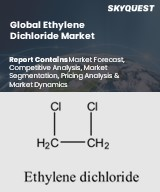
Ethylene dichloride (EDC), also known as 1,2-dichloroethane, is a foundational chlorinated intermediate used predominantly to manufacture vinyl chloride monomer (VCM), the direct precursor to polyvinyl chloride (PVC). Its demand profile is closely tied to construction materials, pipes and fittings, wire and cable insulation, packaging, automotive components, and other PVC-intensive applications supported by infrastructure development and industrial activity.
The ethylene dichloride market is shaped by integrated chlor-alkali and vinyl chains, where ethylene, chlorine, electricity and fuel costs, caustic soda co-product economics, and downstream PVC utilization influence operating decisions. Producers that manage feedstock security, environmental compliance, logistics resilience, and integration from chlorine to VCM and PVC are best positioned to protect margins in a cyclical chemical market governed by safety, emissions, and hazardous chemical handling requirements.
Transformative Shifts in the EDC Landscape
The EDC landscape is being reshaped by the combined pressures of feedstock volatility, stricter environmental oversight, and changing PVC demand patterns. Direct chlorination and oxychlorination remain the core production routes, but plant operators are increasingly focused on heat integration, emissions control, catalyst performance, corrosion management, and byproduct handling to improve efficiency and reduce compliance risk.
A major shift is occurring in global trade flows as Asia continues to anchor PVC consumption while North American and Middle Eastern producers benefit from competitive ethylene and energy positions. At the same time, policy scrutiny around chlorinated chemicals, hazardous air pollutants, occupational exposure, and waste streams is pushing the industry toward tighter process controls, safer storage and transport practices, and stronger product stewardship across the value chain.
Cumulative Impact of Artificial Intelligence
Artificial intelligence is becoming a practical performance lever in ethylene dichloride production, particularly in process optimization, predictive maintenance, emissions monitoring, and supply chain planning. AI-enabled advanced process control can help stabilize reactor conditions, optimize ethylene and chlorine conversion, reduce off-spec material, and improve energy efficiency in both direct chlorination and oxychlorination units.
AI also supports safer and more resilient operations by analyzing sensor data for early detection of corrosion, fouling, leaks, abnormal temperature profiles, and equipment anomalies. In supply chains, machine learning can improve visibility into VCM and PVC demand signals, optimize vessel and rail scheduling, and simulate disruptions linked to feedstock shortages, port congestion, regulatory changes, extreme weather, or maintenance outages.
Key Regional Insights
Asia-Pacific remains the central demand region for ethylene dichloride because China, India, Japan, South Korea, and Southeast Asian economies support substantial PVC consumption in construction, infrastructure, consumer goods, and electrical applications. China's integrated vinyl chain and large PVC conversion base influence regional trade flows and operating rates, while India's infrastructure, housing, irrigation, and water distribution requirements continue to support PVC demand. Japan and South Korea emphasize reliability, process efficiency, and technology-led petrochemical operations, and Southeast Asia benefits from manufacturing relocation, urbanization, and expanding utility networks.
North America is strategically important due to shale-derived ethylene economics, established chlor-alkali infrastructure, deep logistics networks, and export-oriented VCM and PVC chains. Europe operates under rigorous chemical regulation, industrial emissions requirements, and decarbonization pressure, making compliance, energy efficiency, and circularity central to competitiveness. Latin America's demand is supported by housing, sanitation, water infrastructure, packaging, and manufacturing activity, with Brazil and Mexico acting as key demand hubs. The Middle East benefits from competitive energy positions and petrochemical integration, while Africa's long-term opportunity is linked to urbanization, water management, electrification, and expanding construction needs.
Key Group Insights
ASEAN markets are gaining importance as manufacturing diversification, urban development, and infrastructure investment raise PVC consumption across pipe, cable, flooring, and building product applications. The GCC benefits from petrochemical integration, competitive energy economics, and downstream diversification programs, supporting export-oriented chemical strategies and broader participation in the vinyl value chain.
The European Union remains a regulation-driven market where EDC and vinyl producers must align with REACH, industrial emissions rules, circular economy priorities, waste management directives, and climate policies. BRICS countries collectively represent a large and structurally important demand base because China, India, Brazil, Russia, and South Africa connect EDC demand to construction, infrastructure, sanitation, housing, and industrialization. G7 countries emphasize high operating standards, safety performance, emissions control, and resilient supply chains, while NATO members increasingly assess chemical supply security through the lens of industrial resilience, transport continuity, and critical infrastructure protection.
Key Country Insights
The United States is a leading strategic market because of shale-derived ethylene economics, integrated chlorine and vinyl assets, export infrastructure, and established downstream PVC conversion. Canada's role is linked to industrial chemicals, construction demand, and cross-border trade with the United States, while Mexico benefits from manufacturing growth, infrastructure needs, and North American supply chain integration. Brazil anchors Latin American demand through construction, sanitation, packaging, and water infrastructure applications.
In Europe, the United Kingdom, Germany, France, Italy, and Spain operate within mature PVC and chemical ecosystems where energy prices, regulation, industrial emissions standards, and sustainability commitments shape investment decisions. Russia's position is influenced by domestic petrochemical resources, internal construction demand, and geopolitical trade constraints. In Asia-Pacific, China remains central to global EDC and PVC balances, India is supported by infrastructure, housing, agriculture-related piping, and water management needs, Japan and South Korea focus on advanced petrochemical efficiency and export competitiveness, and Australia's demand is tied to construction, utilities, mining infrastructure, and import-linked chemical supply chains.
Actionable Recommendations for Industry Leaders
Industry leaders should prioritize integrated margin management across chlorine, EDC, VCM, PVC, and caustic soda because profitability depends on co-product balance, feedstock costs, energy intensity, and downstream demand. Producers should invest in energy efficiency, emissions control, corrosion prevention, closed-loop monitoring, and digital process optimization to improve competitiveness while meeting tightening environmental, safety, and occupational health expectations.
Companies should also strengthen feedstock and logistics resilience by diversifying ethylene and chlorine sourcing, improving storage and terminal flexibility, qualifying alternative transport routes, and using scenario planning for trade disruptions, severe weather, and regulatory changes. Downstream partnerships with PVC converters, infrastructure suppliers, cable manufacturers, and construction material customers can improve demand visibility and support specification-driven value creation.
Research Methodology
The research methodology combines secondary and primary intelligence to evaluate the ethylene dichloride market across supply, demand, pricing drivers, technology, regulation, trade, and competitive positioning. Public sources include customs and trade databases, regulatory agencies, environmental and occupational safety authorities, company disclosures, sustainability reports, industry association materials, plant-level announcements, and government infrastructure and construction indicators.
Findings are validated through triangulation across production routes, feedstock economics, downstream VCM and PVC demand, regional trade flows, transport constraints, and policy developments. The methodology emphasizes data consistency, source credibility, and practical market relevance, avoiding unsupported assumptions while highlighting the structural factors that influence EDC consumption, operating strategy, compliance priorities, and investment decisions.
Conclusion
The ethylene dichloride market remains essential to the global vinyl value chain as PVC continues to serve construction, infrastructure, water distribution, electrical, packaging, automotive, and industrial applications. Market leadership depends on feedstock advantage, plant integration, operational reliability, regulatory compliance, logistics capability, and the ability to respond to shifting regional demand.
As AI, sustainability requirements, and supply chain resilience become more important, EDC producers and buyers must move beyond volume-based strategies and build more agile, efficient, and transparent operating models. Companies that align technology, compliance, safety, and customer partnerships will be best positioned to capture long-term value in this mature but strategically important chemical market.
Table of Contents
1. Preface
- 1.1. Objectives of the Study
- 1.2. Market Definition
- 1.3. Market Segmentation & Coverage
- 1.4. Years Considered for the Study
- 1.5. Currency Considered for the Study
- 1.6. Language Considered for the Study
- 1.7. Key Stakeholders
2. Research Methodology
- 2.1. Introduction
- 2.2. Research Design
- 2.2.1. Primary Research
- 2.2.2. Secondary Research
- 2.3. Research Framework
- 2.3.1. Qualitative Analysis
- 2.3.2. Quantitative Analysis
- 2.4. Market Size Estimation
- 2.4.1. Top-Down Approach
- 2.4.2. Bottom-Up Approach
- 2.5. Data Triangulation
- 2.6. Research Outcomes
- 2.7. Research Assumptions
- 2.8. Research Limitations
3. Executive Summary
- 3.1. Introduction
- 3.2. CXO Perspective
- 3.3. Market Size & Growth Trends
- 3.4. Market Share Analysis, 2025
- 3.5. FPNV Positioning Matrix, 2025
- 3.6. New Revenue Opportunities
- 3.7. Next-Generation Business Models
- 3.8. Industry Roadmap
4. Market Overview
- 4.1. Introduction
- 4.2. Industry Ecosystem & Value Chain Analysis
- 4.2.1. Supply-Side Analysis
- 4.2.2. Demand-Side Analysis
- 4.2.3. Stakeholder Analysis
- 4.3. Market Dynamics
- 4.3.1. Key Drivers
- 4.3.2. Key Restraints
- 4.3.3. Key Opportunities
- 4.3.4. Key Challenges
- 4.4. Porter's Five Forces Analysis
- 4.5. PESTLE Analysis
- 4.6. Market Outlook
- 4.6.1. Near-Term Market Outlook (0-2 Years)
- 4.6.2. Medium-Term Market Outlook (3-5 Years)
- 4.6.3. Long-Term Market Outlook (5-10 Years)
- 4.7. Go-to-Market Strategy
5. Market Insights
- 5.1. Consumer Insights & End-User Perspective
- 5.2. Consumer Experience Benchmarking
- 5.3. Opportunity Mapping
- 5.4. Distribution Channel Analysis
- 5.5. Pricing Trend Analysis
- 5.6. Regulatory Compliance & Standards Framework
- 5.7. ESG & Sustainability Analysis
- 5.8. Disruption & Risk Scenarios
- 5.9. Return on Investment & Cost-Benefit Analysis
6. Cumulative Impact of Artificial Intelligence 2026
7. Ethylene Dichloride Market, by Purity Grade
- 7.1. High
- 7.2. Standard
- 7.3. Ultra High
8. Ethylene Dichloride Market, by Production Process
- 8.1. Direct Chlorination
- 8.2. Oxychlorination
9. Ethylene Dichloride Market, by Form
- 9.1. Gas
- 9.2. Liquid
10. Ethylene Dichloride Market, by Application
- 10.1. Intermediate
- 10.2. Solvent
- 10.3. Vinyl Chloride Monomer
11. Ethylene Dichloride Market, by End Use Industry
- 11.1. Automotive
- 11.2. Construction
- 11.3. Electrical And Electronics
- 11.4. Packaging
12. Ethylene Dichloride Market, by Region
- 12.1. Asia-Pacific
- 12.2. North America
- 12.3. Latin America
- 12.4. Europe
- 12.5. Middle East
- 12.6. Africa
13. Ethylene Dichloride Market, by Group
- 13.1. ASEAN
- 13.2. GCC
- 13.3. European Union
- 13.4. BRICS
- 13.5. G7
- 13.6. NATO
14. Ethylene Dichloride Market, by Country
- 14.1. United States
- 14.2. Canada
- 14.3. Mexico
- 14.4. Brazil
- 14.5. United Kingdom
- 14.6. Germany
- 14.7. France
- 14.8. Russia
- 14.9. Italy
- 14.10. Spain
- 14.11. China
- 14.12. India
- 14.13. Japan
- 14.14. Australia
- 14.15. South Korea
15. Competitive Landscape
- 15.1. Market Concentration Analysis, 2025
- 15.1.1. Concentration Ratio (CR)
- 15.1.2. Herfindahl Hirschman Index (HHI)
- 15.2. Recent Developments & Impact Analysis, 2025
- 15.3. Product Portfolio Analysis, 2025
- 15.4. Benchmarking Analysis, 2025
16. Company Profiles
- 16.1. AGC Inc.
- 16.2. Akzo Nobel N.V.
- 16.3. Arihant Chemicals
- 16.4. BASF SE
- 16.5. Bayer AG
- 16.6. Chemex Organochem Pvt. Ltd.
- 16.7. DuPont de Nemours, Inc.
- 16.8. EASTMAN CHEMICAL COMPANY
- 16.9. Evonik Industries AG
- 16.10. Gujarat Alkalies and Chemicals Limited
- 16.11. Huntsman International LLC
- 16.12. INEOS AG
- 16.13. JSR Corporation
- 16.14. KEM ONE SAS
- 16.15. Merck KGaA
- 16.16. Ningbo Juhua Chemical & Science Co., Ltd.
- 16.17. Occidental Petroleum Corporation
- 16.18. Research Solutions Group, Inc.
- 16.19. Solvay S.A.
- 16.20. Spectrum Chemical Mfg. Corp.
- 16.21. SUMITOMO SEIKA CHEMICALS CO.,LTD.
- 16.22. The Dow Chemical Company
- 16.23. Tokuyama Corporation
- 16.24. Vizag Chemical