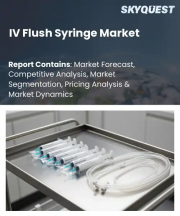
|
시장보고서
상품코드
2087705
주사기 시장 : 유형, 소재, 기술, 수량, 최종 사용자별 - 세계 시장 예측(2026-2032년)Syringes Market by Type, Material, Technology, Volume, End User - Global Forecast 2026-2032 |
||||||
 360iResearch
주사기 시장은 2032년까지 연평균 복합 성장률(CAGR) 7.98%로 성장해 240억 6,000만 달러 규모로 확대될 것으로 예측됩니다.
| 주요 시장 통계 | |
|---|---|
| 기준 연도(2025년) | 140억 5,000만 달러 |
| 추정 연도(2026년) | 149억 2,000만 달러 |
| 예측 연도(2032년) | 240억 6,000만 달러 |
| CAGR(%) | 7.98% |
주사기 시장 개요
주사기 시장은 의료기기 분야 중에서도 매우 중요한 분야로, 예방접종, 당뇨병 관리, 주사용 생물학적 제제, 마취, 응급의료 및 병원 내 약물 투여를 뒷받침하고 있습니다. 수요는 이미 입증된 의료의 기본 요인들에 의해 뒷받침되고 있습니다. 세계보건기구(WHO)의 추산에 따르면, 전 세계에서 매년 약 160억 건의 주사가 시행되고 있으며, 만성 질환 관리 및 예방접종 프로그램의 발전에 따라 무균적이고 정확하며 안전한 주사 기구에 대한 수요가 지속적으로 증가하고 있습니다.
주사기 시장의 획기적인 변화
주사기 시장은 보다 안전한 주사 관행, 자가 투여 증가, 그리고 의료기기 품질에 대한 감독 강화라는 세 가지 지속적인 변화에 따라 재편되고 있습니다. 안전성을 중시하여 설계된 주사기는 미국 OSHA(직업안전보건청)의 혈액 매개 병원체에 관한 요건과 EU의 날카로운 물체 지침에 따라 그 안전성이 인정받고 있습니다. 한편, 자동 무효화식 주사기는 재사용을 방지하고 WHO(세계보건기구)의 지침에 따른 안전한 주사 관행을 지원하기 위해 대규모 예방접종에서 여전히 필수적인 역할을 하고 있습니다.
인공지능(AI)의 누적 영향
인공지능(AI)은 자동 시각 검사부터 성형, 실리콘 코팅, 바늘 조립, 포장, 그리고 멸균과 관련된 생산 워크플로우에 이르기까지 주사기의 밸류체인에 점점 더 큰 영향을 미치고 있습니다. AI를 활용한 컴퓨터 비전은 미세 입자 오염, 외관상의 결함, 치수 불일치, 충전량 편차, 바늘 위치 오차 및 라벨 오류를 대량 무균 제조에 대응할 수 있는 속도로 식별하는 데 도움이 됩니다.
주요 지역에 대한 인사이트
아시아태평양은 대규모 예방접종 프로그램, 당뇨병 유병률 증가, 인구 규모, 그리고 중국, 인도, 일본, 한국, 호주에 구축된 견고한 의료기기 제조거점을 바탕으로 주사기의 주요 생산 및 수요 거점으로 자리매김하고 있습니다. 이 지역의 주사기 수요는 공공 예방접종, 병원 확장, 주사제, 그리고 첨단 의료 시스템에서 정밀 투여 기기의 사용 확대에 힘입어 더욱 증가하고 있습니다. 북미는 안전한 주사기의 보급이 확대되고 있는 점, 만성 질환에 대한 주사 요법, FDA의 감독, OSHA 주도의 날카로운 물체 안전 대책, 대규모 병원 조달 네트워크, 그리고 생물학적 제제 및 전문 의약품에 사용되는 프리필드 주사기 시스템에 대한 확고한 수요 덕분에 여전히 고부가가치 주사기 시장으로 자리 잡고 있습니다.
주요 그룹에 대한 인사이트
아세안(ASEAN) 지역은 의료 접근성 향상, 병원 네트워크 확대, 의료 관광, 그리고 지역 내 제조 역량 강화 등의 혜택을 누리고 있으며, 표준 일회용 주사기와 고부가가치 안전 제품 모두에게 중요한 시장으로 자리매김하고 있습니다. GCC 국가들에서는 병원 투자, 조달 프로세스의 현대화, 의료 서비스의 현지화가 가속화되고 있으며, 이는 고품질 멸균 의료기기, 응급 의료용품, 백신 투여 제품, 그리고 공공 부문의 품질 요건을 준수하는 신뢰할 수 있는 주사기 공급망에 대한 수요를 뒷받침하고 있습니다.
주요 국가에 대한 인사이트
미국은 안전성을 중시하여 설계된 의료기기, 주사제 치료법, 프리필드 주사기의 보급, 그리고 FDA가 주도하는 품질 기준 분야에서 선도적인 위치를 차지하고 있습니다. 한편, 캐나다는 국민건강보험에 기반한 의료 서비스 조달, 안전한 주사 기준, 그리고 병원 및 지역 의료 현장에서의 확실한 접근성을 중시하고 있습니다. 멕시코와 브라질은 공공 예방접종, 병원 수요, 만성 질환 관리, 그리고 멸균 주사 기구에 대한 접근성 확대를 뒷받침하는 현지 유통망의 확대로 인해 라틴아메리카에서 중요한 주사기 시장으로 자리매김하고 있습니다.
업계 리더를 위한 실천적인 제안
업계 리더는 안전성, 투여량의 정확성, 사용 편의성, 그리고 규제 대응 능력을 모두 갖춘 제품 포트폴리오를 우선시해야 합니다. 의료 제도가 성능 증명을 요구하고, 규제 당국이 주사기의 결함, 누출, 미립자 오염, 표시의 정확성, 그리고 의약품과 의료기기의 적합성에 관한 위험에 대한 감시를 강화하고 있는 만큼, ISO 준수 설계 관리, 공급업체 적격성 평가, 멸균 검증, 생체적합성 평가, 용기·밀폐 시스템의 무결성, 그리고 로트 수준의 추적성에 대한 투자가 필수적입니다.
조사 방법
본 요약본은 WHO의 주사 안전 지침, 유니세프의 예방접종 용품 관련 참고 자료, FDA의 의료기기 관련 공고, OSHA의 혈액 매개 병원체 관련 요건, EU의 날카로운 물체 지침, EU의 MDR 요건, 그리고 ISO 7886 및 ISO 8537과 같은 ISO 주사기 규격 등, 공중보건, 규제, 표준 분야의 공인된 정보 출처를 바탕으로 한 2차 조사에 근거하고 있습니다.
결론
주사기 시장은 대량으로 소비되는 소모품 부문에서 안전성, 정밀도, 규제 준수, 무균성 확보, 그리고 견고한 공급망을 바탕으로 형성된 전략적으로 중요한 의료기기 부문으로 진화하고 있습니다. 수요는 예방접종, 만성 질환 치료, 주사용 생물학적 제제, 병원 내 시술, 응급 의료, 그리고 확대되고 있는 재택 투여에 의해 뒷받침되고 있습니다.
자주 묻는 질문
목차
제1장 서문
제2장 조사 방법
제3장 주요 요약
제4장 시장 개요
제5장 시장 인사이트
제6장 AI의 누적 영향(2026년)
제7장 주사기 시장 : 유형별
제8장 주사기 시장 : 소재별
제9장 주사기 시장 : 기술별
제10장 주사기 시장 : 수량별
제11장 주사기 시장 : 최종 사용자별
제12장 주사기 시장 : 지역별
제13장 주사기 시장 : 그룹별
제14장 주사기 시장 : 국가별
제15장 경쟁 구도
제16장 기업 개요
KTH 26.07.21The Syringes Market is projected to grow by USD 24.06 billion at a CAGR of 7.98% by 2032.
| KEY MARKET STATISTICS | |
|---|---|
| Base Year [2025] | USD 14.05 billion |
| Estimated Year [2026] | USD 14.92 billion |
| Forecast Year [2032] | USD 24.06 billion |
| CAGR (%) | 7.98% |
Syringes Market Introduction
The syringes market is a mission-critical segment of medical devices, supporting vaccination, diabetes care, injectable biologics, anesthesia, emergency medicine, and hospital drug delivery. Demand is anchored by verified healthcare fundamentals: the World Health Organization estimates that approximately 16 billion injections are administered worldwide each year, while chronic disease management and immunization programs continue to raise the need for sterile, accurate, and safe injection devices.
Market relevance is shifting from commodity disposable syringes toward safety syringes, auto-disable syringes, insulin syringes, low-dead-space syringes, and prefilled syringe systems that reduce medication errors, needle-stick injuries, reuse risk, and contamination. Regulatory expectations under FDA quality system requirements, EU Medical Device Regulation, ISO 7886, ISO 8537, and WHO performance and prequalification guidance are making product reliability, traceability, sterility assurance, and supply resilience central buying criteria for healthcare providers, pharmaceutical manufacturers, and public procurement agencies.
Transformative Shifts in the Syringes Landscape
The syringes landscape is being reshaped by three durable shifts: safer injection practice, growth in self-administration, and higher scrutiny of device quality. Safety-engineered syringes are supported by OSHA bloodborne pathogen requirements in the United States and the EU Sharps Directive, while auto-disable syringes remain essential in mass immunization because they help prevent reuse and support WHO-aligned injection safety practices.
At the same time, injectable biologics, insulin therapy, GLP-1 medications, anticoagulants, fertility treatments, and home-based care are increasing demand for user-friendly delivery formats. Hospitals, pharmaceutical companies, and contract manufacturers are also prioritizing low-dead-space designs, latex-free components, consistent plunger performance, container-closure integrity, extractables and leachables control, and compatibility with high-value drugs, making syringe selection a clinical, regulatory, and supply-chain decision rather than a price-only purchase.
Cumulative Impact of Artificial Intelligence
Artificial intelligence is increasingly influencing the syringe value chain, from automated visual inspection to predictive maintenance on molding, siliconization, needle assembly, packaging, and sterilization-related production workflows. AI-enabled computer vision can help identify particulate contamination, cosmetic defects, dimensional inconsistencies, fill-level deviations, needle alignment issues, and labeling errors at speeds that support high-volume sterile manufacturing.
The cumulative impact is stronger quality assurance and lower batch risk, especially for prefilled syringes, safety syringe mechanisms, and insulin syringe components where tolerance failures can affect dose accuracy, sterility, activation, or user safety. AI is also improving demand planning for vaccination campaigns, hospital formularies, emergency stockpiles, and chronic therapy segments, helping manufacturers and procurers align capacity with public-health requirements while reducing stockouts, excess inventory, and avoidable supply disruption.
Key Regional Insights
Asia-Pacific is a major production and demand center for syringes, supported by large immunization programs, expanding diabetes prevalence, population scale, and strong device manufacturing bases in China, India, Japan, South Korea, and Australia. The region's syringe demand is reinforced by public vaccination, hospital expansion, injectable pharmaceuticals, and growing use of precision delivery devices in advanced healthcare systems. North America remains a high-value syringe market because of strong safety syringe adoption, chronic injectable therapies, FDA oversight, OSHA-driven sharps safety practices, large hospital purchasing networks, and established demand for prefilled syringe systems used with biologics and specialty drugs.
Latin America is driven by public vaccination, hospital modernization, private clinic expansion, and broader access to injectable treatments, with Brazil and Mexico serving as important demand anchors. Europe is shaped by the EU Medical Device Regulation, high sharps safety standards, strong post-market surveillance expectations, and established uptake of prefilled, safety, and specialty syringes across hospital and self-administration settings. The Middle East is investing in hospital infrastructure, emergency care capacity, and medical localization, particularly in GCC countries where procurement quality and sterile supply reliability are rising priorities. Africa's syringe demand is closely linked to donor-supported immunization, maternal health, infectious disease programs, primary care access, and the need for WHO-aligned auto-disable syringes that support safe injection practices in high-volume public-health campaigns.
Key Group Insights
ASEAN benefits from rising healthcare access, expanding hospital networks, medical tourism, and regional manufacturing capacity, making it important for both standard disposable syringes and higher-value safety products. The GCC is accelerating hospital investment, procurement modernization, and healthcare localization, supporting demand for premium sterile devices, emergency-care supplies, vaccine delivery products, and reliable syringe supply chains aligned with public-sector quality requirements.
The European Union emphasizes MDR compliance, sharps safety, traceability, clinical evidence, and sustainable procurement, which favors suppliers with strong technical documentation, quality systems, and post-market surveillance. BRICS countries combine large patient populations with expanding domestic manufacturing ambitions, particularly in China, India, and Brazil, where immunization scale, diabetes care, and pharmaceutical production increase syringe relevance. G7 markets concentrate advanced demand for prefilled syringes, biologic compatibility, safety-engineered devices, and low-defect manufacturing, while NATO countries' medical readiness priorities reinforce the importance of resilient syringe supply for defense health systems, emergency preparedness, field medicine, and public-health response.
Key Country Insights
The United States leads in safety-engineered devices, injectable therapies, prefilled syringe adoption, and FDA-driven quality expectations, while Canada emphasizes universal healthcare procurement, safe injection standards, and reliable access across hospital and community care settings. Mexico and Brazil are important Latin American syringe markets due to public immunization, hospital demand, chronic disease care, and growing local distribution networks that support broader access to sterile injection devices.
In Europe, the United Kingdom, Germany, France, Italy, and Spain show strong demand for compliant safety syringes, insulin syringes, and prefilled systems, with procurement influenced by sharps safety, MDR-aligned quality expectations, and hospital efficiency. Russia's market is shaped by domestic supply needs, localization priorities, and healthcare self-sufficiency. China and India are central to global syringe production and domestic immunization scale, with China facing heightened international quality scrutiny and India benefiting from vaccine, pharmaceutical, and medical device manufacturing depth. Japan, Australia, and South Korea emphasize high-quality precision devices, aging-population care, regulated procurement, and consistent performance in hospital, home-care, and specialty injectable therapy settings.
Actionable Recommendations for Industry Leaders
Industry leaders should prioritize product portfolios that combine safety, dose accuracy, usability, and regulatory resilience. Investments in ISO-compliant design controls, supplier qualification, sterilization validation, biocompatibility assessment, container-closure integrity, and lot-level traceability are essential as health systems demand proof of performance and as regulators increase scrutiny of syringe defects, leakage, particulate contamination, labeling accuracy, and drug-device compatibility risks.
Manufacturers should expand capabilities in safety syringes, auto-disable syringes, insulin delivery, low-dead-space designs, and prefilled-compatible platforms while diversifying raw material, needle, elastomer, barrel, and packaging component sourcing. Commercial teams should align messaging with measurable outcomes: reduced needle-stick injury risk, lower medication waste, reliable immunization delivery, improved patient adherence in home-care settings, and stronger continuity of supply for hospitals, public-health agencies, and pharmaceutical partners.
Research Methodology
This executive summary is based on secondary research from recognized public-health, regulatory, and standards sources, including WHO injection safety guidance, UNICEF immunization supply references, FDA medical device communications, OSHA bloodborne pathogen requirements, the EU Sharps Directive, EU MDR requirements, and ISO syringe standards such as ISO 7886 and ISO 8537.
The analysis also applies market triangulation across clinical-use trends, procurement behavior, chronic disease demand, vaccination programs, device manufacturing practices, quality-system requirements, and regional healthcare infrastructure. Insights were validated for consistency with documented regulatory frameworks, public-health guidance, standards-based performance expectations, and observable demand drivers rather than unverified market-size, market-share, or forecasting claims.
Conclusion
The syringes market is evolving from a high-volume consumable category into a strategically important medical device sector shaped by safety, precision, regulatory compliance, sterility assurance, and resilient supply chains. Demand is supported by immunization needs, chronic disease care, injectable biologics, hospital procedures, emergency medicine, and expanding home administration.
Organizations that combine dependable manufacturing, advanced quality controls, AI-enabled inspection, validated sterilization, strong documentation, and region-specific regulatory execution will be best positioned to support hospital, public-health, and pharmaceutical partnerships in the next phase of syringe market development.
Table of Contents
1. Preface
- 1.1. Objectives of the Study
- 1.2. Market Definition
- 1.3. Market Segmentation & Coverage
- 1.4. Years Considered for the Study
- 1.5. Currency Considered for the Study
- 1.6. Language Considered for the Study
- 1.7. Key Stakeholders
2. Research Methodology
- 2.1. Introduction
- 2.2. Research Design
- 2.2.1. Primary Research
- 2.2.2. Secondary Research
- 2.3. Research Framework
- 2.3.1. Qualitative Analysis
- 2.3.2. Quantitative Analysis
- 2.4. Market Size Estimation
- 2.4.1. Top-Down Approach
- 2.4.2. Bottom-Up Approach
- 2.5. Data Triangulation
- 2.6. Research Outcomes
- 2.7. Research Assumptions
- 2.8. Research Limitations
3. Executive Summary
- 3.1. Introduction
- 3.2. CXO Perspective
- 3.3. Market Size & Growth Trends
- 3.4. Market Share Analysis, 2025
- 3.5. FPNV Positioning Matrix, 2025
- 3.6. New Revenue Opportunities
- 3.7. Next-Generation Business Models
- 3.8. Industry Roadmap
4. Market Overview
- 4.1. Introduction
- 4.2. Industry Ecosystem & Value Chain Analysis
- 4.2.1. Supply-Side Analysis
- 4.2.2. Demand-Side Analysis
- 4.2.3. Stakeholder Analysis
- 4.3. Market Dynamics
- 4.3.1. Key Drivers
- 4.3.2. Key Restraints
- 4.3.3. Key Opportunities
- 4.3.4. Key Challenges
- 4.4. Porter's Five Forces Analysis
- 4.5. PESTLE Analysis
- 4.6. Market Outlook
- 4.6.1. Near-Term Market Outlook (0-2 Years)
- 4.6.2. Medium-Term Market Outlook (3-5 Years)
- 4.6.3. Long-Term Market Outlook (5-10 Years)
- 4.7. Go-to-Market Strategy
5. Market Insights
- 5.1. Consumer Insights & End-User Perspective
- 5.2. Consumer Experience Benchmarking
- 5.3. Opportunity Mapping
- 5.4. Distribution Channel Analysis
- 5.5. Pricing Trend Analysis
- 5.6. Regulatory Compliance & Standards Framework
- 5.7. ESG & Sustainability Analysis
- 5.8. Disruption & Risk Scenarios
- 5.9. Return on Investment & Cost-Benefit Analysis
6. Cumulative Impact of Artificial Intelligence 2026
7. Syringes Market, by Type
- 7.1. Disposable
- 7.2. Reusable
8. Syringes Market, by Material
- 8.1. Glass
- 8.2. Plastic
- 8.3. Stainless Steel
9. Syringes Market, by Technology
- 9.1. Prefill
- 9.1.1. Auto Injector
- 9.1.2. Cartridge
- 9.2. Safety
- 9.2.1. Active
- 9.2.2. Passive
- 9.3. Smart
- 9.4. Standard
10. Syringes Market, by Volume
- 10.1. High Volume
- 10.2. Low Volume
- 10.3. Medium Volume
11. Syringes Market, by End User
- 11.1. Hospitals & Clinics
- 11.2. Diagnostic Centers
- 11.3. Blood Banks
- 11.4. Pharmaceutical & Biotech Companies
12. Syringes Market, by Region
- 12.1. Asia-Pacific
- 12.2. North America
- 12.3. Latin America
- 12.4. Europe
- 12.5. Middle East
- 12.6. Africa
13. Syringes Market, by Group
- 13.1. ASEAN
- 13.2. GCC
- 13.3. European Union
- 13.4. BRICS
- 13.5. G7
- 13.6. NATO
14. Syringes Market, by Country
- 14.1. United States
- 14.2. Canada
- 14.3. Mexico
- 14.4. Brazil
- 14.5. United Kingdom
- 14.6. Germany
- 14.7. France
- 14.8. Russia
- 14.9. Italy
- 14.10. Spain
- 14.11. China
- 14.12. India
- 14.13. Japan
- 14.14. Australia
- 14.15. South Korea
15. Competitive Landscape
- 15.1. Market Concentration Analysis, 2025
- 15.1.1. Concentration Ratio (CR)
- 15.1.2. Herfindahl Hirschman Index (HHI)
- 15.2. Recent Developments & Impact Analysis, 2025
- 15.3. Product Portfolio Analysis, 2025
- 15.4. Benchmarking Analysis, 2025
16. Company Profiles
- 16.1. B. Braun Melsungen AG
- 16.2. Baxter International Inc.
- 16.3. Becton, Dickinson and Company
- 16.4. Cardinal Health, Inc.
- 16.5. Catalent, Inc.
- 16.6. Codan Medizinische Gerate GmbH & Co. KG
- 16.7. Dispomed Witt oHG
- 16.8. Gerresheimer AG
- 16.9. Grand River Aseptic Manufacturing, Inc
- 16.10. Henke-Sass, Wolf GmbH
- 16.11. KDL Biotech Limited
- 16.12. Medtronic plc
- 16.13. Nipro Corporation
- 16.14. Owen Mumford Limited
- 16.15. Poly Medicure Limited
- 16.16. Retractable Technologies, Inc.
- 16.17. Schott AG
- 16.18. Shandong Weigao Group Medical Polymer Co., Ltd.
- 16.19. SHL Medical AG
- 16.20. Stevanato Group S.p.A.
- 16.21. Terumo Corporation
- 16.22. Unilife Corporation
- 16.23. Vetter Pharma-Fertigung GmbH & Co. KG
- 16.24. Weigao Group Medical Polymer Company Limited
- 16.25. West Pharmaceutical Services, Inc.
- 16.26. Ypsomed Holding AG