|
시장보고서
상품코드
2093363
외고정기 시장 예측(2026-2032년)External Fixators Market - Global Forecast 2026-2032 |
||||||
 360iResearch
외고정기 시장은 2032년까지 연평균 복합 성장률(CAGR) 6.48%로 29억 7,000만 달러 규모로 확대될 것으로 예측됩니다.
| 주요 시장 통계 | |
|---|---|
| 기준 연도 : 2025년 | 19억 1,000만 달러 |
| 추정 연도 : 2026년 | 20억 3,000만 달러 |
| 예측 연도 : 2032년 | 29억 7,000만 달러 |
| CAGR(%) | 6.48% |
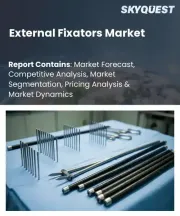
외고정기는 내부 고정이 적합하지 않거나 단계적인 치료가 필요한 경우, 골절의 안정화, 변형 교정, 하지 길이 불일치 관리 및 복잡한 재건 수술을 보조하기 위해 사용되는 매우 중요한 정형외과 외상용 의료기기입니다. 그 임상적 중요성은 도로 교통사고, 낙상, 스포츠 외상, 전투 관련 외상, 당뇨병에 따른 하지 합병증, 그리고 연부 조직에 대한 접근이 필요하고 신속한 안정화가 요구되는 복잡한 개방 골절 등, 전 세계적으로 보고된 질병 부담에 의해 뒷받침되고 있습니다. 현대적인 외고정 시스템에는 단측형, 환형, 하이브리드형, 소아용 및 컴퓨터 지원형 프레임이 포함되어 있으며, 그 채택은 외과의사의 선호도, 해부학적 복잡성, 감염 위험, 수술실 효율성, X선 평가 및 수술 후 재활 요구에 따라 결정됩니다. 이 시스템의 사용은 외상 대응 체계, 정형외과 수술 능력, 응급 대응 체계, 외래 외상 치료는 물론, 프레임 구축, 변형 교정 계획 및 핀 삽입 부위 관리에 대해 훈련을 받은 숙련된 외과의사의 확보와 밀접한 관련이 있습니다. 병원, 외상 센터, 전문 정형외과 클리닉을 막론하고, 외고정기는 손상 통제 정형외과, 감염 위험이 높은 사례, 단계적 재건, 고에너지 골절 관리에서 다용도로 활용되는 동시에, 상처 부위에 대한 접근 및 신경혈관 모니터링을 가능하게 하므로 여전히 필수적인 존재입니다.
외고정기의 전망을 재구성하는 혁신적인 변화
외고정기 분야는 기존의 기계적 안정화에서 벗어나, 환자 개개인에 더 맞춤화된 디지털 기술을 활용한 저침습적 정형외과적 치료 경로로 전환되고 있습니다. 티타늄, 탄소섬유, X선 투과성 소재, 모듈식 클램프, 그리고 개선된 핀 코팅을 통해 프레임의 강도, 영상 진단과의 호환성, 경량화, 그리고 감염 예방이 향상되고 있습니다. 병원에서는 수술 준비 시간을 단축하고, 재고 관리의 복잡성을 줄이며, 응급, 외상, 소아, 재건 각 분야에서 재현성이 높은 고정술을 가능하게 하는 시스템을 점점 더 우선시하고 있습니다. 임상 현장에서도 다발성 외상에 대한 단계적 프로토콜로의 전환이 진행되고 있으며, 일시적인 외부 고정으로 확정적인 복원 수술 전의 소생 처치를 지원하고, 손상된 연부 조직에 가해지는 부담을 줄이고 있습니다. 원형 프레임과 헥사포드 프레임은 그 정밀도, 조정성, 그리고 단계적 교정을 가능하게 하는 능력 덕분에 변형 교정 및 사지 재건 분야에서 그 중요성이 커지고 있습니다. 동시에 외래 경과 관찰, 원격 환자 모니터링, 재활 중심의 치료가 제품 설계에 영향을 미치고 있어, 환자의 편안함, 경량화, 조정 기구의 단순화, 그리고 핀 삽입 부위의 관리 표준화가 점점 더 중요시되고 있습니다. 의료기기의 안전성, 무균성, 생체 적합성, 추적성 및 시판 후 조사에 관한 규제 요건으로 인해 제조업체와 의료 제공업체는 증거 창출, 외과의사 교육 및 임상 연수 프로그램 강화를 더욱 시급히 추진해야 하는 상황에 놓여 있습니다.
인공지능(AI)이 외고정기에 미치는 누적 영향
인공지능(AI)은 수술 전 계획, 골절 분류 지원, 영상 기반 변형 분석, 수술 시뮬레이션 및 맞춤형 교정 일정을 통해 외부 고정 분야에 영향을 미치기 시작했습니다. AI를 활용한 영상 진단 워크플로는 임상의가 X선 사진과 CT 스캔을 종합적으로 검토하여 정렬, 골 결손, 관절 방향, 골유합 조직 형성 및 치유 진행 상황을 보다 일관성 있게 평가하는 데 도움이 됩니다. 복잡한 사지 재건에서는 알고리즘을 통한 계획 지원이 지지대 조정 일정 및 공간적 교정 모델링을 보조하여 수작업 계산의 부담을 줄이는 동시에 치료의 일관성을 향상시킬 수 있습니다. 또한 AI는 임플란트 재고 최적화, 외상 사례의 경향 파악, 그리고 지연 유합, 핀 삽입 부위의 감염, 프레임 관리 미준수, 혹은 장기적인 재활의 필요성 등 합병증 위험이 높은 환자를 식별함으로써 병원 운영을 지원합니다. 그러나 이를 도입하기 위해서는 임상적 타당성 검증, 알고리즘의 투명성, 기존 영상 진단 시스템과의 통합, 외과의사의 수용, 데이터 개인정보 보호, 그리고 의료 시스템 전반에 걸친 공정한 접근이 필수적입니다. 따라서 인공지능이 가져오는 종합적인 영향은 정형외과 전문 지식을 대체하는 것이 아니라, 의사 결정, 워크플로우 효율화, 합병증 모니터링, 그리고 환자별로 최적화된 외부 고정 관리의 강화에 있습니다.
아시아태평양, 유럽, 북미, 라틴아메리카, 아프리카, 중동의 주요 지역별 인사이트
아시아태평양에서는 외고정기의 활용이 외상 사례 수 증가, 급속한 도시화, 도로 교통사고, 주요 경제권 내 정형외과 인프라 확충에 힘입어 확대되고 있으며, 중국, 인도, 일본, 한국, 호주에서는 외상 치료 능력, 재건 정형외과, 전문 외과 의사에 대한 접근성 측면에서 각각 다른 경향이 나타납니다. 유럽에서는 성숙한 외상 의료 네트워크, 엄격한 의료기기 규제, 그리고 고도의 재건외과 전문 지식이 강점으로 작용하고 있으며, 임상 사용 현황은 고령화, 스포츠 부상, 복잡한 변형 교정 수술, 그리고 확립된 병원 조달 시스템에 의해 형성되고 있습니다. 북미에서는 선진적인 외상 치료 시스템, 전문 정형외과 센터, 그리고 근거 기반의 손상 통제 프로토콜이 널리 채택되어 있으며, 고에너지 골절, 개방성 외상, 골반 고정, 소아 외상, 사지 재건 등 폭넓은 분야에서 사용되고 있습니다. 라틴아메리카에서는 교통사고, 직업성 외상, 그리고 전문 정형외과 의료에 대한 접근성 격차로 인한 지속적인 임상적 수요가 존재하며, 공공 및 민간 병원 모두에게 비용 대비 효과가 높고 내구성이 뛰어나며 조립이 용이한 고정 시스템이 중요해지고 있습니다. 아프리카에서는 많은 지역에서 외상으로 인한 높은 부담과 자원 제약에 직면해 있으며, 개방성 골절, 감염 위험이 높은 외상, 진료 지연, 단계적 치료 및 비용 대비 효과가 임상적 의사결정의 핵심이 되는 환경에서 외고정기가 특히 유용한 것으로 평가됩니다. 중동에서는 3차 병원, 외상 센터, 응급 의료 및 전문 정형외과 서비스에 대한 투자가 영향을 미치고 있으며, 특히 의료 인프라 확충이 모듈식, X선 투과성 및 첨단 고정 기술의 도입을 촉진하고 있는 지역에서 이러한 경향이 두드러집니다.
NATO, G7, BRICS, 유럽연합(EU), ASEAN, GCC를 아우르는 주요 그룹 분석
나토(NATO) 회원국은 군사 의료, 비상사태 대비, 재난 대응에서 매우 중요한 위치를 차지하고 있으며, 전투로 인한 부상자 치료, 사지의 신속한 고정, 손상 통제 정형외과, 이송 경로, 단계적 재건 과정에서 외고정기가 필수적입니다. G7 국가에서는 일반적으로 고품질 정형외과 의료, 첨단 영상 진단 기술의 통합, 외과 연수, 규제 준수 및 시판 후 증거가 중시되며, 복잡한 외상 및 재건 수술에서 정밀성을 중시한 프레임, 원형 시스템 및 디지털 계획 도구의 도입이 촉진되고 있습니다. BRICS 국가들은 방대한 환자 수, 막대한 외상 부담, 확대되는 병원 수용 능력, 그리고 지속적으로 성장하는 국내 정형외과 의료기기 제조 능력을 모두 갖추고 있어, 첨단 외고정기 플랫폼과 비용 대비 효과가 높은 플랫폼 모두가 임상적으로 중요한 역할을 하는 다양한 환경을 형성하고 있습니다. 유럽연합(EU)은 조화로운 의료기기 규제, 견고한 병원 조달 절차, 그리고 안전성, 추적성 및 치료 결과에 대한 증거를 임상적으로 중시하는 특징을 가지고 있어, 외상, 변형 교정 및 사지 재건 분야에서 외고정기의 표준화된 사용이 촉진되고 있습니다. 아세안(ASEAN) 국가에서는 외상 의료 서비스의 확대, 자동차 보급, 의료 관광, 정형외과 연수 프로그램의 확충으로 인해 공공 및 민간 의료 시스템을 불문하고 신뢰성 높은 골절 고정 도구에 대한 수요가 증가하고 있으며, 외고정기의 중요성이 점점 더 커지고 있습니다. GCC 국가에서는 의료의 현대화, 외상 전문 병동 설치, 응급 의료에 대한 투자, 그리고 첨단 수술 기술의 도입으로 인해, 특히 중증 환자를 수용하는 병원이나 3차 정형외과 센터에서 모듈식 및 X선 투과성 고정 시스템의 활용이 촉진되고 있습니다.
주요 외고정기 시장의 국가별 분석
중국과 인도는 방대한 인구, 병원 수용 능력 확대, 도로 교통사고로 인한 부상, 산업 재해, 그리고 정형외과 수술에 대한 접근성 확대에 힘입어 외고정기의 주요 수요 거점이 되고 있습니다. 한편, 일본에서는 고령화, 높은 임상 수준, 그리고 체계화된 병원 시스템이 골절 관리, 변형 교정 및 재건 치료에서 외고정기의 사용에 영향을 미치고 있습니다. 미국에서는 확립된 외상 네트워크, 높은 수준의 외과 전문성, 그리고 개방성 골절, 골반 고정, 사지 재건, 소아 정형외과 치료에 걸친 광범위한 적용을 통해 외고정기의 활용이 활발히 이루어지고 있습니다. 반면 캐나다에서는 국민건강보험에 대한 접근성, 지역별 외상 대응 협력, 그리고 근거 기반 정형외과 프로토콜이 중시되고 있습니다. 독일, 영국, 프랑스, 이탈리아, 스페인은 성숙한 정형외과 시스템과 체계화된 외상 치료 경로의 혜택을 받고 있으며, 독일과 프랑스는 고도의 외과적 인프라와 재건 수술에 대한 전문 지식이 특징이고, 영국은 지침에 기반한 외상 관리를 중시하며, 이탈리아와 스페인은 외상, 스포츠 부상, 복잡한 골절 치료의 전 영역에서 외고정기의 사용을 지원하고 있습니다. 호주에서는 첨단 외상 시스템과 지역 및 외딴 지역의 접근성 문제가 공존하고 있어, 대도시권에서 지방에 이르기까지 의료 경로 전반에 걸쳐 신뢰할 수 있는 고정술이 중요해지고 있습니다. 한편, 한국에서는 기술적으로 선진적인 의료 환경이 정밀한 정형외과 솔루션, 영상 진단을 활용한 치료 계획, 그리고 전문적인 외상 치료의 도입을 뒷받침하고 있습니다. 러시아의 광활한 영토와 외상 치료에 대한 수요는 중앙 병원에서 지역 병원에 이르기까지 내구성이 뛰어난 고정 시스템의 중요성을 입증하고 있습니다. 브라질과 멕시코는 외상 관련 수요가 매우 높으며, 신속한 안정화, 단계적 치료, 그리고 비용 효율성이 필수적인 공립 병원 및 응급 현장에서 외고정기는 실용적인 도구로 기능하고 있습니다.
외고정기 업계 리더를 위한 실천적 제안
업계 리더 여러분은 조립 용이성 향상, 수술 시간 단축, X선 영상상 가시성 향상, 그리고 핀 설계 개선, 코팅, 멸균 포장, 표준화된 치료 프로토콜을 통해 감염 위험 감소를 지원하는 임상적으로 검증된 외부 고정 시스템을 우선적으로 고려해야 합니다. 제품 전략 측면에서는 모듈식 플랫폼, 확장 가능한 기구 세트, 상황에 따른 재사용 및 일회용 옵션, 그리고 외과의사의 경험 수준에 맞춘 교육 프로그램을 제공함으로써, 고도의 3차 의료 수요와 자원이 제한된 외상 치료 환경 모두에 대응해야 합니다. 정형외과학회, 외상 센터, 재활 팀 및 학술 기관과의 협력을 통해 기능적 결과, 합병증 감소, 프레임의 내약성, 핀 삽입 부위 관리 및 재활 효율성에 관한 근거 창출을 강화할 수 있습니다. 또한 업계 리더는 병원의 영상 진단 시스템 및 전자의무기록 시스템과의 상호 운용성을 확보하는 동시에, 디지털 계획 도구, AI를 활용한 변형 분석, 환자 교육 자료, 원격 추적 관리 기능에 투자해야 합니다. 외고정기는 외상, 대량 사상자, 재해 등의 상황에서 긴급하게 필요한 경우가 많기 때문에 공급망의 회복탄력성이 필수적입니다. 따라서 지역별 재고 계획, 멸균 효율, 그리고 긴급 조달 체계의 구축은 전략적 우선순위가 됩니다. 마지막으로, 시장 접근 팀은 제품의 기능적 차별화에만 의존하지 말고, 끊임없이 변화하는 의료기기 규제, 가치 기반 조달 기준, 임상의의 교육 요건, 그리고 입증 가능한 임상적 유용성에 대한 병원 측 수요에 대응해야 합니다.
외고정기 분석을 위한 조사 기법
외고정기 시장 상황을 평가하기 위한 조사 기법으로는 검증된 2차 조사, 임상 문헌 검토, 규제 분석, 그리고 정형외과 전문의, 외상 전문의, 병원 조달 팀, 재활 전문가, 의료기기 공급망 전문가로부터 얻은 체계적인 1차 정보를 결합해야 합니다. 2차 정보원으로는 동료 심사를 거친 정형외과 학술지, 외상 등록부 간행물, 공중보건 상해 데이터베이스, 규제 지침, 의료기기 규격, 병원의 치료 프로토콜, 정부 의료 보고서 및 공인된 임상 실무 지침을 포함해야 합니다. 1차 검증에서는 기기 선정 기준, 시술 이용 사례, 외과 의사의 교육 요구 사항, 핀 삽입 부위의 감염 관리 관행, 조달상의 제약, 응급 대응 체계, 그리고 계획 및 사후 관리에서 디지털 도구의 역할을 평가해야 합니다. 분석적 삼각 측량에서는 시장 규모, 시장 점유율 또는 예측을 사용하지 않고, 임상적 증거, 기술 도입 패턴, 보험 급여 동향, 규제적 기대치 및 지역 의료 인프라를 비교해야 합니다. 또한, 이 조사 기법에서는 제품 유형, 임상적 적용, 최종 사용자, 소재 혁신, 수술 환경 및 지역 의료 환경별로 외고정기를 평가하고, 결론이 투명하며 데이터에 뒷받침되고 재현 가능한 연구 기법에 기반을 두도록 보장해야 합니다.
외고정기의 미래에 관한 결론
외고정기는 신속한 안정화, 연부 조직 접근성, 조정 가능성, 그리고 다양한 의료 환경에서의 임상적 범용성을 제공하기 때문에 정형외과 외상, 사지 재건, 변형 교정 및 단계적 골절 치료에서 여전히 필수적인 존재입니다. 이 분야의 동향은 외상 부담, 고령화, 외과 수술의 전문화, 재료 혁신, 디지털 계획, 인공지능, 응급 대응, 그리고 안전성과 치료 결과에 대한 증거에 대한 더욱 엄격한 기대에 의해 형성되고 있습니다. 지역 및 국가 차원의 동향을 살펴보면, 선진 의료 시스템에서는 정밀도, 워크플로우 효율성, 영상 진단과의 호환성, 통합적 계획이 우선시되는 반면, 자원이 제한된 환경에서는 실용적이고 내구성이 뛰어나며 사용하기 쉬운 외상 치료를 위해 여전히 외부 고정법에 의존하고 있습니다. 업계의 성공은 혁신성과 합리적인 가격의 균형을 맞추고, 외과 의사의 교육을 강화하며, 수술 후 치료 순응도를 지원하고, 공급의 지속성을 확보하며, 측정 가능한 임상적 가치를 입증할 수 있는지에 달려 있습니다. 의료 시스템이 외상 및 재건 의료 서비스의 현대화를 추진하는 가운데, 특히 적응성이 높고, 증거에 기반하며, 디지털 기술을 활용한 솔루션이 실제 임상적 요구와 부합할 경우, 외고정기는 정형외과 의료의 핵심을 계속 차지할 것입니다.
자주 묻는 질문
목차
제1장 서문
제2장 조사 방법
제3장 주요 요약
제4장 시장 개요
제5장 시장 인사이트
제6장 AI의 누적 영향, 2026년
제7장 외고정기 시장 : 고정기 유형별
제8장 외고정기 시장 : 소재별
제9장 외고정기 시장 : 휴대성별
제10장 외고정기 시장 : 고정 방식별
제11장 외고정기 시장 : 환자 유형별
제12장 외고정기 시장 : 용도별
제13장 외고정기 시장 : 최종 사용자별
제14장 외고정기 시장 : 유통 채널별
제15장 외고정기 시장 : 지역별
제16장 외고정기 시장 : 그룹별
제17장 외고정기 시장 : 국가별
제18장 경쟁 구도
제19장 기업 개요
JHSThe External Fixators Market is projected to grow by USD 2.97 billion at a CAGR of 6.48% by 2032.
| KEY MARKET STATISTICS | |
|---|---|
| Base Year [2025] | USD 1.91 billion |
| Estimated Year [2026] | USD 2.03 billion |
| Forecast Year [2032] | USD 2.97 billion |
| CAGR (%) | 6.48% |
External fixators are critical orthopedic trauma devices used to stabilize fractures, correct deformities, manage limb length discrepancies, and support complex reconstructive procedures when internal fixation is unsuitable or staged care is required. Their clinical relevance is reinforced by the documented global burden of road traffic injuries, falls, sports trauma, combat-related injuries, diabetes-associated limb complications, and complex open fractures requiring rapid stabilization with soft-tissue access. Modern external fixation systems include unilateral, circular, hybrid, pediatric, and computer-assisted frames, with adoption shaped by surgeon preference, anatomical complexity, infection risk, operating room efficiency, radiographic assessment, and post-operative rehabilitation needs. Use is strongly linked to trauma system readiness, orthopedic surgical capacity, emergency preparedness, ambulatory trauma care, and the availability of skilled surgeons trained in frame construction, deformity correction planning, and pin-site management. Across hospitals, trauma centers, and specialty orthopedic clinics, external fixators remain essential because they offer versatility in damage-control orthopedics, infection-sensitive cases, staged reconstruction, and high-energy fracture management while enabling access to wounds and neurovascular monitoring.
Transformative Shifts Reshaping the External Fixators Landscape
The external fixators landscape is shifting from conventional mechanical stabilization toward more patient-specific, digitally supported, and minimally invasive orthopedic care pathways. Titanium, carbon fiber, radiolucent materials, modular clamps, and improved pin coatings are enhancing frame strength, imaging compatibility, weight reduction, and infection prevention. Hospitals are increasingly prioritizing systems that shorten surgical setup time, reduce inventory complexity, and support reproducible fixation across emergency, trauma, pediatric, and reconstructive applications. Clinical practice is also moving toward staged protocols in polytrauma, where temporary external fixation supports resuscitation before definitive repair and reduces disruption to injured soft tissues. Circular and hexapod frames are gaining relevance in deformity correction and limb reconstruction due to their precision, adjustability, and ability to support gradual correction. At the same time, outpatient follow-up, remote patient monitoring, and rehabilitation-centered care are influencing product design, with growing emphasis on patient comfort, lighter constructs, simplified adjustment mechanisms, and standardized pin-site care. Regulatory expectations around device safety, sterility, biocompatibility, traceability, and post-market surveillance are further pushing manufacturers and care providers to strengthen evidence generation, surgeon education, and clinical training programs.
Cumulative Impact of Artificial Intelligence on External Fixation
Artificial intelligence is beginning to influence external fixation through preoperative planning, fracture classification support, image-based deformity analysis, surgical simulation, and personalized correction scheduling. AI-enabled imaging workflows can help clinicians evaluate alignment, bone defects, joint orientation, callus formation, and healing progression more consistently across radiographs and CT scans. In complex limb reconstruction, algorithm-supported planning can assist with strut adjustment schedules and spatial correction modeling, reducing manual calculation burden and improving treatment consistency. AI also supports hospital operations by optimizing implant inventory, identifying trauma caseload patterns, and flagging patients at higher risk of complications such as delayed union, pin-site infection, nonadherence to frame care, or extended rehabilitation needs. However, adoption depends on clinical validation, transparent algorithms, integration with existing imaging systems, surgeon acceptance, data privacy safeguards, and equitable access across healthcare systems. The cumulative impact of artificial intelligence is therefore not the replacement of orthopedic expertise, but the augmentation of decision-making, workflow efficiency, complication surveillance, and patient-specific external fixation management.
Key Regional Insights Across Asia-Pacific, Europe, North America, Latin America, Africa, and the Middle East
In Asia-Pacific, external fixator utilization is supported by high trauma volumes, rapid urbanization, road traffic injuries, and expanding orthopedic infrastructure across major economies, with China, India, Japan, South Korea, and Australia showing distinct patterns in trauma care capacity, reconstructive orthopedics, and access to specialist surgeons. Europe benefits from mature trauma networks, stringent medical device regulation, and strong reconstructive surgery expertise, with clinical use shaped by aging populations, sports injuries, complex deformity correction practices, and established hospital procurement systems. North America demonstrates strong adoption of advanced trauma systems, specialist orthopedic centers, and evidence-based damage-control protocols, with broad use across high-energy fractures, open injuries, pelvic stabilization, pediatric trauma, and limb reconstruction. Latin America presents sustained clinical need driven by road injuries, occupational trauma, and uneven access to specialized orthopedic care, making cost-efficient, durable, and easy-to-assemble fixation systems important for public and private hospitals. Africa faces a high burden of traumatic injuries and resource constraints in many settings, making external fixators particularly valuable for open fractures, infection-prone injuries, delayed presentations, and environments where staged care and affordability are central to clinical decision-making. The Middle East is influenced by investments in tertiary hospitals, trauma centers, emergency medicine, and specialist orthopedic services, particularly where medical infrastructure expansion supports adoption of modular, radiolucent, and advanced fixation technologies.
Key Group Insights Covering NATO, G7, BRICS, European Union, ASEAN, and GCC
NATO member countries have strong relevance for military medicine, emergency preparedness, and disaster response, where external fixators are essential in combat casualty care, rapid limb stabilization, damage-control orthopedics, evacuation pathways, and staged reconstruction. G7 countries typically emphasize high-quality orthopedic care, advanced imaging integration, surgical training, regulatory compliance, and post-market evidence, supporting adoption of precision-oriented frames, circular systems, and digital planning tools in complex trauma and reconstruction. BRICS economies combine large patient populations, substantial trauma burden, expanding hospital capacity, and growing domestic orthopedic manufacturing capability, creating a diverse environment where both advanced and cost-effective external fixator platforms are clinically important. The European Union is shaped by harmonized medical device regulations, robust hospital procurement processes, and strong clinical emphasis on safety, traceability, and outcomes evidence, encouraging standardized use of external fixation in trauma, deformity correction, and limb reconstruction. ASEAN countries are seeing rising relevance for external fixators as expanding trauma services, motorization, medical tourism, and orthopedic training programs increase demand for reliable fracture stabilization tools across public and private healthcare systems. In the GCC, healthcare modernization, specialist trauma units, emergency care investment, and advanced surgical technology adoption support greater use of modular and radiolucent fixation systems, particularly in high-acuity hospitals and tertiary orthopedic centers.
Key Country Insights Across Major External Fixator Markets
China and India are major external fixator demand centers due to large populations, expanding hospital capacity, road traffic injuries, industrial trauma, and increasing access to orthopedic procedures, while Japan's aging population, high clinical standards, and structured hospital systems influence use in fracture management, deformity correction, and reconstructive care. The United States shows strong external fixator utilization through established trauma networks, high surgical specialization, and broad application in open fractures, pelvic stabilization, limb reconstruction, and pediatric orthopedic care, while Canada emphasizes universal healthcare access, regional trauma coordination, and evidence-based orthopedic protocols. Germany, the United Kingdom, France, Italy, and Spain benefit from mature orthopedic systems and structured trauma pathways, with Germany and France associated with advanced surgical infrastructure and reconstructive expertise, the United Kingdom emphasizing guideline-driven trauma management, and Italy and Spain supporting use across trauma, sports injury, and complex fracture care. Australia combines advanced trauma systems with regional and remote access challenges, making reliable fixation important across metropolitan and rural care pathways, while South Korea's technologically advanced healthcare environment supports adoption of precision orthopedic solutions, imaging-enabled planning, and specialist trauma care. Russia's large geography and trauma care requirements support the relevance of durable fixation systems across centralized and regional hospitals. Brazil and Mexico face significant trauma-related demand, with external fixators serving as practical tools in public hospitals and emergency settings where rapid stabilization, staged care, and cost efficiency are crucial.
Actionable Recommendations for External Fixator Industry Leaders
Industry leaders should prioritize clinically validated external fixation systems that improve ease of assembly, reduce operative time, enhance radiographic visibility, and support infection risk mitigation through improved pin design, coatings, sterile packaging, and standardized care protocols. Product strategies should address both advanced tertiary-care needs and resource-sensitive trauma environments by offering modular platforms, scalable instrument sets, reusable and single-use options where appropriate, and training programs tailored to surgeon experience levels. Collaboration with orthopedic societies, trauma centers, rehabilitation teams, and academic institutions can strengthen evidence generation around functional outcomes, complication reduction, frame tolerance, pin-site management, and rehabilitation efficiency. Leaders should also invest in digital planning tools, AI-supported deformity analysis, patient education resources, and remote follow-up capabilities while ensuring interoperability with hospital imaging and electronic health record systems. Supply chain resilience is essential because external fixators are often required urgently in trauma, mass casualty, and disaster settings; therefore, regional inventory planning, sterilization efficiency, and emergency procurement readiness are strategic priorities. Finally, market access teams should align with evolving medical device regulations, value-based procurement criteria, clinician training requirements, and hospital demand for demonstrable clinical utility without relying solely on product feature differentiation.
Research Methodology for External Fixators Analysis
The research methodology for evaluating the external fixators landscape should combine verified secondary research, clinical literature review, regulatory analysis, and structured primary insights from orthopedic surgeons, trauma specialists, hospital procurement teams, rehabilitation professionals, and medical device supply chain experts. Secondary sources should include peer-reviewed orthopedic journals, trauma registry publications, public health injury databases, regulatory guidance, medical device standards, hospital treatment protocols, government healthcare reports, and recognized clinical practice guidelines. Primary validation should assess device selection criteria, procedural use cases, surgeon training needs, pin-site infection management practices, procurement constraints, emergency readiness, and the role of digital tools in planning and follow-up. Analytical triangulation should compare clinical evidence, technology adoption patterns, reimbursement dynamics, regulatory expectations, and regional healthcare infrastructure without using market sizing, market share, or forecasting. The methodology should also evaluate external fixation by product type, clinical application, end user, material innovation, surgical setting, and regional care environment, ensuring that conclusions are grounded in transparent, data-backed, and reproducible research practices.
Conclusion on the Future of External Fixators
External fixators remain indispensable in orthopedic trauma, limb reconstruction, deformity correction, and staged fracture care because they provide rapid stabilization, soft-tissue access, adjustability, and clinical versatility across diverse healthcare environments. The landscape is being shaped by trauma burden, aging populations, surgical specialization, material innovation, digital planning, artificial intelligence, emergency preparedness, and stricter expectations for safety and outcomes evidence. Regional and country-level dynamics show that advanced healthcare systems are prioritizing precision, workflow efficiency, imaging compatibility, and integrated planning, while resource-constrained settings continue to rely on external fixation for practical, durable, and accessible trauma care. Industry success will depend on balancing innovation with affordability, strengthening surgeon training, supporting post-operative adherence, ensuring supply continuity, and demonstrating measurable clinical value. As healthcare systems continue to modernize trauma and reconstructive services, external fixators will remain a core component of orthopedic care, particularly when adaptable, evidence-supported, and digitally enabled solutions align with real-world clinical needs.
Table of Contents
1. Preface
- 1.1. Objectives of the Study
- 1.2. Market Definition
- 1.3. Market Segmentation & Coverage
- 1.4. Years Considered for the Study
- 1.5. Currency Considered for the Study
- 1.6. Language Considered for the Study
- 1.7. Key Stakeholders
2. Research Methodology
- 2.1. Introduction
- 2.2. Research Design
- 2.2.1. Primary Research
- 2.2.2. Secondary Research
- 2.3. Research Framework
- 2.3.1. Qualitative Analysis
- 2.3.2. Quantitative Analysis
- 2.4. Market Size Estimation
- 2.4.1. Top-Down Approach
- 2.4.2. Bottom-Up Approach
- 2.5. Data Triangulation
- 2.6. Research Outcomes
- 2.7. Research Assumptions
- 2.8. Research Limitations
3. Executive Summary
- 3.1. Introduction
- 3.2. CXO Perspective
- 3.3. Market Size & Growth Trends
- 3.4. New Revenue Opportunities
- 3.5. Next-Generation Business Models
- 3.6. Industry Roadmap
4. Market Overview
- 4.1. Introduction
- 4.2. Industry Ecosystem & Value Chain Analysis
- 4.2.1. Supply-Side Analysis
- 4.2.2. Demand-Side Analysis
- 4.2.3. Stakeholder Analysis
- 4.3. Market Dynamics
- 4.3.1. Key Drivers
- 4.3.2. Key Restraints
- 4.3.3. Key Opportunities
- 4.3.4. Key Challenges
- 4.4. Porter's Five Forces Analysis
- 4.5. PESTLE Analysis
- 4.6. Market Outlook
- 4.6.1. Near-Term Market Outlook (0-2 Years)
- 4.6.2. Medium-Term Market Outlook (3-5 Years)
- 4.6.3. Long-Term Market Outlook (5-10 Years)
- 4.7. Go-to-Market Strategy
5. Market Insights
- 5.1. Consumer Insights & End-User Perspective
- 5.2. Consumer Experience Benchmarking
- 5.3. Opportunity Mapping
- 5.4. Distribution Channel Analysis
- 5.5. Pricing Trend Analysis
- 5.6. Regulatory Compliance & Standards Framework
- 5.7. ESG & Sustainability Analysis
- 5.8. Disruption & Risk Scenarios
- 5.9. Return on Investment & Cost-Benefit Analysis
6. Cumulative Impact of Artificial Intelligence 2026
7. External Fixators Market, by Fixator Type
- 7.1. Introduction
- 7.2. Circular Fixator
- 7.2.1. Hexapod Frame
- 7.2.2. Ilizarov Frame
- 7.3. Hybrid Fixator
- 7.3.1. Composite System
- 7.3.2. Mixed System
- 7.4. Monolateral Fixator
- 7.4.1. Biplanar
- 7.4.2. Uniplanar
8. External Fixators Market, by Material
- 8.1. Introduction
- 8.2. Carbon Fiber
- 8.3. Stainless Steel
- 8.4. Titanium
9. External Fixators Market, by Portability
- 9.1. Introduction
- 9.2. Portable
- 9.3. Stationary
10. External Fixators Market, by Fixation Type
- 10.1. Introduction
- 10.2. Pin-based Fixators
- 10.3. Wire-based Fixators
- 10.4. Hybrid Fixation
11. External Fixators Market, by Patient Type
- 11.1. Introduction
- 11.2. Adult
- 11.3. Pediatric
- 11.4. Geriatric
12. External Fixators Market, by Application
- 12.1. Introduction
- 12.2. Deformity Correction
- 12.3. Limb Lengthening
- 12.4. Trauma
- 12.4.1. Closed Fracture
- 12.4.2. Open Fracture
- 12.5. Tumor Management
13. External Fixators Market, by End User
- 13.1. Introduction
- 13.2. Ambulatory Surgical Centers
- 13.3. Hospitals
- 13.4. Specialty Centers
14. External Fixators Market, by Distribution Channel
- 14.1. Introduction
- 14.2. Offline
- 14.3. Online
15. External Fixators Market, by Region
- 15.1. Asia-Pacific
- 15.2. Europe
- 15.3. North America
- 15.4. Latin America
- 15.5. Africa
- 15.6. Middle East
16. External Fixators Market, by Group
- 16.1. NATO
- 16.2. G7
- 16.3. BRICS
- 16.4. European Union
- 16.5. ASEAN
- 16.6. GCC
17. External Fixators Market, by Country
- 17.1. China
- 17.2. United States
- 17.3. Japan
- 17.4. India
- 17.5. Germany
- 17.6. United Kingdom
- 17.7. Australia
- 17.8. France
- 17.9. South Korea
- 17.10. Italy
- 17.11. Canada
- 17.12. Russia
- 17.13. Brazil
- 17.14. Mexico
- 17.15. Spain
18. Competitive Landscape
- 18.1. Market Share Analysis, 2025
- 18.2. FPNV Positioning Matrix, 2025
- 18.3. Market Concentration Analysis, 2025
- 18.3.1. Concentration Ratio (CR)
- 18.3.2. Herfindahl Hirschman Index (HHI)
- 18.4. Recent Developments & Impact Analysis, 2025
- 18.5. Product Portfolio Analysis, 2025
- 18.6. Benchmarking Analysis, 2025
19. Company Profiles
- 19.1. Acumed LLC
- 19.2. Advanced Orthopaedic Solutions
- 19.3. Aike Shanghai Medical Equipment Co Ltd
- 19.4. Arthrex Inc
- 19.5. Auxein Medical
- 19.6. B. Braun Melsungen AG
- 19.7. Baumer SA
- 19.8. Citieffe Srl
- 19.9. Double Medical Technology Inc
- 19.10. Enovis Corporation
- 19.11. Fixus BV
- 19.12. Globus Medical Inc
- 19.13. GPC Medical Ltd
- 19.14. Integra LifeSciences Corporation
- 19.15. Johnson & Johnson Services Inc
- 19.16. Medtronic plc
- 19.17. Mikai SpA
- 19.18. Nutek Orthopaedics
- 19.19. Ortho-SUV Ltd
- 19.20. Orthofix Medical Inc
- 19.21. Response Ortho LLC
- 19.22. Smith & Nephew plc
- 19.23. SOFEMED
- 19.24. Stryker Corporation
- 19.25. Tasarimmed Tibbi Mamuller San Tic AS
- 19.26. Tianjin Walkman Biomaterial Co Ltd
- 19.27. WishBone Medical Inc
- 19.28. Zimed Medikal
- 19.29. Zimmer Biomet Holdings Inc