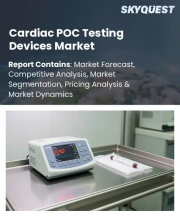
|
시장보고서
상품코드
2095455
심장 POC 검사 장비 시장 예측(2026-2032년)Cardiac POC Testing Devices Market - Global Forecast 2026-2032 |
||||||
 360iResearch
심장 POC 검사 장비 시장은 2032년까지 연평균 복합 성장률(CAGR) 6.69%로 37억 8,000만 달러 규모로 확대될 것으로 예측됩니다.
| 주요 시장 통계 | |
|---|---|
| 기준 연도 : 2025년 | 24억 달러 |
| 추정 연도 : 2026년 | 25억 6,000만 달러 |
| 예측 연도 : 2032년 | 37억 8,000만 달러 |
| CAGR(%) | 6.69% |
심장 POC 검사 장치는 심장 트로포닌, 크레아틴 키나제-MB, 미오글로빈, D-다이머, B형 나트륨 이뇨 펩티드, N-말단 프로 B형 나트륨 이뇨 펩티드, 그리고 응급실, 구급차, 응급 치료 센터, 중환자실, 1차 진료 현장에서 사용되는 기타 지표와 같은 바이오마커를 신속하게 측정할 수 있게 함으로써, 급성 심혈관 질환의 진단 방식을 혁신하고 있습니다. 이러한 기기의 핵심 가치는 급성 관상동맥 증후군, 심부전, 혈전색전증 및 관련 심장 질환이 의심되는 사례에서 증상 발현부터 진단 확정, 트리아지, 치료 개시까지의 시간을 단축하는 데 있습니다. 그 임상적 필요성은 충분히 입증되었습니다. 심혈관 질환은 여전히 전 세계 사망 원인 1위를 차지하고 있으며, 예방 가능한 합병증을 줄이기 위해서는 조기 진단이 필수적이기 때문입니다.
심장 POC 검사 기기의 경영 환경은 임상적 의사 결정의 신속화, 분산형 진단, 그리고 측정 가능한 품질 성과라는 세 가지 우선순위가 교차함으로써 정의됩니다. 고감도 트로포닌 검사는 흉통 진료 흐름에서 중심적인 위치를 차지하게 되었으며, 한편 휴대용 분석기나 연결형 검사 플랫폼은 병원의 디지털 인프라, 응급 의료 서비스, 원격 의료 모델과의 연계를 점점 더 강화하고 있습니다. 그러나 이를 도입하기 위해서는 분석 정확도, 규제 준수, 품질 관리, 조작자 교육, 보험 환급 체계, 사이버 보안, 그리고 전자 건강 기록(EHR)과의 상호 운용성이 필수적입니다. 의료 시스템이 진단을 환자 곁으로 가져오면서, 심장 POC 검사 장치는 워크플로우 효율화, 진단 지연 감소, 그리고 근거 기반 심혈관 의료 지원을 위한 필수적인 도구가 되어가고 있습니다.
심장 POC 검사 분야의 혁신적인 변화
의료 제공이 중앙 집중식 검사실에 대한 의존에서 환자에게 가까운 곳에서의 진단으로 전환됨에 따라, 심장 POC 검사 기기 분야는 혁신적인 변화를 겪고 있습니다. 응급실에서는 심근경색의 ‘양성 판정’ 및 ‘음성 판정’ 프로토콜의 신속화가 우선시되고 있는 반면, 외래 및 지역 의료 현장에서는 조기 이송 및 위험도 분류를 지원하기 위해 신속한 심장 바이오마커 검사가 활용되고 있습니다. 이러한 변화는 과밀 상태에 있는 병원, 지방 의료 시스템, 그리고 첨단 검사 인프라에 대한 접근이 제한된 지역에서 특히 중요한 의미를 지닙니다.
심장 POC 검사에서 인공지능의 누적 영향
인공지능은 의사결정 지원, 자동 판정, 품질 보증, 예측 분석을 통해 심장 POC 검사 기기에 영향을 미치기 시작했습니다. AI를 활용한 알고리즘은 POC 바이오마커 결과를 심전도 소견, 환자 병력, 생체 징후, 연령, 성별, 신장 기능, 동반 질환 및 검증된 위험 점수와 결합함으로써 임상의사를 지원하고, 보다 일관된 분류 판단을 뒷받침할 수 있습니다. 이는 심근경색, 불안정 협심증, 비심인성 흉통, 심부전 악화, 폐색전증 및 기타 질환을 신속하고 정확하게 감별하는 것이 임상적으로 매우 중요한 흉통 평가에서 특히 중요합니다.
심장 POC 검사 기기에 대한 주요 지역별 인사이트
아시아태평양은 심혈관 질환 부담 증가, 병원 인프라 확충, 여러 국가에서의 인구 고령화, 그리고 도시와 농촌을 불문하고 진단 접근성을 개선하려는 정부의 이니셔티브에 힘입어, 심장 POC 검사 기기에 있어 매우 중요한 지역으로 급속히 발전하고 있습니다. 중국, 인도, 일본, 한국, 호주에서는 응급 심장 의료 체계가 강화되고 있는 반면, 많은 동남아시아 국가에서는 의뢰로 인한 지연을 단축하기 위해 분산형 진단 역량에 대한 투자가 진행되고 있습니다. 수요는 막대한 환자 수, 당뇨병 및 고혈압 유병률 증가, 그리고 급성 관상동맥 증후군 및 심부전의 조기 발견에 대한 중요성 인식의 고조에 힘입어 뒷받침되고 있습니다.
NATO, G7, BRICS, EU, ASEAN, GCC 내 주요 그룹 분석
NATO 회원국에는 많은 고소득국의 의료 시스템이 포함되어 있으며, 비상사태 대비, 상호 운용 가능한 의료 인프라, 표준화된 조달, 그리고 탄력적인 공급망이 심장 POC 검사 장비 도입 결정에 영향을 미치고 있습니다. 이들 국가가 의료의 연속성, 위기 대비, 상호 연결된 시스템을 중시하고 있기 때문에 병원, 군 의료 현장, 응급 대응 네트워크, 국경을 넘는 의료 경로에서 신속한 심장 진단의 중요성이 더욱 커지고 있습니다. G7 국가들은 성숙한 의료 시스템, 임상 지침의 철저한 이행, 확립된 보험 급여 제도, 인증받은 검사실의 감독, 그리고 광범위한 응급 의료 인프라를 바탕으로 전반적으로 도입 환경이 잘 갖춰져 있습니다.
심장 POC 검사 기기에 관한 주요 국가의 동향
중국은 병원 투자, 국내 혁신, 그리고 급성기 의료 분야에서 신속 진단에 대한 수요 증가를 통해 심장 진단 역량을 확대되고 있습니다. 한편, 미국은 흉통에 대한 응급의료 이용률이 높고, 심장 트로포닌 검사의 광범위한 활용, 그리고 보다 신속한 트리아지에 대한 강한 수요로 인해 심장 POC 검사 기기 도입에서 주도적인 입지를 차지하고 있습니다. 일본은 고품질 진단, 고령화 사회의 요구, 그리고 선진적인 응급의료 시스템을 중시하는 반면, 인도는 심혈관 질환의 부담이 크고, 농촌 인구가 많으며, 민간 의료의 보급이 진행되고 있어 이용하기 쉬운 심장 POC 검사기에 대한 강한 수요가 나타나고 있습니다.
업계 리더를 위한 실천적 제안
업계 리더는 임상 등급의 성능, 워크플로우 통합, 그리고 근거 기반의 차별화를 우선시해야 합니다. 가장 실행 가능한 전략은 검사실과 동등한 정확도, 추적성, 품질 관리를 유지하면서 응급 의료가 요구하는 신속성을 충족하는 심장 POC 검사 장치를 설계하는 것입니다. 고감도 바이오마커 측정 능력, 카트리지 조작의 간소화, 소량의 검체, 신속한 결과 보고, 견고한 온보드 제어, 그리고 명확한 결과 해석은 병원 및 분산형 의료 현장 모두에서 도입되기 위해 필수적입니다.
조사 방법론
본 요약 보고서는 심장 POC 검사 기기 및 심혈관 진단과 관련된, 검증되고 데이터로 뒷받침되는 정보원에 초점을 맞춘 체계적인 2차 조사 방법론을 사용하여 작성되었습니다. 조사 접근 방식에는 공개된 임상 지침, 규제 관련 문서, 병원 치료 경로에 관한 문헌, 동료 심사를 거친 연구, 공중보건 데이터베이스, 의료기기 안전성 공지, 검사실 품질 기준 및 의료 정책 문서에 대한 검토가 포함됩니다. 특히, 심장 바이오마커, POC 검사 품질 기준, 급성 관상동맥 증후군의 분류, 심부전 진단, 응급 의료 워크플로우, 분산형 의료 제공 및 디지털 헬스 통합에 대해 언급하고 있는 정보원에 중점을 두었습니다.
결론
의료 시스템이 더 신속하고, 접근성이 높으며, 임상적으로 신뢰할 수 있는 진단 경로를 추구하는 가운데, 심장 POC 검사 장비는 현대 심혈관 의료에서 필수적인 요소로 자리 잡고 있습니다. 그 역할은 응급실부터 구급차, 응급 치료 센터, 지방 진료소, 그리고 통합적인 만성 질환 관리 현장으로 확대되고 있습니다. 도입을 촉진하는 가장 큰 요인으로는 전 세계적인 심혈관 질환의 부담, 심근경색 및 심부전의 조기 발견이 갖는 임상적 중요성, 진단 지연 감소에 대한 압박, 그리고 분산형 검사 솔루션에 대한 수요가 꼽힙니다.
자주 묻는 질문
목차
제1장 서문
제2장 조사 방법
제3장 주요 요약
제4장 시장 개요
제5장 시장 인사이트
제6장 AI의 누적 영향, 2026년
제7장 심장 POC 검사 장비 시장 : 제품 유형별
제8장 심장 POC 검사 장비 시장 : 샘플 유형별
제9장 심장 POC 검사 장비 시장 : 기술별
제10장 심장 POC 검사 장비 시장 : 용도별
제11장 심장 POC 검사 장비 시장 : 최종 사용자별
제12장 심장 POC 검사 장비 시장 : 지역별
제13장 심장 POC 검사 장비 시장 : 그룹별
제14장 심장 POC 검사 장비 시장 : 국가별
제15장 경쟁 구도
제16장 기업 개요
JHS 26.08.03The Cardiac POC Testing Devices Market is projected to grow by USD 3.78 billion at a CAGR of 6.69% by 2032.
| KEY MARKET STATISTICS | |
|---|---|
| Base Year [2025] | USD 2.40 billion |
| Estimated Year [2026] | USD 2.56 billion |
| Forecast Year [2032] | USD 3.78 billion |
| CAGR (%) | 6.69% |
Cardiac point-of-care testing (POC testing) devices are reshaping acute cardiovascular diagnostics by enabling rapid measurement of biomarkers such as cardiac troponin, creatine kinase-MB, myoglobin, D-dimer, B-type natriuretic peptide, N-terminal pro-B-type natriuretic peptide, and other indicators used in emergency departments, ambulances, urgent care centers, intensive care units, and primary care settings. Their core value lies in shortening the time between symptom presentation, diagnostic interpretation, triage, and treatment initiation for suspected acute coronary syndrome, heart failure, thromboembolic events, and related cardiac conditions. The clinical need is well established: cardiovascular diseases remain the leading cause of death globally, and early diagnosis is central to reducing avoidable complications.
The executive landscape for cardiac POC testing devices is defined by three converging priorities: faster clinical decision-making, decentralized diagnostics, and measurable quality outcomes. High-sensitivity troponin testing has become central to chest pain pathways, while portable analyzers and connected testing platforms are increasingly aligned with hospital digital infrastructure, emergency medical services, and remote care models. However, adoption depends on analytical accuracy, regulatory compliance, quality control, operator training, reimbursement pathways, cybersecurity, and interoperability with electronic health records. As healthcare systems push diagnostics closer to the patient, cardiac POC testing devices are becoming essential tools for improving workflow efficiency, reducing diagnostic delays, and supporting evidence-based cardiovascular care.
Transformative Shifts in the Cardiac POC Testing Landscape
The cardiac POC testing devices landscape is undergoing transformative change as care delivery shifts from centralized laboratory dependence toward near-patient diagnostics. Emergency departments are prioritizing faster rule-in and rule-out protocols for myocardial infarction, while ambulatory and community-based settings are using rapid cardiac biomarkers to support earlier referrals and risk stratification. This shift is especially relevant in overcrowded hospitals, rural health systems, and regions with limited access to advanced laboratory infrastructure.
Technology transformation is being driven by miniaturized immunoassay platforms, improved biosensor performance, cartridge-based testing, multiplex biomarker panels, microfluidics, and wireless connectivity. Devices are increasingly designed to integrate with hospital information systems, laboratory information systems, middleware, and cloud-based quality management tools. Regulatory expectations are also shaping innovation, with greater emphasis on analytical sensitivity, clinical validation, operator competency, traceability, lot management, and post-market performance monitoring.
Another important shift is the growing role of decentralized care pathways. Paramedic-led testing, urgent care diagnostics, home-based cardiac monitoring support, and primary care triage are expanding the relevance of cardiac POC testing beyond traditional hospital environments. At the same time, healthcare providers are scrutinizing total cost of care, repeat testing rates, turnaround time, patient throughput, and adherence to evidence-based chest pain and heart failure protocols. As a result, future competitiveness will depend less on standalone device speed and more on clinically integrated solutions that combine accuracy, usability, connectivity, and workflow reliability.
Cumulative Impact of Artificial Intelligence on Cardiac POC Testing
Artificial intelligence is beginning to influence cardiac POC testing devices through decision support, automated interpretation, quality assurance, and predictive analytics. AI-enabled algorithms can assist clinicians by combining POC biomarker results with electrocardiogram findings, patient history, vital signs, age, sex, renal function, comorbidities, and validated risk scores to support more consistent triage decisions. This is particularly important in chest pain evaluation, where rapid but accurate differentiation between myocardial infarction, unstable angina, non-cardiac chest pain, heart failure exacerbation, pulmonary embolism, and other conditions is clinically critical.
AI can also strengthen operational performance. Automated quality control monitoring, anomaly detection, lot-to-lot variability analysis, connectivity diagnostics, environmental condition tracking, and operator performance monitoring help reduce preventable errors in decentralized testing environments. In high-volume emergency care settings, AI-enabled workflow tools can prioritize critical results, flag repeat testing intervals, and support compliance with clinical protocols.
The cumulative impact of AI will depend on validation, transparency, cybersecurity, data governance, and clinician trust. Cardiac diagnostics carry high clinical consequences, so AI outputs must be explainable, evidence-based, and aligned with regulatory requirements for software used in medical decision support. The most valuable applications will not replace clinical judgment; they will improve consistency, reduce cognitive burden, and connect cardiac POC testing data with broader cardiovascular risk management pathways.
Key Regional Insights for Cardiac POC Testing Devices
Asia-Pacific is advancing rapidly as a critical region for cardiac POC testing devices due to rising cardiovascular disease burden, expanding hospital infrastructure, aging populations in several countries, and government efforts to improve access to diagnostics across urban and rural settings. China, India, Japan, South Korea, and Australia are strengthening emergency cardiac care pathways, while many Southeast Asian countries are investing in decentralized diagnostic capacity to reduce referral delays. Demand is supported by large patient populations, increasing diabetes and hypertension prevalence, and a growing emphasis on early detection of acute coronary syndrome and heart failure.
Europe is characterized by strict regulatory expectations, established clinical guidelines, and broad use of high-sensitivity cardiac biomarkers in acute care. Germany, France, the United Kingdom, Italy, and Spain emphasize clinical validation, data protection, interoperability, and post-market surveillance within hospital networks. North America remains one of the most mature environments for cardiac POC testing adoption, supported by established emergency medicine protocols, high utilization of cardiac biomarkers, advanced laboratory accreditation systems, and strong integration of diagnostics with electronic health records. The United States and Canada emphasize rapid triage, reduced emergency department congestion, and evidence-based chest pain pathways, making analytical performance, connectivity, and quality oversight key purchasing criteria.
Latin America is seeing increased relevance for cardiac POC testing as healthcare systems address uneven access to centralized laboratories and emergency cardiac care. Brazil and Mexico are important contributors, with growing hospital modernization and public health attention toward noncommunicable diseases. Africa's need is shaped by limited laboratory access in many settings, rising cardiovascular risk factors, and the value of portable, durable, easy-to-use devices suitable for decentralized and resource-constrained environments. The Middle East is investing in advanced emergency care infrastructure, particularly in countries with national healthcare transformation programs, where rapid cardiac biomarker testing aligns with digital health, ambulance services, and hospital modernization priorities.
Key Group Insights Across NATO, G7, BRICS, EU, ASEAN, and GCC
NATO member countries include many high-income healthcare systems where emergency preparedness, interoperable health infrastructure, standardized procurement, and resilient supply chains influence decisions for cardiac POC testing devices. The group's emphasis on healthcare continuity, crisis readiness, and connected systems strengthens the relevance of rapid cardiac diagnostics in hospitals, military medical settings, emergency response networks, and cross-border care pathways. G7 countries generally demonstrate advanced adoption conditions due to mature healthcare systems, strong clinical guideline implementation, established reimbursement mechanisms, accredited laboratory oversight, and extensive emergency care infrastructure.
BRICS countries represent a diverse but strategically significant group, with China, India, Brazil, Russia, and South Africa facing large cardiovascular disease burdens and varying levels of diagnostic decentralization. These countries share a need for scalable, cost-conscious, and reliable cardiac POC testing models that can function across tertiary hospitals, regional clinics, and underserved areas. The European Union provides a highly regulated environment where device performance, clinical evidence, data security, quality management, and post-market surveillance are central to adoption. Alignment with medical device regulatory frameworks, laboratory quality standards, and privacy requirements is essential for access and sustained use.
ASEAN countries are increasingly important for cardiac POC testing devices because they combine rising cardiovascular disease prevalence with diverse healthcare access conditions. Urban hospitals in Singapore, Thailand, Malaysia, Indonesia, Vietnam, and the Philippines are adopting faster diagnostic workflows, while rural, island, and cross-border geographies strengthen the case for portable cardiac testing that can support earlier referral decisions. The GCC region is prioritizing advanced healthcare infrastructure, digital health integration, and emergency care modernization. Countries in the Gulf are addressing high rates of diabetes, obesity, and hypertension, which are major cardiovascular risk factors, making rapid cardiac biomarker testing relevant for both emergency and chronic disease pathways.
Key Country Insights for Cardiac POC Testing Devices
China is expanding cardiac diagnostic capacity through hospital investment, domestic innovation, and rising demand for rapid acute care diagnostics, while the United States is a leading adopter of cardiac POC testing devices due to high emergency care utilization for chest pain, widespread use of cardiac troponin testing, and strong demand for faster triage. Japan emphasizes high-quality diagnostics, aging population needs, and advanced emergency care systems, whereas India presents strong need for accessible cardiac POC testing because of its high cardiovascular disease burden, large rural population, and increasing private healthcare penetration.
Germany has a strong hospital-based diagnostics environment and prioritizes analytical reliability, clinical evidence, and regulatory compliance, while the United Kingdom focuses on emergency care efficiency, chest pain pathway optimization, and integration of diagnostics into national health service delivery. Australia benefits from well-structured clinical governance and the value of POC testing in remote and rural health services. France emphasizes clinical evidence, healthcare quality, connected medical technologies, and strict data protection requirements. South Korea combines advanced hospital infrastructure, digital health adoption, and a strong focus on rapid, high-quality cardiovascular care.
Italy and Spain continue to rely on guideline-driven cardiac biomarker testing within emergency and hospital care, with growing interest in digital connectivity and workflow efficiency. Canada emphasizes standardized care pathways, laboratory quality oversight, and equitable access across geographically dispersed populations. Russia's adoption is influenced by regional healthcare disparities and the need to improve acute cardiovascular diagnostics across large geographies. Brazil is shaped by a large public and private healthcare mix and a significant burden of ischemic heart disease, while Mexico is expanding diagnostic access through hospital modernization and greater attention to cardiovascular risk management.
Actionable Recommendations for Industry Leaders
Industry leaders should prioritize clinical-grade performance, workflow integration, and evidence-based differentiation. The most actionable strategy is to design cardiac POC testing devices that meet emergency care requirements for speed while maintaining laboratory-aligned accuracy, traceability, and quality control. High-sensitivity biomarker capability, simplified cartridge handling, low sample volume, rapid turnaround time, robust onboard controls, and clear result interpretation are essential for adoption in both hospital and decentralized settings.
Manufacturers and healthcare stakeholders should invest in interoperability with electronic health records, laboratory information systems, middleware, and remote quality management platforms. Connected diagnostics can improve result visibility, reduce manual documentation errors, support audit readiness, strengthen clinical governance, and enable standardized oversight across multiple care locations. In parallel, organizations should develop training programs for nurses, paramedics, general practitioners, emergency clinicians, and non-laboratory operators to ensure consistent test performance.
Regulatory strategy should begin early, with clinical validation plans aligned to intended use, setting of care, specimen type, operator profile, and relevant patient populations. Industry leaders should also build resilient supply chains for cartridges, reagents, calibrators, quality controls, and consumables, as cardiac POC testing depends on uninterrupted availability. Finally, partnerships with healthcare systems should focus on measurable outcomes such as reduced time to diagnosis, improved triage accuracy, shorter emergency department length of stay, fewer avoidable transfers, and better adherence to chest pain and heart failure protocols.
Research Methodology
This executive summary is developed using a structured secondary research methodology focused on verified, data-backed sources relevant to cardiac POC testing devices and cardiovascular diagnostics. The research approach includes review of publicly available clinical guidelines, regulatory publications, hospital care pathway literature, peer-reviewed studies, public health databases, device safety communications, laboratory quality standards, and healthcare policy documents. Emphasis is placed on sources that address cardiac biomarkers, point-of-care testing quality standards, acute coronary syndrome triage, heart failure diagnostics, emergency medicine workflows, decentralized healthcare delivery, and digital health integration.
The methodology applies triangulation across clinical, regulatory, technological, and regional evidence to ensure balanced interpretation. Insights are assessed for relevance to device adoption, care setting, testing workflow, analytical performance, operator requirements, connectivity, cybersecurity, quality management, and patient care impact. Regional, group, and country insights are synthesized from observable healthcare infrastructure trends, cardiovascular disease burden, diagnostic access priorities, clinical guideline adoption, and regulatory environments. The analysis intentionally excludes market sizing, revenue estimation, market share calculation, and forecasting to maintain a qualitative, evidence-oriented perspective focused on strategic decision-making.
Conclusion
Cardiac POC testing devices are becoming indispensable in modern cardiovascular care as healthcare systems seek faster, more accessible, and clinically reliable diagnostic pathways. Their role is expanding from emergency departments to ambulances, urgent care centers, rural clinics, and integrated chronic disease management settings. The strongest adoption drivers include the global burden of cardiovascular disease, the clinical importance of early myocardial infarction and heart failure detection, pressure to reduce diagnostic delays, and the need for decentralized testing solutions.
The future direction of the field will be defined by high-sensitivity biomarker performance, AI-supported interpretation, digital connectivity, regulatory compliance, cybersecurity, and quality management across distributed care environments. Regions and countries differ in infrastructure maturity, reimbursement conditions, and clinical workflow readiness, but the underlying need is consistent: rapid cardiac diagnostics that support timely, accurate, and actionable decisions. Industry leaders that combine analytical excellence with usability, interoperability, validated clinical value, and resilient supply chains will be best positioned to support the next generation of cardiac point-of-care testing.
Table of Contents
1. Preface
- 1.1. Objectives of the Study
- 1.2. Market Definition
- 1.3. Market Segmentation & Coverage
- 1.4. Years Considered for the Study
- 1.5. Currency Considered for the Study
- 1.6. Language Considered for the Study
- 1.7. Key Stakeholders
2. Research Methodology
- 2.1. Introduction
- 2.2. Research Design
- 2.2.1. Primary Research
- 2.2.2. Secondary Research
- 2.3. Research Framework
- 2.3.1. Qualitative Analysis
- 2.3.2. Quantitative Analysis
- 2.4. Market Size Estimation
- 2.4.1. Top-Down Approach
- 2.4.2. Bottom-Up Approach
- 2.5. Data Triangulation
- 2.6. Research Outcomes
- 2.7. Research Assumptions
- 2.8. Research Limitations
3. Executive Summary
- 3.1. Introduction
- 3.2. CXO Perspective
- 3.3. Market Size & Growth Trends
- 3.4. New Revenue Opportunities
- 3.5. Next-Generation Business Models
- 3.6. Industry Roadmap
4. Market Overview
- 4.1. Introduction
- 4.2. Industry Ecosystem & Value Chain Analysis
- 4.2.1. Supply-Side Analysis
- 4.2.2. Demand-Side Analysis
- 4.2.3. Stakeholder Analysis
- 4.3. Market Dynamics
- 4.3.1. Key Drivers
- 4.3.2. Key Restraints
- 4.3.3. Key Opportunities
- 4.3.4. Key Challenges
- 4.4. Porter's Five Forces Analysis
- 4.5. PESTLE Analysis
- 4.6. Market Outlook
- 4.6.1. Near-Term Market Outlook (0-2 Years)
- 4.6.2. Medium-Term Market Outlook (3-5 Years)
- 4.6.3. Long-Term Market Outlook (5-10 Years)
- 4.7. Go-to-Market Strategy
5. Market Insights
- 5.1. Consumer Insights & End-User Perspective
- 5.2. Consumer Experience Benchmarking
- 5.3. Opportunity Mapping
- 5.4. Distribution Channel Analysis
- 5.5. Pricing Trend Analysis
- 5.6. Regulatory Compliance & Standards Framework
- 5.7. ESG & Sustainability Analysis
- 5.8. Disruption & Risk Scenarios
- 5.9. Return on Investment & Cost-Benefit Analysis
6. Cumulative Impact of Artificial Intelligence 2026
7. Cardiac POC Testing Devices Market, by Product Type
- 7.1. Introduction
- 7.2. BNP
- 7.3. CK-MB
- 7.4. Myoglobin
- 7.5. Troponin
- 7.5.1. Troponin I
- 7.5.2. Troponin T
8. Cardiac POC Testing Devices Market, by Sample Type
- 8.1. Introduction
- 8.2. Plasma
- 8.3. Serum
- 8.4. Whole Blood
9. Cardiac POC Testing Devices Market, by Technology
- 9.1. Introduction
- 9.2. Colorimetric
- 9.3. Electrochemical
- 9.4. Immunoassay
- 9.4.1. Fluorescence
- 9.4.2. Lateral Flow
10. Cardiac POC Testing Devices Market, by Application
- 10.1. Introduction
- 10.2. Acute Coronary Syndrome Diagnosis
- 10.3. Myocardial Infarction Detection
- 10.4. Heart Failure Monitoring
- 10.5. Cardiac Risk Assessment
11. Cardiac POC Testing Devices Market, by End User
- 11.1. Introduction
- 11.2. Clinics
- 11.3. Diagnostic Laboratories
- 11.4. Hospital
- 11.4.1. Cardiac Care Unit
- 11.4.2. Emergency Department
12. Cardiac POC Testing Devices Market, by Region
- 12.1. Asia-Pacific
- 12.2. Europe
- 12.3. North America
- 12.4. Latin America
- 12.5. Africa
- 12.6. Middle East
13. Cardiac POC Testing Devices Market, by Group
- 13.1. NATO
- 13.2. G7
- 13.3. BRICS
- 13.4. European Union
- 13.5. ASEAN
- 13.6. GCC
14. Cardiac POC Testing Devices Market, by Country
- 14.1. China
- 14.2. United States
- 14.3. Japan
- 14.4. India
- 14.5. Germany
- 14.6. United Kingdom
- 14.7. Australia
- 14.8. France
- 14.9. South Korea
- 14.10. Italy
- 14.11. Canada
- 14.12. Russia
- 14.13. Brazil
- 14.14. Mexico
- 14.15. Spain
15. Competitive Landscape
- 15.1. Market Share Analysis, 2025
- 15.2. FPNV Positioning Matrix, 2025
- 15.3. Market Concentration Analysis, 2025
- 15.3.1. Concentration Ratio (CR)
- 15.3.2. Herfindahl Hirschman Index (HHI)
- 15.4. Recent Developments & Impact Analysis, 2025
- 15.5. Product Portfolio Analysis, 2025
- 15.6. Benchmarking Analysis, 2025
16. Company Profiles
- 16.1. Abbott Laboratories
- 16.2. Acon Laboratories
- 16.3. Alfa Scientific Designs
- 16.4. Beckman Coulter
- 16.5. Becton Dickinson and Company
- 16.6. Bio-Rad Laboratories, Inc
- 16.7. Boditech Med Inc
- 16.8. Creative Diagnostics
- 16.9. Danaher Corporation
- 16.10. EKF Diagnostics Holdings
- 16.11. F. Hoffmann-La Roche Ltd
- 16.12. HemoCue AB
- 16.13. Krsnaa Diagnostics Ltd
- 16.14. Life Diagnostics, Inc
- 16.15. Lumina Diagnostics
- 16.16. Luminex Corporation
- 16.17. Lupin Diagnostics
- 16.18. Masimo Corporation
- 16.19. Medtronic
- 16.20. Meso Scale Diagnostics
- 16.21. Mindray
- 16.22. Nano-Ditech Corporation
- 16.23. Nova Biomedical Corporation
- 16.24. Pathkind Labs
- 16.25. QuidelOrtho Corporation
- 16.26. Randox Laboratories Ltd
- 16.27. Siemens Healthineers AG
- 16.28. Thermo Fisher Scientific Inc