|
시장보고서
상품코드
2102855
셀투팩(CTP) 배터리 시장 : 세계 예측(2026-2032년)Cell to Pack Battery Market - Global Forecast 2026-2032 |
||||||
 360iResearch
셀투팩(CTP) 배터리 시장은 2032년까지 연평균 복합 성장률(CAGR) 15.13%로 성장해 576억 8,000만 달러 규모로 확대될 것으로 예측됩니다.
| 주요 시장 통계 | |
|---|---|
| 기준 연도(2025년) | 215억 1,000만 달러 |
| 추정 연도(2026년) | 245억 9,000만 달러 |
| 예측 연도(2032년) | 576억 8,000만 달러 |
| CAGR(%) | 15.13% |
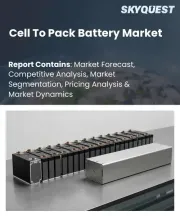
셀투팩(CTP) 배터리 기술은 중간 모듈 구조를 배제하고 배터리 셀을 팩 구조에 직접 통합함으로써 첨단 에너지 저장 방식을 혁신하고 있습니다. 이러한 설계 접근 방식을 통해 부피 활용도가 향상되고, 중복 부품이 줄어들며, 조립의 복잡성이 경감될 뿐만 아니라, 전기자동차, 가정용 에너지 저장, 상업용 모빌리티 및 산업용 전기화 분야에서 더 높은 에너지 밀도를 실현합니다. 배출 가스 규제 강화, 전기차 보급 확대, 전력망 현대화, 그리고 더 안전하고 경량이며 비용 효율적인 배터리 시스템에 대한 수요가 높아지고 있는 것이 이 시장 수요를 뒷받침하고 있습니다. 업계의 주요 우선 과제로는 열 관리, 충돌 안전성, 셀 밸런스, 구조적 무결성, 제조성, 재활용 가능성, 그리고 인산철 리튬, 니켈 리치형 리튬 이온, 나트륨 이온 및 기타 신흥 배터리 화학 계열과의 호환성이 포함됩니다. 배터리 공급망이 현지화되고 성능에 대한 기대가 높아지는 가운데, ‘셀투팩(CTP)’ 배터리 시스템은 기존의 모듈 중심 설계에 의존하지 않고 주행 거리 향상, 시스템 중량 감소, 대규모 배터리 생산의 간소화를 실현하기 위한 전략적 경로로 점점 더 주목받고 있습니다.
'셀투팩(CTP)' 배터리 분야의 혁신적인 변화
셀투팩(CTP) 배터리 분야는 전동 모빌리티의 확대, 배터리 화학 조성의 다양화, 그리고 더욱 엄격해진 지속가능성 요건에 힘입어 혁신적인 변화를 겪고 있습니다. 자동차 제조업체와 에너지 저장 시스템 통합사업자들은 비활성 물질을 줄이고, 패키징 효율을 높이며, 보다 유연한 차량 플랫폼 설계를 가능하게 하는 단순화된 팩 구조로 전환하고 있습니다. 인산철 리튬은 열적 안정성, 비용 경쟁력, 긴 사이클 수명으로 인해 채택이 가속화되고 있지만, 에너지 밀도가 우선시되는 분야에서는 니켈계 화학 성분이 여전히 중요한 역할을 하고 있습니다. 구조적 배터리 개념, 첨단 접착제, 액체 냉각판, 내화 장벽, 압력 배출 경로 및 통합형 배터리 관리 시스템은 신뢰성 높은 셀투팩(CTP) 도입을 실현하기 위한 핵심 요소로 자리 잡고 있습니다. 배터리 안전성, 탄소 발자국 공개, 책임 있는 조달 및 폐배터리 추적성에 관한 규제적 압력 또한 설계 선택에 영향을 미치고 있습니다. 동시에, 공급망의 지역화를 통해 현지 셀 제조, 표준화된 팩 형식, 그리고 셀 생산, 팩 조립, 차량 제조 간의 보다 긴밀한 통합이 촉진되고 있습니다.
'셀투팩(CTP)' 배터리에 대한 인공지능의 누적 영향
인공지능(AI)은 설계 최적화, 제조 품질, 안전 모니터링 및 수명 주기 성능을 향상시킴으로써 '셀투팩(CTP)' 배터리 시스템의 진화를 더욱 가속화하고 있습니다. AI를 활용한 시뮬레이션은 실제 프로토타입을 제작하기 전에 온도 구배, 기계적 응력, 셀 간격, 충돌 하중, 냉각 효율을 평가함으로써 팩 레이아웃 최적화를 지원합니다. 제조 현장에서는 머신 비전 및 예측 분석이 팩의 신뢰성을 저해할 수 있는 용접 결함, 셀의 불균일성, 절연 위험, 누액 문제 및 조립상의 편차를 감지하는 데 도움이 됩니다. 가동 중에는 AI를 활용한 배터리 관리 시스템을 통해 충전 상태(SOC) 추정, 배터리 상태(SOH) 예측, 열 제어, 충전 전략 및 이상 조기 감지가 강화됩니다. 모듈이 없는 셀투팩(CTP) 설계에서는 셀 수준의 모니터링과 팩 수준의 고장 진단이 더욱 중요해지므로, 이러한 기능은 특히 가치가 큽니다. 배터리 밸류체인 전반에 걸쳐 인공지능은 소재 선정, 공급망 위험 평가, 재활용 공정 최적화, 보증 분석, 디지털 트윈 개발에도 적용되어 고밀도 배터리 팩의 보다 안전하고 효율적인 도입을 뒷받침하고 있습니다.
'셀투팩(CTP)' 배터리 도입에 관한 주요 지역별 인사이트
아시아태평양은 성숙한 배터리 제조 생태계, 견고한 전기차 생산 기반, 그리고 양극재, 분리막, 전해액, 파워 일렉트로닉스에 관한 탄탄한 공급망을 바탕으로 ‘셀투팩(CTP)’ 배터리 개발의 중심적인 역할을 계속하고 있습니다. 중국은 대규모 전기차 도입과 인산철 리튬 배터리의 광범위한 채택에 힘입어, 모듈리스 팩 구조의 보급에 있어 특히 큰 영향력을 발휘하고 있습니다. 일본과 한국은 첨단 셀 엔지니어링, 품질 관리 시스템, 소재 혁신, 그리고 제조 분야의 엄격한 관리 체제에 기여하고 있는 반면, 인도와 동남아시아 국가들은 배터리 조립, 현지화 프로그램, 그리고 전동 모빌리티 정책 강화에 주력하고 있습니다. 북미에서는 국내 배터리 제조에 대한 우대 조치, 전기차 플랫폼에 대한 투자, 그리고 전력망의 신뢰성 및 재생에너지 통합으로 이어지는 에너지 저장 시스템의 도입을 통해 진전이 나타나고 있습니다. 미국과 캐나다는 핵심 광물, 셀, 배터리 팩 분야의 현지 공급망을 우선시하고 있는 반면, 멕시코는 자동차 제조 통합, 니어쇼어링, 국경을 초월한 자동차 생산 네트워크의 혜택을 누리고 있습니다. 유럽은 엄격한 배터리 규제, 탄소 발자국 관련 규정, 재활용 의무, 실사 요건, 그리고 차량 전동화 목표에 따라 움직이고 있으며, 안전성, 순환성, 추적성이 셀에서 팩으로의 채택 과정에서 핵심적인 역할을 하고 있습니다. 독일, 프랑스, 이탈리아, 스페인, 영국은 배터리 혁신을 자동차 산업의 경쟁력 강화 및 에너지 전환 목표와 연계하고 있습니다. 라틴아메리카는 핵심 광물 자원, 재생에너지의 잠재력, 그리고 확대되는 전기 버스 및 차량 함대의 전동화 프로그램을 통해 중요한 위치를 차지하고 있으며, 브라질과 멕시코가 산업 측면에서 중요한 역할을 수행하고 있습니다. 중동에서는 에너지 다각화 전략의 일환으로, 특히 재생에너지 확대, 스마트 인프라, 산업 현지화 프로그램이 추진되고 있는 지역에서 축전지 및 전동 모빌리티 도입이 검토되고 있습니다. 아프리카에서는 Off-grid 전력 저장, 재생에너지 통합, 전동 이륜차·삼륜차, 광물 공급망을 통해 점차 부상하고 있으나, 인프라, 자금 조달, 기술력, 제조 능력이 여전히 주요 제약 요인으로 작용하고 있습니다.
전략적 경제·정책 동맹에 관한 주요 그룹 분석
아세안(ASEAN)에서는 일부 회원국의 전자, 자동차, 광물 가공 클러스터에 힘입어 지역 각국 정부가 전기차 생산, 배터리 조립 및 현지 부품 제조를 추진하고 있어, ‘셀투팩(CTP)’ 배터리 밸류체인에서의 중요성이 높아지고 있습니다. GCC(걸프협력회의)는 에너지 다각화, 재생에너지 통합, 전동 모빌리티 인프라, 산업 현지화, 그리고 탄력적인 전력 시스템이라는 관점에서 배터리 기술에 주력하고 있으며, 고정형 에너지 저장 및 차량 전동화를 위한 기회를 창출하고 있습니다. 유럽연합(EU)은 주요 규제 주체로서, 배터리 패스포트 요건, 수명 주기 탄소 회계, 실사 의무, 재활용 목표 및 폐배터리 관련 규정이 셀투팩(CTP) 시스템의 설계, 조달, 제조 및 문서화 방식을 형성하고 있습니다. BRICS 국가들은 수요 증가, 광물 자원, 제조 역량 및 정책 주도형 산업화를 통해 배터리 생태계에 종합적인 영향력을 행사하고 있으며, 중국과 인도가 전기 모빌리티의 큰 추진력을 이끌고, 브라질, 러시아, 남아프리카공화국이 자원 및 지역 시장 측면에서 기여하고 있습니다. G7 국가들은 첨단 배터리 연구개발, 안전 기준, 자동차 공학, 청정 제조 및 공급망 회복탄력성에 관한 정책에서 여전히 중요한 역할을 수행하고 있으며, 고품질 생산, 지적 재산권 개발, 사이버 보안, 지속 가능한 조달을 중시하고 있습니다. 나토(NATO) 회원국들 또한 배터리 공급망 안보, 중요 광물 확보, 탄력적인 제조 체계, 그리고 국방용 모빌리티, 인프라 회복탄력성, 작전 전력, 에너지 자립을 위한 에너지 저장 장치의 전략적 역할에 점점 더 주목하고 있습니다.
‘셀투팩(CTP)’ 배터리 도입을 주도하는 주요국의 동향
미국은 국내 제조에 대한 인센티브, 전기차 투자, 전력망용 에너지 저장 시스템 도입, 그리고 중앙 집중화된 배터리 공급망에 대한 의존도를 낮추는 것을 목표로 하는 정책을 통해 ‘셀투팩(CTP)’ 배터리의 중요성을 높이고 있습니다. 캐나다는 핵심 광물 자원, 청정 전력 분야의 우위, 배터리 공급망 개발, 그리고 북미 자동차 생산과의 통합을 통해 그 역할을 강화하고 있습니다. 멕시코는 자동차 제조와의 통합 및 니어쇼어링 추세를 활용하여 배터리 팩 조립, 부품 생산, 그리고 전동 모빌리티의 밸류체인을 뒷받침하고 있습니다. 브라질은 재생에너지의 강점, 산업 역량, 그리고 특히 버스 및 상용 운송 분야에서의 차량 전동화 기회를 통해 진전을 이루고 있습니다. 영국은 배터리 혁신, 기가팩토리 개발, 자동차 전기화 및 고부가가치 엔지니어링에 주력하고 있으며, 안전 기준과 공급망의 회복탄력성을 중시하고 있습니다. 독일은 자동차 배터리 통합, 제조 자동화 및 프리미엄 전기차 플랫폼의 주요 거점으로 자리매김하고 있는 반면, 프랑스는 배터리 산업화, 저탄소 제조 및 순환 경제 요건을 지원하고 있습니다. 러시아의 중요성은 광물 자원, 국내 에너지 저장 수요, 산업용 배터리 생산 능력과 관련이 있으나, 지정학적 제약이 국제 협력 및 설비 접근에 영향을 미치고 있습니다. 이탈리아와 스페인은 유럽의 규제 체계 내에서 전기차 생산, 배터리 조립, 재생에너지 저장 기회를 확대되고 있습니다. 중국은 셀투팩(CTP) 방식의 대규모 도입, 인산철 리튬 제조, 배터리 재료 가공 및 전기차 통합 공급망 분야에서 주도적인 입지를 차지하고 있습니다. 인도는 전동화 정책, 배터리 제조에 대한 인센티브, 이륜차 및 삼륜차의 보급, 전기 버스 프로그램, 그리고 가정용 에너지 저장 수요를 통해 성장세를 보이고 있습니다. 일본은 고도의 셀 품질, 배터리 안전성 전문 지식, 소재의 정밀 가공, 그리고 하이브리드차에서 전기차로 전환하는 데 필요한 엔지니어링 기술을 제공하고 있는 반면, 호주는 리튬 및 기타 배터리용 광물 자원, 그리고 그리드 규모의 에너지 저장 시스템 도입에 있어 중요한 역할을 수행하고 있습니다. 한국은 리튬 이온 셀, 소재 혁신, 공정 제어, 그리고 세계 전기차 플랫폼과 연계된 고성능 배터리 제조 분야의 주요 기술 거점으로 자리매김하고 있습니다.
배터리 업계 리더를 위한 실천적 제안
업계 선도 기업들은 설계 초기 단계부터 에너지 밀도, 열 안정성, 충돌 안전성, 제조성, 유지보수성 및 규제 준수의 균형을 맞추는 통합적인 팩 설계 전략을 우선시해야 합니다. 배터리 개발 기업은 셀투팩(CTP) 구조로 인해 중간 격리 단계가 줄어들어 셀 간의 일관성이 더욱 중요해지므로, 셀 수준의 품질 관리를 강화해야 합니다. 제조업체는 결함 위험을 줄이고 수명 주기 전반에 걸친 신뢰성을 향상시키기 위해 첨단 열 관리, 견고한 배터리 관리 시스템, AI 기반 검사, 디지털 트윈, 기능 안전 검증 및 자동 조립 공정에 투자해야 합니다. 조달 팀은 지역의 현지 조달 규정, 탄소 보고 및 책임 있는 조달 요건을 준수하면서, 중요 광물 및 셀의 조달처를 다각화해야 합니다. 제품 팀은 새로운 배터리 규제 및 지속가능성에 대한 기대에 부응하기 위해, 재활용, 분해, 추적성, 수리 평가 및 세컨드 라이프 평가를 고려한 설계를 수행해야 합니다. 셀 제조, 팩 통합, 차량 엔지니어링, 충전 인프라, 소프트웨어, 시험, 재활용에 걸친 파트너십을 구축함으로써 상용화 위험을 줄일 수 있습니다. 또한 리더는 인산철 리튬, 니켈 리치형 리튬 이온, 나트륨 이온 및 미래의 화학계 배터리에서 각각 서로 다른 팩 구조, 냉각 시스템, 안전 프로토콜, 성능 검증 기법이 필요할 수 있음을 인식하고, 화학계별로 특화된 전략을 수립해야 합니다.
'셀투팩(CTP)'에 이르는 배터리 조사 방법론
본 경영진 요약본은 정부 에너지 기관, 교통 수단 전기화 관련 정책, 배터리 안전 기준, 규제 문서, 과학 문헌, 특허 동향, 무역 데이터, 제조 관련 발표, 지속가능성 프레임워크, 그리고 배터리 공학에 관한 기술 간행물 등, 검증된 공개 자료 및 업계에서 인정된 정보원을 바탕으로 한 체계적인 2차 조사 접근법을 통해 작성되었습니다. 본 조사 방법론에서는 여러 신뢰할 수 있는 정보원을 횡단적으로 대조하는 ‘삼각측량’을 중시하며, 기술 촉진요인, 지역별 정책 방향, 공급망 동향, 화학 조성 트렌드, 인공지능(AI)의 응용, 그리고 용도 수준에서의 도입 동향을 검증하고 있습니다. 정성적 분석을 통해 규제 영향, 제조 준비 현황, 배터리 설계의 진화, 안전 고려 사항, 순환 경제 요건, 그리고 인공지능이 엔지니어링 및 운영에 미치는 영향을 평가했습니다. 본 조사에서는 근거 없는 예측, 검증되지 않은 주장, 시장 규모 추정, 시장 점유율 및 예측에 기반한 가정은 제외했습니다. 도출된 인사이트는 셀투팩(CTP) 배터리 시스템에 관한 전략, 제품 개발, 제조, 규정 준수, 조달, 지역별 전개, 수명 주기 계획 등 경영진의 의사결정을 지원하는 형태로 정리되어 있습니다.
'셀투팩(CTP)' 배터리 시스템의 미래에 관한 결론
셀투팩(CTP) 배터리 기술은 패키징 효율 향상, 팩 구조의 단순화, 그리고 전기차 및 대규모 에너지 저장 시스템의 성능 요건 충족이 가능하기 때문에 차세대 에너지 저장 분야의 결정적인 방향성이 되고 있습니다. 이 기술의 발전은 배터리 화학 기술의 진화, 인공지능, 지역별 공급망 현지화, 지속가능성 관련 규제, 안전 기준, 그리고 신뢰성이 높은 고밀도 팩에 대한 필요성에 의해 주도되고 있습니다. 아시아태평양은 계속해서 제조의 모멘텀을 주도하고 있는 반면, 북미 및 유럽에서는 국내 생산, 규제 준수, 재활용 체계 구축, 그리고 공급망의 회복력 강화가 추진되고 있습니다. 라틴아메리카, 중동 및 아프리카, 아세안(ASEAN), 브릭스(BRICS) 국가에서의 새로운 기회는 전기화, 광물 자원, 재생에너지의 통합, 그리고 산업의 현지화와 밀접하게 관련되어 있습니다. 성공의 열쇠는 엄격한 엔지니어링, 신뢰할 수 있는 셀 품질, 첨단 안전 시스템, 규제 대응 준비, 그리고 수명 주기 전반에 걸친 순환성입니다. 셀에서 팩에 이르는 설계를 탁월한 제조 기술, AI를 활용한 인사이트, 검증된 지속가능성 노력, 그리고 탄탄한 조달 체계와 결합할 수 있는 조직이야말로 급속히 진화하는 배터리 생태계에서 경쟁 우위를 확립할 수 있을 것입니다.
목차
제1장 서문
제2장 조사 방법
제3장 주요 요약
제4장 시장 개요
제5장 시장 인사이트
제6장 AI의 누적 영향(2026년)
제7장 셀투팩(CTP) 배터리 시장 : 형태별
제8장 셀투팩(CTP) 배터리 시장 : 배터리 유형별
제9장 셀투팩(CTP) 배터리 시장 : 구성 요소별
제10장 셀투팩(CTP) 배터리 시장 : 추진 방식별
제11장 셀투팩(CTP) 배터리 시장 : 차량 유형별
제12장 셀투팩(CTP) 배터리 시장 : 최종 사용자별
제13장 셀투팩(CTP) 배터리 시장 : 지역별
제14장 셀투팩(CTP) 배터리 시장 : 그룹별
제15장 셀투팩(CTP) 배터리 시장 : 국가별
제16장 경쟁 구도
제17장 기업 개요
KTHThe Cell to Pack Battery Market is projected to grow by USD 57.68 billion at a CAGR of 15.13% by 2032.
| KEY MARKET STATISTICS | |
|---|---|
| Base Year [2025] | USD 21.51 billion |
| Estimated Year [2026] | USD 24.59 billion |
| Forecast Year [2032] | USD 57.68 billion |
| CAGR (%) | 15.13% |
Cell to pack battery technology is reshaping advanced energy storage by removing intermediate module structures and integrating battery cells directly into the pack architecture. This design approach improves volumetric utilization, reduces redundant components, lowers assembly complexity, and supports higher energy density for electric vehicles, stationary storage, commercial mobility, and industrial electrification. Demand is being reinforced by stricter emissions policies, expanding electric vehicle adoption, grid modernization, and the need for safer, lighter, and more cost-efficient battery systems. Key industry priorities include thermal management, crash safety, cell balancing, structural integrity, manufacturability, recycling readiness, and compatibility with lithium iron phosphate, nickel-rich lithium-ion, sodium-ion, and other emerging battery chemistries. As battery supply chains localize and performance expectations rise, cell to pack battery systems are increasingly viewed as a strategic pathway for improving range, reducing system weight, and simplifying large-scale battery production without relying on traditional module-heavy designs.
Transformative Shifts in the Cell to Pack Battery Landscape
The cell to pack battery landscape is undergoing transformative shifts driven by electric mobility scale-up, battery chemistry diversification, and tighter sustainability requirements. Automakers and energy storage integrators are moving toward simplified pack structures that reduce inactive material, improve packaging efficiency, and enable more flexible vehicle platform design. Lithium iron phosphate adoption is accelerating because of its thermal stability, cost resilience, and long cycle life, while nickel-based chemistries remain important where energy density is prioritized. Structural battery concepts, advanced adhesives, liquid cooling plates, fire-resistant barriers, pressure relief pathways, and integrated battery management systems are becoming critical enablers of reliable cell to pack deployment. Regulatory pressure on battery safety, carbon footprint disclosure, responsible sourcing, and end-of-life traceability is also influencing design choices. At the same time, supply chain regionalization is encouraging localized cell manufacturing, standardized pack formats, and closer integration between cell production, pack assembly, and vehicle manufacturing.
Cumulative Impact of Artificial Intelligence on Cell to Pack Batteries
Artificial intelligence is compounding the evolution of cell to pack battery systems by improving design optimization, manufacturing quality, safety monitoring, and lifecycle performance. AI-enabled simulation supports pack layout optimization by evaluating thermal gradients, mechanical stress, cell spacing, crash loads, and cooling efficiency before physical prototyping. In manufacturing, machine vision and predictive analytics help detect weld defects, cell inconsistencies, insulation risks, leakage issues, and assembly deviations that can compromise pack reliability. During operation, AI-driven battery management systems enhance state-of-charge estimation, state-of-health prediction, thermal control, charging strategies, and early anomaly detection. These capabilities are especially valuable in cell to pack designs because the absence of modules increases the importance of cell-level monitoring and pack-level fault isolation. Across the battery value chain, artificial intelligence is also being applied to material selection, supply chain risk assessment, recycling process optimization, warranty analytics, and digital twin development, supporting safer and more efficient deployment of high-density battery packs.
Key Regional Insights for Cell to Pack Battery Adoption
Asia-Pacific remains central to cell to pack battery development because of its mature battery manufacturing ecosystem, strong electric vehicle production base, and deep supply chains for cathode materials, separators, electrolytes, and power electronics. China has been particularly influential in scaling module-free pack architectures, supported by large-scale electric vehicle deployment and broad lithium iron phosphate adoption. Japan and South Korea contribute advanced cell engineering, quality systems, materials innovation, and manufacturing discipline, while India and Southeast Asian economies are strengthening battery assembly, localization programs, and electric mobility policies. North America is advancing through domestic battery manufacturing incentives, electric vehicle platform investments, and energy storage deployments tied to grid reliability and renewable integration. The United States and Canada are prioritizing local supply chains for critical minerals, cells, and battery packs, while Mexico benefits from automotive manufacturing integration, nearshoring, and cross-border vehicle production networks. Europe is guided by stringent battery regulations, carbon footprint rules, recycling mandates, due diligence requirements, and vehicle electrification targets, making safety, circularity, and traceability central to cell to pack adoption. Germany, France, Italy, Spain, and the United Kingdom are aligning battery innovation with automotive competitiveness and energy transition goals. Latin America is relevant through critical mineral resources, renewable energy potential, and growing electric bus and fleet electrification programs, with Brazil and Mexico playing important industrial roles. The Middle East is exploring battery storage and electric mobility as part of energy diversification strategies, particularly where renewable power expansion, smart infrastructure, and industrial localization programs are underway. Africa is gradually emerging through off-grid storage, renewable integration, electric two- and three-wheelers, and mineral supply chains, although infrastructure, financing, technical skills, and manufacturing capacity remain key constraints.
Key Group Insights Across Strategic Economic and Policy Alliances
ASEAN is gaining relevance in cell to pack battery value chains as regional governments promote electric vehicle production, battery assembly, and localized component manufacturing, supported by electronics, automotive, and mineral-processing clusters in several member economies. The GCC is approaching battery technologies through the lens of energy diversification, renewable power integration, electric mobility infrastructure, industrial localization, and resilient power systems, creating opportunities for stationary storage and fleet electrification. The European Union is a major regulatory force, with battery passport requirements, lifecycle carbon accounting, due diligence obligations, recycling targets, and waste battery rules shaping how cell to pack systems are designed, sourced, manufactured, and documented. BRICS countries collectively influence the battery ecosystem through demand growth, mineral resources, manufacturing capacity, and policy-led industrialization, with China and India driving major electric mobility momentum and Brazil, Russia, and South Africa contributing resource and regional market dimensions. G7 economies remain important for advanced battery research, safety standards, automotive engineering, clean manufacturing, and supply chain resilience policies, emphasizing high-quality production, intellectual property development, cybersecurity, and sustainable sourcing. NATO member countries are also increasingly attentive to battery supply chain security, critical mineral access, resilient manufacturing, and the strategic role of energy storage in defense mobility, infrastructure resilience, operational power, and energy independence.
Key Country Insights Shaping Cell to Pack Battery Deployment
The United States is accelerating cell to pack battery relevance through domestic manufacturing incentives, electric vehicle investment, grid storage deployment, and policies aimed at reducing dependence on concentrated battery supply chains. Canada is strengthening its role through critical mineral resources, clean electricity advantages, battery supply chain development, and integration with North American automotive production. Mexico benefits from vehicle manufacturing integration and nearshoring trends, supporting battery pack assembly, component production, and electric mobility supply chains. Brazil is advancing through renewable energy strength, industrial capacity, and fleet electrification opportunities, particularly in buses and commercial transport. The United Kingdom is focused on battery innovation, gigafactory development, automotive electrification, and high-value engineering, with emphasis on safety standards and supply chain resilience. Germany remains a key hub for automotive battery integration, manufacturing automation, and premium electric vehicle platforms, while France is supporting battery industrialization, low-carbon manufacturing, and circular economy requirements. Russia's relevance is linked to mineral resources, domestic energy storage needs, and industrial battery capabilities, although geopolitical constraints affect international collaboration and equipment access. Italy and Spain are expanding electric vehicle production, battery assembly, and renewable energy storage opportunities within the European regulatory framework. China leads in high-volume cell to pack deployment, lithium iron phosphate manufacturing, battery materials processing, and integrated electric vehicle supply chains. India is building momentum through electrification policies, battery manufacturing incentives, two- and three-wheeler adoption, electric bus programs, and stationary storage needs. Japan contributes advanced cell quality, battery safety expertise, materials precision, and hybrid-to-electric vehicle engineering, while Australia is important for lithium and other battery minerals as well as grid-scale storage deployment. South Korea remains a major technology center for lithium-ion cells, materials innovation, process control, and high-performance battery manufacturing linked to global electric vehicle platforms.
Actionable Recommendations for Cell to Pack Battery Industry Leaders
Industry leaders should prioritize integrated pack design strategies that balance energy density, thermal stability, crash safety, manufacturability, serviceability, and regulatory compliance from the earliest engineering stages. Battery developers should strengthen cell-level quality control because cell to pack architectures reduce intermediate containment and make consistency across cells more critical. Manufacturers should invest in advanced thermal management, robust battery management systems, AI-enabled inspection, digital twins, functional safety validation, and automated assembly processes to reduce defect risk and improve lifecycle reliability. Procurement teams should diversify critical mineral and cell sourcing while aligning with regional content rules, carbon reporting, and responsible sourcing requirements. Product teams should design for recycling, disassembly, traceability, repair assessment, and second-life evaluation to comply with emerging battery regulations and sustainability expectations. Partnerships across cell manufacturing, pack integration, vehicle engineering, charging infrastructure, software, testing, and recycling can reduce commercialization risk. Leaders should also develop chemistry-specific strategies, recognizing that lithium iron phosphate, nickel-rich lithium-ion, sodium-ion, and future chemistries may require different pack structures, cooling systems, safety protocols, and performance validation methods.
Research Methodology for Cell to Pack Battery Insights
This executive summary is developed using a structured secondary research approach based on verified public-domain and industry-recognized sources, including government energy agencies, transport electrification policies, battery safety standards, regulatory documents, scientific literature, patent trends, trade data, manufacturing announcements, sustainability frameworks, and technical publications on battery engineering. The methodology emphasizes triangulation across multiple credible sources to validate technology drivers, regional policy direction, supply chain developments, chemistry trends, artificial intelligence applications, and application-level adoption signals. Qualitative analysis was applied to assess regulatory impact, manufacturing readiness, battery design evolution, safety considerations, circular economy requirements, and the influence of artificial intelligence on engineering and operations. The research excludes unsupported projections, unverified claims, market sizing, market share, and forecast-based assumptions. Insights are organized to support executive decision-making across strategy, product development, manufacturing, compliance, sourcing, regional expansion, and lifecycle planning for cell to pack battery systems.
Conclusion on the Future of Cell to Pack Battery Systems
Cell to pack battery technology is becoming a defining direction in next-generation energy storage because it improves packaging efficiency, simplifies pack architecture, and supports the performance demands of electric vehicles and large-scale storage systems. The technology's progress is being shaped by battery chemistry evolution, artificial intelligence, regional supply chain localization, sustainability regulation, safety standards, and the need for reliable high-density packs. Asia-Pacific continues to lead manufacturing momentum, while North America and Europe are strengthening domestic production, regulatory compliance, recycling readiness, and supply chain resilience. Emerging opportunities across Latin America, the Middle East, Africa, ASEAN, and BRICS are linked to electrification, mineral resources, renewable energy integration, and industrial localization. Success will depend on disciplined engineering, reliable cell quality, advanced safety systems, regulatory readiness, and lifecycle circularity. Organizations that align cell to pack design with manufacturing excellence, AI-enabled intelligence, verified sustainability practices, and resilient sourcing will be better positioned to compete in the rapidly evolving battery ecosystem.
Table of Contents
1. Preface
- 1.1. Objectives of the Study
- 1.2. Market Definition
- 1.3. Market Segmentation & Coverage
- 1.4. Years Considered for the Study
- 1.5. Currency Considered for the Study
- 1.6. Language Considered for the Study
- 1.7. Key Stakeholders
2. Research Methodology
- 2.1. Introduction
- 2.2. Research Design
- 2.2.1. Primary Research
- 2.2.2. Secondary Research
- 2.3. Research Framework
- 2.3.1. Qualitative Analysis
- 2.3.2. Quantitative Analysis
- 2.4. Market Size Estimation
- 2.4.1. Top-Down Approach
- 2.4.2. Bottom-Up Approach
- 2.5. Data Triangulation
- 2.6. Research Outcomes
- 2.7. Research Assumptions
- 2.8. Research Limitations
3. Executive Summary
- 3.1. Introduction
- 3.2. CXO Perspective
- 3.3. Market Size & Growth Trends
- 3.4. New Revenue Opportunities
- 3.5. Next-Generation Business Models
- 3.6. Industry Roadmap
4. Market Overview
- 4.1. Introduction
- 4.2. Industry Ecosystem & Value Chain Analysis
- 4.2.1. Supply-Side Analysis
- 4.2.2. Demand-Side Analysis
- 4.2.3. Stakeholder Analysis
- 4.3. Market Dynamics
- 4.3.1. Key Drivers
- 4.3.2. Key Restraints
- 4.3.3. Key Opportunities
- 4.3.4. Key Challenges
- 4.4. Porter's Five Forces Analysis
- 4.5. PESTLE Analysis
- 4.6. Market Outlook
- 4.6.1. Near-Term Market Outlook (0-2 Years)
- 4.6.2. Medium-Term Market Outlook (3-5 Years)
- 4.6.3. Long-Term Market Outlook (5-10 Years)
- 4.7. Go-to-Market Strategy
5. Market Insights
- 5.1. Consumer Insights & End-User Perspective
- 5.2. Consumer Experience Benchmarking
- 5.3. Opportunity Mapping
- 5.4. Distribution Channel Analysis
- 5.5. Pricing Trend Analysis
- 5.6. Regulatory Compliance & Standards Framework
- 5.7. ESG & Sustainability Analysis
- 5.8. Disruption & Risk Scenarios
- 5.9. Return on Investment & Cost-Benefit Analysis
6. Cumulative Impact of Artificial Intelligence 2026
7. Cell to Pack Battery Market, by Forms
- 7.1. Introduction
- 7.2. Cylindrical
- 7.3. Pouch
- 7.4. Prismatic
8. Cell to Pack Battery Market, by Battery Type
- 8.1. Introduction
- 8.2. Lead-Acid
- 8.3. Lithium Ion
- 8.4. Lithium Iron Phosphate
- 8.5. Lithium Sulphur
- 8.6. Nickel Manganese Cobalt
- 8.7. Nickel Metal Hydride
9. Cell to Pack Battery Market, by Components
- 9.1. Introduction
- 9.2. Battery Management System
- 9.3. Cell
- 9.4. Coolant
- 9.5. Housing
- 9.6. Switches & Fuses
10. Cell to Pack Battery Market, by Propulsion Type
- 10.1. Introduction
- 10.2. Battery Electric Vehicles
- 10.3. Plug-in Hybrid Electric Vehicles
11. Cell to Pack Battery Market, by Vehicle Type
- 11.1. Introduction
- 11.2. Commercial Vehicle
- 11.3. Passenger Vehicle
12. Cell to Pack Battery Market, by End User
- 12.1. Introduction
- 12.2. Aftermarket
- 12.3. OEMs
13. Cell to Pack Battery Market, by Region
- 13.1. Asia-Pacific
- 13.2. Europe
- 13.3. North America
- 13.4. Latin America
- 13.5. Africa
- 13.6. Middle East
14. Cell to Pack Battery Market, by Group
- 14.1. NATO
- 14.2. G7
- 14.3. BRICS
- 14.4. European Union
- 14.5. ASEAN
- 14.6. GCC
15. Cell to Pack Battery Market, by Country
- 15.1. China
- 15.2. United States
- 15.3. Japan
- 15.4. India
- 15.5. Germany
- 15.6. United Kingdom
- 15.7. Australia
- 15.8. France
- 15.9. South Korea
- 15.10. Italy
- 15.11. Canada
- 15.12. Russia
- 15.13. Brazil
- 15.14. Mexico
- 15.15. Spain
16. Competitive Landscape
- 16.1. Market Share Analysis, 2025
- 16.2. FPNV Positioning Matrix, 2025
- 16.3. Market Concentration Analysis, 2025
- 16.3.1. Concentration Ratio (CR)
- 16.3.2. Herfindahl Hirschman Index (HHI)
- 16.4. Recent Developments & Impact Analysis, 2025
- 16.5. Product Portfolio Analysis, 2025
- 16.6. Benchmarking Analysis, 2025
17. Company Profiles
- 17.1. Alexander Battery Technologies
- 17.2. AZL Aachen GmbH
- 17.3. BYD Motors Inc.
- 17.4. Cell Pack Solutions Ltd.
- 17.5. Chroma ATE Inc.
- 17.6. Contemporary Amperex Technology Co., Limited
- 17.7. Custom Power
- 17.8. Epec, LLC
- 17.9. Genuine Power
- 17.10. Henkel AG & Co. KGaA
- 17.11. Hioki E.E. CORPORATION
- 17.12. IONETIC Limited
- 17.13. LG Energy Solution Ltd.
- 17.14. Microvast Holdings, Inc.
- 17.15. NEC Corporation
- 17.16. Nissan Motor Co., Ltd.
- 17.17. Panasonic Industry Co., Ltd.
- 17.18. Plethora Power Pvt. Ltd.
- 17.19. Proterra Inc.
- 17.20. RRC power solutions Ltd.
- 17.21. Samsung SDI Co., Ltd.
- 17.22. SK innovation Co., Ltd.
- 17.23. Sunwoda Electronic Co., Ltd.
- 17.24. Tenergy Corporation
- 17.25. Wardwizard Innovations & Mobility Ltd.
- 17.26. WS Technicals A/S