|
시장보고서
상품코드
1431433
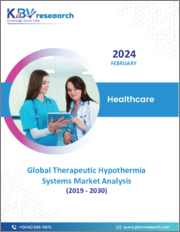
저체온 치료 시스템 시장 규모, 점유율 및 동향 분석 보고서 : 용도별, 제품별, 지역별, 전망 및 예측(2023-2030년)Global Therapeutic Hypothermia Systems Market Size, Share & Trends Analysis Report By Application, By Product, By Regional Outlook and Forecast, 2023 - 2030 |
||||||

저체온 치료 시스템 시장 규모는 예측 기간 동안 연평균 5.7%의 성장률로 성장하여 2030년까지 4억 2,360만 달러에 달할 것으로 예상됩니다.
그러나 치료적 저체온 요법에서는 원하는 치료 효과를 얻기 위해 세심한 체온 관리가 필요합니다. 그러나 환자 개개인의 특성, 동반 질환, 반응의 다양성에 따른 임상적 복잡성으로 인해 일관되고 정확한 체온 관리를 유지하는 데 어려움을 겪고 있습니다. 치료적 저체온에 대한 환자의 반응은 불확실성과 어려움을 야기합니다. 연령, 기저질환, 기저 손상이나 질환의 성격과 같은 요인으로 인해 다양한 반응이 나타나기 때문에 표준화된 체온 조절 프로토콜을 확립하기가 쉽지 않습니다. 또한 효과적인 치료적 저체온 요법은 환자의 체온, 활력징후, 신경학적 상태를 지속적으로 평가할 수 있는 첨단 모니터링 시스템을 필요로 합니다. 이러한 시스템은 고도의 모니터링 장비가 필요하기 때문에 도입이 복잡해지고, 접근성과 통합 측면에서 어려움이 증가합니다. 따라서 이러한 요인들은 저체온 치료 시스템에 대한 수요 감소로 이어집니다.
목차
제1장 시장 범위와 조사 방법
- 시장의 정의
- 목적
- 시장 범위
- 세분화
- 조사 방법
제2장 시장 요약
- 주요 하이라이트
제3장 시장 개요
- 서론
- 개요
- 시장 구성과 시나리오
- 개요
- 시장에 영향을 미치는 주요 요인
- 시장 성장 촉진요인
- 시장 성장 억제요인
- 시장 기회
- 시장이 해결해야 할 과제
제4장 경쟁 분석 - 세계
- 시장 점유율 분석, 2022년
- 저체온 치료 시스템 시장에서 전개되는 전략
- Porter의 Five Forces 분석
제5장 세계 시장 : 용도별
- 세계의 신경 시장 : 지역별
- 세계의 심장병 시장 : 지역별
- 세계의 신생아 케어 시장 : 지역별
- 세계의 기타 시장 : 지역별
제6장 세계 시장 : 제품별
- 세계의 냉각 장비 시장 : 지역별
- 세계의 냉각 카테터 시장 : 지역별
- 세계의 쿨 캡 시장 : 지역별
제7장 세계 시장 : 지역별
- 북미 시장
- 북미 시장 : 용도별
- 북미 시장 : 제품별
- 북미 시장 : 국가별
- 유럽 시장
- 유럽 시장 : 용도별
- 유럽 시장 : 제품별
- 유럽 시장 : 국가별
- 아시아태평양 시장
- 아시아태평양 시장 : 용도별
- 아시아태평양 시장 : 제품별
- 아시아태평양 시장 : 국가별
- 라틴아메리카/중동 및 아프리카 시장
- 라틴아메리카/중동 및 아프리카 시장 : 용도별
- 라틴아메리카/중동 및 아프리카 시장 : 제품별
- 라틴아메리카/중동 및 아프리카 시장 : 국가별
제8장 기업 개요
- Asahi Kasei Corporation
- Becton, Dickinson, and Company
- Gentherm Incorporated
- Stryker Corporation
- Belmont Medical Technologies(Audax Management Company, LLC)
- EM-MED Sp z o.o. Sp. K
- International Biomedical Ltd
- Phoenix Medical Systems Pvt Ltd.
- Shenzhen Comen Medical Instruments Co, Ltd.
- Terumo Corporation
제9장 저체온 요법 시스템 시장을 위한 성공 필수 조건
LSH 24.03.29The Global Therapeutic Hypothermia Systems Market size is expected to reach $423.6 million by 2030, rising at a market growth of 5.7% CAGR during the forecast period.
North America has seen a growing adoption of therapeutic hypothermia, especially in critical care settings. Therefore, the North America segment captured $110.9 million revenue in the market in 2022. The treatment's effectiveness in post-cardiac arrest care and neurological conditions has contributed to its acceptance in hospitals and healthcare facilities across the region. Owing to these factors, there will be increased demand in the segment.
Therapeutic hypothermia has been recognized as an effective intervention for reducing the risk of brain injury in newborns who have experienced perinatal asphyxia. The primary goal of therapeutic hypothermia in neonatology is to mitigate the extent of brain injury in newborns. By lowering the infant's body temperature, usually to around 33-34 degrees Celsius, therapeutic hypothermia slows down metabolic processes, reduces inflammation, and helps protect brain cells from damage caused by oxygen deprivation. In addition, the increasing incidence of neonatal encephalopathy has led to a growing body of clinical evidence supporting the efficacy of therapeutic hypothermia in improving outcomes for affected infants. Additionally, therapeutic hypothermia, also known as targeted temperature management, is recommended as a specific care strategy for individuals who have experienced cardiac arrest. The objective is to modulate body temperature intentionally to achieve hypothermia, typically 32-36 degrees Celsius, for a specified duration. One of the primary goals of inducing therapeutic hypothermia post-cardiac arrest is to improve neurological outcomes. Cardiac arrest can lead to cerebral ischemia and reperfusion injury, resulting in brain damage. Lowering body temperature helps mitigate the extent of neurological damage, potentially preserving cognitive function and reducing the risk of long-term neurological deficits. Thus, these factors will assist in the expansion of the therapeutic hypothermia systems market.
However, the therapeutic hypothermia process demands meticulous temperature management to achieve the desired therapeutic effects. However, the clinical complexities associated with individual patient characteristics, comorbidities, and response variations pose challenges in maintaining consistent and precise temperature control. Variations in patient response to therapeutic hypothermia introduce uncertainties and challenges. Factors like age, pre-existing medical conditions, and the nature of the underlying injury or illness can lead to diverse responses, making it difficult to establish standardized protocols for temperature modulation. Additionally, effective therapeutic hypothermia necessitates advanced monitoring systems to continuously assess the patient's temperature, vital signs, and neurological status. The requirement for sophisticated monitoring equipment increases the complexity of implementing these systems, adding challenges in terms of accessibility and integration. Thus, these factors will lead to reduced demand for therapeutic hypothermic systems.
By Application Analysis
On the basis of application, the therapeutic hypothermia systems market is divided into neurology, cardiology, neonatal care, and others. In 2022, the cardiology segment witnessed a substantial revenue share in the therapeutic hypothermia systems market. Ongoing research and clinical trials continue to provide supporting evidence for the efficacy of therapeutic hypothermia in improving neurological outcomes after cardiac arrest. Positive research outcomes contribute to the growth of the cardiology segment within therapeutic hypothermia systems as healthcare providers seek evidence-based practices for post-cardiac arrest care. Therefore, these factors will assist in the growth of the segment.
By Product Analysis
Based on product, the therapeutic hypothermia systems market is segmented into cooling devices, cooling catheters, and cool caps. The cooling devices segment held the largest revenue share in the therapeutic hypothermia systems market in 2022. Innovations in device design, materials, and temperature control mechanisms contribute to developing more efficient and precise cooling devices. Manufacturers continually refine their products to enhance performance, reduce energy consumption, and improve patient comfort during therapeutic hypothermia. These factors will boost the demand in the segment.
By Regional Analysis
By region, the therapeutic hypothermia systems market is segmented into North America, Europe, Asia Pacific, and LAMEA. In 2022, the Europe segment acquired a considerable revenue share in the therapeutic hypothermia systems market. The quality of healthcare infrastructure in European countries can influence the adoption of advanced medical technologies. Well-established healthcare systems may be more likely to integrate therapeutic hypothermia into standard medical practices. Thus, these aspects will pose lucrative growth prospects for the segment.
Recent Strategies Deployed in the Market
- Dec-2023: Terumo Medical Corporation, a subsidiary of Terumo Corporation, launched the AZUR HydroPack Peripheral Coil System. The new product is a universal-shaped platinum and hydrogel coil that is used to fill an empty space within the vessel. Additionally, the new product offers precise delivery and optimized stability.
- Jul-2023: ZOLL Medical Corporation, a subsidiary of Asahi Kasei Corporation, came into an agreement with BrainCool AB, an innovative medical device company. Under this agreement, ZOLL Medical enhanced its temperature management solutions product portfolio to include intravascular technology and surface options. Additionally, the agreement provided clinicians with advanced solutions with precise temperature control.
- Dec-2021: Becton, Dickinson, and Company completed the acquisition of Venclose, Inc., a medical technology company developing solutions for the treatment of chronic venous insufficiency. Through this acquisition, Becton, Dickinson, and Company offered a variety of solutions to physicians for the treatment of venous conditions.
- Jun-2021: ZOLL Medical Corporation, a subsidiary of Asahi Kasei Corporation, entered into an agreement with Global Healthcare SG, a medical technology organization. Under this agreement, the companies distributed CarbonCool Full Body Suit and Comfort Suit in the Asia-Pacific countries.
- Jul-2020: Terumo Corporation completed the acquisition of Quirem Medical B.V., a Netherlands-based healthcare startup. Through this acquisition, Terumo strengthened its manufacturing and clinical development activities. Additionally, the acquisition provided a variety of products that will support the customers.
List of Key Companies Profiled
- Asahi Kasei Corporation
- Becton, Dickinson, and Company
- Gentherm Incorporated
- Stryker Corporation
- Belmont Medical Technologies(Audax Management Company, LLC)
- EM-MED Sp. z o.o. Sp. K.
- International Biomedical Ltd.
- Phoenix Medical Systems Pvt. Ltd.
- Shenzhen Comen Medical Instruments Co., Ltd.
- Terumo Corporation
Global Therapeutic Hypothermia Systems Market Report Segmentation
By Application
- Neurology
- Cardiology
- Neonatal Care
- Others
By Product
- Cooling Devices
- Cooling Catheters
- Cool Caps
By Geography
- North America
- US
- Canada
- Mexico
- Rest of North America
- Europe
- Germany
- UK
- France
- Russia
- Spain
- Italy
- Rest of Europe
- Asia Pacific
- China
- Japan
- India
- South Korea
- Singapore
- Malaysia
- Rest of Asia Pacific
- LAMEA
- Brazil
- Argentina
- UAE
- Saudi Arabia
- South Africa
- Nigeria
- Rest of LAMEA
Table of Contents
Chapter 1. Market Scope & Methodology
- 1.1 Market Definition
- 1.2 Objectives
- 1.3 Market Scope
- 1.4 Segmentation
- 1.4.1 Global Therapeutic Hypothermia Systems Market, by Application
- 1.4.2 Global Therapeutic Hypothermia Systems Market, by Product
- 1.4.3 Global Therapeutic Hypothermia Systems Market, by Geography
- 1.5 Methodology for the research
Chapter 2. Market at a Glance
- 2.1 Key Highlights
Chapter 3. Market Overview
- 3.1 Introduction
- 3.1.1 Overview
- 3.1.1.1 Market Composition and Scenario
- 3.1.1 Overview
- 3.2 Key Factors Impacting the Market
- 3.2.1 Market Drivers
- 3.2.2 Market Restraints
- 3.2.3 Market Opportunities
- 3.2.4 Market Challenges
Chapter 4. Competition Analysis - Global
- 4.1 Market Share Analysis, 2022
- 4.2 Strategies Deployed in the Therapeutic Hypothermia Systems Market
- 4.3 Porter's Five Forces Analysis
Chapter 5. Global Therapeutic Hypothermia Systems Market, by Application
- 5.1 Global Neurology Market, by Region
- 5.2 Global Cardiology Market, by Region
- 5.3 Global Neonatal Care Market, by Region
- 5.4 Global Others Market, by Region
Chapter 6. Global Therapeutic Hypothermia Systems Market, by Product
- 6.1 Global Cooling Devices Market, by Region
- 6.2 Global Cooling Catheters Market, by Region
- 6.3 Global Cool Caps Market, by Region
Chapter 7. Global Therapeutic Hypothermia Systems Market, by Region
- 7.1 North America Therapeutic Hypothermia Systems Market
- 7.1.1 North America Therapeutic Hypothermia Systems Market, by Application
- 7.1.1.1 North America Neurology Market, by Country
- 7.1.1.2 North America Cardiology Market, by Country
- 7.1.1.3 North America Neonatal Care Market, by Country
- 7.1.1.4 North America Others Market, by Country
- 7.1.2 North America Therapeutic Hypothermia Systems Market, by Product
- 7.1.2.1 North America Cooling Devices Market, by Country
- 7.1.2.2 North America Cooling Catheters Market, by Country
- 7.1.2.3 North America Cool Caps Market, by Country
- 7.1.3 North America Therapeutic Hypothermia Systems Market, by Country
- 7.1.3.1 US Therapeutic Hypothermia Systems Market
- 7.1.3.1.1 US Therapeutic Hypothermia Systems Market, by Application
- 7.1.3.1.2 US Therapeutic Hypothermia Systems Market, by Product
- 7.1.3.2 Canada Therapeutic Hypothermia Systems Market
- 7.1.3.2.1 Canada Therapeutic Hypothermia Systems Market, by Application
- 7.1.3.2.2 Canada Therapeutic Hypothermia Systems Market, by Product
- 7.1.3.3 Mexico Therapeutic Hypothermia Systems Market
- 7.1.3.3.1 Mexico Therapeutic Hypothermia Systems Market, by Application
- 7.1.3.3.2 Mexico Therapeutic Hypothermia Systems Market, by Product
- 7.1.3.4 Rest of North America Therapeutic Hypothermia Systems Market
- 7.1.3.4.1 Rest of North America Therapeutic Hypothermia Systems Market, by Application
- 7.1.3.4.2 Rest of North America Therapeutic Hypothermia Systems Market, by Product
- 7.1.3.1 US Therapeutic Hypothermia Systems Market
- 7.1.1 North America Therapeutic Hypothermia Systems Market, by Application
- 7.2 Europe Therapeutic Hypothermia Systems Market
- 7.2.1 Europe Therapeutic Hypothermia Systems Market, by Application
- 7.2.1.1 Europe Neurology Market, by Country
- 7.2.1.2 Europe Cardiology Market, by Country
- 7.2.1.3 Europe Neonatal Care Market, by Country
- 7.2.1.4 Europe Others Market, by Country
- 7.2.2 Europe Therapeutic Hypothermia Systems Market, by Product
- 7.2.2.1 Europe Cooling Devices Market, by Country
- 7.2.2.2 Europe Cooling Catheters Market, by Country
- 7.2.2.3 Europe Cool Caps Market, by Country
- 7.2.3 Europe Therapeutic Hypothermia Systems Market, by Country
- 7.2.3.1 Germany Therapeutic Hypothermia Systems Market
- 7.2.3.1.1 Germany Therapeutic Hypothermia Systems Market, by Application
- 7.2.3.1.2 Germany Therapeutic Hypothermia Systems Market, by Product
- 7.2.3.2 UK Therapeutic Hypothermia Systems Market
- 7.2.3.2.1 UK Therapeutic Hypothermia Systems Market, by Application
- 7.2.3.2.2 UK Therapeutic Hypothermia Systems Market, by Product
- 7.2.3.3 France Therapeutic Hypothermia Systems Market
- 7.2.3.3.1 France Therapeutic Hypothermia Systems Market, by Application
- 7.2.3.3.2 France Therapeutic Hypothermia Systems Market, by Product
- 7.2.3.4 Russia Therapeutic Hypothermia Systems Market
- 7.2.3.4.1 Russia Therapeutic Hypothermia Systems Market, by Application
- 7.2.3.4.2 Russia Therapeutic Hypothermia Systems Market, by Product
- 7.2.3.5 Spain Therapeutic Hypothermia Systems Market
- 7.2.3.5.1 Spain Therapeutic Hypothermia Systems Market, by Application
- 7.2.3.5.2 Spain Therapeutic Hypothermia Systems Market, by Product
- 7.2.3.6 Italy Therapeutic Hypothermia Systems Market
- 7.2.3.6.1 Italy Therapeutic Hypothermia Systems Market, by Application
- 7.2.3.6.2 Italy Therapeutic Hypothermia Systems Market, by Product
- 7.2.3.7 Rest of Europe Therapeutic Hypothermia Systems Market
- 7.2.3.7.1 Rest of Europe Therapeutic Hypothermia Systems Market, by Application
- 7.2.3.7.2 Rest of Europe Therapeutic Hypothermia Systems Market, by Product
- 7.2.3.1 Germany Therapeutic Hypothermia Systems Market
- 7.2.1 Europe Therapeutic Hypothermia Systems Market, by Application
- 7.3 Asia Pacific Therapeutic Hypothermia Systems Market
- 7.3.1 Asia Pacific Therapeutic Hypothermia Systems Market, by Application
- 7.3.1.1 Asia Pacific Neurology Market, by Country
- 7.3.1.2 Asia Pacific Cardiology Market, by Country
- 7.3.1.3 Asia Pacific Neonatal Care Market, by Country
- 7.3.1.4 Asia Pacific Others Market, by Country
- 7.3.2 Asia Pacific Therapeutic Hypothermia Systems Market, by Product
- 7.3.2.1 Asia Pacific Cooling Devices Market, by Country
- 7.3.2.2 Asia Pacific Cooling Catheters Market, by Country
- 7.3.2.3 Asia Pacific Cool Caps Market, by Country
- 7.3.3 Asia Pacific Therapeutic Hypothermia Systems Market, by Country
- 7.3.3.1 China Therapeutic Hypothermia Systems Market
- 7.3.3.1.1 China Therapeutic Hypothermia Systems Market, by Application
- 7.3.3.1.2 China Therapeutic Hypothermia Systems Market, by Product
- 7.3.3.2 Japan Therapeutic Hypothermia Systems Market
- 7.3.3.2.1 Japan Therapeutic Hypothermia Systems Market, by Application
- 7.3.3.2.2 Japan Therapeutic Hypothermia Systems Market, by Product
- 7.3.3.3 India Therapeutic Hypothermia Systems Market
- 7.3.3.3.1 India Therapeutic Hypothermia Systems Market, by Application
- 7.3.3.3.2 India Therapeutic Hypothermia Systems Market, by Product
- 7.3.3.4 South Korea Therapeutic Hypothermia Systems Market
- 7.3.3.4.1 South Korea Therapeutic Hypothermia Systems Market, by Application
- 7.3.3.4.2 South Korea Therapeutic Hypothermia Systems Market, by Product
- 7.3.3.5 Singapore Therapeutic Hypothermia Systems Market
- 7.3.3.5.1 Singapore Therapeutic Hypothermia Systems Market, by Application
- 7.3.3.5.2 Singapore Therapeutic Hypothermia Systems Market, by Product
- 7.3.3.6 Malaysia Therapeutic Hypothermia Systems Market
- 7.3.3.6.1 Malaysia Therapeutic Hypothermia Systems Market, by Application
- 7.3.3.6.2 Malaysia Therapeutic Hypothermia Systems Market, by Product
- 7.3.3.7 Rest of Asia Pacific Therapeutic Hypothermia Systems Market
- 7.3.3.7.1 Rest of Asia Pacific Therapeutic Hypothermia Systems Market, by Application
- 7.3.3.7.2 Rest of Asia Pacific Therapeutic Hypothermia Systems Market, by Product
- 7.3.3.1 China Therapeutic Hypothermia Systems Market
- 7.3.1 Asia Pacific Therapeutic Hypothermia Systems Market, by Application
- 7.4 LAMEA Therapeutic Hypothermia Systems Market
- 7.4.1 LAMEA Therapeutic Hypothermia Systems Market, by Application
- 7.4.1.1 LAMEA Neurology Market, by Country
- 7.4.1.2 LAMEA Cardiology Market, by Country
- 7.4.1.3 LAMEA Neonatal Care Market, by Country
- 7.4.1.4 LAMEA Others Market, by Country
- 7.4.2 LAMEA Therapeutic Hypothermia Systems Market, by Product
- 7.4.2.1 LAMEA Cooling Devices Market, by Country
- 7.4.2.2 LAMEA Cooling Catheters Market, by Country
- 7.4.2.3 LAMEA Cool Caps Market, by Country
- 7.4.3 LAMEA Therapeutic Hypothermia Systems Market, by Country
- 7.4.3.1 Brazil Therapeutic Hypothermia Systems Market
- 7.4.3.1.1 Brazil Therapeutic Hypothermia Systems Market, by Application
- 7.4.3.1.2 Brazil Therapeutic Hypothermia Systems Market, by Product
- 7.4.3.2 Argentina Therapeutic Hypothermia Systems Market
- 7.4.3.2.1 Argentina Therapeutic Hypothermia Systems Market, by Application
- 7.4.3.2.2 Argentina Therapeutic Hypothermia Systems Market, by Product
- 7.4.3.3 UAE Therapeutic Hypothermia Systems Market
- 7.4.3.3.1 UAE Therapeutic Hypothermia Systems Market, by Application
- 7.4.3.3.2 UAE Therapeutic Hypothermia Systems Market, by Product
- 7.4.3.4 Saudi Arabia Therapeutic Hypothermia Systems Market
- 7.4.3.4.1 Saudi Arabia Therapeutic Hypothermia Systems Market, by Application
- 7.4.3.4.2 Saudi Arabia Therapeutic Hypothermia Systems Market, by Product
- 7.4.3.5 South Africa Therapeutic Hypothermia Systems Market
- 7.4.3.5.1 South Africa Therapeutic Hypothermia Systems Market, by Application
- 7.4.3.5.2 South Africa Therapeutic Hypothermia Systems Market, by Product
- 7.4.3.6 Nigeria Therapeutic Hypothermia Systems Market
- 7.4.3.6.1 Nigeria Therapeutic Hypothermia Systems Market, by Application
- 7.4.3.6.2 Nigeria Therapeutic Hypothermia Systems Market, by Product
- 7.4.3.7 Rest of LAMEA Therapeutic Hypothermia Systems Market
- 7.4.3.7.1 Rest of LAMEA Therapeutic Hypothermia Systems Market, by Application
- 7.4.3.7.2 Rest of LAMEA Therapeutic Hypothermia Systems Market, by Product
- 7.4.3.1 Brazil Therapeutic Hypothermia Systems Market
- 7.4.1 LAMEA Therapeutic Hypothermia Systems Market, by Application
Chapter 8. Company Profiles
- 8.1 Asahi Kasei Corporation
- 8.1.1 Company Overview
- 8.1.2 Financial Analysis
- 8.1.3 Segmental and Regional Analysis
- 8.1.4 Research & Development Expenses
- 8.1.5 Recent strategies and developments:
- 8.1.5.1 Partnerships, Collaborations, and Agreements:
- 8.1.5.2 Acquisition and Mergers:
- 8.1.6 SWOT Analysis
- 8.2 Becton, Dickinson, and Company
- 8.2.1 Company Overview
- 8.2.2 Financial Analysis
- 8.2.3 Segmental and Regional Analysis
- 8.2.4 Research & Development Expense
- 8.2.5 Recent strategies and developments:
- 8.2.5.1 Product Launches and Product Expansions:
- 8.2.5.2 Acquisition and Mergers:
- 8.2.6 SWOT Analysis
- 8.3 Gentherm Incorporated
- 8.3.1 Company Overview
- 8.3.2 Financial Analysis
- 8.3.3 Segmental and Regional Analysis
- 8.3.4 Research & Development Expenses
- 8.3.5 SWOT Analysis
- 8.4 Stryker Corporation
- 8.4.1 Company Overview
- 8.4.2 Financial Analysis
- 8.4.3 Segmental and Regional Analysis
- 8.4.4 Research & Development Expense
- 8.4.5 Recent strategies and developments:
- 8.4.5.1 Product Launches and Product Expansions:
- 8.4.5.2 Acquisition and Mergers:
- 8.4.6 SWOT Analysis
- 8.5 Belmont Medical Technologies (Audax Management Company, LLC.)
- 8.5.1 Company Overview
- 8.5.2 SWOT Analysis
- 8.6 EM-MED Sp. z o.o. Sp. K.
- 8.6.1 Company Overview
- 8.6.2 SWOT Analysis
- 8.7 International Biomedical Ltd.
- 8.7.1 Company Overview
- 8.7.2 SWOT Analysis
- 8.8 Phoenix Medical Systems Pvt. Ltd.
- 8.8.1 Company Overview
- 8.8.2 SWOT Analysis
- 8.9 Shenzhen Comen Medical Instruments Co., Ltd.
- 8.9.1 Company Overview
- 8.9.2 SWOT Analysis
- 8.10. Terumo Corporation
- 8.10.1 Company Overview
- 8.10.2 Financial Analysis
- 8.10.3 Segmental and Regional Analysis
- 8.10.4 Research & Development Expenses
- 8.10.5 Recent strategies and developments:
- 8.10.5.1 Product Launches and Product Expansions:
- 8.10.5.2 Acquisition and Mergers:
- 8.10.6 SWOT Analysis