|
시장보고서
상품코드
1768576
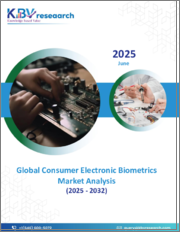
소비자 가전 바이오메트릭스 시장 : 규모, 점유율, 동향 분석(보안 수준별, 기술별, 디바이스 유형별, 용도별, 지역별), 전망, 예측Global Consumer Electronic Biometrics Market Size, Share & Industry Analysis Report By Security Level, By Technology, By Device Type, By Application, By Regional Outlook and Forecast, 2025 - 2032 |
||||||

소비자 가전 바이오메트릭스 시장 규모는 예측 기간 동안 20.0%의 연평균 복합 성장률(CAGR)로 성장하여 2032년까지 245억 달러에 달할 것으로 예측됩니다.
KBV Cardinal matrix : 소비자 가전 바이오메트릭스 시장 경쟁 분석
KBV Cardinal matrix에서 제시된 분석에 따르면 Apple사와 Microsoft사는 소비자 가전 바이오메트릭스(생체인증) 시장의 선구자입니다. Windows Hello는 생체인증 로그인을 통한 보안, 긴 배터리 수명 및 고급 AI 기능을 제공하여 이동 중에도 사용자의 생산성과 혁신을 향상시키도록 설계되었습니다.
COVID-19의 영향 분석
COVID-19 팬데믹 기간 동안 시장은 세계적인 공급망의 혼란에 의해 큰 과제에 직면했습니다. 생산과 납품에 지연이 발생했으며 많은 전자기기 제조업체는 중요한 부품의 조달에 어려움을 겪어 제품 발매의 연기나 소매 시장에서의 디바이스의 입수성 저하로 이어졌습니다.
시장 성장 요인
지난 10년간 보안 침해, 개인정보 절도, 사이버 공격은 빈도와 성공의 양면에서 증가하고 있으며, 디지털 보안은 소비자와 조직 모두에게 최우선 과제가 되었습니다. 지문인증, 얼굴인증, 음성인식 등의 생체인증은 보다 안전하고 개인을 식별하기 쉽우며 복제가 어려운 사용자 인증 대체 수단으로 사용됩니다.
게다가 스마트폰, 스마트워치, 피트니스 트래커, 스마트홈 허브, 음성 어시스턴트와 같은 커넥티드 디바이스의 세계적인 급증은 개인과 기술의 관계를 근본적으로 바꾸어 왔으며 상호 운용성과 직관적인 사용자 경험이 최우선 과제인 생태계를 창출하고 있습니다.
시장 성장 억제요인
생체인증은 보안 강화의 가능성이 높게 평가되고 있는 한편, 프라이버시와 데이터 보호에 관한 특유의 과제가 그 광범위한 보급을 막는 큰 장벽이 되고 있다는 모순이 있습니다. 생체인증은 한번 손상되면 재설정이 불가능합니다. 이러한 영구성은 소비자와 개인정보 보호자 사이에 큰 우려를 야기합니다.
밸류체인 분석
소비자 가전의 생체인증 시장의 밸류체인은 필수 하드웨어 요소를 제공하는 원재료 및 부품 공급업체로부터 시작됩니다. 시스템 개발자는 맞춤형 용도과 보안 프로토콜을 통해 장치의 기능을 강화합니다.
시장 점유율 분석
보안 수준별 전망
보안 수준에 따라 시장은 단일요소 인증과 다중요소 인증으로 분류됩니다. 다중요소 인증 부문은 2024년 시장 점유율의 38%를 차지했습니다. 이와 같은 두 가지 이상의 인증방법을 결합하여 보안을 더욱 강화할 수 있습니다.
기술별 전망
기술을 기반으로 시장은 지문인증, 얼굴인증, 음성인증, 홍채인증 등으로 분류됩니다. 얼굴인증은 비접촉적이고 편리한 보안 솔루션으로 급속하게 보급되고 있습니다. 최신 얼굴인증 시스템은 고급 알고리즘과 3D 이미징기술을 사용하여 다양한 조명 조건에서도 사용자를 정확하게 식별합니다.
기기 유형별 전망
기기 유형에 따라 시장은 스마트폰, 노트북, 웨어러블, 태블릿 등으로 분류됩니다. 원격 근무, 디지털 컨텐츠 제작의 트렌드가 인기를 얻으면서 안전하고 편리한 디바이스 액세스의 요구가 높아지고 있습니다. 그 결과, 노트북 제조업체는 지문 스캐너나 얼굴인증등의 생체인증 기능을 디바이스에 탑재하는 케이스가 늘고 있습니다.
용도별 전망
용도별로 보면, 시장은 인증 및 액세스 제어, 모바일 결제 및 디지털 지갑, 디바이스 보안 및 도난 방지 대책, 자녀 보호 및 이용 제한, 기타로 분류됩니다. 디지털 결제 솔루션의 세계적인 급속한 보급에 의해 안전하고 원활한 거래를 실현하기 위해 생체인증의 도입이 가속화되고 있습니다.
지역 전망
지역별로 볼 때 시장은 북미, 유럽, 아시아태평양, LAMEA(라틴아메리카, 중동, 아프리카)의 4개 지역으로 구분됩니다. 북미 소비자는 스마트폰, 웨어러블, 노트북, 스마트 홈디바이스와의 광범위한 통합을 통해 생체인증 기술을 일상적으로 활용하고 있습니다.
시장 경쟁과 특성
소비자 가전 바이오메트릭스 시장에서의 경쟁은 주요 기업을 제외하고는 여전히 활발하고 혁신 주도적입니다. 지역 및 스타트업 기업은 특히 신흥국 시장에서 기술 개발을 추진해 다양한 소비자의 기호에 대응하고 있으며 세계적인 거대 기업이 존재하지 않음에도 불구하고 다이나믹하고 세분화된 경쟁 구도를 형성하고 있습니다.
시장에서 전개되는 최근 전략
- 2025년 4월 : Samsung Electronics 주식회사는 오스트리아 기업 SKIDATA와의 제휴를 통해 세계적인 스포츠 엔터테인먼트 시설에서의 게스트 액세스 향상을 목표로 할 것을 발표하였습니다. 삼성 월렛은 SKIDATA 시스템과 통합되어 생체인증, 디지털 티켓 등을 활용한 안전하고 원활한 입장을 가능하게 하고, 편의성과 디지털 액세스 혁신의 새로운 기준을 확립합니다.
- 2024년 10월 : Infineon Technologies AG는 TRAVEO T2G 마이크로컨트롤러에 최적화된 차량용 지문 센서 IC 'CYFP10020A00' 및 'CYFP10020S00'을 발표했습니다. 이러한 센서는 차량 내 개인화 및 결제를 위한 고정밀 생체인증 기능을 제공하며, AES 암호화 기능을 탑재하고, 폭넓은 작동 온도 범위에 대응하여 자동차 분야를 비롯한 다양한 분야에서 보안과 사용성을 향상시킵니다.
- 2024년 4월 : Apple은 AI 압축과 컴퓨터비전을 전문으로 하는 프랑스 스타트업 기업 Datakalab을 인수했습니다. 저전력 디바이스 내 딥러닝으로 알려진 Datakalab 기술은 Apple의 얼굴인식 및 개인정보 보호기능을 향상시킵니다. 이번 인수는 PrimeSense, RealFace, Emotient와 같은 타겟을 좁힌 인수를 통해 생체인증 기능을 강화하는 Apple의 광범위한 전략을 지원합니다.
- 2024년 3월 : Qualcomm Incorporated는 보안 기업 IDEMIA와 제휴하여 Snapdragon 8 시리즈 스마트폰에 내장된 보안프로세서 유닛(SPU)을 활용하여 안전한 오프라인 CBDC 결제를 실현할 것을 발표하였습니다. 이 파트너십은 결제 보안과 편의성을 향상시키고 OEM은 혁신적이고 부드러운 디지털 통화 솔루션을 세계에 배포하여 수십억 명의 사용자에게 안전하고 원활한 거래를 제공할 수 있도록 합니다.
- 2024년 1월 : Qualcomm Incorporated는 소프트웨어 기업인 Salesforce 및 생체인증 기업인 Daon과의 제휴를 발표했습니다. 이번 제휴는 Snapdragon Digital Chassis와 Salesforce Automotive Cloud를 통합한 스마트카용 생체인증 시스템 개발을 목표로 합니다. 이 시스템은 정산 및 보험을 위한 생체인증, 개인화된 운전 경험, 데이터 구동 서비스 등을 제공하여 운전자, 승객 및 자동차 제조업체를 위한 차량의 연결성 및 보안을 강화합니다.
목차
제1장 시장의 범위와 분석 수법
- 시장의 정의
- 목적
- 시장 범위
- 세분화
- 분석방법
제2장 시장 개관
- 주요 하이라이트
제3장 시장 개요
- 소개
- 개요
- 시장 구성과 시나리오
- 개요
- 시장에 영향을 미치는 주요 요인
- 시장 성장 촉진요인
- 시장 성장 억제요인
- 시장 기회
- 시장의 과제
제4장 경쟁 분석 : 세계 시장
- KBV Cardinal Matrix
- 최근 업계 전체의 전략적 전개
- 사업 제휴 및 협력, 계약
- 제품 발매 및 확대
- 기업 합병 및 인수(M&A)
- 시장 점유율 분석(2024년)
- 주요 성공 전략
- 주요 전략
- 주요 전략적 움직임
- Porter's Five Forces 분석
제5장 소비자 가전 바이오메트릭스 시장의 밸류체인 분석
- 원재료 및 부품 공급자
- 생체인증 기술 개발자
- OEM 디바이스 제조업체
- 소프트웨어 인테그레이터 시스템 개발자
- 유통 및 소매 채널
- 최종사용자/소비자
- 애프터서비스 및 지원
제6장 소비자 가전 바이오메트릭스 시장의 주요 고객 기준
제7장 세계의 소비자 가전 바이오메트릭스 시장 : 보안 수준별
- 세계의 단일요소 인증 시장 : 지역별
- 세계의 다중요소 인증 시장 : 지역별
제8장 세계의 소비자 가전 바이오메트릭스 시장 : 기술별
- 세계의 지문인식 시장 : 지역별
- 세계의 얼굴인식 시장 : 지역별
- 세계의 음성인식 시장 : 지역별
- 세계의 홍채인식 시장 : 지역별
- 세계의 기타 기술 시장 : 지역별
제9장 세계의 소비자 가전 바이오메트릭스 시장 : 디바이스 유형별
- 세계의 스마트폰 시장 : 지역별
- 세계의 노트북 시장 : 지역별
- 세계의 웨어러블 시장 : 지역별
- 세계의 태블릿 시장 : 지역별
- 세계의 기타 유형의 디바이스 시장 : 지역별
제10장 세계의 소비자 가전 바이오메트릭스 시장 : 용도별
- 세계의 인증 및 액세스 제어 시장 : 지역별
- 세계의 모바일 결제 및 디지털 지갑 시장 : 지역별
- 세계의 디바이스 보안 및 도난 방지 대책 시장 : 지역별
- 세계의 자녀 보호 및 이용 제한 시장 : 지역별
- 세계의 기타 용도 시장 : 지역별
제11장 세계의 소비자 가전 바이오메트릭스 시장 : 지역별
- 북미
- 북미의 소비자 가전 바이오메트릭스 시장 : 국가별
- 미국
- 캐나다
- 멕시코
- 기타 북미
- 북미의 소비자 가전 바이오메트릭스 시장 : 국가별
- 유럽
- 유럽의 소비자 가전 바이오메트릭스 시장 : 국가별
- 독일
- 영국
- 프랑스
- 러시아
- 스페인
- 이탈리아
- 기타 유럽
- 유럽의 소비자 가전 바이오메트릭스 시장 : 국가별
- 아시아태평양
- 아시아태평양 소비자 가전 바이오메트릭스 시장 : 국가별
- 중국
- 일본
- 인도
- 한국
- 싱가포르
- 말레이시아
- 기타 아시아태평양
- 아시아태평양 소비자 가전 바이오메트릭스 시장 : 국가별
- 라틴아메리카, 중동, 아프리카
- 라틴아메리카, 중동, 아프리카의 소비자 가전 바이오메트릭스 시장 : 국가별
- 브라질
- 아르헨티나
- 아랍에미리트(UAE)
- 사우디아라비아
- 남아프리카
- 나이지리아
- 기타 라틴아메리카, 중동, 아프리카
- 라틴아메리카, 중동, 아프리카의 소비자 가전 바이오메트릭스 시장 : 국가별
제12장 기업 프로파일
- Apple, Inc
- Samsung Electronics Co., Ltd.(Samsung Group)
- Qualcomm Incorporated(Qualcomm Technologies, Inc)
- Infineon Technologies AG
- Microsoft Corporation
- IDEMIA SAS(Advent International, Inc)
- Fujitsu Limited
- Synaptics Incorporated
- Thales Group SA
- Aware, Inc
제13장 소비자 가전 바이오메트릭스 시장의 필수 성공 조건
CSM 25.07.22The Global Consumer Electronic Biometrics Market size is expected to reach $24.50 billion by 2032, rising at a market growth of 20.0% CAGR during the forecast period.
Consumers value the seamless experience of unlocking devices or authorizing actions with a single touch or glance, which has cemented single-factor authentication as the default choice in many mainstream products. Despite the growing awareness of security threats, the trade-off for faster and more intuitive user experiences continues to keep single-factor authentication at the forefront of the market.
The major strategies followed by the market participants are Product Launches as the key developmental strategy to keep pace with the changing demands of end users. For instance, In July, 2024, Samsung Electronics Co., Ltd. unveiled its first smart ring, the Galaxy Ring, featuring advanced biometric health monitoring like sleep, heart rate, and stress tracking. It integrates seamlessly with Samsung's ecosystem and offers competitive features and pricing compared to the Oura Ring, targeting health-conscious and tech-savvy consumers seeking comprehensive wellness wearables. Additionally, In January, 2025, IDEMIA SAS unveiled a USB-C device enabling biometric payment card enrollment via smartphones, simplifying fingerprint registration. The biometric data stays securely on the card, removing PIN use. Supported by Mastercard and Visa, this innovation aims to boost the global adoption of biometric payment cards by offering a user-friendly enrollment experience.
KBV Cardinal Matrix - Consumer Electronic Biometrics Market Competition Analysis
Based on the Analysis presented in the KBV Cardinal matrix; Apple, Inc., and Microsoft Corporation are the forerunners in the Consumer Electronic Biometrics Market. In August, 2024, Microsoft Corporation unveiled the new Surface Pro and Surface Laptop in the UAE, powered by Snapdragon X Elite and X Plus processors. These AI-enabled Copilot+ PCs offer enhanced performance, security with Windows Hello biometric sign-in, long battery life, and advanced AI features, designed to boost productivity and innovation for users on the go. Companies such as Samsung Electronics Co., Ltd., Qualcomm Incorporated, and Fujitsu Limited are some of the key innovators in Consumer Electronic Biometrics Market.
COVID 19 Impact Analysis
During the COVID-19 pandemic, the market faced significant disruptions due to global supply chain interruptions. Factory shutdowns in key manufacturing hubs, such as China and Southeast Asia, resulted in delays in the production and delivery of biometric components, including fingerprint sensors and facial recognition modules. Many electronics manufacturers struggled to source critical parts, leading to postponed product launches and reduced availability of devices in retail markets. Thus, the COVID-19 pandemic had a negative impact on the market.
Market Growth Factors
Over the past decade, security breaches, identity thefts, and cyberattacks have grown both in frequency and sophistication, making digital security a top priority for consumers and organizations alike. In a digital-first world where personal data is exchanged rapidly and often, people have become more aware of the vulnerabilities associated with traditional password and PIN-based systems. Biometrics-such as fingerprint recognition, facial authentication, and voice recognition-offer a more secure, personal, and hard-to-replicate alternative for user authentication. Thus, cyber threats evolve and digital lifestyles become more pervasive, the demand for secure and privacy-oriented solutions continues to push biometric technologies to the forefront of the market.
Additionally, the global surge in connected devices, including smartphones, smartwatches, fitness trackers, smart home hubs, and voice assistants, has fundamentally transformed how individuals interact with technology. This proliferation, commonly referred to as the Internet of Things (IoT), creates a vast ecosystem where seamless interoperability and intuitive user experiences are paramount. In conclusion, as the IoT ecosystem expands and connected devices permeate every aspect of modern living, biometrics is rapidly becoming the default authentication solution.
Market Restraining Factors
While biometrics are celebrated for their potential to enhance security, the paradox is that they introduce unique privacy and data protection challenges that act as a significant restraint on their widespread adoption. Unlike passwords, biometric identifiers such as fingerprints, facial features, or voice patterns are inherently personal and immutable. Once compromised, they cannot be changed or reset. This permanence raises major concerns among consumers and privacy advocates alike. Thus, despite their promise, privacy and data security concerns remain a profound restraint on the mass adoption of biometrics in consumer electronics.
Value Chain Analysis
The value chain of the consumer electronics biometrics market begins with raw material and component suppliers who provide essential hardware elements. These are utilized by biometric technology developers to create core recognition systems like fingerprint and facial sensors. OEMs and device manufacturers then integrate these technologies into consumer products. Software integrators and system developers enhance device functionality through tailored applications and security protocols. Distribution and retail channels deliver the products to end users/consumers, who rely on them for secure, seamless digital experiences. Finally, after-sales services and support ensure continued customer satisfaction and feed insights back into development.
Market Share Analysis
Security Level Outlook
Based on security level, the market is characterized into single-factor authentication and multi-factor authentication. The multi-factor authentication segment procured 38% revenue share in the market in 2024. Multi-factor authentication combines two or more distinct verification methods-such as pairing biometrics with passwords, PINs, or additional biometric modalities-to provide an extra layer of security. This approach has gained traction in scenarios where higher levels of protection are required, such as in mobile payments, access to sensitive data, or enterprise device usage.
Technology Outlook
On the basis of technology, the market is classified into fingerprint recognition, facial recognition, voice recognition, iris recognition, and others. The facial recognition segment garnered 27% revenue share in the market in 2024. This segment has seen rapid adoption due to the increasing popularity of contactless and highly convenient security solutions, particularly in smartphones, tablets, and laptops. Modern facial recognition systems use advanced algorithms and 3D imaging technologies to accurately identify users, even in varying lighting conditions.
Device Type Outlook
By device type, the market is divided into smartphones, laptops, wearables, tablets, and others. The laptops segment garnered 18% revenue share in the market in 2024. The rising trend of remote work, online education, and digital content creation has increased the need for secure and convenient device access. As a result, laptop manufacturers are increasingly embedding biometric features like fingerprint scanners and facial recognition into their devices.
Application Outlook
Based on application, the market is segmented into authentication & access control, mobile payments & digital wallets, device security & anti-theft measures, parental controls & usage restrictions, and others. The rapid global adoption of digital payment solutions has accelerated the integration of biometrics to ensure secure, frictionless transactions. Biometric authentication, particularly fingerprint and facial recognition, has become a standard security feature in mobile payment platforms and digital wallets.
Regional Outlook
Region-wise, the market is analyzed across North America, Europe, Asia Pacific, and LAMEA. The North America segment recorded 35% revenue share in the market in 2024. The region's strong market position is underpinned by its rapid technological adoption, high consumer awareness, and the presence of major global players in the electronics and biometrics sectors. Consumers in North America have embraced biometric technologies for everyday use, with widespread integration in smartphones, wearables, laptops, and smart home devices.
Market Competition and Attributes
The competition in the consumer electronic biometrics market, excluding top key players, remains vibrant and innovation-driven. Numerous regional firms and emerging startups compete by focusing on niche applications, affordability, and localized solutions. These players drive technological experimentation and cater to diverse consumer preferences, especially in developing markets, fostering a dynamic and fragmented competitive landscape despite the absence of global giants.
Recent Strategies Deployed in the Markets
- Apr-2025: Samsung Electronics Co., Ltd. announced the partnership with SKIDATA, an Austrian company to enhance guest access at global sports and entertainment venues. Samsung Wallet will integrate with SKIDATA's systems, enabling secure, seamless entry using biometric authentication, digital tickets, and more, setting new standards for convenience and digital access innovation.
- Oct-2024: Infineon Technologies AG unveiled automotive-qualified fingerprint sensor ICs, CYFP10020A00 and CYFP10020S00, optimized for TRAVEO T2G microcontrollers. These sensors offer precise biometric authentication for in-vehicle personalization and payments, feature AES encryption, and support various operating temperatures, enhancing security and usability in automotive and other sectors.
- Apr-2024: Apple, Inc. acquired Datakalab, a French startup specializing in AI compression and computer vision Known for low-power, on-device deep learning, Datakalab's technology enhances Apple's facial recognition and privacy features. This move supports Apple's broader strategy to strengthen biometric capabilities through targeted acquisitions like PrimeSense, RealFace, and Emotient.
- Mar-2024: Qualcomm Incorporated teamed up with IDEMIA, a security company to enable secure offline CBDC payments on Snapdragon 8-series smartphones using the built-in Secure Processor Unit. This collaboration enhances payment security and ease, allowing OEMs to deploy innovative, frictionless digital currency solutions globally, supporting billions of users with safer, seamless transactions.
- Jan-2024: Qualcomm Incorporated announced the partnership with Salesforce, a software company, and Daon, a Biometric company to develop a smart car biometric system integrating Snapdragon Digital Chassis with Salesforce Automotive Cloud. The system offers biometric authentication for payments and insurance, personalized driving experiences, and data-driven services, enhancing vehicle connectivity and security for drivers, passengers, and automakers.
List of Key Companies Profiled
- Apple, Inc.
- Samsung Electronics Co., Ltd. (Samsung Group)
- Qualcomm Incorporated (Qualcomm Technologies, Inc.)
- Infineon Technologies AG
- Microsoft Corporation
- IDEMIA SAS (Advent International, Inc.)
- Fujitsu Limited
- Synaptics Incorporated
- Thales Group S.A.
- Aware, Inc.
Global Consumer Electronic Biometrics Market Report Segmentation
By Security Level
- Single-Factor Authentication
- Multi-Factor Authentication
By Technology
- Fingerprint Recognition
- Facial Recognition
- Voice Recognition
- Iris Recognition
- Other Technology
By Device Type
- Smartphones
- Laptops
- Wearables
- Tablets
- Other Device Type
By Application
- Authentication & Access Control
- Mobile Payments & Digital Wallets
- Device Security & Anti-Theft Measures
- Parental Controls & Usage Restrictions
- Other Application
By Geography
- North America
- US
- Canada
- Mexico
- Rest of North America
- Europe
- Germany
- UK
- France
- Russia
- Spain
- Italy
- Rest of Europe
- Asia Pacific
- China
- Japan
- India
- South Korea
- Singapore
- Malaysia
- Rest of Asia Pacific
- LAMEA
- Brazil
- Argentina
- UAE
- Saudi Arabia
- South Africa
- Nigeria
- Rest of LAMEA
Table of Contents
Chapter 1. Market Scope & Methodology
- 1.1 Market Definition
- 1.2 Objectives
- 1.3 Market Scope
- 1.4 Segmentation
- 1.4.1 Global Consumer Electronic Biometrics Market, by Security Level
- 1.4.2 Global Consumer Electronic Biometrics Market, by Technology
- 1.4.3 Global Consumer Electronic Biometrics Market, by Device Type
- 1.4.4 Global Consumer Electronic Biometrics Market, by Application
- 1.4.5 Global Consumer Electronic Biometrics Market, by Geography
- 1.5 Methodology for the research
Chapter 2. Market at a Glance
- 2.1 Key Highlights
Chapter 3. Market Overview
- 3.1 Introduction
- 3.1.1 Overview
- 3.1.1.1 Market Composition and Scenario
- 3.1.1 Overview
- 3.2 Key Factors Impacting the Market
- 3.2.1 Market Drivers
- 3.2.2 Market Restraints
- 3.2.3 Market Opportunities
- 3.2.4 Market Challenges
Chapter 4. Competition Analysis - Global
- 4.1 KBV Cardinal Matrix
- 4.2 Recent Industry Wide Strategic Developments
- 4.2.1 Partnerships, Collaborations and Agreements
- 4.2.2 Product Launches and Product Expansions
- 4.2.3 Acquisition and Mergers
- 4.3 Market Share Analysis, 2024
- 4.4 Top Winning Strategies
- 4.4.1 Key Leading Strategies: Percentage Distribution (2021-2025)
- 4.5 Porter Five Forces Analysis
Chapter 5. Value Chain Analysis of Consumer Electronic Biometrics Market
- 5.1 Raw Material and Component Suppliers
- 5.2 Biometric Technology Developers
- 5.3 OEMs and Device Manufacturers
- 5.4 Software Integrators and System Developers
- 5.5 Distribution and Retail Channels
- 5.6 End Users / Consumers
- 5.7 After-Sales Services and Support
Chapter 6. Key Costumer Criteria of Consumer Electronic Biometrics Market
Chapter 7. Global Consumer Electronic Biometrics Market by Security Level
- 7.1 Global Single-Factor Authentication Market by Region
- 7.2 Global Multi-Factor Authentication Market by Region
Chapter 8. Global Consumer Electronic Biometrics Market by Technology
- 8.1 Global Fingerprint Recognition Market by Region
- 8.2 Global Facial Recognition Market by Region
- 8.3 Global Voice Recognition Market by Region
- 8.4 Global Iris Recognition Market by Region
- 8.5 Global Other Technology Market by Region
Chapter 9. Global Consumer Electronic Biometrics Market by Device Type
- 9.1 Global Smartphones Market by Region
- 9.2 Global Laptops Market by Region
- 9.3 Global Wearables Market by Region
- 9.4 Global Tablets Market by Region
- 9.5 Global Other Device Type Market by Region
Chapter 10. Global Consumer Electronic Biometrics Market by Application
- 10.1 Global Authentication & Access Control Market by Region
- 10.2 Global Mobile Payments & Digital Wallets Market by Region
- 10.3 Global Device Security & Anti-Theft Measures Market by Region
- 10.4 Global Parental Controls & Usage Restrictions Market by Region
- 10.5 Global Other Application Market by Region
Chapter 11. Global Consumer Electronic Biometrics Market by Region
- 11.1 North America Consumer Electronic Biometrics Market
- 11.1.1 North America Consumer Electronic Biometrics Market by Security Level
- 11.1.1.1 North America Single-Factor Authentication Market by Region
- 11.1.1.2 North America Multi-Factor Authentication Market by Region
- 11.1.2 North America Consumer Electronic Biometrics Market by Technology
- 11.1.2.1 North America Fingerprint Recognition Market by Country
- 11.1.2.2 North America Facial Recognition Market by Country
- 11.1.2.3 North America Voice Recognition Market by Country
- 11.1.2.4 North America Iris Recognition Market by Country
- 11.1.2.5 North America Other Technology Market by Country
- 11.1.3 North America Consumer Electronic Biometrics Market by Device Type
- 11.1.3.1 North America Smartphones Market by Country
- 11.1.3.2 North America Laptops Market by Country
- 11.1.3.3 North America Wearables Market by Country
- 11.1.3.4 North America Tablets Market by Country
- 11.1.3.5 North America Other Device Type Market by Country
- 11.1.4 North America Consumer Electronic Biometrics Market by Application
- 11.1.4.1 North America Authentication & Access Control Market by Country
- 11.1.4.2 North America Mobile Payments & Digital Wallets Market by Country
- 11.1.4.3 North America Device Security & Anti-Theft Measures Market by Country
- 11.1.4.4 North America Parental Controls & Usage Restrictions Market by Country
- 11.1.4.5 North America Other Application Market by Country
- 11.1.5 North America Consumer Electronic Biometrics Market by Country
- 11.1.5.1 US Consumer Electronic Biometrics Market
- 11.1.5.1.1 US Consumer Electronic Biometrics Market by Security Level
- 11.1.5.1.2 US Consumer Electronic Biometrics Market by Technology
- 11.1.5.1.3 US Consumer Electronic Biometrics Market by Device Type
- 11.1.5.1.4 US Consumer Electronic Biometrics Market by Application
- 11.1.5.2 Canada Consumer Electronic Biometrics Market
- 11.1.5.2.1 Canada Consumer Electronic Biometrics Market by Security Level
- 11.1.5.2.2 Canada Consumer Electronic Biometrics Market by Technology
- 11.1.5.2.3 Canada Consumer Electronic Biometrics Market by Device Type
- 11.1.5.2.4 Canada Consumer Electronic Biometrics Market by Application
- 11.1.5.3 Mexico Consumer Electronic Biometrics Market
- 11.1.5.3.1 Mexico Consumer Electronic Biometrics Market by Security Level
- 11.1.5.3.2 Mexico Consumer Electronic Biometrics Market by Technology
- 11.1.5.3.3 Mexico Consumer Electronic Biometrics Market by Device Type
- 11.1.5.3.4 Mexico Consumer Electronic Biometrics Market by Application
- 11.1.5.4 Rest of North America Consumer Electronic Biometrics Market
- 11.1.5.4.1 Rest of North America Consumer Electronic Biometrics Market by Security Level
- 11.1.5.4.2 Rest of North America Consumer Electronic Biometrics Market by Technology
- 11.1.5.4.3 Rest of North America Consumer Electronic Biometrics Market by Device Type
- 11.1.5.4.4 Rest of North America Consumer Electronic Biometrics Market by Application
- 11.1.5.1 US Consumer Electronic Biometrics Market
- 11.1.1 North America Consumer Electronic Biometrics Market by Security Level
- 11.2 Europe Consumer Electronic Biometrics Market
- 11.2.1 Europe Consumer Electronic Biometrics Market by Security Level
- 11.2.1.1 Europe Single-Factor Authentication Market by Country
- 11.2.1.2 Europe Multi-Factor Authentication Market by Country
- 11.2.2 Europe Consumer Electronic Biometrics Market by Technology
- 11.2.2.1 Europe Fingerprint Recognition Market by Country
- 11.2.2.2 Europe Facial Recognition Market by Country
- 11.2.2.3 Europe Voice Recognition Market by Country
- 11.2.2.4 Europe Iris Recognition Market by Country
- 11.2.2.5 Europe Other Technology Market by Country
- 11.2.3 Europe Consumer Electronic Biometrics Market by Device Type
- 11.2.3.1 Europe Smartphones Market by Country
- 11.2.3.2 Europe Laptops Market by Country
- 11.2.3.3 Europe Wearables Market by Country
- 11.2.3.4 Europe Tablets Market by Country
- 11.2.3.5 Europe Other Device Type Market by Country
- 11.2.4 Europe Consumer Electronic Biometrics Market by Application
- 11.2.4.1 Europe Authentication & Access Control Market by Country
- 11.2.4.2 Europe Mobile Payments & Digital Wallets Market by Country
- 11.2.4.3 Europe Device Security & Anti-Theft Measures Market by Country
- 11.2.4.4 Europe Parental Controls & Usage Restrictions Market by Country
- 11.2.4.5 Europe Other Application Market by Country
- 11.2.5 Europe Consumer Electronic Biometrics Market by Country
- 11.2.5.1 Germany Consumer Electronic Biometrics Market
- 11.2.5.1.1 Germany Consumer Electronic Biometrics Market by Security Level
- 11.2.5.1.2 Germany Consumer Electronic Biometrics Market by Technology
- 11.2.5.1.3 Germany Consumer Electronic Biometrics Market by Device Type
- 11.2.5.1.4 Germany Consumer Electronic Biometrics Market by Application
- 11.2.5.2 UK Consumer Electronic Biometrics Market
- 11.2.5.2.1 UK Consumer Electronic Biometrics Market by Security Level
- 11.2.5.2.2 UK Consumer Electronic Biometrics Market by Technology
- 11.2.5.2.3 UK Consumer Electronic Biometrics Market by Device Type
- 11.2.5.2.4 UK Consumer Electronic Biometrics Market by Application
- 11.2.5.3 France Consumer Electronic Biometrics Market
- 11.2.5.3.1 France Consumer Electronic Biometrics Market by Security Level
- 11.2.5.3.2 France Consumer Electronic Biometrics Market by Technology
- 11.2.5.3.3 France Consumer Electronic Biometrics Market by Device Type
- 11.2.5.3.4 France Consumer Electronic Biometrics Market by Application
- 11.2.5.4 Russia Consumer Electronic Biometrics Market
- 11.2.5.4.1 Russia Consumer Electronic Biometrics Market by Security Level
- 11.2.5.4.2 Russia Consumer Electronic Biometrics Market by Technology
- 11.2.5.4.3 Russia Consumer Electronic Biometrics Market by Device Type
- 11.2.5.4.4 Russia Consumer Electronic Biometrics Market by Application
- 11.2.5.5 Spain Consumer Electronic Biometrics Market
- 11.2.5.5.1 Spain Consumer Electronic Biometrics Market by Security Level
- 11.2.5.5.2 Spain Consumer Electronic Biometrics Market by Technology
- 11.2.5.5.3 Spain Consumer Electronic Biometrics Market by Device Type
- 11.2.5.5.4 Spain Consumer Electronic Biometrics Market by Application
- 11.2.5.6 Italy Consumer Electronic Biometrics Market
- 11.2.5.6.1 Italy Consumer Electronic Biometrics Market by Security Level
- 11.2.5.6.2 Italy Consumer Electronic Biometrics Market by Technology
- 11.2.5.6.3 Italy Consumer Electronic Biometrics Market by Device Type
- 11.2.5.6.4 Italy Consumer Electronic Biometrics Market by Application
- 11.2.5.7 Rest of Europe Consumer Electronic Biometrics Market
- 11.2.5.7.1 Rest of Europe Consumer Electronic Biometrics Market by Security Level
- 11.2.5.7.2 Rest of Europe Consumer Electronic Biometrics Market by Technology
- 11.2.5.7.3 Rest of Europe Consumer Electronic Biometrics Market by Device Type
- 11.2.5.7.4 Rest of Europe Consumer Electronic Biometrics Market by Application
- 11.2.5.1 Germany Consumer Electronic Biometrics Market
- 11.2.1 Europe Consumer Electronic Biometrics Market by Security Level
- 11.3 Asia Pacific Consumer Electronic Biometrics Market
- 11.3.1 Asia Pacific Consumer Electronic Biometrics Market by Security Level
- 11.3.1.1 Asia Pacific Single-Factor Authentication Market by Country
- 11.3.1.2 Asia Pacific Multi-Factor Authentication Market by Country
- 11.3.2 Asia Pacific Consumer Electronic Biometrics Market by Technology
- 11.3.2.1 Asia Pacific Fingerprint Recognition Market by Country
- 11.3.2.2 Asia Pacific Facial Recognition Market by Country
- 11.3.2.3 Asia Pacific Voice Recognition Market by Country
- 11.3.2.4 Asia Pacific Iris Recognition Market by Country
- 11.3.2.5 Asia Pacific Other Technology Market by Country
- 11.3.3 Asia Pacific Consumer Electronic Biometrics Market by Device Type
- 11.3.3.1 Asia Pacific Smartphones Market by Country
- 11.3.3.2 Asia Pacific Laptops Market by Country
- 11.3.3.3 Asia Pacific Wearables Market by Country
- 11.3.3.4 Asia Pacific Tablets Market by Country
- 11.3.3.5 Asia Pacific Other Device Type Market by Country
- 11.3.4 Asia Pacific Consumer Electronic Biometrics Market by Application
- 11.3.4.1 Asia Pacific Authentication & Access Control Market by Country
- 11.3.4.2 Asia Pacific Mobile Payments & Digital Wallets Market by Country
- 11.3.4.3 Asia Pacific Device Security & Anti-Theft Measures Market by Country
- 11.3.4.4 Asia Pacific Parental Controls & Usage Restrictions Market by Country
- 11.3.4.5 Asia Pacific Other Application Market by Country
- 11.3.5 Asia Pacific Consumer Electronic Biometrics Market by Country
- 11.3.5.1 China Consumer Electronic Biometrics Market
- 11.3.5.1.1 China Consumer Electronic Biometrics Market by Security Level
- 11.3.5.1.2 China Consumer Electronic Biometrics Market by Technology
- 11.3.5.1.3 China Consumer Electronic Biometrics Market by Device Type
- 11.3.5.1.4 China Consumer Electronic Biometrics Market by Application
- 11.3.5.2 Japan Consumer Electronic Biometrics Market
- 11.3.5.2.1 Japan Consumer Electronic Biometrics Market by Security Level
- 11.3.5.2.2 Japan Consumer Electronic Biometrics Market by Technology
- 11.3.5.2.3 Japan Consumer Electronic Biometrics Market by Device Type
- 11.3.5.2.4 Japan Consumer Electronic Biometrics Market by Application
- 11.3.5.3 India Consumer Electronic Biometrics Market
- 11.3.5.3.1 India Consumer Electronic Biometrics Market by Security Level
- 11.3.5.3.2 India Consumer Electronic Biometrics Market by Technology
- 11.3.5.3.3 India Consumer Electronic Biometrics Market by Device Type
- 11.3.5.3.4 India Consumer Electronic Biometrics Market by Application
- 11.3.5.4 South Korea Consumer Electronic Biometrics Market
- 11.3.5.4.1 South Korea Consumer Electronic Biometrics Market by Security Level
- 11.3.5.4.2 South Korea Consumer Electronic Biometrics Market by Technology
- 11.3.5.4.3 South Korea Consumer Electronic Biometrics Market by Device Type
- 11.3.5.4.4 South Korea Consumer Electronic Biometrics Market by Application
- 11.3.5.5 Singapore Consumer Electronic Biometrics Market
- 11.3.5.5.1 Singapore Consumer Electronic Biometrics Market by Security Level
- 11.3.5.5.2 Singapore Consumer Electronic Biometrics Market by Technology
- 11.3.5.5.3 Singapore Consumer Electronic Biometrics Market by Device Type
- 11.3.5.5.4 Singapore Consumer Electronic Biometrics Market by Application
- 11.3.5.6 Malaysia Consumer Electronic Biometrics Market
- 11.3.5.6.1 Malaysia Consumer Electronic Biometrics Market by Security Level
- 11.3.5.6.2 Malaysia Consumer Electronic Biometrics Market by Technology
- 11.3.5.6.3 Malaysia Consumer Electronic Biometrics Market by Device Type
- 11.3.5.6.4 Malaysia Consumer Electronic Biometrics Market by Application
- 11.3.5.7 Rest of Asia Pacific Consumer Electronic Biometrics Market
- 11.3.5.7.1 Rest of Asia Pacific Consumer Electronic Biometrics Market by Security Level
- 11.3.5.7.2 Rest of Asia Pacific Consumer Electronic Biometrics Market by Technology
- 11.3.5.7.3 Rest of Asia Pacific Consumer Electronic Biometrics Market by Device Type
- 11.3.5.7.4 Rest of Asia Pacific Consumer Electronic Biometrics Market by Application
- 11.3.5.1 China Consumer Electronic Biometrics Market
- 11.3.1 Asia Pacific Consumer Electronic Biometrics Market by Security Level
- 11.4 LAMEA Consumer Electronic Biometrics Market
- 11.4.1 LAMEA Consumer Electronic Biometrics Market by Security Level
- 11.4.1.1 LAMEA Single-Factor Authentication Market by Country
- 11.4.1.2 LAMEA Multi-Factor Authentication Market by Country
- 11.4.2 LAMEA Consumer Electronic Biometrics Market by Technology
- 11.4.2.1 LAMEA Fingerprint Recognition Market by Country
- 11.4.2.2 LAMEA Facial Recognition Market by Country
- 11.4.2.3 LAMEA Voice Recognition Market by Country
- 11.4.2.4 LAMEA Iris Recognition Market by Country
- 11.4.2.5 LAMEA Other Technology Market by Country
- 11.4.3 LAMEA Consumer Electronic Biometrics Market by Device Type
- 11.4.3.1 LAMEA Smartphones Market by Country
- 11.4.3.2 LAMEA Laptops Market by Country
- 11.4.3.3 LAMEA Wearables Market by Country
- 11.4.3.4 LAMEA Tablets Market by Country
- 11.4.3.5 LAMEA Other Device Type Market by Country
- 11.4.4 LAMEA Consumer Electronic Biometrics Market by Application
- 11.4.4.1 LAMEA Authentication & Access Control Market by Country
- 11.4.4.2 LAMEA Mobile Payments & Digital Wallets Market by Country
- 11.4.4.3 LAMEA Device Security & Anti-Theft Measures Market by Country
- 11.4.4.4 LAMEA Parental Controls & Usage Restrictions Market by Country
- 11.4.4.5 LAMEA Other Application Market by Country
- 11.4.5 LAMEA Consumer Electronic Biometrics Market by Country
- 11.4.5.1 Brazil Consumer Electronic Biometrics Market
- 11.4.5.1.1 Brazil Consumer Electronic Biometrics Market by Security Level
- 11.4.5.1.2 Brazil Consumer Electronic Biometrics Market by Technology
- 11.4.5.1.3 Brazil Consumer Electronic Biometrics Market by Device Type
- 11.4.5.1.4 Brazil Consumer Electronic Biometrics Market by Application
- 11.4.5.2 Argentina Consumer Electronic Biometrics Market
- 11.4.5.2.1 Argentina Consumer Electronic Biometrics Market by Security Level
- 11.4.5.2.2 Argentina Consumer Electronic Biometrics Market by Technology
- 11.4.5.2.3 Argentina Consumer Electronic Biometrics Market by Device Type
- 11.4.5.2.4 Argentina Consumer Electronic Biometrics Market by Application
- 11.4.5.3 UAE Consumer Electronic Biometrics Market
- 11.4.5.3.1 UAE Consumer Electronic Biometrics Market by Security Level
- 11.4.5.3.2 UAE Consumer Electronic Biometrics Market by Technology
- 11.4.5.3.3 UAE Consumer Electronic Biometrics Market by Device Type
- 11.4.5.3.4 UAE Consumer Electronic Biometrics Market by Application
- 11.4.5.4 Saudi Arabia Consumer Electronic Biometrics Market
- 11.4.5.4.1 Saudi Arabia Consumer Electronic Biometrics Market by Security Level
- 11.4.5.4.2 Saudi Arabia Consumer Electronic Biometrics Market by Technology
- 11.4.5.4.3 Saudi Arabia Consumer Electronic Biometrics Market by Device Type
- 11.4.5.4.4 Saudi Arabia Consumer Electronic Biometrics Market by Application
- 11.4.5.5 South Africa Consumer Electronic Biometrics Market
- 11.4.5.5.1 South Africa Consumer Electronic Biometrics Market by Security Level
- 11.4.5.5.2 South Africa Consumer Electronic Biometrics Market by Technology
- 11.4.5.5.3 South Africa Consumer Electronic Biometrics Market by Device Type
- 11.4.5.5.4 South Africa Consumer Electronic Biometrics Market by Application
- 11.4.5.6 Nigeria Consumer Electronic Biometrics Market
- 11.4.5.6.1 Nigeria Consumer Electronic Biometrics Market by Security Level
- 11.4.5.6.2 Nigeria Consumer Electronic Biometrics Market by Technology
- 11.4.5.6.3 Nigeria Consumer Electronic Biometrics Market by Device Type
- 11.4.5.6.4 Nigeria Consumer Electronic Biometrics Market by Application
- 11.4.5.7 Rest of LAMEA Consumer Electronic Biometrics Market
- 11.4.5.7.1 Rest of LAMEA Consumer Electronic Biometrics Market by Security Level
- 11.4.5.7.2 Rest of LAMEA Consumer Electronic Biometrics Market by Technology
- 11.4.5.7.3 Rest of LAMEA Consumer Electronic Biometrics Market by Device Type
- 11.4.5.7.4 Rest of LAMEA Consumer Electronic Biometrics Market by Application
- 11.4.5.1 Brazil Consumer Electronic Biometrics Market
- 11.4.1 LAMEA Consumer Electronic Biometrics Market by Security Level
Chapter 12. Company Profiles
- 12.1 Apple, Inc.
- 12.1.1 Company Overview
- 12.1.2 Financial Analysis
- 12.1.3 Regional Analysis
- 12.1.4 Research & Development Expense
- 12.1.5 Recent strategies and developments:
- 12.1.5.1 Acquisition and Mergers:
- 12.1.6 SWOT Analysis
- 12.2 Samsung Electronics Co., Ltd. (Samsung Group)
- 12.2.1 Company Overview
- 12.2.2 Financial Analysis
- 12.2.3 Segmental and Regional Analysis
- 12.2.4 Research & Development Expenses
- 12.2.5 Recent strategies and developments:
- 12.2.5.1 Partnerships, Collaborations, and Agreements:
- 12.2.5.2 Product Launches and Product Expansions:
- 12.2.6 SWOT Analysis
- 12.3 Qualcomm Incorporated (Qualcomm Technologies, Inc.)
- 12.3.1 Company Overview
- 12.3.2 Financial Analysis
- 12.3.3 Segmental and Regional Analysis
- 12.3.4 Research & Development Expense
- 12.3.5 Recent strategies and developments:
- 12.3.5.1 Partnerships, Collaborations, and Agreements:
- 12.3.6 SWOT Analysis
- 12.4 Infineon Technologies AG
- 12.4.1 Company Overview
- 12.4.2 Financial Analysis
- 12.4.3 Segmental and Regional Analysis
- 12.4.4 Research & Development Expense
- 12.4.5 Recent strategies and developments:
- 12.4.5.1 Product Launches and Product Expansions:
- 12.4.6 SWOT Analysis
- 12.5 Microsoft Corporation
- 12.5.1 Company Overview
- 12.5.2 Financial Analysis
- 12.5.3 Segmental and Regional Analysis
- 12.5.4 Research & Development Expenses
- 12.5.5 Recent strategies and developments:
- 12.5.5.1 Partnerships, Collaborations, and Agreements:
- 12.5.5.2 Product Launches and Product Expansions:
- 12.5.5.3 Acquisition and Mergers:
- 12.5.6 SWOT Analysis
- 12.6 IDEMIA SAS (Advent International, Inc.)
- 12.6.1 Company Overview
- 12.6.2 Recent strategies and developments:
- 12.6.2.1 Product Launches and Product Expansions:
- 12.6.3 SWOT Analysis
- 12.7 Fujitsu Limited
- 12.7.1 Company Overview
- 12.7.2 Financial Analysis
- 12.7.3 Segmental and Regional Analysis
- 12.7.4 Research & Development Expenses
- 12.7.5 Recent strategies and developments:
- 12.7.5.1 Acquisition and Mergers:
- 12.7.6 SWOT Analysis
- 12.8 Synaptics Incorporated
- 12.8.1 Company Overview
- 12.8.2 Financial Analysis
- 12.8.3 Regional Analysis
- 12.8.4 Research & Development Expenses
- 12.8.5 Recent strategies and developments:
- 12.8.5.1 Product Launches and Product Expansions:
- 12.8.6 SWOT Analysis
- 12.9 Thales Group S.A.
- 12.9.1 Company Overview
- 12.9.2 Financial Analysis
- 12.9.3 Segmental Analysis
- 12.9.4 Research & Development Expenses
- 12.9.5 SWOT Analysis
- 12.10. Aware, Inc.
- 12.10.1 Company Overview
- 12.10.2 Financial Analysis
- 12.10.3 Segmental Analysis
- 12.10.4 Research & Development Expenses
- 12.10.5 SWOT Analysis