|
시장보고서
상품코드
2021342
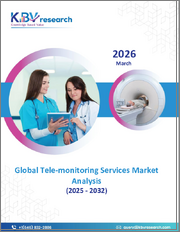
원격 모니터링 서비스 시장 규모, 점유율, 업계 분석 리포트 : 디바이스별, 서비스별, 결제 모델별, 최종사용자별, 애플리케이션별, 시설별, 지역별 전망 및 예측(2025-2032년)Global Tele-monitoring Services Market Size, Share & Industry Analysis Report By Device, By Service, By Payment Model, By End Use, By Application, By Facility, By Regional Outlook and Forecast, 2025 - 2032 |
||||||

세계의 원격 모니터링 서비스 시장 규모는 2025년에 288억 달러로 추계되고 있으며, 2032년까지 911억 달러에 달할 것으로 예상되고 있습니다. 예측 기간(2025-2032년)의 CAGR은 17.9%에 달할 것으로 예상됩니다. 이러한 성장은 만성질환의 유병률 증가, 원격 환자 모니터링의 도입 확대, 디지털 헬스 기술의 발전에 힘입어 성장하고 있습니다. 원격의료 인프라의 확대, 정부의 지원책, 비용 효율적인 케어 솔루션에 대한 수요는 시장 확대를 더욱 가속화하며 이러한 성장을 지원하고 있습니다.
주요 시장 동향과 인사이트:
- 2024년 북미 시장은 세계 원격 모니터링 서비스 시장을 주도하며 동년 매출 점유율의 33.78%를 차지했습니다.
- 미국 시장은 2032년까지 시장 규모가 224억 7,000만 달러에 달할 것으로 예상되며, 북미 시장에서 선두를 유지할 것으로 예상됩니다.
- 디바이스별로는 웨어러블/원격 센서 부문이 유럽 시장을 주도하며 2024년 매출 점유율의 57.22%를 차지했습니다.
- 서비스별로는 원격 환자 모니터링(RPM) 부문이 아시아태평양 시장을 주도할 것으로 예상되며, 2032년까지 48.54%의 매출 점유율을 차지할 것으로 예상됩니다.
- 지불 모델에서는 보험 환급 시장이 2024년 주요 모델로 부상하여 34.15%의 매출 점유율을 차지하며, 예측 기간 중 그 우위를 유지할 것으로 보입니다.
- 최종 용도별 시장에서 북미 정보, 감시 및 정찰(ISR) 시장은 2032년 111억 1,000만 달러 규모에 달하며, 예측 기간 중 선두를 유지할 것으로 예상됩니다.
- 용도별로는 일차의료 부문이 2024년 68억 1,000만 달러의 시장 규모를 차지하며, 이 부문은 예측 기간 중 그 지위를 유지할 것으로 보입니다.
- 시설별로는 원격병원 부문이 세계 시장을 주도할 것으로 예상되며, 2032년까지 매출 점유율의 50.95%를 차지할 것으로 예측됩니다.
원격 모니터링 서비스 시장은 웨어러블 기기, 통신 기술, 클라우드 컴퓨팅, 바이오 센서의 발전에 힘입어 정교한 디지털 헬스케어 생태계로 발전했습니다. 이러한 혁신은 지속적인 모니터링, 실시간 건강 데이터 수집, 원격 임상 의사결정을 가능하게 하여 특히 만성질환 관리에서 환자 참여도를 크게 향상시켰습니다. AI와 예측 분석을 활용하고 전자건강기록(EHR)과의 통합을 통해 치료의 질을 더욱 향상시키고, 개인화된 치료와 조기 개입을 가능하게 합니다. 원격 모니터링 서비스는 고령화에 따른 재택 의료에 대한 수요 증가와 유리한 규제 프레임워크에 힘입어 현대 의료 서비스 제공의 핵심 요소로 자리 잡고 있습니다.
원격 모니터링 서비스 시장은 데이터 보안과 프라이버시에 대한 관심 증가, IoT 지원 웨어러블 기기의 보급, 의료 시스템 간 상호운용성에 대한 강력한 추진력 등의 요인에 의해 형성되고 있습니다. 각 기업은 전략적 제휴, 혁신, 규제 기준 준수를 통해 경쟁하고 있으며, AI와 클라우드 기반 플랫폼을 활용하여 비용 효율적이고 확장 가능한 솔루션을 제공하고 있습니다. 경쟁 환경에는 통합성, 기능성, 사용자 경험을 향상시키려는 기술 기업, 의료기기 제조업체, 원격의료 서비스 제공업체 등이 포함됩니다. 원격 모니터링 서비스 시장은 파트너십과 연구개발(R&D)에 대한 지속적인 투자를 통해 혁신 주도형 시장으로 성장하고 의료 성과 향상에 기여하고 있습니다.
KBV 카디널 매트릭스 - 시장 경쟁 분석
KBV Cardinal Matrix의 분석에 따르면 Abbott Laboratories는 원격 모니터링 서비스 시장의 선구자입니다. 2024년 8월, Abbott는 Medtronic과 제휴하여 자사의 FreeStyle Libre CGM 기술을 Medtronic의 인슐린 투여 시스템에 통합하여 자동화된 당뇨병 관리를 강화했습니다. 이번 글로벌 파트너십은 인슐린 의존성 당뇨병을 관리하는 수백만 명의 환자들에게 원격 모니터링의 선택의 폭을 넓혀 혈당 관리와 치료 결과를 개선할 수 있는 기회를 제공할 것으로 기대됩니다. 메드트로닉 PLC, GE헬스케어 테크놀러지스(GE Healthcare Technologies)와 같은 기업은 원격 모니터링 서비스 시장의 주요 혁신가들 중 일부입니다.
목차
제1장 시장 범위와 조사 방법
제2장 시장 개관
제3장 시장 개요
제4장 시장의 동향
제5장 경쟁 구도
제6장 시장의 통합
제7장 주요 고객 기준
제8장 제품수명주기 분석
제9장 밸류체인 분석 : 원격 모니터링 서비스 시장
제10장 경쟁 분석 : 세계
제11장 세계 시장 : 디바이스별
제12장 세계 시장 : 서비스별
제13장 세계 시장 : 결제 모델별
제14장 세계 시장 : 최종 용도별
제15장 세계 시장 : 용도별
제16장 세계 시장 : 시설별
제17장 세계 시장 : 지역별
제18장 기업 개요
제19장 성공 요건 : 원격 모니터링 서비스 시장
KSA 26.05.12The Global Tele-monitoring Services Market size is estimated at $28.80 billion in 2025 and is expected to reach $91.10 billion by 2032, rising at a market growth of 17.9% CAGR during the forecast period (2025-2032). This growth is driven by rising chronic disease prevalence, increasing adoption of remote patient monitoring, and advancements in digital health technologies. Expanding telehealth infrastructure, supportive government initiatives, and demand for cost-effective care solutions further accelerate market expansion justifying the growth.
Key Market Trends & Insights:
- The North America market dominated Global Tele-monitoring Services Market in 2024, accounting for a 33.78% revenue share in 2024.
- The U.S. market is projected to maintain its leadership in North America, reaching a market size of USD 22.47 billion by 2032.
- Among the Device, the Wearables / Remote Sensors segment dominated the Europe market, contributing a revenue share of 57.22% in 2024.
- In terms of Service, Remote Patient Monitoring (RPM) segment are expected to lead the Asia Pacific market, with a projected revenue share of 48.54% by 2032.
- The Insurance Reimbursement market emerged as the leading Payment Model in 2024, capturing a 34.15% revenue share, and is projected to retain its dominance during the forecast period.
- The Intelligence, Surveillance and Reconnaissance Market in End Use is poised to grow at the market in 2032 in North America with a market size of USD 11.11 billion and is projected to maintain its dominant position throughout the forecast period.
- By Application the Primary Care Segment captured the market size of USD 6.81 billion in 2024 and this segment will maintain its position during the forecast period.
- In terms of Facility, Tele-Hospitals segment are expected to lead the global market, with a projected revenue share of 50.95% by 2032.
The tele-monitoring services market has developed into a sophisticated digital healthcare ecosystem, propelled by advancements in wearable devices, communication technologies, cloud computing, and biosensors. These innovations have allowed continuous monitoring, real-time health data collection, and remote clinical decision-making, substantially enhancing patient engagement, especially for chronic disease management. The use of AI and predictive analytics, as well as integration with e-health records have further strengthened care quality, allowing personalized treatment and early intervention. Tele-monitoring services have become a core component of modern healthcare delivery, supported by rising demand for home-based care because of the aging population and favourable regulatory frameworks.
The tele-monitoring services market is shaped by factors including rising focus on data security and privacy, widespread adoption of IoT-enabled wearables, and a strong push towards interoperability across healthcare systems. Enterprises compete through strategic partnerships, innovation, and compliance with regulatory standards, along with leveraging AI and cloud-based platforms to deliver cost-effective and scalable solutions. The competitive landscape includes technology firms, medical device manufacturers, and telehealth providers, seeking to improve integration, functionality, and user-experience. The tele-monitoring services market remains innovation-driven, with continued investment in partnerships and R&D supporting growth and enhancing healthcare outcomes.
The major strategies followed by the market participants are Partnership as the key developmental strategy to keep pace with the changing demands of end users. For instance, In February, 2024, GE HealthCare partnered with Biofourmis to offer virtual care-at-home solutions, extending patient monitoring beyond hospitals. The collaboration leverages AI-guided algorithms and wearable devices to support remote care, aiming to reduce readmissions, ease staffing shortages, and improve patient outcomes. Moreover, In April, 2025, OMRON Healthcare partnered with Tricog Health to launch KeeboHealth, an AI-powered remote cardiac care platform using home ECG and monitoring devices. The solution enhances heart failure management, reducing hospital readmissions and improving treatment adherence through personalized, tele-monitored interventions in India.
KBV Cardinal Matrix - Market Competition Analysis
Based on the Analysis presented in the KBV Cardinal matrix; Abbott Laboratories is the forerunners in the Tele-monitoring Services Market. In August, 2024, Abbott partnered with Medtronic to integrate its FreeStyle Libre CGM technology with Medtronic's insulin delivery systems, enhancing automated diabetes care. This global collaboration expands remote monitoring options, supporting better glucose management and improving outcomes for millions managing insulin-dependent diabetes. Companies such as Medtronic PLC and GE HealthCare Technologies, Inc. are some of the key innovators in Tele-monitoring Services Market.
COVID 19 Impact Analysis
The COVID-19 pandemic sped up the growth of the tele-monitoring services market by quickly changing how healthcare is delivered to models that are remote and use technology. A lot of people started using tele-monitoring to keep track of vital signs, manage chronic conditions, and do virtual follow-ups because they needed to limit physical interactions while still getting care. This surge was helped by more relaxed rules, more reimbursements, and more telehealth integration across healthcare systems. The pandemic also showed that traditional care has gaps, especially for people in rural areas and those who are vulnerable. This made it even more important to use remote monitoring to make care more accessible and involve patients more. There were some problems that came up, like problems with technology, privacy of data, and lack of digital literacy, but they didn't stop the market from growing very much. The use of advanced technologies like artificial intelligence and data analytics has also made the foundation for more personalized and predictive healthcare solutions stronger.
Drivers
- Growing Prevalence Of Chronic Diseases And Aging Population
- Advancements In Technology And Integration Of Artificial Intelligence
- Rising Healthcare Costs And Need For Cost-Effective Care Models
- Increasing Adoption Of Digital Health And Telehealth Ecosystems
Restraints
- Regulatory Complexity And Uncertainty
- Reimbursement Challenges And Inconsistent Payment Policies
- Data Privacy Concerns And Security Vulnerabilities
Opportunities
- Growing Demand For Remote Chronic Disease Management
- Integration Of Artificial Intelligence To Enhance Tele-Monitoring Capabilities
- Growing Demand For Remote Monitoring In Post-Acute And Home Care Settings
Challenges
- Data Security And Privacy Risks
- Interoperability And Integration Barriers
- Limited Digital Infrastructure In Emerging Regions
Market Share Analysis
Device Outlook
Based on Device, the market is segmented into Wearables / Remote Sensors and Mobile Devices. The mobile devices segment attained 43% revenue share in the tele-monitoring services market in 2024. These devices serve as a central platform for collecting, transmitting, and analyzing patient health data, enabling seamless communication between patients and healthcare providers. Mobile devices facilitate remote consultations, health tracking, medication reminders, and access to telehealth services, making healthcare more accessible and convenient.
Service Outlook
Based on Service, the market is segmented into Remote Patient Monitoring (RPM), Chronic Disease Management and Post-Operative Monitoring. The chronic disease management segment recorded 29% revenue share in the tele-monitoring services market in 2024. The chronic disease management segment focuses on monitoring and managing long-term conditions such as diabetes, cardiovascular diseases, and respiratory disorders. Tele-monitoring services in this segment enable continuous tracking of patient health and support proactive treatment adjustments. These solutions help improve patient adherence to treatment plans through regular monitoring, alerts, and virtual consultations.
Regional Outlook
Region-wise, the tele-monitoring services market is analyzed across North America, Europe, Asia Pacific, and LAMEA. The North America segment recorded 34% revenue share in the tele-monitoring services market in 2024. In North America and Europe regions, the tele-monitoring services market is estimated to experience significant growth. The market is driven by strong digital adoption, advanced healthcare infrastructure, and supportive regulatory frameworks. North America's market is growing due to widespread use of remote patient monitoring, high healthcare spending, and favorable reimbursement policies that support telehealth adoption. The presence of major healthcare companies and technology providers, alongside early integration of cloud-based and AI platforms, further surges the market expansion. Moreover, Europe tele-monitoring services market is growing, propelled by an increasing elderly population raising the need for chronic disease management, and government-backed digital health initiatives. The region's focus on interoperability and data privacy standards which promote standardized and secure tele-monitoring solutions across healthcare systems.
The tele-monitoring services market is anticipated to grow at a substantial rate in the Asia Pacific and LAMEA region. The market is driven by increasing smartphone penetration, enhancing healthcare infrastructure, and rising awareness of remote healthcare solutions. Asia Pacific is experiencing strong growth supported by rising chronic disease burden, large patient populations, and government initiatives promoting digital health. Mobile health platforms and cost-effective tele-monitoring solutions are influential in underserved areas. Furthermore, the LAMEA tele-monitoring services market is expanding at a steady pace. This is because of investment in telecommunication infrastructure and healthcare modernization efforts. Also, the region showcases noticeable growth opportunities because of the rising demand for affordable and accessible healthcare solutions.
Market Competition and Attributes
The tele-monitoring services market is very competitive and changes quickly because of new technologies and growing healthcare needs. Providers stand out by offering better service, more reliable platforms, better data security, and better ways to connect with existing healthcare systems. The market is always changing, with better remote patient monitoring tools and easier-to-use interfaces. Strategic partnerships, geographic growth, and tailoring services for chronic disease management all make competition even tougher. At the same time, following the rules and protecting patient data are still very important competitive factors.
Recent Strategies Deployed in the Market
- May-2025: Teladoc Health acquired UpLift to expand virtual mental health access through covered benefits. The deal enhances Teladoc's tele-monitoring services in psychiatry, therapy, and medication management by integrating UpLift's provider network and insurance arrangements covering over 100 million lives.
- Nov-2024: Teladoc Health launched an AI-enhanced Virtual Sitter solution to help hospitals monitor more patients remotely, reduce fall incidents, and improve care efficiency. This advancement supports inpatient tele-monitoring, easing staff workloads and enhancing safety through real-time motion detection and alerts.
- Apr-2024: OMRON Healthcare acquired Luscii Healthtech to expand its remote patient monitoring capabilities. The acquisition enhances OMRON's digital healthcare presence across Europe, supporting integrated care for chronic conditions and advancing its mission to reduce heart attacks and strokes through scalable tele-monitoring solutions.
- Oct-2023: Medtronic PLC and La Poste partnered to launch a digital platform offering telemonitoring and telecare services. The collaboration aims to enhance patient journeys using AI and data analytics, supporting healthcare providers in digital transformation and improving care coordination across medical conditions.
- Sep-2023: Abbott announced the acquisition of Bigfoot Biomedical to enhance its diabetes care portfolio with smart insulin management systems. The deal integrates Abbott's CGM technology with Bigfoot's AI-powered insulin dosing tools, supporting personalized, connected, and remote diabetes monitoring and treatment.
- Aug-2023: OMRON HEALTHCARE Co., Ltd. and EPIC Health partnered to launch VitalSight(TM), a remote patient monitoring program for hypertension management in underserved Detroit communities. The service enhances patient-doctor connections, enables real-time data sharing, and supports personalized, accessible care to reduce cardiovascular risks.
List of Key Companies Profiled
- OMRON HEALTHCARE Co., Ltd. (Omron Corporation)
- Koninklijke Philips N.V.
- Teladoc Health, Inc.
- Twilio, Inc.
- Medtronic PLC
- GE HealthCare Technologies, Inc.
- American Well Corporation (Amwell)
- Athenahealth, Inc.
- Abbott Laboratories
- MDLive, Inc.
Global Tele-monitoring Services Market Report Segmentation
By Device
- Wearables / Remote Sensors
- Mobile Devices
By Service
- Remote Patient Monitoring (RPM)
- Chronic Disease Management
- Post-Operative Monitoring
By Payment Model
- Insurance Reimbursement
- Self-Pay (Out-of-Pocket)
- Employer-Sponsored
- Other Payment Model
By End Use
- Providers
- Patients
- Payers
- Other End Use
By Application
- Primary Care
- Cardiology
- Mental Health
- Dermatology
- Other Application
By Facility
- Tele-Hospitals
- Tele-Home
By Geography
- North America
- US
- Canada
- Mexico
- Rest of North America
- Europe
- Germany
- UK
- France
- Russia
- Spain
- Italy
- Rest of Europe
- Asia Pacific
- China
- Japan
- India
- South Korea
- Singapore
- Malaysia
- Rest of Asia Pacific
- LAMEA
- Brazil
- Argentina
- UAE
- Saudi Arabia
- South Africa
- Nigeria
- Rest of LAMEA
Table of Contents
Chapter 1. Market Scope & Methodology
- 1.1 Market Definition
- 1.2 Objectives
- 1.3 Market Scope
- 1.4 Segmentation
- 1.4.1 Global Tele-monitoring Services Market, by Device
- 1.4.2 Global Tele-monitoring Services Market, by Service
- 1.4.3 Global Tele-monitoring Services Market, by Payment Model
- 1.4.4 Global Tele-monitoring Services Market, by End Use
- 1.4.5 Global Tele-monitoring Services Market, by Application
- 1.4.6 Global Tele-monitoring Services Market, by Facility
- 1.4.7 Global Tele-monitoring Services Market, by Geography
- 1.5 Methodology for the research
Chapter 2. Market at a Glance
- 2.1 Key Highlights
Chapter 3. Market Overview
- 3.1 Introduction
- 3.1.1 Overview
- 3.1.1.1 Market Composition and Scenario
- 3.1.1 Overview
- 3.2 Key Factors Impacting the Market
- 3.2.1 Market Drivers
- 3.2.2 Market Restraint
- 3.2.3 Market Opportunities
- 3.2.4 Market Challenges
Chapter 4. Market Trends
- 4.1 Increasing Integration Of Artificial Intelligence In Tele-monitoring Services
- 4.2 Expansion Of Reimbursement Policies Supporting Tele-monitoring Services
- 4.3 Advancements In Wearable And Remote Sensing Technologies
- 4.4 Growing Emphasis On Data Security And Regulatory Compliance
Chapter 5. State of Competition
- 5.1 Technology Leadership
- 5.2 Strategic Partnerships And Collaborations
- 5.3 Pricing Dynamics
- 5.4 Regulatory And Compliance Positioning
- 5.5 Service Differentiation And Patient Engagement
Chapter 6. Market Consolidation
- 6.1 overview
- 6.2 Analysis
Chapter 7. Key Customer Criteria
- 7.1 Mapping of Key Customer Criteria
Chapter 8. Product Life Cycle Analysis
- 8.1 overview
- 8.1.1 Introduction Stage
- 8.1.2 Growth Stage
- 8.1.3 Maturity Stage
Chapter 9. Value Chain Analysis of Tele-monitoring Services Market
- 9.1 Research & Development (R&D)
- 9.2 Component Manufacturing and Sensor Fabrication
- 9.3 Platform Development and Software Integration
- 9.4 System Integration and Clinical Validation
- 9.5 Regulatory Approval and Compliance
- 9.6 Marketing, Sales, and Channel Distribution
- 9.7 Deployment and Training
- 9.8 Monitoring, Support, and Maintenance
- 9.9 Data Analytics and Reporting
- 9.1 Reimbursement and Revenue Management
- 9.11 Feedback and Continuous Improvement
Chapter 10. Competition Analysis - Global
- 10.1 KBV Cardinal Matrix
- 10.2 Recent Industry Wide Strategic Developments
- 10.2.1 Partnerships, Collaborations and Agreements
- 10.2.2 Product Launches and Product Expansions
- 10.2.3 Acquisition and Mergers
- 10.3 Market Share Analysis, 2024
- 10.4 Top Winning Strategies
- 10.4.1 Key Leading Strategies: Percentage Distribution (2021-2025)
- 10.4.2 Key Strategic Move: (Partnerships, Collaborations & Agreements: 2022, Apr - 2025, Apr) Leading Players
- 10.5 Porter Five Forces Analysis
Chapter 11. Global Tele-monitoring Services Market by Device
- 11.1 Global Wearables / Remote Sensors Market by Region
- 11.2 Global Mobile Devices Market by Region
Chapter 12. Global Tele-monitoring Services Market by Service
- 12.1 Global Remote Patient Monitoring (RPM) Market by Region
- 12.2 Global Chronic Disease Management Market by Region
- 12.3 Global Post-Operative Monitoring Market by Region
Chapter 13. Global Tele-monitoring Services Market by Payment Model
- 13.1 Global Insurance Reimbursement Market by Region
- 13.2 Global Self-Pay (Out-of-Pocket) Market by Region
- 13.3 Global Employer-Sponsored Market by Region
- 13.4 Global Other Payment Model Market by Region
Chapter 14. Global Tele-monitoring Services Market by End Use
- 14.1 Global Providers Market by Region
- 14.2 Global Patients Market by Region
- 14.3 Global Payers Market by Region
- 14.4 Global Other End Use Market by Region
Chapter 15. Global Tele-monitoring Services Market by Application
- 15.1 Global Primary Care Market by Region
- 15.2 Global Cardiology Market by Region
- 15.3 Global Mental Health Market by Region
- 15.4 Global Dermatology Market by Region
- 15.5 Global Other Application Market by Region
Chapter 16. Global Tele-monitoring Services Market by Facility
- 16.1 Global Tele-Hospitals Market by Region
- 16.2 Global Tele-Home Market by Region
Chapter 17. Global Tele-monitoring Services Market by Region
- 17.1 North America Tele-monitoring Services Market
- 17.1.1 Key Factors Impacting the Market
- 17.1.1.1 Market Drivers
- 17.1.1.2 Market Restraints
- 17.1.1.3 Market Opportunities
- 17.1.1.4 Market Challenges
- 17.1.2 Market Trends - North America Tele-monitoring Services Market
- 17.1.2.1 Key Market Trends
- 17.1.3 State Of Competition - North America Tele-monitoring Services Market
- 17.1.3.1 Overview
- 17.1.3.2 Key Competitive Factors
- 17.1.4 Market Consolidation - North America Tele-monitoring Services Market
- 17.1.4.1 Overview
- 17.1.4.2 Key Market Consolidation Factors
- 17.1.5 Key Customer Criteria - North America Tele-monitoring Services Market
- 17.1.5.1 Overview
- 17.1.5.2 Key Customer Criteria
- 17.1.6 Product Life Cycle - North America Tele-monitoring Services Market
- 17.1.6.1 Overview
- 17.1.6.2 Introduction Stage
- 17.1.6.3 Growth Stage
- 17.1.6.4 Maturity Stage
- 17.1.6.5 Decline Stage
- 17.1.7 North America Tele-monitoring Services Market by Device
- 17.1.7.1 North America Wearables / Remote Sensors Market by Region
- 17.1.7.2 North America Mobile Devices Market by Region
- 17.1.8 North America Tele-monitoring Services Market by Service
- 17.1.8.1 North America Remote Patient Monitoring (RPM) Market by Country
- 17.1.8.2 North America Chronic Disease Management Market by Country
- 17.1.8.3 North America Post-Operative Monitoring Market by Country
- 17.1.9 North America Tele-monitoring Services Market by Payment Model
- 17.1.9.1 North America Insurance Reimbursement Market by Country
- 17.1.9.2 North America Self-Pay (Out-of-Pocket) Market by Country
- 17.1.9.3 North America Employer-Sponsored Market by Country
- 17.1.9.4 North America Other Payment Model Market by Country
- 17.1.10 North America Tele-monitoring Services Market by End Use
- 17.1.10.1 North America Providers Market by Country
- 17.1.10.2 North America Patients Market by Country
- 17.1.10.3 North America Payers Market by Country
- 17.1.10.4 North America Other End Use Market by Country
- 17.1.11 North America Tele-monitoring Services Market by Application
- 17.1.11.1 North America Primary Care Market by Country
- 17.1.11.2 North America Cardiology Market by Country
- 17.1.11.3 North America Mental Health Market by Country
- 17.1.11.4 North America Dermatology Market by Country
- 17.1.11.5 North America Other Application Market by Country
- 17.1.12 North America Tele-monitoring Services Market by Facility
- 17.1.12.1 North America Tele-Hospitals Market by Country
- 17.1.12.2 North America Tele-Home Market by Country
- 17.1.13 North America Tele-monitoring Services Market by Country
- 17.1.13.1 US Tele-monitoring Services Market
- 17.1.13.1.1 US Tele-monitoring Services Market by Device
- 17.1.13.1.2 US Tele-monitoring Services Market by Service
- 17.1.13.1.3 US Tele-monitoring Services Market by Payment Model
- 17.1.13.1.4 US Tele-monitoring Services Market by End Use
- 17.1.13.1.5 US Tele-monitoring Services Market by Application
- 17.1.13.1.6 US Tele-monitoring Services Market by Facility
- 17.1.13.2 Canada Tele-monitoring Services Market
- 17.1.13.2.1 Canada Tele-monitoring Services Market by Device
- 17.1.13.2.2 Canada Tele-monitoring Services Market by Service
- 17.1.13.2.3 Canada Tele-monitoring Services Market by Payment Model
- 17.1.13.2.4 Canada Tele-monitoring Services Market by End Use
- 17.1.13.2.5 Canada Tele-monitoring Services Market by Application
- 17.1.13.2.6 Canada Tele-monitoring Services Market by Facility
- 17.1.13.3 Mexico Tele-monitoring Services Market
- 17.1.13.3.1 Mexico Tele-monitoring Services Market by Device
- 17.1.13.3.2 Mexico Tele-monitoring Services Market by Service
- 17.1.13.3.3 Mexico Tele-monitoring Services Market by Payment Model
- 17.1.13.3.4 Mexico Tele-monitoring Services Market by End Use
- 17.1.13.3.5 Mexico Tele-monitoring Services Market by Application
- 17.1.13.3.6 Mexico Tele-monitoring Services Market by Facility
- 17.1.13.4 Rest of North America Tele-monitoring Services Market
- 17.1.13.4.1 Rest of North America Tele-monitoring Services Market by Device
- 17.1.13.4.2 Rest of North America Tele-monitoring Services Market by Service
- 17.1.13.4.3 Rest of North America Tele-monitoring Services Market by Payment Model
- 17.1.13.4.4 Rest of North America Tele-monitoring Services Market by End Use
- 17.1.13.4.5 Rest of North America Tele-monitoring Services Market by Application
- 17.1.13.4.6 Rest of North America Tele-monitoring Services Market by Facility
- 17.1.13.1 US Tele-monitoring Services Market
- 17.1.1 Key Factors Impacting the Market
- 17.2 Europe Tele-monitoring Services Market
- 17.2.1 Key Factors Impacting the Market
- 17.2.1.1 Market Driver
- 17.2.1.2 Market Restraint
- 17.2.1.3 Market Opportunities
- 17.2.1.4 Market Challenge
- 17.2.2 Market Trends - Europe Tele-monitoring Services Market
- 17.2.2.1 Overview
- 17.2.3 State of Competition - Europe Tele-monitoring Services Market
- 17.2.3.1 Overview
- 17.2.4 Market Consolidation- Europe Tele-monitoring Services Market
- 17.2.4.1 Overview
- 17.2.4.2 Key Market Consolidation Factors
- 17.2.5 Key Customer Criteria - Europe Tele-monitoring Services Market
- 17.2.5.1 Overview
- 17.2.5.2 Key Customer Criteria
- 17.2.6 Product Life Cycle - Europe Tele-monitoring Services Market
- 17.2.6.1 Overview
- 17.2.6.2 Introduction Stage
- 17.2.6.3 Growth Stage
- 17.2.6.4 Maturity Stage
- 17.2.6.5 Decline Stage
- 17.2.7 Europe Tele-monitoring Services Market by Device
- 17.2.7.1 Europe Wearables / Remote Sensors Market by Country
- 17.2.7.2 Europe Mobile Devices Market by Country
- 17.2.8 Europe Tele-monitoring Services Market by Service
- 17.2.8.1 Europe Remote Patient Monitoring (RPM) Market by Country
- 17.2.8.2 Europe Chronic Disease Management Market by Country
- 17.2.8.3 Europe Post-Operative Monitoring Market by Country
- 17.2.9 Europe Tele-monitoring Services Market by Payment Model
- 17.2.9.1 Europe Insurance Reimbursement Market by Country
- 17.2.9.2 Europe Self-Pay (Out-of-Pocket) Market by Country
- 17.2.9.3 Europe Employer-Sponsored Market by Country
- 17.2.9.4 Europe Other Payment Model Market by Country
- 17.2.10 Europe Tele-monitoring Services Market by End Use
- 17.2.10.1 Europe Providers Market by Country
- 17.2.10.2 Europe Patients Market by Country
- 17.2.10.3 Europe Payers Market by Country
- 17.2.10.4 Europe Other End Use Market by Country
- 17.2.11 Europe Tele-monitoring Services Market by Application
- 17.2.11.1 Europe Primary Care Market by Country
- 17.2.11.2 Europe Cardiology Market by Country
- 17.2.11.3 Europe Mental Health Market by Country
- 17.2.11.4 Europe Dermatology Market by Country
- 17.2.11.5 Europe Other Application Market by Country
- 17.2.12 Europe Tele-monitoring Services Market by Facility
- 17.2.12.1 Europe Tele-Hospitals Market by Country
- 17.2.12.2 Europe Tele-Home Market by Country
- 17.2.13 Europe Tele-monitoring Services Market by Country
- 17.2.13.1 Germany Tele-monitoring Services Market
- 17.2.13.1.1 Germany Tele-monitoring Services Market by Device
- 17.2.13.1.2 Germany Tele-monitoring Services Market by Service
- 17.2.13.1.3 Germany Tele-monitoring Services Market by Payment Model
- 17.2.13.1.4 Germany Tele-monitoring Services Market by End Use
- 17.2.13.1.5 Germany Tele-monitoring Services Market by Application
- 17.2.13.1.6 Germany Tele-monitoring Services Market by Facility
- 17.2.13.2 UK Tele-monitoring Services Market
- 17.2.13.2.1 UK Tele-monitoring Services Market by Device
- 17.2.13.2.2 UK Tele-monitoring Services Market by Service
- 17.2.13.2.3 UK Tele-monitoring Services Market by Payment Model
- 17.2.13.2.4 UK Tele-monitoring Services Market by End Use
- 17.2.13.2.5 UK Tele-monitoring Services Market by Application
- 17.2.13.2.6 UK Tele-monitoring Services Market by Facility
- 17.2.13.3 France Tele-monitoring Services Market
- 17.2.13.3.1 France Tele-monitoring Services Market by Device
- 17.2.13.3.2 France Tele-monitoring Services Market by Service
- 17.2.13.3.3 France Tele-monitoring Services Market by Payment Model
- 17.2.13.3.4 France Tele-monitoring Services Market by End Use
- 17.2.13.3.5 France Tele-monitoring Services Market by Application
- 17.2.13.3.6 France Tele-monitoring Services Market by Facility
- 17.2.13.4 Russia Tele-monitoring Services Market
- 17.2.13.4.1 Russia Tele-monitoring Services Market by Device
- 17.2.13.4.2 Russia Tele-monitoring Services Market by Service
- 17.2.13.4.3 Russia Tele-monitoring Services Market by Payment Model
- 17.2.13.4.4 Russia Tele-monitoring Services Market by End Use
- 17.2.13.4.5 Russia Tele-monitoring Services Market by Application
- 17.2.13.4.6 Russia Tele-monitoring Services Market by Facility
- 17.2.13.5 Spain Tele-monitoring Services Market
- 17.2.13.5.1 Spain Tele-monitoring Services Market by Device
- 17.2.13.5.2 Spain Tele-monitoring Services Market by Service
- 17.2.13.5.3 Spain Tele-monitoring Services Market by Payment Model
- 17.2.13.5.4 Spain Tele-monitoring Services Market by End Use
- 17.2.13.5.5 Spain Tele-monitoring Services Market by Application
- 17.2.13.5.6 Spain Tele-monitoring Services Market by Facility
- 17.2.13.6 Italy Tele-monitoring Services Market
- 17.2.13.6.1 Italy Tele-monitoring Services Market by Device
- 17.2.13.6.2 Italy Tele-monitoring Services Market by Service
- 17.2.13.6.3 Italy Tele-monitoring Services Market by Payment Model
- 17.2.13.6.4 Italy Tele-monitoring Services Market by End Use
- 17.2.13.6.5 Italy Tele-monitoring Services Market by Application
- 17.2.13.6.6 Italy Tele-monitoring Services Market by Facility
- 17.2.13.7 Rest of Europe Tele-monitoring Services Market
- 17.2.13.7.1 Rest of Europe Tele-monitoring Services Market by Device
- 17.2.13.7.2 Rest of Europe Tele-monitoring Services Market by Service
- 17.2.13.7.3 Rest of Europe Tele-monitoring Services Market by Payment Model
- 17.2.13.7.4 Rest of Europe Tele-monitoring Services Market by End Use
- 17.2.13.7.5 Rest of Europe Tele-monitoring Services Market by Application
- 17.2.13.7.6 Rest of Europe Tele-monitoring Services Market by Facility
- 17.2.13.1 Germany Tele-monitoring Services Market
- 17.2.1 Key Factors Impacting the Market
- 17.3 Asia Pacific Tele-monitoring Services Market
- 17.3.1 Key Factors Impacting the Market
- 17.3.1.1 Market Drivers
- 17.3.1.2 Market Restraint
- 17.3.1.3 Market Opportunities
- 17.3.1.4 Market Challenge
- 17.3.2 Market Trends - Asia Pacific Tele-monitoring Services Market
- 17.3.2.1 Key Market Trends
- 17.3.3 State Of Competition - Asia Pacific Tele-monitoring Services Market
- 17.3.3.1 Overview
- 17.3.3.2 Key Competitive Factors
- 17.3.4 Market Consolidation - Asia Pacific Tele-monitoring Services Market
- 17.3.4.1 Overview
- 17.3.4.2 Key Market Consolidation Factors
- 17.3.5 Key Customer Criteria- Asia Pacific Tele-monitoring Services Market
- 17.3.5.1 Overview
- 17.3.5.2 Key Customer Criteria
- 17.3.6 Product Life Cycle - Asia Pacific Tele-monitoring Services Market
- 17.3.6.1 Overview
- 17.3.6.2 Introduction Stage
- 17.3.6.3 Growth Stage
- 17.3.6.4 Maturity Stage
- 17.3.6.5 Decline Stage
- 17.3.7 Asia Pacific Tele-monitoring Services Market by Device
- 17.3.7.1 Asia Pacific Wearables / Remote Sensors Market by Country
- 17.3.7.2 Asia Pacific Mobile Devices Market by Country
- 17.3.8 Asia Pacific Tele-monitoring Services Market by Service
- 17.3.8.1 Asia Pacific Remote Patient Monitoring (RPM) Market by Country
- 17.3.8.2 Asia Pacific Chronic Disease Management Market by Country
- 17.3.8.3 Asia Pacific Post-Operative Monitoring Market by Country
- 17.3.9 Asia Pacific Tele-monitoring Services Market by Payment Model
- 17.3.9.1 Asia Pacific Insurance Reimbursement Market by Country
- 17.3.9.2 Asia Pacific Self-Pay (Out-of-Pocket) Market by Country
- 17.3.9.3 Asia Pacific Employer-Sponsored Market by Country
- 17.3.9.4 Asia Pacific Other Payment Model Market by Country
- 17.3.10 Asia Pacific Tele-monitoring Services Market by End Use
- 17.3.10.1 Asia Pacific Providers Market by Country
- 17.3.10.2 Asia Pacific Patients Market by Country
- 17.3.10.3 Asia Pacific Payers Market by Country
- 17.3.10.4 Asia Pacific Other End Use Market by Country
- 17.3.11 Asia Pacific Tele-monitoring Services Market by Application
- 17.3.11.1 Asia Pacific Primary Care Market by Country
- 17.3.11.2 Asia Pacific Cardiology Market by Country
- 17.3.11.3 Asia Pacific Mental Health Market by Country
- 17.3.11.4 Asia Pacific Dermatology Market by Country
- 17.3.11.5 Asia Pacific Other Application Market by Country
- 17.3.12 Asia Pacific Tele-monitoring Services Market by Facility
- 17.3.12.1 Asia Pacific Tele-Hospitals Market by Country
- 17.3.12.2 Asia Pacific Tele-Home Market by Country
- 17.3.13 Asia Pacific Tele-monitoring Services Market by Country
- 17.3.13.1 China Tele-monitoring Services Market
- 17.3.13.1.1 China Tele-monitoring Services Market by Device
- 17.3.13.1.2 China Tele-monitoring Services Market by Service
- 17.3.13.1.3 China Tele-monitoring Services Market by Payment Model
- 17.3.13.1.4 China Tele-monitoring Services Market by End Use
- 17.3.13.1.5 China Tele-monitoring Services Market by Application
- 17.3.13.1.6 China Tele-monitoring Services Market by Facility
- 17.3.13.2 Japan Tele-monitoring Services Market
- 17.3.13.2.1 Japan Tele-monitoring Services Market by Device
- 17.3.13.2.2 Japan Tele-monitoring Services Market by Service
- 17.3.13.2.3 Japan Tele-monitoring Services Market by Payment Model
- 17.3.13.2.4 Japan Tele-monitoring Services Market by End Use
- 17.3.13.2.5 Japan Tele-monitoring Services Market by Application
- 17.3.13.2.6 Japan Tele-monitoring Services Market by Facility
- 17.3.13.3 India Tele-monitoring Services Market
- 17.3.13.3.1 India Tele-monitoring Services Market by Device
- 17.3.13.3.2 India Tele-monitoring Services Market by Service
- 17.3.13.3.3 India Tele-monitoring Services Market by Payment Model
- 17.3.13.3.4 India Tele-monitoring Services Market by End Use
- 17.3.13.3.5 India Tele-monitoring Services Market by Application
- 17.3.13.3.6 India Tele-monitoring Services Market by Facility
- 17.3.13.4 South Korea Tele-monitoring Services Market
- 17.3.13.4.1 South Korea Tele-monitoring Services Market by Device
- 17.3.13.4.2 South Korea Tele-monitoring Services Market by Service
- 17.3.13.4.3 South Korea Tele-monitoring Services Market by Payment Model
- 17.3.13.4.4 South Korea Tele-monitoring Services Market by End Use
- 17.3.13.4.5 South Korea Tele-monitoring Services Market by Application
- 17.3.13.4.6 South Korea Tele-monitoring Services Market by Facility
- 17.3.13.5 Singapore Tele-monitoring Services Market
- 17.3.13.5.1 Singapore Tele-monitoring Services Market by Device
- 17.3.13.5.2 Singapore Tele-monitoring Services Market by Service
- 17.3.13.5.3 Singapore Tele-monitoring Services Market by Payment Model
- 17.3.13.5.4 Singapore Tele-monitoring Services Market by End Use
- 17.3.13.5.5 Singapore Tele-monitoring Services Market by Application
- 17.3.13.5.6 Singapore Tele-monitoring Services Market by Facility
- 17.3.13.6 Malaysia Tele-monitoring Services Market
- 17.3.13.6.1 Malaysia Tele-monitoring Services Market by Device
- 17.3.13.6.2 Malaysia Tele-monitoring Services Market by Service
- 17.3.13.6.3 Malaysia Tele-monitoring Services Market by Payment Model
- 17.3.13.6.4 Malaysia Tele-monitoring Services Market by End Use
- 17.3.13.6.5 Malaysia Tele-monitoring Services Market by Application
- 17.3.13.6.6 Malaysia Tele-monitoring Services Market by Facility
- 17.3.13.7 Rest of Asia Pacific Tele-monitoring Services Market
- 17.3.13.7.1 Rest of Asia Pacific Tele-monitoring Services Market by Device
- 17.3.13.7.2 Rest of Asia Pacific Tele-monitoring Services Market by Service
- 17.3.13.7.3 Rest of Asia Pacific Tele-monitoring Services Market by Payment Model
- 17.3.13.7.4 Rest of Asia Pacific Tele-monitoring Services Market by End Use
- 17.3.13.7.5 Rest of Asia Pacific Tele-monitoring Services Market by Application
- 17.3.13.7.6 Rest of Asia Pacific Tele-monitoring Services Market by Facility
- 17.3.13.1 China Tele-monitoring Services Market
- 17.3.1 Key Factors Impacting the Market
- 17.4 LAMEA Tele-monitoring Services Market
- 17.4.1 Key Factors Impacting the Market
- 17.4.1.1 Market Drivers
- 17.4.1.2 Market Restraint
- 17.4.1.3 Market Opportunities
- 17.4.1.4 Market Challenges
- 17.4.2 Market Trends - LAMEA Tele-monitoring Services Market
- 17.4.2.1 Key Market Trends
- 17.4.3 State Of Competition - LAMEA Tele-monitoring Services Market
- 17.4.3.1 Overview
- 17.4.3.2 Key Competitive Factors
- 17.4.4 Market Consolidation - LAMEA Tele-monitoring Services Market
- 17.4.4.1 Overview
- 17.4.4.2 Key Market Consolidation Factors
- 17.4.5 Key Customer Criteria- LAMEA Tele-monitoring Services Market
- 17.4.5.1 Overview
- 17.4.5.2 Key Customer Criteria
- 17.4.6 Product Life Cycle - LAMEA Tele-monitoring Services Market
- 17.4.6.1 Overview
- 17.4.6.2 Introduction Stage
- 17.4.6.3 Growth Stage
- 17.4.6.4 Maturity Stage
- 17.4.6.5 Decline Stage
- 17.4.7 LAMEA Tele-monitoring Services Market by Device
- 17.4.7.1 LAMEA Wearables / Remote Sensors Market by Country
- 17.4.7.2 LAMEA Mobile Devices Market by Country
- 17.4.8 LAMEA Tele-monitoring Services Market by Service
- 17.4.8.1 LAMEA Remote Patient Monitoring (RPM) Market by Country
- 17.4.8.2 LAMEA Chronic Disease Management Market by Country
- 17.4.8.3 LAMEA Post-Operative Monitoring Market by Country
- 17.4.9 LAMEA Tele-monitoring Services Market by Payment Model
- 17.4.9.1 LAMEA Insurance Reimbursement Market by Country
- 17.4.9.2 LAMEA Self-Pay (Out-of-Pocket) Market by Country
- 17.4.9.3 LAMEA Employer-Sponsored Market by Country
- 17.4.9.4 LAMEA Other Payment Model Market by Country
- 17.4.10 LAMEA Tele-monitoring Services Market by End Use
- 17.4.10.1 LAMEA Providers Market by Country
- 17.4.10.2 LAMEA Patients Market by Country
- 17.4.10.3 LAMEA Payers Market by Country
- 17.4.10.4 LAMEA Other End Use Market by Country
- 17.4.11 LAMEA Tele-monitoring Services Market by Application
- 17.4.11.1 LAMEA Primary Care Market by Country
- 17.4.11.2 LAMEA Cardiology Market by Country
- 17.4.11.3 LAMEA Mental Health Market by Country
- 17.4.11.4 LAMEA Dermatology Market by Country
- 17.4.11.5 LAMEA Other Application Market by Country
- 17.4.12 LAMEA Tele-monitoring Services Market by Facility
- 17.4.12.1 LAMEA Tele-Hospitals Market by Country
- 17.4.12.2 LAMEA Tele-Home Market by Country
- 17.4.13 LAMEA Tele-monitoring Services Market by Country
- 17.4.13.1 Brazil Tele-monitoring Services Market
- 17.4.13.1.1 Brazil Tele-monitoring Services Market by Device
- 17.4.13.1.2 Brazil Tele-monitoring Services Market by Service
- 17.4.13.1.3 Brazil Tele-monitoring Services Market by Payment Model
- 17.4.13.1.4 Brazil Tele-monitoring Services Market by End Use
- 17.4.13.1.5 Brazil Tele-monitoring Services Market by Application
- 17.4.13.1.6 Brazil Tele-monitoring Services Market by Facility
- 17.4.13.2 Argentina Tele-monitoring Services Market
- 17.4.13.2.1 Argentina Tele-monitoring Services Market by Device
- 17.4.13.2.2 Argentina Tele-monitoring Services Market by Service
- 17.4.13.2.3 Argentina Tele-monitoring Services Market by Payment Model
- 17.4.13.2.4 Argentina Tele-monitoring Services Market by End Use
- 17.4.13.2.5 Argentina Tele-monitoring Services Market by Application
- 17.4.13.2.6 Argentina Tele-monitoring Services Market by Facility
- 17.4.13.3 UAE Tele-monitoring Services Market
- 17.4.13.3.1 UAE Tele-monitoring Services Market by Device
- 17.4.13.3.2 UAE Tele-monitoring Services Market by Service
- 17.4.13.3.3 UAE Tele-monitoring Services Market by Payment Model
- 17.4.13.3.4 UAE Tele-monitoring Services Market by End Use
- 17.4.13.3.5 UAE Tele-monitoring Services Market by Application
- 17.4.13.3.6 UAE Tele-monitoring Services Market by Facility
- 17.4.13.4 Saudi Arabia Tele-monitoring Services Market
- 17.4.13.4.1 Saudi Arabia Tele-monitoring Services Market by Device
- 17.4.13.4.2 Saudi Arabia Tele-monitoring Services Market by Service
- 17.4.13.4.3 Saudi Arabia Tele-monitoring Services Market by Payment Model
- 17.4.13.4.4 Saudi Arabia Tele-monitoring Services Market by End Use
- 17.4.13.4.5 Saudi Arabia Tele-monitoring Services Market by Application
- 17.4.13.4.6 Saudi Arabia Tele-monitoring Services Market by Facility
- 17.4.13.5 South Africa Tele-monitoring Services Market
- 17.4.13.5.1 South Africa Tele-monitoring Services Market by Device
- 17.4.13.5.2 South Africa Tele-monitoring Services Market by Service
- 17.4.13.5.3 South Africa Tele-monitoring Services Market by Payment Model
- 17.4.13.5.4 South Africa Tele-monitoring Services Market by End Use
- 17.4.13.5.5 South Africa Tele-monitoring Services Market by Application
- 17.4.13.5.6 South Africa Tele-monitoring Services Market by Facility
- 17.4.13.6 Nigeria Tele-monitoring Services Market
- 17.4.13.6.1 Nigeria Tele-monitoring Services Market by Device
- 17.4.13.6.2 Nigeria Tele-monitoring Services Market by Service
- 17.4.13.6.3 Nigeria Tele-monitoring Services Market by Payment Model
- 17.4.13.6.4 Nigeria Tele-monitoring Services Market by End Use
- 17.4.13.6.5 Nigeria Tele-monitoring Services Market by Application
- 17.4.13.6.6 Nigeria Tele-monitoring Services Market by Facility
- 17.4.13.7 Rest of LAMEA Tele-monitoring Services Market
- 17.4.13.7.1 Rest of LAMEA Tele-monitoring Services Market by Device
- 17.4.13.7.2 Rest of LAMEA Tele-monitoring Services Market by Service
- 17.4.13.7.3 Rest of LAMEA Tele-monitoring Services Market by Payment Model
- 17.4.13.7.4 Rest of LAMEA Tele-monitoring Services Market by End Use
- 17.4.13.7.5 Rest of LAMEA Tele-monitoring Services Market by Application
- 17.4.13.7.6 Rest of LAMEA Tele-monitoring Services Market by Facility
- 17.4.13.1 Brazil Tele-monitoring Services Market
- 17.4.1 Key Factors Impacting the Market
Chapter 18. Company Profiles
- 18.1 OMRON HEALTHCARE Co., Ltd. (Omron Corporation)
- 18.1.1 Company Overview
- 18.1.2 Financial Analysis
- 18.1.3 Segmental and Regional Analysis
- 18.1.4 Research & Development Expenses
- 18.1.5 Recent strategies and developments:
- 18.1.5.1 Partnerships, Collaborations, and Agreements:
- 18.1.5.2 Product Launches and Product Expansions:
- 18.1.5.3 Acquisition and Mergers:
- 18.1.6 SWOT Analysis
- 18.2 Koninklijke Philips N.V.
- 18.2.1 Company Overview
- 18.2.2 Financial Analysis
- 18.2.3 Segmental and Regional Analysis
- 18.2.4 Research & Development Expense
- 18.2.5 Recent strategies and developments:
- 18.2.5.1 Partnerships, Collaborations, and Agreements:
- 18.2.5.2 Product Launches and Product Expansions:
- 18.2.5.3 Acquisition and Mergers:
- 18.2.6 SWOT Analysis
- 18.3 Teladoc Health, Inc.
- 18.3.1 Company Overview
- 18.3.2 Financial Analysis
- 18.3.3 Regional Analysis
- 18.3.4 Research & Development Expenses
- 18.3.5 Recent strategies and developments:
- 18.3.5.1 Partnerships, Collaborations, and Agreements:
- 18.3.5.2 Product Launches and Product Expansions:
- 18.3.6 SWOT Analysis
- 18.4 Medtronic PLC
- 18.4.1 Company overview
- 18.4.2 Financial Analysis
- 18.4.3 Segmental and Regional Analysis
- 18.4.4 Research & Development Expenses
- 18.4.5 Recent strategies and developments:
- 18.4.5.1 Partnerships, Collaborations, and Agreements:
- 18.4.6 SWOT Analysis
- 18.5 Twilio, Inc.
- 18.5.1 Company Overview
- 18.5.2 Financial Analysis
- 18.5.3 Segment & Regional Analysis
- 18.5.4 Research & Development Expense
- 18.5.5 SWOT Analysis
- 18.6 GE HealthCare Technologies, Inc.
- 18.6.1 Company Overview
- 18.6.2 Financial Analysis
- 18.6.3 Segmental and Regional Analysis
- 18.6.4 Research & Development Expenses
- 18.6.5 Recent strategies and developments:
- 18.6.5.1 Partnerships, Collaborations, and Agreements:
- 18.6.5.2 Acquisition and Mergers:
- 18.6.6 SWOT Analysis
- 18.7 American Well Corporation (Amwell)
- 18.7.1 Company Overview
- 18.7.2 Financial Analysis
- 18.7.3 Research & Development Expenses
- 18.7.4 SWOT Analysis
- 18.8 Athenahealth, Inc.
- 18.8.1 Company overview
- 18.9 Abbott Laboratories
- 18.9.1 Company Overview
- 18.9.2 Financial Analysis
- 18.9.3 Segmental and Regional Analysis
- 18.9.4 Research & Development Expense
- 18.9.5 Recent strategies and developments:
- 18.9.5.1 Partnerships, Collaborations, and Agreements:
- 18.9.5.2 Acquisition and Mergers:
- 18.9.6 SWOT Analysis
- 18.1 MDLive, Inc.
- 18.10.1 Company Overview