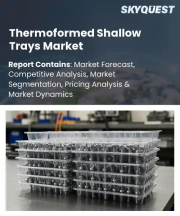
|
시장보고서
상품코드
1917744
열성형 포장 시장 - 예측(2026-2031년)Thermoform Packaging Market - Forecast from 2026 to 2031 |
||||||

열성형 포장 시장은 CAGR 4.43%로 추이하며, 2025년 590억 7,200만 달러에서 2031년에는 766억 3,100만 달러에 달할 것으로 예측되고 있습니다.
열성형 포장 시장은 맞춤형 및 기능성 디자인을 특징으로 하는 세계 플라스틱 포장 산업에서 중요하고 다용도한 분야입니다. 이 공정은 열가소성 시트를 가열하여 유연한 상태로 만든 후 금형을 통해 성형하여 클램쉘, 물집, 트레이, 용기 등 정밀한 3차원 포장 구조물을 만드는 과정입니다. 이 방법을 통해 우수한 제품 가시성, 보호성, 매장내 임팩트를 제공하는 맞춤형 포장의 대량 생산이 가능합니다. 다양한 최종 용도 분야에 서비스를 제공하는 이 시장의 성장은 우수한 성능 특성을 유지하면서 지속가능성과 재료 효율성에 대한 요구가 높아지는 가운데 균형을 맞추어야 할 필요성에 의해 점점 더 촉진되고 있습니다.
주요 시장 성장 요인
시장 확대는 지속적인 기능적 이점과 진화하는 시장 수요의 조합에 의해 추진되고 있습니다. 근본적인 촉진요인은 열성형 포장이 제공하는 우수한 제품 보호 및 보존 성능입니다. 단단하고 형태에 맞는 쉘을 형성하는 능력은 물리적 손상, 습기, 오염물질에 대한 탁월한 장벽 특성을 실현합니다. 특히 생산부터 판매 시점까지 제품의 무결성을 유지하는 것이 최우선 과제인 신선식품, 섬세한 전자제품, 의료기기에 있어서는 매우 중요합니다. 이 과정을 통해 잠금식 폐쇄 메커니즘, 변조 방지 기능, 완충재 삽입 등의 통합 기능이 가능해져 보안 및 사용자 신뢰성을 향상시킬 수 있습니다.
이와 밀접한 관련이 있는 것은 타의 추종을 불허하는 디자인 커스터마이징과 범용성입니다. 열성형 금형은 사출성형에 비해 신속한 개발 및 수정이 가능하며, 크기, 모양, 구획 분할을 비용 효율적으로 커스터마이징할 수 있습니다. 이러한 유연성을 통해 정밀한 브랜딩, 투명한 가시성 창을 내장하고, 복잡한 소매점 진열대에서 제품을 차별화할 수 있는 독특한 구조 설계를 구현할 수 있습니다. 동일한 기본 공정에서 대량 생산 표준품과 빠른 납기의 특수 포장을 모두 생산할 수 있는 능력은 중요한 경쟁 우위입니다.
또한 지속가능성과 순환 경제에 대한 강한 초점이 시장을 재구성하고 있습니다. 기존에는 다층 복합재에 의존했으나, 업계는 폴리프로필렌(PP)과 폴리에틸렌 테레프탈레이트(PET)를 중심으로 한 단일 소재 구조로 큰 전환기를 맞이하고 있습니다. 이러한 설계는 성능을 유지하면서 기존 재활용 시스템과의 호환성을 획기적으로 향상시킵니다. 동시에, 소비 후 재활용 소재(PCR)의 배합과 바이오소재 및 퇴비화 가능한 소재의 개발은 환경 부하를 줄이려는 브랜드의 노력, 규제 압력 및 소비자 선호에 힘입어 중요한 혁신입니다.
주요 적용 분야: 식품 및 음료 분야 선도적 위치
식품 및 음료 분야는 열성형 포장 분야에서 가장 크고 역동적인 응용 분야로 꾸준한 성장을 거듭하고 있습니다. 이러한 우위는 편리하고 RTE(Ready-to-eat) 단일 제품 사이즈에 대한 수요, 가스 대체 포장(MAP) 기능을 통한 유통기한 연장의 필요성, 배송을 위해 견고하고 변조 방지 및 누출 방지 기능이 있는 용기를 필요로 하는 EC 식품 유통의 부상 등 몇 가지 시너지 효과에 의해 지원되고 있습니다. 지원되고 있습니다. 또한 트레이와 클램쉘 용기에 지속가능한 단일 소재 솔루션을 도입하여 플라스틱 폐기물 감소라는 업계 전반의 목표에 직접적으로 기여하고 있습니다.
지역별 전망: 북미 시장의 강점
북미는 전 세계 열성형 포장 시장에서 큰 비중을 차지할 것으로 예측됩니다. 이러한 지위는 포장된 신선식품, 의약품, 가전제품에 대한 높은 수요를 바탕으로 한 성숙하고 첨단화된 소비자 시장에 의해 지원되고 있습니다. 탄탄한 제조거점, 첨단인 소매 및 E-Commerce 물류, 주요 브랜드 소유자 및 포장 컨버터가 존재하여 안정적인 수요 환경을 형성하고 있습니다. 또한 기업의 적극적인 지속가능성 노력과 포장 폐기물에 대한 규제 환경의 변화로 인해 차세대 재활용 및 재생 소재가 함유된 써모폼의 채택이 가속화되고 있습니다.
경쟁 환경과 전략적 혁신
시장에는 대규모 다각화 포장 기업과 전문 열성형 기업이 혼재되어 있습니다. 경쟁은 치열하며, 재료과학, 설계 기술, 제조 효율의 기술력에 초점을 맞추었습니다. 전략적 혁신은 주로 다음 두 가지 영역에 집중되어 있습니다.
1. 순환형 사회를 위한 재료과학 : 식품 접촉에 필요한 장벽 특성(산소, 수분)을 갖추면서도 재활용이 용이한 고성능 단일 소재 필름(PP, PET) 개발 및 인증. 여기에는 재활용성을 손상시키지 않는 밀봉층과 배리어 코팅의 발전이 포함됩니다.
2. 제조 기술 : 이러한 새롭고 종종 더 어려운 지속가능한 재료(예 : PCR 함유 시트, 바이오필름)를 효율적으로 처리하기 위한 열 성형 기계의 혁신. 여기에는 높은 수율과 일관된 품질을 유지하기 위한 가열 제어, 성형 정확도, 인라인 품질 검사 개선이 포함됩니다.
수지 제조업체와 같은 재료 공급업체, 기계 제조업체, 포장 가공업체가 협력하여 밸류체인 전반에 걸쳐 지속가능한 솔루션을 공동 개발하고 검증하는 것이 점점 더 보편화되고 있습니다.
향후 전개와 전략적 과제
열성형 포장 시장은 대체가 아닌 진화하는 방향이며, 미래 성장은 지속가능성 통합의 성공과 밀접한 관련이 있습니다. 복잡한 다층 라미네이트에서 재활용 가능한 단일 소재로 전환하는 것이 핵심 전략 과제입니다. 성공하기 위해서는 성능 격차를 해소하기 위한 지속적인 연구개발, 새로운 금형 및 생산라인에 대한 막대한 투자, 그리고 재활용 제품의 최종 시장 수요를 확보하기 위한 재활용 사업체와의 긴밀한 협력이 필요합니다.
업계 관계자들의 전략적 우선순위는 첨단 재료 과학 전문 지식에 대한 투자, 새로운 지속가능한 포맷 개발 위험을 줄이기 위한 전략적 파트너십 구축, 브랜드 고객이 비용, 성능, 지속가능성 간의 절충점을 적절히 판단할 수 있도록 지원하는 것 등입니다. 지원해야 합니다. 제품의 보호성, 가시성, 맞춤화 등 핵심적인 장점을 유지하면서 순환성을 향상시킬 수 있는 명확한 경로를 제시할 수 있는 능력이 시장 주도권을 결정짓는다. 결과적으로, 열성형 포장은 순환형 포장 경제의 세계적 요구에 따라 계속 진화하는 한, 필수적이고 적응력이 높은 솔루션으로 남을 것입니다.
이 보고서의 주요 장점:
- 인사이트 분석 : 주요 지역과 신흥 지역을 아우르는 상세한 시장 인사이트를 제공합니다. 고객 부문, 정부 정책 및 사회경제적 요인, 소비자 선호도, 산업 수직 분야, 기타 하위 부문에 초점을 맞추었습니다.
- 경쟁 구도 : 주요 기업의 세계 전략 움직임을 이해하고, 적절한 전략을 통한 시장 침투 가능성을 파악합니다.
- 시장 성장 촉진요인과 미래 동향 : 시장을 움직이는 역동적인 요소와 주요 동향, 그리고 이들이 향후 시장 발전을 어떻게 형성할 것인지에 대해 알아봅니다.
- 실천적 제안: 이러한 지식을 활용하여 전략적 의사결정을 내리고, 급변하는 환경 속에서 새로운 비즈니스 기회와 수입원을 발굴할 수 있습니다.
- 스타트업, 연구기관, 컨설턴트, 중소기업, 대기업 등 다양한 독자층에게 유익하고 비용 대비 효과가 높은 내용입니다.
이 보고서의 기업 활용 사례
산업 및 시장 분석, 기회 평가, 제품 수요 예측, 시장 진출 전략, 지역 확장, 자본 투자 결정, 규제 프레임워크 및 영향, 신제품 개발, 경쟁사 정보 수집
보고서의 범위:
- 2021-2025년 실적 데이터 및 2026-2031년 예측 데이터
- 성장 기회, 과제, 공급망 전망, 규제 프레임워크, 동향 분석
- 경쟁사 포지셔닝, 전략, 시장 점유율 분석
- 국가를 포함한 부문 및 지역별 매출 및 예측 평가 및 예측 평가
- 기업 프로파일(전략, 제품, 재무정보, 주요 발전 등)
목차
제1장 개요
제2장 시장 개요
- 시장 개요
- 시장의 정의
- 조사 범위
- 시장 세분화
제3장 비즈니스 상황
- 시장 성장 촉진요인
- 시장 성장 억제요인
- 시장 기회
- Porter's Five Forces 분석
- 업계 밸류체인 분석
- 정책과 규제
- 전략적 제안
제4장 기술 전망
제5장 열성형 포장 시장 : 소재별
- 서론
- 플라스틱
- 종이
제6장 열성형 포장 시장 : 제품 유형별
- 서론
- 블리스터 포장
- 클램쉘 포장
- 트레이·뚜껑
- 용기
제7장 열성형 포장 시장 : 최종사용자별
- 서론
- 식품 및 음료
- 의약품
- 퍼스널케어·화장품
- 가전제품
제8장 열성형 포장 시장 : 지역별
- 서론
- 북미
- 미국
- 캐나다
- 멕시코
- 남미
- 브라질
- 아르헨티나
- 기타
- 유럽
- 독일
- 프랑스
- 영국
- 스페인
- 기타
- 중동 및 아프리카
- 사우디아라비아
- 아랍에미리트
- 기타
- 아시아태평양
- 중국
- 인도
- 일본
- 한국
- 인도네시아
- 태국
- 기타
제9장 경쟁 환경과 분석
- 주요 기업과 전략 분석
- 시장 점유율 분석
- 합병, 인수, 합의 및 협업
- 경쟁 대시보드
제10장 기업 개요
- Amcor Plc
- Sonoco Products Company
- DS Smith
- Placon
- Display Pack
- WestRock Company
- Tekni-Plex, Inc.
- Anchor Packaging LLC
- D&W Fine Pack
- Sealed Air
제11장 부록
- 통화
- 전제조건
- 기준연도 및 예측연도 타임라인
- 이해관계자에 대한 주요 이점
- 조사 방법
- 약어
The thermoform packaging market, with a 4.43% CAGR, is anticipated to reach USD 76.631 billion in 2031 from USD 59.072 billion in 2025.
The thermoform packaging market is a vital and versatile segment within the global plastics packaging industry, characterized by its customizability and functional design. The process involves heating a thermoplastic sheet to a pliable state and forming it over a mold to create precise, three-dimensional packaging structures such as clamshells, blisters, trays, and containers. This method enables high-volume production of tailored packaging that provides excellent product visibility, protection, and shelf impact. Serving a diverse range of end-use sectors, the market's growth is increasingly driven by the need to balance strong performance characteristics with escalating demands for sustainability and material efficiency.
Primary Market Growth Drivers
Market expansion is propelled by a combination of enduring functional benefits and evolving market demands. A foundational driver is the superior product protection and preservation offered by thermoformed packaging. The ability to create a rigid, form-fitting shell provides exceptional barrier properties against physical damage, moisture, and contaminants. This is particularly critical for perishable goods, delicate electronics, and medical devices, where maintaining product integrity from production to point-of-sale is paramount. The process allows for integrated features like locking closures, tamper evidence, and cushioned inserts, enhancing security and user confidence.
Closely linked is the unmatched level of design customization and versatility. Thermoforming tools can be rapidly developed and modified compared to injection molding, allowing for cost-effective customization of size, shape, and compartmentalization. This flexibility enables precise branding, the incorporation of clear viewing windows, and the creation of unique structural designs that differentiate products on crowded retail shelves. The ability to produce both high-volume standard items and short-run specialized packaging from the same basic process is a key competitive advantage.
Furthermore, the intense focus on sustainability and the circular economy is reshaping the market. While historically reliant on multi-material laminates, the industry is undergoing a significant transformation toward mono-material structures, primarily using polypropylene (PP) or polyethylene terephthalate (PET). These designs maintain performance while dramatically improving compatibility with existing recycling streams. Concurrently, the integration of post-consumer recycled (PCR) content and the development of bio-based and compostable materials are critical innovations, driven by brand commitments, regulatory pressure, and consumer preference for reduced environmental impact.
Key Application Segment: Food and Beverage Leadership
The food and beverage segment represents the largest and most dynamic application area for thermoform packaging, exhibiting consistent positive growth. This dominance is driven by several converging trends: the demand for convenient, ready-to-eat, and single-serve formats; the need for extended shelf life through modified atmosphere packaging (MAP) capabilities; and the rise of e-commerce grocery, which requires robust, tamper-evident, and leak-resistant containers for shipping. The segment is also at the forefront of adopting sustainable mono-material solutions for trays and clamshells, directly addressing industry-wide goals to reduce plastic waste.
Geographical Outlook: North American Market Strength
North America is expected to hold a significant share of the global thermoform packaging market. This position is supported by the region's mature and sophisticated consumer markets, with high demand for packaged fresh food, pharmaceuticals, and consumer electronics. A strong manufacturing base, advanced retail and e-commerce logistics, and the presence of major brand owners and packaging converters contribute to a stable demand environment. Furthermore, proactive corporate sustainability initiatives and evolving regulatory landscapes around packaging waste are accelerating the adoption of next-generation recyclable and recycled-content thermoforms in the region.
Competitive Landscape and Strategic Innovation
The market features a mix of large, diversified packaging corporations and specialized thermoformers. Competition is intense, focusing on technological capability in material science, design engineering, and manufacturing efficiency. Strategic innovation is concentrated in two primary areas:
1. Material Science for Circularity: Developing and qualifying high-performance mono-material films (PP, PET) that offer the necessary barrier properties (oxygen, moisture) for food contact while being readily recyclable. This includes advancements in sealing layers and barrier coatings that do not compromise recyclability.
2. Manufacturing Technology: Innovating thermoforming machinery to efficiently process these new, often more challenging, sustainable materials (e.g., PCR-content sheets, bio-based films). This involves enhancements in heating control, forming precision, and in-line quality inspection to maintain high yields and consistent quality.
Collaborations between material suppliers (like resin producers), machine manufacturers, and packaging converters are becoming increasingly common to co-develop and validate sustainable solutions across the entire value chain.
Future Trajectory and Strategic Imperatives
The thermoform packaging market is positioned for evolution rather than displacement, with its future growth tightly coupled to successful sustainability integration. The transition from complex multi-layer laminates to recyclable mono-materials is the central strategic challenge. Success will require continued R&D to close any performance gaps, significant investment in new tooling and production lines, and close collaboration with recycling entities to ensure end-market demand for the recycled output.
For industry participants, strategic priorities must include investing in advanced material science expertise, forming strategic partnerships to de-risk the development of new sustainable formats, and helping brand customers navigate the cost/performance/sustainability trade-offs. The ability to provide a clear path to improved circularity, while maintaining the core benefits of product protection, visibility, and customization, will determine market leadership. As a result, thermoform packaging will remain an essential and adaptable solution, provided it continues to evolve in alignment with the global imperative for a circular packaging economy.
Key Benefits of this Report:
- Insightful Analysis: Gain detailed market insights covering major as well as emerging geographical regions, focusing on customer segments, government policies and socio-economic factors, consumer preferences, industry verticals, and other sub-segments.
- Competitive Landscape: Understand the strategic maneuvers employed by key players globally to understand possible market penetration with the correct strategy.
- Market Drivers & Future Trends: Explore the dynamic factors and pivotal market trends and how they will shape future market developments.
- Actionable Recommendations: Utilize the insights to exercise strategic decisions to uncover new business streams and revenues in a dynamic environment.
- Caters to a Wide Audience: Beneficial and cost-effective for startups, research institutions, consultants, SMEs, and large enterprises.
What do businesses use our reports for?
Industry and Market Insights, Opportunity Assessment, Product Demand Forecasting, Market Entry Strategy, Geographical Expansion, Capital Investment Decisions, Regulatory Framework & Implications, New Product Development, Competitive Intelligence
Report Coverage:
- Historical data from 2021 to 2025 & forecast data from 2026 to 2031
- Growth Opportunities, Challenges, Supply Chain Outlook, Regulatory Framework, and Trend Analysis
- Competitive Positioning, Strategies, and Market Share Analysis
- Revenue Growth and Forecast Assessment of segments and regions including countries
- Company Profiling (Strategies, Products, Financial Information, and Key Developments among others.)
Thermoform Packaging Market Segmentation
- By Material
- Plastic
- Paper
- By Product Type
- Blisters
- Clamshells
- Trays & Lids
- Containers
- By End-User
- Food & Beverage
- Pharmaceuticals
- Personal Care & Cosmetics
- Consumer Electronics
- By Geography
- North America
- USA
- Canada
- Mexico
- South America
- Brazil
- Argentina
- Others
- Europe
- Germany
- France
- United Kingdom
- Spain
- Others
- Middle East and Africa
- Saudi Arabia
- UAE
- Others
- Asia Pacific
- China
- India
- Japan
- South Korea
- Indonesia
- Thailand
- Others
TABLE OF CONTENTS
1. EXECUTIVE SUMMARY
2. MARKET SNAPSHOT
- 2.1. Market Overview
- 2.2. Market Definition
- 2.3. Scope of the Study
- 2.4. Market Segmentation
3. BUSINESS LANDSCAPE
- 3.1. Market Drivers
- 3.2. Market Restraints
- 3.3. Market Opportunities
- 3.4. Porter's Five Forces Analysis
- 3.5. Industry Value Chain Analysis
- 3.6. Policies and Regulations
- 3.7. Strategic Recommendations
4. TECHNOLOGICAL OUTLOOK
5. THERMOFORM PACKAGING MARKET BY MATERIAL
- 5.1. Introduction
- 5.2. Plastic
- 5.3. Paper
6. THERMOFORM PACKAGING MARKET BY PRODUCT TYPE
- 6.1. Introduction
- 6.2. Blisters
- 6.3. Clamshells
- 6.4. Trays & Lids
- 6.5. Containers
7. THERMOFORM PACKAGING MARKET BY END-USER
- 7.1. Introduction
- 7.2. Food & Beverage
- 7.3. Pharmaceuticals
- 7.4. Personal Care & Cosmetics
- 7.5. Consumer Electronics
8. THERMOFORM PACKAGING MARKET BY GEOGRAPHY
- 8.1. Introduction
- 8.2. North America
- 8.2.1. USA
- 8.2.2. Canada
- 8.2.3. Mexico
- 8.3. South America
- 8.3.1. Brazil
- 8.3.2. Argentina
- 8.3.3. Others
- 8.4. Europe
- 8.4.1. Germany
- 8.4.2. France
- 8.4.3. United Kingdom
- 8.4.4. Spain
- 8.4.5. Others
- 8.5. Middle East and Africa
- 8.5.1. Saudi Arabia
- 8.5.2. UAE
- 8.5.3. Others
- 8.6. Asia Pacific
- 8.6.1. China
- 8.6.2. India
- 8.6.3. Japan
- 8.6.4. South Korea
- 8.6.5. Indonesia
- 8.6.6. Thailand
- 8.6.7. Others
9. COMPETITIVE ENVIRONMENT AND ANALYSIS
- 9.1. Major Players and Strategy Analysis
- 9.2. Market Share Analysis
- 9.3. Mergers, Acquisitions, Agreements, and Collaborations
- 9.4. Competitive Dashboard
10. COMPANY PROFILES
- 10.1. Amcor Plc
- 10.2. Sonoco Products Company
- 10.3. DS Smith
- 10.4. Placon
- 10.5. Display Pack
- 10.6. WestRock Company
- 10.7. Tekni-Plex, Inc.
- 10.8. Anchor Packaging LLC
- 10.9. D&W Fine Pack
- 10.10. Sealed Air
11. APPENDIX
- 11.1. Currency
- 11.2. Assumptions
- 11.3. Base and Forecast Years Timeline
- 11.4. Key Benefits for the Stakeholders
- 11.5. Research Methodology
- 11.6. Abbreviations