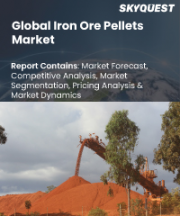
|
시장보고서
상품코드
1690505
철광석 펠릿 시장 보고서 : 동향, 예측, 경쟁 분석(-2031년)Iron Ore Pellet Market Report: Trends, Forecast and Competitive Analysis to 2031 |
||||||
 Lucintel
세계 철광석 펠릿 시장의 미래는 캡티브 시장과 해상 시장에서 기회가 있으며, 유망한 것으로 보입니다. 세계 철광석 펠릿 시장은 2025년부터 2031년까지 연평균 3.2%의 성장률을 보일 것으로 예상됩니다. 이 시장의 주요 촉진요인은 주택 수요 증가에 기여하는 인구 증가와 자동차 부문의 철강 사용 증가입니다.
- Lucintel의 예측에 따르면, 제품별로는 용광로(BF) 철광석 펠릿이 저렴한 가격으로 인해 예측 기간 동안 계속 큰 비중을 차지할 것으로 보입니다.
- 거래 형태별로는 제조 공정에서의 활용도가 높기 때문에 캡티브(전속)가 계속해서 큰 비중을 차지할 것으로 보입니다.
- 지역별로는 아시아태평양이 제조업에 대한 지출 증가와 철강 산업의 괄목할 만한 성장으로 인해 예측 기간 동안 가장 큰 지역으로 남을 것으로 보입니다.
철광석 펠릿 시장의 전략적 성장 기회
철광석 펠릿 시장에는 용도별로 몇 가지 전략적 성장 기회가 있습니다. 이러한 기회를 식별하고 활용하면 시장 성장을 촉진하고 경쟁력을 향상시키며 변화하는 산업 환경 속에서 새로운 길을 열 수 있습니다.
- 고품질 펠릿 생산 : 고품질 철광석 펠릿을 생산하는 기술에 대한 투자는 큰 성장 기회가 될 수 있습니다. 고품질 펠릿은 철강 생산 효율을 개선하고 엄격한 업계 표준을 충족시켜 생산자에게 경쟁 우위를 제공합니다.
- 신흥 시장에서의 사업 확장 : 인도, 동남아시아 등 철강 산업이 성장하고 있는 신흥 시장을 공략하는 것은 전략적 기회입니다. 이들 지역에서는 산업화가 진행되고 있으며, 철광석 펠릿에 대한 수요가 증가하고 있습니다.
- 기술 발전 : 첨단 펠릿화 기술을 활용하면 생산 효율을 높이고 비용을 절감할 수 있습니다. 자동화 및 선광 공정의 혁신은 시장 관계자들에게 운영 성과와 제품 품질을 향상시킬 수 있는 기회를 제공합니다.
- 지속가능성에 대한 노력 : 지속가능성 및 친환경 생산 방식을 도입하는 것은 세계 트렌드와 규제 요건에 부합합니다. 저탄소 기술 및 친환경 기술에 대한 투자는 새로운 시장 부문을 개척하고 장기적인 성장을 지원합니다.
- 전략적 파트너십 : 철강 제조업체 및 기술 제공업체와 전략적 파트너십을 맺음으로써 시너지 효과를 창출하고 시장 성장을 촉진할 수 있습니다. 협업은 기술 공유, 합작 투자, 시장 범위 확대로 이어져 모두에게 이익을 가져다 줄 수 있습니다.
철광석 펠릿 시장의 성장과 경쟁력을 촉진하기 위해서는 이러한 성장 기회를 활용해야 합니다. 고품질 생산, 새로운 시장 진출, 기술, 지속가능성, 전략적 파트너십에 초점을 맞추면 기업은 장기적인 성공의 길로 나아갈 수 있습니다.
철광석 펠릿 시장의 촉진요인 및 과제
철광석 펠릿 시장에는 다양한 촉진요인과 과제가 있으며, 주로 기술 발전, 경제 상황, 정부 규제 고려 사항과 관련이 있습니다. 이러한 요소를 인식하는 것은 시장 상황에 적응하는 데 매우 중요합니다.
철광석 펠릿 시장을 이끄는 요인은 다음과 같습니다:
- 기술 발전 : 펠릿화 기술의 혁신은 생산 효율과 품질 향상을 촉진합니다. 이러한 변화는 비용을 낮추고 경쟁력을 높이며 시장 성장을 촉진합니다.
- 규제 지원 : 지속가능한 관행을 지원하는 정부 규제와 정책은 DR 펠릿 생산의 강력한 기반이 되고 있습니다. 바람직한 정책은 친환경 기술에 대한 투자와 환경 기준 준수를 장려합니다.
- 철강 수요 확대 : 산업화와 인프라 개발로 인한 철강 수요의 급증은 철광석 펠릿의 수요를 증가시킵니다. 철강 생산량이 증가함에 따라 펠릿의 대량 소비가 확산되어 더욱 성장할 수 있습니다.
- 비용 효율성 : 생산 공정 및 기술 개선으로 운영 비용을 절감할 수 있습니다. 비용 효율성이 향상되면 생산자는 경쟁력 있는 가격으로 제품을 제공할 수 있고, 시장에서의 입지를 강화할 수 있습니다.
- 국내 생산 확대 : 국내 펠릿 생산에 대한 투자로 수입 의존도를 낮출 수 있습니다. 이러한 추세는 지역 산업을 강화하고 시장 성장을 위한 경제적 안정을 지원합니다.
철광석 펠릿 시장의 과제는 다음과 같습니다:
- 환경 규제 : 환경 규제의 강화는 종종 컴플라이언스 문제와 관련 비용을 초래합니다. 이러한 규제에 대응하는 것은 생산자에게 부담이 될 수 있으며, 수익성에 영향을 미칠 수 있습니다.
- 원자재 가용성 : 원자재 가용성 및 가격 변동은 공급망에 혼란을 초래하고, 생산 지연 및 생산 비용 상승으로 이어질 수 있습니다.
- 시장 변동 : 철 가격의 변동은 철광석 펠릿의 비용과 수익성에 영향을 미칩니다. 시장 변동은 불확실성을 야기하고 투자를 억제할 수 있습니다.
철광석 펠릿 시장은 기술 발전, 규제 지원, 철강 수요 증가, 비용 효율성, 국내 생산 확대에 의해 형성됩니다. 그러나 환경 규제, 원자재 가용성, 시장 변동성 등의 문제도 시장에 영향을 미칩니다. 이러한 촉진요인과 도전의 균형을 맞추는 것은 변화하는 시장 상황을 효과적으로 헤쳐 나가기 위해 필수적입니다.
목차
제1장 주요 요약
제2장 세계의 철광석 펠릿 시장 : 시장 역학
- 소개, 배경, 분류
- 공급망
- 업계 성장 촉진요인과 과제
제3장 시장 동향과 예측 분석(2019-2031년)
- 거시경제 동향(2019-2024년)과 예측(2025-2031년)
- 세계의 철광석 펠릿 시장 동향(2019-2024년)과 예측(2025-2031년)
- 세계의 철광석 펠릿 시장 : 제품별
- 용광로(BF) 철광석 펠릿
- 직접 환원(DR) 철광석 펠릿
- 세계의 철광석 펠릿 시장 : 무역 형태별
- 캡티브
- 해상 운송
제4장 지역별 시장 동향과 예측 분석(2019-2031년)
- 세계의 철광석 펠릿 시장 : 지역별
- 북미의 철광석 펠릿 시장
- 유럽의 철광석 펠릿 시장
- 아시아태평양의 철광석 펠릿 시장
- 기타 지역의 철광석 펠릿 시장
제5장 경쟁 분석
- 제품 포트폴리오 분석
- 운영 통합
- Porter's Five Forces 분석
제6장 성장 기회와 전략 분석
- 성장 기회 분석
- 세계의 철광석 펠릿 시장 성장 기회 : 제품별
- 세계의 철광석 펠릿 시장 성장 기회 : 무역 형태별
- 세계의 철광석 펠릿 시장 성장 기회 : 지역별
- 세계의 철광석 펠릿 시장 최신 동향
- 전략적 분석
- 신제품 개발
- 세계의 철광석 펠릿 시장 생산능력 확대
- 세계의 철광석 펠릿 시장 기업 인수합병(M&A), 합작투자
- 인증과 라이선싱
제7장 주요 기업 개요
- Vale
- Rio Tinto
- Cleveland-Cliffs
- BHP Billiton
- US Steel
- Fortescue Metals
- ArcelorMittal
The future of the global iron ore pellet market looks promising with opportunities in the captive and seaborne markets. The global iron ore pellet market is expected to grow with a CAGR of 3.2% from 2025 to 2031. The major drivers for this market are the rising population, which is contributing to an escalating demand for housing, and a rise in the use of steel in the automotive sector.
- Lucintel forecasts that, within the product category, blast furnace (BF) iron ore pellet will remain the larger segment over the forecast period due to its affordability.
- Within the trade category, captive will remain the larger segment due to the wide range of applications in the manufacturing process.
- In terms of regions, APAC will remain the largest region over the forecast period due to rising spending in manufacturing and the significantly growing steel industry in the region.
Gain valuable insights for your business decisions with our comprehensive 150+ page report.
Emerging Trends in the Iron Ore Pellet Market
Within recent years, several emerging trends have reformed the landscape of the iron ore pellet market. These trends underpin evolving technologies, changing regulations, and shifting market dynamics that influence production and consumption patterns.
- Increased Interest in Sustainability: There is an increasing focus on environmental concerns in production methods. Companies are investing in technologies that could reduce emissions and increase energy efficiency. Stringent environmental regulations, along with a global interest in sustainable industrial practices, motivate this trend.
- Technological Advancements: Innovations in pelletizing technologies are improving production efficiency and pellet quality. Advances include better beneficiation techniques and automation, leading to higher productivity and lower operational costs. This trend helps meet rising quality standards and operational demands.
- Shift to Domestic Production: Many countries have scaled up domestic production of iron ore pellets to reduce dependence on imports. This trend is particularly strong in the large steel-producing regions of China and India. This development will enhance energy security and economic stability.
- Increasing Demand for Quality Pellets: Quality pellets of higher caliber are in demand, characterized by better performance in steelmaking. This is influenced by the need for steelmaking to become more efficient and cleaner. Production is oriented toward improving pellet quality.
- Expanding Production Capacity: Firms are improving their production capacity for pellets to meet growing demand from the global market. They invest in new plants or enhance existing ones. All this corresponds to the rise in pellet intake by the steel industry and helps fulfill future requirements.
Various trends reshape the iron ore pellet market, emphasizing sustainability, technological advancements, and a significant increase in production capacity. As the market adapts to change, it reflects a greater paradigm shift toward efficient and environmentally responsible practices.
Recent Developments in the Iron Ore Pellet Market
Recent developments in the iron ore pellet market symbolize changes in production methods, advancements in technology, and strategic investments. These factors transform market dynamics and create revised standards for the industry globally.
- Technological Innovations: New technologies in pelletizing help raise efficiency and quality. Recent innovations in beneficiation and automation processes make production more competitive, reduce costs, and increase outputs. Advancements in these areas are critical for evolving industry standards and meeting changing environmental regulations.
- Environmental Regulations: Much of the environmental regulation, especially in the developed world, compels firms to install cleaner means of production. Investments in low-emission technologies and better waste management practices are now common. Market access and sustainability depend on compliance with these regulations.
- Increased Domestic Production: Countries are investing in expanding their domestic DR pellet production to reduce import dependency. This trend is evident in regions with significant steel production, such as China and India. Enhanced local production supports economic stability and energy security.
- Market Demand: A transition is occurring from traditional volume-based iron ore pellets to higher-quality iron ore pellets. For steelmakers, a more efficient type of DR pellet is needed. The demand for quality pellets has driven producers to strive for improvements in pellet quality through investments in advanced technologies.
- Infrastructure Investment: Significant investments are being made in new pelletizing plants and infrastructure, which will increase production capacity in line with growing global demand. Such investments are necessary for maintaining growth and staying ahead of future market demands.
The latest changes drive technological improvements, regulatory compliance, and changes in production capacity. These factors enhance the iron ore DR pellet market by increasing efficiency and sustainability.
Strategic Growth Opportunities for the Iron Ore Pellet Market
There are several strategic growth opportunities across applications within the iron ore pellet market. Identifying and harnessing these opportunities would drive market growth and improve competitiveness, opening new avenues in the changing industrial landscape.
- High-Quality Pellet Production: Investing in technologies to produce high-quality iron ore pellets represents a significant growth opportunity. High-quality pellets improve steel production efficiency and meet stringent industry standards, creating a competitive advantage for producers.
- Expansion in Emerging Markets: Targeting emerging markets with growing steel industries, such as India and Southeast Asia, presents a strategic opportunity. Increased industrialization in these regions drives demand for iron ore pellets, offering growth potential for market players.
- Technological Advancements: Leveraging advanced pelletizing technologies can enhance production efficiency and reduce costs. Innovations in automation and beneficiation processes offer opportunities for market players to improve their operational performance and product quality.
- Sustainability Initiatives: Embracing sustainability and green production methods align with global trends and regulatory requirements. Investing in low-carbon technologies and eco-friendly practices opens new market segments and supports long-term growth.
- Strategic Partnerships: Forming strategic partnerships with steel producers and technology providers can create synergies and drive market growth. Collaborations can lead to technology sharing, joint ventures, and expanded market reach, benefiting all parties involved.
These growth opportunities must be capitalized on to drive growth and competitiveness within the iron ore DR pellet market. This focus on quality production, emergence in new markets, technology, sustainability, and strategic partnerships will place companies on the pathway to long-term success.
Iron Ore Pellet Market Driver and Challenges
Various drivers and challenges are associated with the iron ore pellet market, primarily related to technological advances, economic conditions, and governmental regulatory considerations. Recognizing these elements is crucial for aligning with the market landscape.
The factors driving the iron ore pellet market include:
- Technological Advances: Innovations in pelletizing technologies promote better efficiency and quality in production. These changes lower costs and enhance competitiveness, fostering market growth.
- Regulatory Support: Government regulations and policies that support sustainable practices provide a strong foundation for DR pellet production. Favorable policies encourage investment in green technologies and adherence to environmental standards.
- Growing Steel Demand: Rapidly growing demand for steel, driven by industrialization and infrastructural development, increases demand for iron ore pellets. As steel production rises, high pellet consumption becomes prevalent, leading to further growth.
- Cost Efficiency: Improved production processes and technologies reduce operational costs. Enhanced cost-efficiency allows producers to offer their products at competitive prices, expanding their market presence.
- Domestic Production Expansion: Investments in domestic pellet production reduce reliance on imports. This trend bolsters local industries and supports economic stability for market growth.
Challenges in the iron ore pellet market include:
- Environmental Regulations: Increased environmental regulations often result in compliance issues and associated costs. Meeting these regulations can be burdensome for producers and may impact profitability.
- Availability of Raw Materials: Fluctuations in the availability and price of raw materials can disrupt supply chains, leading to delays and increased production costs.
- Market Volatility: Volatile changes in iron prices impact the cost and profitability of iron ore pellets. Market volatility creates uncertainty and may deter investment.
The iron ore pellet market is shaped by technological advancements, regulatory support, rising steel demand, cost efficiency, and domestic production expansion. However, challenges such as environmental regulations, raw material availability, and market volatility also affect the market. Balancing these drivers and challenges is essential for effectively navigating the evolving market landscape.
List of Iron Ore Pellet Companies
Companies in the market compete on the basis of product quality offered. Major players in this market focus on expanding their manufacturing facilities, R&D investments, infrastructural development, and leverage integration opportunities across the value chain. Through these strategies iron ore pellet companies cater increasing demand, ensure competitive effectiveness, develop innovative products & technologies, reduce production costs, and expand their customer base. Some of the iron ore pellet companies profiled in this report include-
- Vale
- Rio Tinto
- Cleveland-Cliffs
- BHP Billiton
- US Steel
- Fortescue Metals
- ArcelorMittal
Iron Ore Pellet by Segment
The study includes a forecast for the global iron ore pellet market by product, trade, and region.
Iron Ore Pellet Market by Product [Analysis by Value from 2019 to 2031]:
- Blast Furnace (BF) Iron Ore Pellets
- Direct Reduced (DR) Iron Ore Pellets
Iron Ore Pellet Market by Trade [Analysis by Value from 2019 to 2031]:
- Captive
- Seaborne
Iron Ore Pellet Market by Region [Analysis by Value from 2019 to 2031]:
- North America
- Europe
- Asia Pacific
- The Rest of the World
Country Wise Outlook for the Iron Ore Pellet Market
The iron ore pellet market is rapidly changing due to shifts in global demand and technological developments. Recent developments across key markets indicate how market dynamics are adjusting. Each country's movements reflect broader trends affecting production, technology, and trade.
- United States: In the United States, investments to improve the quality of pellets are increasing. Companies are adopting advanced technologies to ensure higher quality with less environmental impact. More domestic production is emphasized to reduce reliance on imports.
- China: China is accelerating the adoption of pellet technology as environmental regulations become stricter. New pelletizing facilities and upgrades to existing ones aim to reduce carbon emissions. The focus has shifted to increasing domestic production to support the massive steel industry.
- Germany: Germany is a leader in developing low-carbon pellet production technologies. Modern projects incorporate green technologies into the pelletizing process, aligning with the country's sustainability goals. This trend responds to Germany's ambitions regarding industrial emission reductions and the principle of green steel.
- India: The iron orepellet market in India is growing, with efforts to expand capacity and improve pellet quality. New infrastructure projects and technological upgrades are underway to meet the growing demand from the booming steel sector. Export initiatives are also being developed.
- Japan: Japan is developing advanced technologies for iron ore pellets to increase efficiency and reduce production costs. The country relies on technological innovations to remain competitive in the marketplace and is sharing technologies with international companies through collaboration and upgrading efforts.
Features of the Global Iron Ore Pellet Market
Market Size Estimates: Iron ore pellet market size estimation in terms of value ($B).
Trend and Forecast Analysis: Market trends (2019 to 2024) and forecast (2025 to 2031) by various segments and regions.
Segmentation Analysis: Iron ore pellet market size by product, trade, and region in terms of value ($B).
Regional Analysis: Iron ore pellet market breakdown by North America, Europe, Asia Pacific, and Rest of the World.
Growth Opportunities: Analysis of growth opportunities in different products, trade, and regions for the iron ore pellet market.
Strategic Analysis: This includes M&A, new product development, and competitive landscape of the iron ore pellet market.
Analysis of competitive intensity of the industry based on Porter's Five Forces model.
If you are looking to expand your business in this or adjacent markets, then contact us. We have done hundreds of strategic consulting projects in market entry, opportunity screening, due diligence, supply chain analysis, M & A, and more.
This report answers following 11 key questions:
- Q.1. What are some of the most promising, high-growth opportunities for the iron ore pellet market by product (blast furnace (BF) iron ore pellet and direct reduced (DR) iron ore pellet), trade (captive and seaborne), and region (North America, Europe, Asia Pacific, and the Rest of the World)?
- Q.2. Which segments will grow at a faster pace and why?
- Q.3. Which region will grow at a faster pace and why?
- Q.4. What are the key factors affecting market dynamics? What are the key challenges and business risks in this market?
- Q.5. What are the business risks and competitive threats in this market?
- Q.6. What are the emerging trends in this market and the reasons behind them?
- Q.7. What are some of the changing demands of customers in the market?
- Q.8. What are the new developments in the market? Which companies are leading these developments?
- Q.9. Who are the major players in this market? What strategic initiatives are key players pursuing for business growth?
- Q.10. What are some of the competing products in this market and how big of a threat do they pose for loss of market share by material or product substitution?
- Q.11. What M&A activity has occurred in the last 5 years and what has its impact been on the industry?
Table of Contents
1. Executive Summary
2. Global Iron Ore Pellet Market : Market Dynamics
- 2.1: Introduction, Background, and Classifications
- 2.2: Supply Chain
- 2.3: Industry Drivers and Challenges
3. Market Trends and Forecast Analysis from 2019 to 2031
- 3.1. Macroeconomic Trends (2019-2024) and Forecast (2025-2031)
- 3.2. Global Iron Ore Pellet Market Trends (2019-2024) and Forecast (2025-2031)
- 3.3: Global Iron Ore Pellet Market by Product
- 3.3.1: Blast Furnace (BF) Iron Ore Pellets
- 3.3.2: Direct Reduced (DR) Iron Ore Pellets
- 3.4: Global Iron Ore Pellet Market by Trade
- 3.4.1: Captive
- 3.4.2: Seaborne
4. Market Trends and Forecast Analysis by Region from 2019 to 2031
- 4.1: Global Iron Ore Pellet Market by Region
- 4.2: North American Iron Ore Pellet Market
- 4.2.1: North American Market by Product: Blast Furnace (BF) and Direct Reduced (DR) Iron Ore Pellet
- 4.2.2: North American Market by Trade: Captive and Seaborne
- 4.3: European Iron Ore Pellet Market
- 4.3.1: European Market by Product: Blast Furnace (BF) and Direct Reduced (DR) Iron Ore Pellet
- 4.3.2: European Market by Trade: Captive and Seaborne
- 4.4: APAC Iron Ore Pellet Market
- 4.4.1: APAC Market by Product: Blast Furnace (BF) and Direct Reduced (DR) Iron Ore Pellet
- 4.4.2: APAC Market by Trade: Captive and Seaborne
- 4.5: ROW Iron Ore Pellet Market
- 4.5.1: ROW Market by Product: Blast Furnace (BF) and Direct Reduced (DR) Iron Ore Pellet
- 4.5.2: ROW Market by Trade: Captive and Seaborne
5. Competitor Analysis
- 5.1: Product Portfolio Analysis
- 5.2: Operational Integration
- 5.3: Porter's Five Forces Analysis
6. Growth Opportunities and Strategic Analysis
- 6.1: Growth Opportunity Analysis
- 6.1.1: Growth Opportunities for the Global Iron Ore Pellet Market by Product
- 6.1.2: Growth Opportunities for the Global Iron Ore Pellet Market by Trade
- 6.1.3: Growth Opportunities for the Global Iron Ore Pellet Market by Region
- 6.2: Emerging Trends in the Global Iron Ore Pellet Market
- 6.3: Strategic Analysis
- 6.3.1: New Product Development
- 6.3.2: Capacity Expansion of the Global Iron Ore Pellet Market
- 6.3.3: Mergers, Acquisitions, and Joint Ventures in the Global Iron Ore Pellet Market
- 6.3.4: Certification and Licensing
7. Company Profiles of Leading Players
- 7.1: Vale
- 7.2: Rio Tinto
- 7.3: Cleveland-Cliffs
- 7.4: BHP Billiton
- 7.5: US Steel
- 7.6: Fortescue Metals
- 7.7: ArcelorMittal