|
시장보고서
상품코드
1521774
두개 내비게이션 시스템 : 시장 점유율 분석, 산업 동향 및 통계, 성장 예측(2024-2029년)Cranial Navigation System - Market Share Analysis, Industry Trends & Statistics, Growth Forecasts (2024 - 2029) |
||||||
 Mordor Intelligence
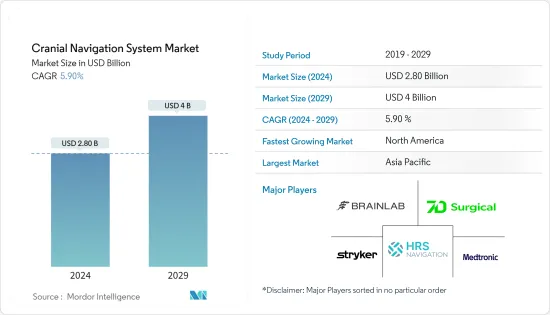
두개 내비게이션 시스템 시장 규모는 2024년 28억 달러로 추정되며, 2029년에는 40억 달러에 달할 것으로 예상되며, 예측 기간(2024-2029년) 동안 5.90%의 CAGR로 성장할 것으로 예상됩니다.
신경외과 수술은 일반 외과 수술보다 위험도가 높고 가장 어려운 수술로 알려져 있습니다. 두개 내비게이션 시스템은 환자의 두개골 표면의 해부학적 구조를 수술 전 MRI 검사와 결합하여 전문가가 수술 중 해부학적 위치를 지속적으로 모니터링할 수 있게 해줍니다. 이러한 접근 방식은 수술의 정확성을 높이고 성공률을 극대화합니다. 이러한 요인들로 인해 다양한 최종사용자들이 이 시스템을 도입하여 신경외과 수술의 효율성을 최적화하고 있습니다.
영상 유도 수술(IGS)에 대한 최종사용자들의 신뢰가 높아지면서 예측 기간 동안 시장 성장을 촉진할 것으로 보입니다. 예를 들어, 2023년 5월 AdventHealth의 전문가들은 스트라이커(Stryker)의 두개 내비게이션 시스템을 이용한 첫 번째 수술 사례를 성공적으로 완료했다고 발표했습니다. 외과 의사에 따르면, 이 시스템은 안내 기능을 제공하고 복잡한 수술을 할 때 큰 자신감을 주며, 신경외과 분야에서 영상 유도 내비게이션의 새로운 벤치마크가 될 수 있다고 합니다. 따라서 전문가의 신뢰 수준은 두개 내비게이션 시스템에 대한 수요 증가와 양의 상관 관계가 있습니다.
시장 진입 기업들은 신흥국의 진입이 증가하는 것을 목격하고 있습니다. 예를 들어, 2022년 12월 인도의 공립대학인 All India Institute of Medical Sciences, Bathinda는 신경외과를 위해 Medtronic의 첨단 두개골 및 척추 내비게이션 시스템을 구입했습니다. 신흥국의 경제 발전으로 인해 정부는 연구 개발에 충분한 자원을 할당할 수 있게 되었으며, 이는 장비에 대한 수요 증가에 반영되고 있습니다.
두개 내비게이션 시스템 시장은 시스템 기능을 확장하고 제품 기능을 개선하려는 시장 기업들의 적극적인 노력으로 성장하고 있습니다. 2024년 1월, 제타 서지컬(Zeta Surgical)은 자사의 제타 두개 내비게이션 시스템이 미국 식품의약국(FDA)으로부터 스페셜 510(k) 허가를 받았다고 발표했습니다. 이번 허가를 통해 업그레이드된 소프트웨어 기능과 보조 액세서리와의 호환성을 통한 기능 확장이 가능해졌습니다. 비접촉식 수술에 대한 수요가 급증함에 따라 시장 업체들은 두개 내비게이션 시스템을 발전시키기 위한 연구개발을 계속하고 있으며, 이는 예측 기간 동안 시장 성장을 촉진할 것으로 예상됩니다.
따라서 두개골 수술의 증가, 절개 전 상세한 해부학적 정보에 대한 요구 증가, 시장 진입 기업의 제품 출시 등의 요인으로 인해 시장은 예측 기간 동안 성장할 것으로 예상됩니다. 그러나 높은 시스템 유지보수 및 설치 비용으로 인해 시장 성장은 억제될 것으로 추정됩니다.
두개 내비게이션 시스템 시장 동향
예측 기간 동안 광학 시스템 부문이 큰 시장 점유율을 차지할 것으로 예상
두개 내비게이션 시스템은 추적 모델에서 작동하며, 환자의 좌표와 수술 중 또는 수술 전 디지털 의료 이미지를 연결하는 데 도움을 줍니다. 시장에는 두 가지 유형의 시스템이 시판되고 있습니다. 두 내비게이션 시스템의 기능은 동일하지만 전문가에게 정보를 제공하기 위해 사용되는 기술은 다릅니다.
광학 시스템은 다른 의료기기에 의한 전자기 간섭을 포함한 전자기 시스템(EMS)의 한계에 대응하기 때문에 전문가들의 채택률이 높을 것으로 예상됩니다. 광학 내비게이션 시스템의 반복성과 정확도는 다른 시스템보다 우수하다고 할 수 있습니다. 실시간 탐색 및 등록은 추적기와 적외선 카메라에 대한 프로브의 가시성에 크게 의존하기 때문입니다. 따라서 이러한 시스템의 우위가 2022년 분야별 점유율에 큰 기여를 할 것으로 보입니다.
시스템의 기술적 진보를 위한 제품 출시, 승인, 파트너십에 대한 시장 기업들의 활동은 예측 기간 동안 이 분야의 성장을 촉진할 것으로 예상됩니다. 예를 들어, 클라로나브(Claronab)는 두개 내비게이션 시스템의 광학 추적기를 개선하여 추적기의 정확한 위치 결정을 위한 라이브 비디오, 영구적이고 증기 멸균이 가능한 마커, 툴팁의 정확도 검증을 위한 확장된 뷰를 제공하고 있습니다. 또한, 최소침습 수술에 대한 요구가 증가함에 따라 환자의 통증 감소, 입원 기간 단축, 빠른 회복과 함께 광학식 두개 내비게이션 시스템에 대한 수요가 증가할 것으로 예상됩니다.
아시아태평양은 예측 기간 동안 괄목할 만한 성장을 이룰 것으로 예상
아시아태평양은 예측 기간 동안 두개 내비게이션 시스템 시장에서 큰 성장을 보일 것으로 예상됩니다. 이는 수입 의료기기에 대한 의존도를 줄이기 위한 정부의 노력, 의료 관광 산업의 성장, 제품 개발에 참여하는 주요 시장 기업의 존재 등의 요인에 기인합니다.
이 지역의 뇌손상 증가와 신경외과 의사 부족은 시장 성장을 촉진할 것으로 예상되며, 2022년 12월에 발표된 기사에 따르면 인구 13억 5,000만 명에 비해 인도에는 약 3,700명의 신경외과 의사가 있으며, 이는 미국, 일본 등 선진국보다 훨씬 적습니다. 두개 내비게이션 시스템은 외과 의사가 수술의 정확성을 떨어뜨리지 않고 최소한의 시간으로 수술을 할 수 있도록 도와줍니다.
HRS 내비게이션과 같은 다양한 시장 관계자들은 인도와 같은 신흥국에서 저렴하고 간단한 내비게이션 솔루션의 필요성을 인식하고 있습니다. 이 회사는 APAC 지역의 주요 국가들이 두개 내비게이션 시스템의 미개척 시장으로 보고 있습니다. 정부가 지원하는 수많은 병원과 연구 기관은 제품 개발 프로세스를 강화하기 위해 세계 기업과 협력하고 있습니다. 예를 들어, 2023년 7월 제타 서지컬(Zeta Surgical)은 싱가포르 국립신경과학연구소에서 '인체적용시험(First-in-Human Trial)'을 통해 제타 두개 내비게이션 시스템을 이용한 첫 환자 치료를 완료했다고 발표했습니다. 성공적인 임상시험 후 2023년 9월, 제타 서지컬은 미국 식품의약국(FDA)으로부터 두개 내비게이션 시스템에 대한 승인을 받았습니다. 미국 FDA의 국제적인 인지도를 고려할 때, 이 인증은 일본, 중국, 인도를 포함한 다양한 국가에서 제품을 상업화할 수 있게 해줍니다. 또한 제품 출시의 증가는 경쟁 수준을 높이고 시장 효율성을 높일 수 있습니다.
따라서 두개 내비게이션 시스템의 국내 생산 증가, 저렴한 내비게이션 시스템에 대한 접근성 증가, 시장 기업의 제품 승인 및 출시와 같은 요인으로 인해 아시아태평양 시장은 성장을 보일 것으로 예상됩니다.
두개 내비게이션 시스템 산업 개요
두개 내비게이션 시스템 시장은 집중화되어 있으며, 소수의 대기업으로 구성되어 있습니다. 주요 기업들이 시장에서의 입지를 강화하기 위해 시행하고 있는 주요 전략은 지역 확장입니다. 신흥국은 신경외과 수술 사례의 증가와 영상 유도 수술에 대한 인식 향상에 힘입어 시장이 급성장하고 있어 경쟁이 치열하게 전개되고 있습니다. 시장 진입 기업으로는 Stryker, HRS Navigation, Brainlab AG, 7D Surgical, Medtronic, ClaroNav, Heal Force Bio-Meditech Holdings Limited(이하 Heal Force), Zeta Surgical Inc., Parsis Co., Nexstim PLC 등이 있습니다.
기타 혜택:
- 엑셀 형식의 시장 예측(ME) 시트
- 3개월간의 애널리스트 지원
목차
제1장 소개
- 조사 가정과 시장 정의
- 조사 범위
제2장 조사 방법
제3장 주요 요약
제4장 시장 역학
- 시장 개요
- 시장 성장 촉진요인
- 정확하고 비접촉인 두개 수술에 대한 요구 상승
- 영상 유도 수술(IGS)에 대한 최종사용자 신뢰성 향상
- 시장 성장 억제요인
- 내비게이션 시스템 제조와 유지보수에 따른 고비용
- Porter's Five Forces 분석
- 공급 기업의 교섭력
- 구매자/소비자의 협상력
- 신규 참여업체의 위협
- 대체품의 위협
- 경쟁 기업 간의 경쟁 강도
제5장 시장 세분화(시장 규모 - 금액)
- 제품 유형별
- 계측 기기
- 소프트웨어
- 기술별
- 광학 시스템
- 전자 시스템
- 최종사용자별
- 병원·클리닉
- 외래 수술 센터
- 연구 센터
- 기타 최종사용자
- 지역별
- 북미
- 미국
- 캐나다
- 멕시코
- 유럽
- 독일
- 영국
- 프랑스
- 이탈리아
- 스페인
- 기타 유럽
- 아시아태평양
- 중국
- 일본
- 인도
- 호주
- 한국
- 기타 아시아태평양
- 세계 기타 지역
- 북미
제6장 경쟁 상황
- 기업 개요
- Stryker
- HRS Navigation
- Brainlab AG
- 7D Surgical
- Medtronic
- ClaroNav
- Heal Force Bio-meditech Holdings Limited(Heal Force)
- Zeta Surgical Inc.
- Parsis Co.
- Nexstim PLC
제7장 시장 기회와 향후 동향
ksm 24.08.01The Cranial Navigation System Market size is estimated at USD 2.80 billion in 2024, and is expected to reach USD 4 billion by 2029, growing at a CAGR of 5.90% during the forecast period (2024-2029).
Neurosurgery is considered the most challenging, with higher risks than general surgery. The cranial navigation system allows the professional to monitor the anatomical position continuously during the surgery by combining the patient's cranial surface anatomy with preoperative MRI studies. The approach improves the accuracy of the surgery and maximizes the success rate. These factors encourage various end users to incorporate the system and optimize the efficiency of neurosurgical procedures.
The increasing end-user confidence in image-guided surgery (IGS) is likely to boost market growth during the forecast period. For instance, in May 2023, professionals at AdventHealth announced the successful completion of the first surgical cases through Stryker's cranial navigation system. According to surgeons, the system can be a new benchmark for image-guided navigation in neurosurgical settings since it provides guidance capabilities and gives greater confidence in performing complex surgeries. Hence, the confidence level of professionals is positively correlated with the increasing demand for the cranial navigation system.
Market players are witnessing rising participation from emerging countries. For instance, in December 2022, a public university in India, All India Institute of Medical Sciences, Bathinda, purchased an advanced cranial and spine navigation system from Medtronic for its neurosurgery department. The economic development of emerging countries enables their government to allocate sufficient resources for research and development, which is reflected in the increasing requirement for instruments.
The cranial navigation system market is growing due to the proactive efforts of market players to broaden system capabilities and improve product functionality. Zeta Surgical, in January 2024, announced that its Zeta Cranial Navigation System obtained Special 510(k) clearance from the US Food and Drug Administration (FDA). This clearance allows expanded functionality through upgraded software features and compatibility with supplementary accessories. The surging demand for contactless procedures compels market players to continue their research and development for advancing cranial navigation systems, which is expected to propel the market growth during the forecast period.
Therefore, owing to factors such as the rising cranial surgeries, growing requirement for detailed anatomical information prior to the incision, and product launches by market players, the market is anticipated to witness growth during the forecast period. However, the system's high maintenance and installation cost is estimated to restrain market growth.
Cranial Navigation System Market Trends
The Optical System Segment is Expected to Hold a Significant Market Share Over the Forecast Period
The cranial navigation system operates on the tracking model, which assists in correlating the patient's coordinates to the intraoperative or preoperative digital medical imagery. There are two types of systems commercially available in the market. Although both navigation systems have the same functionalities, the technology employed to offer the information to the professionals differs.
The adoption rate of the optical system by professionals is expected to be higher since it addresses the limitations of electromagnetic systems (EMS), including electromagnetic interferences of other medical devices that can impact the accuracy and registration through the EMS, which can also be time-consuming. The reproducibility and accuracy of the optical navigation system are considered better than those of other systems. Since the real-time navigation and registration are majorly dependent on the tracker and visibility of the probe to the infrared camera. Hence, such system advantages are likely to contribute to the significant segmental share in 2022.
The activities of market players for the product launch, approvals, and partnerships to technologically advance the system are expected to boost the segment's growth over the forecast period. For instance, Claronav modified its optical tracker in the cranial navigation system to offer a live video for better positioning the tracker, permanent and steam sterilizable markers, and an augmented view for tooltip accuracy verification. Additionally, the increasing requirement for minimally invasive surgery, along with low levels of patient pain, reduced in-hospital stays, and rapid recovery, is expected to fuel the growing demand for optical cranial navigation systems.
Asia-Pacific is Expected to Witness Significant Growth Over the Forecast Period
Asia Pacific is anticipated to witness significant growth in the cranial navigation system market during the forecast period. This can be attributed to factors such as government initiatives to reduce the dependency on imported medical devices, the growing medical tourism industry, and the presence of significant market players engaged in product development.
The rising number of brain injuries in the region and the shortage of neurosurgeons are expected to increase the market growth. According to the article published in December 2022, there were approximately 3,700 neurosurgeons in India available for a population of 1.35 billion, significantly lower than developed countries such as the United States and Japan. The cranial navigation system assists surgeons in performing surgeries in a minimal time without compromising the accuracy of the surgery.
Various market players, such as HRS Navigation, have identified the need for affordable and simple navigation solutions in emerging countries like India. The company believes major countries in APAC regions are untapped markets for cranial navigation systems. Numerous government-backed hospitals and research institutions are collaborating with global companies to strengthen the product development process. For instance, in July 2023, Zeta Surgical announced the completion of its first patient treatment at the National Neuroscience Institute in Singapore through the Zeta cranial navigation system under the first-in-human trial. After the success of clinical trials, in September 2023, Zeta Surgical received the US Food and Drug Administration (FDA) approval for its cranial navigation system. Considering the international recognition of the US FDA, this certification will allow the company to commercialize its products in various countries, including Japan, China, and India. Additionally, increasing product launches enhances the competition level and increases the efficiency of the market.
Therefore, owing to factors such as the growing domestic production of cranial navigation systems, increasing accessibility of affordable navigation systems, and product approvals and launches by market players, the Asia-Pacific market is expected to witness growth.
Cranial Navigation System Industry Overview
The cranial navigation system market is concentrated and consists of a handful of major players. The key strategy the major players implement to strengthen their market position is regional expansion. Emerging countries are becoming hotspots for significant competition due to the rapidly expanding market, fueled by the rising number of neurosurgery cases and the increasing awareness of image-guided surgery. Players in the market include Stryker, HRS Navigation, Brainlab AG, 7D Surgical, Medtronic, ClaroNav, Heal Force Bio-Meditech Holdings Limited (Heal Force), Zeta Surgical Inc., Parsis Co., and Nexstim PLC.
Additional Benefits:
- The market estimate (ME) sheet in Excel format
- 3 months of analyst support
TABLE OF CONTENTS
1 INTRODUCTION
- 1.1 Study Assumptions and Market Definition
- 1.2 Scope of the Study
2 RESEARCH METHODOLOGY
3 EXECUTIVE SUMMARY
4 MARKET DYNAMICS
- 4.1 Market Overview
- 4.2 Market Drivers
- 4.2.1 Growing Need for Accurate and Contactless Cranial Surgery
- 4.2.2 Increasing End-users Confidence in Image-guided Surgery (IGS)
- 4.3 Market Restraints
- 4.3.1 High Cost Associated with Manufacturing and Maintenance of Navigation System
- 4.4 Porter's Five Forces Analysis
- 4.4.1 Bargaining Power of Suppliers
- 4.4.2 Bargaining Power of Buyers/Consumers
- 4.4.3 Threat of New Entrants
- 4.4.4 Threat of Substitute Products
- 4.4.5 Intensity of Competitive Rivalry
5 MARKET SEGMENTATION (Market Size by Value - USD)
- 5.1 By Product Type
- 5.1.1 Instrument
- 5.1.2 Software
- 5.2 By Technology
- 5.2.1 Optical System
- 5.2.2 Electromagnetic System
- 5.3 By End User
- 5.3.1 Hospitals & Clinics
- 5.3.2 Ambulatory Surgical Centers
- 5.3.3 Research Center
- 5.3.4 Others end users
- 5.4 Geography
- 5.4.1 North America
- 5.4.1.1 United States
- 5.4.1.2 Canada
- 5.4.1.3 Mexico
- 5.4.2 Europe
- 5.4.2.1 Germany
- 5.4.2.2 United Kingdom
- 5.4.2.3 France
- 5.4.2.4 Italy
- 5.4.2.5 Spain
- 5.4.2.6 Rest of Europe
- 5.4.3 Asia-Pacific
- 5.4.3.1 China
- 5.4.3.2 Japan
- 5.4.3.3 India
- 5.4.3.4 Australia
- 5.4.3.5 South Korea
- 5.4.3.6 Rest of Asia-Pacific
- 5.4.4 Rest of World
- 5.4.1 North America
6 COMPETITIVE LANDSCAPE
- 6.1 Company Profiles
- 6.1.1 Stryker
- 6.1.2 HRS Navigation
- 6.1.3 Brainlab AG
- 6.1.4 7D Surgical
- 6.1.5 Medtronic
- 6.1.6 ClaroNav
- 6.1.7 Heal Force Bio-meditech Holdings Limited (Heal Force)
- 6.1.8 Zeta Surgical Inc.
- 6.1.9 Parsis Co.
- 6.1.10 Nexstim PLC