|
시장보고서
상품코드
1537664
항공기용 카메라 시장 : 점유율 분석, 산업 동향 및 통계, 성장 예측(2024-2029년)Aircraft Cameras - Market Share Analysis, Industry Trends & Statistics, Growth Forecasts (2024 - 2029) |
||||||
 Mordor Intelligence
항공기용 카메라 시장 규모는 2024년에 2,748만 달러로 추정되고, 2029년에는 4,550만 달러에 이를 전망이며, 예측 기간 중(2024-2029년)의 CAGR은 10.61%를 나타낼 것으로 예측됩니다.
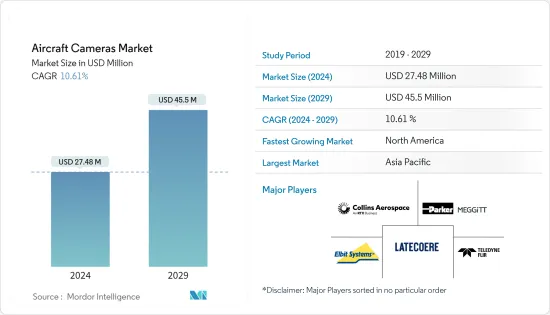
항공기용 카메라는 항공기 내외에서 많은 기능을 수행합니다. 이러한 용도는 지상 조종 및 기내 모니터링에서 외부 보안 대책에 이르기까지 다양합니다. 항공기용 카메라는 급유, 감시, 조준 등 군사 작전에 중요한 역할을 하며 관찰, 식별, 자기 방어를 지원합니다.
여객 수송량 증가가 민간 항공기 수요를 견인하고 있어 향후 수년간에 많은 납품이 예상됩니다. 동시에 세계 각국이 군사력의 근대화에 주력하는 가운데 차세대 군용기에 대한 관심도 높아지고 있습니다. 이러한 민간기와 군용기의 급증은 항공기용 카메라 수요를 직접 밀어 올립니다.
그러나 카메라 이미지 기술의 비용이 높고 위험한 사건으로 인한 손상을 받기 쉽다는 문제가 있습니다. 이러한 과제는 특히 소규모 항공사의 경우 이러한 기술의 경제적 실행 가능성을 방해할 수 있습니다. 이러한 장애물에도 불구하고 해상도 향상, 저조도 성능 향상, 세련된 디자인 등 카메라 기술의 진보가 계속되고 있으며, 이 시장은 유망합니다. 이러한 기술 혁신을 선도하는 제조업체는 항공기에 최첨단 카메라 솔루션을 제공함으로써 경쟁 우위에 서는 태세를 갖추고 있습니다.
항공기용 카메라 시장 동향
시장 점유율을 독점하는 군용기 부문
- 군용기는 감시와 상황 인식에서 조준과 자기 방어에 이르기까지 무수한 기능으로 카메라에 의존합니다. 2023년 세계 군사비는 2조 4,400억 달러에 달했습니다. 현대의 군용기, 특히 최신 세대의 군용기는 다양한 운영을 위해 이미지 센서에 크게 의존하고 있습니다. 군용기에 대한 수요 증가는 군용기 조종사의 상황 인식 강화의 필요성과 함께 이 시장 부문의 성장을 뒷받침하고 있습니다. 2023년 8월, 미국 정부는 5억 달러의 대외 군사 판매 계약에 따라 F-16 파이팅 팔콘용 적외선 수색 및 추적(IRST) 기술의 대만 판매를 승인했습니다. 고급 카메라와 ISR 도구인 이 IRST는 대만의 공중 지배를 보장하는 데 매우 중요합니다.
- 또한, 선도적인 OEM은 최첨단 다중 스펙트럼 IR 레이저 기반 대책 시스템 개발의 선두에 서 있습니다. 이 시스템은 대형 고정 날개에서 회전 날개까지 광범위한 항공기를 적외선 유도 미사일 위협으로부터 보호하도록 설계되었습니다. 예를 들어, 2023년 8월, Elbit Systems는 DALO Days 2023에서 지향성 IR 대책(DIRCM)을 포함한 일련의 솔루션을 발표했습니다. 전시된 DIRCM 솔루션은 첨단 레이저 기술과 높은 프레임 속도 열화상 카메라를 탑재하여 빠르고 정확한 위협 감지 및 방해가 뛰어납니다. Elbit Systems의 DIRCM 솔루션은 이스라엘 공군, NATO, 독일 공군, 이탈리아 공군, 브라질 공군 등 군용기와 헬리콥터를 보호하기 위해 유명한 조직으로부터 신뢰를 얻고 있습니다. 이러한 진보는 앞으로 몇 년동안이 부문의 성장을 가속할 것으로 보입니다.
아시아태평양이 최대 시장 점유율을 차지할 전망
- 예측 기간 동안 아시아태평양은 군용기와 민간기 모두에 대한 수요가 증가함에 따라 항공기용 카메라의 지배적 시장으로 상승할 전망입니다. 이 지역의 국제 여객 수는 견조하게 회복되어 민간 항공 부문을 강화할 것입니다.
- 주목할 점은 2023년 6월에 에어 인디아가 에어버스사와 보잉사와 계약을 체결하고 각각 250대와 220대를 주문했다는 점입니다. 보잉의 B777X의 라인업은 파일럿의 기수와 메인 기어 부근의 시야를 보조하는 지상 조종 카메라 시스템(GMCS)을 갖추고 있는 것이 특징입니다. 2023년 12월, 에어 인디아는 에어 버스와 A350-900형기 20기와 A350-1000형기 20기의 계약을 체결하여 보유기를 더욱 강화했습니다. 주요 항공기 제조업체 각 회사는 항공기 안전성, 특히 착륙 시 안전성을 높이기 위해 카메라 시스템 개발에 주력하고 있습니다. 예를 들어 에어버스는 2023년 1월에 드래곤플라이 비행시스템 시험을 시작했으며, 특히 비상시 컴퓨터 비전과 여러 카메라를 사용하여 항공기를 자율적으로 착륙할 수 있는 능력을 선보였습니다.
- 군사 분야에서 카메라는 군용기의 ISR 작전에서 매우 중요한 역할을 합니다. 특히 아시아태평양의 일부 국가에서는 정찰기를 고급 EO/IR 카메라로 업그레이드하고 있습니다. 2023년 3월의 주목할만한 움직임으로 태국 해군은 제너럴 아토믹스 에어로텍 시스템스(GA-ATS)에 2대의 돌니에 228의 대규모 근대화와 유지보수를 의뢰해 360° 미션 레이더 그리고 전자 광학 및 적외선 카메라를 장착했습니다. 이러한 신흥국 시장의 개척은 세계 시장의 성장을 이끌고 있습니다.
항공기용 카메라 산업 개요
항공기용 카메라 시장은 반고정적이며 소수의 기업만이 주요 시장 점유율을 차지합니다. Elbit Systems Ltd, LATECOERE SA, Meggitt Ltd, Teledyne FLIR LLC, Collins Aerospace(RTX Corporation)는 시장의 유명한 기업입니다. 시장 진출기업은 항공기용 카메라 제품을 강화하기 위해 연구개발 투자를 크게 늘리고 있습니다. 상황 인식을 높이고 새로운 고객층을 획득하는 것이 목적입니다.
또한, 이들 기업은 항공기 OEM과의 계약 연장을 전략적으로 추구하고 있습니다. 이러한 계약은 지속적인 수익을 약속하며 항공기 프로그램의 기간이 수년에 걸쳐 있기 때문에 매우 유리합니다. 게다가 특히 군용 분야에서는 국산화를 추진하는 정부의 이니셔티브에 힘입어 신규 진입기업이 급증하고 있습니다. 이러한 신규 진입은 향후 수년간 시장 경쟁이 격화될 것으로 예상됩니다.
기타 혜택 :
- 엑셀 형식 시장 예측(ME) 시트
- 3개월간의 애널리스트 서포트
목차
제1장 서론
- 조사의 전제조건
- 조사 범위
제2장 조사 방법
제3장 주요 요약
제4장 시장 역학
- 시장 개요
- 시장 성장 촉진요인
- 시장 성장 억제요인
- Porter's Five Forces 분석
- 신규 진입업자의 위협
- 구매자 및 소비자의 협상력
- 공급기업의 협상력
- 대체품의 위협
- 경쟁 기업간 경쟁 관계의 강도
제5장 시장 세분화
- 용도별
- 민간 항공기
- 군용기
- 유형별
- 내부 카메라
- 외부 카메라
- 지역별
- 북미
- 미국
- 캐나다
- 유럽
- 독일
- 영국
- 프랑스
- 기타 유럽
- 아시아태평양
- 인도
- 중국
- 일본
- 한국
- 기타 아시아태평양
- 라틴아메리카
- 브라질
- 기타 라틴아메리카
- 중동 및 아프리카
- 아랍에미리트(UAE)
- 사우디아라비아
- 이스라엘
- 기타 중동 및 아프리카
- 북미
제6장 경쟁 구도
- 벤더의 시장 점유율
- 기업 프로파일
- KID-Systeme GmbH
- LATECOERE SA
- Meggitt Ltd
- Teledyne FLIR LLC
- Collins Aerospace(RTX Corporation)
- AD Aerospace Ltd
- Kappa optronics GmbH
- Cabin Avionics Limited
- Eirtech Aviation Services Limited
- Elbit Systems Ltd
- L3Harris Technologies Inc.
- THALES
제7장 시장 기회 및 향후 동향
AJY 24.09.03The Aircraft Cameras Market size is estimated at USD 27.48 million in 2024, and is expected to reach USD 45.5 million by 2029, growing at a CAGR of 10.61% during the forecast period (2024-2029).
Aircraft cameras serve a multitude of functions both within and outside aircraft. These applications range from ground maneuvering and cabin surveillance to external security measures. They play a crucial role in military operations, including refueling, surveillance, and targeting, aiding in observation, identification, and self-protection.
Rising passenger traffic is driving the demand for commercial aircraft, with many deliveries expected in the upcoming years. Simultaneously, as nations globally focus on modernizing their military capabilities, there is a heightened interest in next-gen military aircraft. This surge in commercial and military aircraft directly boosts the demand for aircraft cameras.
However, the high cost of camera imaging technology and its susceptibility to damage from hazardous events present challenges. These challenges could impede such technology's economic viability, particularly for smaller airlines. Despite these hurdles, ongoing advancements in camera technology, like improved resolution, better low-light performance, and sleeker designs, paint a promising picture for the market. Manufacturers leading these innovations are poised to gain a competitive edge by providing state-of-the-art camera solutions for aerial vehicles.
Aircraft Cameras Market Trends
Military Aircraft Segment to Dominate Market Share
- Military aircraft rely on cameras for myriad functions, from surveillance and situational awareness to targeting and self-protection. In 2023, global military expenditure reached a substantial USD 2.44 trillion. Modern military aircraft, especially the latest generations, heavily lean on imaging sensors for their diverse operations. The rising demand for military aircraft, coupled with the imperative for heightened situational awareness among military pilots, is propelling the growth of this market segment. In August 2023, the US government, under a USD 500 million Foreign Military Sales agreement, approved the sale of infrared search and track (IRST) technology to Taiwan for its F-16 Fighting Falcon fleet. This IRST, a sophisticated camera and ISR tool, is pivotal in securing aerial dominance for Taiwan.
- Furthermore, leading OEMs spearhead the development of cutting-edge multi-spectral IR laser-based countermeasure systems. These systems are designed to shield a broad spectrum of aircraft, ranging from large fixed to rotary wings, from the threat of infrared-guided missiles. For instance, in August 2023, Elbit Systems unveiled its suite of solutions, including the Directed IR Countermeasures (DIRCM), at DALO Days 2023. The showcased DIRCM solution, equipped with advanced laser technology and a high frame-rate thermal camera, excels in swift and precise threat detection and jamming. Elbit Systems' DIRCM solutions have garnered the trust of several prominent entities, such as the Israel Airforce, NATO, and the German, Italian, and Brazilian Air forces, for safeguarding their military aircraft and helicopters. These advancements are poised to fuel the segment's growth in the coming years.
Asia-Pacific Expected to Hold Largest Market Share
- During the forecast period, Asia-Pacific is poised to emerge as the dominant market for aircraft cameras, driven by escalating demands for both military and commercial aircraft. The region's robust rebound in international passenger traffic is set to bolster its commercial aviation sector.
- Notably, in June 2023, Air India inked deals with Airbus and Boeing, ordering 250 and 220 aircraft, respectively, with a subset of 10 B777X jets. Boeing's B777X lineup notably features a Ground Maneuver Camera System (GMCS), aiding pilots with views of the nose and main gear areas. In December 2023, Air India further bolstered its fleet by reaching a contract with Airbus for 20 A350-900s and 20 A350-1000s, highlighting the A350's tail cameras, designed to assist pilots during ground maneuvers. Major aircraft OEMs have intensified their focus on developing camera systems to enhance aircraft safety, particularly during landings. Airbus, for instance, initiated tests in January 2023 with its DragonFly flight system, showcasing its ability to autonomously land aircraft using computer vision and multiple cameras, especially in emergencies.
- In the military, cameras play a pivotal role in ISR operations on military aircraft. Notably, several countries in the Asia-Pacific are upgrading their surveillance aircraft with advanced EO/IR cameras. In a notable move in March 2023, the Royal Thai Navy enlisted General Atomics AeroTec Systems (GA-ATS) for extensive modernization and maintenance on two Dornier 228s, equipping them with a 360° mission radar and electro-optical/infrared camera. Such developments are driving the market's growth across the globe.
Aircraft Cameras Industry Overview
The aircraft cameras market is semi-consolidated, as only a few players account for a major market share. Elbit Systems Ltd, LATECOERE SA, Meggitt Ltd, Teledyne FLIR LLC, and Collins Aerospace (RTX Corporation) are prominent players in the market. Market players are significantly increasing their R&D investments to enhance their aircraft camera products. They aim to boost situational awareness and entice a fresh customer base.
Moreover, these players are strategically pursuing extended contracts with aircraft OEMs. Such agreements promise sustained revenues and are incredibly lucrative given the multi-year duration of aircraft programs. Additionally, a surge of new entrants, particularly in the military segment, is being witnessed, spurred by governmental initiatives favoring indigenization. This influx is poised to intensify market competition in the coming years.
Additional Benefits:
- The market estimate (ME) sheet in Excel format
- 3 months of analyst support
TABLE OF CONTENTS
1 INTRODUCTION
- 1.1 Study Assumptions
- 1.2 Scope of the Study
2 RESEARCH METHODOLOGY
3 EXECUTIVE SUMMARY
4 MARKET DYNAMICS
- 4.1 Market Overview
- 4.2 Market Drivers
- 4.3 Market Restraints
- 4.4 Porter's Five Forces Analysis
- 4.4.1 Threat of New Entrants
- 4.4.2 Bargaining Power of Buyers/Consumers
- 4.4.3 Bargaining Power of Suppliers
- 4.4.4 Threat of Substitute Products
- 4.4.5 Intensity of Competitive Rivalry
5 MARKET SEGMENTATION
- 5.1 By Application
- 5.1.1 Commercial Aircraft
- 5.1.2 Military Aircraft
- 5.2 By Type
- 5.2.1 Internal Cameras
- 5.2.2 External Cameras
- 5.3 By Geography
- 5.3.1 North America
- 5.3.1.1 United States
- 5.3.1.2 Canada
- 5.3.2 Europe
- 5.3.2.1 Germany
- 5.3.2.2 United Kingdom
- 5.3.2.3 France
- 5.3.2.4 Rest of Europe
- 5.3.3 Asia-Pacific
- 5.3.3.1 India
- 5.3.3.2 China
- 5.3.3.3 Japan
- 5.3.3.4 South Korea
- 5.3.3.5 Rest of Asia-Pacific
- 5.3.4 Latin America
- 5.3.4.1 Brazil
- 5.3.4.2 Rest of Latin America
- 5.3.5 Middle East and Africa
- 5.3.5.1 United Arab Emirates
- 5.3.5.2 Saudi Arabia
- 5.3.5.3 Israel
- 5.3.5.4 Rest of Middle East and Africa
- 5.3.1 North America
6 COMPETITIVE LANDSCAPE
- 6.1 Vendor Market Share
- 6.2 Company Profiles
- 6.2.1 KID-Systeme GmbH
- 6.2.2 LATECOERE SA
- 6.2.3 Meggitt Ltd
- 6.2.4 Teledyne FLIR LLC
- 6.2.5 Collins Aerospace (RTX Corporation)
- 6.2.6 AD Aerospace Ltd
- 6.2.7 Kappa optronics GmbH
- 6.2.8 Cabin Avionics Limited
- 6.2.9 Eirtech Aviation Services Limited
- 6.2.10 Elbit Systems Ltd
- 6.2.11 L3Harris Technologies Inc.
- 6.2.12 THALES