

|
시장보고서
상품코드
1693915
일본의 당뇨병 치료제 및 기기 시장(2025-2030년) : 시장 점유율 분석, 산업 동향 및 통계, 성장 예측Japan Diabetes Drugs And Devices - Market Share Analysis, Industry Trends & Statistics, Growth Forecasts (2025 - 2030) |
||||||
 Mordor Intelligence
일본의 당뇨병 치료제 및 기기 시장 규모는 2025년에 49억 5,000만 달러로 추정되며, 예측 기간(2025-2030년) 동안 CAGR 3.2%를 초과하여 2030년에는 58억 달러에 달할 것으로 예측됩니다.
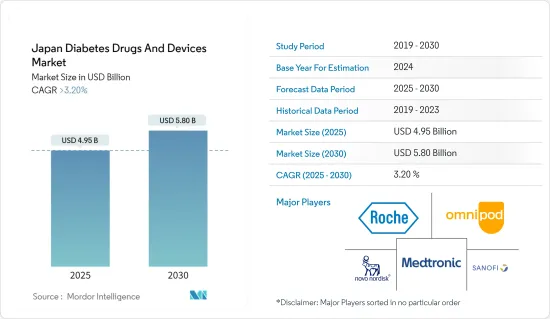
일본의 당뇨병 치료제 및 기기 시장은 당뇨병 유병률의 상승과 제품 개발 및 생산 능력의 확대 등 기업의 적극적인 대처에 의해 예측 기간 동안 크게 성장할 전망입니다.
당뇨병 치료제 및 기기는 혈당을 모니터링하고 관리하는 데 필수적입니다. IDF Diabetes Atlas에 따르면 일본 당뇨병 환자 수는 2030년까지 약 1,054만 2,700명으로 예측되고, 2045년에는 1,011만 7,900명에 달할 것으로 예측됩니다.
여러 기업이 당뇨병 치료 수요 및 공급 격차가 확대되고 있음을 인식하고 기회를 포착하고 있습니다. 이러한 움직임 중 하나로 Eli Lilly가 주력 당뇨병 치료제 '만자로'를 일본에서 공급하기로 결정하였습니다.
2024년 5월 일본 당뇨병학회는 당뇨병 치료제 중에서도 특히 인크레틴 관련 약의 안전한 사용을 강조하는 가이드라인을 발표했습니다. GLP-1 수용체 작용제는 당뇨병과 관련된 신장병이나 심혈관 질환의 치료제으로서도 유망한 결과를 보이고 있으며 경구 투여 제제의 도입을 한층 더 뒷받침하고 있습니다.
일본의 당뇨병 치료제 및 기기 시장은 견조한 성장 궤도에 있습니다. 당뇨병의 유병률 증가는 기업에 의한 전략적인 대처나 규제 당국의 지원과 함께 시장 확대의 원동력이 될 것으로 예측됩니다.
일본 당뇨병 치료제 및 기기 시장 동향
예측 기간 동안 지속 포도당 모니터링 부문이 크게 성장할 것으로 예상
일본의 지속 포도당 모니터링(CGM) 시장은 예측 기간 동안 크게 성장할 것으로 예측됩니다.
지속 포도당 모니터링 센서는 포도당 옥시다아제에 따라 혈당을 측정합니다. 이 효소는 포도당을 과산화수소로 변환하고 센서의 백금과 반응하여 수신기에 전송되는 전기 신호를 생성합니다. 연구자들은 전기화학식 포도당 센서를 대신하는 것을 적극적으로 모색하고 있으며 CGM 센서를 보다 비용 대비 효과가 높고, 침습성이 낮으며, 사용하기 쉽게 만드는 것을 목표로 하고 있습니다.
분광법, 형광법, 홀로그래피 등의 다양한 기술은 지속 포도당 모니터링에 큰 가능성을 제시하고 있습니다.
확대되는 일본의 CGM 사정은 부문 확대를 촉진합니다. Abbott는 'FreeStyle Libre Care' 지원 프로그램 전용 공식 LINE 계정을 개설하여 LINE 플랫폼을 통해 FreeStyle Libre Care 등록을 효율화했습니다.
2024년 3월에는 일본 당뇨병학회가 '실시간 CGM의 사용에 관한 가이드라인'과 '간헐적 주사형 지속 혈당 측정기(isCGM)에 관한 견해'의 최신판을 발표하면서 FreeStyle Libre를 언급하는 등 CGM의 보급이 진행되고 있습니다. 이 가이드 라인은 환자의 혈당 관리를 강화하는데 중요한 역할을 할 것으로 예상되며, 특히 SMBG와 함께 이러한 도구가 권장되는 환자 프로파일이 상세하게 설명되어 있습니다.
따라서 이러한 부문의 성장은 기술 혁신과 시장 제공 증가로 이어집니다.
당뇨병 유병률 상승이 시장을 견인하는 전망
당뇨병은 여전히 세계적으로 중요한 건강 문제이며 일본도 예외는 아닙니다. 일본에서의 당뇨병 유병률 증가는 건강에 대한 우려를 낳고 있으며, 의료 당국이나 이해 관계자에 의한 시급한 주의와 대책이 필요합니다.
일본의 후생노동성은 당뇨병을 임박한 건강 문제로 인식하고 있습니다. 특히 2형 당뇨병은 고혈압이나 고지혈증 등의 합병증을 가진 환자나 합병증이 발병한 환자에게 큰 경제적 부담이 되고 있습니다.
일본에서는 비만 인구 증가, 식생활의 균형 파괴, 쉴 새 없는 라이프스타일 등이 원인이 되어, 모든 연령층에서 당뇨병이 급증하고 있습니다. 국제당뇨병연합(IDF)은 일본 당뇨병 인구가 2030년까지 1,054만 2,700명, 2045년까지 1,011만 7,900명에 이를 것으로 예측했습니다.
당뇨병 인구가 증가함에 따라 일본에서는 제품 개발 및 지침 업데이트가 자주 이루어지고 있습니다. 예를 들어, 2024년 5월에 개최된 제67회 일본 당뇨병학회 학술 집회에서는 Light Touch Technology(본사 : 오사카시 조토구)가 비침습형 혈당 센서를 발표했습니다. 양산 프로토타입 단계에 있는 이 획기적인 센서는 중적외선 레이저를 사용하여 모세 혈관의 포도당 농도를 측정합니다. 사용자는 단지 센서에 손가락을 5초간 위치하기만 하면 됩니다. 이 회사는 몇년 후 출시를 목표로 하고 있습니다.
당뇨병 유병률 상승과 일본의 적극적인 대응으로 당뇨병 부문은 예측 기간 동안 강력한 성장이 예상됩니다.
따라서 일본의 당뇨병 유병률 증가는 중요한 과제와 기회를 제시합니다. 혁신적인 해결책과 최신 지침을 통해 이 건강 위기를 다루는 국가의 노력은 향후 몇 년 동안 당뇨병의 경제적, 건강적 영향을 관리하는 데 매우 중요할 것으로 보입니다.
일본 당뇨병 치료제 및 기기 산업 개요
일본의 당뇨병 치료제와 기기 시장은 다음과 같은 주요 기업의 존재로 반고체화되고 있습니다.
Abbott과 Medtronic 등의 대기업은 유기적 성장 전략을 견지하는 한편 시장 지배력을 획득하기 위해 수많은 합병, 인수, 제휴를 실시했습니다.
기타 혜택
- 엑셀 형식 시장 예측(ME) 시트
- 3개월간 애널리스트 서포트
목차
제1장 서론
- 조사의 전제조건과 시장 정의
- 조사 범위
제2장 조사 방법
제3장 주요 요약
제4장 시장 역학
- 시장 개요
- 시장 역학
- 시장 성장 촉진요인
- 국내 당뇨병 유병률 상승
- 정부에 의한 전략적 이니셔티브의 확대
- 시장 성장 억제요인
- 국내에서의 저렴한 약물 전달 기기의 한정된 이용 가능성
- 시장 성장 촉진요인
- Porter's Five Forces 분석
- 공급기업의 협상력
- 소비자의 협상력
- 신규 참가업체의 위협
- 대체품의 위협
- 경쟁 기업간 경쟁 관계의 강도
제5장 시장 세분화
- 제품 유형별
- 기기
- 모니터링 기기
- 자가 혈당 모니터링 기기
- 연속 혈당 모니터링 기기
- 관리 기기
- 인슐린 펌프
- 인슐린 주사기
- 일회용 펜
- 기타
- 약
- 경구 당뇨병 치료제
- 인슐린 제형
- 기타
- 기기
제6장 시장 지표
- 1형 당뇨병 인구(2021-2029년)
- 2형 당뇨병 인구(2021-2029년)
제7장 경쟁 구도
- 기업 프로파일
- Novo Nordisk A/S
- Medtronic
- Insulet Corporation
- Tandem Diabetes Care
- Ypsomed
- Novartis AG
- Sanofi
- Eli Lilly and Company
- Abbottt
- Astrazeneca
- Dexcom Inc.
제8장 시장 기회와 미래 동향
CSM 25.05.15The Japan Diabetes Drugs And Devices Market size is estimated at USD 4.95 billion in 2025, and is expected to reach USD 5.80 billion by 2030, at a CAGR of greater than 3.2% during the forecast period (2025-2030).
Japan's diabetes drugs and devices market is poised for significant growth through the forecast period, driven by a rising prevalence of diabetes and proactive initiatives from companies, including product development and expanding production capacities.
Diabetes drugs and devices are crucial in monitoring and managing blood glucose levels. With Japan's diabetic population on the rise, companies are set to see an expanding user base. According to the IDF Diabetes Atlas, Japan is projected to have around 10,542.7 thousand individuals with diabetes by 2030; the number is expected to reach 10,117.9 thousand by 2045.
Recognizing the widening gap between the demand and supply of diabetic drugs, several companies are seizing the opportunity. For instance, in June 2024, Eli Lilly and Company made significant investments to boost its production capacity for drugs targeting obesity and diabetes. This move came as the company lifted restrictions on shipping its flagship diabetes drug, Manjaro, in Japan. By enhancing its production capabilities, Eli Lilly aims to meet the escalating demand for diabetes drugs, especially in light of limited supplies at the national level.
In May 2024, the Japan Diabetes Society published guidelines emphasizing the safe use of diabetes drugs, particularly Incretin-Related Drugs. This initiative was prompted by the rising adoption of GLP-1 receptor agonists, known for their efficacy in blood sugar management and weight reduction. These drugs have also shown promising results in addressing diabetes-related kidney and cardiovascular diseases, further bolstered by the introduction of orally administered formulations.
The diabetes drugs and devices market in Japan is on a robust growth trajectory. The increasing prevalence of diabetes, coupled with strategic initiatives by companies and regulatory support, is expected to drive market expansion. This dynamic environment presents significant opportunities for stakeholders in the diabetes care sector.
Japan Diabetes Drugs and Devices Market Trends
The Continuous Glucose Monitoring Segment is Expected to Witness Significant Growth Over the Forecast Period
The continuous glucose monitoring (CGM) market in Japan is expected to experience significant growth over the forecast period. This growth can be attributed to technological advancements and the increasing adoption of CGM devices among diabetes patients.
Continuous glucose monitoring sensors rely on glucose oxidase to gauge blood sugar levels. This enzyme converts glucose to hydrogen peroxide, which generates an electrical signal transmitted to a receiver upon reacting with platinum in the sensor. The sensor is pivotal in any continuous blood glucose monitoring apparatus. Researchers are actively exploring alternatives to electrochemical glucose sensors, aiming to render CGM sensors more cost-effective, less invasive, and user-friendly. Optical measurement is a promising avenue for glucose assessment.
Various techniques, such as spectroscopy, fluorescence, and holography, show significant potential for continuous glucose monitoring. For instance, Eversense, a fluorescence-based CGM sensor from Sensonics Company, boasts a notably longer lifespan than its electrochemical counterparts. With ongoing technological enhancements to boost sensor precision, the segment is primed for substantial growth.
Japan's expanding CGM landscape is set to fuel segmental expansion. In March 2024, Abbott unveiled its FreeStyle Libre 2 Continuous Glucose Monitoring Device, offering real-time, minute-to-minute glucose monitoring and customizable alerts for diabetes management. In a similar move, Abbott introduced an official LINE account in 2023, specifically for its "FreeStyle Libre Care" support program, streamlining registration for FreeStyle Libre Care through the LINE platform.
Highlighting the rising adoption of CGM, in March 2024, the Japan Diabetes Society released updated versions of its Guidelines for Real-time CGM Use and its stance on Intermittent Scanning Continuous Glucose Monitors (isCGM), specifically referencing FreeStyle Libre. These guidelines are expected to play a significant role in enhancing patients' blood sugar management, detailing the patient profiles for whom these tools are recommended, especially in conjunction with SMBG.
Hence, the growth of the segment is driven by technological innovations and increasing market offerings. These advancements are expected to significantly improve diabetes management and patient outcomes over the forecast period.
Rising Diabetes Prevalence is Expected to Drive the Market
Diabetes remains a critical health issue globally, and Japan is no exception. The increasing prevalence of diabetes in the country is a cause for concern, necessitating immediate attention and action from healthcare authorities and stakeholders.
The Ministry of Health, Labor, and Welfare in Japan has identified diabetes as a pressing health concern. Type 2 diabetes, in particular, poses a substantial economic burden, especially for patients with comorbidities such as hypertension and hyperlipidemia or those who develop complications.
Japan is witnessing a surge in diabetes across all age groups, attributed to a rising obese population, poor dietary habits, and sedentary lifestyles. The International Diabetes Federation (IDF) projects Japan's diabetic population to reach 10,542.7 thousand by 2030 and 10,117.9 thousand by 2045.
With the diabetic population on the rise, Japan is seeing more frequent product developments and guideline updates. For instance, in May 2024, during the 67th Annual Meeting of the Japan Diabetes Society, Light Touch Technology (based in Joto-ku, Osaka) unveiled a non-invasive blood glucose sensor. This innovative sensor, which is in the mass production prototype stage, uses a mid-infrared laser to measure glucose concentration in capillaries. Additionally, it only requires the user to hold their finger over the sensor for five seconds. The company aims to release the sensor in the coming years.
Given the escalating diabetes prevalence and the country's proactive responses, the diabetes segment is poised for robust growth over the forecast period.
Hence, Japan's increasing diabetes prevalence presents significant challenges and opportunities. The country's commitment to addressing this health crisis through innovative solutions and updated guidelines will be crucial in managing the economic and health impacts of diabetes in the coming years.
Japan Diabetes Drugs and Devices Industry Overview
The Japanese diabetes drugs and devices market is semi-consolidated with the presence of key players such as Novo Nordisk A/S, Medtronic, Insulet Corporation, Sanofi, and Eli Lilly and Company.
Large companies such as Abbott and Medtronic have made numerous mergers, acquisitions, and partnerships to gain market dominance while adhering to organic growth strategies. The manufacturers of insulin delivery devices are spending a huge amount on the R&D of the devices.
Additional Benefits:
- The market estimate (ME) sheet in Excel format
- 3 months of analyst support
TABLE OF CONTENTS
1 INTRODUCTION
- 1.1 Study Assumptions and Market Definition
- 1.2 Scope of the Study
2 RESEARCH METHODOLOGY
3 EXECUTIVE SUMMARY
4 MARKET DYNAMICS
- 4.1 Market Overview
- 4.2 Market Dynamics
- 4.2.1 Market Drivers
- 4.2.1.1 Rising Diabetes Prevalence In The Country
- 4.2.1.2 Growing Strategic Initiatives By The Government
- 4.2.2 Market Restraints
- 4.2.2.1 Limited Availability of Affordable Drug Delivery Devices In The Country
- 4.2.1 Market Drivers
- 4.3 Porter's Five Forces Analysis
- 4.3.1 Bargaining Power of Suppliers
- 4.3.2 Bargaining Power of Consumers
- 4.3.3 Threat of New Entrants
- 4.3.4 Threat of Substitute Products and Services
- 4.3.5 Intensity of Competitive Rivalry
5 MARKET SEGMENTATION (Market Size by Value - USD)
- 5.1 By Product Type
- 5.1.1 Devices
- 5.1.1.1 Monitoring Devices
- 5.1.1.1.1 Self-Monitoring Blood Glucose Devices
- 5.1.1.1.2 Continuous Blood Glucose Monitoring
- 5.1.1.2 Management Devices
- 5.1.1.2.1 Insulin Pump
- 5.1.1.2.2 Insulin Syringes
- 5.1.1.2.3 Disposable Pens
- 5.1.1.2.4 Others
- 5.1.2 Drugs
- 5.1.2.1 Oral Anti-diabetes Drugs
- 5.1.2.2 Insulin Drugs
- 5.1.2.3 Others
- 5.1.1 Devices
6 Market Indicators
- 6.1 Type-1 Diabetes Population (2021-2029)
- 6.2 Type-2 Diabetes Population (2021-2029)
7 COMPETITIVE LANDSCAPE
- 7.1 Company Profiles
- 7.1.1 Novo Nordisk A/S
- 7.1.2 Medtronic
- 7.1.3 Insulet Corporation
- 7.1.4 Tandem Diabetes Care
- 7.1.5 Ypsomed
- 7.1.6 Novartis AG
- 7.1.7 Sanofi
- 7.1.8 Eli Lilly and Company
- 7.1.9 Abbottt
- 7.1.10 Astrazeneca
- 7.1.11 Dexcom Inc.


