
|
시장보고서
상품코드
1934644
미국의 내시경 기기 : 시장 점유율 분석, 업계 동향과 통계, 성장 예측(2026-2031년)US Endoscopy Devices - Market Share Analysis, Industry Trends & Statistics, Growth Forecasts (2026 - 2031) |
||||||
 Mordor Intelligence
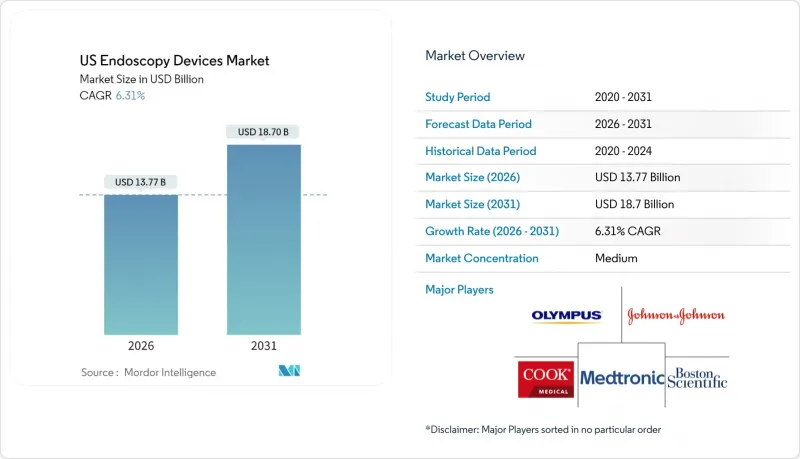
2026년 미국의 내시경 기기 시장 규모는 137억 7,000만 달러로 추정되며, 2025년 129억 5,000만 달러에서 성장이 전망됩니다.
2031년까지의 예측은 187억 달러에 달할 것으로 예상되며, 2026년부터 2031년까지 연평균 6.31%의 성장률을 나타낼 것으로 전망됩니다.
병원의 설비 투자 사이클, AI 강화 영상 진단 기술, 일회용 내시경으로의 빠른 전환은 미국 내시경 장비 시장의 지속적인 성장을 견인하고 있습니다. 외래 진료에 중점을 둔 상환 제도 개혁은 감염 관리의 요구와 일치하며, 시설들이 회전 시간을 단축하는 일회용 플랫폼을 우선적으로 사용하도록 유도하고 있습니다. 대규모 의료 시스템에서는 4K 광학 기술, 형광 가이드, 전자 건강 기록 연계를 통합한 시각화 스위트를 도입하여 시술 효율을 향상시키고 있습니다. 한편, 벤처캐피털에 의한 신규 진입기업은 재처리 설비투자가 필요 없는 비용 예측 가능한 클라우드 연동형 일회용 스코프로 외래수술센터(ASC)를 끌어들여 미국 내시경 장비 시장에서의 경쟁을 심화시키고 있습니다.
미국 내시경 장비 시장 동향과 인사이트
최소침습수술 선호도 상승
외래 수술센터는 지속적으로 확대되고 있으며, 대장내시경과 상부위장관내시경 검사가 입원 시설에서 벗어나면서 5년간 12% 증가가 예상됩니다. 병원과 외래수술센터(ASC) 간의 상환액 차이로 인해 임상의들은 외래 시설에서 더 많은 수의 수술을 예약하게 되었고, 평균 회복 시간은 절반으로 줄었습니다. 주요 소화기 센터에서는 전담 회전율 팀과 최적화된 스케줄 관리 소프트웨어를 활용하여 시간당 최대 4건의 대장내시경 검사를 시행하고 있습니다. 미국 ASC의 의사 소유율은 50%에 육박하고 있으며, 수술실 회전율 향상에 따른 직접적인 경제적 이익이 창출되고 있습니다. 이로 인해 멸균 지연을 줄이는 일회용 내시경에 대한 투자가 촉진되고, 처리 효율성이 향상되어 조달 형태가 변화하고 있습니다. 단가를 높이면서 일회용 모델에 대한 지출 증가 추세가 강화되고 있습니다.
소화기 암 및 만성 소화기 질환의 부담
대장암 검진 시작 연령이 45세로 낮아짐에 따라 대상 미국 인구가 약 1,900만 명 증가하여 2030년까지 대장내시경 검진 수요가 확대될 것으로 예측됩니다. 연간 2,000만 건 이상의 소화기 내시경 검사가 시행되고 있으며, 그 중 대장내시경 검사가 61.2%를 차지하고 있습니다. 소화기내과 전문의의 지리적 편중으로 인해 예약 병목현상이 악화되고 있습니다. 미국 카운티의 69.3%에 상주 전문의가 없으며, 지방의 경우 대기 기간이 4개월에 달할 전망입니다. 매사추세츠, 코네티컷, 뉴욕 등 도시 지역에서는 과잉 환자를 수용하고 높은 이용률을 유지하고 있기 때문에 고가 영상진단 패키지나 로봇 보조 장비가 유리하게 작용하고 있습니다.
불충분한 재처리로 인한 내시경 감염 발생
십이지장 내시경과 관련된 여러 오염 사례가 발생함에 따라 규제 당국은 병원 멸균실에 대한 감시를 강화하고 있습니다. FDA의 지침은 현재 에틸렌옥사이드보다 과산화수소 증기 멸균을 우선시하고 있으며, 시설에서는 하드웨어를 업데이트하고 직원을 재교육해야 합니다. 소규모 병원에서는 이러한 전환을 위한 자금 조달과 공인된 기술자 확보에 어려움을 겪고 있으며, 재처리 위험을 제거한 일회용 대체품에 대한 평가가 진행되고 있습니다. 책임에 대한 우려와 의료시설평가기구(Joint Commission)의 감사로 인해 압력이 가중되고, 예산이 부족한 상황에서도 관리자들은 일회용 방식으로의 전환을 촉구하고 있습니다.
부문 분석
내시경은 진단의 핵심으로 2025년 매출의 55.02% 유지. 한편, 시각화 및 기록 장비는 CAGR 10.82%로 가장 빠르게 성장하고 있으며, 현재 미국 내시경 장비 시장에서 추가 자본 예산을 확보하고 있습니다. 병원 관리자는 전문 분야를 넘나드는 광학계와 데이터 수집을 표준화하는 통합 이미징 타워를 채택하여 벤더의 복잡성을 억제하고 분석 도구의 활용을 촉진하고 있습니다. 경성 내시경은 정형외과 및 이비인후과 분야의 틈새 시장 수요를 충족시키는 반면, 연성 내시경은 확립된 시술 알고리즘을 통해 소화기 영역의 적응증을 지배하고 있습니다. 네비캠의 승인을 받은 캡슐내시경은 대장검사 적용범위를 넓히고, 로봇내시경은 기관지 내시경 검사의 수율 향상을 기대할 수 있는 고부가가치 분야를 차지하고 있습니다.
스트라이커의 1788 플랫폼은 4K, 형광, 수술실 연계 기능의 융합을 실현하여 시설에서 단계적 업그레이드 없이 미래를 내다보는 시스템 구축이 가능합니다. 치료용도의 확대(특히 비만 내시경 수술 및 내시경 봉합술)에 따라 내시경 수술기구 수요는 견조하게 증가하고 있습니다. 제조업체들은 이미지 스트림에 AI 모듈을 탑재하여 제품 차별화를 꾀하고, 소프트웨어 구독 수익을 창출하고 있습니다. 이를 통해 미국 내시경 장비 시장 전체에 대한 생태계 포위력을 강화해 나가고 있습니다.
소화기 내시경 검사는 대장내시경 검사의 확고한 입지와 확대되는 검진 지침으로 2025년 매출의 48.06%를 차지하며 검사 건수의 안정적 증가를 이끌었습니다. 부인과 내시경 검사는 저침습적 자궁경 검사의 보급 확대와 자궁경부암 검진 알고리즘의 발전으로 CAGR 9.67%로 성장을 견인하고 있습니다. 호흡기 내시경 검사는 로봇 기관지경 검사의 기술적 추세를 타고, 이비인후과 서비스는 부비동경 검사와 후두경 검사의 표준화를 통해 안정성을 높이고 있습니다.
스미스앤네퓨는 이비인후과 시술의 COBLATION 기술 노하우를 활용하여 연간 약 35만 건의 비갑개 축소술을 목표로 하고 있습니다. 응용 범위의 다양성은 제조업체를 전문 분야별 상환 충격으로부터 보호하고, 크로스 플랫폼의 연구개발 활용을 가능하게 합니다. 성숙한 소화기 병리 경로는 투명한 상환 코드에 따라 AI를 통한 폴립 검출과 같은 프리미엄 업셀링을 촉진하여 미국 내시경 장비 시장에서 수익의 연속성을 강화하고 있습니다.
기타 특전:
- 엑셀 형식 시장 예측(ME) 시트
- 애널리스트 지원(3개월)
자주 묻는 질문
목차
제1장 서론
제2장 조사 방법
제3장 주요 요약
제4장 시장 구도
제5장 시장 규모와 성장 예측
제6장 경쟁 구도
제7장 시장 기회와 향후 전망
LSH 26.03.05The United States endoscopy devices market size in 2026 is estimated at USD 13.77 billion, growing from 2025 value of USD 12.95 billion with 2031 projections showing USD 18.7 billion, growing at 6.31% CAGR over 2026-2031.
Hospital capital cycles, AI-enhanced imaging, and the accelerating pivot toward single-use scopes position the United States endoscopy devices market for sustained expansion. Reimbursement reforms that reward outpatient settings align with infection-control imperatives, nudging facilities to favor disposable platforms that compress turnover times. Large health systems deploy integrated visualization suites that knit together 4K optics, fluorescence guidance, and electronic health-record connectivity, elevating procedural efficiency. Meanwhile, venture-backed entrants entice ambulatory surgical centers (ASCs) with cost-predictable, cloud-linked single-use scopes that bypass reprocessing capital outlays, intensifying competition in the United States endoscopy devices market.
US Endoscopy Devices Market Trends and Insights
Rising Preference for Minimally-Invasive Surgeries
Ambulatory surgical centers continue to scale, forecasting 12% volume growth over five years as colonoscopy and esophagogastroduodenoscopy migrate from inpatient suites. The reimbursement differential between hospitals and ASCs incentivizes clinicians to schedule high-throughput cases in outpatient venues, cutting average recovery times by half. Leading GI centers now perform up to four colonoscopies per hour by leveraging dedicated turnover teams and optimized scheduling software. Physician ownership-approaching 50% in U.S. ASCs-creates direct financial upside for faster room cycling, reinforcing investments in single-use scopes that shave sterilization delays. The resulting throughput efficiencies are reshaping procurement, tilting spending toward disposable models despite their premium per-unit cost.
Burden of GI Cancers & Chronic Digestive Disorders
Lowering the colorectal screening threshold to age 45 has expanded the eligible U.S. population by an estimated 19 million, swelling demand for colonoscopy capacity through 2030. More than 20 million GI endoscopic procedures take place annually, with colonoscopies representing 61.2% of the mix. Geographic maldistribution of gastroenterologists compounds scheduling bottlenecks; 69.3% of U.S. counties lack a resident specialist, pushing wait times in rural regions to four months. Urban hubs such as Massachusetts, Connecticut, and New York absorb overflow volumes, sustaining higher utilization rates that favor premium imaging bundles and robotic adjuncts.
Infection Outbreaks from Inadequately Reprocessed Scopes
Regulators intensify scrutiny of hospital sterilization suites after multiple contamination events linked to duodenoscopes. FDA guidance now prioritizes vaporized hydrogen peroxide over ethylene oxide, forcing facilities to upgrade hardware and retrain staff. Smaller hospitals struggle to finance these conversions and to recruit certified technicians, spurring evaluations of single-use alternatives that eliminate reprocessing risk. Liability worries and Joint Commission audits magnify pressure, nudging administrators toward disposable pathways even when budgets remain tight.
Other drivers and restraints analyzed in the detailed report include:
- Rapid Advances in HD/3-D, Disposable & Robotic Scopes
- CMS Outpatient Payment Boost for Single-Use Scopes
- High Capital & Procedure Costs
For complete list of drivers and restraints, kindly check the Table Of Contents.
Segment Analysis
Endoscopes retained 55.02% of 2025 revenue, reflecting their centrality to diagnostics, yet visualization and documentation equipment grew fastest at 10.82% CAGR and now captures incremental capital budgets within the United States endoscopy devices market. Hospital administrators embrace integrated imaging towers that standardize optics and data capture across specialties, curbing vendor complexity and unlocking analytics tools. Rigid scopes satisfy orthopedic and ENT niches, while flexible scopes dominate GI indications through entrenched procedural algorithms. Capsule endoscopes, recently cleared under NaviCam, expand small-bowel reach, and robotic endoscopes occupy premium segments where bronchoscopy yields rise.
Stryker's 1788 platform illustrates convergence of 4K, fluorescence, and OR interoperability, letting facilities future-proof their stack without piecemeal upgrades. Endoscopic operative instruments maintain steady demand as therapeutic uses broaden, notably in bariatric endoscopy and endoluminal suturing. Manufacturers coding AI modules atop image streams differentiate offerings and capture software subscription revenue, reinforcing ecosystem lock-in across the United States endoscopy devices market.
Gastroenterology delivered 48.06% of 2025 sales thanks to colonoscopy's entrenched status and expanding screening guidelines, anchoring volume stability. Gynecology leads growth at 9.67% CAGR as minimally invasive hysteroscopy adoption widens and cervical screening algorithms evolve. Pulmonology gains a technology tailwind from robotic bronchoscopy, while ENT services gain consistency on sinus and laryngoscopy pathways.
Smith+Nephew leverages COBLATION know-how in ENT procedures, targeting roughly 350,000 annual turbinate reductions. Application diversity cushions manufacturers against specialty-specific reimbursement shocks and permits cross-platform R&D leverage. Mature GI pathways foster premium upselling-such as AI polyp detection-under transparent reimbursement codes, reinforcing revenue continuity in the United States endoscopy devices market.
The United States Endoscopy Devices Market Report is Segmented by Device Type (Endoscopes [Rigid Endoscopes, and More], Endoscopic Operative Devices, and Visualization & Documentation Equipment), Application (Gastroenterology, Pulmonology, ENT Surgery, and More), Usability (Reusable and Single-Use), and End User (Hospitals, Ambulatory Surgical Centers, and More). The Market Forecasts are Provided in Terms of Value (USD).
List of Companies Covered in this Report:
- Ambu
- Arthrex
- B. Braun
- Boston Scientific
- Conmed
- Cook Group
- FUJIFILM
- HOYA Corp. (Pentax Medical)
- Intuitive Surgical
- Johnson & Johnson
- Karl Storz
- Medtronic
- Olympus
- Richard Wolf
- Smiths Group
- STERIS
- Stryker
Additional Benefits:
- The market estimate (ME) sheet in Excel format
- 3 months of analyst support
TABLE OF CONTENTS
1 Introduction
- 1.1 Study Assumptions & Market Definition
- 1.2 Scope of the Study
2 Research Methodology
3 Executive Summary
4 Market Landscape
- 4.1 Market Overview
- 4.2 Market Drivers
- 4.2.1 Rising Preference for Minimally-Invasive Surgeries
- 4.2.2 Burden of GI Cancers & Chronic Digestive Disorders
- 4.2.3 Rapid Advances In HD/3-D, Disposable & Robotic Scopes
- 4.2.4 CMS Outpatient Payment Boost for Single-Use Scopes
- 4.2.5 AI-Assisted Polyp-Detection Integration with EHRs
- 4.3 Market Restraints
- 4.3.1 Infection Outbreaks from Inadequately Reprocessed Scopes
- 4.3.2 High Capital & Procedure Costs
- 4.3.3 Shortage of Certified Reprocessing Technicians
- 4.3.4 CMOS Sensor Supply-Chain Fragility
- 4.4 Supply-Chain Analysis
- 4.5 Regulatory Landscape
- 4.6 Technological Outlook
- 4.7 Porter's Five Forces
- 4.7.1 Threat of New Entrants
- 4.7.2 Bargaining Power of Buyers
- 4.7.3 Bargaining Power of Suppliers
- 4.7.4 Threat of Substitutes
- 4.7.5 Competitive Rivalry
5 Market Size & Growth Forecasts (Value, USD)
- 5.1 By Device Type
- 5.1.1 Endoscopes
- 5.1.1.1 Rigid Endoscopes
- 5.1.1.2 Flexible Endoscopes
- 5.1.1.3 Capsule Endoscopes
- 5.1.1.4 Robot-assisted Endoscopes
- 5.1.2 Endoscopic Operative Devices
- 5.1.2.1 Irrigation / Suction Systems
- 5.1.2.2 Access Devices (Trocars, Cannulae)
- 5.1.2.3 Operative Manual Instruments
- 5.1.2.4 Other Operative Devices
- 5.1.3 Visualization & Documentation Equipment
- 5.1.1 Endoscopes
- 5.2 By Application
- 5.2.1 Gastroenterology
- 5.2.2 Pulmonology / Bronchoscopy
- 5.2.3 ENT Surgery
- 5.2.4 Gynecology
- 5.2.5 Neurology
- 5.2.6 Urology
- 5.2.7 Other Applications
- 5.3 By Usability
- 5.3.1 Reusable Devices
- 5.3.2 Single-use / Disposable Devices
- 5.4 By End User
- 5.4.1 Hospitals
- 5.4.2 Ambulatory Surgical Centers
- 5.4.3 Other Settings
6 Competitive Landscape
- 6.1 Market Concentration
- 6.2 Market Share Analysis
- 6.3 Company Profiles (includes Global level Overview, Market level overview, Core Business Segments, Financials, Headcount, Key Information, Market Rank, Market Share, Products and Services, and analysis of Recent Developments)
- 6.3.1 Ambu A/S
- 6.3.2 Arthrex Inc.
- 6.3.3 B. Braun Melsungen AG
- 6.3.4 Boston Scientific Corporation
- 6.3.5 CONMED Corporation
- 6.3.6 Cook Medical
- 6.3.7 Fujifilm Holdings
- 6.3.8 HOYA Corp. (Pentax Medical)
- 6.3.9 Intuitive Surgical Inc.
- 6.3.10 Johnson & Johnson (Ethicon)
- 6.3.11 Karl Storz GmbH & Co. KG
- 6.3.12 Medtronic PLC
- 6.3.13 Olympus Corporation
- 6.3.14 Richard Wolf GmbH
- 6.3.15 Smith & Nephew plc
- 6.3.16 STERIS plc
- 6.3.17 Stryker Corporation
7 Market Opportunities & Future Outlook
- 7.1 White-space & Unmet-need Assessment