|
시장보고서
상품코드
1937256
아프리카의 면화 : 시장 점유율 분석, 업계 동향과 통계, 성장 예측(2026-2031년)Africa Cotton - Market Share Analysis, Industry Trends & Statistics, Growth Forecasts (2026 - 2031) |
||||||
 Mordor Intelligence
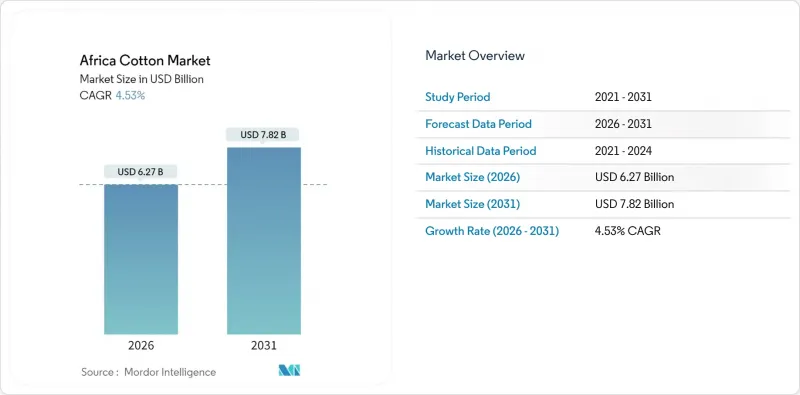
2026년 아프리카의 면화 시장 규모는 62억 7,000만 달러로 추정되며, 2025년 60억 달러에서 성장이 전망됩니다.
2031년까지의 예측에서는 78억 2,000만 달러에 달하며, 2026-2031년에 CAGR 4.53%로 확대할 전망입니다.
이러한 성장은 사헬 지역의 관개 네트워크 확장, 서아프리카 면화에 대한 중국 수요 증가, 농가의 수자원, 농자재 및 디지털 자문 서비스에 대한 접근성 향상을 위한 정부 정책에 기인합니다. 미국 농무부 해외농업국에 따르면 아프리카 12개 면화 생산국 중 코트디부아르와 부르키나파소가 최대 생산국이며, 조사 기간 중 생산량 증가가 예상됩니다. 유엔식량농업기구(FAO) 기업 통계 데이터베이스의 보고서에 따르면 말리는 2023년 면화 생산량이 68만 5,000톤을 넘어 사상 최고치를 기록했습니다. 이들 국가의 다량 생산이 아프리카 면화 시장의 성장을 주도하고 있습니다. 지속가능성 인증은 추적성을 통해 프리미엄 가격 책정을 가능하게 하고, 영향력 중심의 자금 조달은 소규모 농가의 현대화를 지원합니다. 생산이 분산되어 있음에도 불구하고 주요 무역업체들은 면화 제직 시설과 지속가능한 농업 방식에 대한 투자를 통해 수직적 통합을 추진하고 있습니다. 부족한 농촌 인프라, 고령화되는 농업 노동력, 외화 제약이 현대화 노력을 가로막고 있습니다. 새로운 기술과 가뭄에 강한 관개 시스템의 도입은 품질 요구 사항을 충족하는 생산자에게 개선의 잠재력을 가지고 있습니다.
아프리카 면화 시장 동향과 인사이트
면화 재배 면적 확대
서아프리카 국가들이 관개 및 저장 인프라에 대한 공공 투자로 면화 재배 면적을 확대하면서 아프리카 면화 시장은 계속 성장하고 있습니다. 이슬람개발은행 그룹의 일원인 국제이슬람무역금융공사(ITFC)는 부르키나파소의 면화산업 지원을 위해 1억 600만 유로(한화 약 11억 1,940만 원)의 대출 한도를 승인했습니다. 이 자금은 부르키나파소 섬유협회(Sofitex)와의 '무라바하' 계약에 따라 지원되었습니다. 유엔식량농업기구(FAO)에 따르면 말리의 면화 재배 면적은 2022년 59만 헥타르에서 2023년 71만 헥타르로 증가할 것으로 예측됩니다. 말리의 니제르 공사는 현재 면화 재배를 포함한 74,000 헥타르의 농지를 관리하고 있으며, 3,300 평방 킬로미터의 확장을 계획하고 있습니다. 이는 향후 공급 가능성이 매우 크다는 것을 보여줍니다. 이러한 확장은 농가의 매출 증가로 이어지지만, 천수 농업 시스템을 기후 변화의 영향에 노출시키기 때문에 다자간 기관은 기후를 고려한 관개 지침의 시행을 추진하고 있습니다. 지속적인 재배면적 확대는 기후 변화에 강한 물 관리 시스템과 저렴한 농자재에 대한 접근성에 달려있습니다.
서아프리카산 면화에 대한 중국 수요 증가
중국은 서아프리카 면화 수출의 90%를 수입하고 있으며, 장섬유 면화 가격 프리미엄을 유지함으로써 아프리카 면화 시장의 매출 성장을 지원하고 있습니다. 아프리카 면의 높은 섬유 강도는 중국의 섬유 생산 요구 사항을 충족합니다. 이러한 의존성으로 인해 생산자들은 중국의 정책 변화, 특히 비축 구매 관행의 변화에 취약합니다. 아프리카 생산자들은 시장 변동으로부터 수입을 보호하기 위해 고품질을 유지하면서 수출 채널을 다양화할 필요가 있습니다. 중국은 안정적인 원료 공급을 확보하기 위해 재배에서 의류 제조에 이르기까지 아프리카의 면화 밸류체인 전반에 대한 투자를 지속적으로 확대하고 있습니다. 'Cotton made in Africa(CmiA)'와 같은 프로그램은 중국의 아프리카 면화에 대한 노력을 보여주는 동시에 아프리카 농가, 섬유 기업, 중국 시장 간의 협력을 촉진하고 있습니다.
전 세계 동종업계 대비 낮은 탈면 수율
아프리카의 면직물 공장은 1톤당 78kWh의 전력을 소비하고 있으며, 이는 기준치를 크게 상회하는 수치입니다. 이로 인해 경쟁력이 떨어지고 농가의 이익률이 감소하고 있습니다. 자동 톱통(톱실린더) 도입으로 섬유 길이를 유지하면서 에너지 소비를 50% 절감할 수 있습니다. 카메룬의 소데코톤(SODECOTON)의 경우, 가공 과정에서 발생하는 면화껍질 폐기물에 미활용 에너지 잠재력이 존재한다는 점에서 이러한 과제가 드러나고 있습니다. 효율성 격차는 가공 비용을 증가시키고 섬유 품질에도 영향을 미칩니다. 구식 탈면 기술은 면섬유를 손상시키고 시장 가치를 떨어뜨릴 수 있기 때문입니다. 이로 인해 수익성 저하가 현대화 설비 투자를 제약하는 악순환이 발생하고 있습니다.
부문 분석
아프리카 면화 시장 보고서는 지역(부르키나파소, 말리, 베냉, 베냉, 코트디부아르, 카메룬, 수단, 나이지리아, 이집트 등)별로 세분화되어 있습니다. 본 조사에서는 생산 분석(수량), 소비 분석(금액 및 수량), 수출 분석(금액 및 수량), 수입 분석(금액 및 수량), 가격 동향 분석을 포함합니다. 시장 예측은 금액(USD) 및 수량(미터톤)으로 제공됩니다.
기타 특전:
- 엑셀 형식 시장 예측(ME) 시트
- 애널리스트의 3개월간 지원
자주 묻는 질문
목차
제1장 서론
제2장 조사 방법
제3장 개요
제4장 시장 구도
제5장 시장 규모와 성장 예측(금액과 수량)
제6장 경쟁 구도
제7장 시장 기회와 향후 전망
KSA 26.03.06Africa cotton market size in 2026 is estimated at USD 6.27 billion, growing from 2025 value of USD 6.0 billion with 2031 projections showing USD 7.82 billion, growing at 4.53% CAGR over 2026-2031.
The growth stems from expanded irrigation networks in the Sahel region, increased Chinese demand for West African cotton, and government policies improving farmers' access to water, agricultural inputs, and digital advisory services. According to the USDA's Foreign Agricultural Service, among the twelve cotton-producing nations in Africa, Cote d'Ivoire and Burkina Faso are the largest producers, with production projected to increase during the study period. Mali achieved its highest cotton production of over 685,000 metric tons in 2023, as reported by the Food and Agriculture Organization Corporate Statistical Database. The significant production volumes from these countries drive growth in the African cotton market. Sustainability certifications enable premium pricing through traceability, while impact-focused financing supports smallholder farm modernization. Despite fragmented production, major traders are pursuing vertical integration, investing in ginning facilities and sustainable farming practices. Inadequate rural infrastructure, an aging agricultural workforce, and foreign exchange limitations constrain modernization efforts. The adoption of new technologies and drought-resistant irrigation systems offers potential improvements for producers who meet quality requirements.
Africa Cotton Market Trends and Insights
Rising Area Under Cotton Cultivation
The African cotton market is expanding as West African producers increase planted areas through public investments in irrigation and storage infrastructure. The International Islamic Trade Finance Corporation (ITFC), a member of the Islamic Development Bank Group, has approved a €106 million ($119.4 million) financing facility for Burkina Faso to support its cotton industry. The funding was granted under a 'Mourabaha' agreement with the Burkinabe Society of Textile Fibers (Sofitex). According to the Food and Agriculture Organization, Mali's cotton cultivation area increased from 590,000 hectares in 2022 to 710,000 hectares in 2023. Mali's Office du Niger currently manages 74,000 hectares of agricultural land, including cotton farming, and plans to expand by 3,300 square kilometers, indicating significant future supply potential. While these expansions increase farmer revenues, they expose rain-fed systems to climate variability, leading multilateral agencies to implement climate-smart irrigation guidelines. The sustained growth in planted area depends on climate-resilient water management systems and access to affordable agricultural inputs.
Growing Chinese Demand for West-African Lint
China imports 90% of West African cotton exports, maintaining price premiums for long-staple lint and supporting revenue growth in the African cotton market. The high fiber strength of African cotton meets Chinese textile manufacturing requirements. This dependency makes producers vulnerable to Chinese policy changes, particularly in reserve buying practices. African producers need to diversify their export channels while maintaining premium quality to protect their income from market fluctuations. China continues to expand its investments across the African cotton value chain, from cultivation to garment manufacturing, to ensure a consistent raw material supply. Programs such as Cotton made in Africa (CmiA) demonstrate China's commitment to African cotton and facilitate connections between African farmers, textile companies, and the Chinese market.
Low Ginning Out-Turn Ratios vs. Global Peers
African cotton gins consume 78 kWh per metric ton, significantly exceeding benchmark levels, which reduces competitiveness and decreases farmer margins. Automated saw cylinders can reduce energy consumption by 50% while maintaining fiber length integrity. In Cameroon, SODECOTON's operations demonstrate these challenges, as cotton shell waste from processing contains substantial untapped energy potential. The efficiency gap increases processing costs and affects fiber quality, as outdated ginning technology can damage cotton fibers and lower their market value. This creates a cycle where reduced profitability constrains investment in modern equipment.
Other drivers and restraints analyzed in the detailed report include:
- Expansion of Irrigation Corridors
- Adoption of Genetically Modified Cotton Seeds
- Aging Smallholder Farmer Base
For complete list of drivers and restraints, kindly check the Table Of Contents.
Segment Analysis
The Africa Cotton Market Report is Segmented by Geography (Burkina Faso, Mali, Benin, Cote D'Ivoire, Cameroon, Sudan, Nigeria, Egypt, and More). The Study Includes Production Analysis (Volume), Consumption Analysis (Value and Volume), Export Analysis (Value and Volume), Import Analysis (Value and Volume), and Price Trend Analysis. The Market Forecasts are Provided in Terms of Value (USD) and Volume (Metric Tons).
List of Companies Covered in this Report:
- Market Overview
- Market Drivers
- Market Restraints
- Value / Supply-Chain Analysis
- Regulatory Landscape
- Technological Outlook
- PESTLE Analysis
- List of Stakeholders
Additional Benefits:
- The market estimate (ME) sheet in Excel format
- 3 months of analyst support
TABLE OF CONTENTS
1 Introduction
- 1.1 Study Assumptions and Market Definition
- 1.2 Scope of the Study
2 Research Methodology
3 Executive Summary
4 Market Landscape
- 4.1 Market Overview
- 4.2 Market Drivers
- 4.2.1 Rising Area Under Cotton Cultivation
- 4.2.2 Growing Chinese Demand for West-African Lint
- 4.2.3 Expansion of Irrigation Corridors
- 4.2.4 Adoption of Genetically Modified Cotton Seeds
- 4.2.5 Digitized Extension Platforms
- 4.2.6 Traceability Premiums from ESG-Oriented Brands
- 4.3 Market Restraints
- 4.3.1 Low Ginning Out-Turn Ratios vs. Global Peers
- 4.3.2 Aging Smallholder Farmer Base
- 4.3.3 Under-Developed Rural Logistics
- 4.3.4 Foreign Exchange Shortages Restricting Input Imports
- 4.4 Value / Supply-Chain Analysis
- 4.5 Regulatory Landscape
- 4.6 Technological Outlook
- 4.7 PESTLE Analysis
5 Market Size and Growth Forecasts (Value and Volume)
- 5.1 By Geography (Production Analysis (Volume), Consumption Analysis (Volume and Value), Import Analysis (Volume and Value), Export Analysis (Volume and Value), and Price Trend Analysis)
- 5.1.1 Burkina Faso
- 5.1.2 Mali
- 5.1.3 Benin
- 5.1.4 Cote d'Ivoire
- 5.1.5 Cameroon
- 5.1.6 Sudan
- 5.1.7 Nigeria
- 5.1.8 Egypt
- 5.1.9 Zimbabwe
- 5.1.10 Morocco
- 5.1.11 Ghana
- 5.1.12 South Africa
6 Competitive Landscape
- 6.1 List of Stakeholders
- 6.1.1 Olam International Limited
- 6.1.2 Louis Dreyfus Company B.V.
- 6.1.3 Cargill, Incorporated
- 6.1.4 Plexus Cotton Limited (RCMA Group)
- 6.1.5 Paul Reinhart AG
- 6.1.6 Compagnie Malienne pour le Developpement des Textiles SA
- 6.1.7 Societe Burkinabe des Fibres Textiles (SOFITEX)
- 6.1.8 Ivoire Coton SA
- 6.1.9 Societe de Developpement du Coton (SODECOTON)
- 6.1.10 Devcot SA
- 6.1.11 West African Cotton Company Limited (WACOT)
- 6.1.12 Branson Commodities
- 6.1.13 ETG Commodities (ETC Group)
- 6.1.14 Cotton Company of Zimbabwe Limited (COTTCO)
- 6.1.15 Alliance Ginneries Limited