|
시장보고서
상품코드
1939091
아세트산 : 시장 점유율 분석, 업계 동향과 통계, 성장 예측(2026-2031년)Acetic Acid - Market Share Analysis, Industry Trends & Statistics, Growth Forecasts (2026 - 2031) |
||||||
 Mordor Intelligence
아세트산 시장 규모는 2026년에는 2,048만 톤으로 추정되며, 2025년 1,958만 톤으로부터 성장이 전망됩니다. 2031년의 예측에서는 2,562만 톤에 달하며, 2026-2031년에 CAGR 4.58%로 확대할 전망입니다.
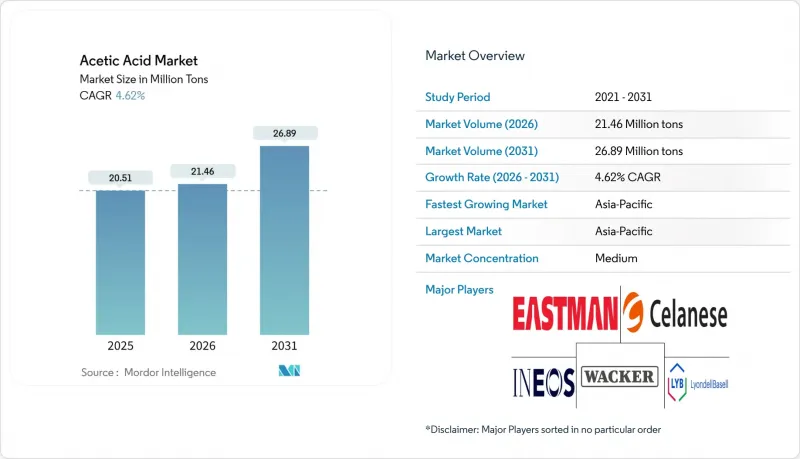
비닐 아세테이트 모노머, 정제된 테레프탈산, 신흥 배터리 등급 전해질에 대한 견고한 수요가 성장을 지원하고 있습니다. 규모에 따른 비용 효율성, 지속가능성에 대한 요구, 다운스트림 공정과의 통합으로 생산자의 이익률이 향상되고 있습니다. 폴리에스테르, 접착제, 용제 소비량이 높은 수준을 유지하고 있으므로 아시아태평양의 우위는 지속되고 있습니다. 규제 감시가 강화됨에 따라 저탄소 생산 기술 및 탄소 포집 프로젝트에 대한 투자가 가속화되어 아세트산 시장의 경쟁 역학을 더욱 형성하고 있습니다.
세계 아세트산 시장 동향 및 인사이트
비닐 아세테이트 모노머 수요 증가
수성 접착제 및 코팅제의 배합에는 우수한 접착력과 유연성을 위해 비닐 아세테이트 모노머가 필수적입니다. 이러한 특성은 특히 건설업 및 자동차 생산 분야의 용제 배출에 대한 엄격한 환경 규제를 충족합니다. 아시아태평양은 전 세계 VAM 소비량의 60% 이상을 차지하고 있으며, 수요처 인근 아세틸계 통합 투자를 촉진하고 있습니다. 세라니스가 난징에 신설한 초산비닐-에틸렌 생산 설비는 7만 톤의 생산 능력을 추가하며 입지적 우위를 보이고 있습니다.
정제된 테레프탈산 소비 증가
섬유 및 포장 분야의 폴리에스테르 수요 증가가 정제된 테레프탈산 소비 증가를 견인하고, 용매 및 반응 매체로서의 아세트산 사용량을 지원하고 있습니다. 중국석유화공(Sinopec)이 강소성에 건설한 연간 300만 톤 규모의 단일 라인 PTA 공장은 현재 아시아태평양에서 표준적인 생산 규모를 보여주고 있습니다. 대규모 공장은 아세트산 이용 효율을 향상시키면서 총 수요 증가를 유지하고 있습니다. 인도의 프리미엄 가격의 PTA와 같은 지역적 공급 불균형은 유연한 공급자가 차익거래를 통해 이익을 얻을 수 있는 기회를 제공합니다.
탄소화 반응 관련 CO2/VOC 배출 규제
북미 및 유럽 규제 당국은 현재 탄소화 반응기 및 증류 공정에서 배출되는 배출물을 규제 대상으로 삼고 있습니다. 미국 환경보호청(EPA)의 규제 가이드라인과 캐나다의 환경보호법은 모두 배출 허용치를 엄격하게 규정하고 있습니다. 규제 준수를 위해서는 탄소 포집 및 첨단 스크러버에 대한 투자가 필요하며, 이는 가용 자본이 있는 대규모 생산자에게 유리합니다. 셀레네즈 클리어레이크 공장의 리노베이션을 통해 메탄올 합성을 위한 CO2를 회수하고 있으며, 통합형 배출 저감 벤치마킹을 확립하고 있습니다.
부문 분석
2025년 비닐 아세테이트 모노머는 건설 및 자동차 분야의 수성 접착제에 대한 수요 증가로 인해 아세트산 시장 점유율 27.25%를 차지할 것으로 예측됩니다. 폴리초산비닐 및 에틸렌초산비닐 공중합체는 새로운 배출 기준을 충족하지 못하는 용제계 시스템을 대체하여 성장을 보장하고 있습니다. 셀레네즈와 이네오스는 후방 통합을 통해 다운스트림 부문에 대한 공급망을 구축하고 비용을 절감하는 데 활용하고 있습니다.
정제된 테레프탈산은 CAGR 4.95%로 확대되고 있으며, 의류 및 병용 수지의 폴리에스테르 수요 증가에 힘입어 성장세를 보이고 있습니다. 에틸 아세테이트는 의약품 및 페인트 용제 분야에서 안정적인 수요를 유지하고 있으며, 무수 아세트산은 담배 필터 수요 감소에도 불구하고 의약품 아세틸화 응용 분야에서 견고한 수요를 보이고 있습니다. 파생 제품 수요 패턴은 아세틸화 공정 전반에 걸쳐 부가가치를 창출하는 생산자 전략을 반영합니다. 통합형 사업자는 범용 아세트산 생산량을 고매출 다운스트림 제품으로 전환하여 원재료 가격 변동시 매출 보호를 도모하고 있습니다.
아세트산 보고서는 유도체별(비닐 아세테이트 모노머, 정제된 테레프탈산, 에틸 아세테이트 등), 제조 경로별(메탄올 카르보닐화, 아세트알데히드 산화 등), 용도별(플라스틱/폴리머, 식품/음료, 접착제/페인트/코팅, 섬유, 의료, 기타 용도), 지역별(아시아태평양, 북미, 유럽, 남미, 중동/아프리카, 중동/북미, 아시아태평양, 유럽, 아시아태평양, 아시아태평양, 유럽, 아시아태평양) 북미, 유럽, 남미, 중동/아프리카) 별로 분석했습니다.
지역별 분석
아시아태평양은 2025년 아세트산 시장의 68.10%를 차지하며 2031년까지 연평균 5.05% 성장할 것으로 예측됩니다. 중국은 전 세계 생산능력의 약 55%를 점유하고 있으며, 규모의 경제와 지역적 가격 결정력을 보유하고 있습니다. 이 지역의 거대한 폴리에스테르 산업과 접착제 산업은 외부 경제 변동 시에도 수요량을 안정적으로 유지하고 있습니다.
북미는 소비가 성숙한 반면 저탄소 생산에 대한 투자가 눈에 띄게 증가하고 있습니다. 셀라니스의 클리어레이크 공장의 130만톤 증설 프로젝트는 경쟁력 확보를 위해 이산화탄소 포집 기술과 원료 공급 안정화를 통합하고 있습니다. 배출량 감축을 중시하는 규제에 따라 미국과 캐나다에서는 바이오 프로젝트가 추진되고 있으며, 수입량의 일부가 국내 공급으로 전환될 가능성이 있습니다.
유럽에서는 순환 경제의 원칙과 엄격한 수명주기 평가가 우선시됩니다. 인증된 저탄소발자국을 가진 생산자는 자동차 및 포장 산업 고객으로부터 조달 우선권을 얻고 있습니다. 신흥 중동 및 아프리카에서는 경쟁력 있는 원자재 가격을 활용한 생산능력 확대를 목표로 하고 있지만, 인프라 및 규제 프레임워크는 아직 정비 중입니다. 라틴아메리카의 아세트산 시장은 폴리에스테르 병 수지 및 식품 방부제 용도에 힘입어 꾸준히 성장하고 있지만, 아시아태평양의 생산 규모에 비해서는 제한적일 수밖에 없습니다.
기타 특전:
- 엑셀 형식 시장 예측(ME) 시트
- 애널리스트의 3개월간 지원
자주 묻는 질문
목차
제1장 서론
제2장 조사 방법
제3장 개요
제4장 시장 구도
제5장 시장 규모와 성장 예측
제6장 경쟁 구도
제7장 시장 기회와 향후 전망
KSA 26.03.05Acetic Acid market size in 2026 is estimated at 20.48 Million tons, growing from 2025 value of 19.58 Million tons with 2031 projections showing 25.62 Million tons, growing at 4.58% CAGR over 2026-2031.
Robust demand across vinyl acetate monomer, purified terephthalic acid, and emerging battery-grade electrolytes anchors growth. Scale-based cost efficiency, rising sustainability mandates, and downstream integration strengthen producer margins. Asia-Pacific dominance persists as polyester, adhesive, and solvent consumption remains high. Investment in low-carbon production technologies and carbon-capture projects is accelerating as regulatory scrutiny tightens, further shaping competitive dynamics in the acetic acid market.
Global Acetic Acid Market Trends and Insights
Increasing Demand for Vinyl Acetate Monomer
Water-based adhesive and coating formulations rely on vinyl acetate monomer for superior bonding strength and flexibility. These attributes meet stricter environmental rules on solvent emissions, especially in construction and automotive production. Asia-Pacific accounts for more than 60% of global VAM consumption, encouraging integrated acetyl chain investments near demand hubs. Celanese started a new vinyl acetate ethylene unit in Nanjing that adds 70,000 tons of capacity, illustrating the proximity advantage.
Rising Consumption of Purified Terephthalic Acid
Polyester growth in textiles and packaging drives higher purified terephthalic acid volumes, sustaining acetic acid usage as solvent and reaction medium. Sinopec's single-train PTA plant in Jiangsu, with 3 million tons annual capacity, shows the scale now typical in Asia-Pacific production. Larger units improve acetic acid utilization efficiency yet keep total demand rising. Regional supply imbalances, such as India's premium PTA pricing, allow flexible suppliers to capture arbitrage gains.
Carbonylation-Related CO2/VOC Emission Regulations
North American and European regulators now target emissions from carbonylation reactors and distillation steps. The EPA's control guidelines and Canada's Environmental Protection Act both tighten emission thresholds. Compliance requires investments in carbon capture and advanced scrubbers, favoring larger producers with available capital. Celanese's Clear Lake retrofit captures CO2 for methanol synthesis, setting a benchmark for integrated abatement.
Other drivers and restraints analyzed in the detailed report include:
- Expansion of Acetate-Ester Solvents in High-Solids Coatings
- Emerging Use in Li-Ion Battery Electrolyte Additives
- Anti-Dumping Actions Against Chinese Exports
For complete list of drivers and restraints, kindly check the Table Of Contents.
Segment Analysis
Vinyl acetate monomer held 27.25% acetic acid market share in 2025 as construction and automotive sectors favored water-based adhesives. Polyvinyl acetate and ethylene-vinyl acetate copolymers secure growth by replacing solvent-borne systems that fail new emission norms. Celanese and INEOS leverage backward integration to keep costs low and service captive downstream units.
Purified terephthalic acid, growing at a 4.95% CAGR, benefits from polyester expansion in apparel and bottle resin. Ethyl acetate maintains steady use in pharmaceutical and coating solvents, while acetic anhydride demonstrates resilience in pharmaceutical acetylation despite cigarette filter decline. Derivative demand patterns reflect producer strategies that capture value along the acetyl chain. Integrated operators convert commodity acetic acid volumes into higher-margin downstream products, protecting earnings during feedstock price swings.
The Acetic Acid Report is Segmented by Derivative (Vinyl Acetate Monomer, Purified Terephthalic Acid, Ethyl Acetate, and More), Production Route (Methanol Carbonylation, Acetaldehyde Oxidation, and More), Application (Plastics and Polymers, Food and Beverage, Adhesives Paints and Coatings, Textile, Medical, and Other Applications), and Geography (Asia-Pacific, North America, Europe, South America, and Middle-East and Africa).
Geography Analysis
Asia-Pacific dominated with 68.10% acetic acid market share in 2025 and is forecast to grow at 5.05% CAGR through 2031. China alone controls about 55% of global capacity, granting scale economies and regional pricing influence. The region's large polyester and adhesive industries stabilize volume demand even during external economic swings.
North America exhibits mature consumption yet notable investment in low-carbon production. Celanese's 1.3 million ton Clear Lake upgrade integrates carbon capture and feedstock security to ensure competitiveness. Regulatory focus on emission reduction promotes bio-based projects across the United States and Canada, potentially shifting a portion of import volumes to domestic supply.
Europe prioritizes circular economy principles and stringent lifecycle assessments. Producers with verified low-carbon footprints gain procurement preference among automotive and packaging customers. Emerging Middle East and Africa capacity aims to leverage competitive feedstock costs, yet infrastructure and regulatory frameworks remain in development. Latin America experiences steady acetic acid market growth tied to polyester bottle resin and food preservative applications, but scale is limited compared with Asia-Pacific production.
- Celanese Corporation
- Daicel Corporation
- Eastman Chemical Company
- Gujarat Narmada Valley Fertilizers & Chemicals Limited
- INEOS
- Jiangsu SOPO (Group) Co., Ltd.
- Kingboard Holdings Ltd.
- LyondellBasell Industries Holdings B.V.
- Mitsubishi Chemical Group Corporation
- PetroChina Company Limited
- SABIC
- Sekab
- Shandong Hualu Hengsheng Group Co., Ltd.
- Shanghai Huayi Fine Chemical Co., Ltd
- Sipchem Company
- Tanfac Industries Ltd
- Wacker Chemie AG
- Yankuang Energy Group Company Limited
Additional Benefits:
- The market estimate (ME) sheet in Excel format
- 3 months of analyst support
TABLE OF CONTENTS
1 Introduction
- 1.1 Study Assumptions and Market Definition
- 1.2 Scope of the Study
2 Research Methodology
3 Executive Summary
4 Market Landscape
- 4.1 Market Overview
- 4.2 Market Drivers
- 4.2.1 Increasing Demand for Vinyl Acetate Monomer (VAM)
- 4.2.2 Rising Consumption of Purified Terephthalic Acid (PTA)
- 4.2.3 Expansion of Acetate-Ester Solvents in High-Solids Coatings
- 4.2.4 Bio-Based Acetic Acid Adoption Under Net-Zero Mandates
- 4.2.5 Emerging Use in Li-Ion Battery Electrolyte Additives
- 4.3 Market Restraints
- 4.3.1 Volatile Methanol Feedstock Pricing
- 4.3.2 Carbonylation-Related CO?/VOC Emission Regulations
- 4.3.3 Anti-Dumping Actions Against Chinese Exports
- 4.4 Value Chain Analysis
- 4.5 Porter's Five Forces
- 4.5.1 Bargaining Power of Suppliers
- 4.5.2 Bargaining Power of Buyers
- 4.5.3 Threat of New Entrants
- 4.5.4 Threat of Substitutes
- 4.5.5 Degree of Competition
5 Market Size and Growth Forecasts (Volume)
- 5.1 By Derivative
- 5.1.1 Vinyl Acetate Monomer (VAM)
- 5.1.2 Purified Terephthalic Acid (PTA)
- 5.1.3 Ethyl Acetate
- 5.1.4 Acetic Anhydride
- 5.1.5 Other Derivatives
- 5.2 By Production Route
- 5.2.1 Methanol Carbonylation
- 5.2.2 Acetaldehyde Oxidation
- 5.2.3 Ethylene Oxidation
- 5.2.4 Bio-based Fermentation
- 5.3 By Application
- 5.3.1 Plastics and Polymers
- 5.3.2 Food and Beverage
- 5.3.3 Adhesives, Paints and Coatings
- 5.3.4 Textile
- 5.3.5 Medical
- 5.3.6 Other Applications
- 5.4 By Geography
- 5.4.1 Asia-Pacific
- 5.4.1.1 China
- 5.4.1.2 India
- 5.4.1.3 Japan
- 5.4.1.4 South Korea
- 5.4.1.5 Rest of Asia-Pacific
- 5.4.2 North America
- 5.4.2.1 United States
- 5.4.2.2 Canada
- 5.4.2.3 Mexico
- 5.4.3 Europe
- 5.4.3.1 Germany
- 5.4.3.2 United Kingdom
- 5.4.3.3 Italy
- 5.4.3.4 France
- 5.4.3.5 Rest of Europe
- 5.4.4 South America
- 5.4.4.1 Brazil
- 5.4.4.2 Argentina
- 5.4.4.3 Rest of South America
- 5.4.5 Middle-East and Africa
- 5.4.5.1 Saudi Arabia
- 5.4.5.2 South Africa
- 5.4.5.3 Rest of Middle-East and Africa
- 5.4.1 Asia-Pacific
6 Competitive Landscape
- 6.1 Market Concentration
- 6.2 Strategic Moves
- 6.3 Market Share(%)/ Ranking Analysis
- 6.4 Company Profiles (includes Global Overview, Market Overview, Core Segments, Financials, Strategic Information, Market Rank/Share, Products and Services, Recent Developments)
- 6.4.1 Celanese Corporation
- 6.4.2 Daicel Corporation
- 6.4.3 Eastman Chemical Company
- 6.4.4 Gujarat Narmada Valley Fertilizers & Chemicals Limited
- 6.4.5 INEOS
- 6.4.6 Jiangsu SOPO (Group) Co., Ltd.
- 6.4.7 Kingboard Holdings Ltd.
- 6.4.8 LyondellBasell Industries Holdings B.V.
- 6.4.9 Mitsubishi Chemical Group Corporation
- 6.4.10 PetroChina Company Limited
- 6.4.11 SABIC
- 6.4.12 Sekab
- 6.4.13 Shandong Hualu Hengsheng Group Co., Ltd.
- 6.4.14 Shanghai Huayi Fine Chemical Co., Ltd
- 6.4.15 Sipchem Company
- 6.4.16 Tanfac Industries Ltd
- 6.4.17 Wacker Chemie AG
- 6.4.18 Yankuang Energy Group Company Limited
7 Market Opportunities and Future Outlook
- 7.1 White-space and unmet-need assessment