|
시장보고서
상품코드
1939590
이유식 포장 : 시장 점유율 분석, 업계 동향과 통계, 성장 예측(2026-2031년)Baby Food Packaging - Market Share Analysis, Industry Trends & Statistics, Growth Forecasts (2026 - 2031) |
||||||
 Mordor Intelligence
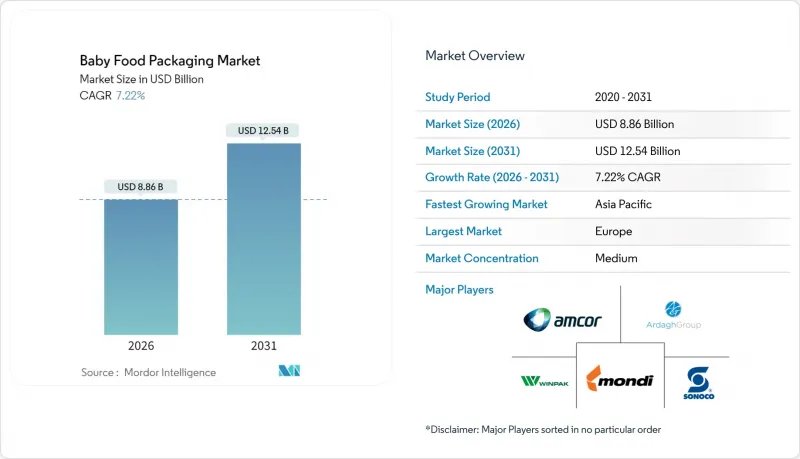
2026년 이유식 포장 시장 규모는 88억 6,000만 달러로 추정되며, 2025년 82억 6,000만 달러에서 계속 성장하고 있습니다.
2031년까지의 예측에서는 125억 4,000만 달러에 달하며, 2026-2031년에 CAGR 7.22%로 확대가 전망됩니다.
이 성장률은 도시 가정의 즉시 먹을 수 있는 형태에 대한 요구, 규제 당국의 엄격한 유아 안전 규정, 가공업체가 유통기한을 연장하고 소비자와의 상호작용을 가능하게 하는 스마트한 재료를 도입하는 등의 요인으로 인해 전체 식품 포장 카테고리를 능가하는 성장률을 보이고 있습니다. 유아용 수지에 대한 안정적인 프리미엄 가격에 대한 내성은 공급업체가 컴플라이언스 비용을 전가할 수 있게 해주며, 확대된 생산자 책임(EPR) 프로그램은 재활용 가능 또는 바이오 라미네이트에 대한 수요를 촉진하고 있습니다. 2025-2030년 주둥이가 있는 파우치, 무균 충전 라인, AI를 활용한 추적성은 유아식 패키징 시장에서 높은 성과를 거둔 업체와 상품 경쟁업체를 가르는 중요한 혁신 분야가 될 것으로 예측됩니다. 세계 수지 가격 변동과 수제 퓌레의 추세로 인해 주기적으로 카테고리 성장을 억제하는 가운데, 제약용 스파우트 및 배리어 필름에 대한 공급망 관리 강화는 계속해서 필수적일 것입니다.
세계 유아식 포장 시장 동향 및 인사이트
편의성을 중시한 이유식 파우치 채택으로 편리함 제공
주둥이가 달린 파우치는 가볍고 휴대가 간편하며 주둥이가 더러워지지 않아 유리병을 대체하여 유아식 포장 시장의 30% 이상의 점유율을 차지했습니다. 밀레니얼 세대의 부모들은 재밀봉 가능성과 파손 위험 감소를 결정적인 장점으로 여기며 가격 프리미엄과 재구매를 지지하고 있습니다. 내열성 라미네이트는 고온 충전, 레토르트 처리, 고압 살균이 가능하며, 방부제 무첨가로 보존 안정성을 실현합니다. 브랜드 사례에서는 특히 유기농 퓌레의 경우 파우치 형태로 전환 후 두 자릿수 매출 증가가 확인되고 있습니다. 이러한 요인들이 복합적으로 작용하여 이 부문은 유아식 포장 시장에서 가장 크고 가장 빠른 성장 동력이라는 이중적 지위를 확보하고 있습니다.
도시 맞벌이 가구가 원하는 시간 단축형 형식
인구가 밀집된 도시 지역에서는 일하는 부모들이 요리 시간과 뒷정리를 줄일 수 있는 즉석식품 패키지에 대한 수요가 증가하고 있습니다. 원스어폰어팜은 이러한 수요에 대응하기 위해 자동화 라인을 주당 120만 팩 규모로 확대하여 2020년 생산량을 3배로 늘렸습니다. 아시아태평양의 메가시티에서는 대가족의 육아 지원이 감소하는 가운데, 판매량이 가장 가파르게 증가하고 있습니다. E-Commerce의 확산은 이러한 추세를 더욱 가속화시키고 있습니다. 파우치나 강화 판지는 유리 용기보다 배송시 충격에 더 강하기 때문입니다. 20-30%의 가격 프리미엄에도 불구하고 가정에서는 포장의 편리함을 시간 절약이라는 무형의 가치와 연결하여 평가하므로 수요 탄력성이 양호하게 유지되고 있으며, 이는 이유식 포장 시장에 지속적인 순풍을 불러일으키고 있습니다.
플라스틱 지속가능성에 대한 반발과 법규 규제
캘리포니아, 메인, 오레곤, 콜로라도주의 EPR(확대 생산자 책임) 법은 생산자에게 재활용 시스템 자금 조달 및 회수 설계 기준 준수를 의무화하고 있습니다. EU의 포장 및 포장 폐기물 규제는 2030년까지 30%의 재활용 재료 사용을 의무화하고 있습니다. 식품용 재생 PP의 생산 능력은 재생 폴리머 총 생산량의 약 10%에 불과하여 공급 부족과 비용 상승을 초래하고 있습니다. 재활용성과 퇴비화 가능성을 입증할 수 있는 브랜드는 소비자의 신뢰를 얻는 반면, 기존의 다층 구조는 진부화가 가속화되고 있으며, 유아식 포장 시장 전체의 단기 이익률을 압박하고 있습니다.
부문 분석
플라스틱은 2025년 26.42%의 매출 점유율을 유지하며 광범위한 가공 인프라를 반영하고 있지만, 규제 당국과 브랜드가 탄소 감축 목표를 강화하는 가운데 바이오플라스틱은 현재 9.53%의 가장 빠른 CAGR을 보이고 있습니다. 브라스켐의 폐식용유 유래 바이오 순환형 폴리프로필렌은 라인 변경을 용이하게 하는 드롭인(drop-in) 대체품을 제공합니다. AD바이오플라스틱스는 100% 퇴비화 가능한 100% 퇴비화 가능한 아기용 퓌레 전용 수지를 상품화했습니다. 초기 도입 기업은 EPR 크레딧과 마케팅 효과를 확보하고, 기존 플라스틱이 규모와 비용 우위를 유지하는 가운데 바이오폴리머를 전략적 헤지 수단으로 활용하고 있습니다.
이러한 소재 전환은 공급망 재구성을 촉진한다: 가공업체는 바이오폴리머 공급업체와 장기 공급 계약을 협상하고, 소비재 제조업체는 사용 후 특성을 강조하는 라벨 디자인을 재검토합니다. 생산량 증가에 따라 규모의 경제 효과로 비용 차이가 줄어들면서 바이오플라스틱은 유아식 포장재 시장에서 더욱 자리를 잡아갈 것으로 예측됩니다.
지역별 분석
유럽은 2025년에도 25.55%의 매출 점유율을 유지할 것으로 예상되며, 재활용 가능한 설계를 장려하고 화학적 위험성을 규제하는 첨단인 법규에 힘입어 성장세를 이어갈 것으로 보입니다. 2025년 1월 비스페놀A(BPA) 금지령으로 인해 즉각적인 제품 재설계가 요구되고 있으며, 적격 재료와 컴플라이언스 문서를 보유한 공급업체에 대한 수요가 집중되고 있습니다. 독일과 프랑스에서는 지속가능한 포장 연구개발이 활발한 클러스터를 형성하고 있으며, 영국에서는 추적성 칩이 내장된 스마트 파우치 형태의 고급 유기농 퓌레에 대한 수요가 지속되고 있습니다.
아시아태평양은 2031년까지 연평균 복합 성장률(CAGR) 7.69%로 가장 빠른 성장세를 보일 것으로 예측됩니다. 중산층의 소득 증가와 도시형 라이프스타일로 인해 편의성 중심의 SKU가 가속화되고 있으며, 이 지역은 유아식 포장 시장에서 가장 큰 증분 수요처로 자리매김하고 있습니다. 中?の乳?用調製粉乳市場回復に伴い,H&Hグル-プは2025年第1四半期に44.3%의 매출 성장을 기록하며 과거 안전 문제 이후 브랜드 영양식품에 대한 신뢰 회복을 보여주고 있습니다. 인도의 BPA 프리 의무화는 암콜의 피닉스 플렉서블즈(Phoenix Flexibles) 2,000만 달러 인수와 연계되어 구자라트 주에서 현지 플렉서블 필름 생산 능력을 강화할 것입니다. 일본과 한국은 이중 QR코드 추적 시스템을 선도하고 있으며, 소비자의 안전성 검증에 대한 선호를 반영하고 있습니다.
북미는 FDA의 엄격한 규제와 EC의 높은 보급률로 인해 여전히 고부가가치 시장입니다. 4개 주에서 시행된 EPR법으로 인해 브랜드 제조업체는 재활용 비용을 부담해야 하는 의무가 발생하여 단일 소재 라미네이트의 급속한 보급을 촉진하고 있습니다. 2022년 분유 부족을 계기로 국내 생산능력 확대: 보비스 오하이오주 공장(9만 평방피트)은 엄격한 미생물 관리 하에 통조림과 분유를 생산하고 있습니다. 캐나다의 통합된 주정부 간 EPR 네트워크는 연질 및 경질 용기의 재활용 설계를 촉진하고 꾸준한 기술 혁신을 지속하고 있습니다.
기타 특전:
- 엑셀 형식 시장 예측(ME) 시트
- 애널리스트의 3개월간 지원
자주 묻는 질문
목차
제1장 서론
제2장 조사 방법
제3장 개요
제4장 시장 구도
제5장 시장 규모와 성장 예측
제6장 경쟁 구도
제7장 시장 기회와 향후 전망
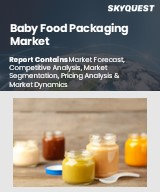
KSA 26.03.06The baby food packaging market size in 2026 is estimated at USD 8.86 billion, growing from 2025 value of USD 8.26 billion with 2031 projections showing USD 12.54 billion, growing at 7.22% CAGR over 2026-2031.
This growth rate exceeds the broader food-packaging category as urban families seek ready-to-serve formats, regulators impose strict infant-safety rules, and converters deploy smart materials that lengthen shelf life while enabling consumer interaction. Steady premium-price tolerance for infant-grade resins allows suppliers to pass through compliance costs, while extended-producer-responsibility (EPR) programs propel demand for recyclable or bio-based laminates. During 2025-2030, spouted pouches, aseptic filling lines, and AI-enabled traceability are expected to remain the pivotal innovation fronts that separate high-performing vendors from commodity competitors in the baby food packaging market. Heightened supply-chain discipline around pharmaceutical-grade spouts and barrier films will remain essential as global resin volatility and DIY puree trends periodically temper category momentum.
Global Baby Food Packaging Market Trends and Insights
Convenience-Driven Adoption of Baby Food Pouches
Spouted pouches have secured more than 30% share of the baby food packaging market by displacing glass jars through lighter weight, portability, and mess-free dispensing. Millennial parents view resealability and reduced breakage risk as decisive benefits, supporting price premiums and repeat purchases. Heat-resistant laminates enable hot-fill, retort, and high-pressure pasteurization, delivering preservative-free shelf stability. Brand case studies show double-digit sales lifts after switching to pouch formats, particularly in organic purees. Together, these factors underpin the segment's dual status as both largest and fastest growth engine of the baby food packaging market.
Urban Dual-Income Households Demanding Time-Saving Formats
In dense metros, working parents trade up to ready-to-consume packages that cut prep time and washing. Once Upon a Farm scaled automated lines to 1.2 million packs per week triple 2020 throughput-to meet this demand.Asia Pacific megacities show the sharpest volume increases as extended-family childcare support wanes. E-commerce penetration amplifies the trend because pouches and reinforced cartons tolerate parcel-handling shocks better than glass. Despite 20-30% price premiums, elasticity remains favorable as households equate packaging convenience with intangible time savings, providing sustained tailwinds for the baby food packaging market.
Plastics Sustainability Backlash & Legislation
EPR statutes in California, Maine, Oregon, and Colorado obligate producers to bankroll recycling systems and meet design-for-recovery criteria.The EU's Packaging and Packaging Waste Regulation further mandates 30% recycled content by 2030. Food-grade recycled PP capacity sits near 10% of total recycled polymer output, tightening supply and inflating costs. Brands able to validate recyclability or compostability gain consumer trust, whereas legacy multilayer formats face accelerating obsolescence, weighing on near-term margins across the baby food packaging market.
Other drivers and restraints analyzed in the detailed report include:
- Stricter Infant-Safety Regulations Expanding Premium Packaging
- Aseptic Spouted-Pouch Filling Lines Gaining Ground
- Supply Bottlenecks of Pharma-Grade Spout Resins
For complete list of drivers and restraints, kindly check the Table Of Contents.
Segment Analysis
Plastic maintained 26.42% revenue share in 2025, reflecting extensive processing infrastructure, but bioplastics now post the quickest 9.53% CAGR as regulators and brands escalate carbon-reduction targets. Braskem's bio-circular polypropylene derived from used cooking oil offers a drop-in alternative that eases line changeovers. ADBioplastics commercialized a 100% compostable resin tailored for wet baby purees. Early adopters secure EPR credits and marketing lift, positioning biopolymers as a strategic hedge even while traditional plastics keep scale and cost advantages.
The material shift galvanizes supply-chain reengineering: converters negotiate long-term offtake with bio-polymer suppliers, and CPGs redesign labels to highlight end-of-life credentials. As volumes rise, economies of scale are expected to narrow the cost delta, further embedding bioplastics within the baby food packaging market.
Baby Food Packaging Market Report is Segmented by Material (Plastic, Paperboard, Metal, Glass, Bioplastics), Package Type (Bottles, Cartons, Jars, Pouches, Bag-In-Box), Product (Liquid Milk Formula, Dried Baby Food, Powder Milk Formula, Prepared Baby Food, Baby Snacks), and by Geography. The Market Forecasts are Provided in Terms of Value (USD).
Geography Analysis
Europe maintained a 25.55% revenue lead in 2025, propelled by progressive regulation that rewards recyclable designs and punishes chemical hazards. The January 2025 BPA prohibition forces immediate reformulations, channeling business toward suppliers with qualifying materials and compliance documentation. Germany and France house active clusters of sustainable-packaging R&D, while the UK displays sustained demand for premium organic purees sold in smart pouches that embed traceability chips.
Asia Pacific shows the fastest 7.69% CAGR through 2031. Rising middle-class incomes and urban lifestyles accelerate convenience-focused SKUs, positioning the region as the largest incremental volume source for the baby food packaging market. China's infant-formula rebound H&H Group recorded 44.3% Q1 2025 revenue growth signals renewed confidence in branded nutrition after earlier safety scares. India's BPA-free mandate aligns with Amcor's USD 20 million purchase of Phoenix Flexibles, which boosts local flexible-film capacity in Gujarat. Japan and South Korea pioneer dual-QR traceability, reflecting consumer penchant for safety verification.
North America remains a high-value arena given stringent FDA rules and wide e-commerce penetration. EPR laws in four states obligate brands to finance recycling, pushing quick adoption of mono-material laminates. The 2022 formula shortage catalyzed domestic capacity investments: Bobbie's 90,000 sq ft Ohio plant now produces canned and powdered formula under strict microbiological controls. Canada's harmonized provincial EPR network incentivizes design-for-recycling across flexible and rigid formats alike, sustaining steady innovation.
- Amcor PLC
- Tetra Laval Group
- Mondi Group
- Berry Global Inc. (incl. former RPC)
- Silgan Holdings Inc.
- Sonoco Products Company
- Ardagh Group
- Winpak Ltd
- DS Smith PLC
- SIG Combibloc Group
- Cheer Pack North America
- Gualapack Group
- Scholle IPN
- UFlex Ltd
- ProAmpac LLC
- Huhtamaki Oyj
- AptarGroup Inc.
- Plastipak Packaging Inc.
- Crown Holdings Inc.
- Sealed Air Corp.
Additional Benefits:
- The market estimate (ME) sheet in Excel format
- 3 months of analyst support
TABLE OF CONTENTS
1 INTRODUCTION
- 1.1 Study Assumptions and Market Definition
- 1.2 Scope of the Study
2 RESEARCH METHODOLOGY
3 EXECUTIVE SUMMARY
4 MARKET LANDSCAPE
- 4.1 Market Overview
- 4.2 Market Drivers
- 4.2.1 Convenience-driven adoption of baby food pouches
- 4.2.2 Urban dual-income households demanding time-saving formats
- 4.2.3 Stricter infant-safety regulations expanding premium packaging
- 4.2.4 Aseptic spouted-pouch filling lines gaining ground
- 4.2.5 Extended-producer-responsibility incentives for recyclability
- 4.2.6 AI-led personalised-nutrition pack design innovations
- 4.3 Market Restraints
- 4.3.1 Plastics sustainability backlash and legislation
- 4.3.2 BPA/chemicals compliance cost pressures
- 4.3.3 Supply bottlenecks of pharma-grade spout resins
- 4.3.4 DIY baby-food trend reducing packaged demand
- 4.4 Supply-Chain Analysis
- 4.5 Regulatory Landscape
- 4.6 Technological Outlook
- 4.7 Porter's Five Forces
- 4.7.1 Threat of New Entrants
- 4.7.2 Bargaining Power of Buyers
- 4.7.3 Bargaining Power of Suppliers
- 4.7.4 Threat of Substitute Products
- 4.7.5 Intensity of Competitive Rivalry
- 4.8 Assesment of Macroeconomic Factors on the Market
5 MARKET SIZE AND GROWTH FORECASTS (VALUE)
- 5.1 By Material
- 5.1.1 Plastic
- 5.1.2 Paperboard
- 5.1.3 Metal
- 5.1.4 Glass
- 5.1.5 Bioplastics
- 5.2 By Package Type
- 5.2.1 Bottles
- 5.2.2 Cartons
- 5.2.3 Jars
- 5.2.4 Pouches
- 5.2.5 Bag-in-Box
- 5.3 By Product
- 5.3.1 Liquid Milk Formula
- 5.3.2 Dried Baby Food
- 5.3.3 Powder Milk Formula
- 5.3.4 Prepared Baby Food
- 5.3.5 Baby Snacks
- 5.4 By Geography
- 5.4.1 North America
- 5.4.1.1 United States
- 5.4.1.2 Canada
- 5.4.1.3 Mexico
- 5.4.2 South America
- 5.4.2.1 Brazil
- 5.4.2.2 Argentina
- 5.4.2.3 Rest of South America
- 5.4.3 Europe
- 5.4.3.1 Germany
- 5.4.3.2 United Kingdom
- 5.4.3.3 France
- 5.4.3.4 Italy
- 5.4.3.5 Spain
- 5.4.3.6 Rest of Europe
- 5.4.4 Asia-Pacific
- 5.4.4.1 China
- 5.4.4.2 Japan
- 5.4.4.3 India
- 5.4.4.4 South Korea
- 5.4.4.5 Southeast Asia
- 5.4.4.6 Rest of Asia-Pacific
- 5.4.5 Middle East and Africa
- 5.4.5.1 Middle East
- 5.4.5.1.1 Saudi Arabia
- 5.4.5.1.2 United Arab Emirates
- 5.4.5.1.3 Turkey
- 5.4.5.1.4 Rest of Middle East
- 5.4.5.2 Africa
- 5.4.5.2.1 South Africa
- 5.4.5.2.2 Nigeria
- 5.4.5.2.3 Egypt
- 5.4.5.2.4 Rest of Africa
- 5.4.5.1 Middle East
- 5.4.1 North America
6 COMPETITIVE LANDSCAPE
- 6.1 Market Concentration
- 6.2 Strategic Moves
- 6.3 Market Share Analysis
- 6.4 Company Profiles (includes Global level Overview, Market level overview, Core Segments, Financials as available, Strategic Information, Market Rank/Share for key companies, Products and Services, and Recent Developments)
- 6.4.1 Amcor PLC
- 6.4.2 Tetra Laval Group
- 6.4.3 Mondi Group
- 6.4.4 Berry Global Inc. (incl. former RPC)
- 6.4.5 Silgan Holdings Inc.
- 6.4.6 Sonoco Products Company
- 6.4.7 Ardagh Group
- 6.4.8 Winpak Ltd
- 6.4.9 DS Smith PLC
- 6.4.10 SIG Combibloc Group
- 6.4.11 Cheer Pack North America
- 6.4.12 Gualapack Group
- 6.4.13 Scholle IPN
- 6.4.14 UFlex Ltd
- 6.4.15 ProAmpac LLC
- 6.4.16 Huhtamaki Oyj
- 6.4.17 AptarGroup Inc.
- 6.4.18 Plastipak Packaging Inc.
- 6.4.19 Crown Holdings Inc.
- 6.4.20 Sealed Air Corp.
7 MARKET OPPORTUNITIES AND FUTURE OUTLOOK
- 7.1 White-space and Unmet-need Assessment