|
시장보고서
상품코드
1939597
유럽의 폴리염화비닐(PVC) : 시장 점유율 분석, 업계 동향과 통계, 성장 예측(2026-2031년)Europe Polyvinyl Chloride (PVC) - Market Share Analysis, Industry Trends & Statistics, Growth Forecasts (2026 - 2031) |
||||||
 Mordor Intelligence
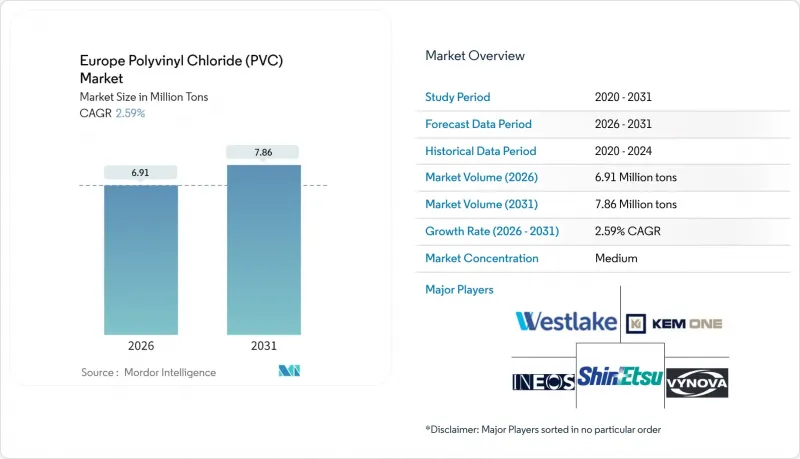
유럽의 폴리염화비닐(PVC) 시장 규모는 2026년에 691만 톤에 달할 것으로 예측되고 있습니다.
이는 2025년 674만 톤으로부터 증가할 전망이며, 2031년에는 786만 톤에 달할 것으로 예측되고 있습니다. 2026-2031년의 연평균 성장률(CAGR)은 2.59%로 예측되고 있습니다.
파이프, 프로파일, 피팅의 견고한 수요와 주택 건설의 완만한 회복세가 결합되어 단기적인 물량 증가를 지원하고 있습니다. REACH 규제에 따른 압력으로 인해 칼슘-아연계 안정제 채택이 가속화되고 있지만, 지속적인 인프라 투자로 전환 비용이 완화되고 있습니다. 에너지 절약 개조 프로그램, 전력망 업그레이드, 물 관리 프로젝트가 구조적 수요를 지원하는 한편, 순환 경제의 요구로 인해 재활용 및 바이오 유래 PVC에 대한 투자가 가속화되고 있습니다. 통합 생산자들이 규모의 경제, 자체 원료, 자체 기술을 활용하여 컴플라이언스 비용을 상쇄하고 있으므로 경쟁의 강도는 여전히 중간 정도에 머물러 있습니다.
유럽 폴리염화비닐(PVC) 시장 동향 및 전망
건설 업계 수요 증가
유럽의 주택 부족과 노후화된 건축 재고로 인한 개보수 수요가 지속되고 있으며, 창호 및 사이딩용 PVC 수요를 견인하고 있습니다. 열가소성 수지 인서트로 보강된 PVC 프레임은 단열 성능을 12-13% 향상시키고, EU의 에너지 절약 기준 적합성을 높이기 위해 리노베이션 프로젝트에서 경질 PVC의 채택이 더욱 정착되고 있습니다. 회원국의 재건 기금은 토목 공사 지출을 중점적으로 지원하고 있으며, 저수형 배수 시스템은 농업 인프라에서 PVC의 기능성과 비용 우위를 보여주고 있습니다. 금리의 안정화와 자재 가격의 정상화로 북유럽 시장에서는 프로젝트 실행 가능성이 높아졌지만, 남유럽에서는 재정적 제약이 성장을 억제하고 있습니다. 전체적으로 PVC 파이프 및 프로파일에 대한 수요는 중기적으로 고르게 증가할 것으로 예측됩니다.
자동차 산업 수요 증가
전기자동차의 보급으로 내장 부품의 사양이 재구성되고, 와이어 하네스 및 바닥재에 난연성 연질 PVC의 적용 범위가 확대되고 있습니다. 2025년 초 독일 자동차 생산량은 전년 대비 3% 증가했으며, 지역 컴파운딩 공장에서의 수지 인계량이 증가하고 있습니다. 바이오 유래 PVC 등급은 인장강도와 내열성능을 유지하면서 제조 공정까지의 CO2 배출량을 58% 감소시킵니다. 이를 통해 OEM(Original Equipment Manufacturer)는 플랫폼 재설계 없이도 ESG 목표를 달성할 수 있습니다. 독일, 프랑스, 북부 이탈리아를 중심으로 한 성장 거점은 물류 최적화와 저스트 인 시퀀싱 공급 모델을 촉진합니다. Tier 1 공급업체는 디지털 품질관리 툴와 재료 혁신을 결합하여 트림 폐기물을 줄이고 사이클 타임을 단축하고 있습니다.
소매업체들의 PVC 식품 포장 금지 가속화
서유럽의 대형 슈퍼마켓 체인들은 PVC 트레이와 랩 필름을 단계적으로 폐지하고 있으며, 컨버터들에게 단일 소재의 PET 또는 종이 기반 대체품으로의 전환을 요구하고 있습니다. 시행 예정인 포장폐기물 규제에서 PFAS와 BPA 규제가 추가되어 기존 PVC 배합의 컴플라이언스 대응이 복잡해지고 있습니다. 의약품 블리스터 팩은 적용 제외되는 반면, 수요가 많은 신선식품 분야에서는 즉각적인 대체가 진행되어 유럽 PVC 시장의 연질 필름 수요가 줄어들고 있습니다. 브랜드 소유주의 구매 정책은 업스트림으로 파급되어, 컴파운더는 대체 수지의 인증을 획득하고, 차단성이 중요한 틈새 용도를 위한 재활용 가능한 PVC 블렌드를 개발해야 하는 상황에 처해 있습니다. 동유럽 시장에서는 금지 조치의 도입이 늦어지고 있으며, 일시적인 완화 요인으로 작용하는 한편, 궁극적으로 지역 전체의 전환을 암시하고 있습니다.
부문 분석
2025년 기준 유럽 PVC 시장의 60.42%를 차지하는 경질 등급은 건축 및 급수 네트워크에서 배관, 프로파일, 피팅의 우위를 유지하고 있습니다. 저발연 PVC는 기반 규모가 작지만, 대중교통, 터널, 공공 집회장 프로젝트에서의 방화 규제를 배경으로 2031년까지 연평균 복합 성장률(CAGR) 3.73%로 가장 높은 성장률을 보일 것으로 예측됩니다. 연질 PVC 수요 동향은 양극화되어 있습니다. 의료용 튜브용 바이오가소성 투명 등급 수요 증가가 식품 포장용 필름의 축소분을 상쇄할 것으로 예측됩니다. 염화PVC는 산업용 온수배관 분야 진출을 가속화하고 있으며, 지역 생산체제를 구축하여 수입관세 및 물류비용을 절감하고 있습니다.
성숙한 수요 패턴으로 인해 가동률이 80% 내외로 안정적이기 때문에 생산능력 증설은 억제된 상태로 유지되고 있습니다. 압출업체들은 신규 설비 투자보다는 다이헤드 업그레이드와 인라인 측정 시스템을 통한 수율 향상에 집중하고 있습니다. 화학처리용 사이트 글라스용 경질 투명 제품 수주와 지자체용 파이프 계약의 대량 수주를 병행하는 컨버터에게 제품 믹스의 유연성은 경쟁적 차별화 요소로 작용하고 있습니다. 유럽 PVC 시장은 이처럼 안정적이고 수요가 높은 경질 분야와 저발연성 및 염소화 폴리염화비닐(CPVC) 분야의 특수 용도 성장 틈새 시장이 균형을 이루고 있습니다.
2025년 안정제 소비량의 42.55%를 칼슘-아연계가 차지하여 EU 납 규제 이후 시장 전환을 명확히 보여주고 있습니다. 이러한 안정제 패키지는 2031년까지 연평균 복합 성장률(CAGR) 3.47%로 확대될 것으로 예상되며, 유럽 PVC 시장의 첨가제 수준 가치 성장의 대부분을 견인할 것으로 예측됩니다. 납계 안정제는 현재 임시 예외 조치에 따라 주로 재생 경질 스트림에 남아 있으며, 주석계 시스템은 내열성 전선 피복의 틈새 시장에 남아있습니다. 바륨-아연 및 액체 혼합 금속 형태는 특수 시트 캘린더 가공에 공급되고 있지만, 통일된 그린 케미컬 표준이 하류로 확산됨에 따라 공급량 감소에 직면하고 있습니다.
화학물질 공급업체는 주요 압출 기지 근처에 모듈식 혼합 시설을 확장하여 적시 납품 및 엄격한 배합 관리를 실현하고 있습니다. 프로파일 제조업체와의 공동 인증 프로그램을 통해 라인 변경 승인을 가속화하고 전환 기간을 단축하고 있습니다. 안정제 전환은 규제 요구사항이 R&D의 깊이와 통합 물류를 보유한 기업에 유리하게 공급망을 재구성하는 현실을 부각시키고 있습니다.
유럽 PVC 시장 보고서는 제품 유형별(경질 PVC, 연질 PVC, 저연 PVC 등), 안정제 유형별(칼슘계, 납계, 주석계 및 유기 주석계 등), 용도별(파이프/피팅, 필름/시트, 전선/케이블 등), 최종사용자 산업별(건축/건설, 자동차, 전기/전자 등), 지역별(독일, 프랑스, 영국, 이탈리아 등)로 구분하여 분석했습니다. 등), 지역별(독일, 프랑스, 영국, 이탈리아 등)로 분류되어 있습니다.
기타 특전:
- 엑셀 형식 시장 예측(ME) 시트
- 애널리스트의 3개월간 지원
자주 묻는 질문
목차
제1장 서론
제2장 조사 방법
제3장 개요
제4장 시장 구도
제5장 시장 규모와 성장 예측
제6장 경쟁 구도
제7장 시장 기회와 향후 전망
KSA 26.03.06Europe Polyvinyl Chloride Market size in 2026 is estimated at 6.91 million tons, growing from 2025 value of 6.74 million tons with 2031 projections showing 7.86 million tons, growing at 2.59% CAGR over 2026-2031.
Robust demand in pipes, profiles, and fittings, coupled with moderate recovery in residential construction, underpins near-term volume gains. Regulatory pressure from REACH continues to accelerate calcium-zinc stabilizer adoption, yet sustained infrastructure spending cushions transition costs. Energy-efficient renovation programs, electrical grid upgrades, and water-management projects anchor structural demand, while circular-economy mandates fast-track investment in recycling and bio-attributed PVC. Competitive intensity remains moderate as integrated producers leverage scale, captive feedstocks, and proprietary technology to offset compliance costs.
Europe Polyvinyl Chloride (PVC) Market Trends and Insights
Growing Demand from Construction Industry
The region's housing shortage and aging building stock keep renovation activity high, driving window-profile and siding volumes in the Europe PVC market. Thermal-performance gains of 12-13% in PVC frames reinforced with thermoplastic inserts improve compliance with EU energy-efficiency codes, further entrenching rigid PVC in retrofit projects. Member-state recovery funds earmark civil-works spending, with water-retention drainage systems illustrating PVC's functional and cost advantages in agricultural infrastructure. Stabilizing interest rates and normalized material prices enhance project viability across Northern markets, though fiscal constraints continue to cap growth in Southern Europe. The overall effect is a well-distributed, medium-term lift in PVC pipe and profile demand.
Increasing Demand from Automotive Industry
Electric-vehicle adoption is reshaping interior-component specifications, widening the aperture for flame-retardant flexible PVC in wire harnesses and floor coverings. German motor-vehicle output advanced 3% YoY in early 2025, boosting resin off-take from regional compounding plants. Bio-attributed PVC grades cut cradle-to-gate CO2 emissions by 58% while preserving tensile and thermal performance, enabling OEMs to meet ESG targets without platform redesign. Growth clusters around Germany, France, and northern Italy facilitate optimized logistics and just-in-sequence supply models. Tier-one suppliers are pairing digital quality-control tools with material innovations to eliminate trim waste and reduce cycle times.
Accelerating Retailer Bans on PVC Food Packaging
Large supermarket chains across Western Europe are phasing out PVC trays and cling films, pressuring converters to shift toward mono-material PET or paper-based formats. The forthcoming Packaging and Packaging Waste Regulation adds PFAS and BPA constraints, complicating compliance pathways for legacy PVC formulations. While pharmaceutical blister packs remain exempt, high-volume fresh-food segments experience immediate substitution, shaving flexible-film demand in the Europe PVC market. Brand-owner purchasing policies cascade upstream, compelling compounders to qualify alternative resins or develop recyclable PVC-blends for niche, barrier-critical applications. Eastern markets show lagged uptake of bans, offering temporary relief yet signaling an eventual region-wide transition.
Other drivers and restraints analyzed in the detailed report include:
- Increasing Demand from Water Infrastructure Projects
- Healthcare Demand for Medical-Grade PVC
- Escalating REACH Restrictions on Legacy Lead and Tin Stabilizers
For complete list of drivers and restraints, kindly check the Table Of Contents.
Segment Analysis
Rigid grades anchored 60.42% of the Europe PVC market share in 2025 as pipes, profiles, and fittings retain dominance across building and water-supply networks. Low-smoke PVC, although a smaller base, is set to clock the strongest 3.73% CAGR through 2031 on the back of fire-safety regulations in mass-transit, tunnel, and public-assembly projects. Flexible PVC volumes face mixed fortunes: demand for bio-plasticized clear grades in medical tubing offsets contraction in food-packaging films. Chlorinated PVC penetrates industrial hot-water lines, leveraging localized production to mitigate import tariffs and logistics costs.
Capacity additions stay disciplined as mature demand patterns stabilize operating rates around 80%. Extruders focus on die-head upgrades and inline-measurement systems to boost yields rather than greenfield expansions. Product-mix agility becomes a competitive differentiator as converters juggle rigid-clear orders for chemical-processing sight-glasses alongside bulk commitments for municipal pipe contracts. The Europe PVC market thus balances steady, high-volume rigid demand with specialty growth niches in low-smoke and CPVC segments.
Calcium-zinc solutions held 42.55% of stabilizer consumption in 2025, a clear signal of market pivot after the EU lead ban These packages are projected to expand at 3.47% CAGR to 2031, driving most additive-level value growth in the Europe PVC market. Lead-based stabilizers now persist mainly in recycled rigid streams under temporary derogations, while tin systems linger in heat-resistant wire-coating niches. Barium-zinc and liquid-mixed-metal formats supply specialty sheet calendaring but face volume erosion as unified green-chemistry criteria spread downstream.
Chemical suppliers scale modular blending facilities near major extrusion hubs, ensuring just-in-time deliveries and tighter formulation control. Collaborative qualification programs with profile manufacturers accelerate line-change approvals, compressing conversion timelines. The stabilizer shift underscores how regulatory imperatives reshape supply chains in favor of actors with R&D depth and integrated logistics.
The Europe PVC Market Report is Segmented by Product Type (Rigid PVC, Flexible PVC, Low-Smoke PVC, and More), Stabilizer Type (Calcium Based, Lead Based, Tin and Organotin Based, and More), Application (Pipes and Fittings, Films and Sheets, Wires and Cables, and More), End-User Industry (Building and Construction, Automotive, Electrical and Electronics, and More), and Geography (Germany, France, United Kingdom, Italy, and More).
List of Companies Covered in this Report:
- Benvic Group
- Ercros S.A.
- Formosa Plastics Corporation
- Hanwa Solutions Chemical Division Corporation
- Industrie Generali S.p.A.
- INEOS
- KEM ONE
- LG Chem
- Lukoil
- Oltchim SA
- Orbia
- Shin-Etsu Chemical Co. Ltd.
- SIBUR Holding PJSC
- Solvay
- Teknor Apex
- Vynova Group
- Westlake Corporation
Additional Benefits:
- The market estimate (ME) sheet in Excel format
- 3 months of analyst support
TABLE OF CONTENTS
1 Introduction
- 1.1 Study Assumptions and Market Definition
- 1.2 Scope of the Study
2 Research Methodology
3 Executive Summary
4 Market Landscape
- 4.1 Market Overview
- 4.2 Market Drivers
- 4.2.1 Growing demand from construction industry
- 4.2.2 Increasing demand from automotive industry
- 4.2.3 Increasing demand from water infrastructure projects
- 4.2.4 Healthcare demand for medical-grade PVC
- 4.2.5 Rinsing Usage in Packaging Application
- 4.3 Market Restraints
- 4.3.1 Accelerating retailer bans on PVC food packaging
- 4.3.2 Escalating REACH restrictions on legacy lead and tin stabilizers
- 4.3.3 Rising bio-based polymer substitution in window-profile segment
- 4.4 Value Chain Analysis
- 4.5 Porter's Five Forces
- 4.5.1 Bargaining Power of Suppliers
- 4.5.2 Bargaining Power of Consumers
- 4.5.3 Threat of New Entrants
- 4.5.4 Threat of Substitutes
- 4.5.5 Degree of Competition
5 Market Size and Growth Forecasts (Volume)
- 5.1 By Product Type
- 5.1.1 Rigid PVC
- 5.1.1.1 Clear Rigid PVC
- 5.1.1.2 Non-clear Rigid PVC
- 5.1.2 Flexible PVC
- 5.1.2.1 Clear Flexible PVC
- 5.1.2.2 Non-clear Flexible PVC
- 5.1.3 Low-smoke PVC
- 5.1.4 Chlorinated PVC
- 5.1.1 Rigid PVC
- 5.2 By Stabilizer Type
- 5.2.1 Calcium based (Ca-Zn)
- 5.2.2 Lead based Pb
- 5.2.3 Tin and Organotin based (Sn)
- 5.2.4 Barium-based and Others (Liquid Mixed Metals)
- 5.3 By Application
- 5.3.1 Pipes and Fittings
- 5.3.2 Films and Sheets
- 5.3.3 Wires and Cables
- 5.3.4 Bottles
- 5.3.5 Profiles, Hoses and Tubings
- 5.3.6 Other Applications
- 5.4 By End-user Industry
- 5.4.1 Building and Construction
- 5.4.2 Automotive
- 5.4.3 Electrical and Electronics
- 5.4.4 Packaging
- 5.4.5 Footwear
- 5.4.6 Healthcare
- 5.4.7 Other End-user Industries
- 5.5 By Geography
- 5.5.1 Germany
- 5.5.2 France
- 5.5.3 United Kingdom
- 5.5.4 Italy
- 5.5.5 Spain
- 5.5.6 Turkey
- 5.5.7 Rest of Europe
6 Competitive Landscape
- 6.1 Market Concentration
- 6.2 Strategic Moves
- 6.3 Market Share(%)/Rankinh Analysis
- 6.4 Company Profiles (includes Global level Overview, Market level overview, Core Segments, Financials, Strategic Information, Market Rank/Share, Products and Services, Recent Developments)
- 6.4.1 Benvic Group
- 6.4.2 Ercros S.A.
- 6.4.3 Formosa Plastics Corporation
- 6.4.4 Hanwa Solutions Chemical Division Corporation
- 6.4.5 Industrie Generali S.p.A.
- 6.4.6 INEOS
- 6.4.7 KEM ONE
- 6.4.8 LG Chem
- 6.4.9 Lukoil
- 6.4.10 Oltchim SA
- 6.4.11 Orbia
- 6.4.12 Shin-Etsu Chemical Co. Ltd.
- 6.4.13 SIBUR Holding PJSC
- 6.4.14 Solvay
- 6.4.15 Teknor Apex
- 6.4.16 Vynova Group
- 6.4.17 Westlake Corporation
7 Market Opportunities and Future Outlook
- 7.1 PVC Recycling and Circularity
- 7.2 Bio-based Stabilizer and Plasticizer Platforms
- 7.3 White-space and unmet-need assessment