|
시장보고서
상품코드
1940578
변비 치료 : 세계 시장 점유율 분석, 업계 동향과 통계, 성장 예측(2026-2031년)Global Constipation Treatment - Market Share Analysis, Industry Trends & Statistics, Growth Forecasts (2026 - 2031) |
||||||
 Mordor Intelligence
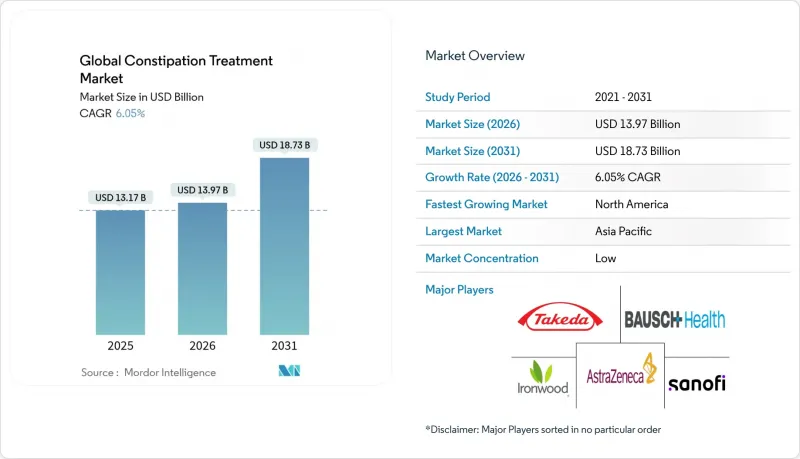
변비 치료 시장은 2025년 131억 7,000만 달러에서 2026년에는 139억 7,000만 달러에 이르고, 2026-2031년 CAGR 6.05%로 성장을 지속하여 2031년까지 187억 3,000만 달러에 달할 것으로 예측됩니다.
고령화 인구 증가, 오피오이드 관련 변비 증가, 수용체 표적 치료제 승인 등이 이러한 성장세를 뒷받침하고 있습니다. GC-C, 5-HT4 작용제 등 정밀 치료제가 기존 투과성 완하제를 대체하고 있으며, 장뇌 디지털 치료와 진동 캡슐 장치가 치료법 선택의 폭을 넓혀가고 있습니다. 북미지역은 유리한 상환제도로 인해 뚜렷한 주도권을 유지하고 있지만, 아시아태평양은 의료 접근성 확대와 가처분 소득 증가로 인해 가장 빠른 성장 곡선을 보이고 있습니다. 기존 기업들이 제네릭 의약품과 신규 시장 진출기업(마이크로바이옴 및 디지털 헬스 툴에 집중)로부터 자사 제품을 방어하는 가운데, 경쟁 활동은 여전히 온건한 수준입니다.
세계 변비 치료제 시장 동향 및 인사이트
고령화 사회에서의 만성 특발성 변비 증가 추세
65세 이상 노인의 비율이 증가함에 따라 만성 특발성 변비 유병률은 15%에 달하고, 젊은 층의 거의 두 배에 달할 전망입니다. 결장 운동 기능 저하, 직장 감각 저하, 다약제 병용에 의한 상호작용으로 치료 의존도가 높아지고 있습니다. 미국 내 변비 관련 응급실 내원 건수는 연간 130만 건을 넘어섰으며, 변색증 환자의 경우 심각한 합병증 발생률은 40.6%, 입원율은 거의 90%에 달하고, 현재 치료법의 한계가 드러나고 있습니다. 베이비부머 세대의 구매력은 일상생활을 지원하는 고효능 치료법에 대한 수요를 더욱 확대시키고 있습니다. 이에 제약사들은 노인 생리에 특화된 장뇌축 조절제, 마이크로바이옴 교정제, 생체리듬 조절제에 연구개발 예산을 중점적으로 배분하고 있습니다.
오피오이드 처방 증가가 OIC 치료제 수요를 견인
오피오이드 유발 변비는 만성 통증 환자의 최대 81%에게 영향을 미치며, 현재 전체 변비 치료제 시장에서 21억 달러 규모의 기회를 창출하고 있습니다. 글렌탈이 나록세골(Naloxegol)을 2억 5,000만 달러에 인수한 것은 진통 효과는 유지하면서 장 기능을 회복시키는 말초 작용형 μ-오피오이드 수용체 길항제의 매력이 커지고 있음을 보여줍니다. 복약 순응도가 70% 이상으로 기존 완하제를 크게 상회하여 안정적인 수익원을 확보하고 있습니다. 시오노기제약의 나르데메딘이 중국에서 승인됨에 따라 지리적 범위가 확대되고, 아시아태평양 지불자의 수용 준비가 확대되고 있는 것으로 보입니다.
자극성 완하제 장기 사용에 대한 안전성 우려
유럽의약품청(EMA)은 2025년 하이드록시안트라센 계열 화합물의 사용을 금지하고, 센나와 카스카라 제품에 대한 규제를 강화했습니다. 현재 의사들은 특히 전해질 균형이 깨지기 쉬운 허약한 노인들에게 삼투압성 또는 수용체 표적형 약물을 권장하는 경향이 있습니다. 그 결과, 기존의 자극성 완하제 브랜드는 유럽에서 선반 공간의 감소에 직면하고 있으며, 규제가 엄격한 다른 지역에도 파급 효과가 나타나고 있습니다.
부문 분석
2025년 약리학 제제는 변비 치료제 시장에서 83.02%의 점유율을 차지할 것으로 예측됩니다. GC-C 작용제와 5-HT4 작용제가 지속적 완화 효과에서 팽창성 및 삼투압성 약물을 능가하는 견인차 역할을 했습니다. 이 분야에서는 리나크로티드와 같은 GC-C 약물이 8억 달러의 매출을 기록한 반면, 말초 작용형 μ-오피오이드 수용체 길항제는 통증 환자들의 높은 복약 순응도 덕을 톡톡히 본 것으로 분석됐습니다. 확고한 우위를 유지하는 것, 제네릭 의약품의 부상과 자극제에 대한 안전성 감시가 향후 점유율을 억제할 것으로 예측됩니다.
비약물 요법은 7.03%의 연평균 복합 성장률(CAGR)로 확대되며 획기적인 잠재력을 가지고 있습니다. FDA 승인 진동 캡슐은 위약군 36% 대비 64%의 유효율을 보였습니다. 디지털 장뇌 프로그램은 73%의 개선율을 기록하며 약물 치료의 효과를 높이는 보조요법으로 자리매김하고 있습니다. 파이프라인이 성숙해짐에 따라, 2020년대 말까지 교차 모달 요법이 약물 치료의 우위를 축소할 가능성이 있습니다.
2025년 기준 변비 치료제 시장의 86.15%를 내복약이 차지하고 있으며, 이는 편의성과 만성 사용 시 실용성이 그 요인으로 작용하고 있습니다. 내복용 변비 치료제 시장 규모는 혁신이 확대되는 가운데 5.88%의 연평균 복합 성장률(CAGR)을 보일 것으로 예측됩니다.
난치성 오피오이드 환자를 위한 피하 투여 메틸날트렉손을 포함한 비경구용 제제는 낮은 수준이지만 7.21%로 더 높은 성장률을 보이고 있습니다. 진동기능이 있는 캡슐 등의 개선은 전신에 약물부하를 증가시키지 않으면서 효과를 높여 경구제에 대한 신뢰성을 강화하고 있습니다. 직장약은 진료소에서 빠른 배변 촉진이나 소아 용량의 제약이 있는 경우 등 여전히 틈새 용도에 머물러 있습니다.
지역별 분석
북미는 2025년 매출의 41.88%를 차지할 것으로 예상되며, 높은 치료 도입률, 탄탄한 상환 제도, 오피오이드 과다 복용으로 인한 OIC(오피오이드 유발 변비) 발생률이 높은 것이 그 배경입니다. 만성 특발성 변비에 대한 GC-C 작용제 처방 증가로 미국 변비 치료제 시장 규모는 2026년 52억 8,000만 달러를 돌파할 것으로 예측됩니다. 제네릭 의약품인 푸르카로프리드의 진입은 이 지역이 1차 경쟁의 격전지가 될 것임을 보여줍니다.
아시아태평양은 2031년까지 연평균 복합 성장률(CAGR) 7.86%로 가장 빠르게 성장할 지역입니다. 중국의 보험제도 개혁과 중산층의 구매력 향상으로 첨단 치료에 대한 접근성이 확대되는 한편, 양약과 병행하여 '통변'과 같은 전통 한약 처방도 연구되고 있습니다. 일본은 고령화 사회에 대응하여 한약과 수용체 표적 의약품을 모두 활용하고 있으며, 인도에서는 전자 약국의 급격한 성장이 가격 민감성과 디지털 보급을 연결하고 있습니다.
유럽은 견조하지만 성장률은 둔화되고 있으며, 엄격한 의료 기술 평가와 2025년부터 하이드록시안트라센계 식물성 성분 금지가 제약 요인으로 작용하고 있습니다. 독일과 프랑스에서는 이미 자극성 완하제의 변비치료제 시장 점유율이 감소하고 있어 삼투압성 완하제나 GC-C제의 진입 여지가 생기고 있습니다. 브렉시트 이후 규제 차이로 인해 영국의 승인 절차는 EU에 비해 가속화되거나 정체될 수 있지만, 지불자 측의 심사는 전 세계적으로 엄격하게 유지될 것입니다.
기타 특전:
- 엑셀 형식 시장 예측(ME) 시트
- 애널리스트의 3개월간 지원
자주 묻는 질문
목차
제1장 서론
제2장 조사 방법
제3장 주요 요약
제4장 시장 구도
제5장 시장 규모와 성장 예측
제6장 경쟁 구도
제7장 시장 기회와 향후 전망
LSH 26.03.10The constipation treatment market is expected to grow from USD 13.17 billion in 2025 to USD 13.97 billion in 2026 and is forecast to reach USD 18.73 billion by 2031 at 6.05% CAGR over 2026-2031.
Expanding elderly populations, higher opioid-related constipation rates, and approvals of receptor-targeted drugs underpin this growth trajectory. Precision therapeutics such as GC-C and 5-HT4 agonists continue to displace traditional osmotic laxatives, while gut-brain digital therapeutics and vibrating capsule devices widen the therapeutic playbook. North America maintains clear leadership through favorable reimbursement frameworks, yet Asia-Pacific shows the fastest up-curve thanks to broader healthcare access and rising disposable incomes. Competitive activity remains moderate as incumbents defend franchises against generics and newcomers focused on microbiome and digital health tools.
Global Constipation Treatment Market Trends and Insights
Increasing Prevalence of Chronic Idiopathic Constipation in Ageing Population
As the share of adults aged >= 65 climbs, chronic idiopathic constipation rates have reached 15%, almost doubling younger cohorts. Reduced colonic motility, lower rectal sensation, and polypharmacy interplay intensify treatment dependence. Constipation-related emergency department visits now exceed 1.3 million annually in the United States, with fecal impaction cases showing 40.6% serious complication rates and nearly 90% hospital admission rates, highlighting the inadequacy of current therapeutic approaches. The purchasing power of baby boomers magnifies demand for higher-efficacy therapies that support daily functioning. Drug developers are therefore steering R&D budgets toward gut-brain axis modulators, microbiome correction, and circadian rhythm agents tailored to geriatric physiology.
Rising Opioid Prescriptions Driving Demand for OIC Therapeutics
Opioid-induced constipation affects up to 81% of chronic pain patients and now represents a USD 2.1 billion opportunity within the broader constipation treatment market. Grunenthal's USD 250 million deal for naloxegol underscores the growing appeal of peripherally acting µ-opioid receptor antagonists that restore bowel function without blunting analgesia. Adherence tops 70%, far above conventional laxatives, securing sticky revenue streams. Shionogi's naldemedine clearance in China broadens geographic reach and illustrates expanding payer readiness in Asia-Pacific.
Safety Concerns Over Long-Term Use of Stimulant Laxatives
The EMA banned hydroxyanthracene compounds in 2025, tightening leverage on senna and cascara products. Physicians now lean toward osmotic or receptor-targeted agents, particularly for frail seniors susceptible to electrolyte imbalance. Consequently, legacy stimulant brands face shelf-space erosion in Europe and ripple effects in other stringent jurisdictions.
Other drivers and restraints analyzed in the detailed report include:
- Shift Toward OTC Self-Medication & E-Pharmacy Penetration
- Novel GC-C and 5-HT4 Agonists Gaining Approvals
- Patent Cliffs for Blockbuster Agents Intensifying Price Competition
For complete list of drivers and restraints, kindly check the Table Of Contents.
Segment Analysis
Pharmacological offerings captured an 83.02% slice of the constipation treatment market in 2025, led by GC-C and 5-HT4 agonists that outperformed bulk-forming and osmotic agents on sustained relief metrics. Within this pillar, GC-C drugs such as linaclotide posted USD 800 million in sales, while peripherally acting µ-opioid receptor antagonists benefited from high adherence among pain patients. Despite entrenched dominance, looming generics and safety vigilance for stimulants temper future share.
Non-pharmacological approaches expanded at a 7.03% CAGR and headline disruptive potential. FDA-cleared vibrating capsules produced 64% responder rates versus 36% placebo. Digital gut-brain programs recorded 73% improvement, positioning them as adjuncts that lift pharmacotherapy efficacy. As pipelines mature, cross-modal regimens could narrow pharmacological lead by decade's end.
Oral drugs delivered 86.15% of the constipation treatment market share in 2025, owing to convenience and chronic-use practicality. The constipation treatment market size for oral options is projected to climb at a 5.88% CAGR, even as innovation spreads.
Parenteral solutions-including subcutaneous methylnaltrexone for refractory opioid cases-post a faster 7.21% pace, albeit from a low base. Enhancements like vibration-enabled capsules reinforce oral loyalty by boosting efficacy without systemic drug load. Rectal forms remain niche for rapid in-clinic decompression or pediatric dosing constraints.
The Constipation Treatment Market Report is Segmented by Treatment Type (Pharmacological Laxatives, Non-Pharmacological), Route of Administration (Oral, Rectal, Parenteral), Patient Type (Adults, Pediatrics, Geriatrics), Distribution Channel (Hospital Pharmacies, Retail Pharmacies, Online Pharmacies), and Geography (North America, Europe, and More). The Market Forecasts are Provided in Terms of Value (USD).
Geography Analysis
North America commanded 41.88% of 2025 sales, underpinned by high therapeutic adoption rates, resilient reimbursement, and heavy opioid use creating OIC incidence. The constipation treatment market size in the United States alone surpassed USD 5.28 billion in 2026 as prescribers favored GC-C agonists for chronic idiopathic constipation. Generic prucalopride's entry reflects the region's hotbed for first-wave competition.
Asia-Pacific is the fastest advancing territory with an 7.86% CAGR to 2031. China's insurance reforms and rising middle-class purchasing power widen access to advanced therapies, while culturally embedded herbal formulas such as Tongbian are studied alongside Western drugs. Japan leverages both Kampo remedies and receptor-targeted drugs for its aging population, and India's e-pharmacy boom couples price sensitivity with digital reach.
Europe delivers steady but slower momentum, constrained by stringent health technology assessments and the 2025 ban on hydroxyanthracene botanicals. The constipation treatment market share of stimulant laxatives has already fallen in Germany and France, opening room for osmotic and GC-C agents. Post-Brexit regulatory divergence could either speed or stall UK approvals relative to the EU, yet payer scrutiny remains universally tight.
- Takeda Pharmaceuticals
- Bayer
- Ironwood Pharmaceuticals
- Abbvie
- Sanofi
- AstraZeneca
- Shionogi & Co., Ltd.
- Bausch Health
- GlaxoSmithKline
- Johnson & Johnson
- Procter & Gamble
- Cipla
- Daewoong Pharmaceutical Co. Ltd.
- Nichirin Pharmaceutical
- HERMES PHARMA GmbH
- Nestle Health Science
- Herbalife Nutrition Ltd.
Additional Benefits:
- The market estimate (ME) sheet in Excel format
- 3 months of analyst support
TABLE OF CONTENTS
1 Introduction
- 1.1 Study Assumptions & Market Definition
- 1.2 Scope of the Study
2 Research Methodology
3 Executive Summary
4 Market Landscape
- 4.1 Market Overview
- 4.2 Market Drivers
- 4.2.1 Increasing prevalence of chronic idiopathic constipation in ageing population
- 4.2.2 Rising opioid prescriptions driving demand for OIC therapeutics
- 4.2.3 Shift toward OTC self-medication & e-pharmacy penetration
- 4.2.4 Novel GC-C and 5-HT4 agonists gaining approvals
- 4.2.5 Microbiome-derived therapeutics entering late-stage pipeline
- 4.2.6 Digital therapeutics & gut-brain neurostimulation apps improving adherence
- 4.3 Market Restraints
- 4.3.1 Safety concerns over long-term use of stimulant laxatives
- 4.3.2 Patent cliffs for blockbuster agents intensifying price competition
- 4.3.3 Supply-chain shortages of PEG & senna due to ESG controls
- 4.3.4 Consumer shift to herbal & home remedies reducing prescription uptake
- 4.4 Value / Supply-Chain Analysis
- 4.5 Regulatory Landscape
- 4.6 Technological Outlook
- 4.7 Porter's Five Forces
- 4.7.1 Threat of New Entrants
- 4.7.2 Bargaining Power of Suppliers
- 4.7.3 Bargaining Power of Buyers
- 4.7.4 Threat of Substitutes
- 4.7.5 Industry Rivalry
5 Market Size & Growth Forecasts
- 5.1 By Treatment Type (Value)
- 5.1.1 Pharmacological
- 5.1.1.1 Laxatives
- 5.1.1.2 Chloride Channel Activators (Lubiprostone)
- 5.1.1.3 GC-C Agonists (Linaclotide, Plecanatide)
- 5.1.1.4 5-HT4 Agonists (Prucalopride, Naronapride)
- 5.1.1.5 Peripherally Acting µ-Opioid Receptor Antagonists
- 5.1.1.6 Others (Bile-acid modulators, etc.)
- 5.1.2 Non-Pharmacological
- 5.1.2.1 Dietary Fibre Supplements
- 5.1.2.2 Biofeedback & Physical Therapy
- 5.1.2.3 Fecal Microbiota Transplant
- 5.1.2.4 Digital Therapeutics
- 5.1.1 Pharmacological
- 5.2 By Route of Administration (Value)
- 5.2.1 Oral
- 5.2.2 Rectal (Suppositories, Enemas)
- 5.2.3 Parenteral / Sub-cutaneous
- 5.3 By Patient Type (Value)
- 5.3.1 Adults
- 5.3.2 Pediatrics
- 5.3.3 Geriatrics
- 5.4 By Distribution Channel (Value)
- 5.4.1 Hospital Pharmacies
- 5.4.2 Retail Pharmacies & Drug Stores
- 5.4.3 Online Pharmacies
- 5.5 By Geography (Value)
- 5.5.1 North America
- 5.5.1.1 United States
- 5.5.1.2 Canada
- 5.5.1.3 Mexico
- 5.5.2 Europe
- 5.5.2.1 Germany
- 5.5.2.2 United Kingdom
- 5.5.2.3 France
- 5.5.2.4 Italy
- 5.5.2.5 Spain
- 5.5.2.6 Rest of Europe
- 5.5.3 Asia-Pacific
- 5.5.3.1 China
- 5.5.3.2 India
- 5.5.3.3 Japan
- 5.5.3.4 South Korea
- 5.5.3.5 Australia
- 5.5.3.6 Rest of Asia-Pacific
- 5.5.4 South America
- 5.5.4.1 Brazil
- 5.5.4.2 Argentina
- 5.5.4.3 Rest of South America
- 5.5.5 Middle East and Africa
- 5.5.5.1 GCC
- 5.5.5.2 South Africa
- 5.5.5.3 Rest of Middle East and Africa
- 5.5.1 North America
6 Competitive Landscape
- 6.1 Market Concentration
- 6.2 Market Share Analysis
- 6.3 Company Profiles (includes Global level Overview, Market level overview, Core Segments, Financials as available, Strategic Information, Market Rank/Share for key companies, Products & Services, and Recent Developments)
- 6.3.1 Takeda Pharmaceutical Company Limited
- 6.3.2 Bayer AG
- 6.3.3 Ironwood Pharmaceuticals, Inc.
- 6.3.4 AbbVie Inc.
- 6.3.5 Sanofi S.A.
- 6.3.6 AstraZeneca plc
- 6.3.7 Shionogi & Co., Ltd.
- 6.3.8 Bausch Health Companies Inc.
- 6.3.9 GlaxoSmithKline plc
- 6.3.10 Johnson & Johnson
- 6.3.11 Procter & Gamble Co.
- 6.3.12 Cipla Ltd.
- 6.3.13 Daewoong Pharmaceutical Co. Ltd.
- 6.3.14 Nichirin Pharmaceutical
- 6.3.15 HERMES PHARMA GmbH
- 6.3.16 Nestle Health Science
- 6.3.17 Herbalife Nutrition Ltd.
7 Market Opportunities & Future Outlook
- 7.1 White-space & Unmet-need Assessment