
|
시장보고서
상품코드
1940673
영국의 제3자 물류(3PL) : 시장 점유율 분석, 업계 동향과 통계, 성장 예측(2026-2031년)United Kingdom Third Party Logistics (3PL) - Market Share Analysis, Industry Trends & Statistics, Growth Forecasts (2026 - 2031) |
||||||
 Mordor Intelligence
영국의 제3자 물류 시장은 2025년 291억 달러에서 2026년에는 301억 9,000만 달러로 성장하여 2026년부터 2031년까지 CAGR 3.73%를 기록하며 2031년까지 362억 6,000만 달러에 달할 것으로 예측됩니다.
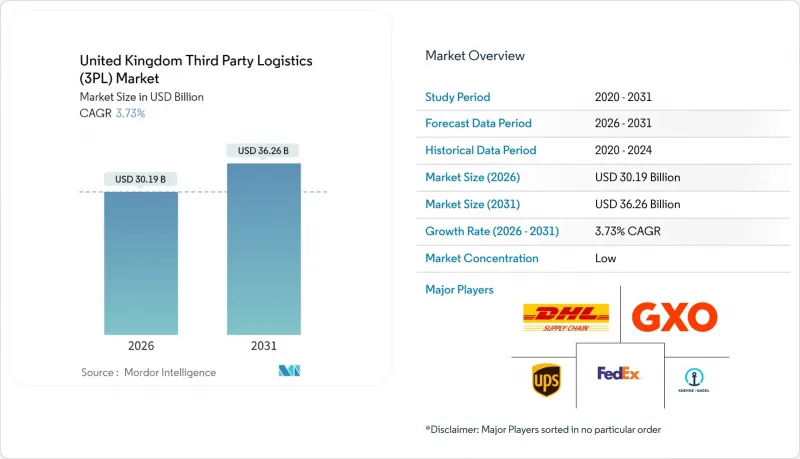
시장 규모의 변화는 브렉시트 관련 통관 마찰, E-Commerce 문화의 심화, 정부의 탈탄소화 의무, 지속적인 노동력 부족 등의 요인으로 인해 이 부문이 급속한 성장에서 안정적 성숙 단계로 전환하고 있음을 반영합니다. 3PL(제3자 물류) 사업자는 규제 충격을 흡수하고, 기술 투자를 집약하며, 대규모 저탄소 운송 옵션을 제공할 수 있기 때문에 기업들은 아웃소싱 물류 파트너로 전환하고 있습니다. 국제기업들이 항만 접근성과 도심 창고망을 확보하기 위해 현지 전문업체를 인수하는 한편, 국내 기업들은 자동화 및 전기자동차 도입으로 대응하는 움직임을 보이고 있어 경쟁은 더욱 치열해지고 있습니다. 도로, 철도, 트럭 정류장의 인프라 구축은 새로운 운송 능력을 가져오는 한편, 소비자 직송 서비스에서 높아진 서비스 기대치를 충족시켜야 한다는 압력을 가중시키고 있습니다. 이러한 요인들이 결합되어 탄력성과 유연성이 장기적인 성공을 좌우하는 시장 기반을 형성하고 있습니다.
영국 제3자 물류(3PL) 시장 동향과 인사이트
폭발적으로 늘어나는 E-Commerce 소포 물량
온라인 소매는 현재 영국 전체 쇼핑량의 30%를 차지하고 있습니다. 주문 빈도가 급증함에 따라 3PL 사업자들은 도시 지역에 마이크로 풀필먼트 거점을 확대할 수밖에 없었고, 아마존의 '프로젝트 주니퍼(Project Juniper)' 네트워크가 배송 시간을 몇 시간 단위로 단축하고 있는 것이 그 증거입니다. DPD Group UK는 이미 밀턴킨스에서 2,500건 이상의 자율주행 라스트 마일 배송을 완료하여 로봇 기술이 상업적 수준의 서비스 계약을 충족시킬 수 있다는 것을 입증했습니다. 런던의 포털 웨이(Portal Way)에는 260개의 다크키친이 위치해 있으며, 퀵커머스 모델이 창고 수요를 재구성하는 모습을 보여주고 있습니다. 소매업체들이 옴니채널 대응을 중시하는 가운데, B2B 유통과 소비자 대상 소량 배송을 융합하는 사업자는 더 높은 계약 가치와 장기 계약을 확보할 수 있습니다.
화물 운송에 대한 정부 탈탄소화 인센티브 제공
정부는 무공해 대형 화물차(HGV) 시범운영을 위해 2억 5,400만 달러의 예산을 책정했으며, 2040년까지 신규 디젤 트럭의 단계적 폐지를 목표로 하고 있습니다. HIVED는 입찰에서 우위를 점하고 있으며, HIVED는 주행거리 310마일(약 500km)의 600kWh 배터리를 장착한 메르세데스-벤츠 eActros 11대를 주문하여 완전 전기 미들마일 차량군을 확대했습니다. 또한 2,096만 달러를 투입하여 38개소의 트럭 정류장을 개보수했습니다. 대용량 충전기와 운전자 편의시설 확충으로 전기트럭의 항속거리 불안을 해소합니다. 콜드체인 운송은 연간 1,410만 톤의 CO2e를 배출하고 있으며, 온도 관리형 전기화는 규제 우선순위입니다. ISO14001 인증은 공공부문 입찰에서 필수 조건이 되고 있으며, 지속가능한 자산에 조기 투자하는 제3자 물류(3PL) 사업자가 평가받는 구조가 형성되고 있습니다.
운전자 및 창고 노동자 부족
국내에서는 대형 화물차 운전자가 5만 명 부족하고, 공급 32만 명에 비해 수요가 37만 명으로 영국 제3자 물류 시장의 성장 속도를 제한하고 있습니다. 운전자의 평균 연령은 51세로 55%가 50-65세 연령층에 집중되어 있어 이직률의 악화를 시사하고 있습니다. 인건비는 3PL 사업비의 40% 이상을 차지하며, 2024년 초 19%의 기업이 구인난을 보고한 후 급등했습니다. 38개 트럭 정류장 현대화를 위한 2,096만 달러의 기금은 직업의 매력을 높이기 위한 것이지만, 런던과 맨체스터의 치솟는 주거비는 신규 채용을 가로막고 있습니다. 창고 인력 부족은 EU 탈퇴 후 EU 근로자 유출로 더욱 심각해졌고, 3PL 기업들은 로봇과 AI 기반 슬로팅으로 전환해야 하는 상황에 직면해 있습니다.
부문 분석
영국의 제3자 물류 시장 규모에서 국내 운송 관리가 차지하는 비중은 2025년 41.45%에 달했으며, 이는 이 섬나라의 도로 중심의 화물 운송 패턴을 반영하고 있습니다. 국제 운송 관리는 국경 간 무역에서 여전히 중요하지만, 관세 관련 변동성으로 인해 수익률이 압박받는 문제에 직면해 있습니다. 부가가치형 창고 및 유통 서비스는 EC 고객들이 고부가가치 피킹 및 포장, 반품 처리, 키트 조립 업무를 아웃소싱하는 움직임에 따라 CAGR 7.01%로 성장하고 있습니다. 자동 창고 시스템, 온도관리실, 통합 통관구역의 도입으로 창고는 비용 중심에서 수익성 높은 거점으로 변모하고 있습니다. 정부의 1,168억 달러 규모의 도로 및 철도 건설은 복합운송의 가능성을 열어주지만, 도시 소비 클러스터가 간선도로를 따라 집중되어 있기 때문에 2031년까지 영국 도로 운송에서 3자 물류(3PL)의 시장 점유율은 우위를 유지할 것입니다. 철도 및 근해 운송 사업자는 대형 화물 운송이 필요한 재생에너지 프로젝트에 특화되어 트럭 운송을 대체하는 것이 아니라 보완하는 역할을 담당합니다.
기업의 창고 의존도가 높아지면서 계약 구조가 재편되었습니다. 고객은 주문 라인에 연동된 변동비 가격 설정을 요구하고 있으며, 이는 로봇 피킹의 확장성에 부합합니다. 기후에 민감한 식품 및 의약품의 유통이 확대됨에 따라 콜드체인 시설은 프리미엄 수익을 얻을 수 있습니다. 자동화로 인한 노동력 수요의 압축에 따라 사업자는 인력을 부가가치가 높은 구성 관리 및 품질 검사 업무에 재배치합니다. 재고 관리에 예측 분석을 거듭하는 3PL 사업자는 우선 공급자로서의 지위를 획득하고, 업계 재편 추세를 강화할 것입니다.
기타 특전:
- 엑셀 형식의 시장 예측(ME) 시트
- 애널리스트 지원(3개월)
자주 묻는 질문
목차
제1장 소개
제2장 조사 방법
제3장 주요 요약
제4장 시장 구도
제5장 시장 규모와 성장 예측
제6장 경쟁 구도
제7장 시장 기회와 향후 전망
KSM 26.03.10The United Kingdom Third Party Logistics Market is expected to grow from USD 29.10 billion in 2025 to USD 30.19 billion in 2026 and is forecast to reach USD 36.26 billion by 2031 at 3.73% CAGR over 2026-2031.
The market size trajectory reflects the sector's gradual move from rapid expansion to steady maturation, shaped by Brexit-related customs friction, a deepening e-commerce culture, government decarbonization mandates, and persistent labor shortages. Businesses are migrating toward outsourced logistics partners because 3PLs can absorb regulatory shocks, aggregate technology investments, and deliver lower-carbon transport options at scale. Competitive intensity is rising as international players buy local specialists to secure port access and urban warehousing footprints, while domestic firms counter with automation and electric-fleet rollouts. Infrastructure upgrades across roads, rail, and truck stops provide new capacity yet also pressure operators to meet rising service expectations in direct-to-consumer fulfillment. Together, these forces underpin a market where resilience and flexibility determine long-term success.
United Kingdom Third Party Logistics (3PL) Market Trends and Insights
Explosive E-commerce Parcel Volumes
Online retail now represents 30% of all U.K. shopping. Rapid ordering frequencies compel 3PLs to enlarge urban micro-fulfillment footprints, evidenced by Amazon's Project Juniper network that cuts delivery windows to hours. DPD Group UK has already completed more than 2,500 autonomous last-mile deliveries in Milton Keynes, proving robotics can meet commercial service-level agreements. London's Portal Way hosts 260 dark kitchens that illustrate how quick-commerce models reshape warehousing demand. As retailers favor omnichannel fulfillment, operators that marry B2B distribution with direct-to-consumer parcel flows secure higher contract values and longer tenures.
Government Decarbonization Incentives for Freight
The government has earmarked USD 254 million for zero-emission HGV trials and set a 2040 deadline for phasing out new diesel trucks. Early movers gain bidding advantages; HIVED expanded its fully electric middle-mile fleet by ordering 11 Mercedes-Benz eActros units with 600 kWh batteries capable of 310-mile ranges. A further USD 20.96 million upgrade of 38 truck stops introduces high-capacity chargers and improved driver amenities, lowering range-anxiety barriers for electric haulage. Cold-chain transport emits 14.1 MtCO2e annually, making temperature-controlled electrification a regulatory priority. ISO 14001 certification is becoming table stakes in public-sector tenders, thereby rewarding 3PLs that invest early in sustainable assets.
Driver & Warehouse-Labor Shortage
The country is short 50,000 HGV drivers, with supply at 320,000 against demand for 370,000, limiting the expansion pace of the United Kingdom's third-party logistics market. The average driver age is 51, and 55% are within 50-65, signaling worsening attrition. Labor costs absorb more than 40% of 3PL operating spend and rose sharply after 19% of firms reported vacancies in early 2024. A USD 20.96 million fund to modernize 38 truck stops aims to improve job attractiveness, yet high housing costs in London and Manchester deter recruits. Warehouse labor gaps compound the issue as EU workers depart post-Brexit, pushing 3PLs toward robots and AI-driven slotting.
Other drivers and restraints analyzed in the detailed report include:
- Warehouse Automation & Robotics Adoption
- Post-Brexit Near-Shoring & Customs-Integrated 3PL Demand
- Brexit-Related Customs Friction & Paperwork
For complete list of drivers and restraints, kindly check the Table Of Contents.
Segment Analysis
The United Kingdom's third-party logistics market size attributable to Domestic Transportation Management stood at 41.45% share in 2025, mirroring the island nation's road-centric freight patterns. International Transportation Management remains critical for cross-border trade but wrestles with customs-driven volatility that depresses margins. Value-Added Warehousing & Distribution is accelerating at 7.01% CAGR as e-commerce clients outsource high-touch pick-pack, returns, and kitting tasks. Automated storage systems, climate-controlled chambers, and integrated customs areas turn warehouses into revenue-rich nodes rather than cost centers. Government road and rail upgrades worth USD 116.8 billion unlock intermodal plays, but the United Kingdom's third-party logistics market share for roads stays dominant through 2031 because urban consumption clusters hug motorway spines. Rail and short-sea players niche into renewable-energy projects requiring oversized-cargo moves, complementing rather than displacing trucking.
Growing enterprise reliance on warehousing has re-shaped contract structures. Clients demand variable-cost pricing tied to order lines, which suits the scalable nature of robotic picking. Cold-chain facilities earn premiums as climate-sensitive food and pharmaceutical flows expand. As automation compresses labor needs, operators redeploy headcount into value-added configuration and quality-check tasks. 3PLs that layer predictive analytics on inventory get preferred-supplier status, reinforcing consolidation trends.
The United Kingdom Third-Party Logistics Market Report is Segmented by Service (Domestic Transportation Management, International Transportation Management, and More), by End User (Automotive, Energy & Utilities, Manufacturing, Life Sciences & Healthcare, and More), by Logistics Model (Asset-Light, Asset-Heavy, Hybrid), and by Region (England, Scotland, and More). The Market Forecasts are Provided in Terms of Value (USD).
List of Companies Covered in this Report:
- DHL Group
- Kuehne + Nagel
- GXO Logistics
- FedEx
- United Parcel Service, Inc.
- DSV
- CEVA Logistics
- Yusen Logistics
- Rhenus Logistics
- Eddie Stobart Logistics
- Xpediator
- Bibby Distribution
- Torque Logistics
- Pointbid Logistics
- XPO Logistics
- Culina Group
- Geodis
- Parcel Hub
- Evri (Formerly Hermes)
- Walker Logistics
Additional Benefits:
- The market estimate (ME) sheet in Excel format
- 3 months of analyst support
TABLE OF CONTENTS
1 Introduction
- 1.1 Study Assumptions & Market Definition
- 1.2 Scope of the Study
2 Research Methodology
3 Executive Summary
4 Market Landscape
- 4.1 Market Overview
- 4.2 Market Drivers
- 4.2.1 Explosive e-commerce parcel volumes
- 4.2.2 Government decarbonisation incentives for freight
- 4.2.3 Warehouse automation & robotics adoption
- 4.2.4 Post-Brexit near-shoring & customs-integrated 3PL demand
- 4.2.5 Subscription D2C models requiring micro-fulfilment
- 4.2.6 Product-security legislation boosting secure logistics
- 4.3 Market Restraints
- 4.3.1 Driver & warehouse-labour shortage
- 4.3.2 Brexit-related customs friction & paperwork
- 4.3.3 HGV-charging & grid-capacity limits for fleet electrification
- 4.3.4 Logistics-property tax rise (post-2026 revaluation)
- 4.4 Value / Supply-Chain Analysis
- 4.5 Regulatory Landscape
- 4.6 Technological Outlook
- 4.7 Porter's Five Forces
- 4.7.1 Threat of New Entrants
- 4.7.2 Bargaining Power of Buyers
- 4.7.3 Bargaining Power of Suppliers
- 4.7.4 Threat of Substitutes
- 4.7.5 Competitive Rivalry
- 4.8 Warehousing Market Trends
- 4.9 Demand from CEP, Last-mile, Cold-chain
- 4.10 Ecommerce Insights
- 4.11 Impact of COVID-19 & Post-pandemic Reset
5 Market Size & Growth Forecasts (Value)
- 5.1 By Service
- 5.1.1 Domestic Transportation Management (DTM)
- 5.1.1.1 Roadways
- 5.1.1.2 Railways
- 5.1.1.3 Airways
- 5.1.1.4 Waterways
- 5.1.2 International Transportation Management (ITM)
- 5.1.2.1 Roadways
- 5.1.2.2 Railways
- 5.1.2.3 Airways
- 5.1.2.4 Waterways
- 5.1.3 Value-Added Warehousing & Distribution (VAWD)
- 5.1.1 Domestic Transportation Management (DTM)
- 5.2 By End User
- 5.2.1 Automotive
- 5.2.2 Energy & Utilities
- 5.2.3 Manufacturing
- 5.2.4 Life Sciences & Healthcare
- 5.2.5 Technology & Electronics
- 5.2.6 E-commerce
- 5.2.7 Consumer Goods & FMCG
- 5.2.8 Food & Beverages
- 5.2.9 Others
- 5.3 By Logistics Model
- 5.3.1 Asset-Light (Management-Based)
- 5.3.2 Asset-Heavy (Own Fleet & Warehouses)
- 5.3.3 Hybrid
- 5.4 By UK Region
- 5.4.1 England
- 5.4.2 Scotland
- 5.4.3 Wales
- 5.4.4 Northern Ireland
6 Competitive Landscape
- 6.1 Market Concentration
- 6.2 Strategic Moves
- 6.3 Market Share Analysis
- 6.4 Company Profiles (includes Global level Overview, Market level overview, Core Segments, Financials as available, Strategic Information, Market Rank/Share for key companies, Products & Services, and Recent Developments)
- 6.4.1 DHL Group
- 6.4.2 Kuehne + Nagel
- 6.4.3 GXO Logistics
- 6.4.4 FedEx
- 6.4.5 United Parcel Service, Inc.
- 6.4.6 DSV
- 6.4.7 CEVA Logistics
- 6.4.8 Yusen Logistics
- 6.4.9 Rhenus Logistics
- 6.4.10 Eddie Stobart Logistics
- 6.4.11 Xpediator
- 6.4.12 Bibby Distribution
- 6.4.13 Torque Logistics
- 6.4.14 Pointbid Logistics
- 6.4.15 XPO Logistics
- 6.4.16 Culina Group
- 6.4.17 Geodis
- 6.4.18 Parcel Hub
- 6.4.19 Evri (Formerly Hermes)
- 6.4.20 Walker Logistics