

|
시장보고서
상품코드
1940693
중고 및 리퍼비쉬 스마트폰 : 시장 점유율 분석, 업계 동향과 통계, 성장 예측(2026-2031년)Used And Refurbished Smartphone - Market Share Analysis, Industry Trends & Statistics, Growth Forecasts (2026 - 2031) |
||||||
 Mordor Intelligence
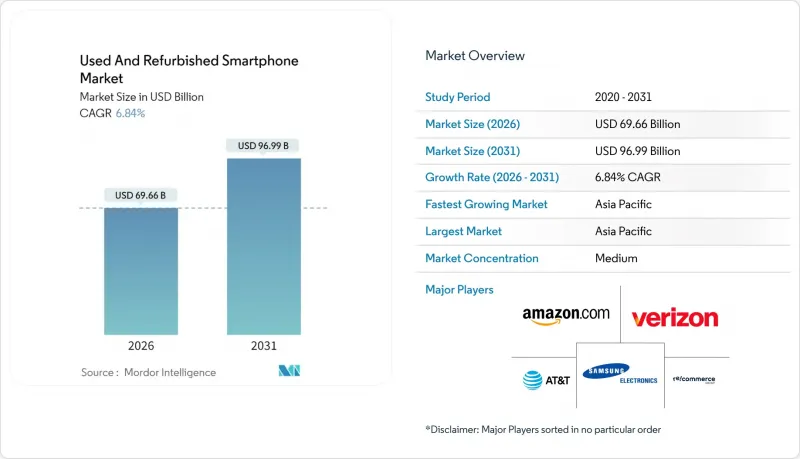
중고 및 리퍼비쉬 스마트폰 시장 규모는 2025년 652억 달러에서 2026년에는 696억 6,000만 달러에 이르고, 2026-2031년 CAGR 6.84%로 성장을 지속하여 2031년까지 969억 9,000만 달러에 달할 것으로 예측됩니다.

출하량 측면에서 시장 규모는 2025년 3억 1,500만 대에서 2030년까지 4억 3,000만 대까지 확대될 것이며, 예측 기간(2025-2030년) 동안 6.42%의 연평균 복합 성장률(CAGR)을 보일 것으로 예측됩니다. 아시아태평양은 고가의 신규 단말기, 확대되는 OEM 보상판매 프로그램, 전자폐기물 억제에 대한 규제 압력에 힘입어 성장세를 보이고 있습니다. 1,300달러가 넘는 플래그십 단말기는 가격에 민감한 구매자를 인증된 중고품으로 유도하고, 5G로의 업그레이드 주기는 거의 신품에 준하는 단말기를 2차 유통 시장에 안정적으로 공급하고 있습니다. 온라인 마켓플레이스는 등급, 보증, 반품 프로세스를 효율화하여 성장을 저해하는 신뢰성의 격차를 줄였습니다. 기업들도 배출량 감축 목표 달성 및 하드웨어 예산 절감을 위해 소비자와 마찬가지로 디바이스 재사용에 뛰어들고 있습니다. 이러한 요인들이 결합되어 중고 및 리퍼비쉬 스마트폰 시장은 견고하고 광범위하게 확대될 것으로 예측됩니다.
세계 중고 및 리퍼비쉬 스마트폰 시장 동향 및 인사이트 제공
스마트폰 가격 상승으로 구매 가능 가격대가 좁아집니다.
iPhone 16 Pro Max와 같은 플래그십 단말기는 1,399.99달러에 판매되고 있으며, 많은 구매자들에게 프리미엄 하드웨어는 손이 닿지 않는 가격입니다. 해당 모델의 인증 중고품은 30-40% 저렴하게 판매되며, 중고 및 리퍼비쉬 스마트폰 시장을 활성화하는 가치 격차를 확대하고 있습니다. 신흥국에서는 재생품 수입이 5G 연결을 실현할 수 있는 유일한 경제적으로 실현 가능한 수단인 경우가 많으며, 가격 상승이 구조적 성장의 촉매제로 전환되고 있습니다.
OEM 인증 프로그램, 품질 기준을 재정의합니다.
애플과 삼성을 비롯한 OEM 업체들은 새 배터리, 외관 수리, 1년 보증을 보장함으로써 소비자의 신뢰를 높이고 기기 등급을 표준화하고 있습니다. 유럽투자은행의 2024년 스와피에 대한 1,700만 유로의 대출은 대규모 재생 모델에 대한 투자자들의 신뢰를 뒷받침합니다.
신뢰성에 대한 소비자의 우려는 여전히 남아 있습니다.
OEM 보증이 있더라도 구매 고려자의 65%가 배터리 성능 저하와 방수 성능 상실을 가장 큰 우려로 꼽아 리퍼비쉬 시장의 신규 진입을 억제하고 있습니다. 인지 리스크를 줄이기 위해서는 인식 개선 캠페인과 연장 보증 제공이 여전히 필수적입니다.
부문 분석
인증 중고 단말기는 CAGR 7.28%로 성장을 가속화하고 있지만, 표준 중고 단말기가 60.85%의 점유율로 여전히 주류를 이루고 있습니다. 인증된 중고 및 리퍼비쉬 스마트폰 시장 규모는 Phonecheck와 같은 자동 진단 솔루션(2분 만에 검사 완료)을 통해 확대되고 있습니다. 구매자들은 OEM 인증을 받은 제품을 새 제품과 동등한 품질로 인식하는 경향이 강해져 프리미엄 가격 책정이 가능해졌습니다.
저가형 단말기는 여전히 개인 간 거래가 주류를 이루고 있지만, 엄격한 수입 규제와 EU의 수리권 의무화로 인해 전문 리퍼비셔를 통한 거래가 늘어날 것으로 예측됩니다. 이러한 구조적 변화로 인해 품질 격차가 줄어들고, 브랜드 제품 및 보증 재고의 가치가 높아지고 있습니다.
온라인 포털은 2025년 매출의 38.22%를 차지할 것으로 예상되며, 클릭부터 배송까지 편리하고 투명한 반품 정책을 선호하는 소비자의 추세를 반영합니다. 통신사 보상판매 창구는 재고 공급원이 되어 AT&T에서만 2024년 1,250만 대의 단말기를 회수했습니다. OEM 직영점은 규모는 작지만 8.88%의 연평균 복합 성장률(CAGR)로 가장 빠르게 성장하는 채널입니다. 브랜드가 사용자 경험을 보호하면서 2차 수요를 직접적으로 수익화하고 있기 때문입니다.
실물 매장은 특히 디지털 결제의 보급이 더딘 신흥 시장에서 실물을 직접 만져보고 확인하는 것을 중요시하는 쇼핑객들에게 여전히 중요한 존재다. 키오스크 단말기를 통한 즉시 결제 옵션을 포함한 온라인과 오프라인을 융합한 전략이 원활한 전환을 위해 주목받고 있습니다.
중고 및 리퍼비쉬 스마트폰 시장 보고서는 기기 상태(중고, 리퍼/인증 중고), 판매 채널(온라인 마켓플레이스, 오프라인 소매점 등), 가격대(100달러 미만, 100-199달러, 200-399달러, 200달러 이상), 최종소비자(소비자, 정부, 기업, 정부기관), 지역별로 분석합니다. 최종 사용자(소비자/개인, 기업/법인, 정부/기관), 지역별로 분석했습니다. 시장 예측은 금액(USD)과 수량(출하량)으로 제공됩니다.
지역별 분석
아시아태평양은 2025년 41.05%로 가장 큰 점유율을 차지할 것으로 예상되며, 이는 높은 모바일 보급률과 5G의 급속한 보급을 반영합니다. 일본은 2024년도에 315만대의 중고차 판매를 기록해 전년 대비 15.5% 증가했습니다. 이는 소매 유통망 확대와 인증 중고품의 적극적인 마케팅이 기여한 것으로 분석됩니다. 중국 대형 전자상거래 업체들은 중고품 전용 섹션을 추가하며 주류화에 박차를 가하고 있습니다.
인도에서는 공급 부족으로 인해 수요가 충족되지 않아 2025년 판매량이 5-7% 감소할 것으로 예측됩니다. Cashify가 955 루피(1억 1,800만 달러)의 매출을 기록했음에도 불구하고, 회수 네트워크의 중요성이 부각되고 있습니다. 동남아시아의 연간 20%에 달하는 스마트폰 성장률과 젊은 층의 인구 및 데이터 소비 증가로 인해 중고 및 리퍼비시 스마트폰 시장에서 동남아시아 시장 점유율이 크게 확대될 수 있는 기반이 마련되었습니다.
북미에서는 통신사의 성숙한 프로그램을 활용하고 있지만, 소유자의 70%가 여전히 중고 단말기를 보유하고 있어 잠재적인 공급원이 될 수 있습니다. 기업의 회수 제도와 수리권 관련 법률이 추가적인 유통을 촉진할 수 있습니다. 유럽에서는 2025년 6월 시행되는 에코 디자인 지침의 혜택을 받아 7년간의 부품 공급 의무로 인해 재생 비용이 낮아지고, 단말기 수명이 연장됩니다.
기타 특전:
- 엑셀 형식 시장 예측(ME) 시트
- 애널리스트의 3개월간 지원
자주 묻는 질문
목차
제1장 서론
제2장 조사 방법
제3장 주요 요약
제4장 시장 구도
제5장 시장 규모와 성장 예측
제6장 경쟁 구도
제7장 시장 기회와 향후 전망
LSH 26.03.10The Used And Refurbished Smartphone market is expected to grow from USD 65.20 billion in 2025 to USD 69.66 billion in 2026 and is forecast to reach USD 96.99 billion by 2031 at 6.84% CAGR over 2026-2031.
In terms of shipment volume, the market is expected to grow from 315 million units in 2025 to 430 million units by 2030, at a CAGR of 6.42% during the forecast period (2025-2030). Asia-Pacific region buoyed by high new-device prices, growing OEM trade-in programs, and regulatory pressure to curb e-waste. Flagship devices priced above USD 1,300 push price-sensitive buyers toward certified alternatives, while 5G upgrade cycles recycle a steady flow of near-new handsets into the secondary channel. Online marketplaces have streamlined grading, warranty, and returns, shrinking the trust gap that once limited growth. Enterprises are joining consumers in device reuse to hit emissions goals and trim hardware budgets. Collectively, these forces position the used and refurbished smartphones market for resilient, broad-based expansion.
Global Used And Refurbished Smartphone Market Trends and Insights
Rising Smartphone Prices Narrow the Affordability Window
Flagship devices such as the iPhone 16 Pro Max list at USD 1,399.99, placing premium hardware beyond reach for many buyers . Certified units of the same model sell 30-40% lower, widening the value gap that fuels the used and refurbished smartphones market. In emerging economies, refurbished imports often represent the only financially viable path to 5G connectivity, turning price inflation into a structural growth catalyst.
OEM Certification Programs Reset Quality Expectations
Apple, Samsung, and other OEMs guarantee new batteries, cosmetic refurbishing, and full-year warranties, lifting consumer confidence and standardizing device grades. Financing from the European Investment Bank, EUR 17 million to Swappie in 2024, underscores investor belief in scale refurbishment models .
Consumer Concerns About Reliability Persist
Even with OEM guarantees, 65% of prospective buyers cite battery degradation and waterproofing loss as top worries, dampening adoption in first-time refurb markets . Educational campaigns and extended warranties remain essential to lower perceived risk.
Other drivers and restraints analyzed in the detailed report include:
- 5G Upgrade Waves Boost Supply Quality
- Online Marketplaces Remove Transaction Friction
- Counterfeit Components Undercut Trust
For complete list of drivers and restraints, kindly check the Table Of Contents.
Segment Analysis
Certified pre-owned units are accelerating at a 7.28% CAGR, while standard used phones still dominate volume at 60.85%. The used and refurbished smartphones market size for certified devices is lifted by automated testing solutions such as Phonecheck that complete diagnostics in two minutes. Increasingly, buyers equate OEM certification with near-new quality, enabling premium pricing.
Peer-to-peer resales remain popular for low-value handsets, yet stringent import laws and upcoming EU right-to-repair mandates are expected to push more trade through professional refurbishers. This structural shift narrows the quality gap and pushes value toward branded, warrantied inventory.
Online portals accounted for 38.22% of 2025 turnover, reflecting consumer preference for click-to-door convenience and transparent return policies. Carrier trade-in desks feed inventory pipelines; AT&T alone collected 12.5 million devices in 2024. OEM storefronts, though smaller, are the fastest-growing channel at 8.88% CAGR as brands monetize secondary demand directly while safeguarding user experience.
Physical retailers retain relevance for shoppers who value in-hand inspection, especially in emerging markets where digital payment penetration lags. Blended online-offline strategies, including kiosk-based instant payment options, are gaining traction to ease the transition.
The Used and Refurbished Smartphone Market Report is Segmented by Device Condition (Used, Refurbished/Certified Pre-Owned), Sales Channel (Online Marketplaces, Offline Retailers, and More), Price Band (< USD 100, USD 100-199, USD 200-399, and More), End User (Consumer/Individual, Business/Enterprise, Government/Institutional), and Geography. The Market Forecasts are Provided in Terms of Value (USD) and Volume (Shipments).
Geography Analysis
Asia-Pacific generated the largest share at 41.05% in 2025, reflecting deep mobile penetration and rapid 5G rollouts. Japan logged 3.15 million secondary sales in fiscal year 2024, up 15.5% year on year, aided by wide retail distribution and aggressive marketing of certified stock. China's e-commerce giants have added dedicated refurbished sections, accelerating mainstream acceptance.
India shows unmet demand constrained by supply gaps; unit volumes dipped 5-7% in 2025 despite Cashify posting INR 955 crore (USD 118 million) revenue, underscoring the importance of collection networks. Southeast Asia, with 20% annual smartphone growth, combines young demographics with rising data consumption, positioning the region for outsized share gains within the used and refurbished smartphones market.
North America leverages mature carrier programs, yet 70% of owners still retain retired devices, signaling latent supply. Corporate take-back schemes and right-to-repair laws could unlock additional flow. Europe benefits from the Ecodesign Directive, effective June 2025, which requires spare-parts availability for seven years, lowering refurbishment costs and enhancing device lifetimes.
- Apple Inc.
- Samsung Electronics Co., Ltd.
- Back Market, Inc.
- Amazon.com, Inc.
- Recommerce Group
- Verizon Communications Inc.
- AT&T Inc.
- Best Buy Co., Inc.
- Alibaba Group Holding Ltd.
- Swappie Oy
- Cashify (Manak Waste Management Private Limited)
- Gazelle (ecoATM, LLC)
- Likewize Corp. (Brightstar Corp.)
- Trocafone, Inc.
- musicMagpie plc (Decluttr)
- FoneGiant Limited
- Reboxed Ltd.
Additional Benefits:
- The market estimate (ME) sheet in Excel format
- 3 months of analyst support
TABLE OF CONTENTS
1 INTRODUCTION
- 1.1 Study Assumptions and Market Definition
- 1.2 Scope of the Study
2 RESEARCH METHODOLOGY
3 EXECUTIVE SUMMARY
4 MARKET LANDSCAPE
- 4.1 Market Overview
- 4.2 Market Drivers
- 4.2.1 Rising smartphone retail prices driving secondary-market demand
- 4.2.2 Expansion of online marketplaces enabling convenient transactions
- 4.2.3 OEM-led trade-in and certified refurbishment programs
- 4.2.4 Sustainability regulations and consumer eco-consciousness
- 4.2.5 5G-driven device replacement cycles increasing used-phone supply
- 4.2.6 Enterprise device-leasing models feeding high-grade inventory
- 4.3 Market Restraints
- 4.3.1 Consumer concerns around quality and warranties
- 4.3.2 Proliferation of counterfeit parts and grey-market sellers
- 4.3.3 Software security locks limiting refurb viability
- 4.3.4 Tightening e-waste import/export regulations
- 4.4 Value Chain Analysis
- 4.5 Regulatory Landscape
- 4.6 Technological Outlook
- 4.7 Distribution Channel Landscape (OEMs vs Third-Party Platforms)
- 4.8 Impact of 5G on Used and Refurbished Smartphones
- 4.9 Porter's Five Forces Analysis
- 4.9.1 Bargaining Power of Suppliers
- 4.9.2 Bargaining Power of Consumers
- 4.9.3 Threat of New Entrants
- 4.9.4 Intensity of Competitive Rivalry
- 4.9.5 Threat of Substitutes
- 4.10 Impact of Macroeconomic Factors on the Market
5 MARKET SIZE AND GROWTH FORECASTS (VALUE)
- 5.1 By Device Condition
- 5.1.1 Used
- 5.1.2 Refurbished/Certified Pre-Owned
- 5.2 By Sales Channel
- 5.2.1 Online Marketplaces
- 5.2.2 Offline Retailers
- 5.2.3 Carrier/Operator Trade-In Programs
- 5.2.4 OEM Certified Refurbished Stores
- 5.2.5 Wholesale/B2B
- 5.3 By Price Band
- 5.3.1 < USD 100
- 5.3.2 USD 100-199
- 5.3.3 USD 200-399
- 5.3.4 USD 400-599
- 5.3.5 >= USD 600
- 5.4 By End User
- 5.4.1 Consumer/Individual
- 5.4.2 Business/Enterprise
- 5.4.3 Government/Institutional
- 5.5 By Geography
- 5.5.1 North America
- 5.5.1.1 United States
- 5.5.1.2 Canada
- 5.5.1.3 Mexico
- 5.5.2 South America
- 5.5.2.1 Brazil
- 5.5.2.2 Argentina
- 5.5.2.3 Rest of South America
- 5.5.3 Europe
- 5.5.3.1 Germany
- 5.5.3.2 United Kingdom
- 5.5.3.3 France
- 5.5.3.4 Italy
- 5.5.3.5 Spain
- 5.5.3.6 Russia
- 5.5.3.7 Rest of Europe
- 5.5.4 Asia Pacific
- 5.5.4.1 China
- 5.5.4.2 India
- 5.5.4.3 Japan
- 5.5.4.4 South Korea
- 5.5.4.5 Southeast Asia
- 5.5.4.6 Rest of Asia Pacific
- 5.5.5 Middle East
- 5.5.5.1 Saudi Arabia
- 5.5.5.2 United Arab Emirates
- 5.5.5.3 Turkey
- 5.5.5.4 Rest of Middle East
- 5.5.6 Africa
- 5.5.6.1 South Africa
- 5.5.6.2 Nigeria
- 5.5.6.3 Egypt
- 5.5.6.4 Rest of Africa
- 5.5.1 North America
6 COMPETITIVE LANDSCAPE
- 6.1 Market Concentration
- 6.2 Strategic Moves
- 6.3 Market Share Analysis
- 6.4 Company Profiles (includes Global level Overview, Market level overview, Core Segments, Financials as available, Strategic Information, Market Rank/Share for key companies, Products and Services, and Recent Developments)
- 6.4.1 Apple Inc.
- 6.4.2 Samsung Electronics Co., Ltd.
- 6.4.3 Back Market, Inc.
- 6.4.4 Amazon.com, Inc.
- 6.4.5 Recommerce Group
- 6.4.6 Verizon Communications Inc.
- 6.4.7 AT&T Inc.
- 6.4.8 Best Buy Co., Inc.
- 6.4.9 Alibaba Group Holding Ltd.
- 6.4.10 Swappie Oy
- 6.4.11 Cashify (Manak Waste Management Private Limited)
- 6.4.12 Gazelle (ecoATM, LLC)
- 6.4.13 Likewize Corp. (Brightstar Corp.)
- 6.4.14 Trocafone, Inc.
- 6.4.15 musicMagpie plc (Decluttr)
- 6.4.16 FoneGiant Limited
- 6.4.17 Reboxed Ltd.
7 MARKET OPPORTUNITIES AND FUTURE OUTLOOK
- 7.1 White-Space and Unmet-Need Assessment


