|
시장보고서
상품코드
2043861
영국의 핫멜트 접착제 : 시장 점유율 분석, 업계 동향 및 통계, 성장 예측(2026-2031년)United Kingdom Hot-Melt Adhesives - Market Share Analysis, Industry Trends & Statistics, Growth Forecasts (2026 - 2031) |
||||||
 Mordor Intelligence
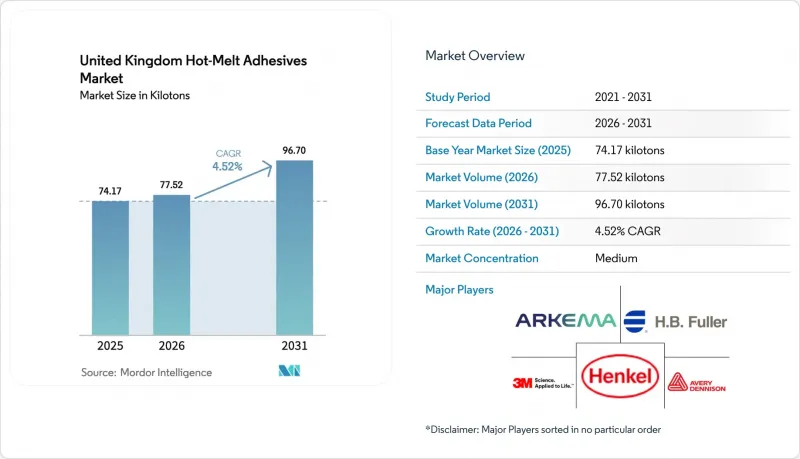
영국의 핫멜트 접착제 시장 규모는 2025년 74.17킬로톤으로 평가되었습니다. 2026년에는 77.52킬로톤으로 확대되어 2031년까지 96.70 킬로톤에 이를 것으로 예상되며 2026년부터 2031년에 걸쳐 CAGR 4.52%를 나타낼 전망입니다.
전자상거래로 인한 소포 운송량이 급증하고 플라스틱 포장세가 시행됨에 따라 컨버터 업체들은 바이오 유래 및 수용성 화학물질로 전환을 추진하고 있습니다. 이러한 선택은 재생 소재를 포함한 기판에 대응할 수 있을 뿐만 아니라 생산 라인의 속도를 유지할 수 있습니다. 이러한 변화는 특히 골판지 및 플렉서블 필름 생산 라인에서 병목현상을 피하기 위해 저온에서 빠르게 경화되는 수지를 사용하게 된 골판지 및 플렉서블 필름 생산 라인에서 두드러지게 나타나고 있습니다. 이러한 전환은 메탈로센 폴리올레핀 기술의 발전으로 가능해졌습니다. 한편, 자동차 생산 감소와 디이소시아네이트 노출 규제 강화로 인해 기존 폴리우레탄 수요는 압박을 받고 있습니다. 그러나 모듈 건축, 의료기기 등의 분야가 수요를 안정화시킬 수 있는 새로운 성장 분야로 떠오르고 있습니다. 현재 공급업체는 접착제 판매뿐만 아니라 배합 기술, 도포 장비, 규제에 대한 지식을 함께 제공함으로써 경쟁 우위를 확보하고 있습니다.
영국의 핫멜트 접착제 시장 동향과 인사이트
영국의 플라스틱 포장 세금은 재활용 가능한 접착제를 촉진합니다.
2024년, 등록된 총량의 상당 부분이 재활용 재료 함유량이 30% 미만인 포장에 대한 과세 면제를 신청했습니다. 그러나 2027년 4월에 설정된 인증 의무로 인해 컴플라이언스 요구사항은 더욱 엄격해지고 있습니다. 현재 배합 제조업체는 60 ℃ 이하의 온도에서 부침조에서 접착제 잔류 물이 분리되도록 보장하고 있으며, 이 요구 사항으로 인해 많은 고가교 EVA 등급이 제거되었습니다. 헨켈은 기존 생산 라인과의 호환성을 유지하면서 재활용성을 유지하는 솔루션으로의 전환을 강조하며, ISCC PLUS 인증을 획득한 바이오 유래 드롭인 대체품을 출시했습니다. 과세 금액이 인플레이션에 따라 조정됨에 따라 버진 소재와 재생 소재의 비용 격차가 확대될 것으로 예상되며, 영국의 핫멜트 접착제 시장에서 재활용성은 접착제 선택의 중요한 기준으로 확고히 자리 잡을 것으로 보입니다.
저온 메탈로센계 핫멜트 접착제 채택
메탈로센 촉매를 이용한 폴리올레핀계 핫멜트는 기존 EVA보다 낮은 온도에서 접착하기 때문에 에너지를 절약할 수 있고, 열에 약한 라벨도 변형 없이 사용할 수 있습니다. 또한, 접착 온도가 낮기 때문에 냉각 대기 시간이 단축되어 추가 도포 장치 없이도 라인 속도를 높일 수 있습니다. 이는 지속가능성을 추구하는 음료 공장에 특히 유용합니다. 또한, 비극성 필름에 대한 강력한 박리 접착력으로 컨버터는 도포량을 줄일 수 있어 배출가스 및 재료 비용을 절감할 수 있습니다. 전기 요금의 급등과 함께 이러한 노력의 채택이 증가하고 있으며, 이는 구체적인 투자 회수로 이어져 영국의 핫멜트 접착제 시장에서 이 기술의 매력을 높이고 있습니다.
자동화에 따른 숙련된 도포 작업자 부족
영국에서는 견습제도가 불충분하여 핫멜트 접착제 산업 수요에 걸맞는 공인 기술자를 충분히 배출하지 못하고 있습니다. 그 결과, 컨버터는 수동식 건에 의존하게 되었고, 이는 접착제의 낭비와 불량률 증가로 이어졌습니다. 예지보전 기능을 갖춘 IoT 지원 용융 장비는 어느 정도의 지원을 제공하지만, 현장에서의 실질적인 문제 해결의 필요성을 대체할 수는 없습니다. 전문학교의 커리큘럼이 개선되지 않는 한, 이러한 인력 부족은 영국의 핫멜트 접착제 시장의 생산성을 계속 저해할 것입니다.
부문 분석
2025년 열가소성 폴리우레탄은 유연성, 내마모성, 접착 강도의 독특한 조합으로 영국의 핫멜트 접착제 시장의 61.69%를 차지했습니다. 이러한 특성으로 인해 자동차 내장재, 신발, 고차단성 필름 라미네이트 등 다양한 분야에서 선호되고 있습니다. Huntsman의 IROGRAN 등급은 라미네이팅 공정의 광범위한 스프레이 응용 분야를 위해 설계되었으며, 180°C에서 용융 점도가 10,000cP 이하로 낮게 유지되는 특성을 가지고 있습니다. 비용 효율성이 높아 골판지 밀봉에 선호되던 에틸렌-비닐 아세테이트 공중합체(EVA)는 가공업체들이 더 빠른 경화 속도와 낮은 온도에 대응할 수 있는 옵션으로 전환함에 따라 점유율이 줄어들고 있습니다. 스티렌-부타디엔 공중합체는 2026년부터 2031년까지 연평균 5.78% 성장할 것으로 예상되며, 특히 박리 강도와 재활용성을 중시하는 응용 분야에서 폴리프로필렌 라벨을 추월하고 있습니다. 브랜드 소유자가 단일 소재의 유연한 패키지로 전환함에 따라 영국의 핫멜트 접착제 시장에서 스티렌-부타디엔 공중합체에 대한 수요가 증가하고 있으며, 특히 폴리에틸렌 스트림의 무결성을 유지하는 접착제에 대한 수요가 증가하고 있습니다.
수익률 압박에 직면한 컨버터 업체들은 비용과 성능의 균형을 맞추기 위해 열가소성 폴리우레탄과 폴리올레핀 엘라스토머를 융합한 하이브리드 블렌드를 점점 더 많이 채택하고 있습니다. 코베스트로의 바이오 유래 성분을 함유한 'Desmomelt' 시리즈는 지속가능성 목표에 부합하는 제품이며, 열 안정성을 갖추고 있지만, 프리미엄 가격을 지불할 의향이 있는 OEM(주문자 상표 부착 생산업체)에 한해 채택되고 있습니다. 고온용 섬유 분야에서는 여전히 폴리아미드 계열이 주류를 이루고 있지만, 메탈로센계 폴리올레핀도 성장세를 보이고 있습니다. 특히, 기존의 120°C라는 사용 온도보다 생산 라인의 에너지 효율이 우선시되는 상황에서 이러한 경향이 두드러집니다. 현재 수지 선택에는 과세 및 재활용성 요인이 영향을 미치고 있으며, 영국의 핫멜트 접착제 시장 전망은 가격보다 배합 기술에 의해 크게 좌우될 것이라는 점이 부각되고 있습니다.
"영국의 핫멜트 접착제 시장 보고서는 수지 유형(열가소성 폴리우레탄, 비닐 에틸렌 아세테이트, 스티렌-부타디엔 공중합체, 기타 수지 유형) 및 최종 사용자 산업(건축 및 건설, 판지 및 포장, 목공 및 가구, 운송, 신발 및 가죽, 헬스케어 등)별로 분류되어 있습니다. 분류되어 있습니다. 시장 예측은 수량(톤) 기준으로 제공됩니다.
기타 혜택 :
- 엑셀 형식 시장 예측(ME) 시트
- 3개월간 애널리스트 지원
자주 묻는 질문
목차
제1장 서론
제2장 조사 방법
제3장 주요 요약
제4장 시장 구도
제5장 시장 규모와 성장 예측
제6장 경쟁 구도
제7장 시장 기회와 향후 전망
KTH 26.05.29The United Kingdom Hot-Melt Adhesives Market size is expected to increase from 74.17 kilotons in 2025 to 77.52 kilotons in 2026 and reach 96.70 kilotons by 2031, growing at a CAGR of 4.52% over 2026-2031.
As e-commerce parcel traffic surges and the Plastic Packaging Tax takes effect, converters are pivoting towards bio-derived and water-compatible chemistries. These choices not only support substrates with recycled content but also maintain production line speeds. This shift is particularly evident in corrugated and flexible-film lines, which are now opting for lower-temperature, faster-curing resins to avoid bottlenecks. This transition has been made possible by advancements in metallocene polyolefin technology. At the same time, a decline in automotive output and tightening limits on diisocyanate exposure are pressuring legacy polyurethane demand. However, sectors such as modular construction and medical devices are emerging as stabilizing volume pockets. Currently, suppliers find a competitive edge not only in selling adhesives but also in bundling formulation expertise, dispensing equipment, and regulatory insights.
United Kingdom Hot-Melt Adhesives Market Trends and Insights
UK Plastic Packaging Tax Pushes Recyclable Adhesives
In 2024, a significant portion of the registered tonnage claimed an exemption from the levy on packaging with less than 30% recycled content. However, compliance is tightening with the certification mandate set for April 2027. Formulators are now ensuring that adhesive residues separate in float-sink tanks at temperatures below 60 degrees Celsius, a requirement that eliminates many high-crosslink EVA grades. Henkel, highlighting a shift toward solutions compatible with existing lines and maintaining recyclability, has introduced bio-attributed drop-in alternatives certified under ISCC PLUS. As the levy adjusts with inflation, the cost disparity between virgin and recycled substrates is expected to grow, solidifying recyclability as a key criterion in adhesive selection within the United Kingdom hot-melt adhesives market.
Low-Temperature Metallocene HMA Adoption
Metallocene-catalyzed polyolefin hot melts bond at lower temperatures than conventional EVA, saving energy and allowing the use of heat-sensitive labels without distortion. These lower bonding temperatures also reduce cool-down dwell time, enabling increased line speed without extra applicators. This is particularly beneficial for beverage plants aiming for sustainability. Additionally, strong peel adhesion on non-polar films allows converters to reduce coat weight, cutting emissions and material costs. With rising electricity tariffs, these practices have seen increased adoption, leading to tangible paybacks and enhancing the technology's appeal in the United Kingdom hot-melt adhesives market
Skilled Applicator Shortage for Automation
In the United Kingdom, apprenticeships are falling short, producing fewer certified technicians than the hot-melt adhesive sector demands. As a result, converters are turning to manual guns, which leads to increased adhesive waste and a rise in defect rates. Although the IoT-enabled melters with predictive maintenance provide some assistance, they cannot replace the need for hands-on problem-solving on the shop floor. Without an enhancement in technical college curricula, this talent gap continues to hinder productivity in the United Kingdom's hot-melt adhesives market.
Other drivers and restraints analyzed in the detailed report include:
- Surge in Off-Site Modular Construction
- NHS Shift to Solvent-Free Medical Devices
- UK REACH-Style Limits on Isocyanates
For complete list of drivers and restraints, kindly check the Table Of Contents.
Segment Analysis
In 2025, thermoplastic polyurethane captured 61.69% of the United Kingdom hot-melt adhesives market, due to its unique combination of flexibility, abrasion resistance, and bond strength. These qualities make it a preferred choice for diverse applications, including automotive interiors, footwear, and high-barrier film lamination. Huntsman's IROGRAN grades, designed for broad spray applications in laminations, feature melt viscosities dropping below 10,000 cP at 180°C. Ethylene-vinyl acetate, traditionally favored for carton sealing due to its cost-effectiveness, is losing ground as converters turn to faster-curing and lower-temperature options. Styrenic-butadiene copolymers, set to grow at a 5.78% CAGR through the forecast period of 2026-2031, are closing in on polypropylene labels, especially in applications prioritizing peel strength and recyclability. With brand owners shifting towards mono-material flexible packs, the demand for styrenic-butadiene copolymers in the United Kingdom hot-melt adhesives market is increasing, particularly for adhesives that preserve the integrity of polyethylene streams.
Converters, facing margin pressures, are increasingly exploring hybrid blends that merge thermoplastic polyurethane with polyolefin elastomers, achieving a balance between cost and performance. Covestro's bio-attributed Desmomelt line aligns with sustainability objectives and offers thermal stability, but its uptake is limited to original equipment manufacturers (OEMs) ready to pay a premium. While polyamide grades still lead in high-temperature textiles, metallocene polyolefins are gaining traction, especially where energy efficiency on the production line is prioritized over the conventional 120°C service temperature. Today's resin choices are influenced by taxation and recyclability factors, highlighting that the future of the United Kingdom hot-melt adhesives market will hinge more on formulation science than on pricing alone.
The United Kingdom Hot-Melt Adhesives Market Report is Segmented by Resin Type (Thermoplastic Polyurethane, Ethylene Vinyl Acetate, Styrene-Butadiene Copolymers, and Other Resin Types) and End-User Industry (Building and Construction, Paper Board and Packaging, Woodworking and Joinery, Transportation, Footwear and Leather, Healthcare, and More). The Market Forecasts are Provided in Terms of Volume (Tons).
List of Companies Covered in this Report:
- 3M
- Adco (UK) Ltd
- Alphabond Adhesives
- Arkema
- Avery Dennison Corporation
- Delo Industrial Adhesives
- Dow Chemical Company
- Drytac Corporation
- EOC Group
- HB Fuller Company
- Henkel AG & Company KGaA
- Hexcel Corporation
- Huntsman Corporation
- Jowat UK Limited
- KLEBCHEMIE M. G. Becker GmbH & Co. KG
- Sika AG
Additional Benefits:
- The market estimate (ME) sheet in Excel format
- 3 months of analyst support
TABLE OF CONTENTS
1 Introduction
- 1.1 Study Assumptions and Market Definition
- 1.2 Scope of the Study
2 Research Methodology
3 Executive Summary
4 Market Landscape
- 4.1 Market Drivers
- 4.1.1 E-commerce packaging boom post-Brexit
- 4.1.2 UK Plastic Packaging Tax pushes recyclable adhesives
- 4.1.3 Low-temperature metallocene HMA adoption
- 4.1.4 Surge in off-site modular construction
- 4.1.5 NHS shift to solvent-free medical devices
- 4.2 Market Restraints
- 4.2.1 Skilled applicator shortage for automation
- 4.2.2 UK REACH-style limits on isocyanates
- 4.2.3 Sluggish domestic auto production
- 4.3 Value Chain Analysis
- 4.4 Porter's Five Forces
- 4.4.1 Bargaining Power of Suppliers
- 4.4.2 Bargaining Power of Buyers
- 4.4.3 Threat of New Entrants
- 4.4.4 Threat of Substitutes
- 4.4.5 Degree of Competition
5 Market Size and Growth Forecasts (Volume)
- 5.1 By Resin Type
- 5.1.1 Thermoplastic Polyurethane
- 5.1.2 Ethylene Vinyl Acetate
- 5.1.3 Styrene-butadiene Copolymers
- 5.1.4 Other Resin Types
- 5.2 By End-user Industry
- 5.2.1 Building and Construction
- 5.2.2 Paper Board and Packaging
- 5.2.3 Woodworking and Joinery
- 5.2.4 Transportation
- 5.2.5 Footwear and Leather
- 5.2.6 Healthcare
- 5.2.7 Electrical and Electronic Appliances
- 5.2.8 Other End-user Industries
6 Competitive Landscape
- 6.1 Market Concentration
- 6.2 Strategic Moves
- 6.3 Market Share(%)/Ranking Analysis
- 6.4 Company Profiles (includes Global Overview, Market Overview, Core Segments, Financials, Strategic Information, Products and Services, Recent Developments)
- 6.4.1 3M
- 6.4.2 Adco (UK) Ltd
- 6.4.3 Alphabond Adhesives
- 6.4.4 Arkema
- 6.4.5 Avery Dennison Corporation
- 6.4.6 Delo Industrial Adhesives
- 6.4.7 Dow Chemical Company
- 6.4.8 Drytac Corporation
- 6.4.9 EOC Group
- 6.4.10 HB Fuller Company
- 6.4.11 Henkel AG & Company KGaA
- 6.4.12 Hexcel Corporation
- 6.4.13 Huntsman Corporation
- 6.4.14 Jowat UK Limited
- 6.4.15 KLEBCHEMIE M. G. Becker GmbH & Co. KG
- 6.4.16 Sika AG
7 Market Opportunities and Future Outlook
- 7.1 White-space and Unmet-need Assessment