|
시장보고서
상품코드
2061622
경량 스포츠 항공기(LSA) 시장 : 시장 점유율 분석, 업계 동향 및 통계, 성장 예측(2026-2031년)Light-Sport Aircraft - Market Share Analysis, Industry Trends & Statistics, Growth Forecasts (2026 - 2031) |
||||||
 Mordor Intelligence
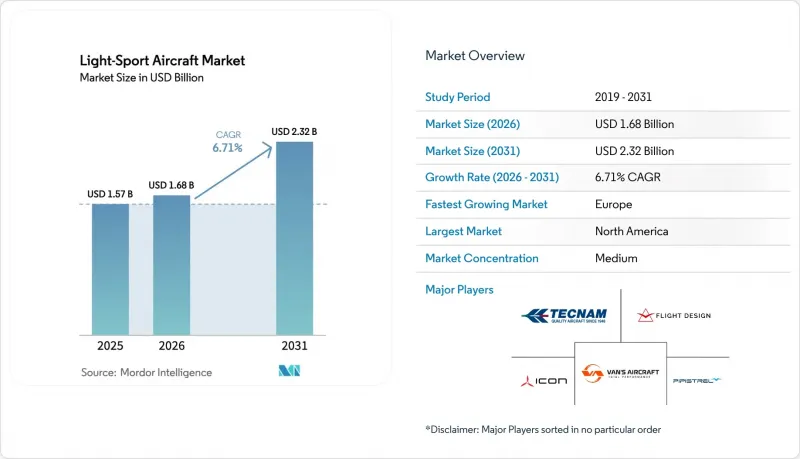
Mordor Intelligence에 의하면, 경량 스포츠 항공기 시장 규모는 2025년 15억 7,000만 달러로 평가되었고, 2026년에는 16억 8,000만 달러로 추정되고, 2026-2031년 CAGR 6.71%로 성장을 지속할 전망이며, 2031년까지 23억 2,000만 달러에 이를 것으로 예측됩니다.
본 보고서는 유형별(비행기 및 수상비행기), 추진 방식별(기존 내연기관, 하이브리드 전기, 전기), 용도별(비행 훈련 및 조종사 학교, 개인 및 레크리에이션용 소유, 항공 작업 및 유틸리티 운용, 대여 및 플라잉 클럽), 그리고 지역별(북미, 유럽, 아시아태평양, 남미 등)로 분류되어 있습니다. 시장 전망은 금액(달러) 기준으로 제시되어 있습니다.
세계의 경량 스포츠 항공기 시장 동향 및 인사이트
MOSAIC 최종 규정에 따라 LSA의 성능과 스포츠 조종사의 특권이 확대됨
FAA의 2025년 7월 MOSAIC 최종 규정은 규정된 중량 제한을 스포츠 조종사를 위한 59노트(보정 대류 속도 VS1) 기준치 및 2026년 7월 이후 인증된 항공기를 위한 61노트(VS0)로 대체함으로써, 더 광범위한 항공기의 자격 요건과 운용의 유연성을 가능하게 합니다. 이 규정은 새로운 체계 하에서 적절한 자격 인증 및 건강 상태를 조건으로 하여 4인승 구성, 수납식 랜딩 기어, 가변 피치 프로펠러 및 야간 운항을 승인하고 있습니다. 이번 변경으로 인해 스포츠 조종사 자격 요건을 충족하는 항공기의 선택 폭이 즉시 넓어졌으며, 업계 단체의 분석에 따르면 기존의 단발 피스톤기 모델 대부분이 기존의 중량 제한이 아닌 성능 기준에 따라 스포츠 조종사의 특권 대상이 되었습니다. 제조업체의 성명이나 제품 업데이트 현황을 살펴보면, 성능 중심의 접근 방식의 혜택을 받는 수륙양용기나 첨단 항공전자장비를 탑재한 기종을 포함해 신속한 대응이 진행되고 있습니다. 2025년 하반기의 조종사 훈련 및 정비사 대상 갱신, 2026년의 감항성 인증 변경이라는 단계적인 시행 일정에 따라, 비행 학교와 OEM(원천 장비 제조업체)이 기체군 및 생산 일정을 조정할 수 있도록 관리하기 쉬운 이행 기간이 마련되어 있습니다.
비행 훈련 수요와 기체 교체 수요가 비용 효율이 높은 LSA 훈련기를 뒷받침하고 있습니다.
가동률이 높은 훈련 학교들은 현대적이고 운영 비용이 낮은 플랫폼을 활용해 기체를 지속적으로 증강하고 있으며, 이는 LSA 대응 OEM 제조업체들에게 단기적인 수주 잔고와 생산 라인의 가동률을 유지해 주고 있습니다. 2025년 및 2026년 초의 항공기 조달에서는 초급 조종사 자격에서 상업 조종사 자격으로의 승급을 지원하기 위해 글래스콕핏이 탑재된 훈련기나 다발기 유형에 중점을 두었으며, 대규모 운항에서 표준화된 항공전자 장비 및 정비의 가치가 입증되었습니다. 각 OEM 업체의 발표에 따르면, 북미 및 유럽의 훈련 기관에서는 훈련 역량 강화가 진행되고 있으며, 확대되는 LSA의 운용 범위에 부합하거나 이에 상응하는 단발 및 쌍발 훈련기가 납품되고 있습니다. MOSAIC의 특권을 야간 운항 인증을 포함한 훈련 프로파일과 연계함으로써, 업무량이 많은 훈련 학교에서 항공기의 활용도와 일정 유연성이 향상됩니다. 전동화된 훈련기는 단시간 비행과 충전 인프라가 교육 과정의 요구 사항에 부합하는 특정 거점에서 지속가능성 목표를 달성하기 위한 보완적인 경로를 제공합니다.
일반 항공(GA) 및 LSA 운항 사업자의 보험 가입 가능성과 보험료 부담
각 항공 보험사는 2026년을 앞두고 보험료가 소폭 상승할 것으로 전망하고 있으며, 무사고 기록을 유지하고 체계적인 정기 훈련을 실시하며 모든 항공기에 대한 안전 대책을 문서화한 운항 사업자에게는 가장 유리한 보험료가 적용됩니다. 보험료의 차등 적용은 특정 의료 인증 절차보다는 조종사의 총 비행 시간, 기종별 비행 시간, 훈련의 최신성 및 항공기 장비 수준을 반영하는 경우가 많으며, 이를 통해 MOSAIC과 BasicMed의 교차 적용을 받는 운항 사업자의 불확실성이 줄어듭니다. 보험료의 편차는 사고 이력이 없는 신규 사업이나 기체 가치가 높은 경우에서 여전히 두드러지며, 사업자가 장기간에 걸쳐 안정적인 안전 실적을 확립할 때까지는 기본 보험료율이 높은 수준을 유지할 가능성이 있습니다. 격납고 내 보관, 명확한 기술 유지 기준, 최신 항공 전자 장비와 같은 문서화된 위험 완화 조치는 대부분의 경우 시장 전반의 압박을 일부 상쇄하는 할인 요인이 됩니다. 경량 스포츠 항공기 시장 전체에 대한 시사점은 전문적으로 관리되는 기체군이라면 보험료 인상을 억제할 수 있다는 것입니다. 반면, 비전문적이거나 새로 설립된 운항 사업자의 경우, 최적의 보험 요율을 확보하기 위한 장벽이 높아지고 있습니다.
부문별 분석
2025년 기준으로 항공기는 시장 점유율의 94.32%를 차지했으며, 경량 스포츠 항공기 시장에서 기종별 점유율 1위를 기록했습니다. 한편, 수상기는 도입 대수가 적은 편이지만, 2031년까지 연평균 성장률(CAGR) 7.78%를 나타낼 것으로 예측됩니다. 이러한 경향은 북미와 유럽의 학교 및 클럽에 구축된 인프라를 배경으로, 육상에서의 광범위한 훈련용 기체 군과 포장 활주로 및 잔디 활주로에서의 높은 운항 신뢰성을 반영하고 있습니다. OEM 출하 데이터에 따르면, 강사 및 정비팀 사이에서 널리 알려져 있어 기존 구성의 모델이 상당한 판매량을 기록하고 있는 것으로 확인되었습니다. 수륙양용기는 수변 지역이나 레크리에이션 구역에서 독자적인 활용 사례를 제공하고 있으며, 기존의 중량 제한이 아닌 실속 속도 매개변수를 중시하여 운항 승인을 내리는 MOSAIC의 성능 기준 체계의 혜택을 받고 있습니다. 주력 모델인 수륙양용 기종은 2024년에 최대 이륙 중량을 늘렸으며, 스핀 저항성을 중시하고 있어, 수상 접근성과 안전 시스템을 중요시하는 운영사들에게 프리미엄급 틈새 시장 선택지로 자리매김하고 있습니다.
수상 비행기의 성장 전망은 연안 지역, 호수 및 습지대, 도서 지역의 노선에서 시장 침투율이 낮은 점을 반영하고 있으며, 이러한 지역에서는 수상 교통 수단이 장거리 육상 구간이나 제한된 지상 인프라를 대체할 수 있습니다. MOSAIC의 성능 기준에 대한 유연성 덕분에, 향후 4인승 구성 및 장비 옵션 확충은 지리적 제약으로 인해 이착륙 구역이 제한되는 환경에서 임무의 범용성을 높여줍니다. 육상 항공기의 경우, 경량 스포츠 항공기 시장 규모와 관련된 논점은 훈련 주기의 안정성, 높은 기체 가동률, 그리고 대규모 교육 및 정비 계획을 효율화하는 표준화된 항공 전자 장비로 귀결됩니다. 이러한 하위 부문 간의 상호작용은 계절, 임무, 지역에 따라 포장 활주로와 수상 착륙장을 모두 병행하여 사용하는 비행 학교나 개인 소유주 및 운항자에게 포트폴리오 전략을 뒷받침해 줍니다. 2025년에는 출하 대수가 소수의 브랜드에 집중되었으며, 육상 및 수상 운용에서의 가동률을 유지하기 위해서는 사후 서비스 체계와 즉시 납품 가능한 부품 확보가 중요하다는 점이 부각되고 있습니다.
지역별 분석
북미는 2025년 경량 스포츠 항공기 시장에서 40.03%의 점유율을 차지했으며, 훈련 및 비행 적합성 분야에서 MOSAIC의 단계적 도입으로 인한 혜택을 볼 것으로 예측됩니다. 규제의 현대화에 따라 대상 항공기와 임무 범위가 확대됨에 따라, 비행 학교 및 렌탈 네트워크의 항공기 대수가 증가할 것으로 예측됩니다. 전국적인 네트워크를 갖춘 비행 학교는 계획에 따라 기체 납품을 시작했으며, 글래스콕핏 방식 훈련기의 안정적인 공급 체제를 강화하고 있습니다. BasicMed와 MOSAIC이 통합됨에 따라, 조종사는 스포츠용 항공기에서 개인용 항공기로의 자격 취득 과정을 더욱 원활하게 진행할 수 있게 될 것이며, 운항 사업자의 경우 항공기의 범용성과 기종별 비행 시간의 연속성이 향상될 것입니다. 미국 및 캐나다 전역에서 규제 당국의 승인과 OEM의 지원이 경량 스포츠 항공기 시장의 기체 교체 주기를 뒷받침하고 있습니다.
유럽에서는 견고한 OEM 생태계와 추진 시스템 인증 분야의 성장세에 힘입어, 2031년까지 연평균 성장률(CAGR) 7.88%를 기록하며 성장할 것으로 전망됩니다. 유럽의 훈련 기관들은 항공사 중심의 훈련 과정을 위한 표준화된 절차에 따라 수용 능력을 확대하기 위해, 최신 항공 전자 장비를 탑재한 단발 및 쌍발 항공기 모델을 계속해서 도입하고 있습니다. EASA(유럽항공안전청)의 승인을 받은 125 kW 인증 전기 모터와 프랑스 및 영국의 반자동 생산 라인을 통한 생산 능력을 바탕으로, 유럽의 OEM 및 통합업체들은 훈련 및 단거리 비행 임무를 위한 전기화 옵션을 확대하기 위한 명확한 로드맵을 수립하고 있습니다. 국경을 초월한 인증 체계는 OEM이 플랫폼을 보다 광범위하게 확대하는 데 도움이 되지만, 시장의 수용도는 공항 인프라, 충전 능력 및 교육 방침에 따라 달라집니다. 주요 제조업체들의 시설 확장 및 선행 수주 진행 상황은 예측 기간 동안 지속될 수주 잔고를 보여주고 있습니다.
아시아태평양, 남미, 중동 및 아프리카가 나머지 시장을 합쳐 차지하고 있으며, 인증 및 파트너십을 통해 전동 트레이닝 기기와 최신 LSA(경량 스포츠 항공기)를 위한 새로운 판로가 열리고 있습니다. 한국에서 완전 전동식 소형 운동 기구에 대한 최초의 국가 안전 인증은 도심이나 소음에 민감한 공역에서 저소음 기기 시장 진입 기회를 부각시키고 있습니다. 남아시아의 제조업체 및 교육 제공업체들은 공장 직영 거점을 확충하고 새로운 교육원을 개설함으로써, 항공기 지원 체계와 예비 부품 공급 대응 능력을 강화하고 있습니다. 지역별 성장 추세는 각국의 규제 조화, 공항 정비 현황, 그리고 훈련 수요에 따라 달라질 것으로 보이며, 인프라와 교육 과정이 종일 충전을 지원하는 지역에서는 전동 훈련기의 도입이 점차 확대될 것입니다. 예측 기간 동안, 신규 지역에서의 인증 상호 인정 및 OEM 지원 네트워크의 강화에 따라 경량 스포츠 항공기 시장은 연쇄적인 확산의 혜택을 누리게 될 것입니다.
기타 혜택 :
- 엑셀 형식 시장 예측(ME) 시트
- 3개월간의 애널리스트 지원
자주 묻는 질문
목차
제1장 서론
제2장 조사 방법
제3장 주요 요약
제4장 시장 구도
제5장 시장 규모 및 성장 예측
제6장 경쟁 구도
제7장 시장 기회 및 향후 전망
AJY 26.06.26According to Mordor Intelligence, the light-sport aircraft market size is expected to grow from USD 1.57 billion in 2025 to USD 1.68 billion in 2026 and is forecasted to reach USD 2.32 billion by 2031 at a 6.71% CAGR over 2026-2031.
This report is Segmented by Type (Airplane and Seaplane), Propulsion Type (Conventional ICE, Hybrid-Electric, and Electric), Application (Flight Training and Pilot Schools, Personal/Recreational Ownership, Aerial Work and Utility Operations, and Rental/Flying Clubs), and Geography (North America, Europe, Asia-Pacific, South America, and More). The Market Forecasts are Provided in Terms of Value (USD).
Global Light-Sport Aircraft Market Trends and Insights
MOSAIC Final Rule Expands LSA Capabilities And Sport Pilot Privileges
The FAA's July 2025 MOSAIC final rule replaces prescriptive weight limits with a 59-knot calibrated airspeed VS1 threshold for sport pilots and a 61-knot VS0 for aircraft certificated after July 2026, enabling broader aircraft eligibility and operational flexibility. The rule authorizes four-seat configurations, retractable landing gear, controllable-pitch propellers, and night operations subject to appropriate endorsements and medical status under the new framework. The shift immediately widens the pool of sport-pilot-eligible aircraft, with association analysis indicating that a large portion of legacy single-engine piston models now fall within sport-pilot privileges under performance criteria rather than legacy weight caps. Manufacturer statements and product updates show rapid alignment, including amphibious and advanced avionics variants that benefit from the performance-based approach. The staged effective dates, with pilot training and repairman updates in late 2025 and airworthiness certification changes in 2026, create a manageable transition period for schools and OEMs to adjust fleets and production scheduling.
Flight Training Demand And Fleet Renewal Favor Cost-Effective LSA Trainers
High-utilization training schools continue to expand fleets with modern, low-operating-cost platforms, sustaining near-term order books and line utilization for LSA-aligned OEMs. Fleet procurement in 2025 and early 2026 concentrated on glass-cockpit trainers and multi-engine types to support progression from entry certificates to commercial ratings, signaling the value of standardized avionics and maintenance across large operations. OEM announcements point to increased training capacity at schools in North America and Europe, with deliveries of single- and twin-trainers that fit within or parallel to the expanding LSA envelope. Aligning MOSAIC privileges with training profiles, including night operations with endorsements, enhances aircraft utility and scheduling flexibility at busy schools. Electrified trainers add a complementary pathway to sustainability goals at select locations where short sorties and charging infrastructure align with curriculum needs.
Insurance Availability And Premium Pressure For GA/LSA Operators
Aviation insurers have flagged modest firming for 2026, with the best pricing available to operators that maintain clean loss records, structured recurrent training, and documented safety features across fleets. Premium differentiation often reflects pilot total time, time in type, recency of training, and aircraft equipment levels more than the specific medical certification path, which lowers uncertainty for operators adapting to MOSAIC and BasicMed intersections. Rate dispersion remains notable for new operations without claims history or for higher hull values, which can translate to elevated base rates until operators establish stable safety performance over time. Documented mitigations like hangared storage, defined currency standards, and modern avionics often qualify for credits that partially offset broader market pressure. The overall implication for the light-sport aircraft market is that professionally managed fleets can contain insurance inflation. At the same time, casual or newly established operations face a higher bar to achieve best-available pricing.
Other drivers and restraints analyzed in the detailed report include:
- BasicMed Expansion And Sport-Pilot Pathways Broaden The Eligible Pilot Pool
- Composite Airframes And Modern Avionics Reduce Operating Cost And Improve Safety
- Supply-Chain Bottlenecks For Engines, Avionics, And Composites
For complete list of drivers and restraints, kindly check the Table Of Contents.
Segment Analysis
Airplanes accounted for 94.32% market share in 2025, the highest share across types in the light-sport aircraft market, while seaplanes are projected to grow at a 7.78% CAGR to 2031 from a smaller installed base. The profile reflects extensive land-based training fleets and high dispatch reliability on paved and grass strips, with embedded infrastructure at schools and clubs across North America and Europe. OEM shipment data show meaningful volumes for conventional configurations, supported by broad familiarity among instructors and maintenance teams. Amphibious platforms add distinct use cases in waterfront regions and recreational corridors, and they benefit from MOSAIC's performance framing, which favors stall-speed parameters for operational approval rather than legacy weight caps. A flagship amphibious model raised its gross weight in 2024 and emphasizes spin-resistant characteristics, placing it as a premium niche choice for operators who value water access and safety systems.
Growth prospects for seaplanes reflect underpenetrated coastal, lake-country, and island routes where waterborne access can substitute for longer overland segments or limited surface infrastructure. With MOSAIC's flexibility around performance-based standards, future four-seat configurations and expanded equipment options improve mission versatility where takeoff and landing areas are constrained by geography. For landplanes, the light-sport aircraft market size narrative centers on training-cycle stability, high airframe utilization, and standardized avionics that streamline instruction and maintenance planning at scale. The interplay between these subsegments supports a portfolio approach for schools and owner-operators who split time between paved strips and water sites depending on season, mission, and region. Shipment concentration in 2025 among a handful of brands underscores the importance of after-sales support and the availability of ready parts in sustaining uptime for both land and water operations.
Geography Analysis
North America held a 40.03% share of the light-sport aircraft market in 2025 and is expected to benefit from MOSAIC's staged implementation across training and airworthiness. The regulatory modernization expands eligible aircraft and missions, supporting fleet augmentation at schools and rental networks. Schools with national networks have begun taking deliveries aligned to their plans, reinforcing a steady pipeline of glass-cockpit trainers. As BasicMed and MOSAIC converge, pilots may progress more fluidly from sport to private privileges, improving utility and time-on-type continuity for operators. Across the US and Canada, regulatory validation and OEM support underpin the fleet renewal cycle in the light-sport aircraft market.
Europe is projected to grow at a 7.88% CAGR through 2031, supported by a robust OEM ecosystem and momentum in propulsion certification. European training organizations continue to add single and twin models with modern avionics to scale capacity, guided by standardized procedures for airline-oriented training tracks. With a certified 125 kW electric motor approved by EASA and production capacity enabled by semi-automated lines in France and the UK, European OEMs and integrators have a clear path to expand electrified options for training and short-hop missions. Cross-border certification structures help OEMs deploy platforms more broadly, while market readiness varies by airport infrastructure, charging capacity, and training doctrine. Facility expansions and forward order coverage at leading manufacturers indicate a sustained book of business that extends into the forecast window.
Asia-Pacific, South America, and the Middle East and Africa collectively account for the balance, with certifications and partnerships opening new channels for electrified trainers and modern LSAs. The first national safety certificate for a fully electric light trainer in South Korea highlights entry points for low-noise aircraft in urban or noise-sensitive airspaces. Manufacturers and training providers in South Asia have advanced direct-factory representation and launched new academies to accelerate fleet support and spare-parts responsiveness. Regional growth trajectories are likely to track national regulatory alignment, airport readiness, and training demand, with incremental adoption of electric trainers where infrastructure and curricula support charging throughout the day. Over the forecast period, the light-sport aircraft market benefits from cascading adoption as certification reciprocity and OEM support networks deepen in newer geographies.
- Costruzioni Aeronautiche TECNAM S.p.A.
- PIPISTREL D.O.O.
- Flight Design general aviation GmbH
- Van's Aircraft, Inc.
- ICON Aircraft, Inc.
- CubCrafters, Inc.
- American Legend Aircraft Co.
- TL-ULTRALIGHT s.r.o.
- Aeropro SK s.r.o.
- Jabiru Aircraft Pty Ltd
- Zenith Aircraft Company
- Brumby Aircraft Australia Pty. Ltd.
- Stemme Production GmbH
- Super Petrel USA
- Czech Aircraft Group s.r.o.
Additional Benefits:
- The market estimate (ME) sheet in Excel format
- 3 months of analyst support
TABLE OF CONTENTS
1 INTRODUCTION
- 1.1 Study Assumptions and Market Definition
- 1.2 Scope of the Study
2 RESEARCH METHODOLOGY
3 EXECUTIVE SUMMARY
4 MARKET LANDSCAPE
- 4.1 Market Overview
- 4.2 Market Drivers
- 4.2.1 MOSAIC final rule expands LSA capabilities and sport pilot privileges
- 4.2.2 Flight training demand and fleet renewal favor cost-effective LSA trainers
- 4.2.3 Composite airframes and modern avionics reduce operating cost and improve safety
- 4.2.4 BasicMed expansion and sport-pilot pathways broaden the eligible pilot pool
- 4.2.5 Unleaded avgas transition pathways (fleet authorizations) de-risk engine operations
- 4.2.6 Limited aerial-work authorizations under MOSAIC create new revenue streams
- 4.3 Market Restraints
- 4.3.1 Supply-chain bottlenecks for engines, avionics, and composites
- 4.3.2 Insurance availability and premium pressure for GA/LSA operators
- 4.3.3 Electric LSA endurance/charging limits constrain training throughput
- 4.3.4 Airspace and VFR/day restrictions cap utility in dense corridors
- 4.4 Value Chain Analysis
- 4.5 Regulatory Outlook
- 4.6 Technological Outlook
- 4.7 Porter's Five Forces Analysis
- 4.7.1 Bargaining Power of Suppliers
- 4.7.2 Bargaining Power of Buyers/Consumers
- 4.7.3 Threat of New Entrants
- 4.7.4 Threat of Substitute Products
- 4.7.5 Intensity of Competitive Rivalry
5 MARKET SIZE AND GROWTH FORECASTS (VALUE)
- 5.1 By Type
- 5.1.1 Airplane
- 5.1.2 Seaplane
- 5.2 By Propulsion Type
- 5.2.1 Conventional ICE
- 5.2.2 Hybrid-Electric
- 5.2.3 Electric
- 5.3 By Application
- 5.3.1 Flight Training and Pilot Schools
- 5.3.2 Personal/Recreational Ownership
- 5.3.3 Aerial Work and Utility Operations
- 5.3.4 Rental/Flying Clubs
- 5.4 By Geography
- 5.4.1 North America
- 5.4.1.1 United States
- 5.4.1.2 Canada
- 5.4.1.3 Mexico
- 5.4.2 Europe
- 5.4.2.1 United Kingdom
- 5.4.2.2 France
- 5.4.2.3 Germany
- 5.4.2.4 Italy
- 5.4.2.5 Rest of Europe
- 5.4.3 Asia-Pacific
- 5.4.3.1 China
- 5.4.3.2 India
- 5.4.3.3 Japan
- 5.4.3.4 South Korea
- 5.4.3.5 Rest of Asia-Pacific
- 5.4.4 South America
- 5.4.4.1 Brazil
- 5.4.4.2 Rest of South America
- 5.4.5 Middle East and Africa
- 5.4.5.1 Middle East
- 5.4.5.1.1 Saudi Arabia
- 5.4.5.1.2 United Arab Emirates
- 5.4.5.1.3 Rest of Middle East
- 5.4.5.2 Africa
- 5.4.5.2.1 South Africa
- 5.4.5.2.2 Rest of Africa
- 5.4.5.1 Middle East
- 5.4.1 North America
6 COMPETITIVE LANDSCAPE
- 6.1 Market Concentration
- 6.2 Strategic Moves
- 6.3 Market Share Analysis
- 6.4 Company Profiles (includes Global level Overview, Market level Overview, Core Segments, Financials as available, Strategic Information, Market Rank/Share for key companies, Products and Services, and Recent Developments)
- 6.4.1 Costruzioni Aeronautiche TECNAM S.p.A.
- 6.4.2 PIPISTREL D.O.O.
- 6.4.3 Flight Design general aviation GmbH
- 6.4.4 Van's Aircraft, Inc.
- 6.4.5 ICON Aircraft, Inc.
- 6.4.6 CubCrafters, Inc.
- 6.4.7 American Legend Aircraft Co.
- 6.4.8 TL-ULTRALIGHT s.r.o.
- 6.4.9 Aeropro SK s.r.o.
- 6.4.10 Jabiru Aircraft Pty Ltd
- 6.4.11 Zenith Aircraft Company
- 6.4.12 Brumby Aircraft Australia Pty. Ltd.
- 6.4.13 Stemme Production GmbH
- 6.4.14 Super Petrel USA
- 6.4.15 Czech Aircraft Group s.r.o.
7 MARKET OPPORTUNITIES AND FUTURE OUTLOOK
- 7.1 White-space and Unmet-Need Assessment