|
시장보고서
상품코드
2062142
유럽의 냉장 운송 시장 : 점유율 분석, 업계 동향과 통계, 성장 예측(2026-2031년)Europe Refrigerated Transport - Market Share Analysis, Industry Trends & Statistics, Growth Forecasts (2026 - 2031) |
||||||
 Mordor Intelligence
Mordor Intelligence에 의하면, 유럽 냉장 운송 시장 규모는 2025년에 784억 4,000만 달러, 2026년에 815억 8,000만 달러가 되어, 2031년까지 995억 2,000만 달러에 이를 것으로 예측되며, 2026년부터 2031년까지 CAGR 4.0%로 성장할 전망입니다.
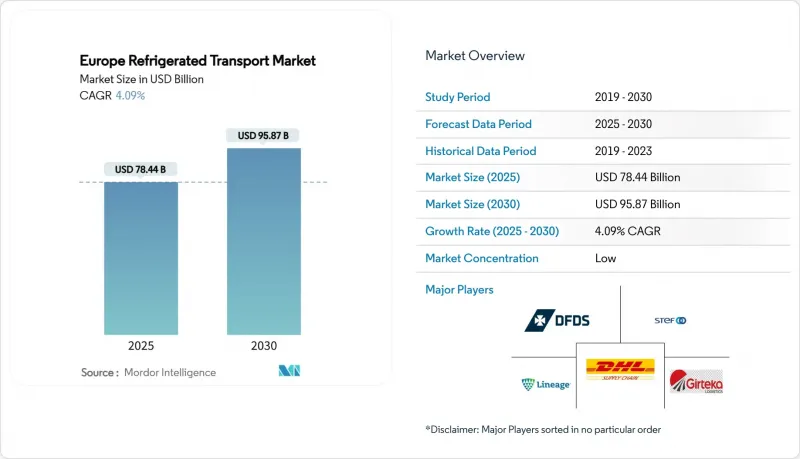
의약품 및 밀키트 물류 분야에서 정밀한 온도 관리에 대한 수요가 증가하는 데다, 소매업체들의 탄소 중립 추진 노력이 더해지면서 차량 사양과 경로 계획이 재검토되고 있습니다. 본 보고서는 운송 수단(도로, 철도, 해상, 항공), 온도대(냉장 0-5°C, 냉동 -18-0°C, 상온, 초저온/극저온 -20°C 이상), 용도(식품 및 음료, 의약품 및 생명과학, 화학·특수 소재, 화훼·원예, 기타), 지역(독일, 프랑스, 기타)별로 분류되어 있습니다. 시장 전망은 금액(달러) 기준으로 제시되어 있습니다.
유럽 냉장 운송 시장 동향과 인사이트
IoT를 활용한 종단 간 콜드체인 가시화
5G 연결 센서를 통해 현재 도로, 철도, 해상, 항공 등 각 운송 구간에서 온도, 습도, 위치 정보가 실시간으로 전송되고 있으며, Carrier사의 Lynx Fleet와 같은 플랫폼을 도입한 차량 군에서는 온도 이상 사고를 최대 35%까지 줄이고 있습니다. 보험사는 건강 상태의 개선이 입증될 경우 10-15%의 보험료 할인을 제공함으로써 기술 투자의 수익성을 높이고 있습니다. 의약품에 관한 유럽의 적정 유통 기준(GDP)은 지속적인 모니터링을 의무화하고 있으며, 이에 따라 IoT 도입은 얼리 어답터의 범위를 넘어 확산되고 있습니다. 트레일러 제조업체들은 출고 시점에 이미 텔레매틱스 시스템을 탑재하고 있으며, 슈미츠 카고불(Schmitz Cargobull)사가 ‘아틀란티스 월드 시스템(Atlantis World System)’을 도입해 신형 냉동 트레일러에 추적용 하드웨어를 장착하고 있다는 사실이 이를 증명합니다. 센서 데이터를 기반으로 한 예측 분석을 통해 화물의 위험이 커지기 전에 압축기 고장을 감지할 수 있게 되어, 예상치 못한 가동 중단 시간을 약 4분의 1로 줄였습니다.
추가 접종 캠페인이 의약품 물류를 견인하고 있습니다.
COVID-19 백신 및 독감 추가 접종 프로그램이 지속되고 있는 데다, 온도 관리가 필요한 생물학적 제제의 급증으로 인해 2-8℃ 운송 노선은 거의 포화 상태를 유지하고 있습니다. DHL은 유럽 전역에서 GDP 인증을 받은 허브를 확대하고, 운송 중 다온도대 대응을 지원하기 위해 검증된 보관 구역을 추가했습니다. 당뇨병 및 비만 치료용 고부가가치 GLP-1 제제는 강화된 관리 체제 하에 운송되고 있으며, 이것이 높은 운송료의 정당한 근거가 되고 있습니다. 운송 수단의 다양화가 진행되고 있어, 안정적인 제품은 배출량 감축을 위해 해상 운송이나 철도로 전환되는 반면, 세포 및 유전자 치료제는 신속성을 중시하기 때문에 항공 운송을 유지하고 있습니다. 데이터 로거가 내장된 재사용 가능한 포장재가 점차 보급되면서, 폐기물을 줄이는 동시에 여러 번의 사용을 통해 총 포장 비용을 거의 절반으로 절감하고 있습니다.
EU의 프레온 할당량 감축으로 인해 저GWP 냉매 가격이 상승
규정 2024/573에 따라, 수소불화탄소(HFC)공급량은 2027년에 약 88%, 2030년에는 95% 감축될 예정이며, R452A의 가격은 1kg당 49달러(45유로)로 상승할 것으로 전망됩니다. 이에 비해 천연 CO2와 프로판의 가격은 6-17달러입니다. 사업자는 규정을 준수하는 시스템을 도입하기 위해 트럭 1대당 1만 6,000-3만 7,000달러의 개조 비용을 부담해야 합니다. 캐리어사는 급등하는 원자재 비용을 상쇄하기 위해 추가 요금을 도입했으나, 차세대 냉매를 사용함으로써 기후에 미치는 영향을 89% 줄일 수 있다고 약속하고 있습니다. 자본적 부담은 노후 차량을 운용하는 소규모 운송업체에게 가장 큰 부담이 되고 있습니다.
부문별 분석
2025년, 유럽 냉장 운송 시장 점유율의 65.97%를 육상 운송이 차지했습니다. 이는 식료품 및 의약품을 운송하는 화주를 위한 유연한 도어 투 도어 서비스가 뒷받침하고 있습니다. 2025년 초에는 42만 6,000건의 운전기사 부족 현상이 발생할 전망이며, 통행료의 대폭 인상이 더해지면서 비용 면에서의 우위는 점차 사라지고 있지만, 내장형 텔레매틱스 및 매장 직배송 노선의 확대로 인해 트럭의 필요성은 여전히 필수적입니다. 탄소 배출 목표가 엄격한 지역에서는 철도와 해운의 비중이 확대되고 있습니다. 브레너 기저 터널은 전면 개통 후 해당 회랑의 일일 열차 수송 능력을 50% 이상 증가시켜(하루 최대 400편의 열차 운행 가능), 북부 항구에서 이탈리아 소매업체로 향하는 냉동 단백질 유통을 촉진할 것으로 예측됩니다. 연평균 성장률(CAGR) 7.66%로 성장을 지속하고, 있는 항공 화물은 특히 프랑크푸르트와 바젤의 제약 클러스터에서 고가 운임을 정당화할 수 있는 고부가가치 바이오의약품을 운송하고 있습니다. 또한, 근해 항로에서 제어 대기형 냉동 컨테이너의 등장으로 혼잡한 도로의 부담이 줄어들었고, 감귤류와 베리류의 유통 기한이 1주일 더 연장되었습니다.
전력과 디젤의 동향이 엇갈리는 가운데, 육상 운송의 상대적 이익률은 축소되고 있습니다. 배터리 트럭은 250km 미만의 단거리 배송에는 탁월하지만, 장거리 운송 시 적재량 제약으로 어려움을 겪고 있는 반면, 수소 프로토타입은 함부르크-뮌헨 간 주요 노선을 목표로 하고 있습니다. 플릿 운영사는 배터리식 라스트 마일 배송 밴과 액화 가스식 간선 운송 트랙터를 결합한 듀얼 연료 전략을 통해 리스크를 분산하고, 주행 거리를 희생하지 않으면서도 배출 규제를 충족하고 있습니다. 복합 운송 사업자들은 트럭만 이용한 배송에 비해 최대 75%의 이산화탄소 감축 효과를 내세우고 있으며, 이는 스코프 3 진행 상황을 보고해야 하는 소매업체들에게 매력적인 수치로 작용하고 있습니다. 가시성의 중요성이 커지는 가운데, 트럭, 철도, 선박 각 구간에서 IoT 텔레메트리 시스템을 통합하는 운송업체들이 생명과학 분야의 화주들로부터 새로운 수주를 따내고 있습니다.
기타 혜택:
- 엑셀 형식 시장 예측(ME) 시트
- 3개월간의 애널리스트 지원
자주 묻는 질문
목차
제1장 서론
제2장 조사 방법
제3장 주요 요약
제4장 시장 구도
제5장 시장 규모와 성장 예측
제6장 경쟁 구도
제7장 시장 기회와 향후 전망
JHS 26.06.19According to Mordor Intelligence, the europe refrigerated transport market size is projected to be USD 78.44 billion in 2025, USD 81.58 billion in 2026, and reach USD 99.52 billion by 2031, growing at a CAGR of 4.0% from 2026 to 2031.
Heightened demand for precise temperature control in pharmaceutical and meal-kit logistics, coupled with retailer net-zero commitments, is reshaping fleet specifications and route planning. This report is Segmented by Mode of Transport (Road, Rail, Sea, Air), by Temperature (Chilled 0-5°C, Frozen -18-0°C, Ambient, Deep-Frozen/Ultra-Low More Than 20°C), by Application (Food & Beverages, Pharmaceuticals & Life-Sciences, Chemicals & Specialty Materials, Floral & Nursery, and More), and by Geography (Germany, France, and More). The Market Forecasts are Provided in Terms of Value (USD).
Europe Refrigerated Transport Market Trends and Insights
IoT-Enabled End-to-End Cold-Chain Visibility
5G-linked sensors now stream temperature, humidity, and location data across road, rail, sea, and air legs, cutting excursion incidents by up to 35% for fleets deploying platforms such as Carrier's Lynx Fleet. Insurance firms are rewarding documented visibility with 10-15% premium discounts, improving return on technology spend. European Good Distribution Practice rules for medicines mandate continuous monitoring, pushing IoT uptake beyond early adopters. Trailer builders are integrating telematics at the factory, evidenced by Schmitz Cargobull's Atlantis Global System purchase, which embeds tracking hardware into new reefers. Predictive analytics built on sensor streams now flag compressor faults before cargo risk escalates, trimming unplanned downtime by roughly a quarter.
Booster Immunization Campaigns Driving Pharma Flows
Continued COVID-19 and influenza booster programs, plus a surge of temperature-sensitive biologics, keep 2-8 °C lanes running near capacity. DHL has expanded GDP-certified hubs across Europe, adding validated storage zones to support multi-temperature breaks in transit. High-value GLP-1 drugs for diabetes and obesity therapy move under reinforced chain-of-custody protocols, justifying premium freight rates. Modal diversification is growing; stable products shift to ocean or rail to cut emissions, while cell and gene therapies stay in air corridors for speed. Reusable packaging with embedded data-loggers is gaining traction, cutting waste and slicing total packaging spend by nearly half over multi-cycle use.
EU F-Gas Quota Cuts Raising Low-GWP Refrigerant Prices
Regulation 2024/573 slashes hydrofluorocarbon availability by nearly 88% in 2027 and 95% in 2030, driving R452A prices toward USD 49 per kg (EUR 45) versus USD 6-17 for natural CO2 or propane. Operators face retrofit bills of USD 16,000-37,000 per truck to adopt compliant systems. Carrier has introduced surcharges to offset steep input costs, yet promises 89% lower climate impact with next-gen refrigerants. Capital strain is harshest on small haulers that run older fleets.
Other drivers and restraints analyzed in the detailed report include:
- Meal-Kit and Ready-to-Cook Subscription Boom
- Retailer Net-Zero Targets Accelerating Fleet Electrification
- High Fuel & Energy Prices
For complete list of drivers and restraints, kindly check the Table Of Contents.
Segment Analysis
Road transport captured 65.97% of the Europe refrigerated transport market share in 2025, anchored by flexible door-to-door service for grocery and pharma shippers. Driver shortages, such as 426,000 vacancies in early 2025 and steep toll hikes, are eroding cost advantages, but embedded telematics and expanded direct-store routes keep trucks indispensable. Rail and sea gain share where carbon targets are stringent; the Brenner Base Tunnel is forecast to increase the corridor's daily train capacity by over 50% (accommodating up to 400 trains per day) once fully opened, drawing frozen protein flows from Northern ports to Italian retailers. Air freight, paced by 7.66% CAGR, channels high-value biologics that justify premium lift prices, especially out of pharma clusters in Frankfurt and Basel. The ascent of controlled-atmosphere reefers on short-sea lanes also eases pressure on congested roads, extending shelf life by an extra week for citrus and berries.
Road's relative margin narrows as electricity and diesel dynamics diverge. Battery trucks excel on sub-250 km milk runs but struggle with long-haul payload penalties, while hydrogen prototypes target the Hamburg-Munich spine. Fleet operators hedge through dual-fuel strategies, pairing battery last-mile vans with liquid gas line-haul tractors to meet emission caps without sacrificing range. Intermodal players market CO2 savings of up to 75% versus truck-only delivery, a compelling figure for retailers reporting Scope 3 progress. As the value of visibility rises, carriers that integrate IoT telemetry across truck, rail, and vessel legs are winning new tenders from life-science shippers.
List of Companies Covered in this Report:
- DHL Group
- DFDS Logistics
- STEF Group
- Lineage Logistics
- Girteka Logistics
- Waberer's International
- DSV
- Dachser
- Frigoscandia
- Kuehne + Nagel
- Hellmann Worldwide Logistics
- Noatum Logistics
- Rhenus Logistics
- Geodis
- XPO Logistics
- Frigotrans
- Transports Octavio
- Constellation Cold Logistics
- Culina Group
- AGI Global Logistics Ltd*
Additional Benefits:
- The market estimate (ME) sheet in Excel format
- 3 months of analyst support
TABLE OF CONTENTS
1 Introduction
- 1.1 Study Assumptions and Market Definition
- 1.2 Scope of the Study
2 Research Methodology
3 Executive Summary
4 Market Landscape
- 4.1 Market Overview
- 4.2 Market Drivers
- 4.2.1 IoT-Enabled End-To-End Cold-Chain Visibility
- 4.2.2 Booster Immunization Campaigns Driving Refrigerated Pharma Flows
- 4.2.3 Meal-Kit and Ready-To-Cook Subscription Boom
- 4.2.4 Retailer Net-Zero Targets Accelerating Fleet Electrification
- 4.2.5 Hydrogen Fuel-Cell Power Packs for Trailer Refrigeration
- 4.2.6 Liberalized Cross-Border Rail Paths for Temperature-Controlled Intermodal
- 4.3 Market Restraints
- 4.3.1 Peak-Hour Electricity Tariffs Inflating E-Reefer OPEX
- 4.3.2 EU F-Gas Quota Cuts Raising Low-GWP Refrigerant Prices
- 4.3.3 ADR-Qualified Technician Shortage for Lithium Battery Reefers
- 4.3.4 Pallet Standard Mismatches Causing Reverse-Logistics Dead-Runs
- 4.4 Value / Supply-Chain Analysis
- 4.5 Regulatory Landscape
- 4.6 Technological Outlook
- 4.7 Porter's Five Forces
- 4.7.1 Threat of New Entrants
- 4.7.2 Bargaining Power of Suppliers
- 4.7.3 Bargaining Power of Buyers
- 4.7.4 Threat of Substitutes
- 4.7.5 Industry Rivalry
5 Market Size and Growth Forecasts (Value)
- 5.1 By Mode of Transport
- 5.1.1 Road
- 5.1.2 Rail
- 5.1.3 Sea
- 5.1.4 Air
- 5.2 By Temperature
- 5.2.1 Chilled (0-5 °C)
- 5.2.2 Frozen (-18-0 °C)
- 5.2.3 Ambient
- 5.2.4 Deep-Frozen / Ultra-Low (more than -20 °C)
- 5.3 By Application
- 5.3.1 Food and Beverages
- 5.3.2 Pharmaceuticals and Life-sciences
- 5.3.3 Chemicals and Specialty Materials
- 5.3.4 Floral & Nursery
- 5.3.5 Other Perishables
- 5.4 By Country
- 5.4.1 Germany
- 5.4.2 France
- 5.4.3 United Kingdom
- 5.4.4 Italy
- 5.4.5 Spain
- 5.4.6 Netherlands
- 5.4.7 Belgium
- 5.4.8 Poland
- 5.4.9 Rest of Europe
6 Competitive Landscape
- 6.1 Market Concentration
- 6.2 Strategic Moves
- 6.3 Market Share Analysis
- 6.4 Company Profiles (includes Global level Overview, Market level overview, Core Segments, Financials as available, Strategic Information, Market Rank/Share for key companies, Products & Services, and Recent Developments)
- 6.4.1 DHL Group
- 6.4.2 DFDS Logistics
- 6.4.3 STEF Group
- 6.4.4 Lineage Logistics
- 6.4.5 Girteka Logistics
- 6.4.6 Waberer's International
- 6.4.7 DSV
- 6.4.8 Dachser
- 6.4.9 Frigoscandia
- 6.4.10 Kuehne + Nagel
- 6.4.11 Hellmann Worldwide Logistics
- 6.4.12 Noatum Logistics
- 6.4.13 Rhenus Logistics
- 6.4.14 Geodis
- 6.4.15 XPO Logistics
- 6.4.16 Frigotrans
- 6.4.17 Transports Octavio
- 6.4.18 Constellation Cold Logistics
- 6.4.19 Culina Group
- 6.4.20 AGI Global Logistics Ltd*