

|
시장보고서
상품코드
2062186
탈빙 액체 : 시장 점유율 분석, 업계 동향 및 통계, 성장 예측(2026-2031년)Deicing Fluid - Market Share Analysis, Industry Trends & Statistics, Growth Forecasts (2026 - 2031) |
||||||
 Mordor Intelligence
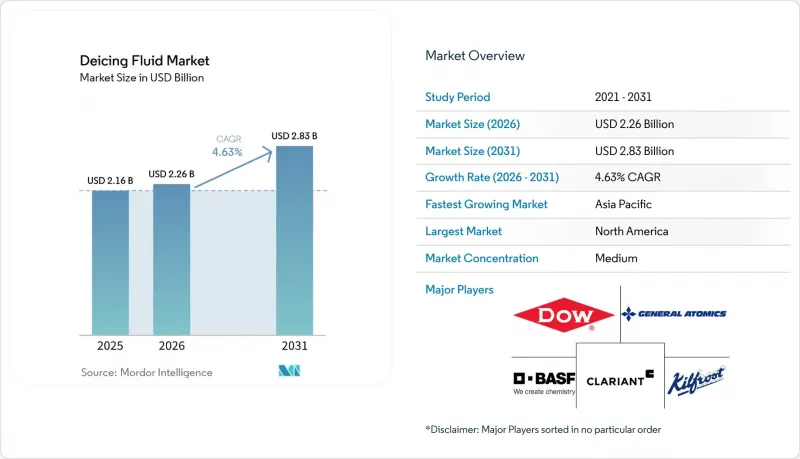
Mordor Intelligence에 의하면, 탈빙 액체 시장 규모는 2025년 21억 6,000만 달러로 평가되었습니다. 2026년 22억 6,000만 달러로 확대되어 2026-2031년에 걸쳐 CAGR은 4.63%를 나타내, 2031년까지 28억 3,000만 달러에 이를 것으로 예측됩니다.
본 보고서는 제품 유형(프로파일렌글리콜계, 에틸렌글리콜계, 아세트산칼륨계, 기타), 유체 유형(유형 I, 유형 II, 기타), 최종 사용자 산업(민간 항공, 군용 항공, 기타), 지역(아시아태평양, 북미, 유럽, 남미, 중동 및 아프리카)별로 분류되어 있습니다. 시장 전망은 금액(달러) 기준으로 제시되어 있습니다.
세계의 탈빙 액체 시장 동향 및 분석
아시아 내 한랭지 공항 및 철도의 확대
인도 뇨마 공군 기지의 개보수 및 일본 오카다마 공항의 활주로 연장 공사는 고지대에 위치한 시설들이 겨울철 운영 기간을 연장함에 따라 탈빙 액체 시장이 확대되고 있음을 보여줍니다. 폴란드에서 일본에 이르는 철도망에서도 항공 산업과 마찬가지로, 사후 제설에서 계획적인 결빙 방지 방식으로 전환되고 있으며, 에너지 비용과 지연 시간을 줄여주는 프로파일렌글리콜 스프레이가 사용되고 있습니다. 지방 공항에 취항하는 대형 지역 제트기의 경우, 유형 I 제빙에 이어 유형 IV 방빙 처리가 필요하기 때문에 편당 2단계 처리 주기가 늘어나고 있습니다. 인도 북부에서 콜드체인을 통한 신선식품 수송을 위해 조성된 화물 회랑에는 글리콜 혼합액을 사전에 도포한 분기점 히터가 추가되면서 모달 간 이용이 확대되고 있습니다. 이러한 프로젝트들을 종합해 볼 때, 기존의 북미 및 유럽 허브 공항 외에도 수년에 걸친 탈빙 액체의 기본 수요가 점차 정착되고 있습니다.
ICAO와 FAA에 의한 글리콜 유출량 상한 규제 강화
FAA 엔지니어링 브리프 108 및 EPA의 폐수 배출 기준에 따라, 중규모의 파트 139 공항에서도 사용 후 글리콜의 회수 또는 재생이 의무화되어 있으며, 이는 가격 변동에도 불구하고 연간 조달량을 안정화시키는 폐쇄형 순환 시스템에 대한 투자를 촉진하고 있습니다. 몬트리올 트뤼도 공항의 순도 99.5% 증류 모델은 구매 비용을 30% 절감했으며, 현재 시러큐스와 컬럼비아 지역 공항에서도 도입되어 블렌더와 예측 가능한 테이크-오어-페이 계약을 체결하고 있습니다. 생화학적 산소 요구량(BOD) 규제가 강화됨에 따라, 요소 및 염화물의 사용량이 줄어들었고, 사업자들은 생분해성이 입증된 SAE 규격프로파일렌글리콜계 유체로 전환해야 하는 상황에 직면해 있습니다. 규정 준수 감사가 강화됨에 따라, 수요는 가격 중심의 입찰에서 회수 기술 지원을 포함한 다년 공급 계약으로 전환되고 있습니다.
급등하는 글리콜 재생 및 빗물 처리 비용
시러큐스에서 비로칸 기술을 도입한 플랜트의 건설비는 1,930만 달러이며, 미니애폴리스·세인트폴에서는 연간 150만 달러가 넘는 운영 비용이 발생하여, 재생되는 1갤런당 수명 주기 비용을 상승시키고 있습니다. 소규모 공항의 경우, 1회 운영당 설비 투자 비용이 2만 달러를 초과하기 때문에 예산이 부족해져, 교통량이 적은 지역에서의 도입이 더뎌지고 있습니다. 생화학적 부하 초과에 따른 지자체의 하수 처리 추가 요금으로 인해 갤런당 실질 가격이 상승하면서, 구매자들은 공급과 회수를 한 세트로 묶은 계약 협상을 강요받고 있으며, 이로 인해 탈빙 액체 시장의 성장세가 둔화되고 있습니다.
부문별 분석
2025년 기준으로, 프로파일렌글리콜 계열 제품은 탈빙 액체 시장 점유율의 51.11%를 차지했습니다. 수요가 안정적인 것은 유형 I과 유형 IV 간의 보편적인 호환성은 물론, 사용 후 용액의 30-40%를 회수할 수 있는 재활용의 경제성이 반영된 결과입니다. LyondellBasell의 텍사스 주 내 사업 확대로 연간 40만 톤프로파일렌이 추가 생산됨에 따라, 산화물 원료의 가격 변동을 완화하고 공급 안정성을 강화하고 있습니다. 미국 공군이 프로파일렌만을 사용하도록 의무화함에 따라 에틸렌글리콜 수요는 감소 추세를 보이고 있지만, 기온이 -50°C 이하로 떨어지는 러시아나 중국의 거점에서는 여전히 틈새 수요를 유지하고 있습니다.
칼륨 아세테이트 기반 부문은 2031년까지 연평균 성장률(CAGR) 5.15%를 기록하며 성장하고 있습니다. 수요는 PFAS 금지 조치로 인해 전환이 가속화되고 있는 유럽과, BOD(생화학적 산소 요구량) 제한치를 초과하지 않으면서 응고점을 낮추기 위해 아세테이트와 염화물을 혼합하고 있는 미국 각 주 교통국(DOT)에 집중되어 있습니다. 톤당 1,100-1,800달러의 추가 비용이 일반 도로로의 보급을 저해하고 있지만, 공항에서는 잔류 신뢰성과 PFAS 무함유라는 특성을 중요하게 여기고 있습니다. 비용 대비 효과가 높은 아세트산-글리콜 혼합물을 개발한 공급업체는 탈빙 액체 시장 전반에서 이익률을 확대할 수 있을 것으로 보입니다.
지역별 분석
북미는 2025년 매출의 35.46%를 차지하며, FAA의 배수 규제 및 미니애폴리스에서 토론토에 이르는 허브 공항에서의 90% 이상의 제빙률에 힘입었습니다. 시러큐스의 1,930만 달러 규모의 재생 플랜트와 콜롬비아의 FAA 자금을 활용한 시스템은 꾸준한 수요 증가를 뒷받침하는 자본 투자의 규모를 여실히 보여주고 있습니다. 캐나다 피어슨 공항에서는 디젤 연료 사용량을 40% 줄이는 하이브리드 전기식 제빙기를 도입했는데, 이 장비들은 현장에서 재생된 고순도 액체에 의존하고 있어 탈빙 액체 시장 전체에서 폐쇄형 조달 체계를 강화하고 있습니다.
아시아태평양은 인도의 라다크 지역 확장 및 일본의 신치토세 공항 내 새로운 전용 에이프런 구축을 견인력으로 삼아, 2031년까지 연평균 성장률(CAGR) 5.78%를 기록하며 성장할 전망입니다. ANA의 색상 코드가 표시된 탈빙 액체은 비행 전 도포 상태 확인 절차를 개선하고, 5개 주요 공항에서 2단계 작업 절차를 표준화하고 있습니다. 한국의 항공사들은 싱가포르와 중국에서 프로파일렌글리콜을 수입하고 있으며, 운송 비용 급등 위험에 노출되어 있음에도 불구하고 안정적인 공급을 확보하고 있습니다. 고지대에 위치한 아세안(ASEAN) 공항에서는 유형 I 탈빙 액체이 산발적으로 사용되고 있지만, 현지 재고가 제한적이어서 비용이 많이 드는 항공 운송이 필요하며, 탈빙 액체 시장이 성숙해짐에 따라 항공사들은 지역별 비축 물량을 공동으로 관리하는 방향으로 나아가고 있습니다.
유럽에서는 PFAS 규제가 구체화되면 신속히 방침이 전환될 것으로 보입니다. 클라리언트사의 스웨덴 내 재생 글리콜 사업 확대와 피나비아사의 폐쇄형 순환 모델은 현재의 조달 체계를 형성하는 순환 경제의 이념을 여실히 보여주고 있습니다. 러시아의 셰레메티예보 공항은 1,000m³의 저장 용량과 40대의 전용 차량을 보유하고 있지만, 아한대의 겨울 기후로 인해 여전히 글리콜 의존도가 높은 반면, 북유럽의 공항에서는 1인당 탈빙 액체 사용량이 세계 최고치를 기록하고 있습니다. 지상 설비의 전동화는 -20°C 이하에서 배터리 성능이 저하됨에 따라 복잡해지고 있으며, 이로 인해 난방이 되는 차고나 내장형 전원 시스템에 대한 추가 수요가 발생하고 있습니다. 이러한 요인들은 간접적으로 탈빙 액체 시장의 취급량을 증가시키고 있습니다.
기타 혜택
- 엑셀 형식 시장 예측(ME) 시트
- 3개월간의 애널리스트 지원
자주 묻는 질문
목차
제1장 서론
제2장 조사 방법
제3장 주요 요약
제4장 시장 구도
제5장 시장 규모 및 성장 예측
제6장 경쟁 구도
제7장 시장 기회 및 향후 전망
KTH 26.06.22According to Mordor Intelligence, the deicing fluid market size is expected to grow from USD 2.16 billion in 2025 to USD 2.26 billion in 2026 and is forecast to reach USD 2.83 billion by 2031 at 4.63% CAGR over 2026-2031.
This report is Segmented by Product Type (Propylene Glycol-Based, Ethylene Glycol-Based, Potassium Acetate-Based, and Other Product Types), Fluid Type (Type I, Type II, and More), End-User Industry (Commercial Aviation, Military Aviation, and More), and Geography (Asia-Pacific, North America, Europe, South America, and Middle-East and Africa). The Market Forecasts are Provided in Terms of Value (USD).
Global Deicing Fluid Market Trends and Insights
Cold-Region Airport and Rail Expansion in Asia
India's Nyoma airbase upgrade and Japan's runway extension at Okadama exemplify how high-altitude facilities are lengthening winter operations and enlarging the deicing fluid market. Rail networks from Poland to Japan mirror aviation's shift from reactive snow removal toward scheduled anti-icing, using propylene-glycol sprays that cut energy costs and delays. Larger regional jets operating into secondary airports demand Type I removal followed by Type IV protection, increasing two-step cycles per turn. Freight corridors built for cold-chain fresh produce in northern India are adding switch-point heaters pre-wetted with glycol blends, expanding cross-modal consumption. Collectively, these projects embed multi-year fluid baseloads outside traditional North American and European hubs.
Stricter ICAO and FAA Glycol Run-Off Caps
FAA Engineering Brief 108 and EPA effluent standards oblige even mid-size Part 139 airports to capture or reclaim spent glycol, driving closed-loop investment that stabilizes annual liftings despite price volatility. Montreal Trudeau's 99.5%-pure distillation model lowered purchase costs 30% and is now replicated at Syracuse and Columbia Regional, creating predictable take-or-pay contracts with formulators. Tighter biochemical-oxygen-demand limits reduce urea and chloride use, pushing operators toward SAE-compliant propylene-glycol fluids with documented biodegradability. As compliance audits tighten, demand shifts from price-led tenders to multi-year supply agreements bundled with recovery technology support.
Rising Glycol Reclamation and Storm-Water Costs
Vilokan-technology plants cost USD 19.3 million at Syracuse and more than USD 1.5 million in annual opex at Minneapolis-St. Paul is elevating the lifecycle cost of every reclaimed gallon. Smaller airports face per-event capital costs above USD 20,000, squeezing budgets and slowing adoption in low-traffic regions. Municipal wastewater surcharges for excess biochemical demand raise the fully loaded price per gallon, nudging buyers to negotiate bundled supply-and-recovery contracts that temper the deicing fluid market growth rate.
Other drivers and restraints analyzed in the detailed report include:
- Transition to Potassium Acetate for PFAS-Free Compliance
- Arctic Shipping Route Commercialization
- Pending EU-Wide PFAS Restrictions Disrupting Legacy Blends
For complete list of drivers and restraints, kindly check the Table Of Contents.
Segment Analysis
The propylene glycol-based segment held 51.11% of the deicing fluid market share in 2025. Stable demand reflects universal Type I and Type IV compatibility, plus recycling economics that recover 30-40% of spent fluid. LyondellBasell's Texas expansion adds 400,000 metric tonnes per annum of propylene, buffering oxide feedstock volatility and fortifying supply security. Ethylene glycol is losing favor as the U.S. Air Force enforces propylene-only specifications, but retains a niche at Russian and Chinese hubs with temperatures below -50 °C.
The potassium acetate-based segment is growing at a 5.15% CAGR through 2031. Demand is concentrated in Europe, where PFAS bans accelerate switch-overs, and among U.S. state DOTs blending acetate with chloride to cut freeze points without breaching BOD limits. Cost premiums of USD 1,100-1,800 tons dampen highway penetration, yet airports value holdover reliability and PFAS-free status. Suppliers that master cost-effective hybrid acetate-glycol blends stand to widen margins across the deicing fluid market.
Geography Analysis
North America generated 35.46% of 2025 revenue, bolstered by FAA runoff rules and 90%+ deicing rates at hubs from Minneapolis to Toronto. Syracuse's USD 19.3 million reclamation plant and Columbia's FAA-funded system illustrate the capital commitment underpinning steady liftings. Canada's Pearson Airport fielded hybrid-electric deicers that cut diesel by 40%, yet depend on high-purity fluids reclaimed on-site, reinforcing closed-loop sourcing across the deicing fluid market.
Asia-Pacific will grow at a 5.78% CAGR through 2031, led by India's expansion in Ladakh and Japan's new dedicated apron at New Chitose. ANA's color-coded fluids improve pre-flight coverage checks, standardizing two-step operations across five major airports. Korean operators import propylene glycol from Singapore and China, exposing them to shipping spikes but securing a reliable supply. High-elevation ASEAN airports use Type I sporadically, but limited local inventory necessitates costly airfreight, nudging carriers to pool regional stockpiles as the deicing fluid market deepens.
Europe will pivot quickly once PFAS restrictions crystallize. Clariant's Swedish recycled-glycol expansion and Finavia's closed-loop model underscore the circular-economy ethos that now shapes procurement. Russia's Sheremetyevo, with 1,000 m3 of storage and 40 specialized vehicles, remains glycol-heavy owing to sub-Arctic winters, while Nordic airports log the world's highest per-capita fluid use. Electrification of ground assets is complicated by battery performance below -20 °C, creating supplemental demand for heated garages and embedded power systems that indirectly raise deicing fluid market throughput.
- ADDCON GmbH
- Aeromag
- AVIATEC GLOBAL AVIATION GMBH & CO. KG Germany
- BASF
- CAV Systems Ltd.
- Chemtex Speciality Limited
- Clariant
- D.W. Davies & Co., Inc.
- Dow
- General Atomics (Cryotech)
- Inland Group of Companies, LLC.
- Kilfrost Ltd.
- LNT Solutions Ltd.
- LyondellBasell Industries Holdings B.V.
- proviron
Additional Benefits:
- The market estimate (ME) sheet in Excel format
- 3 months of analyst support
TABLE OF CONTENTS
1 Introduction
- 1.1 Study Assumptions and Market Definition
- 1.2 Scope of the Study
2 Research Methodology
3 Executive Summary
4 Market Landscape
- 4.1 Market Overview
- 4.2 Market Drivers
- 4.2.1 Cold-region airport and rail expansion in Asia
- 4.2.2 Stricter ICAO and FAA glycol run-off caps
- 4.2.3 Transition to potassium-acetate for PFAS-free compliance
- 4.2.4 Arctic shipping route commercialization
- 4.2.5 On-wing electro-thermal anti-ice lowering fluid dosage
- 4.3 Market Restraints
- 4.3.1 Rising glycol reclamation and storm-water costs
- 4.3.2 Pending EU-wide PFAS restrictions disrupting legacy blends
- 4.3.3 Volatility in bio-based feedstock supply
- 4.4 Value Chain Analysis
- 4.5 Porter's Five Forces
- 4.5.1 Threat of New Entrants
- 4.5.2 Bargaining Power of Buyers
- 4.5.3 Bargaining Power of Suppliers
- 4.5.4 Threat of Substitutes
- 4.5.5 Competitive Rivalry
5 Market Size and Growth Forecasts (Value)
- 5.1 By Product Type
- 5.1.1 Propylene Glycol-based
- 5.1.2 Ethylene Glycol-based
- 5.1.3 Potassium Acetate-based
- 5.1.4 Other Product Types (Urea, etc.)
- 5.2 By Fluid Type
- 5.2.1 Type I
- 5.2.2 Type II
- 5.2.3 Type III
- 5.2.4 Type IV
- 5.3 By End-user Industry
- 5.3.1 Commercial Aviation
- 5.3.2 Military Aviation
- 5.3.3 Railways
- 5.3.4 Highway and Road-maintenance
- 5.3.5 Other End-user Industries (Transport and Industrial)
- 5.4 By Geography
- 5.4.1 Asia-Pacific
- 5.4.1.1 China
- 5.4.1.2 Japan
- 5.4.1.3 India
- 5.4.1.4 South Korea
- 5.4.1.5 ASEAN Countries
- 5.4.1.6 Rest of Asia-Pacific
- 5.4.2 North America
- 5.4.2.1 United States
- 5.4.2.2 Canada
- 5.4.2.3 Mexico
- 5.4.3 Europe
- 5.4.3.1 Germany
- 5.4.3.2 United Kingdom
- 5.4.3.3 France
- 5.4.3.4 Italy
- 5.4.3.5 Spain
- 5.4.3.6 Russia
- 5.4.3.7 NORDIC Countries
- 5.4.3.8 Rest of Europe
- 5.4.4 South America
- 5.4.4.1 Brazil
- 5.4.4.2 Argentina
- 5.4.4.3 Rest of South America
- 5.4.5 Middle-East and Africa
- 5.4.5.1 Saudi Arabia
- 5.4.5.2 South Africa
- 5.4.5.3 Rest of Middle-East and Africa
- 5.4.1 Asia-Pacific
6 Competitive Landscape
- 6.1 Market Concentration
- 6.2 Strategic Moves
- 6.3 Market Share (%)/Ranking Analysis
- 6.4 Company Profiles (includes Global level Overview, Market level overview, Core Segments, Financials as available, Strategic Information, Products and Services, and Recent Developments)
- 6.4.1 ADDCON GmbH
- 6.4.2 Aeromag
- 6.4.3 AVIATEC GLOBAL AVIATION GMBH & CO. KG Germany
- 6.4.4 BASF
- 6.4.5 CAV Systems Ltd.
- 6.4.6 Chemtex Speciality Limited
- 6.4.7 Clariant
- 6.4.8 D.W. Davies & Co., Inc.
- 6.4.9 Dow
- 6.4.10 General Atomics (Cryotech)
- 6.4.11 Inland Group of Companies, LLC.
- 6.4.12 Kilfrost Ltd.
- 6.4.13 LNT Solutions Ltd.
- 6.4.14 LyondellBasell Industries Holdings B.V.
- 6.4.15 proviron
7 Market Opportunities and Future Outlook
- 7.1 White-space and Unmet-need Assessment


