|
시장보고서
상품코드
2063272
아시아태평양의 정부 및 교육기관용 물류 : 시장 점유율 분석, 업계 동향 및 통계, 성장 예측(2026-2031년)Asia-Pacific Government And Education Logistics - Market Share Analysis, Industry Trends & Statistics, Growth Forecasts (2026 - 2031) |
||||||
 Mordor Intelligence
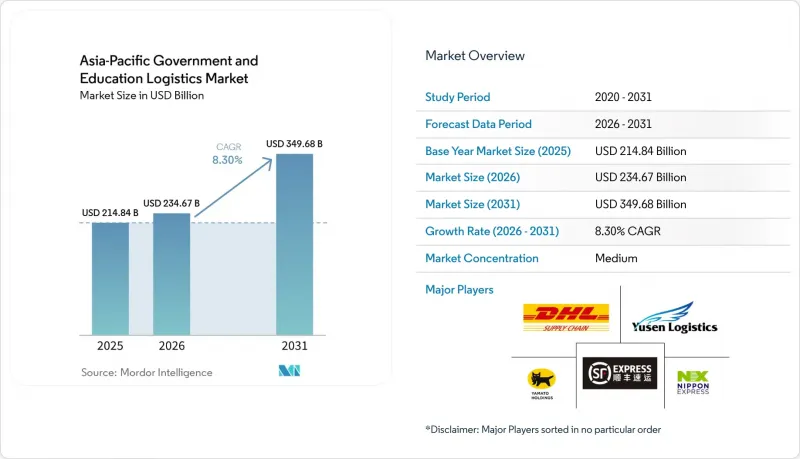
Mordor Intelligence에 의하면, 아시아태평양의 정부 및 교육기관용 물류 시장 규모는 2025년 2,148억 4,000만 달러로 평가되었습니다. 2026년 2,346억 7,000만 달러로 확대되고 2026년부터 2031년에 걸쳐 CAGR은 8.30%를 나타내, 2031년에는 3,496억 8,000만 달러에 이를 것으로 예측됩니다.
이러한 성장 궤적은 국방 분야의 자급자족 강화, 대규모 디지털 학습 도입, 그리고 지역 전체공급망에서 책임 분담을 재구축하고 있는 민관 아웃소싱 체계를 반영하고 있습니다. 본 보고서는 서비스 유형별(육상, 철도, 항공, 해상 등을 포함한 운송), 최종 사용자별(중앙/연방 정부, 주 및 지방 자치단체 등), 지역별(중국, 인도, 일본, 한국, 호주, 인도네시아, 태국, 베트남, 말레이시아 및 기타 아시아태평양)로 분류되어 있습니다. 시장 전망은 금액(달러) 기준으로 제시되어 있습니다.
아시아태평양의 정부 및 교육기관용 물류 시장 동향과 인사이트
대규모 전자정부 및 스마트 인프라를 통한 경제 대책
각국의 디지털 정부 프로그램은 하드웨어 도입, 클라우드 전환 프로젝트, 데이터센터 건설에 자금을 지원함으로써 지속적인 물류 수요를 창출하고 있습니다. 인도의 ‘디지털 인디아’ 이니셔티브에서는 디지털 인프라에 300억 달러가 배정되어, 25만 개의 관공서 및 150만 개의 학교로 지속적인 자금 흐름이 창출되고 있습니다. 인도네시아의 320억 달러 규모 ‘누산타라’ 스마트 수도 프로젝트 역시 여러 기관 간의 화물 운송 조정이 필요합니다. 베트남의 ‘프레임워크 4.0’은 2027년까지 각 부처에서 클라우드 기반 서비스 도입을 의무화하고 있어, 중요한 ICT 장비의 안전한 운송 수요가 증가하고 있습니다. 필리핀의 ICT 지침에서는 입찰자의 사이버 보안 역량을 평가 대상으로 삼고 있으며, 제3자 공급업체에 대해 ISO 27001 시스템 인증 취득을 요구하고 있습니다. 이러한 프로그램들은 공급업체에 수년에 걸친 전망을 제공하는 한편, 국가 및 지방 자치단체별로 조달 주기가 분산되는 요인이 되고 있습니다.
지역 방위 조달(AUKUS, QUAD)의 확대가 보안이 강화된 3PL 수요를 뒷받침하고 있습니다.
방위 분야의 현대화에 따라, 엄격한 통관 및 보관 관리 기준을 충족해야 하는 화물 흐름이 가속화되고 있습니다. 호주의 3,680억 달러 규모의 AUKUS 잠수함 계획에서는 심사를 통과한 계약업체만이 처리할 수 있는 원자력 추진용 부품의 물류가 요구되고 있습니다. QUAD 공급망 회복탄력성 이니셔티브는 호주, 인도, 일본, 미국 간에 보안 절차를 통일하고, 군민 양용 물품을 위한 지정 운송 경로를 확립하고 있습니다. 일본은 2027년까지 국방비를 GDP의 2%로 늘릴 방침이며, 이에 따라 탄약 및 고가 시스템에 대한 새로운 보관·수송 수요가 발생하고 있습니다. 한국의 국산 플랫폼 추진은 역물류의 복잡성을 가중시키고 있습니다. 따라서 기존에 방위 관련 인증을 보유한 공급업체는 프리미엄 가격을 책정할 수 있는 반면, 신규 시장 진출기업은 높은 진입 장벽에 직면해 있습니다.
아시아·태평양 지역의 트럭 운전사 고령화와 인력 부족 심화
일본에서는 운전자의 47%가 50세 이상이며, 은퇴가 가속화되면서 운송 능력 부족 문제가 심각해지고 있습니다. 호주에서는 2024년에 2만 6,000건의 인력 부족이 기록되었으며, 국방 및 보안 허가 요건이 상황을 더욱 악화시키고 있습니다. 한국에서는 임금이 전년 대비 18% 상승한 반면, 태국에서는 직업훈련원 수가 제한적이어서 지방 노선 운전기사 확보에 어려움을 겪고 있습니다. 사업자 측은 계약금, 시뮬레이터, 조기 자율주행 시험 등을 통해 대응하고 있지만, 규제 도입이 지연되면서 정부 화물 운송 분야의 완전한 무인화 도입은 늦어지고 있습니다.
부문별 분석
부가가치 서비스는 2031년까지 연평균 성장률(CAGR) 9.30%를 유지하며, 아시아태평양 운송 부문의 정부 및 교육기관용 물류 시장 전체 점유율을 크게 상회했습니다. 2025년, 운송 부문은 59.89%의 점유율을 유지하며 기본적인 화물 수요 규모를 여실히 보여주었습니다. 그러나 상품화, 운전기사 부족, 그리고 점점 더 엄격해지는 탄소 배출 규제로 인해 운임 인상 여지가 제한되고 있어, 사업자들은 통관 절차, 블록체인 기반 인증, ESG 대시보드를 하나의 패키지로 묶어 제공하지 않을 수 없는 상황에 처해 있습니다. 철도 회랑, 특히 인도의 전용 화물 노선은 표준 리드타임을 30-40% 단축하고 디젤 연료에 대한 의존도를 낮춥니다. 항공 화물은 공문서나 긴급 구호 물자 수송과 같은 틈새 분야에 국한되어 있지만, 적은 운송량을 상쇄할 수 있는 프리미엄 요금이 보장되어 있습니다. 해상 및 내륙 수로는 섬 지역으로의 배송에 있어 여전히 필수적이지만, 연료 관련 위험은 장기 용선자에게로 옮겨가고 있습니다. 창고 업계는 기후 변화에 대한 내성을 높이는 업그레이드의 혜택을 누리고 있으며, 고가 랙과 이중 전원 시스템은 현재 태국과 베트남 전역에서 표준 사양으로 자리 잡았습니다.
캠퍼스 내에서는 마이크로 풀필먼트 허브가 늘어나고 있어, 공간 절약형 자동화 설비와 학생 포털과의 API 연동이 요구되고 있습니다. 그 결과, 이러한 요소들을 하나의 청구서로 통합하는 서비스 제공업체들은 더 높은 이익률을 달성하고, 고객 유지를 강화하고 있습니다. 시장을 선도하는 기업은 ISO 27001 인증을 획득한 데이터센터, 제로 지식 증명 암호화 모듈, 그리고 현장 통관 데스크를 통해 차별화를 꾀하고 있습니다. 사이버 보안 인증을 갖추지 못해 뒤처진 포워더는 하청업체로 전락할 위험이 있으며, 가격 결정권과 전략적 영향력을 상실하게 됩니다.
기타 혜택 :
- 엑셀 형식 시장 예측(ME) 시트
- 3개월간의 애널리스트 지원
자주 묻는 질문
목차
제1장 서론
제2장 조사 방법
제3장 주요 요약
제4장 시장 구도
제5장 시장 규모 및 성장 예측
제6장 경쟁 구도
제7장 시장 기회 및 향후 전망
KTH 26.06.22According to Mordor Intelligence, the asia-Pacific government and education logistics market size is expected to grow from USD 214.84 billion in 2025 to USD 234.67 billion in 2026 and is forecast to reach USD 349.68 billion by 2031 at an 8.30% CAGR over 2026-2031.
The growth path reflects rising defense self-sufficiency, large-scale digital-learning roll-outs, and public-private outsourcing frameworks that are redrawing supply-chain responsibilities across the region. This report is Segmented by Service Type (Transportation, Including Road, Rail, Air, Sea, and More), by End-User (Central/Federal Government, State and Local Government, and More), and by Geography (China, India, Japan, South Korea, Australia, Indonesia, Thailand, Vietnam, Malaysia, and Rest of Asia-Pacific). The Market Forecasts are Provided in Terms of Value (USD).
Asia-Pacific Government And Education Logistics Market Trends and Insights
Large-Scale E-Governance & Smart-Infrastructure Stimulus Packages
National digital-government programs are injecting sustained logistics demand by funding hardware roll-outs, cloud-migration projects, and data-center construction. India's Digital India initiative allocated USD 30 billion to digital infrastructure, creating continuous freight flows to 250,000 offices and 1.5 million schools. Indonesia's USD 32 billion Nusantara smart-capital project similarly requires synchronized multi-agency freight coordination. Vietnam's Framework 4.0 mandates cloud-based services throughout ministries by 2027, amplifying the need for secure transportation of critical ICT equipment. Philippine ICT guidelines now score bidders on cybersecurity capacity, pushing third-party providers to certify ISO 27001 systems. Together, these programs provide multi-year visibility for providers but fragment tender cycles across national and provincial entities.
Escalating Regional Defense Procurement (AUKUS, QUAD) Fuelling Secure 3PL Demand
Defense modernization accelerates cargo streams that must meet stringent clearance and chain-of-custody standards. Australia's USD 368 billion AUKUS submarine program demands nuclear-propulsion component logistics that only vetted contractors can perform. The QUAD Supply Chain Resilience Initiative aligns security procedures across Australia, India, Japan, and the United States, creating designated corridors for dual-use items. Japan is lifting defense outlays to 2% of GDP by 2027, triggering new storage and transport needs for ammunition and high-value systems. South Korea's push for indigenous platforms adds reverse-logistics complexity. Providers with existing defense accreditations, therefore, capture premium pricing while newcomers face high entry barriers.
Aging Truck Driver Workforce & Widening Talent Gaps in APAC
Japan reports 47% of drivers above 50, with retirements accelerating capacity shortfalls. Australia recorded 26,000 vacancies in 2024, compounded by defense-security clearance hurdles. South Korea's wages jumped 18% year on year, while Thailand struggles to staff rural routes due to limited vocational schools. Providers respond with signing bonuses, simulators, and early autonomous trials, but regulatory lag slows full driverless deployment for government cargo.
Other drivers and restraints analyzed in the detailed report include:
- Public-Private Partnership Outsourcing Wave Across Ministries & Universities
- Climate-Resilient Redundant Warehousing Mandates After 2023 Flood Disruptions
- Volatile Bunker Fuel Surcharges Stressing Fixed-Budget Education Shipments
For complete list of drivers and restraints, kindly check the Table Of Contents.
Segment Analysis
Value-added services secured a 9.30% CAGR through 2031, well above the broader Asia-Pacific government and education logistics market share for the transportation sector. In 2025, transportation preserved 59.89% share, underlining the scale of basic freight demand. Yet commoditization, driver shortages, and stricter carbon caps curb rate upside, pushing operators to bundle customs, blockchain stamping, and ESG dashboards. Rail corridors, especially India's dedicated freight routes, trim textbook lead-times by 30-40% and reduce diesel exposure. Air freight remains a niche for official documents and emergency relief, commanding premiums that offset low tonnage. Sea and inland waterways stay critical for archipelagic deliveries, though fuel risk shifts toward long-term charterers. Warehousing gains from climate-resilient upgrades, with elevated racks and dual-power systems now baseline specifications across Thailand and Vietnam.
Micro-fulfillment hubs multiply on campuses, requiring small-footprint automation and API links to student portals. Consequently, providers integrating these components into one invoice realize higher margins and deepen client lock-in. Market leaders differentiate through ISO 27001 data centers, zero-knowledge encryption modules, and on-site customs desks. Lagging freight forwarders that lack cybersecurity credentials risk relegation to subcontract status, losing pricing power and strategic influence.
List of Companies Covered in this Report:
- DHL Supply Chain & Global Forwarding
- Nippon Express Holdings
- Yamato Holdings
- Yusen Logistics
- SF Express (Group) Co., Ltd.
- DSV
- Kuehne + Nagel
- CEVA Logistics
- CJ Logistics
- Kerry Logistics Network
- Sinotrans Limited
- Toll Group
- Sagawa Express
- Gati Ltd
- Allcargo Logistics
- Linfox
- AIT Worldwide Logistics
- Rhenus Logistics
- JD Logistics
- Kintetsu World Express
- Delhivery
Additional Benefits:
- The market estimate (ME) sheet in Excel format
- 3 months of analyst support
TABLE OF CONTENTS
1 Introduction
- 1.1 Study Assumptions and Market Definition
- 1.2 Scope of the Study
2 Research Methodology
3 Executive Summary
4 Market Landscape
- 4.1 Market Overview
- 4.2 Market Drivers
- 4.2.1 Large-Scale e-Governance & Smart-Infrastructure Stimulus Packages
- 4.2.2 Escalating Regional Defence Procurement (AUKUS, QUAD) Fuelling Secure 3PL Demand
- 4.2.3 Public-Private Partnership (PPP) Outsourcing Wave Across Ministries & Universities
- 4.2.4 Climate-Resilient Redundant Warehousing Mandates after 2023 Flood Disruptions
- 4.2.5 Blockchain Authentication of Educational Content to Curb Counterfeit Textbooks
- 4.2.6 Micro-Fulfilment Hubs on University Campuses for On-Demand Learning Kits
- 4.3 Market Restraints
- 4.3.1 Ageing Truck Driver Workforce & Widening Talent Gaps in APAC
- 4.3.2 Volatile Bunker Fuel Surcharges Stressing Fixed-Budget Education Shipments
- 4.3.3 Mandatory Zero-Knowledge Encryption for Defence Cargo Limiting Data Visibility
- 4.3.4 ESG Tier-1 Audit Requirements Adding Compliance Costs for SME Contractors
- 4.4 Porter's Five Forces
- 4.4.1 Threat of New Entrants
- 4.4.2 Bargaining Power of Buyers
- 4.4.3 Bargaining Power of Suppliers
- 4.4.4 Threat of Substitutes
- 4.4.5 Competitive Rivalry
- 4.5 Value / Supply-Chain Analysis
- 4.6 Technological Innovations in the Industry
- 4.7 Government Regulations and Policies
- 4.8 Impact of Geopolitical Events on the Market
5 Market Size and Growth Forecasts (Value, USD Billion)
- 5.1 By Service Type
- 5.1.1 Transportation
- 5.1.1.1 Road
- 5.1.1.2 Rail
- 5.1.1.3 Air
- 5.1.1.4 Sea and Inland Waterway
- 5.1.2 Warehousing and Distribution
- 5.1.3 Value-Added Services
- 5.1.1 Transportation
- 5.2 By End-User
- 5.2.1 Central/Federal Government
- 5.2.2 State and Local Government
- 5.2.3 Defense Agencies
- 5.2.4 Public Education (K-12)
- 5.2.5 Higher Education Institutions
- 5.2.6 Others
- 5.3 By Country
- 5.3.1 China
- 5.3.2 India
- 5.3.3 Japan
- 5.3.4 South Korea
- 5.3.5 Australia
- 5.3.6 Indonesia
- 5.3.7 Thailand
- 5.3.8 Vietnam
- 5.3.9 Malaysia
- 5.3.10 Rest of Asia-Pacific
6 Competitive Landscape
- 6.1 Market Concentration
- 6.2 Strategic Moves
- 6.3 Market Share Analysis
- 6.4 Company Profiles (includes Global level Overview, Market level overview, Core Segments, Financials as available, Strategic Information, Market Rank/Share for key companies, Products and Services, and Recent Developments)
- 6.4.1 DHL Supply Chain & Global Forwarding
- 6.4.2 Nippon Express Holdings
- 6.4.3 Yamato Holdings
- 6.4.4 Yusen Logistics
- 6.4.5 SF Express (Group) Co., Ltd.
- 6.4.6 DSV
- 6.4.7 Kuehne + Nagel
- 6.4.8 CEVA Logistics
- 6.4.9 CJ Logistics
- 6.4.10 Kerry Logistics Network
- 6.4.11 Sinotrans Limited
- 6.4.12 Toll Group
- 6.4.13 Sagawa Express
- 6.4.14 Gati Ltd
- 6.4.15 Allcargo Logistics
- 6.4.16 Linfox
- 6.4.17 AIT Worldwide Logistics
- 6.4.18 Rhenus Logistics
- 6.4.19 JD Logistics
- 6.4.20 Kintetsu World Express
- 6.4.21 Delhivery