

|
시장보고서
상품코드
2063392
안전 펜니들 : 시장 점유율 분석, 업계 동향 및 통계, 성장 예측(2026-2031년)Safety Pen Needles - Market Share Analysis, Industry Trends & Statistics, Growth Forecasts (2026 - 2031) |
||||||
 Mordor Intelligence
Mordor Intelligence에 의하면, 안전 펜니들 시장은 2025년에 7억 7,000만 달러로 평가되었습니다. 2026년 8억 3,000만 달러에서 2031년까지 12억 2,000만 달러에 이를 것으로 예상되며, 예측 기간(2026-2031년) CAGR은 8.16%를 나타낼 전망입니다.
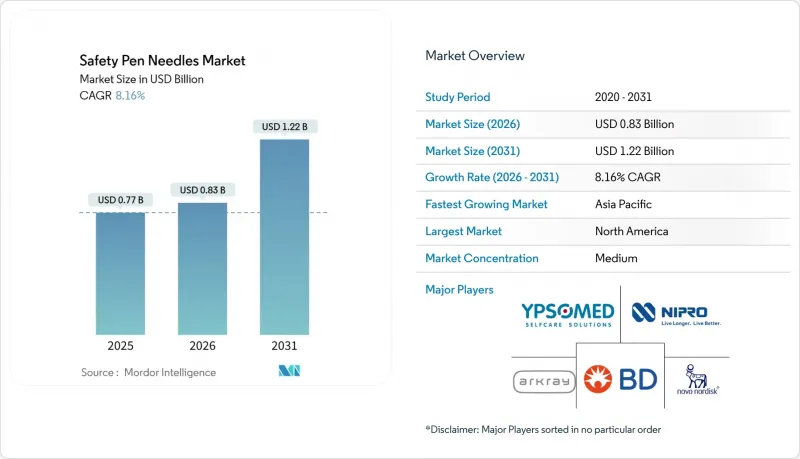
본 보고서는 안전 장치 유형(능동형, 수동형), 바늘 길이(5mm, 6mm, 8mm, 10mm, 기타), 치료법(인슐린, GLP-1, 성장 호르몬, 골다공증, 기타), 최종 사용자(재택치료, 병원 및 클리닉, 외래수술센터(ASC), 기타), 지역(북미, 유럽, 아시아태평양, 중동 및 아프리카, 남미)별로 분류되어 있습니다. 시장 전망은 금액(달러) 단위로 제시되어 있습니다.
세계의 안전 펜니들 시장 동향 및 분석
날카로운 물체로 인한 부상 방지에 관한 규제 요건
ISO 23908 : 2024는 주사 및 폐기 시 펜니들이 바늘 찔림 사고를 방지할 수 있음을 입증하는 세계 검사 프로토콜을 규정하고 있으며, 자동 비활성화 보호 덮개나 수납식 캐뉼라를 갖춘 제품의 승인을 가속화하고 있습니다. 미국 직업안전보건청(OSHA)의 규정에 따르면, 병원에 공학적 대책의 도입이 의무화되어 있는 반면, 유럽연합(EU)의 의료기기 규정에서는 엄격한 시판 후 조사가 의무화되어 있습니다. 인터마운틴 헬스케어는 6mm 안전 주사기를 표준화한 결과, 부상 건수가 51% 감소했다고 보고했으며, 이는 규제의 목적이 실무 현장에서 달성되고 있음을 뒷받침하고 있습니다. 이러한 체계로 인해 표준 바늘의 구매량이 감소하고 있으며, 기존 가격 차이도 줄어들고 있습니다.
당뇨병 유병률이 주사 횟수를 늘리고 있습니다.
NCD-RisC의 추산에 따르면, 2022년 전 세계 성인 당뇨병 환자 수는 8억 2,800만 명이며, 이 중 중국과 인도가 2억 1,700만 명을 차지했습니다. 미국 CDC의 보고에 따르면, 2024년 기준 미국 성인 당뇨병 환자의 26.5%가 GLP-1 제제 주사제를 사용했으며, 주 1회 투여 요법의 보급이 확대되고 있는 것으로 나타났습니다. 일라이 릴리는 2024년에 문자로의 매출이 52억 달러를 기록했으며, 노보노르디스크는 GLP-1 관련 매출이 200억 달러를 돌파했습니다. 이는 호환 가능한 펜니들이 가져다주는 성장 가능성을 뒷받침하는 것입니다.
대체 약물 전달 장치(펌프, 패치 펜)의 보급
엠벡타사는 2025년, 하나의 저장탱크로 3일간 사용할 수 있는 일회용 패치 펌프에 대해 FDA 승인을 획득했으며, 이를 통해 해당 제품으로 전환한 환자 1인당 연간 약 1,500개의 주사바늘 사용을 줄일 수 있게 되었습니다. 인슬렛사와 탠덤사의 펌프 역시, 특히 기술에 정통한 계층을 중심으로 사용자층을 넓혀가고 있습니다. 그러나 자금력이 풍부한 시장이라 하더라도 펌프 보급률은 40% 미만에 그치고 있으며, 또한 GLP-1 제제에는 현재 펌프용 제제가 존재하지 않기 때문에 안전 펜니들 시장의 단기적인 위축은 제한적일 것입니다.
부문별 분석
2025년에는 액티브형 모델이 매출의 69.31%를 차지했으며, 이는 병원에서 확립된 훈련 프로토콜을 반영한 것입니다. 패시브형 모델은 추가 절차 없이도 사용자를 보호할 수 있기 때문에 2031년까지 연평균 성장률(CAGR) 10.12%를 기록하며 성장하고 있으며, 모든 메커니즘 중에서 가장 높은 성장률을 보이고 있습니다. 보험사는 패시브 설계를 상해 배상 청구 감소와 연관 짓고 있으며, ISO 23908 : 2024 역시 자동 작동을 명확히 권장하고 있습니다. 현재 각 제조업체들은 투여 완료 후 자동으로 펼쳐지는 듀얼 쉴드 캐뉼라를 판매하고 있으며, 이는 의료진과 재택 이용자 양측의 요구를 모두 충족시키고 있습니다.
패시브형 기기의 도입이 가장 활발한 곳은 직원 이직률이 높고 환자의 손재주가 제각각인 재택 간호, 소규모 클리닉, 당일 수술 현장입니다. 규제 당국이 규정 준수 기록을 감사하고, 보험사가 보험금 지급을 안전 성과와 연계함에 따라, 안전 펜니들 시장은 계속해서 이러한 기기로 기울고 있습니다. 능동형 디자인은 촉각을 통한 확인을 중시하는 환자가 많은 병원 병동에서는 여전히 중요하지만, 자가 주사가 증가함에 따라 그 상대적 비중은 점차 줄어들 것으로 보입니다.
5mm 바늘은 착용감이 좋고 통증이 적다는 점 덕분에 2025년에는 31.58%의 시장 점유율을 차지했습니다. 6mm 모델은 BMI가 높은 환자에서도 일관된 피하 깊이에 도달할 수 있기 때문에 연평균 성장률(CAGR) 11.01%로 성장하고 있습니다. 각 제조업체들은 중간 정도의 길이에서도 유량을 유지할 수 있는 얇은 두께의 스테인리스 튜브를 개량하고 있으며, 실제 이용 사례에 따르면 더 짧은 캐뉼라와 비교해도 동등한 쾌적성을 보이는 것으로 나타났습니다.
더 긴 8mm 및 10mm 바늘은 특수한 증례에 대응하고 있지만, 소비자들의 수용도는 제한적입니다. 초단축형 4mm 모델은 소아나 민감한 성인을 대상으로 하고 있지만, 전체 시장에서 차지하는 비중은 여전히 미미한 수준입니다. 강성을 저해하지 않으면서 외경을 줄이는 기술적 진보에 힘입어 중형 사이즈의 추세가 강화됨에 따라, 5-6mm 제품이 안전 펜니들 시장의 중심을 계속 차지할 가능성이 높을 것으로 보입니다.
지역별 분석
북미는 OSHA(미국 직업안전보건청)의 규제, 안전 장치에 대한 CMS(미국 의료보험·의료서비스센터)의 보상, GLP-1 처방약의 급속한 보급에 힘입어 2025년 매출의 43.83%를 차지했습니다. BD와 Sharps Technology의 국내 생산 능력에 대한 투자는 해당 지역의 견고한 수요 기반을 뒷받침하는 것이며, 공급망 단축을 목표로 하는 정책의 움직임을 반영하고 있습니다.
유럽은 MDR 시행과 공공 조달 분야에서 높은 안전성에 대한 기대감으로 인해 견조한 단가를 유지하고 있습니다. 독일, 프랑스, 영국은 예산 제약으로 인한 가격 압박이 있는 상황에서도 여전히 주요 시장으로서의 지위를 유지하고 있습니다. 중동유럽에서는 병원 그룹의 현대화에 따라 시장 진출의 여지가 보입니다.
아시아태평양은 2031년까지 연평균 성장률(CAGR) 14.67%를 달성할 것으로 예상되며, 이는 세계 최고 수준입니다. 중국과 인도의 높은 당뇨병 유병률과 현지 생산 규모의 확대에 힘입어, 해당 지역은 판매량 측면에서 매우 중요한 위치를 차지하고 있습니다. 양국의 규제 당국은 ISO 23908을 준수하고 있으며, 안전 설계가 적용된 제품에 대한 입찰이 개방되어 있습니다. 일본이나 호주 등 성숙한 시장에서는 높은 보급률이 유지되고 있는 반면, 동남아시아에서는 도시 지역의 소득 증가에 따라 보급 곡선이 상승 추세를 보이고 있습니다.
라틴아메리카와 중동 및 아프리카에서는 완만한 개선 추세를 보이는 성장이 나타나고 있습니다. 브라질과 멕시코는 민간 부담 부문의 확대에 힘입어 라틴아메리카를 주도하고 있습니다. 걸프협력회의(GCC) 회원국에서는 만성 질환 대책 프로그램에 대한 투자가 수요를 끌어올리고 있지만, 공공 부문의 가격 상한선 설정으로 인해 고성능 기기의 보급 속도는 둔화되고 있습니다. 부상 관련 데이터가 더욱 가시화되고, 현지의 멸균 능력이 향상됨에 따라 안전 바늘의 보급률은 높아질 전망입니다.
기타 혜택
- 엑셀 형식 시장 예측(ME) 시트
- 3개월간의 애널리스트 지원
자주 묻는 질문
목차
제1장 서론
제2장 조사 방법
제3장 주요 요약
제4장 시장 구도
제5장 시장 규모 및 성장 예측
제6장 경쟁 구도
제7장 시장 기회 및 향후 전망
KTH 26.06.26According to Mordor Intelligence, the safety pen needles market was valued at USD 0.77 billion in 2025 and expected to grow from USD 0.83 billion in 2026 to reach USD 1.22 billion by 2031, at a CAGR of 8.16% during the forecast period (2026-2031).
This report is Segmented by Safety Mechanism Type (Active, Passive), Needle Length (5mm, 6mm, 8mm, 10mm, Others), Therapy (Insulin, GLP-1, Growth Hormone, Osteoporosis, Others), End-User (Home-Care, Hospitals & Clinics, Ambulatory Surgery Centers, Others), and Geography (North America, Europe, Asia-Pacific, Middle East & Africa, South America). Market Forecasts are Provided in Value (USD).
Global Safety Pen Needles Market Trends and Insights
Regulatory Mandates for Sharps-Injury Prevention
ISO 23908:2024 establishes global test protocols that demonstrate a pen needle can prevent needlestick exposure during injection and disposal, accelerating approvals for products that include auto-disable shields or retractable cannulas. U.S. OSHA rules require hospitals to purchase engineering controls, while the European Union Medical Device Regulation mandates strict post-market surveillance. Intermountain Healthcare documented a 51% drop in injuries after standardizing on a 6-millimeter safety syringe, confirming regulatory aims in practice. These frameworks shift purchasing away from standard needles and narrow the historic price gap.
Diabetes Prevalence Fueling Injection Volumes
NCD-RisC pegged the global diabetes population at 828 million adults in 2022, and China plus India account for 217 million of those cases. The U.S. CDC reported that 26.5% of American adults with diabetes were on GLP-1 injectables in 2024, showing momentum for once-weekly regimens. Eli Lilly logged USD 5.2 billion in Mounjaro sales in 2024, while Novo Nordisk crossed USD 20 billion in GLP-1 revenue, underscoring the upside from compatible pen needles.
Availability of Alternate Drug-Delivery (Pumps, Patch Pens)
Embecta secured FDA clearance in 2025 for a disposable patch pump that can run for three days per reservoir, removing nearly 1,500 needles per converted patient annually. Insulet and Tandem pumps are also gaining users, especially among tech-savvy cohorts. Yet pump penetration remains below 40% even in well-funded markets, and GLP-1 drugs do not have pump formulations today, limiting near-term erosion of the safety pen needles market.
Other drivers and restraints analyzed in the detailed report include:
- Shift to Home-Based Self-Administration
- Passive Auto-Disable Innovations Reduce Training Burden
- Premium Pricing Versus Standard Pen Needles
For complete list of drivers and restraints, kindly check the Table Of Contents.
Segment Analysis
Active models accounted for 69.31% of revenue in 2025, reflecting established training protocols in hospitals. Passive models are growing at 10.12% CAGR through 2031, the fastest of any mechanism, because they protect users without extra steps. Payers link passive designs to lower injury claims, and ISO 23908:2024 clearly favors automatic activation. Manufacturers now market dual-shield cannulas that auto-deploy once the dose is delivered, meeting both clinician and home-user needs.
Passive uptake is strongest in home care, retail clinic, and ambulatory surgery settings, where staff turnover is high, and patient dexterity varies. The safety pen needle market continues to tilt toward these devices as regulators audit compliance logs and insurers tie reimbursements to safety outcomes. Active designs will remain relevant in high-volume hospital wards that value tactile confirmation, but their relative weight will fall as self-administration rises.
Five-millimeter needles held a 31.58% share in 2025, thanks to comfort and low pain scores. Six-millimeter models are expanding at 11.01% CAGR because they reach consistent subcutaneous depth in patients with higher BMI. Manufacturers refine thin-wall stainless tubes that sustain flow even at mid-lengths, and real-world evidence shows equal comfort scores compared with shorter cannulas.
Longer 8 and 10-millimeter needles serve niche cases but see limited consumer acceptance. Ultra-short 4 millimeter variants target pediatric users and sensitive adults, yet their contribution to overall volume remains small. Technological advances that enable smaller outer diameters without compromising rigidity will likely reinforce the mid-range trend and keep 5 to 6-millimeter products at the core of the safety pen needles market.
Geography Analysis
North America generated 43.83% of 2025 revenue, driven by OSHA rules, CMS reimbursement for safety devices, and the rapid uptake of GLP-1 prescriptions. Domestic capacity investments by BD and Sharps Technology validate the region's strong demand base and reflect policy moves to shorten supply chains.
Europe follows with solid value per unit, thanks to MDR enforcement and high safety expectations in public tenders. Germany, France, and the United Kingdom remain anchor markets even as budget constraints pressure prices. Central and Eastern Europe shows room for penetration as hospital groups modernize.
Asia-Pacific is on track for a 14.67% CAGR to 2031, the highest globally. The prevalence of diabetes in China and India, along with local manufacturing scale, makes the region crucial for volume. Regulators in both countries are aligning with ISO 23908, opening tenders to safety designs. Mature markets such as Japan and Australia maintain high adoption rates, while Southeast Asia is moving up the curve as urban incomes rise.
Latin America and the Middle East & Africa post modest but improving growth. Brazil and Mexico lead Latin America as private pay segments expand. In the Gulf Cooperation Council, investment in chronic-disease programs increases demand, though public-sector price caps slow the uptake of premium devices. Safety needle penetration should increase as injury data becomes more visible and local sterilization capacity improves.
- AdvaCare
- Allison Medical Inc.
- Arkray
- Artsana Group
- B. Braun
- Beckton Dickinson
- Beipu Medical
- Berpu Medical Technology
- Embecta Corp.
- GlucoRx Ltd.
- Hindustan Syringes & Medical Devices
- HTL-STREFA S.A.
- Kangdelai
- NIPRO Corporation
- Novo Nordisk
- Owen Mumford
- PromiseMed Medical Devices
- Terumo
- Trividia Health
- Ultimed
- VOGT Medical Vertrieb GmbH
- Ypsomed
Additional Benefits:
- The market estimate (ME) sheet in Excel format
- 3 months of analyst support
TABLE OF CONTENTS
1 Introduction
- 1.1 Study Assumptions & Market Definition
- 1.2 Scope of the Study
2 Research Methodology
3 Executive Summary
4 Market Landscape
- 4.1 Market Overview
- 4.2 Market Drivers
- 4.2.1 Regulatory Mandates for Sharps-Injury Prevention
- 4.2.2 Diabetes Prevalence Fueling Injection Volumes
- 4.2.3 Shift to Home-Based Self-Administration
- 4.2.4 Passive Auto-Disable Innovations Reduce Training Burden
- 4.2.5 Trade-Driven Near-Shoring of Needle Production
- 4.2.6 Shift Toward Safety Pen Needles to Curb Needlestick Injuries
- 4.3 Market Restraints
- 4.3.1 Availability of Alternate Drug-Delivery (Pumps, Patch Pens)
- 4.3.2 Premium Pricing Versus Standard Pen Needles
- 4.3.3 Stringent ISO / FDA Biocompatibility Test Cycles
- 4.3.4 Ethylene-Oxide Sterilization Capacity Bottlenecks
- 4.4 Regulatory Landscape
- 4.5 Technological Outlook
- 4.6 Porter's Five Forces Analysis
- 4.6.1 Threat of New Entrants
- 4.6.2 Bargaining Power of Buyers
- 4.6.3 Bargaining Power of Suppliers
- 4.6.4 Threat of Substitutes
- 4.6.5 Competitive Rivalry
5 Market Size & Growth Forecasts
- 5.1 By Safety Mechanism Type
- 5.1.1 Active Safety Pen Needles
- 5.1.2 Passive Safety Pen Needles
- 5.2 By Needle Length
- 5.2.1 5 mm
- 5.2.2 6 mm
- 5.2.3 8 mm
- 5.2.4 10 mm
- 5.2.5 Others
- 5.3 By Therapy
- 5.3.1 Insulin Therapy
- 5.3.2 GLP-1 Therapy
- 5.3.3 Growth-Hormone Therapy
- 5.3.4 Osteoporosis
- 5.3.5 Other Therapies
- 5.4 By End-User
- 5.4.1 Home-Care Settings
- 5.4.2 Hospitals & Clinics
- 5.4.3 Ambulatory Surgery Centers
- 5.4.4 Others
- 5.5 By Geography
- 5.5.1 North America
- 5.5.1.1 United States
- 5.5.1.2 Canada
- 5.5.1.3 Mexico
- 5.5.2 Europe
- 5.5.2.1 Germany
- 5.5.2.2 United Kingdom
- 5.5.2.3 France
- 5.5.2.4 Italy
- 5.5.2.5 Spain
- 5.5.2.6 Rest of Europe
- 5.5.3 Asia-Pacific
- 5.5.3.1 China
- 5.5.3.2 Japan
- 5.5.3.3 India
- 5.5.3.4 Australia
- 5.5.3.5 South Korea
- 5.5.3.6 Rest of Asia-Pacific
- 5.5.4 Middle East & Africa
- 5.5.4.1 GCC
- 5.5.4.2 South Africa
- 5.5.4.3 Rest of Middle East & Africa
- 5.5.5 South America
- 5.5.5.1 Brazil
- 5.5.5.2 Argentina
- 5.5.5.3 Rest of South America
- 5.5.1 North America
6 Competitive Landscape
- 6.1 Market Concentration
- 6.2 Market Share Analysis
- 6.3 Company Profiles (includes Global level Overview, Market-level Overview, Core Segments, Financials, Strategic Information, Market Rank/Share, Products & Services, Recent Developments)
- 6.3.1 AdvaCare Pharma
- 6.3.2 Allison Medical Inc.
- 6.3.3 ARKRAY Inc.
- 6.3.4 Artsana Group
- 6.3.5 B. Braun SE
- 6.3.6 Becton, Dickinson & Company
- 6.3.7 Beipu Medical
- 6.3.8 Berpu Medical Technology
- 6.3.9 Embecta Corp.
- 6.3.10 GlucoRx Ltd.
- 6.3.11 Hindustan Syringes & Medical Devices
- 6.3.12 HTL-STREFA S.A.
- 6.3.13 Kangdelai
- 6.3.14 NIPRO Corporation
- 6.3.15 Novo Nordisk A/S
- 6.3.16 Owen Mumford Ltd.
- 6.3.17 PromiseMed Medical Devices
- 6.3.18 Terumo Corporation
- 6.3.19 Trividia Health Inc.
- 6.3.20 UltiMed Inc.
- 6.3.21 VOGT Medical Vertrieb GmbH
- 6.3.22 Ypsomed AG
7 Market Opportunities & Future Outlook
- 7.1 White-space & Unmet-need Assessment


