

|
시장보고서
상품코드
2066732
미국의 데이베드 시장 : 시장 점유율 분석, 업계 동향 및 통계, 성장 예측(2026-2031년)United States Daybeds - Market Share Analysis, Industry Trends & Statistics, Growth Forecasts (2026 - 2031) |
||||||
 Mordor Intelligence
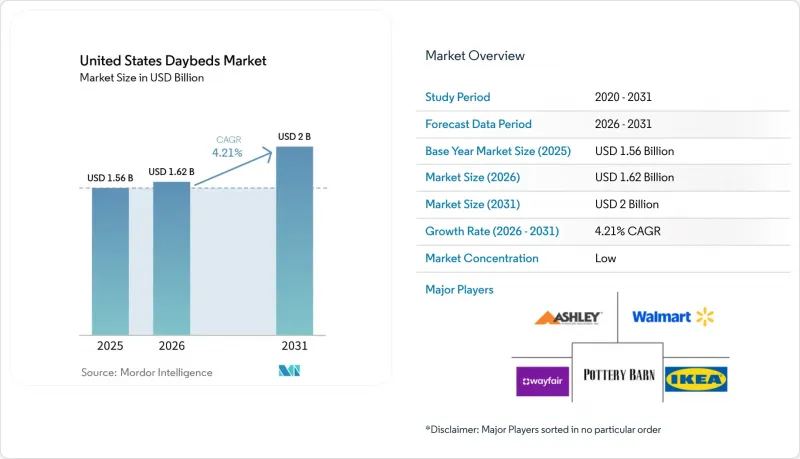
Mordor Intelligence에 의하면, 미국의 데이베드 시장 규모는 2025년에 15억 6,000만 달러로 평가되었고, 2026년 16억 2,000만 달러로 추정되고, 2031년까지 20억 달러에 이를 것으로 예측되며, 2026-2031년 예측 기간 CAGR은 4.21%를 나타낼 전망입니다.
본 보고서는 침대 유형별(실내용, 실외용), 소재 유형별(금속, 플라스틱, 천 커버, 등나무·라탄, 목재, 기타), 기능성별(컨버터블, 수납형, 접이식, 고정식), 최종 사용자별(주거용, 상업용), 유통 채널 및 지역별로 분류되어 있습니다. 시장 전망은 금액(달러) 기준으로 제시되어 있습니다.
미국의 데이베드 시장 동향 및 인사이트
아웃도어 리빙의 업그레이드 주기가 라운지 및 데이베드에 대한 수요를 끌어올리고 있습니다.
야외 레크리에이션은 계속해서 시장 활동에 크게 기여하고 있으며, BEA(미국 경제분석국)의 위성계정에 따르면 2023년 부가가치액은 6,395억 달러를 기록했고, 해당 부문의 실질 성장률은 3.6%를 기록했습니다. 이에 따라 2026년에도 데이베드나 컨버터블 라운저를 설치할 수 있는 뒷마당이나 라나이의 좌석 공간에 대한 지속적인 투자가 촉진되고 있습니다. 플로리다주와 캘리포니아주는 야외 레크리에이션 분야에서 상당한 부가가치를 창출하며 이러한 추세를 주도했습니다. 동시에, 선벨트 지역의 주택 소유주들은 낮에는 의자로, 밤에는 침대로도 사용할 수 있는 내후성이 뛰어난 쿠션과 프레임을 활용해 지붕이 있는 파티오, 수영장 데크, 그늘진 안뜰을 확장했습니다. 플로리다 남서부 등 시장에서 활동하는 맞춤형 주택 건설업체들에 따르면, 야외 주방과 라운지 공간의 보급이 확대되고 있는 것으로 나타났으며, 온화한 기후 덕분에 일년중 더 많은 달에 걸쳐 지속적으로 사용될 수 있는 공간 절약형 라운지와 데이베드가 당연한 것처럼 설계에 반영되고 있습니다. 한편, 가구에 대한 실질 개인소비지출은 2025년 후반에 걸쳐 완만한 압박이 나타났습니다. 그러나 남동부 지역은 마운틴 웨스트의 일부 주에 비해 그 영향이 적었기 때문에 2026년에 들어서면서 야외용 가구 수요에 있어 지역별 차이가 뚜렷해지고 있습니다. 미국의 주택 소유자들이 실내와 실외 생활 공간을 하나로 통합해 나가는 가운데, 2026년 데이베드 시장에서는 색 바램 방지, 속건성, 관리 용이성을 모두 갖춘 제품이 구매 결정에 있어 더욱 중요한 요소가 될 것입니다.
주거 면적의 축소가 다기능 가구의 보급을 촉진하고 있습니다.
가구 구성의 변화 추세와 젊은 층의 자립 지연으로 인해, 제한된 주거 공간에서도 손님을 맞이할 수 있도록 앉는 공간에서 자는 공간으로 변형되는 가구에 대한 관심이 계속되고 있습니다. 낮에는 소파로 사용되고, 밤에는 수면 공간을 제공하는 컨버터블 데이베드는 2025년에도 시장 점유율 부문에서 1위를 유지했습니다. 이는 기본 프레임에 비해 평균 판매 가격이 높은 서랍식 침대, 좌석 하단 수납공간, 충전 기능이 일체화된 모델 등에 고객이 투자하려는 의지에 힘입은 결과입니다. 대형 멀티채널 기업들은 다기능 가구의 판촉 전략을 강화하고 있으며, Wayfair사는 유료 로열티 회원들의 높은 참여도와 2026년이 시작되면서 시장 점유율이 지속적으로 확대되고 있음을 지적하고 있습니다. 이케아는 계속해서 소규모 매장과 인구 밀집 지역 진출 계획에 중점을 두고 있으며, 온라인 상품 검색과 매장 수령 및 배송 서비스를 연계함으로써 도시 지역 가정을 위한 콤팩트하고 모듈식 데이베드 조합을 지원하고 있습니다. 이러한 추세에 따라 미국의 데이베드 시장은 공간 절약이라는 가치를 계속해서 핵심으로 삼고 있으며, 2026년에는 도시 지역의 아파트, 부속 주택, 소규모 단독주택에서 이러한 가치가 공감을 얻고 있습니다.
섬유 제품에 대한 PFAS 금지 조치는 패브릭 소파베드의 규정 준수 비용과 복잡성을 가중시킵니다.
메인주의 규정에 따라 2026년 1월 1일부터 천으로 덮인 가구에 PFAS를 의도적으로 첨가하는 것이 금지됩니다. 이로 인해 오염 방지 및 발수 성능과 관련된 배합 재검토 및 시험이 요구되는 한편, 공급업체 입장에서는 신고 및 규정 준수 비용 증가로 이어질 것입니다. 캘리포니아주의 SB 730 법안은 PFAS 규제를 섬유 제품 및 천으로 덮인 가구까지 확대하며, 2027년 1월 1일부터 시행됩니다. 이에 따라 전미의 제품 라인업은 가장 엄격한 주 규정을 준수하도록 조정될 것이며, 각 브랜드는 PFAS가 포함되지 않은 제품이나 명확하게 정의된 대체품으로 전환해야할 것입니다. 미네소타주의 ‘아마라법’은 PFAS 금지 대상을 천으로 덮인 가구까지 확대하는 한편, 보고 요건을 개정하고 연방 정부의 보고 의무도 강화함에 따라, 주 정부가 주도하는 종합적인 규정 준수 체계를 한층 더 공고히 하고 있습니다. EPA의 TSCA 제8조(a)(7)에 따른 보고 의무에 따라, 제조업체 및 수입업체는 과거 PFAS 사용 현황을 공개해야 하며, 이를 통해 투명성이 향상되고, 실내 장식품의 처리 및 관련 자재에 영향을 미칠 향후 연방 정부의 조치에 참고 자료가 될 수 있습니다. 이러한 변화로 인해 검사 비용 증가, 발유성 및 발수성 성능 간의 상충 가능성, 그리고 미국 데이베드 시장의 유통 확대에 앞서 기업이 규정 준수를 확보하기 위해 제품 출시 시기가 늦춰지는 등의 영향이 발생하고 있습니다.
부문별 분석
2025년 미국 데이베드 시장에서 실내용 데이베드는 73.61%의 점유율을 차지하며 해당 카테고리를 주도했습니다. 이는 객실, 홈오피스로 용도가 변경된 방, 가족이 방문객이나 고향에 온 성인 자녀들을 대접하는 다목적 공간 등으로 활용된 데 힘입은 결과입니다. 실외용 모델이 나머지 시장 점유율을 차지하고 있으며, 2031년까지 연평균 성장률(CAGR)이 6.67%로 가장 높은 성장세를 보일 것으로 전망됩니다. 이는 각 가정에서 지붕이 있는 파티오나 수영장 옆의 좌석 공간을, 때때로 잠을 잘 수 있는 공간으로 확장하고 있기 때문입니다. 미국의 데이베드 시장은 여전히 야외 레크리에이션 및 화창한 날씨와 밀접한 관련이 있으며, 플로리다주와 캘리포니아주에서는 내후성 쿠션, 자외선 차단 원단, 관리가 쉬운 프레임이 필요한 야외 생활에 대한 투자가 주를 이루고 있습니다. 연안 지역 및 선벨트 지역의 도시권 건설업체들은 신축 및 리모델링 주택의 설계 기준으로 라운지와 야외 주방을 계속해서 도입하고 있으며, 이에 따라 2026년 이후에도 야외용 데이베드에 대한 수요는 견조한 추세를 보일 전망입니다. 혹독한 겨울철 시장 상황 속에서도 실내용 제품군은 연중 내내 실용성을 발휘하고 좁은 공간의 방에도 잘 어울린다는 점을 통해 그 우위를 유지하고 있습니다.
실내 부문의 견조한 성장세는 다세대 동거 및 재택 고령화 추세도 반영하고 있습니다. 이러한 추세로 인해, 리모델링이나 증축 없이도 거주 공간을 일시적인 취침 공간으로 업그레이드할 수 있는 가구가 인기를 끌고 있기 때문입니다. 실내용 제품 부문에서는 서랍식 침대, 수납 서랍, 내장 충전 기능을 갖춘 컨버터블 프레임으로의 전환이 진행되고 있으며, 이로 인해 기본 모델에 비해 평균 판매 가격이 상승하고 있습니다. 실외용 제품은 우수한 소재와 탈부착 가능한 커버를 통해 청소 및 유지보수와 관련된 실질적인 과제를 해결해야 합니다. 이로 인해 교체 주기는 짧아지지만, 고품질 구조를 선택한 구매자의 만족도는 높아집니다. 그 결과, 미국의 데이베드 시장에서는 기후와 디자인 트렌드의 영향으로 야외 사용이 확대되고 있는 한편, 시장 점유율 측면에서는 실내용 제품이 여전히 주도적인 위치를 유지하고 있는 침대 유형 구성이 형성되고 있습니다.
2025년, 미국의 데이베드 시장에서 목재는 32.56%의 점유율을 차지했습니다. 이는 클래식한 외관을 선호하는 구매자를 위해, 전통적인 스타일에서 현대적인 팜하우스 스타일에 이르기까지 친근한 미학을 살린 제품입니다. 그러나 가장 빠르게 성장하고 있는 것은 위커와 라탄으로, 2031년까지의 연평균 성장률(CAGR)은 7.20%를 나타낼 것으로 전망됩니다. 이는 각 가정에서 야외 라운지나 수영장 주변 공간에 대한 투자를 확대하고 있기 때문이며, 이러한 장소에서는 알루미늄 프레임보다 수지 위커가 내습성이 뛰어나고 가벼운 편이기 때문입니다. 가구 관련 지역별 소비 동향을 살펴보면, 남동부 지역은 마운틴 웨스트의 일부 주에 비해 비교적 안정적인 수요를 유지하고 있으며, 이는 2026년 아웃도어용 소재의 성장 여지를 뒷받침하고 있습니다. 또한, 솔루션 염색 원단과 내식성 프레임으로의 전환 역시, 관리 편의성과 내구성이 중시되는 실외 환경에서 프리미엄화를 뒷받침하고 있습니다. 이러한 추세로 인해 위커와 라탄은 미국 데이베드 시장의 소재 구성에서 계속해서 긍정적인 요인으로 작용하고 있습니다.
목재의 경우, 현재 216.01%인 반덤핑 마진이 여전히 유효하며, 관세가 적용될 경우 도착 비용이 상승하기 때문에 별도의 관세율이 설정되지 않은 중국 수출업체에 의존하고 있는 경우 수입 압박에 직면하고 있습니다. 일부 생산자에게는 국내 투자가 이러한 위험을 상쇄하는 데 도움이 되고 있지만, 다른 소매업체들은 대체가 가능한 분야에서 상품 구성의 균형을 금속, 위커, 라탄으로 재조정하고 있습니다. 천 커버 유형은 쾌적성을 최우선으로 하는 실내 사용 구매자에게 적합하며, PFAS 규제를 시행하고 있는 주의 기준을 충족할 수 있도록 원단도 지속적으로 개선되고 있습니다. 또한, 금속 프레임은 내구성이 뛰어난 마감 처리로 미니멀리스트 스타일을 돋보이게 합니다. 미국의 데이베드 업계는 소재의 다양성을 활용하여 무역 및 규제상의 충격으로부터 스스로를 보호함으로써, 2031년까지의 균형 잡힌 성장 전망을 더욱 공고히 하고 있습니다.
기타 혜택 :
- 엑셀 형식 시장 예측(ME) 시트
- 3개월간의 애널리스트 지원
자주 묻는 질문
목차
제1장 서론
제2장 조사 방법
제3장 주요 요약
제4장 시장 구도
제5장 시장 규모 및 성장 예측
제6장 경쟁 구도
제7장 시장 기회 및 향후 전망
AJY 26.06.30According to Mordor Intelligence, the united states day beds market size was valued at USD 1.56 billion in 2025 and is estimated to grow from USD 1.62 billion in 2026 to reach USD 2.0 billion by 2031, at a CAGR of 4.21% during the forecast period 2026 to 2031.
This report is Segmented by Bed Type (Indoor, and Outdoor), Material Type (Metal, Plastic, Upholstered, Wicker/Rattan, Wood, and Others), Functionality (Convertible, Storage, Foldable, and Fixed), End-User (Residential, and Commercial), Distribution Channel, and Geography. The Market Forecasts are Provided in Terms of Value (USD).
United States Daybeds Market Trends and Insights
Outdoor living upgrade cycle lifts lounge or daybed demand
Outdoor recreation remained a strong contributor to activity, with the BEA's satellite account reporting USD 639.5 billion of value added in 2023 and a real growth rate of 3.6% for the category, supporting continued investment in backyard and lanai seating areas that accommodate daybeds and convertible loungers in 2026. Florida and California anchored this theme with significant outdoor recreation value added. At the same time, Sun Belt homeowners extended covered patios, pool decks, and shaded courtyards with weather-resilient cushions and frames that double as seating by day and sleeping at night. Custom builders in markets such as Southwest Florida have reported growing prevalence of outdoor kitchens and lounge areas, which naturally include space-efficient lounges and daybeds that remain in use across more months of the year in warmer climates. At the same time, real personal consumption expenditures on furnishings showed modest pressure into late 2025. However, the Southeast experienced smaller drags compared with some Mountain West states, supporting regional differentiation in outdoor furnishing demand as 2026 begins. As homeowners blend indoor and outdoor living areas in the United States day beds market, product choices that offer fade resistance, quick-dry performance, and easy-care features become more central to purchase decisions in 2026.
Smaller home sizes push multi functional furniture adoption
Household formation patterns and delayed independence among young adults sustain interest in furniture that converts from seating to sleep to handle guests within constrained square footage. Convertible daybeds that function as sofas during the day while providing sleeping space at night maintained category leadership by share in 2025, supported by customer willingness to invest in models with trundles, under-seat storage, and integrated charging that raise average selling prices relative to basic frames. Large multichannel players have sharpened merchandising for multi-functional pieces, with Wayfair noting strong engagement from paid loyalty members and continued share capture as 2026 opens. IKEA continues to emphasize small-format stores and planning points in high-density areas, linking online discovery with pickup and delivery to support compact, modular daybed combinations for urban households. These dynamics keep the United States daybed market centered on space-saving value, which resonates in city apartments, accessory dwelling units, and smaller single-family homes in 2026.
PFAS bans in textiles add compliance cost and complexity for upholstered daybeds
Maine's program prohibits intentionally added PFAS in upholstered furniture beginning January 1, 2026, which drives reformulation and testing for stain or water resistance while adding filing and compliance costs for suppliers. California's SB 730 extends PFAS restrictions to textiles and upholstery, with an effective date of January 1, 2027, shaping national assortments to align with the strictest state rules and nudging brands toward PFAS-free or clearly defined alternatives. Minnesota's Amara's Law extended PFAS prohibitions to upholstered furniture while updating reporting requirements, reinforcing a broader state-led compliance framework as federal reporting also ramps up. EPA's TSCA Section 8(a)(7) reporting requires manufacturers and importers to disclose historic PFAS use, adding transparency that could inform future federal actions affecting upholstery treatments and related materials. These shifts introduce incremental testing costs, potential performance trade-offs for oil and water repellency, and staggered product launch timing as companies ensure compliance before scaling distribution in the United States daybeds market.
Other drivers and restraints analyzed in the detailed report include:
- Multigenerational living raises need for flexible sleeping and seating
- Feature-rich daybeds expand use cases and ASPs
- Antidumping duties on wooden bedroom furniture from China pressure import costs and mix
For complete list of drivers and restraints, kindly check the Table Of Contents.
Segment Analysis
Indoor daybeds led the category with a 73.61% share in the United States daybed market in 2025, supported by use in guest rooms, converted home offices, and flexible dens where families host visitors or returning adult children. Outdoor models held the balance and are set to be the fastest-growing, with a 6.67% CAGR through 2031, as households expand covered patios and poolside seating into spaces that also support occasional sleep. The United States daybed market remains tied to outdoor recreation and favorable climates, with Florida and California anchoring outdoor living investments that require weather-resistant cushions, UV-stable fabrics, and easy-care frames. Builders in coastal and Sun Belt metros continue to include lounges and outdoor kitchens as design standards for new or renovated homes, which keeps demand for outdoor daybeds steady into 2026 and beyond. Even in markets with harsher winters, the indoor category sustains its advantage through year-round utility and compatibility with small-footprint rooms.
The indoor segment's resilience also reflects multigenerational living and aging in place, since these trends favor furniture that upgrades living areas into temporary sleeping zones without remodeling or building additions. The indoor products segment is moving toward convertible frames with trundles, storage drawers, and integrated charging, which elevate average selling prices relative to basic options. Outdoor products must address the realities of cleaning and upkeep through better materials and removable covers, which shorten replacement cycles but increase satisfaction among buyers who choose premium constructions. The result is a bed type mix in the United States day beds market that maintains indoor leadership by share while expanding outdoor use, where climate and design trends support it.
Wood captured a 32.56% share of the United States daybed market in 2025, leveraging familiar aesthetics from traditional to modern farmhouse styles for buyers seeking a classic look. Yet wicker or rattan is the fastest-growing, with a 7.20% CAGR through 2031, as households invest in outdoor lounge and poolside areas, where resin wicker over aluminum frames offers better moisture resistance and lighter weight. Regional spending patterns on furnishings suggest the Southeast has maintained steadier demand relative to some Mountain West states, which supports the growth runway for outdoor-oriented materials in 2026. The shift toward solution-dyed fabrics and corrosion-resistant frames also supports premiumization in open-air settings where easy care and durability matter. This trajectory keeps wicker or rattan a bright spot in the material mix for the United States daybeds market.
Wood faces import pressures where sourcing depends on Chinese exporters without a separate rate, since the current antidumping margin of 216.01% remains in force and raises landed costs if duties apply. Domestic investments help offset this exposure for certain producers, while other retailers rebalance assortments toward metal, wicker, and rattan where substitution is feasible. Upholstered variants serve comfort-first indoor buyers as fabrics evolve to meet compliance in PFAS-restricted states, and metal frames support minimalist styles with durable finishes. The United States daybeds industry uses material diversity to insulate against trade and regulatory shocks, reinforcing a balanced growth outlook through 2031.
List of Companies Covered in this Report:
- IKEA
- Ashley Furniture Industries (Ashley)
- Wayfair
- Walmart
- Pottery Barn (Williams-Sonoma, Inc.)
- West Elm
- RH (Restoration Hardware)
- Frontgate
- Serena & Lily
- DHP (Dorel Home)
- Zinus
- Coaster Fine Furniture
- Hillsdale Furniture
- Homelegance
- Article
- Joybird
- World Market (Cost Plus)
- Target
- The Home Depot
- Brown Jordan
- DEDON
- Lloyd Flanders
- Modway
- CB2
- Crate & Barrel
- POLYWOOD
- Outer
Additional Benefits:
- The market estimate (ME) sheet in Excel format
- 3 months of analyst support
TABLE OF CONTENTS
1 Introduction
- 1.1 Study Assumptions & Market Definition
- 1.2 Scope of the Study
2 Research Methodology
3 Executive Summary
4 Market Landscape
- 4.1 Market Overview
- 4.2 Market Drivers
- 4.2.1 Outdoor living upgrade cycle lifts lounge/daybed demand (high replacement + new purchases)
- 4.2.2 Smaller home sizes push multi-functional furniture (sofa-to-sleep) adoption
- 4.2.3 Multigenerational living raises need for flexible sleeping/seating solutions
- 4.2.4 Feature-rich daybeds (trundle, storage, charging, LED) widen use-cases and ASPs
- 4.2.5 Short-term rentals optimize occupancy and guest comfort with daybeds (indoor/outdoor)
- 4.2.6 Aging-in-place shift puts more lounge/sleep solutions into homes vs institutions
- 4.3 Market Restraints
- 4.3.1 PFAS bans in textiles add compliance cost/complexity for upholstered daybeds
- 4.3.2 US antidumping duties on wooden bedroom furniture from China pressure import costs/mix
- 4.3.3 Cleaning/care burden deters outdoor upholstered purchases and replacement cycles
- 4.3.4 Urban short-term-rental (STR) restrictions dampen host furnishing purchases in key cities
- 4.4 Industry Value Chain Analysis
- 4.5 Porter's Five Forces Analysis
- 4.5.1 Threat of New Entrants
- 4.5.2 Bargaining Power of Suppliers
- 4.5.3 Bargaining Power of Buyers
- 4.5.4 Threat of Substitutes
- 4.5.5 Competitive Rivalry
- 4.6 Insights into the Latest Trends and Innovations in the Market
- 4.7 Insights on Recent Developments (New Product Launches, Strategic Initiatives, Investments, Partnerships, JVs, Expansion, M&As, etc.) in the Market
5 Market Size & Growth Forecasts (Value)
- 5.1 By Bed Type
- 5.1.1 Indoor
- 5.1.2 Outdoor
- 5.2 By Material Type
- 5.2.1 Metal
- 5.2.2 Plastic
- 5.2.3 Upholstered
- 5.2.4 Wicker/Rattan
- 5.2.5 Wood
- 5.2.6 Others
- 5.3 By Functionality
- 5.3.1 Convertible
- 5.3.2 Storage
- 5.3.3 Foldable
- 5.3.4 Fixed
- 5.4 By End-User
- 5.4.1 Residential
- 5.4.2 Commercial
- 5.5 By Distribution Channel
- 5.5.1 B2C/Retail Distribution Channel
- 5.5.1.1 Multi-Brand Stores
- 5.5.1.2 Specialty Stores
- 5.5.1.3 Online
- 5.5.1.4 Other Distribution Channel
- 5.5.2 B2B/Project
- 5.5.1 B2C/Retail Distribution Channel
- 5.6 By Geography
- 5.6.1 Northeast
- 5.6.2 Southeast
- 5.6.3 Midwest
- 5.6.4 Southwest
- 5.6.5 West
6 Competitive Landscape
- 6.1 Market Concentration
- 6.2 Strategic Moves
- 6.3 Market Share Analysis
- 6.4 Company Profiles (includes Global level Overview, Market level overview, Core Segments, Financials as available, Strategic Information, Market Rank/Share for key companies, Products & Services, and Recent Developments)
- 6.4.1 IKEA
- 6.4.2 Ashley Furniture Industries (Ashley)
- 6.4.3 Wayfair
- 6.4.4 Walmart
- 6.4.5 Pottery Barn (Williams-Sonoma, Inc.)
- 6.4.6 West Elm
- 6.4.7 RH (Restoration Hardware)
- 6.4.8 Frontgate
- 6.4.9 Serena & Lily
- 6.4.10 DHP (Dorel Home)
- 6.4.11 Zinus
- 6.4.12 Coaster Fine Furniture
- 6.4.13 Hillsdale Furniture
- 6.4.14 Homelegance
- 6.4.15 Article
- 6.4.16 Joybird
- 6.4.17 World Market (Cost Plus)
- 6.4.18 Target
- 6.4.19 The Home Depot
- 6.4.20 Brown Jordan
- 6.4.21 DEDON
- 6.4.22 Lloyd Flanders
- 6.4.23 Modway
- 6.4.24 CB2
- 6.4.25 Crate & Barrel
- 6.4.26 POLYWOOD
- 6.4.27 Outer
7 Market Opportunities & Future Outlook
- 7.1 White-space & unmet-need assessment
- 7.2 Opportunities & Future Trends
- 7.2.1 Contract-grade, PFAS-free upholstered daybeds for hospitality, student housing, and multifamily amenity decks (premium compliance + durability)
- 7.2.2 ADU/garage-conversion and micro-living kits pairing storage/trundle daybeds with modular casegoods (space-maximization bundles)


