

|
시장보고서
상품코드
2073021
남미의 동물 사료용 유기 미량 미네랄 시장 : 시장 점유율 분석, 업계 동향 및 통계, 성장 예측(2026-2031년)South America Animal Feed Organic Trace Minerals - Market Share Analysis, Industry Trends & Statistics, Growth Forecasts (2026 - 2031) |
||||||
 Mordor Intelligence
Mordor Intelligence에 의하면, 남미의 동물 사료용 유기 미량 미네랄 시장 규모는 2026년에는 1억 240만 달러에서 1억 940만 달러로 추정되고, 2031년까지 1억 5,240만 달러로 확대될 것으로 예측되며, 2026-2031년 기간 CAGR은 6.86%를 나타낼 전망입니다.
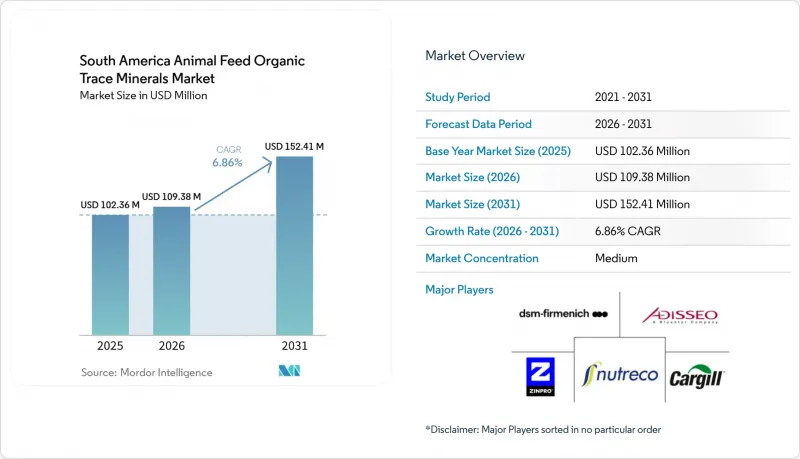
본 보고서는 미량 원소 유형별(아연, 구리, 철 등), 킬레이트화 방식별(아미노산 킬레이트, 단백산염 등), 동물 유형별(가금류, 반추동물 등), 용도별(성장 촉진, 질병 예방, 면역 지원 등) 및 지역별(브라질, 아르헨티나 등)로 분류되어 있습니다. 시장 전망은 금액(달러) 기준으로 제시되어 있습니다.
남미의 동물 사료용 유기 미량 미네랄 시장 동향 및 인사이트
가금류 및 돼지 수출과 관련된 사료 강화 수요
브라질의 2024년 수출 실적을 바탕으로, 남미의 동물사료용 유기 미량 미네랄 시장에서 사료 제조업체들은 더욱 엄격한 미네랄 규격의 도입을 요구받고 있습니다. 브라질 동물성 단백질 협회(ABPA)에 따르면, 2024년 닭고기 수출량은 530만 메트릭톤, 돼지고기 수출량은 140만 메트릭톤에 달했고, 전년 대비 각각 3%, 10% 증가세를 보였습니다. 주요 수출국에서는 사료 원료의 추적 가능성에 대한 기대가 높아지고 있으며, 이로 인해 남미의 동물 사료용 유기 미량 미네랄 시장에서 범용 무기 원료보다 유기 인증을 받은 미네랄 원료가 선호되는 추세입니다. 2025년 9월의 미니 리뷰에 따르면, 가금류와 돼지에게 유기 복합체 형태의 아연, 구리, 망간, 철을 급여함으로써 분변 내 미네랄 배설을 줄일 수 있으며, 이는 수출 관련 공급망에서 상업적 시스템이 환경 규정 준수 압박에 대응하는 데 도움이 된다는 사실이 밝혀졌습니다. 이는 국내 사료 비용이 여전히 변동하고 있는 상황에서도, 남미의 동물사료용 유기 미량 미네랄 시장이 무역 규정 준수 요구에 힘입어 지지를 얻고 있음을 의미합니다.
육우 사육의 집약화와 목초지의 미네랄 균형
육우 사육의 집약화는 남미의 사료용 유기 미량 미네랄 시장에 단기적인 가격 변동에 대한 의존도가 낮은 안정적인 수요 기반을 마련해 주고 있습니다. 브라질의 상업용 소 사육 두수는 2024년에 1억 9,400만 마리에 달했으며, 같은 해 비육장에서 사육된 두수는 사상 최고치인 880만 마리에 이르렀습니다. 같은 ABIEC 보고서에 따르면, 비육 시설에서의 비육은 총 도축 두수의 19.2%를 차지했으며, 브라질 쇠고기 농업 산업 시스템의 사료비는 45억 400만 달러에 달했습니다. 2025년 브라질의 비육 시설에서 실시된 실험에 따르면, 유기 미량 미네랄은 첨가율이 낮은 경우에도 가축의 생산 성능을 유지하면서 네롤 품종 비육 수소의 평균 일일 증체량과 사료 효율을 향상시키는 것으로 나타났습니다. 이 결과는 무기질 공급원과 비교했을 때 뛰어난 생체 이용률과 영양소 이용률을 통해 유기 미량 미네랄의 가치를 입증하는 것입니다. 이에 따라 생산 효율 향상, 사료 비용 최적화, 그리고 세라두나 팜파스와 같은 지역에서 흔히 나타나는 셀레늄, 구리, 아연 결핍을 보다 효과적으로 개선하고자 하는 남미의 쇠고기 생산자들 사이에서 유기 미량 미네랄의 도입이 더욱 확산되고 있습니다.
무기 미량 미네랄과의 가격 차이
남미의 동물 사료용 유기 미량 미네랄 시장에서 높은 가격은 여전히 가장 뚜렷한 도입 장벽으로 작용하고 있습니다. 유기농 제품은 황산염이나 산화물과 비교했을 때 여전히 현저한 비용 차이가 있으며, 단기 사료 공급 주기에서는 수익을 명확히 파악하기 어려운 방목 시스템에서는 이러한 비용 차이를 정당화하기가 더욱 어렵습니다. 이러한 압박은 가치 중심의 쇠고기 생산 시스템을 채택하고 있는 아르헨티나나, 하류 단계의 도체 품질보다는 당장의 사료 비용을 더 중시하는 소규모 양돈 사업에서 가장 크게 느껴집니다. 이러한 상황은 Zinpro, Novus International, Inc., Alltech와 같이 검증된 실적을 보유한 공급업체들에게 유리한 부수적 효과를 가져오고 있습니다. 왜냐하면 유기 사료로 전환하는 생산자들은 투여량과 반응 간의 관계에 대한 데이터가 공개된 브랜드를 선택하는 경향이 있기 때문입니다. 그 결과, 남미의 동물사료용 유기 미량 원소 시장은 완전히 유기 사료로 전환한 선진적인 상업용 사용자와 여전히 무기 제품을 계속 사용하는 소규모 사업자 사이에서 양극화되어 있습니다.
부문별 분석
2025년, 아연은 남미의 동물 사료용 유기 미량 미네랄 시장에서 35.6%라는 최대 점유율을 차지했으며, 가금류, 돼지, 소, 수산 양식 분야의 각 영양 프로그램에서 핵심 미량 원소로 자리매김하고 있습니다. 그 역할은 면역력 강화, 발굽 강도 유지, 장 상피 회복, 번식 능력 향상 등에 이르기까지, 특정 품종에 국한되지 않는 폭넓은 수요가 있습니다. 브라질에서 쇠고기 비육을 위한 실내 사육으로의 전환 역시 아연 사용을 촉진하고 있습니다. 이는 보다 엄격한 사료 공급 시스템에서는 보다 일관된 생산 실적이 요구되기 때문입니다. 2024년 육계 관련 연구 '육계 생산 성적, 도체 특성, 간 및 경골의 미네랄 프로파일에 대한 염산염 및 유기 아연의 시너지 효과'에서는 동일한 첨가량에서 염산염과 유기 아연의 조합이 황산아연에 비해 사료전환율을 개선하고 복부 지방을 감소시키는 것으로 밝혀졌습니다.
셀레늄은 가장 빠르게 성장하고 있는 미량 원소로, 예측 기간(2026-2031년) 동안 연평균 성장률(CAGR) 7.8%를 나타낼 것으로 전망됩니다. 이는 육계, 산란계, 종계 및 수산 양식 각 프로그램에서 생체 이용률과 식품 안전성 두 가지 측면 모두에 대한 지원이 점점 더 중요시되고 있기 때문입니다. 『Journal of Nutrition』지 2025년호에 실린 총설에 따르면, 시판되는 용량 기준에서 유기 셀레늄 메티오닌 및 셀레늄 효모는 아셀레늄산 나트륨에 비해 25%에서 45%의 생체 이용률 우위를 보이는 것으로 보고되었습니다. 구리, 망간, 철, 코발트는 생식 기능, 골격 건강, 또는 특정 집단에서 나타나는 결핍증의 개선과 관련이 있는 경우가 많으며, 중요하기는 하지만 그 기능은 비교적 제한적입니다. 크롬은 여전히 소규모 카테고리에 속하지만, 젖소와 수산 양식 분야의 스트레스 관리 용도로 주목을 받고 있습니다. 남미의 동물사료용 유기 미량 미네랄 업계의 폭넓은 제품 라인업에는 세라도나 팜파스와 같은 사료 부족 지역에서 사용되는 틈새 원소들도 포함되어 있으며, 이러한 지역에서는 미네랄 균형의 근본적인 불균형으로 인해 직접적인 보충이 필요합니다.
단백질염은 남미의 동물사료용 유기 미량 미네랄 시장에서 가장 큰 점유율을 차지했으며, 2025년에는 시장 점유율의 39.4%를 차지했습니다. 이러한 우위는 육우, 젖소, 가금류, 돼지를 위한 사료 배합에서 널리 상업적으로 인정받고 있다는 점에 기인합니다. 생산성을 중시하는 가축 영양 프로그램에서 확립된 역할에 더해, 입증된 생체 이용률, 미네랄의 안정성, 그리고 시판되는 프리믹스 시스템과의 호환성이 어우러져 해당 지역 전체에 걸쳐 강력한 시장 침투를 뒷받침하고 있습니다. 단백질 사료는 집약적인 생산 시스템에서 특히 널리 보급되어 있으며, 이러한 시스템에서는 사료 전환율, 번식 효율, 면역 기능 및 가축의 종합적인 생산성 향상이 상업용 사료 제조업체와 통합형 축산 사업체에게 매우 중요한 요소로 작용하고 있습니다.
하이드록시 미량 미네랄은 남미의 동물사료용 유기 미량 미네랄 시장에서 가장 빠르게 성장하는 킬레이트화 형태로 부상하고 있으며, 2026-2031년 연평균 성장률(CAGR) 9.7%를 나타낼 것으로 전망됩니다. 이러한 성장은 집약적인 축산 시스템에서 미네랄의 안정성, 사료 효율 및 영양소 이용률 향상에 대한 업계의 관심이 높아지고 있는 데 기인합니다. 아미노산 킬레이트, 셀레늄 효모 복합체, 특수 미네랄 배합물 등 다른 형태의 킬레이트도 프리미엄 동물사료 분야에서 주목을 받고 있습니다. 한편, 신흥 나노 미네랄 기술은 남미의 동물사료용 유기 미량 미네랄 업계에서 여전히 상용화의 초기 단계에 있습니다.
기타 혜택 :
- 엑셀 형식 시장 예측(ME) 시트
- 3개월간의 애널리스트 지원
자주 묻는 질문
목차
제1장 서론
제2장 조사 방법
제3장 주요 요약
제4장 시장 구도
제5장 시장 규모 및 성장 예측
제6장 경쟁 구도
제7장 시장 기회 및 향후 전망
AJY 26.07.07According to Mordor Intelligence, the south america animal feed organic trace minerals market size is projected to grow from USD 102.4 million to USD 109.4 million in 2026 to USD 152.4 million by 2031, registering a CAGR of 6.86% during 2026 to 2031.
This report is Segmented by Trace Element Type (Zinc, Copper, Iron, and More), by Chelation Type (Amino-Acid Chelates, Proteinates, and More), by Animal Type (Poultry, Ruminants, and More), by Application (Growth Promotion, Disease Prevention, Immune Support, and More), and by Geography (Brazil, Argentina, and More). The Market Forecasts are Provided in Terms of Value (USD).
South America Animal Feed Organic Trace Minerals Market Trends and Insights
Poultry and Swine Export-Linked Feed Fortification Demand
Brazil's 2024 export performance is pushing feed mills toward tighter mineral specifications in the South America animal feed organic trace minerals market. Chicken exports reached 5.3 million metric tons in 2024, and pork exports reached 1.4 million metric tons, with year-on-year growth of 3% and 10%, respectively, according to the Brazilian Animal Protein Association (ABPA). Large export destinations increasingly expect feed ingredient traceability, which favors labeled organic mineral sources over generic inorganic inputs in the South America animal feed organic trace minerals market. A September 2025 mini-review found that organically complexed zinc, copper, manganese, and iron in poultry and swine can reduce fecal mineral excretion, helping commercial systems respond to environmental compliance pressures in export-linked supply chains. This means the South America animal feed organic trace minerals market is gaining support from trade compliance needs, even when domestic feed costs remain volatile.
Beef Herd Intensification and Pasture Mineral Balancing
Beef herd intensification provides the South American organic trace minerals market for animal feed with a steady demand base that is less dependent on short-cycle price swings. Brazil's commercial cattle herd reached 194 million head in 2024, and feedlot confinement hit a record 8.8 million head in the same year. The same ABIEC report showed that confinement finishing accounted for 19.2% of total slaughters, while nutrition spending in Brazil's beef agro-industrial system reached USD 4,504 million. A 2025 Brazilian feedlot trial showed that organic trace minerals maintained animal performance even at lower inclusion rates, while improving average daily gain and feed efficiency in Nellore finishing bulls. The results reinforce the value of organic trace minerals through superior bioavailability and nutrient utilization compared with inorganic sources. This is supporting wider adoption among South American beef producers seeking greater production efficiency, optimized feed costs, and more effective correction of selenium, copper, and zinc deficiencies common in regions such as the Cerrado and Pampas.
Premium Pricing Versus Inorganic Trace Minerals
Premium pricing remains the clearest adoption barrier in the South America animal feed organic trace minerals market. Organic formats still carry a visible cost gap against sulfates and oxides, and that gap is harder to defend in pasture systems where returns are less visible over short feeding cycles. The pressure is strongest in Argentina's value-led beef systems and in smaller swine operations that focus on immediate ration cost rather than downstream carcass quality. This has the side effect of favoring research-backed suppliers such as Zinpro, Novus International, Inc., and Alltech because producers who do upgrade tend to choose brands with published dose-response support. The South America animal feed organic trace minerals market consequently splits between advanced commercial users who convert fully and smaller operators who remain on inorganic programs.
Other drivers and restraints analyzed in the detailed report include:
- Shift to Higher-Bioavailability Chelated Minerals
- Brazil Premix and Supplement Capacity Expansion
- Registration and Documentation Burden for Feed Additives
For complete list of drivers and restraints, kindly check the Table Of Contents.
Segment Analysis
Zinc accounted for the largest South America animal feed organic trace minerals market share, 35.6%, in 2025, making it the baseline trace element across poultry, swine, cattle, and aquaculture nutrition programs. Its role spans immune support, hoof strength, gut epithelial repair, and reproductive performance, so demand is broad rather than species-specific. Brazil's move toward more confined beef finishing also supports the use of zinc because tighter feeding systems require more consistent performance outcomes. A 2024 broiler study, "Synergistic Effects of Hydroxychloride and Organic Zinc on Performance, Carcass Characteristics, Liver and Tibia Mineral Profiles of Broiler Chickens," found that combinations of hydroxychloride and organic zinc improved feed conversion and reduced abdominal fat compared with zinc sulfate at equivalent inclusion levels.
Selenium is the fastest-growing trace element, projected to grow at a CAGR of 7.8% during the forecast period (2026-2031) because broiler, layer, breeder, and aquaculture programs increasingly value both bioavailability and support for food safety. A 2025 review in the Journal of Nutrition reported a 25% to 45% bioavailability advantage for organic selenomethionine and selenium yeast over sodium selenite at commercial dose levels. Copper, manganese, iron, and cobalt serve important but narrower functions, often tied to reproductive programs, skeletal health, or herd-specific correction of deficiencies. Chromium is still a small category, but it is gaining interest for stress-management applications in dairy cattle and aquaculture. The broader mix in the South America animal feed organic trace minerals industry also includes niche elements used in forage-deficient areas of the Cerrado and Pampas, where baseline mineral imbalance creates a direct supplementation need.
Proteinates held the largest share of the South America animal feed organic trace minerals market and accounted for 39.4% of the market in 2025. This dominance is attributed to their widespread commercial acceptance in feed formulations for beef, dairy, poultry, and swine. Their established role in performance-focused livestock nutrition programs, combined with proven bioavailability, mineral stability, and compatibility with commercial premix systems, supports their strong market penetration across the region. Proteinates are particularly prevalent in intensive production systems, where improvements in feed conversion, reproductive efficiency, immune performance, and overall animal productivity are critical factors for commercial feed manufacturers and integrated livestock operations.
Hydroxy trace minerals emerged as the fastest-growing chelation format in the South America animal feed organic trace minerals market, with a projected CAGR of 9.7% from 2026 to 2031. This growth is driven by the industry's increasing emphasis on mineral stability, feed efficiency, and enhanced nutrient utilization in intensive livestock production systems. Other chelation formats, such as amino acid chelates, selenium yeast complexes, and specialty mineral formulations, are gaining traction in premium animal nutrition applications. Meanwhile, emerging nano-mineral technologies remain in the early stages of commercialization within the South America animal feed organic trace minerals industry.
Complete Report Scope:
- By Trace Element Type
- Zinc
- Copper
- Iron
- Manganese
- Selenium
- Cobalt
- Chromium
- Others
- By Chelation Type
- Amino-Acid Chelates
- Proteinates
- Polysaccharide Complexes
- Hydroxy-Trace Minerals
- Yeast-Based Complexes
- Others
- By Animal Type
- Poultry
- Broilers
- Layers
- Other Poultry Birds
- Ruminants
- Beef Cattle
- Dairy Cattle
- Other Ruminants
- Swine
- Aquaculture
- Fish
- Shrimp
- Other Aquaculture
- Other Animals
- Poultry
- By Application
- Growth Promotion
- Disease Prevention
- Fertility and Reproductive Performance
- Feed Efficiency and Weight Gain
- Hoof and Skeletal Health
- Immune Support
- Other Applications
- By Geography
- Brazil
- Argentina
- Chile
- Rest of South America
List of Companies Covered in this Report:
- Alltech
- ADM
- Balchem Corp.
- Biochem Zusatzstoffe Handels
- dsm-firmenich
- Adisseo (A Bluestar Company)
- Cargill, Incorporated
- Kemin Industries, Inc.
- Novus International, Inc.
- SHV (Nutreco NV)
- Orffa
- BASF SE
- Phibro Animal Health Corporation
- Zinpro
Additional Benefits:
- The market estimate (ME) sheet in Excel format
- 3 months of analyst support
TABLE OF CONTENTS
1 Introduction
- 1.1 Study Assumptions and Market Definition
- 1.2 Scope of the Study
2 Research Methodology
3 Executive Summary
4 Market Landscape
- 4.1 Market Overview
- 4.2 Market Drivers
- 4.2.1 Poultry and swine export-linked feed fortification demand
- 4.2.2 Beef herd intensification and pasture mineral balancing
- 4.2.3 Shift to higher-bioavailability chelated minerals
- 4.2.4 Brazil premix and supplement capacity expansion
- 4.2.5 Brazil tax relief on feed additives and premixes
- 4.2.6 Chile organic salmon feed localization and traceable-input pull
- 4.3 Market Restraints
- 4.3.1 Premium pricing versus inorganic trace minerals
- 4.3.2 Registration and documentation burden for feed additives
- 4.3.3 Remote ranch logistics beyond core feed corridors
- 4.3.4 Smallholder formulation discipline and label-trust gaps
- 4.4 Regulatory Landscape
- 4.5 Technological Outlook
- 4.6 Porter's Five Forces Analysis
- 4.6.1 Bargaining Power of Suppliers
- 4.6.2 Bargaining Power of Buyers
- 4.6.3 Threat of New Entrants
- 4.6.4 Threat of Substitutes
- 4.6.5 Intensity of Competitive Rivalry
5 Market Size and Growth Forecasts (Value)
- 5.1 By Trace Element Type
- 5.1.1 Zinc
- 5.1.2 Copper
- 5.1.3 Iron
- 5.1.4 Manganese
- 5.1.5 Selenium
- 5.1.6 Cobalt
- 5.1.7 Chromium
- 5.1.8 Others
- 5.2 By Chelation Type
- 5.2.1 Amino-Acid Chelates
- 5.2.2 Proteinates
- 5.2.3 Polysaccharide Complexes
- 5.2.4 Hydroxy-Trace Minerals
- 5.2.5 Yeast-Based Complexes
- 5.2.6 Others
- 5.3 By Animal Type
- 5.3.1 Poultry
- 5.3.1.1 Broilers
- 5.3.1.2 Layers
- 5.3.1.3 Other Poultry Birds
- 5.3.2 Ruminants
- 5.3.2.1 Beef Cattle
- 5.3.2.2 Dairy Cattle
- 5.3.2.3 Other Ruminants
- 5.3.3 Swine
- 5.3.4 Aquaculture
- 5.3.4.1 Fish
- 5.3.4.2 Shrimp
- 5.3.4.3 Other Aquaculture
- 5.3.5 Other Animals
- 5.3.1 Poultry
- 5.4 By Application
- 5.4.1 Growth Promotion
- 5.4.2 Disease Prevention
- 5.4.3 Fertility and Reproductive Performance
- 5.4.4 Feed Efficiency and Weight Gain
- 5.4.5 Hoof and Skeletal Health
- 5.4.6 Immune Support
- 5.4.7 Other Applications
- 5.5 By Geography
- 5.5.1 Brazil
- 5.5.2 Argentina
- 5.5.3 Chile
- 5.5.4 Rest of South America
6 Competitive Landscape
- 6.1 Market Concentration
- 6.2 Strategic Moves
- 6.3 Market Share Analysis
- 6.4 Company Profiles (Includes Global Level Overview, Market Level Overview, Core Segments, Financials as Available, Strategic Information, Market Rank/Share for Key Companies, Products and Services, and Recent Developments)
- 6.4.1 Alltech
- 6.4.2 ADM
- 6.4.3 Balchem Corp.
- 6.4.4 Biochem Zusatzstoffe Handels
- 6.4.5 dsm-firmenich
- 6.4.6 Adisseo (A Bluestar Company)
- 6.4.7 Cargill, Incorporated
- 6.4.8 Kemin Industries, Inc.
- 6.4.9 Novus International, Inc.
- 6.4.10 SHV (Nutreco NV)
- 6.4.11 Orffa
- 6.4.12 BASF SE
- 6.4.13 Phibro Animal Health Corporation
- 6.4.14 Zinpro


