
|
시장보고서
상품코드
2098507
스마트 그리드 및 분산 에너지 자원용 사이버 보안 시장 : 점유율 분석, 업계 동향 및 통계, 성장 예측(2026-2031년)Cybersecurity For Smart Grids and Distributed Energy Resources - Market Share Analysis, Industry Trends & Statistics, Growth Forecasts (2026 - 2031) |
||||||
 Mordor Intelligence
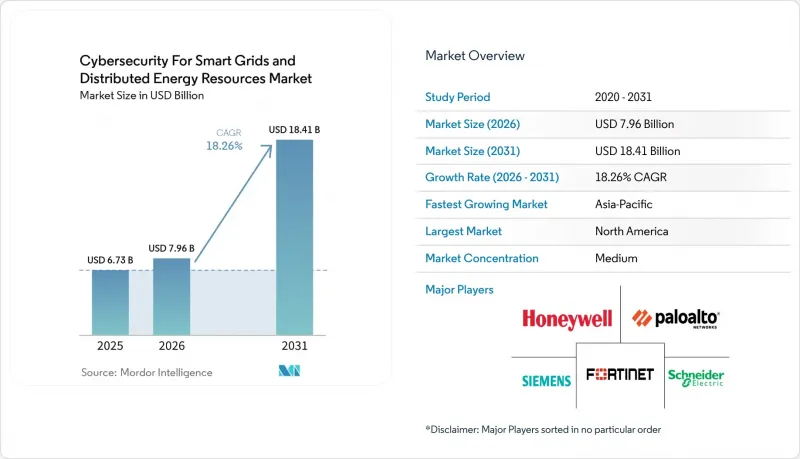
Mordor Intelligence에 의하면, 스마트 그리드 및 분산 에너지 자원용 사이버 보안 시장 규모는 2025년에 67억 3,000만 달러로 평가되었고 2026년 79억 6,000만 달러에서 2031년까지 184억 1,000만 달러에 이를 것으로 예측되며, 예측 기간(2026-2031년) CAGR은 18.26%를 나타낼 전망입니다.
본 보고서는 구성 요소(솔루션 및 서비스), 배포 방식(On-Premise, 클라우드, 하이브리드), 보안 유형(네트워크 보안, 엔드포인트 및 디바이스 보안 등), 용도(그리드 운영 보안 등), 최종 사용 산업(전력 회사 등) 및 지역별로 분류되어 있습니다. 시장 전망은 금액(달러)으로 제시되어 있습니다.
전 세계 스마트 그리드 및 분산형 에너지 자원용 사이버 보안 시장 동향과 인사이트
스마트 그리드의 급속한 디지털화와 분산형 에너지 자원(DER)의 계통 연계
송배전 인프라의 디지털화로 인해, 스마트 그리드 및 분산형 에너지 자원용 사이버 보안 시장의 보안 아키텍처는 전력 회사의 구매 주기가 따라잡을 수 있는 속도를 뛰어넘는 속도로 진화할 수밖에 없습니다. 변전소에 지능형 전자 기기, 원격 터미널 장치, 통신 기능이 탑재된 보호 릴레이가 도입됨에 따라 단일 그리드 환경 내에서 접근 가능한 지점의 수는 계속 증가하고 있습니다. 파로알토 네트웍스의 보고서에 따르면, 6만 대 이상의 OT 방화벽에서 수집된 텔레메트리 데이터를 분석한 결과, 2024년부터 2026년까지 인터넷에 노출된 OT 기기의 수가 332% 증가한 것으로 나타났습니다. 이 분석에 따르면, AI를 활용한 공격 주기로 인해 취약점이 공개된 후 악용되기까지의 시간이 몇 주에서 몇 분으로 단축될 가능성이 있습니다. 이 시간 차가 문제가 되는 이유는 가동 중인 OT 환경에 패치를 적용하는 데 여전히 취약점이 노출된 기간보다 훨씬 더 오랜 시간이 걸리기 때문이며, 그 결과 추가되는 각 디바이스 범주가 횡방향 이동 경로가 될 수 있기 때문입니다.
전력망을 표적으로 한 랜섬웨어 및 OT 침입 위험 증가
위협 행위자들은 운영을 방해할 의도로 전력망의 OT 환경을 표적으로 삼고 있으며, 이로 인해 스마트 그리드 및 분산형 에너지 자원용 사이버 보안 시장에 대한 투자의 시급성이 높아지고 있습니다. 2026년 4월, FBI, CISA, NSA, EPA, 에너지부 및 미국 사이버사령부는 이란계 행위자가 적어도 2026년 3월 이후부터 전미의 에너지 시설 내 PLC 기능을 방해해 왔음을 확인했습니다. 이 권고에 따르면, 에너지 및 정부 부문의 피해자들은 HMI 및 SCADA 시스템의 변조로 인해 업무 차질과 금전적 손실을 입었다고 합니다. 2025년 12월에는 ‘ELECTRUM’이라는 위협 그룹이 폴란드 전력망에 속한 30곳의 재생에너지 시설을 표적으로 삼아, 와이퍼형 악성코드를 사용하여 OT 장비를 복구 불가능한 상태로 만들었습니다. 이러한 사고로 인해 전력 사업자들은 OT의 사이버 현대화를 임의의 업그레이드 주기가 아닌, 사업 지속을 위한 필수 요건으로 인식하게 되었습니다.
기본 보안 제어 기능이 제한적인 레거시 OT 시스템
레거시 OT 장비는 가동 중인 송전망 환경에서 스마트 그리드 및 분산형 에너지 자원용 사이버 보안 시장이 얼마나 신속하게 확대될 수 있는지에 있어 여전히 구조적인 제약 요인으로 작용하고 있습니다. 많은 릴레이, PLC, 변전소 자동화 시스템은 운영상의 재검토 없이 최신 에이전트나 빈번한 보안 업데이트를 지원하도록 설계되지 않았습니다. GE Vernova가 2026년 2월에 출시한 'GridBeats APS'는 가동 중인 변전소에서 보호 기능을 재검증하지 않고도 사이버 보안 소프트웨어 업데이트를 적용할 수 있도록 하는 문제를 직접 해결한 솔루션입니다. 이러한 현실로 인해, 알려진 취약점이 대부분의 기업 사이버 보안 프로그램이 허용하는 기간보다 더 오랫동안 방치된 채로 남아 있어, 전체 설비에 대한 배포 속도가 둔화되고 있습니다. 벤더는 이러한 위험을 모니터링하고 우선순위를 정할 수는 있지만, 이를 해소하는 것은 여전히 관리된 유지보수 기간과 긴 자산 갱신 주기에 의존하고 있습니다.
부문 분석
서비스 시장은 2031년까지 연평균 성장률(CAGR) 22.39%를 나타낼 것으로 예측되며, 스마트 그리드 및 분산형 에너지 자원용 사이버 보안 시장에서 가장 빠르게 확대되는 분야입니다. 이러한 변화는 인력 부족에 대한 전력 사업자의 현실적인 대응을 반영한 것입니다. 전용 보안 운영 센터(SOC)를 보유하지 않은 사업자는 대규모 사내 팀을 구축하기보다는 관리형 감지 및 대응(MDR)에 의존하는 경향이 있기 때문입니다. SERC는 2024년부터 2026년까지의 지역 위험 조사에서 필요한 기술 세트의 부족을 대규모 전력 시스템의 주요 신뢰성 및 보안 위험 중 하나로 꼽았습니다. 이러한 인력 부족으로 인해 비즈니스 모델은 소프트웨어 소유에서 모니터링이 포함된 서비스 제공, 지속적인 위협 대응, 그리고 외부 지원을 통한 사고 대응으로 전환되고 있습니다. 또한 OT 텔레메트리, 규정 준수 보고 및 대응 플레이북을 단일 운영 구조 내에서 통합할 수 있는 벤더의 매력도 높아지고 있습니다.
2025년, 스마트 그리드 및 분산형 에너지 자원용 사이버 보안 시장에서 솔루션이 68.24%의 점유율을 차지했습니다. 이는 인증된 플랫폼이 여전히 전력 회사의 구매 행태의 기반이 되고 있음을 보여줍니다. 전력 회사는 문서화된 증거 추적, 안정적인 제어, 명확한 책임 소재를 갖추고 NERC CIP 감사 준비를 지원할 수 있는 통합 도구를 계속해서 선호하고 있습니다. 하네웰은 2026년 6월, 에너지 및 제조업의 중요 인프라 사업자를 대상으로 5가지 예방적 보호 기능을 갖춘 ‘OT 사이버 보안 제품군’을 확대했습니다. 이러한 움직임은 OT 전문 순수 기업이 분석 계층의 점유율을 더욱 확대하기 전에, 기존 기업들이 인텔리전스, 가시성, 규정 준수 지원을 강화하고 있음을 보여줍니다. 스마트 그리드 사이버 보안 업계에서 이로 인해 예측 기간 동안 서비스의 성장세가 가속화되더라도 솔루션의 기반은 계속해서 대규모로 유지될 것입니다.
클라우드 도입은 2031년까지 연평균 성장률(CAGR) 22.86%로 확대될 것으로 예측되며, 스마트 그리드 및 분산형 에너지 자원용 사이버 보안 시장에서 가장 빠르게 성장하는 도입 형태입니다. 포어스카우트(ForeScout)는 마이크로소프트의 위협 인텔리전스 데이터를 인용하여 2025년 초 클라우드 및 하이브리드 OT 사고가 26% 증가했음을 보여주었으나, 이러한 증가에도 불구하고 클라우드 도입 속도는 둔화되지 않았습니다. 오히려 이러한 추세는 전력 사업자들이 보다 강력한 ID 거버넌스, 원격 세션 로깅, 벤더 액세스에 대한 보다 적절한 모니터링을 갖춘 클라우드 네이티브 보안 아키텍처로 전환하도록 촉진하고 있습니다. 아시아태평양의 신규 전력 사업 프로그램은 기존의 On-Premise형 보안 인프라를 대규모로 해체할 필요 없이 ‘클라우드 우선’ 방식의 그리드 관리를 채택할 수 있기 때문에 특히 중요하게 여겨지고 있습니다. 또한, 전력 사업자들은 핵심 기능에 대해서는 로컬 제어를, 규모와 가시성에 대해서는 클라우드 분석을 원하고 있기 때문에 하이브리드 도입도 계속해서 실용적인 운영 모델로 자리 잡고 있습니다.
2025년 스마트 그리드 및 분산형 에너지 자원용 사이버 보안 시장 규모에서 On-Premise 방식은 59.43%의 점유율을 차지하고 있으며, 이는 규제가 여전히 정의된 네트워크 경계를 중시하고 있음을 반영합니다. 2026년 7월 1일 발효일과 관련된 NERC 기준 준수 지침에 따라, 전자 보안 경계 및 유틸리티 환경 전반에 걸친 문서화된 통신 보호 조치에 대한 관심이 집중되었습니다. 제로 트러스트 접근 방식에 대한 관심은 높아지고 있지만, 전력 사업자에게 있어 실무상의 과제는 운영 환경에서 ID 기반 접근 제어를 경계 중심의 규정 준수 요건과 어떻게 조화시킬 것인가 하는 점에 있습니다. 따라서 분석, 가시화 및 벤더 관리형 모니터링 분야에서 클라우드 도구의 점유율이 확대되고 있음에도 불구하고, 영향력이 큰 조직의 경우 On-Premise 구축의 중요성은 여전히 유지되고 있습니다. 따라서 스마트 그리드 사이버 보안 업계에서 도입 선택지는 기술적 선호도와 마찬가지로 규정 준수 적합성에 의해서도 결정됩니다.
지역별 분석
2025년, 북미는 스마트 그리드 및 분산형 에너지 자원용 사이버 보안 시장의 38.15%를 차지하며, 지역별로는 가장 큰 점유율을 기록했습니다. 이 지역은 대규모 전력 시스템 보안에 관한 가장 강력한 강제적 규정 준수 체제에 의해 뒷받침되고 있으며, 이로 인해 지출은 재량적 프로젝트가 아닌 강제적인 관리 조치와 연계되어 있습니다. 2026년 4월, 연방 기관은 이란과 관련된 공격자들이 적어도 2026년 3월 이후부터 미국 에너지 부문의 각 시설에서 PLC(프로그래머블 로직 컨트롤러)에 대한 방해 활동을 적극적으로 수행해 왔음을 확인했습니다. 이 권고로 인해 피해자들이 업무 차질과 금전적 손실을 입게 되면서, 감시, 통신 보호 및 복구 계획의 중요성이 한층 더 부각되었습니다. 캐나다와 멕시코는 송전망 현대화 활동의 확대와 북미의 규정 준수 및 상호 운용성에 대한 기대감 고조를 통해 이 지역 수요 기반을 확대되고 있습니다.
2025년, 유럽은 스마트 그리드 및 분산형 에너지 자원용 사이버 보안 시장에서 두 번째로 큰 규모를 자랑하는 지역 블록이 되었습니다. 2025년 12월, 폴란드의 분산형 전력망을 표적으로 한 ‘ELECTRUM’ 공격으로 인해 여러 재생에너지 시설의 OT 장비가 복구 불가능한 수준까지 가동 중단된 것을 계기로, 해당 지역의 보안 관련 구매가 가속화되었습니다. 독일, 프랑스, 영국은 성숙한 유틸리티 인프라와 광범위한 디지털화 프로그램을 모두 갖추고 있어 계속해서 최대의 국가별 수요 기반을 지탱하고 있습니다. 또한, 사업자들이 분산형 자산과 국경을 초월한 에너지 시스템 전체의 회복탄력성을 더욱 중시하게 됨에 따라 동유럽 및 중부 유럽도 주목을 받고 있습니다. 남미는 여전히 신흥 시장으로, 사우디아라비아와 아랍에미리트는 더 광범위한 국가 에너지 인프라 프로그램의 일환으로 송전망 사이버 보안을 추진하고 있으며, 아프리카는 여전히 도입 초기 단계에 있습니다.
아시아태평양은 2031년까지 연평균 성장률(CAGR) 23.77%를 나타낼 것으로 예측되며, 스마트 그리드 및 분산형 에너지 자원용 사이버 보안 시장에서 가장 두드러진 성장을 보이는 지역입니다. 이 지역은 전력 사업의 급속한 현대화, 스마트 계량기 도입 확대, 그리고 그린필드 디지털 인프라 기반의 확대로 인한 혜택을 누리고 있습니다. 인도에서는 AMI(첨단 계량 인프라) 보호를 중심으로 수요가 집중되고 있는 반면, 중국에서는 송전망 자동화에 관한 조달 요건 및 현지화 요건에 사이버 보안 요건이 포함되어 있습니다. 일본, 한국, 호주 역시 각국의 전력 회사가 커넥티드 그리드 운영 및 관리형 보안 모델로의 전환을 더욱 추진하고 있어 지역 내 수요를 뒷받침하고 있습니다.
기타 혜택:
- 엑셀 형식 시장 예측(ME) 시트
- 3개월간의 애널리스트 지원
자주 묻는 질문
목차
제1장 서론
제2장 조사 방법
제3장 주요 요약
제4장 시장 구도
제5장 시장 규모와 성장 예측
제6장 경쟁 구도
제7장 시장 기회와 향후 전망
JHSAccording to Mordor Intelligence, the cybersecurity for smart grids and distributed energy resources market size was valued at USD 6.73 billion in 2025 and estimated to grow from USD 7.96 billion in 2026 to reach USD 18.41 billion by 2031, at a CAGR of 18.26% during the forecast period (2026-2031).
This report is Segmented by Component (Solutions, and Services), Deployment Mode (On-Premises, Cloud, and Hybrid), Security Type (Network Security, Endpoint and Device Security, and More ), Application (Grid Operations Security, and More), End User Industry (Electric Utilities, and More), and Geography. The Market Forecasts are Provided in Terms of Value (USD).
Global Cybersecurity For Smart Grids and Distributed Energy Resources Market Trends and Insights
Rapid Smart Grid Digitization and DER Interconnection
The digitalization of transmission and distribution infrastructure is forcing security architectures in the cybersecurity for smart grids and distributed energy resources market to evolve faster than utility buying cycles can adjust. As substations add intelligent electronic devices, remote terminal units, and communication-enabled protection relays, the number of reachable points inside a single grid environment keeps rising. Palo Alto Networks reported that telemetry from more than 60,000 OT firewalls showed a 332% increase in internet-exposed OT devices between 2024 and 2026. The same analysis said AI-assisted attack cycles can reduce the time between vulnerability disclosure and exploitation from weeks to minutes. That mismatch matters because patching in live OT environments still takes far longer than exposure windows, which leaves each added device class as a possible lateral movement path.
Rising Grid-Targeted Ransomware and OT Intrusion Risk
Threat actors are targeting grid OT environments with the intent to disrupt operations, which is raising the urgency behind spending in the cybersecurity for smart grids and distributed energy resources market. In April 2026, the FBI, CISA, NSA, EPA, Department of Energy, and US Cyber Command confirmed that Iranian-affiliated actors had been disrupting PLCs across US energy sites since at least March 2026. The same advisory said victims in the energy and government sectors suffered operational disruption and financial loss through manipulated HMI and SCADA systems. In December 2025, the ELECTRUM threat group targeted 30 renewable energy sites across Poland's power grid and used wiper malware to disable OT equipment beyond repair. These incidents are making utilities treat OT cyber modernization as a continuity requirement rather than a discretionary upgrade cycle.
Legacy OT Systems With Limited Native Security Controls
Legacy OT equipment remains a structural limit on how quickly the cybersecurity for smart grids and distributed energy resources market can scale inside live grid environments. Many relays, PLCs, and substation automation systems were not built to support modern agents or frequent security updates without operational review. GE Vernova's February 2026 launch of GridBeats APS directly addressed the problem of applying cybersecurity software updates without revalidating protection functions in live substations. That reality keeps known exposures open longer than most enterprise cyber programs would accept and slows the speed of full fleet rollouts. Vendors can monitor and prioritize these risks, but closure still depends on controlled maintenance windows and long asset replacement cycles.
Other drivers and restraints analyzed in the detailed report include:
- Regulatory Hardening of Critical Infrastructure Cybersecurity
- Expansion of Cloud-Connected Utility Control Environments
- High Integration Complexity Across Multi-Vendor Grid Environments
For complete list of drivers and restraints, kindly check the Table Of Contents.
Segment Analysis
Services are projected to grow at a 22.39% CAGR through 2031, which makes them the faster-expanding component in the cybersecurity for smart grids and distributed energy resources market. The shift reflects a practical utility response to workforce pressure, because operators without dedicated security operations centers are leaning on managed detection and response rather than building large in-house teams. SERC ranked shortage of required skillsets among the main reliability and security risks for the bulk electric system in its 2024-2026 regional risk work. That labor gap is changing the commercial model from software ownership toward monitored service delivery, continuous threat handling, and externally supported incident response. It also increases the appeal of vendors that can pair OT telemetry, compliance reporting, and response playbooks within one operating structure.
Solutions held 68.24% of the cybersecurity for smart grids and distributed energy resources market share in 2025, which shows that certified platforms still anchor utility buying behavior. Utilities continue to prefer integrated tools that can support NERC CIP audit preparation with documented evidence trails, stable controls, and clear ownership lines. Honeywell expanded its OT Cybersecurity Suite in June 2026 with five proactive protection capabilities aimed at critical infrastructure operators in energy and manufacturing. That move shows how incumbents are adding more intelligence, visibility, and compliance support before pure-play OT specialists consolidate a larger share of the analytics layer. In the smart grid cybersecurity industry, this keeps the solutions base large even as services gain faster momentum through the forecast period.
Cloud deployment is projected to expand at a 22.86% CAGR through 2031, which makes it the fastest-growing mode in the cybersecurity for smart grids and distributed energy resources market. Forescout cited Microsoft Threat Intelligence data that showed a 26% rise in cloud and hybrid OT incidents in early 2025, yet that rise has not slowed adoption. Instead, it is pushing utilities toward cloud-native security architectures with stronger identity governance, remote session logging, and better oversight of vendor access. Greenfield utility programs in Asia-Pacific are especially relevant because they can adopt cloud-first grid management without a large installed on-premises security base to unwind. Hybrid deployment also remains a practical operating model because utilities want local control for core functions and cloud analytics for scale and visibility.
On-premises commanded 59.43% share of the cybersecurity for smart grids and distributed energy resources market size in 2025, which reflects how regulation still favors defined network boundaries. NERC Standards Compliance guidance tied to July 1, 2026 effective dates kept attention on Electronic Security Perimeters and documented communication protections across utility environments. Zero-trust approaches are gaining interest, but the practical utility question remains how to align identity-based access with boundary-oriented compliance expectations in operational settings. That keeps on-premises deployment relevant for high-impact entities even while cloud tools gain share in analytics, visibility, and vendor-managed monitoring. In the smart grid cybersecurity industry, deployment choices are therefore being shaped by compliance fit as much as by technology preference.
Complete Report Scope:
- By Component
- Solutions
- Services
- By Deployment Mode
- On-Premises
- Cloud
- Hybrid
- By Security Type
- Network Security
- Endpoint and Device Security
- Application Security
- Data Security
- Identity and Access Security
- By Application
- Grid Operations Security (Generation, Transmission, Distribution)
- Advanced Metering Infrastructure (AMI) Security
- DER and Renewable Energy Security
- Energy Management Systems (EMS) Security
- SCADA and OT Systems Security
- EV Charging Infrastructure Security
- By End User Industry
- Electric Utilities
- Renewable Energy Operators
- Industrial Grid Operators
- Commercial and Industrial Energy Users
- Residential Prosumer Networks
- Government and Public Energy Infrastructure
- Other End User Industries
- By Geography
- North America
- United States
- Canada
- Mexico
- South America
- Brazil
- Argentina
- Rest of South America
- Europe
- Germany
- United Kingdom
- France
- Italy
- Spain
- Russia
- Rest of Europe
- Asia-Pacific
- China
- India
- Japan
- South Korea
- Australia
- Rest of Asia-Pacific
- Middle East
- Saudi Arabia
- United Arab Emirates
- Turkey
- Israel
- Rest of Middle East
- Africa
- South Africa
- Egypt
- Rest of Africa
- North America
Geography Analysis
North America held 38.15% of the cybersecurity for smart grids and distributed energy resources market in 2025, which made it the leading regional block. The region remains anchored by the strongest mandatory compliance structure for bulk electric system security, which keeps spending tied to enforceable controls rather than discretionary projects. In April 2026, federal agencies confirmed that Iranian-affiliated actors had been actively disrupting PLCs across US energy sector sites since at least March 2026. That advisory raised the urgency around monitoring, communications protection, and recovery planning because victims experienced operational disruption and financial loss. Canada and Mexico extend the regional demand base through growing grid modernization activity and the wider pull of North American compliance and interoperability expectations.
Europe ranked as the second-largest regional block in the cybersecurity for smart grids and distributed energy resources market in 2025. Security buying in the region accelerated after the December 2025 ELECTRUM attack on Poland's distributed power grid disabled OT equipment beyond repair at multiple renewable energy sites. Germany, France, and the United Kingdom continue to anchor the largest country demand pools because they combine mature utility infrastructure with broad digitization programs. Eastern and Central Europe are also drawing more attention as operators place higher value on resilience across distributed assets and cross-border energy systems. South America remains an emerging opportunity, while Saudi Arabia and the United Arab Emirates are advancing grid cybersecurity within wider national energy infrastructure programs, and Africa is still at an earlier adoption stage.
Asia-Pacific is projected to grow at a 23.77% CAGR through 2031, which makes it the fastest-growing region in the cybersecurity for smart grids and distributed energy resources market. The region is benefiting from rapid utility modernization, rising smart meter deployment, and a larger base of greenfield digital infrastructure. India is creating concentrated demand around AMI protection, while China is embedding cybersecurity expectations into grid automation procurement and localization requirements. Japan, South Korea, and Australia also support regional demand because utilities there are moving further into connected grid operations and managed security models.
- Honeywell International Inc.
- Fortinet, Inc.
- Palo Alto Networks, Inc.
- Schneider Electric SE
- Siemens AG
- Cisco Systems, Inc.
- Claroty Ltd.
- Eaton Corporation plc
- ABB Ltd.
- General Electric Company
- Accenture plc
- IBM Corporation
- Leidos Holdings, Inc.
- Advanced Micro Devices, Inc.
- Rocket Software, Inc.
- ATandT Inc.
- BAE Systems plc
- Thales Group
- Toshiba Corporation
- Verizon Communications Inc.
- Dragos, Inc.
Additional Benefits:
- The market estimate (ME) sheet in Excel format
- 3 months of analyst support
TABLE OF CONTENTS
1 INTRODUCTION
- 1.1 Study Assumptions and Market Definition
- 1.2 Scope of the Study
2 RESEARCH METHODOLOGY
3 EXECUTIVE SUMMARY
4 MARKET LANDSCAPE
- 4.1 Market Overview
- 4.2 Market Drivers
- 4.2.1 Rapid Smart Grid Digitization and DER Interconnection
- 4.2.2 Rising Grid-Targeted Ransomware and OT Intrusion Risk
- 4.2.3 Regulatory Hardening of Critical Infrastructure Cybersecurity
- 4.2.4 Expansion of Cloud-Connected Utility Control Environments
- 4.2.5 DER Aggregation, Virtual Power Plants, and Prosumers Expanding Attack Surface
- 4.2.6 Zero-Trust and Identity-Centric Access for OT-IT Convergence
- 4.3 Market Restraints
- 4.3.1 Legacy OT Systems With Limited Native Security Controls
- 4.3.2 High Integration Complexity Across Multi-Vendor Grid Environments
- 4.3.3 Skilled Cybersecurity Talent Shortage in Utility OT Environments
- 4.3.4 Budget Pressure and Long Utility Procurement Cycles
- 4.4 Industry Value-Chain Analysis
- 4.5 Regulatory Landscape
- 4.6 Technological Outlook
- 4.7 Porter's Five Forces Analysis
- 4.7.1 Threat of New Entrants
- 4.7.2 Bargaining Power of Suppliers
- 4.7.3 Bargaining Power of Buyers
- 4.7.4 Threat of Substitutes
- 4.7.5 Intensity of Competitive Rivalry
- 4.8 Impact of Macroeconomic Factors on the Market
5 MARKET SIZE AND GROWTH FORECASTS (VALUE)
- 5.1 By Component
- 5.1.1 Solutions
- 5.1.2 Services
- 5.2 By Deployment Mode
- 5.2.1 On-Premises
- 5.2.2 Cloud
- 5.2.3 Hybrid
- 5.3 By Security Type
- 5.3.1 Network Security
- 5.3.2 Endpoint and Device Security
- 5.3.3 Application Security
- 5.3.4 Data Security
- 5.3.5 Identity and Access Security
- 5.4 By Application
- 5.4.1 Grid Operations Security (Generation, Transmission, Distribution)
- 5.4.2 Advanced Metering Infrastructure (AMI) Security
- 5.4.3 DER and Renewable Energy Security
- 5.4.4 Energy Management Systems (EMS) Security
- 5.4.5 SCADA and OT Systems Security
- 5.4.6 EV Charging Infrastructure Security
- 5.5 By End User Industry
- 5.5.1 Electric Utilities
- 5.5.2 Renewable Energy Operators
- 5.5.3 Industrial Grid Operators
- 5.5.4 Commercial and Industrial Energy Users
- 5.5.5 Residential Prosumer Networks
- 5.5.6 Government and Public Energy Infrastructure
- 5.5.7 Other End User Industries
- 5.6 By Geography
- 5.6.1 North America
- 5.6.1.1 United States
- 5.6.1.2 Canada
- 5.6.1.3 Mexico
- 5.6.2 South America
- 5.6.2.1 Brazil
- 5.6.2.2 Argentina
- 5.6.2.3 Rest of South America
- 5.6.3 Europe
- 5.6.3.1 Germany
- 5.6.3.2 United Kingdom
- 5.6.3.3 France
- 5.6.3.4 Italy
- 5.6.3.5 Spain
- 5.6.3.6 Russia
- 5.6.3.7 Rest of Europe
- 5.6.4 Asia-Pacific
- 5.6.4.1 China
- 5.6.4.2 India
- 5.6.4.3 Japan
- 5.6.4.4 South Korea
- 5.6.4.5 Australia
- 5.6.4.6 Rest of Asia-Pacific
- 5.6.5 Middle East
- 5.6.5.1 Saudi Arabia
- 5.6.5.2 United Arab Emirates
- 5.6.5.3 Turkey
- 5.6.5.4 Israel
- 5.6.5.5 Rest of Middle East
- 5.6.6 Africa
- 5.6.6.1 South Africa
- 5.6.6.2 Egypt
- 5.6.6.3 Rest of Africa
- 5.6.1 North America
6 COMPETITIVE LANDSCAPE
- 6.1 Market Concentration
- 6.2 Strategic Moves
- 6.3 Market Share Analysis
- 6.4 Company Profiles (includes Global Level Overview, Market Level Overview, Core Segments, Financials as available, Strategic Information, Market Rank/Share, Products and Services, Recent Developments)
- 6.4.1 Honeywell International Inc.
- 6.4.2 Fortinet, Inc.
- 6.4.3 Palo Alto Networks, Inc.
- 6.4.4 Schneider Electric SE
- 6.4.5 Siemens AG
- 6.4.6 Cisco Systems, Inc.
- 6.4.7 Claroty Ltd.
- 6.4.8 Eaton Corporation plc
- 6.4.9 ABB Ltd.
- 6.4.10 General Electric Company
- 6.4.11 Accenture plc
- 6.4.12 IBM Corporation
- 6.4.13 Leidos Holdings, Inc.
- 6.4.14 Advanced Micro Devices, Inc.
- 6.4.15 Rocket Software, Inc.
- 6.4.16 ATandT Inc.
- 6.4.17 BAE Systems plc
- 6.4.18 Thales Group
- 6.4.19 Toshiba Corporation
- 6.4.20 Verizon Communications Inc.
- 6.4.21 Dragos, Inc.
7 MARKET OPPORTUNITIES AND FUTURE OUTLOOK
- 7.1 Adjacent Market Opportunities
- 7.2 Investment and Innovation Outlook