|
시장보고서
상품코드
2098570
나트륨 전분 글리콜레이트 : 시장 점유율 분석, 업계 동향과 통계, 성장 예측(2026-2031년)Sodium Starch Glycolate - Market Share Analysis, Industry Trends & Statistics, Growth Forecasts (2026 - 2031) |
||||||
 Mordor Intelligence
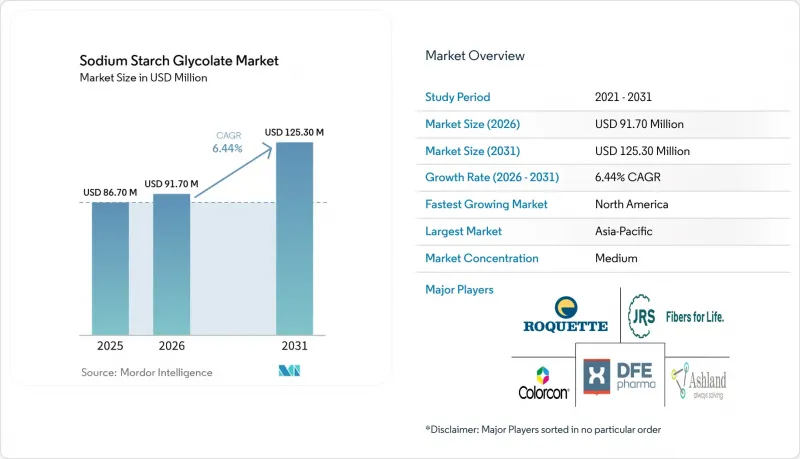
Mordor Intelligence에 의하면, 글리콜산나트륨 전분 시장 규모는 2025년 8,670만 달러에서 2026년에는 9,170만 달러로 확대되고, 2026-2031년 CAGR 6.44%로 성장을 지속하여 2031년에는 1억 2,530만 달러에 이를 것으로 예측됩니다.
본 보고서는 원료별(감자 전분 유래, 옥수수 전분 유래, 밀 전분 유래, 기타 전분 원료), 용도별(의약품, 식품 가공, 퍼스널케어 및 화장품, 기타 용도), 지역별(북미, 유럽, 아시아태평양, 남미, 중동 및 아프리카)로 분류되어 있습니다. 시장 전망은 금액 기준(백만 달러)으로 제시되어 있습니다.
전 세계 나트륨 전분 글리콜레이트 시장 동향 및 인사이트
전 세계 제네릭 의약품 생산 증가
나트륨 전분 글리콜레이트 시장은 규제 시장 및 신흥 시장에서 제네릭 의약품 생산이 증가함에 따라 계속해서 직접적인 혜택을 받고 있습니다. 미국 식품의약국(FDA)은 2024년에 76건의 최초 제네릭 의약품을 승인했으며, 이러한 승인 흐름에 따라 정제 제조에 사용되는 약전 첨가제에 대한 새로운 제형 수요가 지속적으로 창출되고 있습니다. 나트륨 전분 글리콜레이트 시장공급업체에게 주된 이점은 약전 기준이 광범위하게 통일되어 있어 미국과 유럽 양쪽의 제품 파이프라인을 모두 지원하고자 하는 기업들의 문서 작성 부담이 줄어든다는 점입니다. 또한, 사전 인증 절차 역시 대상 수요 기반을 확대되고 있습니다. 공공 보건 조달을 위해 제품 인증을 받는 제조업체는 공인된 품질 기준을 충족하는 부형제가 필요하기 때문입니다. 주요 정제 카테고리에 다중 공급원 제품이 더욱 진입함에 따라, 이미 나트륨 전분 글리콜레이트를 표준화한 제조업체들은 핵심 부형제의 재인증 작업에 시간과 비용이 소요되기 때문에 계속해서 해당 제품을 사용할 경향이 있습니다.
영양보조식품용 정제 및 캡슐 수요 증가
나트륨 전분 글리콜레이트 시장은 영양보조식품 정제 및 캡슐의 꾸준한 확대로 인해 더욱 탄력을 받고 있습니다. 이러한 제형 구성이 중요한 이유는 폭넓은 제품 라인에서 정확한 투여량, 생산량의 확장성, 안정적인 유통 기한을 추구하는 제조업체에게 정제가 여전히 매력적인 선택지이기 때문입니다. 나트륨 글리콜산 전분은 사용량이 적기 때문에 제제 개발자가 비용 관리를 하면서도 압축 제품에서 신속한 분해성을 확보할 수 있다는 점에서 이러한 요건에 가장 적합합니다. 또한, 소매업체와 브랜드 소유자가 일관성, 문서화, 품질에 대한 주장을 더욱 중요시함에 따라, 공급업체와 고객 사이에서 보충제 등급과 의약품 등급 사양 간의 격차도 점차 좁혀지고 있습니다. 그 결과, 나트륨 글리콜레이트 전분 시장 수요 기반은 확대되어 더 이상 처방약이나 제네릭 의약품 제조에만 국한되지 않게 되었습니다.
전분 원료의 가격 변동
나트륨 전분 글리콜레이트 시장은 원료 가격 변동이라는 명백한 제약에 직면해 있습니다. 이는 전분 원료가 여전히 농업 주기, 비료 비용 및 에너지 비용 전가의 영향을 계속 받고 있기 때문입니다. 로켓(Rocket)사가 2026년 3월에 발표한 유럽 시장의 최신 동향에서는 곡물 전반에 걸친 가격 압박을 언급하며, 그 배경으로 기상 불확실성과 더 광범위한 에너지·비료 공급 부족을 꼽고 있습니다. 이러한 영향은 감자 유래 등급에서 더욱 두드러집니다. 그 이유는 원료 공급 기반이 북유럽에 집중되어 있어, 조달 상황이 해당 지역의 작황이나 비용 변동의 영향을 더 쉽게 받기 때문입니다. 고정 계약이나 갱신 속도가 느린 계약을 바탕으로 제약 기업에 공급하는 제조업체는 투입 비용 상승을 항상 즉시 전가할 수 있는 것은 아니기 때문에 이익률에 대한 압박이 급격히 높아집니다. 또한, 나트륨 전분 글리콜레이트 시장에서는 범용 등급과 고부가가치 의약품 등급 사이에 격차가 나타납니다. 즉, 원료 가격이 불리한 방향으로 움직일 경우, 모든 공급업체가 동등한 가격 결정력을 가지고 있는 것은 아니라는 뜻입니다.
부문 분석
2025년 시점에서 감자 전분 유래 SSG는 나트륨 전분 글리콜레이트 시장 점유율의 38.7%를 차지하고 있으며, 이는 단순한 원료의 입수 가능성 이상으로 제제 설계상의 선호도로 이어졌습니다. 감자 유래 등급은 인을 이용한 가교 화학 반응과 관련이 있으며, 그 특성은 습기에 민감한 제형에서 특히 중요하게 여겨지는 화학적 안정성을 뒷받침합니다. 또한, 이 원료는 오랜 기간 약전(Pharmacopoeia)에 등재되어 온 인지도라는 이점도 누리고 있어, 규제 대상인 정제 프로그램을 진행하는 제조업체에게 유익합니다. 유럽의 생산자와 사용자들은 이 원료에 대한 충성도를 계속 유지하고 있습니다. 이는 지역적 공급 접근성, 의약품 마스터 파일(DMF) 지원, 그리고 오랜 기간에 걸친 적합성 인증 이력 덕분에 주요 부형제 선택을 재검토할 필요성이 줄어들었기 때문입니다.
옥수수 전분 유래 SSG는 2026년부터 2031년까지 연평균 성장률(CAGR) 6.32%를 기록하며, 나트륨 전분 글리콜레이트 시장에서 가장 빠른 규모 확대를 보일 것으로 전망됩니다. 이러한 성장 요인은 북미 및 동아시아 전역에 걸친 광범위한 농업 생산량에 있으며, 이를 통해 공급업체는 지역적으로 집중되는 경향이 있는 감자 유래 공급망보다 더 다양한 원료 기반을 확보할 수 있습니다. 이러한 폭넓은 원료 기반은 특히 수입 의존도를 낮추고 연중 내내 보다 예측 가능한 공급을 원하는 시장에서 나트륨 전분 글리콜레이트 업계의 조달 탄력성을 뒷받침하고 있습니다.
지역별 분석
2025년 기준, 아시아태평양은 나트륨 전분 글리콜레이트 시장 점유율의 34.8%를 차지하며, 현재 수요 측면에서 가장 규모가 큰 지역 거점입니다. 인도와 중국이 이러한 위상을 뒷받침하고 있는데, 이는 양국에서 정제 및 캡슐의 제조 규모가 제네릭 의약품용 대량 부형제 조달로 직접 이어지기 때문입니다. 수출 지향적인 인도의 제조업체들은 강력한 문서적 근거를 갖춘 규격에 부합하는 등급을 점점 더 필요로 하고 있는 반면, 중국의 일부 국내 시장에서는 여전히 가격 중심의 일반 상품 공급에 의존하고 있는 상황입니다. 2026년 1월 1일부터 시행되는 중국의 첨가제 관련 우수 제조 기준(GMP) 부록에 따라 국내 규정 준수 기준이 강화되어 국제 기준과의 격차가 점차 좁혀지고 있습니다. 공급업체들의 지역별 기술 지원에 대한 투자가 아시아태평양의 나트륨 전분 글리콜레이트 시장을 강화하고 있으며, DFE Pharma의 하이데라바드 거점은 고객 수요에 맞추어 제제 개발 주기를 단축하려는 노력을 반영하고 있습니다.
북미에서는 2031년까지 연평균 성장률(CAGR) 5.8%로 나트륨 전분 글리콜레이트 시장 규모가 가장 빠르게 확대될 것으로 예측됩니다. 이 지역의 전망은 제네릭 의약품 출시가 잇따르는 견실한 파이프라인과, 정제 및 캡슐 제형을 지속적으로 선호하는 영양보조식품 부문에 의해 뒷받침되고 있습니다. 또한, 규제 대상 및 관련 건강 제품 분야에서 제형 개선과 천연 유래 부형제에 대한 관심이 높아지는 것도 수요를 뒷받침하고 있습니다. 애슈랜드(Ashland)가 2026년에 인도에서 진행할 정제 코팅에 대한 투자는 듀얼 소싱을 중심으로 한 광범위한 공급망 모델과 아시아태평양의 제조 거점과의 긴밀한 협력을 반영하고 있어, 북미 전략에서도 여전히 중요한 위치를 차지하고 있습니다.
유럽은 글리콜산 나트륨 시장에서 여전히 중요하지만, 보다 성숙한 시장으로 자리 잡고 있습니다. 이 지역에는 DFE Pharma나 Roquette와 같은 선진적인 부형제 제조업체들이 거점을 두고 있으며, 이들의 사업 활동은 전 세계 각국의 약전에 기반한 공급에서 품질에 대한 기대에 계속해서 영향을 미치고 있습니다. Roquette가 International Flavors and Fragrances Pharma Solutions를 인수하여 포트폴리오를 확대함으로써, 경구제용 부형제 분야에서의 입지를 높이고, 고부가가치 제제 지원에 있어 유럽의 역할을 강화했습니다. 남미, 중동 및 아프리카 시장 규모는 여전히 작지만, 현지 의약품 제조 및 제형 능력에 대한 투자를 통해 이들 지역의 글리콜산나트륨 시장에 대한 수요는 꾸준히 증가하고 있습니다.
기타 혜택:
- 엑셀 형식 시장 예측(ME) 시트
- 3개월간의 애널리스트 지원
자주 묻는 질문
목차
제1장 서론
제2장 조사 방법
제3장 주요 요약
제4장 시장 구도
제5장 시장 규모와 성장 예측
제6장 경쟁 구도
제7장 시장 기회와 향후 전망
KTH 26.08.06According to Mordor Intelligence, the sodium starch glycolate market size is expected to grow from USD 86.70 million in 2025 to USD 91.70 million in 2026 and is forecast to reach USD 125.30 million by 2031 at 6.44% CAGR over 2026-2031.
This report is Segmented by Source (Potato Starch Based, Corn Starch Based, Wheat Starch Based, Other Starch Sources), Application (Pharmaceuticals, Food Processing, Personal Care and Cosmetics, and Other Applications), and Geography (North America, Europe, Asia-Pacific, South America, Middle East and Africa). The Market Forecasts are Provided in Terms of Value (USD Million).
Global Sodium Starch Glycolate Market Trends and Insights
Rising global generic drug production
The sodium starch glycolate market continues to benefit directly from rising generic pharmaceutical output across regulated and emerging markets. The United States Food and Drug Administration approved 76 first-generic drugs in 2024, and that flow of approvals keeps creating new formulation demand for compendial excipients used in tablet manufacturing . A key advantage for sodium starch glycolate market suppliers is that broad pharmacopeial alignment reduces documentation friction for companies that want to serve both the United States and European product pipelines. Prequalification pathways also widen the addressable demand base because manufacturers that qualify products for public health procurement need excipients that fit recognized quality frameworks. As more multisource products enter large tablet categories, manufacturers that already standardize on sodium starch glycolate tend to keep it in place because requalification work on core excipients adds time and cost.
Growing nutraceutical tablet and capsule demand
The sodium starch glycolate market is gaining added support from the steady expansion of nutraceutical tablets and capsules. This format mix matters because tablets remain attractive for producers that want precise dosing, scalable output, and stable shelf life across a wide product range. Sodium starch glycolate fits this setting well because its low use level helps formulators manage cost while still supporting fast breakup in compressed products. Suppliers and customers are also narrowing the gap between supplement-grade and drug-grade specifications as retailers and brand owners place more attention on consistency, documentation, and quality claims. The result is a broader demand pool for the sodium starch glycolate market that is no longer tied only to prescription and generic drug production.
Raw material price volatility in starch feedstocks
The sodium starch glycolate market faces a clear restraint from raw material volatility because starch feedstocks remain exposed to agricultural cycles, fertilizer costs, and energy pass-through. Roquette's March 2026 market update for Europe noted pressure across the cereal complex and linked the environment to weather uncertainty and wider energy and fertilizer stress. This matters more in potato-based grades because the feedstock base is concentrated in Northern Europe, which makes procurement more sensitive to regional crop conditions and cost swings. Producers that supply pharmaceutical customers under fixed or slower-moving contracts cannot always pass higher input costs through immediately, so margin pressure builds quickly. The sodium starch glycolate market also shows a split between commodity grades and higher-value pharmaceutical grades, which means not every supplier has the same pricing power when raw materials move against them.
Other drivers and restraints analyzed in the detailed report include:
- Clean label and plant-based excipient preference
- Innovation in Novel Drug Delivery Systems (NDDS)
- Regulatory burden across pharmacopeial grades
For complete list of drivers and restraints, kindly check the Table Of Contents.
Segment Analysis
Potato Starch-based SSG held 38.7% of the sodium starch glycolate market share in 2025, and that led to formulation preference more than simple feedstock availability. Potato-derived grades are associated with phosphorous cross-link chemistry, and that profile supports chemical stability that is especially valued in moisture-sensitive formulations. The source has also benefited from long-standing pharmacopeial familiarity, which helps manufacturers working across regulated tablet programs. European producers and users have stayed loyal to this source because regional supply access, Drug Master File support, and a long qualification history reduce the need to revisit core excipient choices.
Corn Starch-based SSG is projected to deliver the fastest sodium starch glycolate market size growth at a 6.32% CAGR from 2026 to 2031. Its growth case is tied to broader agricultural availability across North America and East Asia, which gives suppliers a more diversified feedstock base than the more regionally concentrated potato chain. That broader base supports sourcing resilience for the sodium starch glycolate industry, especially in markets that want lower import dependence and more predictable year-round availability.
Complete Report Scope:
- By Source
- Potato Starch Based
- Corn Starch Based
- Wheat Starch Based
- Other Starch Sources
- By Application
- Pharmaceuticals
- Food Processing
- Personal Care and Cosmetics
- Other Applications
- By Geography
- North America
- Europe
- Asia-Pacific
- South America
- Middle East and Africa
Geography Analysis
Asia-Pacific accounted for 34.8% of the sodium starch glycolate market share in 2025, making it the largest regional base for current demand. India and China anchor this position because their tablet and capsule manufacturing scale feeds directly into high-volume excipient procurement for generic medicines. Export-oriented Indian manufacturers increasingly need harmonized grades with strong documentation support, while a part of the Chinese domestic base still works with more price-led commodity supply. China's excipient Good Manufacturing Practice (GMP) annex, effective from January 1, 2026, is raising the local compliance floor and narrowing gaps with international expectations. Supplier investment in regional technical support is reinforcing the sodium starch glycolate market in Asia-Pacific, and DFE Pharma's Hyderabad center reflects the push to shorten formulation development cycles close to customer demand.
North America is expected to record the fastest sodium starch glycolate market size growth at a 5.8% CAGR through 2031. The regional outlook is supported by a strong pipeline of generic drug launches and by a nutraceutical sector that continues to favor tablet and capsule delivery formats. Demand is also benefiting from formulation upgrades and wider attention to natural-origin excipient options across regulated and adjacent health products. Ashland's 2026 tablet coatings investment in India still matters to North American strategy because it reflects a broader supply chain model built around dual sourcing and closer links with Asia-Pacific manufacturing nodes.
Europe remains an important but more mature part of the sodium starch glycolate market. The region houses advanced excipient producers such as DFE Pharma and Roquette, and their operations continue to influence quality expectations across global pharmacopeial supply. Roquette's portfolio expansion through the International Flavors and Fragrances Pharma Solutions deal widened its presence across oral dosage excipients and strengthened Europe's role in higher-value formulation support. South America and the Middle East and Africa remain smaller in size, but local pharmaceutical manufacturing and formulation capability investments are still creating incremental demand for the sodium starch glycolate market in those regions.
List of Companies Covered in this Report:
- DFE Pharma
- Roquette Freres
- JRS Pharma
- Colorcon
- Ashland
- BASF SE
- Merck KGaA
- Shin-Etsu Chemical Co., Ltd.
- Toshiba Chemical Corporation
- Avantor, Inc.
- Beneo GmbH
- Meggle Pharma
- Lubrizol Corporation
- Nihon Shokuhin Kako Co., Ltd.
- Anhui Sunhere Pharmaceutical Excipients Co., Ltd.
- Shreeji Pharma International
- Liaocheng A Hua Pharmaceutical Co., Ltd.
- Prachin Chemical
- Muby Chemicals
- Huzhou Zhanwang Pharmaceutical Co., Ltd.
Additional Benefits:
- The market estimate (ME) sheet in Excel format
- 3 months of analyst support
TABLE OF CONTENTS
1 Introduction
- 1.1 Study Assumptions and Market Definition
- 1.2 Scope of the Study
2 Research Methodology
3 Executive Summary
4 Market Landscape
- 4.1 Market Overview
- 4.2 Market Drivers
- 4.2.1 Rising global generic drug production
- 4.2.2 Growing nutraceutical tablet and capsule demand
- 4.2.3 Clean label and plant-based excipient preference
- 4.2.4 Innovation in Novel Drug Delivery Systems (NDDS)
- 4.2.5 Increasing use of convenience and instant food products
- 4.2.6 Price volatility of competing disintegrants is strengthening SSG's cost position
- 4.3 Market Restraints
- 4.3.1 Raw material price volatility in starch feedstocks
- 4.3.2 Regulatory burden across pharmacopeial grades
- 4.3.3 Moisture sensitivity and packaging complexity
- 4.3.4 Substitution pressure from crospovidone and croscarmellose sodium
- 4.4 Supply Chain Analysis
- 4.5 Regulatory Landscape
- 4.6 Technological Outlook
- 4.7 Porter's Five Forces
- 4.7.1 Threat of New Entrants
- 4.7.2 Bargaining Power of Suppliers
- 4.7.3 Bargaining Power of Buyers
- 4.7.4 Threat of Substitutes
- 4.7.5 Intensity of Competitive Rivalry
5 Market Size and Growth Forecasts (Value)
- 5.1 By Source
- 5.1.1 Potato Starch Based
- 5.1.2 Corn Starch Based
- 5.1.3 Wheat Starch Based
- 5.1.4 Other Starch Sources
- 5.2 By Application
- 5.2.1 Pharmaceuticals
- 5.2.2 Food Processing
- 5.2.3 Personal Care and Cosmetics
- 5.2.4 Other Applications
- 5.3 By Geography
- 5.3.1 North America
- 5.3.2 Europe
- 5.3.3 Asia-Pacific
- 5.3.4 South America
- 5.3.5 Middle East and Africa
6 Competitive Landscape
- 6.1 Market Concentration
- 6.2 Strategic Moves
- 6.3 Market Positioning Analysis
- 6.4 Company Profiles (includes Global level Overview, Market level overview, Core Segments, Financials as available, Strategic Information, Market Rank/Share for key companies, Products and Services, and Recent Developments)
- 6.4.1 DFE Pharma
- 6.4.2 Roquette Freres
- 6.4.3 JRS Pharma
- 6.4.4 Colorcon
- 6.4.5 Ashland
- 6.4.6 BASF SE
- 6.4.7 Merck KGaA
- 6.4.8 Shin-Etsu Chemical Co., Ltd.
- 6.4.9 Toshiba Chemical Corporation
- 6.4.10 Avantor, Inc.
- 6.4.11 Beneo GmbH
- 6.4.12 Meggle Pharma
- 6.4.13 Lubrizol Corporation
- 6.4.14 Nihon Shokuhin Kako Co., Ltd.
- 6.4.15 Anhui Sunhere Pharmaceutical Excipients Co., Ltd.
- 6.4.16 Shreeji Pharma International
- 6.4.17 Liaocheng A Hua Pharmaceutical Co., Ltd.
- 6.4.18 Prachin Chemical
- 6.4.19 Muby Chemicals
- 6.4.20 Huzhou Zhanwang Pharmaceutical Co., Ltd.