

|
시장보고서
상품코드
2098573
미국의 천연 방충제 : 시장 점유율 분석, 업계 동향과 통계, 성장 예측(2026-2031년)United States Natural Insect Repellent - Market Share Analysis, Industry Trends & Statistics, Growth Forecasts (2026 - 2031) |
||||||
 Mordor Intelligence
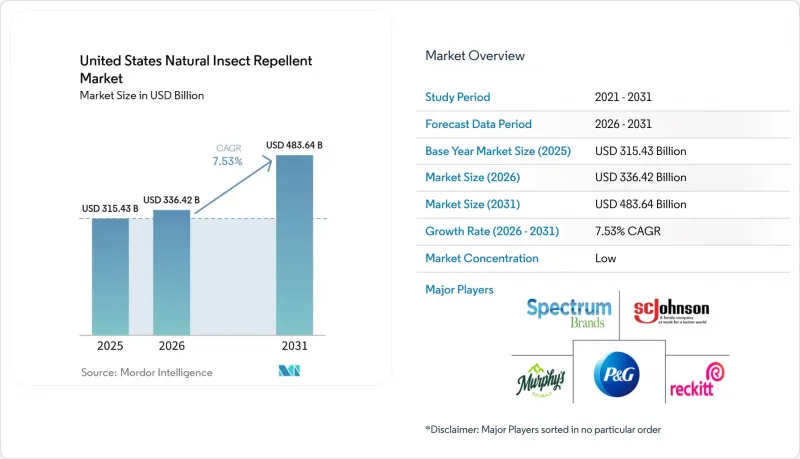
Mordor Intelligence에 의하면, 미국의 천연 방충제제 시장 규모는 2025년 3억 1,543만 달러에서 2026년에는 3억 3,642만 달러로 확대되고, 2031년까지 4억 8,364만 달러에 이를 것으로 예측되며, 예측 기간(2026-2031년) CAGR은 7.53%를 나타낼 전망입니다.
본 보고서는 제품 유형(스프레이, 로션·크림, 롤온, 물티슈, 기타), 해충 유형(모기, 벌레, 파리류, 개미, 기타), 최종 사용자(성인, 어린이), 판매 채널(슈퍼마켓 및 하이퍼마켓, 편의점, 온라인 소매점, 기타 판매 채널)별로 분류되어 있습니다. 시장 전망은 금액(달러) 기준으로 제시되어 있습니다.
미국의 천연 방충제 시장 동향 및 인사이트
모기 및 진드기가 매개하는 질병 발생률 증가
모기 및 진드기가 매개하는 질병 발생률 증가는 미국의 천연 방충제 시장을 견인하는 주요 요인으로 작용하고 있습니다. 이는 소비자들이 벌레 물림에 대한 예방적 개인 보호를 점점 더 중요하게 여기고 있기 때문입니다. 미국 환경보호청(EPA)에 따르면, 동청은 빈대 방제를 위해 300종 이상의 제품을 등록하고 있으며, 이는 효과적인 해충 방제에 대한 관심이 높아지고 있고, 해충 관리 솔루션에 대한 규제적 지원이 확대되고 있음을 보여줍니다. 동시에, 모기나 진드기가 매개하는 질병에 대한 일반 대중의 인식이 높아짐에 따라, 소비자들은 일상적인 야외 활동 시 보호 조치의 일환으로 방충제를 사용하고 있습니다. 이러한 추세로 인해 합성 화학 물질을 피하면서도 효과적인 보호 기능을 제공하는 식물 유래 유효 성분을 함유한 천연 제형에 대한 수요가 가속화되고 있습니다.
야외 레크리에이션 및 어드벤처 활동의 확대
야외 레크리에이션 및 어드벤처 활동의 확대는 미국의 천연 유래 모기 퇴치제 시장을 크게 견인하고 있습니다. 자연을 만끽하는 체험에 참여하는 사람이 늘어남에 따라 모기, 진드기, 파리 및 기타 흡혈 곤충에 노출될 기회가 증가하고 있기 때문입니다. 아웃도어 산업 협회(Outdoor Industry Association)에 따르면, 미국의 아웃도어 레크리에이션 참가자는 2025년에 사상 최고치인 1억 8,320만 명에 달할 것으로 예측되며, 이는 하이킹, 캠핑, 낚시, 트레일 러닝, 사이클링, 사냥, 야생동물 관찰 등의 활동 인기가 높아지고 있음을 반영합니다. 소비자들이 숲, 공원, 호수, 캠핑장에서 보내는 시간이 길어짐에 따라, 장시간 사용해도 쾌적함을 유지하며 신뢰할 수 있는 방충 대책에 대한 수요가 높아지고 있습니다. 이러한 추세를 반영하여 각 제조업체들은 활동적인 아웃도어 라이프스타일에 적합한, 가볍고 속건성이 뛰어나며 땀에 강하고 휴대하기 편리한 천연 유래 방충제 개발을 추진하고 있습니다.
소비자 수요의 계절적 변동
소비자 수요의 계절적 변동은 미국의 천연 방충제 시장을 현저히 억제하는 요인으로 작용하고 있습니다. 매출은 모기, 진드기 및 기타 곤충의 활동이 절정에 달하는 따뜻한 봄부터 여름에 걸쳐 집중됩니다. 추운 계절에는 야외 활동이 줄어들고 곤충의 활동도 감소하기 때문에 수요는 일반적으로 감소하며, 그 결과 연중 판매 패턴에 편차가 발생합니다. 이러한 계절성으로 인해 제조업체와 소매업체는 생산 계획, 재고 관리, 유통 측면에서 과제에 직면하게 되며, 비수기에는 재고 과잉이 발생하기 쉬워 공급망 최적화에 대한 압박이 커지고 있습니다. 또한 기업들은 곤충 활동이 절정에 달하는 시기에 마케팅 활동이나 판촉 캠페인을 집중시키는 경향이 있어, 이것이 연중 안정적인 제품 판매를 저해하는 요인이 되고 있습니다.
부문 분석
2025년에는 스프레이 유형 제품이 미국의 천연 방충제 시장에서 42.37%의 점유율을 차지할 것으로 예측됩니다. 이 부문이 주도적인 위치를 차지하는 이유는 노출된 피부에 신속하고 균일하며 편리하게 약제를 도포할 수 있을 뿐만 아니라, 가볍고 쾌적한 사용감을 제공할 수 있기 때문입니다. 스프레이 제형의 지속적인 개선을 통해 속건성이 뛰어나고 끈적임 없이 잔여물이 남지 않는 식물 유래 제품이 개발되어, 반복적으로 사용해도 소비자 만족도를 높이고 있습니다. 각 제조업체는 미세 미스트 분사 시스템, 정밀 스프레이 노즐, 누출 방지 포장, 그리고 제품 낭비를 최소화하면서 효율적인 도포를 가능하게 하는 에어로졸 프리 펌프 기술 등을 도입하여 제품 성능을 더욱 향상시키고 있습니다. 휴대하기 편리한 여행용 사이즈와 대용량의 가족용 사이즈 라인업이 확충됨에 따라 편의성이 향상되어 다양한 상황에서 사용이 촉진되고 있습니다.
물티슈는 가장 빠르게 성장하고 있는 제품 형태이며, 2031년까지 연평균 성장률(CAGR) 8.49%로 확대될 것으로 예측됩니다. 이 부문이 성장세를 보이고 있는 이유는 한 번 사용할 때마다 정확한 양이 공급되어 과다 사용을 방지하고, 소비자가 직접 액체를 짜낼 필요 없이 균일한 도포가 보장되기 때문입니다. 개별 밀봉된 포장은 사용 전 증발이나 오염을 방지하는 동시에 식물 유래 유효 성분의 안정성을 유지합니다. 컴팩트하고 일회용으로 사용할 수 있는 이 형태는 보관 및 폐기도 용이하기 때문에 물티슈는 여행용 키트, 학교, 야외 행사, 비상용 비축 키트에 특히 적합합니다. 각 제조업체는 제품의 유통기한 동안 제형의 효과를 유지하기 위해 생분해성 부직포 및 보습 기술의 채택을 점점 더 확대되고 있습니다.
2025년, 미국의 천연 방충제 시장에서 모기를 대상으로 한 제품이 53.32%를 차지했습니다. 모기는 여전히 미국 전역에서 가장 널리 서식하는 흡혈 곤충이므로, 이 부문이 시장을 주도하고 있습니다. 미국 질병통제예방센터(CDC) 보고서에 따르면, 미국 및 그 영토 내에는 200종 이상의 모기가 서식하고 있습니다. 이러한 광범위한 종의 다양성으로 인해 각 제조업체들은 레몬 유칼립투스 오일이나 시트로넬라 등 과학적으로 효능이 입증된 식물 유래 성분을 사용하여 모기에 특화된 기피제를 배합하고 있습니다. 제품 개발에서는 천연 성분의 특성을 유지하면서 유효 성분 농도의 최적화, 보호 효과 지속 시간 연장, 제형의 안정성 향상을 통해 모기에 대한 특이적 효과를 높이는 데 점점 더 중점을 두고 있습니다.
‘해충’ 부문은 2031년까지 연평균 성장률(CAGR) 8.56%를 기록하며 가장 빠르게 성장하는 곤충 유형이 될 것으로 예측됩니다. 모기뿐만 아니라, 파리, 딱정벌레, 진드기, 기타 야외나 가정에서 활동 중 자주 마주치는 기어 다니는 곤충이나 날아다니는 곤충 등, 다양한 해충으로부터 몸을 보호할 수 있는 광범위한 천연 기피제에 대한 수요 증가가 이 부문의 성장을 견인하고 있습니다. 소비자들은 해충 유형마다 별도의 제품을 구매할 필요가 없는 범용성이 높은 제제를 점점 더 선호하고 있습니다. 이러한 추세에 따라 제조업체들은 다양한 해충에 대해 더 높은 기피 효과를 지닌 다기능 식물 유래 혼합물 개발을 추진하고 있습니다. 식물 유래 유효 성분의 조합과 제형 기술의 발전으로, 천연 성분의 특성을 유지하면서도 광범위한 효과를 발휘하는 제품의 효능이 높아지고 있습니다.
기타 혜택:
- 엑셀 형식 시장 예측(ME) 시트
- 3개월간의 애널리스트 지원
자주 묻는 질문
목차
제1장 서론
제2장 조사 방법
제3장 주요 요약
제4장 시장 구도
제5장 시장 규모와 성장 예측
제6장 경쟁 구도
제7장 시장 기회와 향후 전망
KTH 26.08.06According to Mordor Intelligence, the United States natural insect repellent market size is expected to increase from USD 315.43 million in 2025 to USD 336.42 million in 2026 and reach USD 483.64 million by 2031, registering a CAGR of 7.53% during the forecast period (2026-2031).
This report is Segmented by Product Type (Spray, Lotion and Cream, Roll-On, Wipes, and Others), Insect Type (Mosquitos, Bugs, Fly Insects, Ants, and Others), End-User (Adults and Kids/Children), and Distribution Channel (Supermarkets/Hypermarkets, Convenience Stores, Online Retail Stores, and Other Distribution Channels). The Market Forecasts are Provided in Terms of Value (USD).
United States Natural Insect Repellent Market Trends and Insights
Rising incidence of mosquito- and tick-borne diseases
The rising incidence of mosquito- and tick-borne diseases is a major factor driving the United States natural insect repellent market, as consumers increasingly prioritize preventive personal protection against insect bites. According to the United States Environmental Protection Agency (EPA), the agency has registered more than 300 products for use against bed bugs, highlighting the growing emphasis on effective insect control and expanding regulatory support for pest management solutions . At the same time, rising public awareness of mosquito- and tick-borne diseases has encouraged consumers to include insect repellents in their daily outdoor protection routines. This trend has accelerated demand for natural formulations containing plant-derived active ingredients that provide effective protection while avoiding synthetic chemicals.
Expansion of outdoor recreational and adventure activities
The expansion of outdoor recreational and adventure activities is significantly driving the United States natural insect repellent market, as increased participation in nature-based experiences raises exposure to mosquitoes, ticks, flies, and other biting insects. According to the Outdoor Industry Association, outdoor recreation in the United States is projected to reach a record 183.2 million participants in 2025, reflecting the growing popularity of activities such as hiking, camping, fishing, trail running, cycling, hunting, and wildlife exploration . As consumers spend longer periods in forests, parks, lakes, and campgrounds, they increasingly need dependable insect protection that remains comfortable during extended use. This trend has encouraged manufacturers to develop lightweight, fast-drying, sweat-resistant, and portable natural repellent formulations suited to active outdoor lifestyles.
Seasonal fluctuations in consumer demand
Seasonal fluctuations in consumer demand significantly restrain the United States natural insect repellent market. Sales concentrate heavily in the warmer spring and summer months, when mosquito, tick, and other insect activity peaks. Demand typically declines during colder seasons as outdoor activities decrease and insect populations become less active, resulting in uneven sales patterns throughout the year. This seasonality creates challenges for manufacturers and retailers in production planning, inventory management, and distribution, often leading to excess stock during off-peak periods and increasing pressure to optimize supply chains. Companies also tend to concentrate marketing efforts and promotional campaigns around peak insect seasons, which limits consistent year-round product movement.
Other drivers and restraints analyzed in the detailed report include:
- Rapid technological advancements driving innovation
- Government and public health campaigns
- Shorter shelf life of plant-based formulations
For complete list of drivers and restraints, kindly check the Table Of Contents.
Segment Analysis
Spray formats are expected to hold 42.37% of the United States natural insect repellent market in 2025. The segment's leadership stems from its ability to provide rapid, uniform, and convenient coverage over exposed skin while delivering a lightweight and comfortable user experience. Continuous advancements in spray formulations have produced fast-drying, non-greasy, and residue-free botanical products that improve consumer satisfaction during repeated use. Manufacturers are further enhancing product performance with fine-mist dispensing systems, precision spray nozzles, leak-resistant packaging, and aerosol-free pump technologies that enable efficient application with minimal product wastage. The availability of portable travel-size packs and larger family-size variants has improved convenience and encouraged broader usage across different occasions.
Wipes represent the fastest-growing product format and are projected to expand at a CAGR of 8.49% through 2031. The segment is gaining momentum because it offers a precise dosage with each application, reduces overuse, and ensures consistent coverage without requiring consumers to dispense liquids manually. Individually sealed packaging preserves the stability of botanical active ingredients while preventing evaporation and contamination before use. The compact, disposable format also simplifies storage and disposal, making wipes particularly suitable for travel kits, schools, outdoor events, and emergency preparedness packs. Manufacturers are increasingly adopting biodegradable nonwoven fabrics and moisture-retention technologies to keep formulations effective throughout the product's shelf life.
Mosquito-targeted products accounted for 53.32% of the United States natural insect repellent market in 2025. The segment leads the market because mosquitoes remain the most widespread biting insects across the country. The Centers for Disease Control and Prevention (CDC) reports that more than 200 mosquito species inhabit the United States and its territories . This broad species diversity has encouraged manufacturers to formulate mosquito-specific repellents using scientifically validated botanical ingredients, such as oil of lemon eucalyptus and citronella. Product development increasingly focuses on improving mosquito-specific efficacy through optimized active ingredient concentrations, longer-lasting protection, and enhanced formulation stability while maintaining a natural ingredient profile.
The bugs segment is projected to be the fastest-growing insect type, registering a CAGR of 8.56% through 2031. Increasing demand for broad-spectrum natural repellents capable of protecting against a wide variety of nuisance insects beyond mosquitoes, including gnats, beetles, mites, and other crawling or flying bugs commonly encountered during outdoor and household activities, drives the segment's growth. Consumers increasingly favor versatile formulations that eliminate the need to purchase separate products for different insect types. This preference encourages manufacturers to develop multi-action botanical blends with enhanced repellency against diverse species. Advancements in plant-derived active ingredient combinations and formulation technologies are improving the effectiveness of these broad-spectrum products while maintaining a natural ingredient profile.
Complete Report Scope:
- By Product Type
- Spray
- Lotion and Cream
- Roll-On
- Wipes
- Others
- By Insect Type
- Mosquitos
- Bugs
- Fly Insects
- Ants
- Others
- By End-User
- Adults
- Kids/Children
- By Distribution Channel
- Supermarkets/Hypermarkets
- Convenience Stores
- Online Retail Stores
- Other Distribution Channels
List of Companies Covered in this Report:
- Spectrum Brands Holdings, Inc.
- S. C. Johnson & Son, Inc.
- Reckitt Benckiser Group plc
- Murphy's Naturals
- The Procter & Gamble Company
- Earthley Wellness
- Primally Pure
- Wondercide LLC
- The Coleman Company, Inc.
- Quantum Health, Inc.
- 3 Moms Organics LLC
- SallyeAnde
- California Baby
- Thistle Farms
- EarthKind
- Avon Products, Inc.
- Insect Shield
- Natrapel
- W.S. Badger Company
- The Clorox Company
Additional Benefits:
- The market estimate (ME) sheet in Excel format
- 3 months of analyst support
TABLE OF CONTENTS
1 INTRODUCTION
- 1.1 Study Assumptions and Market Definition
- 1.2 Scope of the Study
2 RESEARCH METHODOLOGY
3 EXECUTIVE SUMMARY
4 MARKET LANDSCAPE
- 4.1 Market Overview
- 4.2 Market Drivers
- 4.2.1 Rising incidence of mosquito- and tick-borne diseases
- 4.2.2 Expansion of outdoor recreational and adventure activities
- 4.2.3 Rapid technological advancements driving innovation
- 4.2.4 Government and public health campaigns
- 4.2.5 Preference for plant-based and chemical-free insect repellents
- 4.2.6 Demand for convenient multi-format repellent products
- 4.3 Market Restraints
- 4.3.1 Seasonal fluctuations in consumer demand
- 4.3.2 Shorter shelf life of plant-based formulations
- 4.3.3 Risk of skin irritation and allergic reactions
- 4.3.4 Stringent regulatory requirements for efficacy
- 4.4 Consumer Behavior Analysis
- 4.5 Regulatory Landscape
- 4.6 Technological Outlook
- 4.7 Porter's Five Forces Analysis
- 4.7.1 Threat of New Entrants
- 4.7.2 Bargaining Power of Buyers
- 4.7.3 Bargaining Power of Suppliers
- 4.7.4 Threat of Substitutes
- 4.7.5 Intensity of Competitive Rivalry
5 MARKET SIZE AND GROWTH FORECASTS (VALUE)
- 5.1 By Product Type
- 5.1.1 Spray
- 5.1.2 Lotion and Cream
- 5.1.3 Roll-On
- 5.1.4 Wipes
- 5.1.5 Others
- 5.2 By Insect Type
- 5.2.1 Mosquitos
- 5.2.2 Bugs
- 5.2.3 Fly Insects
- 5.2.4 Ants
- 5.2.5 Others
- 5.3 By End-User
- 5.3.1 Adults
- 5.3.2 Kids/Children
- 5.4 By Distribution Channel
- 5.4.1 Supermarkets/Hypermarkets
- 5.4.2 Convenience Stores
- 5.4.3 Online Retail Stores
- 5.4.4 Other Distribution Channels
6 COMPETITIVE LANDSCAPE
- 6.1 Market Concentration
- 6.2 Strategic Moves
- 6.3 Market Share Analysis
- 6.4 Company Profiles (includes Global level Overview, Market level overview, Core Segments, Financials as available, Strategic Information, Market Rank/Share for key companies, Products and Services, and Recent Developments)
- 6.4.1 Spectrum Brands Holdings, Inc.
- 6.4.2 S. C. Johnson & Son, Inc.
- 6.4.3 Reckitt Benckiser Group plc
- 6.4.4 Murphy's Naturals
- 6.4.5 The Procter & Gamble Company
- 6.4.6 Earthley Wellness
- 6.4.7 Primally Pure
- 6.4.8 Wondercide LLC
- 6.4.9 The Coleman Company, Inc.
- 6.4.10 Quantum Health, Inc.
- 6.4.11 3 Moms Organics LLC
- 6.4.12 SallyeAnde
- 6.4.13 California Baby
- 6.4.14 Thistle Farms
- 6.4.15 EarthKind
- 6.4.16 Avon Products, Inc.
- 6.4.17 Insect Shield
- 6.4.18 Natrapel
- 6.4.19 W.S. Badger Company
- 6.4.20 The Clorox Company


